

India is not a destination but a subcontinent with one visa, and the trip is decided by choosing a region and doing it slowly with a driver. This page groups the country by region and interest, then points you to the tours page.
Delhi, Agra and Jaipur: the Golden Triangle
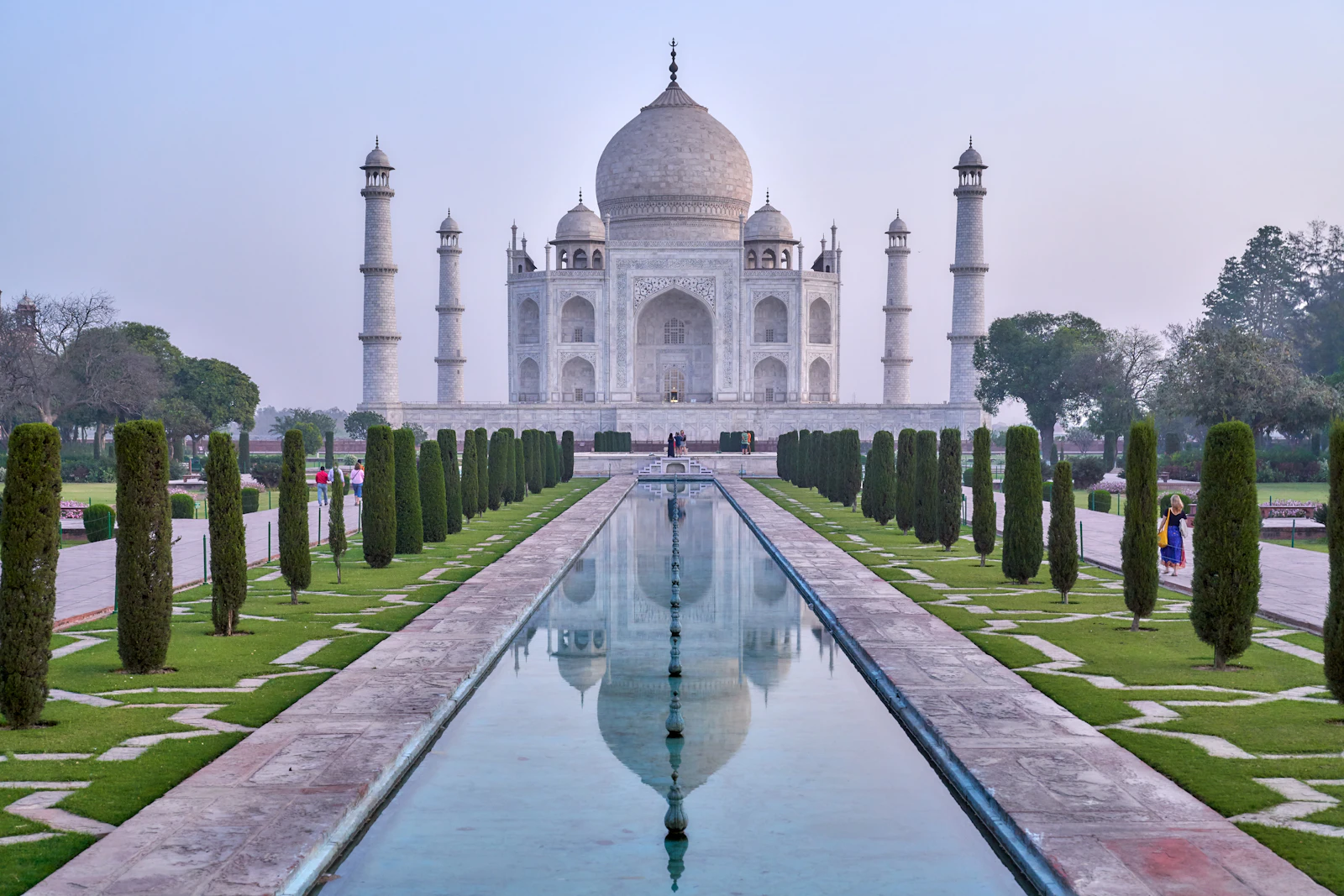
The first trip and the right one: Delhi for Old Delhi by rickshaw, the Jama Masjid, Humayun’s Tomb, the Qutb Minar and Lutyens’ avenues; Agra for the Taj Mahal at sunrise from the east gate and again from the Mehtab Bagh at sunset, the Agra Fort and Fatehpur Sikri’s abandoned red-sandstone capital on the road west; Jaipur for the Amber Fort at opening (by jeep, not elephant), the City Palace, the Jantar Mantar observatory, the Hawa Mahal and the bazaars. Eight days with a private car and driver from Delhi and licensed guides at each city; October to March; and the trip that decides whether there is a second.
Rajasthan: the desert forts and the palaces
The triangle extended into the state that has the palaces: Ranthambore for tigers (two safaris, April and May the best), Pushkar’s lake and its November camel fair, Jodhpur’s blue city under the Mehrangarh Fort, Jaisalmer’s golden fort and a night in the Thar desert, Udaipur’s lakes and the Lake Palace, and the smaller havelis and forts — Shekhawati’s painted towns, Bundi, Ranakpur’s Jain temple, Chittorgarh — between them. Two weeks with a driver throughout and at least two palace nights, which cost half what the equivalent would anywhere else on earth.

Kerala and the south
A different India: green, gentle, Christian and communist by turns. Kochi’s Fort district with the Chinese fishing nets and the Jewish quarter; Munnar’s tea hills and a night in a planter’s bungalow; Periyar’s spice gardens and elephants; a houseboat night on the backwaters from Alleppey or Kumarakom; the beaches at Kovalam, Varkala and Marari; Ayurveda for a week at a retreat; and, for the committed, the temple cities of Tamil Nadu — Madurai’s Meenakshi, Tanjore’s Chola temples, Pondicherry’s French quarter. November to February; twelve days; the India for first-timers who are not sure about India.
Varanasi and the Ganges
The oldest continuously inhabited city on earth and Hinduism’s holiest: the ghats stepping down to the river where the living bathe and the dead are cremated, the dawn boat, the evening Ganga aarti from the water, the lanes behind the ghats, Sarnath where the Buddha first taught, and Bodh Gaya where he was enlightened. Two nights, a flight from Delhi or Jaipur, a guide, and never a photograph at the cremation ghats. October to March; Dev Deepawali in November lights every ghat.

The Himalaya: Ladakh, Sikkim, Darjeeling, Himachal
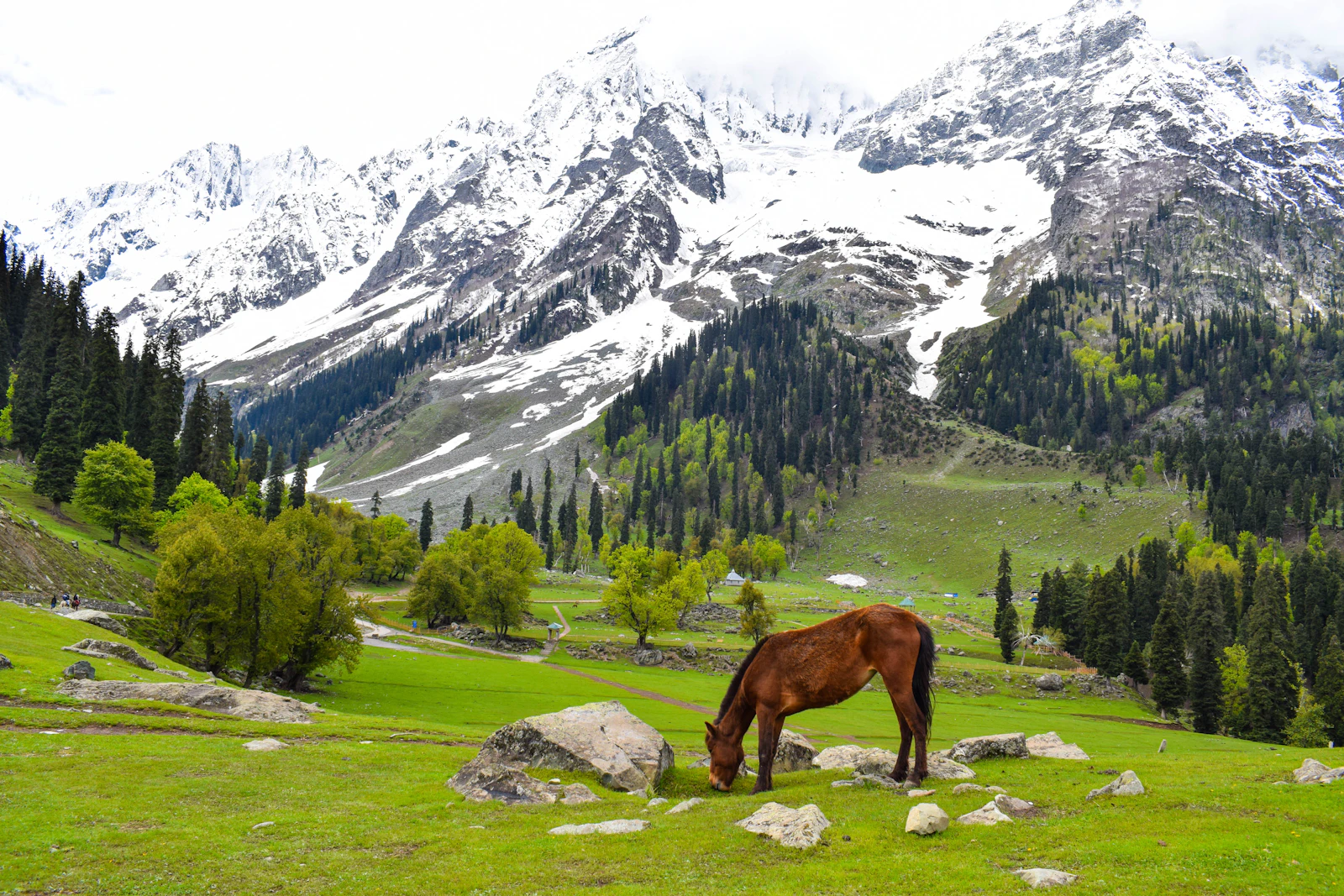
The summer India, when the plains are in monsoon. Ladakh at 3,500 metres for the monasteries of Thiksey and Hemis, Pangong Lake, the Nubra valley and a Tibetan Buddhist culture behind a closed road from October to May; Sikkim for Kanchenjunga and the monasteries; Darjeeling for the toy train and the tea; Himachal for Shimla, Dharamsala and the Dalai Lama’s seat, and the Spiti valley. June to September for Ladakh, March–May and October–November for the rest; acclimatisation days built in.

Wildlife: tigers, rhinos and elephants
Tigers at Ranthambore (from Jaipur), Bandhavgarh and Kanha (central India, the best sightings), Tadoba and Pench; rhinos and elephants at Kaziranga in Assam; the Periyar and Wayanad sanctuaries in Kerala; Gir’s Asiatic lions in Gujarat. Jeep safaris at dawn and dusk from a jungle lodge, a naturalist, two or three nights, and April–May for the sightings when the waterholes shrink; the parks close from July to September.

Elsewhere
Mumbai for the Gateway, the Victoria Terminus, the Dharavi tour and the food; Goa for the Portuguese churches and the beaches; Hampi’s ruined Vijayanagara empire among the boulders; Khajuraho’s carved temples; Ellora and Ajanta’s cave temples from Aurangabad; Amritsar’s Golden Temple and the Wagah border; Kolkata for the intellectual capital and the Durga Puja in October; the Andaman Islands for reef; and the trains — the Shatabdi and Vande Bharat expresses between the triangle cities, the toy trains, and the luxury Maharajas’ Express for those who want it.
By interest
History and monuments
The Taj, the Mughal north, the Rajput forts, Hampi, Khajuraho, Ellora and Ajanta, the Cholas: 3,000 years of the finest architecture on the subcontinent.
- Guides essential
- Sunrise at the Taj
- Palace hotels
- Oct–Mar
Palace hotels
The Lake Palace, Umaid Bhawan, Rambagh, and a hundred converted forts and havelis at a fraction of the price: the accommodation category that exists nowhere else.
- AUD 150–900
- Two nights minimum
- Rajasthan
- Book early
Wildlife
Tigers at Ranthambore, Bandhavgarh and Kanha; rhinos at Kaziranga; elephants in Kerala; lions at Gir.
- Apr–May best
- Dawn and dusk
- Jungle lodges
- Parks close Jul–Sep
Spiritual India
Varanasi, Rishikesh and the yoga ashrams, Bodh Gaya, Amritsar’s Golden Temple, Ladakh’s monasteries, the Kumbh Mela when it falls.
- Varanasi 2 nights
- Rishikesh retreats
- Dress modestly
- Guides matter
Food
Thali in Rajasthan, dosa in the south, Delhi’s chaat, Kerala’s fish curry, Hyderabad’s biryani, chai everywhere: a subcontinent of cuisines, most of them vegetarian.
- Busy places, hot food
- Bottled water
- Half the country is vegetarian
- Cooking classes
Ayurveda and wellness
A week or two at a Kerala or Sri Lankan retreat: treatments, diet, yoga and the monsoon as the traditional season.
- Kerala Jun–Aug
- 7–14 days
- Medical programmes
- Rishikesh for yoga
Questions we get asked
Is India a good first Asian destination?
It is the most demanding country in Asia and the most rewarding; most people are better served by a first trip elsewhere and India as a second or third. If India is the goal, the Golden Triangle with a private driver and guides is the right first trip, and Sri Lanka is the gentle alternative.
When is the best time to visit India?
October to March for the north and Rajasthan; November to February for the south and Kerala; June to September for Ladakh and the Himalaya; April and May for tigers, at 40°C on the plains.
Do Australians need a visa for India?
Yes: an e-Visa applied for online on the official government site (indianvisaonline.gov.in) at least a week before travel. Beware lookalike sites.
Is India safe for tourists?
With preparation, yes. The real risks are stomach upsets, traffic and air pollution rather than crime. A private car and driver, a good operator’s hotel choices, bottled water and the recommended vaccinations resolve most of it. Women travellers find Kerala and Sri Lanka gentler than the north.
How many days do you need for India?
Eight for the Golden Triangle; fourteen for Rajasthan or Kerala properly; three weeks to combine north and south. India rewards doing less, slowly, with a driver.
Where this leads
Blog attracts, things to do informs, tours convert — in that order.