

Japan does unhurried travel better than almost any country: step-free stations, luggage sent ahead, a Green Car on the fastest train on earth, taxis whose doors open themselves, and a culture that treats older guests with an attention that has to be experienced. This route takes the Golden Route and removes everything that tires: the moves, the stairs, the queues, the early starts.
Most Japan itineraries are written for people who can walk 20,000 steps, climb the 300 stairs at Kiyomizu-dera and change trains with a suitcase in a rush-hour station, and most people can. This one is for the rest: travellers who are older, or slower, or recovering, or simply want the temples without the queue and the ryokan without the rush. It keeps the Golden Route — Tokyo, Hakone, Kyoto, Osaka — and changes the way it is done. Four bases instead of five. A private car for every transfer and every day trip, so that the guide chooses the gate with the shortest path and the car is waiting at the other one. Green Car seats on the Shinkansen. Suitcases forwarded and never carried. Hotels with lifts from platform to lobby. A ryokan with Western beds and a private bath. One thing each morning, the afternoon free, and a day in three with nothing planned at all. It is the itinerary we build for parents, for grandparents travelling with the family, and for a surprising number of people in their thirties who have done the other kind.
Why this route
Because Japan is the easiest country in the world to travel slowly in and almost nobody does. The stations have lifts and staff who carry things. The trains have wide seats and leave to the second, so a 10.15 departure is a 10.15 departure and the morning is not spent waiting. Luggage travels separately and arrives first. Taxis are clean, honest and everywhere. The culture of hospitality — the bow at the ryokan gate, the attendant in the Green Car, the guide who noticed the knee — is real and it is turned toward older guests in particular. The Golden Route was always doable at this pace; it was simply never written that way. This is the route written that way, and it is the one that our guests over sixty book twice.
At a glance
| Duration | 13 days / 12 nights |
|---|---|
| Route | Tokyo (4) → Hakone (2) → Kyoto (4) → Osaka (2) |
| Fly | Into Tokyo Haneda, home from Osaka Kansai; premium economy or business on request |
| Best months | April–May and October–November for the weather; late May and early October for value; avoid July–August heat |
| Pace | Gentle: one move every four days, one thing a morning, most afternoons free, a rest day in three |
| Style | Private itinerary; private cars for every transfer and every day trip; licensed guides on days two, eight and ten; Green Car rail |
| Suits | Travellers over 60, anyone with limited mobility, multi-generational groups, first-timers who want Japan without the pace, honeymooners who want the same |
| Accommodation | Hotels chosen for lifts, location and room size; a ryokan with Western beds and a private bath |
| Price | Quoted per departure in AUD |

Day by day
Day 1: Arrive Tokyo
A private car with a name board meets the morning flight at Haneda; the hotel is by Tokyo Station or in Shinjuku, chosen for a lift from platform to lobby, and the first day is rest: the garden across the road, lunch at the hotel, a walk of an hour and an early dinner nearby. Nothing is scheduled, and that is deliberate: the first day of an unhurried trip sets its tempo. The body clock is one hour out and the trip has thirteen days. If the flight was an overnight and sleep was poor, the second morning’s guide is pushed to ten without a word.
Day 2: Tokyo: the old city, slowly
A private guide and car for the morning: Senso-ji at nine, before the crowds and after the first heat, with the car parked at the gate; the Skytree by lift; lunch at a tempura counter with a chair. The afternoon is free, and most take it at the hotel. Dinner at Yurakucho’s yakitori arches, five minutes by taxi.

Day 3: Tokyo: the gardens and the shrine
Meiji Shrine’s forest, flat and shaded, at nine; Omotesando’s tree-lined avenue and a coffee; the Hamarikyu Gardens by river bus and a tea house on the pond; the Ginza depachika for a picnic supper in the room. The guide again if wanted; otherwise the document has every lift and exit marked.
Day 4: Tokyo: a loose day
Rest, or one thing: teamLab (seated sections and step-free), the Tokyo National Museum, a Nikko day by private car with a guide for those with the energy, or the Sumida river by boat. The suitcases are collected this evening and forwarded to Kyoto; the Hakone day bag is packed with two nights’ worth.
Day 5: Hakone by private car
No loop, no ropeway queue: a car from the hotel to the Hakone ryokan in ninety minutes, with a stop at the Open-Air Museum (flat paths, a cafe, Henry Moore in a valley) and Lake Ashi’s shore for Fuji. The ryokan by two; a room with Western beds and a private bath; dinner in the room at six; the bath under the stars.
Day 6: Hakone: a second night
The bath at six, the breakfast, and a day with no train: the Pola Museum, a stroll under the cedars on the old Tokaido road as far as you like and no further, soba for lunch, the afternoon in the bath. A second kaiseki.

Day 7: Hakone to Kyoto in the Green Car
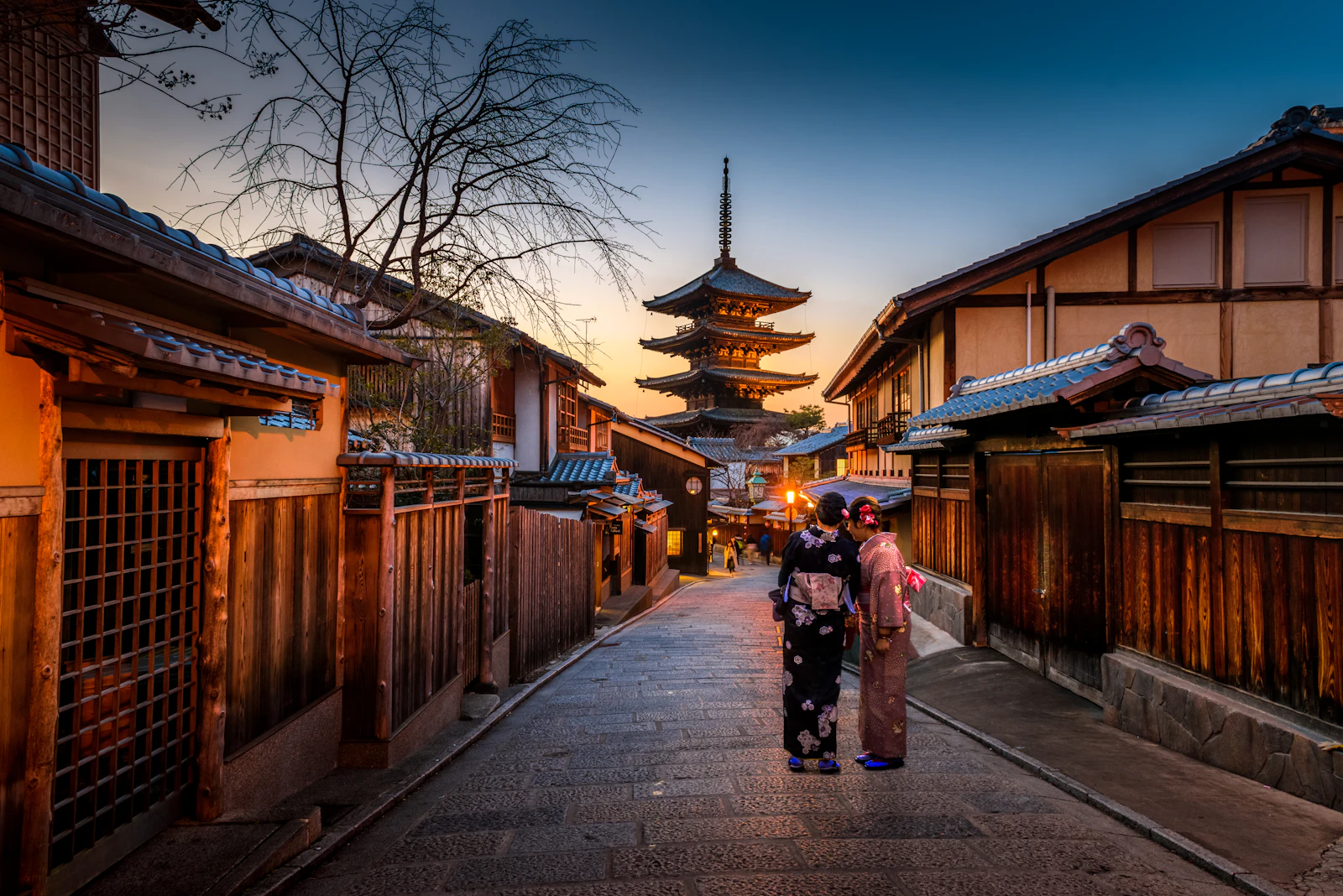
A car to Odawara and the Shinkansen’s Green Car — wide reclining seats, quiet, an attendant, and Fuji in the window for the first twenty minutes — to Kyoto in two hours. A car from the station to a hotel in Higashiyama with the temples a walk away, the suitcases already in the room, and an easy first evening: Maruyama Park, a glimpse of Gion, an obanzai dinner at a table.
Day 8: Eastern Kyoto with a guide, by car
The licensed guide and the car for the whole day: Kiyomizu-dera by the upper gate to avoid the slope, the Sannenzaka lanes downhill, Kodai-ji’s gardens, lunch at a tofu restaurant with chairs, Nanzen-ji, the Philosopher’s Path for as much of it as suits, and Fushimi Inari’s first tier of gates at four when the crowds have thinned. Six hours, three stops with a car between them, and the afternoon rest built in. The guide chooses the order by the crowds and the party’s energy, and the day can stop at any point; Kyoto has been seen properly by people who did two of the five.

Day 9: Arashiyama and the Golden Pavilion
The car to Arashiyama at opening: the bamboo grove, which is a level path; Tenryu-ji’s garden, which has a bench at every turn; the bridge; a river boat down the Hozu gorge for those who like the water. Lunch in the village. The afternoon at Kinkaku-ji, a circuit of the pond, and Ryoan-ji’s stones from the veranda. The kaiseki dinner tonight, at a house with a garden and a table.
Day 10: A loose day, or Nara by car
Nara with the car and the guide: the deer, Todai-ji’s Great Buddha (a level approach), Kasuga Taisha’s lantern path, lunch in Naramachi, back by three. Or Nishiki Market and the Nishijin textile district. Or the hotel and a book.
Day 11: Kyoto to Osaka
A late checkout, the Haruka or a car to Osaka in an hour, and a hotel above the station at Namba with the airport express below it. The afternoon at Osaka Castle park by car, with the moat walk as long or short as it appeals, the evening in Dotonbori for as long as it appeals — a table at an okonomiyaki restaurant rather than the stand, and the canal.
Day 12: Osaka: the loose day
Kuromon Market in the morning by taxi; the Umeda Sky Building or the aquarium; an afternoon at the Hankyu depachika choosing omiyage; or Universal Studios for grandparents travelling with grandchildren, with an express pass and a car both ways.
Day 13: Depart from Kansai
A late breakfast, a car to Kansai Airport (50 minutes, no train), assistance arranged through the terminal, and the evening flight home in premium economy if that was the choice for the way back. Thirteen days, four beds, no suitcase carried, no early train, and the same country everyone else saw, seen at the speed it was built for.
Variations and extensions
Ten days: Tokyo (3), Hakone (2), Kyoto (4), out via Kansai with an Osaka lunch on the way; the shortest version that keeps the two-night ryokan. Sixteen days with Hiroshima and Miyajima: the Green Car to Hiroshima after Kyoto, a car to the Peace Park (level, shaded, a museum with lifts), the ferry to Miyajima (assistance at the pier) and a night at a ryokan on the island, then the Green Car to Osaka. Sixteen days with Kanazawa: the Hokuriku Shinkansen from Tokyo to Kanazawa in the Green Car, two nights, Kenroku-en by wheelchair-friendly path, and the Thunderbird to Kyoto; the Alps proper are steep and left out. The onsen version: a second ryokan at Kinosaki, where the bathhouses are on a level canal path and the ryokan have lifts, in place of the Osaka nights — see our onsen and ryokan route. Multi-generational: two itineraries that run in parallel — the grandparents in the car with the guide, the family on the trains — and meet at the hotel each evening; we build it as one booking. Business class both ways and a night in Singapore on the way home for those who prefer the flight broken.
The two kinds of unhurried. Some travellers want the pace because of mobility; some want it because they have learned that four cities seen well beat eight seen from a window. The route serves both, and the differences are in the detail: the first party gets the cars for every leg, the wheelchair at Todai-ji and the room by the lift; the second takes the Green Car and walks the Philosopher’s Path end to end but still has the afternoon free and the rest day in three. We ask which, and build accordingly. What neither gets is a 7 am Shinkansen, a hotel a night, or a day with four temples on it.
Eating on this route
Tables are booked rather than counters; restaurants with chairs and lifts are chosen over the ones up a flight of stairs in a Golden Gai alley; and the Japanese default of mild, seasonal, beautifully presented food suits an unhurried appetite. Tokyo: tempura and sushi at a table in Ginza, tonkatsu at Maisen, the depachika supper in the room after a long morning. Hakone: two kaiseki dinners in the room, at six, in the yukata. Kyoto: tofu at Nanzen-ji, obanzai at a table in Gion, the kaiseki we book at a house with a garden and chairs. Osaka: okonomiyaki at a restaurant table, a yakiniku where the staff grill for you, Kuromon in the morning. Breakfast is at the hotel every day and is the best meal of most of them. Portions are smaller than at home and the lunch set is the right size for anyone. No tipping, no queues we have not avoided, and the food guide for the days that are free.
What is included
- Return airfare from Sydney, Melbourne or Brisbane in economy, premium economy or business as chosen; open-jaw Tokyo in, Osaka out
- Private cars with a driver for every airport transfer, every intercity leg where a car beats the train (Hakone), and every day trip
- Green Car (first-class) seats on the Shinkansen Hakone–Kyoto
- Licensed private guides on days two, eight and ten, briefed on pace and mobility
- Hotels chosen for lifts, location and room size, with breakfast
- A two-night ryokan stay with Western beds, a private bath and kaiseki dinners
- Luggage forwarding Tokyo–Kyoto and Kyoto–Osaka, and porters where they exist
- Airport assistance at Haneda and Kansai arranged in advance
- Pre-booked entries and a Kyoto kaiseki dinner at a restaurant with tables
- A day-by-day document with every lift, exit and rest stop marked, and a Cooee contact in Brisbane
Not included
- Lunches and most dinners
- Travel insurance (required; we recommend policies with strong medical cover for older travellers)
- Wheelchair hire (arranged on request at cost; Japan’s major sites and stations lend them free)
- Optional experiences not named
Where you stay
Tokyo: a hotel with a lift from the station — the Marunouchi Hotel or the Tokyo Station Hotel above the platforms, the Keio Plaza in Shinjuku with its taxi rank at the door, or the Park Hyatt and the Palace Hotel for the upper tier. Larger rooms than the Japanese standard, requested at booking. Hakone: a ryokan with Western beds, a private open-air bath and a lift — the Hakone Ginyu, the Hyatt Regency Hakone (a hotel with onsen and full accessibility), or Gora Kadan for the top. Kyoto: the Hyatt Regency or the Four Seasons in Higashiyama, the Hotel Okura by the river, or the Ritz-Carlton; all with lifts, tables at breakfast and a taxi rank. Osaka: the Swissotel Nankai directly above Namba station with the airport express below, or the Ritz-Carlton at Umeda. Room size and beds: Japanese hotel rooms are small and we book the larger types; twin beds are requested where wanted and confirmed in writing. Every hotel on this route has been used by us for guests with limited mobility and each has a lift from street to room, a bath as well as a shower in the room types we book, and a concierge who will call a taxi to the door rather than point at the rank. Where a party needs an accessible room by the formal standard — roll-in shower, grab rails, a wider door — the Hyatt, Four Seasons and Ritz-Carlton properties have them and we book those.
What it costs
Private cars, guides and Green Car rail put this itinerary above the Classic route by the cost of those services, which are less than people expect — a car and driver in Japan is AUD 450–700 a day and splits across the party — and the two-night ryokan and the larger hotel rooms add the rest. We do not publish a from-price for this itinerary because two factors move it by thousands: the season (cherry blossom and autumn colour cost 30–40 per cent more than late May or early October on flights and hotels combined) and the accommodation tier (a business hotel and a good ryokan against a five-star and a top-tier ryokan). We quote every departure individually in Australian dollars with everything above included, so the figure you see is the figure you pay. The Japan costs guide sets out the underlying numbers line by line so you can see how the quote is built. For a couple, the difference between this and the Classic route is roughly the price of the cars and the guides; for a family of four or six travelling with grandparents, the cars cost less per head than the trains would have and the difference narrows.
Practical notes
Entry: Australians do not need a visa for Japan for stays under 90 days; complete Visit Japan Web before you fly. Some Australian medicines are prohibited or need a permit — see our entry guide. Money: cards work in cities; carry cash for small restaurants and temples; no tipping. Fitness: a normal Japan day is 15,000–20,000 steps; the itinerary can be paced down. Luggage: forwarded between cities; travel with a day bag. Etiquette: shoes off in ryokan and temples, quiet on trains, wash before the bath. Children and older travellers: both adjust easily; apartment hotels and Green Car rail are the usual changes. Mobility: every Shinkansen station and every Tokyo, Kyoto and Osaka subway station on the route has lifts; the sites have been chosen and routed for the shortest level path (Kiyomizu-dera by the upper car park, Fushimi Inari’s first tier only, Kinkaku-ji’s flat circuit, Nara’s level approach); wheelchairs are lent free at Senso-ji, Meiji Shrine, Todai-ji and the major museums and can be hired for the trip. Walking: a normal day on this route is 5,000–8,000 steps with rests; it can be less. Medical: Japanese hospitals are excellent and English-speaking clinics exist in all four cities; carry medicines in original packaging with prescriptions, check the import rules (some blood-pressure and pain medicines need a certificate) and buy insurance with strong medical and evacuation cover. Heat: the route avoids July and August; in any month the mornings are the outing and the afternoons the rest. Food: tables rather than counters are booked, mild dishes are the Japanese default, and dietary cards in Japanese are provided. Guides: briefed on pace, with a car waiting at every exit; they change the day from a march into a visit. Grandchildren: the route adapts — a Disney or Universal day with an express pass and a car, Nara for the deer, teamLab — and the multi-generational version has the grandparents in the car and the children on the train with their parents, meeting at the next stop. What we ask before we book: the distance each traveller is comfortable walking on a flat path; whether stairs, slopes or standing are the difficulty; whether a wheelchair is used sometimes, always or never; any dietary or medical needs the hotels should know; and whether beds should be twin or double. The itinerary is then built from those answers rather than adjusted afterward, which is the difference between an unhurried trip and a hurried one with apologies. Communication: the guides and drivers carry a Cooee contact card in Japanese and English; the hotels have the party’s needs on file; and the Brisbane number is answered by someone who knows the itinerary.
How to book
Send us your preferred dates, your departure city and the names and ages of the party through the enquiry form or on 0409 661 342. We check the season against the route, confirm availability at the hotels and inns that matter, and send an itinerary and a quote in Australian dollars within two working days. A deposit holds the booking; the balance is due before departure under our booking conditions. Travel insurance is required and we can recommend a policy.
Frequently asked questions
How many days is the Unhurried Japan itinerary?
Thirteen days and twelve nights. It can be shortened or extended; the day-by-day above is the shape we start from.
When is the best time to do the Unhurried Japan itinerary?
April–May and October–November for mild weather and the blossom or colour; late May and early October for the same weather at lower cost and with fewer people at the temples; December–February is cold but clear, empty and easy. We avoid July and August, when the heat is the enemy of an unhurried day.
Is this a group tour or a private itinerary?
A private itinerary built for your party and your dates, not a fixed-departure group. Guides join for the days named; the rest is independent travel with everything pre-booked.
Are flights included?
Yes: return economy from Sydney, Melbourne or Brisbane, open-jaw where the route allows, with premium economy and business on request. Other Australian cities connect via those three.
Do I need a Japan Rail Pass?
Only where the route makes it pay, in which case we include it. For most routes individual reserved tickets are cheaper since the 2023 repricing, and we book them.
Who is this itinerary for?
Travellers over sixty; anyone with a hip, a knee or a heart that sets the pace; multi-generational groups with grandparents; first-timers who want the Golden Route without the marching; and honeymooners who would rather have the ryokan for two nights than five cities in ten days. It is the route we recommend to our own parents.
What happens if the cherry blossom or autumn colour shifts?
We keep the middle of the trip on flexible bookings and adjust the order of cities when the forecasts firm up in mid-March or October. Our blossom guide explains the method.
How much does it cost?
Quoted per departure in Australian dollars with flights, rail, accommodation, transfers, luggage forwarding and named experiences included. Season and accommodation tier move the total; the Japan costs guide shows the underlying numbers.
Related
Tours convert; things to do informs. If you are still choosing, the things-to-do page is the step before this one.