A hundred monks in saffron robes walking in silence at dawn while the town watches from the roadside. A turquoise waterfall so improbably blue it looks invented. Two days on the Mekong watching the jungle pass and the river bend and nothing else required of you. The most bombed country per capita in human history, still pulling unexploded ordnance from its soil. Laos holds contradictions with a stillness that takes several days to understand and longer to leave behind.
Laos (the Lao People’s Democratic Republic — Sathalanalat Paxathipatai Paxaxon Lao — 236,800 km² — 7.5 million people — the only landlocked country in Southeast Asia — bordered by China to the north, Vietnam to the east, Cambodia to the south, Thailand to the west, and Myanmar to the northwest — the Mekong River forming most of the western border with Thailand — a country of mountains, jungle river valleys, and a population that is culturally distinct from every neighbour by a measure that still surprises visitors who assume the region’s countries blur into each other at the borders) is consistently described by travellers who have been through Southeast Asia multiple times as the country that changed the pace of their thinking. This is a deliberate quality in Laos rather than an infrastructural limitation — the Lao concept of “bo pen nyan” (“never mind” — literally “it is nothing” — the cultural acceptance of things as they are rather than as they might be engineered to become) is expressed in the country’s pace of daily life in a way that visitors either find profoundly refreshing or profoundly frustrating depending on whether they have successfully stopped counting their minutes by Day 3.
Laos’s anchor destinations: Luang Prabang (the former royal capital — the UNESCO World Heritage city at the confluence of the Mekong and Nam Khan rivers — the tak bat alms-giving ceremony at dawn, the golden temples, the Kuang Si waterfalls, the Night Market, the French colonial streetscape). The Mekong Slow Boat (the 2-day passenger boat from Huay Xai on the Thai border to Luang Prabang — the single most discussed way to arrive in Laos). Vang Vieng (the karst limestone valley town on the Nam Song river — the Blue Lagoon, the cave temples, the hot air balloon at dawn over the karst formations). Vientiane (the capital — Pha That Luang, the Patuxai, the COPE Visitor Centre — the most important introduction to the UXO (unexploded ordnance) crisis available to visitors). The 4,000 Islands (Si Phan Don) (the Mekong archipelago in the south — the Irrawaddy river dolphins, the Khone Phapheng Falls, the bicycle rhythms of Don Det and Don Khon). The Plain of Jars (the Xieng Khouang plateau — the megalithic stone jars — the most bombed province in Laos during the Secret War).
Laos rewards a north-to-south circuit — arriving on the slow boat from Thailand, working through the river valleys and temple towns, and finishing in the island south before crossing into Cambodia or flying home.
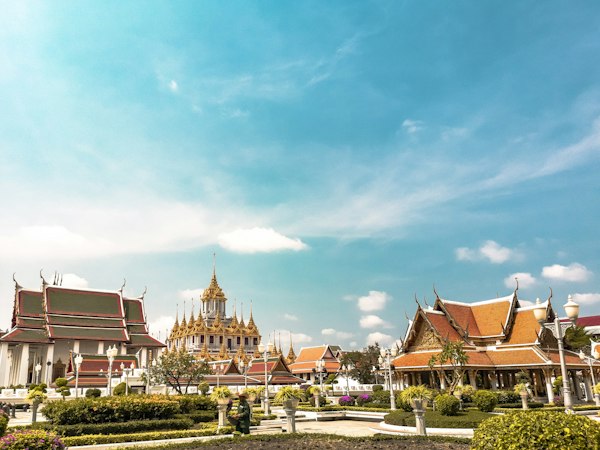
Luang Prabang (the former royal capital of the Kingdom of Lan Xang — the Kingdom of a Million Elephants — at the confluence of the Mekong and Nam Khan rivers in northern Laos — UNESCO World Heritage since 1995 — the city that most visitors to Laos specifically name as the destination that most affected them, and that most struggle to describe without recourse to the word “magic” — the guide’s consistent position being that the word “magic” is not wrong, it is simply imprecise about what is actually happening: the combination of the French colonial streetscape, the 33 Buddhist temples (wats) distributed through the city, the Mekong on one side and the Nam Khan on the other, and a population that moves through the town with a specific unhurried quality that makes the entire place feel as though it is operating at 80% of normal temporal speed) is the most-visited city in Laos and correctly so. The tak bat (the alms-giving ceremony — Tak Bat Thelavosinh — the daily pre-dawn procession of Buddhist monks collecting food offerings from the townspeople — the monks leave their monasteries (the wats) at approximately 5:30–6am and walk in single file through the town streets, each holding an alms bowl (bat) — the lay Buddhists of Luang Prabang kneel along the route and place sticky rice and other food into the bowls as an act of merit (bun — the Buddhist concept of merit accumulated through good deeds — giving food to monks is one of the highest merit-generating acts in Lao Buddhist culture) — the procession is one of the most visually striking daily events in Southeast Asia — and one of the most frequently mis-experienced by visitors who photograph the monks at close range, intrude on the procession, or purchase the low-quality packaged tourist offerings sold at the roadside rather than the fresh sticky rice that the participants actually use). The Wat Xieng Thong (the most important temple in Luang Prabang — at the northern tip of the peninsula — built 1559 CE under King Setthathirath — the mosaic Tree of Life on the rear wall — the funeral carriage hall containing a 12m gilded funeral chariot (the chariot used for royal cremations) — the guide walks the grounds for 45 minutes). The Kuang Si Falls (the tiered turquoise waterfall — 30km from Luang Prabang — the calcium-mineral-rich spring water depositing travertine over the limestone cliff face, producing the specific turquoise-to-aquamarine gradient of the terraced pools — the colour is the same chemistry as Pamukkale in Turkey and the Plitvice Lakes in Croatia — the physics are universal — the specific turquoise at Kuang Si is the result of particulate matter in suspension scattering short-wavelength blue light back to the viewer — the bear rescue sanctuary at the base of the falls (the Asiatic black bears (Ursus thibetanus) rescued from poachers — the bears visible in their forested enclosure on the approach)). The Night Market (the nightly street market on Sisavangvong Road — the textiles (the indigo-dyed Lao silk, the hand-woven sin (the tube skirt), the hmong embroidery), the food stalls (the Lao barbecue, the coconut pancakes (khanom krok — the semi-spherical rice flour and coconut milk cakes cooked in a cast iron mould — sold for 5,000 LAK each — eaten immediately))). The Mekong sunset cruise (the boat upstream on the Mekong from the Luang Prabang jetty — 2 hours — the Pak Ou Caves stop (the caves filled with thousands of Buddha statues at the confluence of the Mekong and Nam Ou rivers — the guide explains the pilgrimage tradition — the cave entrance visible from the river before the boat turns in)).
Vang Vieng (the town on the Nam Song river in Vientiane Province — surrounded by some of the most dramatic karst limestone scenery in mainland Southeast Asia — the same geological formation as Ha Long Bay in Vietnam and the limestone karsts of Guilin in China — here visible at close range from the town river front, rising abruptly from the flat river valley floor to 300–500m) has had a complicated recent history — the town spent the 2000s and early 2010s as Southeast Asia’s most notorious party destination (the tubing on the Nam Song — the riverside bars — the casualty statistics) and has since been substantially reset by the Lao government and by the demographic shift of a more nature-focused traveller arriving since approximately 2018. The contemporary Vang Vieng (the town in 2026) is a genuinely beautiful river valley destination with outdoor activities that justify a 2–3 day stay and a newly functioning railway connection to both Luang Prabang (1 hour north) and Vientiane (50 minutes south). The Blue Lagoon (Tham Phu Kham — the cave and lagoon system 8km from Vang Vieng — the blue-green pool beneath the limestone cliff — the 3km cycling path through rice fields — the cave above the pool containing a large reclining bronze Buddha — the swim in the lagoon below the cliff, the rope swings (the guide assesses each rope swing for structural integrity before recommending — this is not a metaphor — rope quality in rural Laos varies)). The hot air balloon at dawn (the balloon flights from the Vang Vieng plain — 5:30am departure — the karst formations at dawn in the ground mist — the Nam Song visible from 400m as a silver thread between the limestone towers — the 30–45 minute flight — the balloon landing in a rice paddy (invariably — the guide briefs the group on this beforehand and it is always greeted with the same specific combination of surprise and delight when it happens)). The Nam Song kayak (the half-day kayak from Vang Vieng downstream — the karst formations visible from water level — the caves along the river — the local families on the bank with fishing nets — the guide identifies the specific points where the photographic composition of limestone + water + vegetation is correct — which is approximately every 400m)).
Vientiane (the capital of Laos — the smallest capital city in Southeast Asia by population (approximately 820,000 in greater Vientiane) — on the Mekong at the Thai border — described by the French colonialists as “the sleepy capital” — a description that is still, in 2026, more accurate than most capital cities would be comfortable admitting) is a city that most visitors arrive in expecting something resembling Bangkok-lite and leave having experienced something more like a large provincial town with a National Museum and a golden stupa. This is not a criticism — it is an accurate description of Vientiane’s specific charm. The Pha That Luang (the Great Stupa — the national symbol of Laos — visible on all Lao currency and the national seal — the 45m-high gilded Buddhist stupa believed to house a sacred Buddha breastbone relic — the original stupa built on this site in the 3rd century CE — the current structure from the 16th century, destroyed by Siamese forces in 1828, restored by French archaeologists in 1900 (controversially — the 1900 restoration was based on drawings and was largely incorrect by the standards of subsequent Lao scholarship — the current structure representing a third rebuilding in the 1930s and a refurbishment in 1953) — surrounded by a cloister wall with Buddha images at 140m × 160m). The Patuxai (the Victory Gate — the monumental arch built between 1957 and 1968 in the style of the Arc de Triomphe — made partly from cement donated by the United States for a runway and repurposed by the Lao government for the arch — the Americans nicknamed it the “vertical runway” — the guide delivers this story with appropriate irony — the view of Lan Xang Avenue from the top of the arch (the tree-lined boulevard running from the arch to the Mekong — the “Champs-Élysées of Vientiane” — the comparison is accurate in layout and somewhat aspirational in scale)). The COPE Visitor Centre (the Cooperative Orthotic and Prosthetic Enterprise — the rehabilitation organisation providing artificial limbs and support to victims of UXO (unexploded ordnance) — the visitor centre at the COPE facility in Vientiane is the most important site for understanding the ongoing legacy of the Secret War bombing — the centre is not a museum of the war but a functional rehabilitation facility with a visitor exhibition — free entry — 60–90 minutes — the guide recommends this before the Plain of Jars visit).
Si Phan Don (the “4,000 Islands” — the name given to the Mekong archipelago in Champasak Province in the far south of Laos, where the Mekong reaches its widest point (approximately 14km across at full flow during the wet season) and divides into hundreds of channels around a vast cluster of river islands — the islands ranging from large inhabited islands (Don Khong — the largest — 18km long — with a small road circuit, rice paddies, and several guesthouses) to seasonally exposed sandbars that are underwater for five months of the year) is the part of Laos that most visitors running out of time skip and that veterans of multiple Laos visits most consistently recommend as the country’s most atmospheric corner. The two main visitor islands: Don Det (the backpacker island — the most accessible — connected to Don Khon by a French colonial railway bridge (1,800m long — the former narrow-gauge railway used to bypass the Khone Phapheng Falls (which prevent navigation — cargo was offloaded at Don Khon, transported by rail across Don Det and Don Khon, and reloaded below the falls — the railway operated 1897–1940) — the rails are gone but the stone bridge piers and the French locomotive (the rusted hulk of the locomotive — a 1920s Baldwin locomotive — visible in a clearing on Don Khon) remain)). The Irrawaddy river dolphins (Orcaella brevirostris — the critically endangered freshwater dolphin — approximately 90–100 individuals surviving in the Mekong — the largest surviving population is the Kratie section in Cambodia and the Khone Falls section at Si Phan Don — visible from the dolphin-spotting points on Don Khon at dawn and dusk — the dolphins surface visibly every 60–90 seconds for breathing). The Khone Phapheng Falls (the largest waterfall by volume in Southeast Asia — not the tallest (approximately 15m) but the widest — the full flow of the Mekong descending across a 12km front of rapids and channels — the sound audible from 2km). Don Det cycling (the bicycle circuit of Don Det — 8km of village roads — the rice paddies, the stilted guesthouses on the river, the sunset over the Mekong — the correct pace for understanding what Si Phan Don actually is: not a destination but a state of being, available by bicycle, lasting for however many days you can stay).
The Plain of Jars (the Xieng Khouang plateau in north-central Laos — the UNESCO World Heritage site since 2019 — the collection of thousands of large stone jars (the individual jars ranging from 1m to 3m high — typically 1.0–2.5 tonnes — carved from rock in situ approximately 2,500 years ago (the dating based on thermoluminescence dating of charcoal deposits in and around the jars — approximately 500 BCE to 200 CE) — the function of the jars unknown but most plausibly associated with funerary practices (the jars as mortuary containers — the skeletal remains found in and around some jars — the secondary burial hypothesis) distributed across 90+ sites on the plateau) is the most archaeologically distinctive site in Laos and one of the most significant in all of mainland Southeast Asia. The three main visitor sites (Site 1: Thong Hai Hin — the most accessible — 334 jars including the largest (the 6-tonne Jar of the King) — 15 minutes from Phonsavan town. Site 2: Hai Hin Phu Salato — a smaller collection among pine trees — more atmospheric than Site 1 — rarely the choice of tour groups who have limited time. Site 3: Hai Hin Lat Khai — on a remote ridge — the walk through the rice fields to reach it is part of the experience). The UXO context: the Plain of Jars is also one of the most heavily bombed landscapes in the history of aerial warfare. Between 1964 and 1973 the United States conducted more than 580,000 bombing missions over Laos — approximately one bombing mission every 8 minutes for 9 years — dropping more ordnance than was dropped in all of World War II combined. Approximately 30% of the bombs dropped did not explode. The bomb craters are visible throughout the Plain of Jars sites — the guide points them out in the context of the ongoing MAG (Mines Advisory Group) UXO clearance programme that has cleared approximately 2,000 hectares of the plateau since 1994. Visitors must stay on marked paths — the guide is specific and non-negotiable about this.
Nong Khiaw (the riverside village on the Nam Ou — the “Nam Ou” meaning “Ou River” in Lao — approximately 3.5 hours north of Luang Prabang by slow boat or minibus along the road — the village situated where the river cuts through the limestone karst massif — the cliff faces rising 500m directly from the riverbank — the same geological drama as Ha Long Bay but experienced from a guesthouse hammock rather than a cruise ship deck) is the Laos destination that most serious travellers cite as the country’s most visually dramatic landscape — and the one most easily missed on a Luang Prabang–Vang Vieng–Vientiane circuit that does not allocate the extra 2–3 days to go north. The Pha Tok Cave viewpoint (the 30-minute steep hike above Nong Khiaw — the viewpoint at the cave entrance — the Nam Ou valley visible in both directions — the limestone karst cliffs descending to the river — the view that produces the photograph that makes visitors who see it online add Nong Khiaw to their itinerary and subsequently confirm it was the correct decision). The slow boat north from Nong Khiaw to Muang Ngoi Neua (the village — 1.5 hours further up the Nam Ou — accessible only by boat — no road connection — no motorbikes — electricity from solar panels and a small generator — the most complete expression of the “bo pen nyan” pace available in northern Laos — guesthouses operating from bamboo huts on the riverbank — the village trekking (the guide walks to the traditional villages in the surrounding hills — the Hmong and Khmu villages — the agricultural system — the children following the tour group for approximately 200m before deciding the novelty has worn off)). The Bolaven Plateau (the highland plateau in southern Laos — Champasak and Sekong provinces — 1,200m elevation — the source of some of Southeast Asia’s most respected coffee — the arabica and robusta plantations owned by Lao, French, and Vietnamese families — the Tad Fane waterfall (the 120m twin-drop waterfall — the most photographed waterfall in southern Laos — the coffee plantation surrounding it — the guide picks ripe coffee cherries and crushes them for the group to smell the fruit before the bean)).
The tak bat (Tak Bat Thelavosinh — the daily alms-giving ceremony) begins at approximately 5:30–6am in Luang Prabang and is one of the most visually striking daily events in Southeast Asia. It is also one of the most frequently mis-experienced by visitors, and the Luang Prabang municipality has been actively trying to protect the ceremony’s integrity as visitor numbers have grown. The correct conduct: stand back from the procession route (a minimum of 5 metres — the monks walk in single file along the road — the giving happens between the monks and the kneeling Lao community — visitors are witnesses, not participants, unless they have specifically prepared sticky rice and wish to participate properly). Do not use flash photography (the monks are in a meditative state during the procession — flash disturbs this — the guide is specific about this before the 5am departure). Do not purchase the tourist offering packets sold along the route (the packaged biscuits and candy sold in small plastic bags — these are not appropriate offerings and the monks who receive them often discard them — the correct offering is freshly cooked sticky rice prepared from before dawn). The Luang Prabang Tourism Department has published guidelines that the guide reviews with the group the evening before. The tak bat is a religious ceremony. It is available to observe because the community performs it in the street. It deserves the respect that any public religious ceremony deserves.
The Mekong slow boat from Huay Xai to Luang Prabang is not transport in the conventional sense. It is the experience that most Laos veterans describe as the journey they would choose again.
The slow boat (the heua wai — the traditional Mekong passenger cargo boat — a wooden vessel typically 25–35m long, 3–4m wide, carrying passengers on bench seats or cushioned reclining seats in the covered central section, open-air at the bow and stern) departs from Huay Xai (the Lao border town across the Mekong from Chiang Khong in northern Thailand — the entry point for travellers arriving from Chiang Rai) at approximately 11am. Day 1: the first day covers the northern section of the river — the limestone hills giving way to jungle river valley — the boat passing through sections of Class I–II rapids (the Mekong is navigable throughout but the pilot’s skill in reading the current changes is visible at several points) — villages on the river banks visible from the deck (the children waving, the women washing clothes, the monks collecting alms from a river-side community) — the boat arrives at Pak Beng (the mid-river town — the overnight stop — accommodation in the guesthouses on the hill above the river — dinner of fish from the Mekong — the guide identifies the specific fish (the giant Mekong catfish (Pangasianodon gigas) is not on the menu — it is critically endangered and protected — the small river fish (the pa khing) and the river prawns are the correct order)). Day 2: the southern section — the river widening — the valley broadening — the first view of Luang Prabang (the golden spire of Wat Xieng Thong visible through the trees — the guide says nothing — the arriving passengers identify it themselves — the guide has been watching for this moment for 3 years of slow boat journeys and it has not become ordinary). The boat arrives at the Luang Prabang jetty at approximately 5pm.
The boat itself: the standard slow boat (USD$30–45 for the 2 days — purchased in Huay Xai) has fixed bench seats or cushions. The Luang Say and Shompoo premium slow boats (USD$80–150 per person per day — fully inclusive with meals, guide, and boutique accommodation at Pak Beng) offer a significantly more comfortable version of the same journey — the guide recommends the premium boat for groups wanting comfort, the standard boat for those wanting the full cargo-boat experience. What to bring: 2 litres of water minimum per day (the boat has a toilet but no water service — water is available at Pak Beng but not reliably between), snacks for Day 1 (a market in Huay Xai — the guide identifies the correct stalls — the fresh baguettes, the sticky rice with dried fish, the fruit), a book (the standard slow boat has limited wi-fi — this is the intent — the journey is two days of watching a river in a country you have just arrived in), and a light jacket (the river creates its own airflow — the open sections are cooler than expected at 11am departure). The pace: the slow boat is not a vehicle. The river is not scenery. The guide’s briefing on the morning of departure includes the sentence “There is nothing you need to do today except be on a river.” The Pak Beng evening: the hill above Pak Beng at sunset — the Mekong below — the same river that connects Yunnan in China to the Mekong Delta in Vietnam — visible from a plastic chair at 5pm with a Beer Lao — 4,200km of river, and you are somewhere in the middle of it.
The Mekong (Mae Nam Khong in Thai/Lao — Lancang Jiang in Chinese — the 12th longest river in the world — 4,350km from its source on the Tibetan Plateau at 5,224m elevation to its delta in southern Vietnam — flowing through Yunnan Province, Myanmar, Thailand (border), Laos, Cambodia, and Vietnam) sustains approximately 60 million people across the 6 countries of the Lower Mekong Basin directly — through freshwater fish (the Mekong is one of the world’s most biologically diverse river systems, with approximately 1,200 freshwater fish species — the largest freshwater fish in the world, the giant Mekong catfish (Pangasianodon gigas), is a Mekong species), agriculture (the annual flood pulse — the seasonal flooding of the Mekong floodplain that deposits nutrients across the paddy fields of Laos, Cambodia, and Vietnam), and transport (the slow boat is not anachronistic — it is the working river transport of communities without road access). The dam context: the upper Mekong has been dammed extensively by China (11 dams on the Lancang section — completed and operational) and lower Mekong dam construction is proceeding (the Xayaburi Dam in Laos (completed 2019) and the Don Sahong Dam (completed 2020) — both in Laos — the ecological consequences for the Irrawaddy dolphin population and the downstream fish migration patterns are the subject of ongoing scientific and political dispute). The guide discusses the dam situation directly during the Si Phan Don section — it is relevant to the dolphin visit context.
The Nam Ou slow boat (the northern extension of the river journey — from Luang Prabang north up the Nam Ou river (the major Mekong tributary that drains the mountains of Phongsali Province — the river cutting through the limestone karst country north of Luang Prabang in conditions of increasing geological drama as you travel north)) is the correct companion experience to the Mekong slow boat and is available in the wet season (June–November — when the river level is high enough for the boats to navigate — in the dry season, sections of the Nam Ou are too shallow and the minibus road from Luang Prabang to Nong Khiaw is the only option). The journey: Luang Prabang jetty to Nong Khiaw — approximately 3.5–4 hours — the first karst cliffs appearing within 30 minutes — the river becoming progressively narrower and more dramatic as the boat moves north — the Pak Ou Caves (the boat passes the confluence of the Mekong and Nam Ou — the cave mouth visible from the river — a 30-minute stop possible on the downstream return). Nong Khiaw to Muang Ngoi Neua: 1.5 hours further upstream — the boat arriving at a wooden jetty with no road — the village appearing through the vegetation. The return is made the same way — the light different on the cliffs in the afternoon — which is reason enough for the return journey to not feel like repetition.
Between 1964 and 1973, the United States conducted more than 580,000 bombing missions over Laos — approximately one bombing mission every 8 minutes, 24 hours a day, for 9 consecutive years. The total ordnance dropped (approximately 2.1 million tonnes of bombs) exceeds the total dropped by all sides in all theatres of World War II combined. The bombing was classified — the “Secret War” — because the United States was officially neutral in Laos under the 1962 Geneva Accords, and the bombing campaign was therefore denied until its declassification in the 1990s. The stated military objective was to interdict the Ho Chi Minh Trail (the supply route from North Vietnam through eastern Laos to South Vietnam — the “Lao corridor” — the Trail ran through the mountainous eastern provinces of Laos, the Annamite mountains, and the bombers flew over and hit both the trail itself and the surrounding Lao countryside). The Xieng Khouang Province (the Plain of Jars plateau) was bombed particularly heavily because the flat plateau was a contested military zone between Royalist and Pathet Lao (communist) forces throughout the period.
The ongoing consequences: approximately 50 people per year are killed or injured by UXO in Laos (down from over 300 per year in the 1990s, due to clearance efforts — but still occurring). The primary victims are farmers and children. The primary trigger mechanism is disturbing the soil — the most dangerous UXO is the BLU-26 bomblet (the “bomblet” or “cluster bomb submunition” — a small spherical device approximately the size of a tennis ball — released by the hundreds from a single cluster bomb canister — designed to scatter and explode on impact — the ones that did not explode on impact are still sensitive to disturbance). The COPE Visitor Centre in Vientiane and the UXO Lao Visitor Information Centre in Luang Prabang both provide the most direct and accessible briefing on the current situation. Visiting these centres before the Plain of Jars is strongly recommended. The rule at the Plain of Jars and in all rural Laos: stay on marked paths. Always.
Laos is the country that experienced Southeast Asia travellers most often describe as the one that surprised them most — not with anything dramatic (the country is not dramatic in the way Thailand is dramatic, or the way Cambodia’s Angkor is dramatic) but with the specific quality of what happens when you stop expecting a destination to perform for you. The tak bat happens whether visitors are there or not. The slow boat leaves when it leaves. The coconut pancake vendor at the Night Market has been cooking the same pancakes in the same cast iron mould for 15 years and will be there tomorrow morning for the same reason she is there tonight.
Laos is also the country that carries the weight of what was done to it between 1964 and 1973 with a public composure that has nothing to do with having forgotten. The Lao government has been negotiating UXO clearance assistance from the United States since the 1990s — the assistance has increased but remains, by most assessments, inadequate relative to the scale of the problem. Visiting Laos with this context is not a burden on the trip — it is the difference between being a tourist in Laos and being a visitor who understands what the country is and what it has survived.
Lao cuisine is the least internationally known of the mainland Southeast Asian food traditions — the one that even dedicated food travellers in Thailand and Vietnam often do not know is a distinct culinary culture rather than a regional variation.
Larb (also spelled laab or laap — the Lao national dish — claimed also by northern Thailand (where it is equally central to the food culture — the Lao origin claim is supported by the dish’s most sophisticated regional forms being in Laos and the historical movement of Lao culture into what is now northern Thailand)) is a minced meat salad — but that description understates what it is. The essential components: finely minced raw or cooked meat (typically chicken, pork, beef, duck, or fish — the raw version (larb dip) is a ceremonial and special-occasion dish — the cooked version is the standard restaurant preparation), toasted sticky rice powder (khao khua — the raw sticky rice dry-toasted in a pan until golden, then ground — this is the specific textural element of larb — the powder gives the dish its characteristic slightly gritty, nutty substrate), fish sauce and lime juice for seasoning, and a large quantity of fresh herbs (mint, coriander, spring onion, culantro (Eryngium foetidum — the sawtooth herb — the long-leafed relative of coriander with a more intense flavour)). The seasoning may include dried chilli or fresh chilli depending on regional style. The larb at a Lao restaurant is different from the larb at a Bangkok Thai restaurant in the same way that bolognese in Bologna is different from bolognese in a London Italian — the reference population, the rice powder freshness, and the herb ratio are all calibrated differently. Order it.
Khao niaw (sticky rice — glutinous rice (Oryza sativa var. glutinosa) — the staple food of Laos and the cultural identity of the Lao people — Laos is the world’s highest per-capita consumer of sticky rice) is not a side dish or an accompaniment in Laos — it is the meal, and everything else is the accompaniment to it. The rice is cooked in the traditional bamboo cylinder steamer (the huad — the conical bamboo steamer that fits over a water pot — the steam cooking the glutinous rice through the bamboo for 20–25 minutes — the rice emerging sticky but distinct — each grain adhering to the next but not mushy — the correct texture allowing the rice to be pinched into a ball with the fingers and used to scoop up other food), served in the kathi (the individual sticky rice basket — the woven bamboo basket with a lid — the personal portion — placed at every table setting). Eating khao niaw: use the right hand only — pinch a small ball of rice from the basket — use the ball to scoop up larb, tam mak houng, or whatever is on the table — eat the ball. The tak bat gives sticky rice: the sticky rice in the monks’ alms bowls is the same rice — freshly cooked before dawn — a substance so central to Lao culture that the word for “to eat” in Lao (kin khao — literally “eat rice”) is inseparable from the rice itself.
Tam mak houng (the Lao green papaya salad — the original from which the Thai som tam derives — a point that Lao food culture makes with quiet insistence and that the historical and culinary evidence supports: the dish originated in Laos and moved into northeastern Thailand (Isan) with Lao migration, where it became som tam and spread to become globally known as “Thai papaya salad”) is the dish that most distinctly marks the Lao version from its Thai descendant. The Lao version is fermented — pungently, specifically, non-negotiably fermented — through the inclusion of padaek (the Lao fermented fish paste — made from freshwater fish fermented in salt and rice bran — the flavour is deep, funky, complex, and the specific ingredient that determines whether the dish tastes Lao or Thai). The Thai som tam uses fish sauce (a liquid condiment — milder and more familiar to international palates). The Lao tam mak houng uses padaek (a solid paste — fermented longer — more powerful — the flavour described by the guide as “the correct version of what the Thai version is pointing at”). The mortar preparation: the salad is made to order in a large clay mortar — the papaya julienned by hand — the mortar producing the specific sound (the rhythmic pounding — the slap of the pestle on the raw papaya — audible throughout any Lao market) that identifies tam mak houng being prepared within 30 metres.
Mok pa (the fish steamed in banana leaf — the Lao method of cooking fresh Mekong fish (pa khing, pa dek — the river fish species common in the Mekong and its tributaries) with a paste of lemongrass, galangal, kaffir lime leaves, shallots, and fresh dill (dill being the herb that most distinguishes Lao cooking from the cooking of its neighbours — dill is not widely used in Thai or Vietnamese cuisine but is central to the Lao herbal tradition — the specific combination of dill with fish and lemongrass is specifically Lao in the way that mole is specifically Oaxacan) wrapped tightly in banana leaf and steamed or grilled over charcoal until the leaf begins to char and the interior has cooked through). The unwrapping of the mok pa at the table — the steam releasing — the fish in its herb paste against the charred banana leaf — is the defining Lao dining moment. Available at guesthouses along the Nam Ou river and at the better traditional restaurants in Luang Prabang — typically ordered a day in advance in rural areas (the fish is caught fresh — the preparation takes 3–4 hours — ordering at 11am for a 7pm dinner is the correct approach and the guide handles this). The dill in mok pa is the clearest marker of what Lao cooking is doing that its neighbours are not.
Lao coffee (the coffee grown on the Bolaven Plateau in southern Laos — Champasak and Sekong provinces — at 1,200m elevation — the plateau first planted with coffee by French colonists in the early 20th century using arabica and robusta varieties — the coffee industry expanding significantly since the 1990s as international quality coffee markets developed) is among the most respected in Southeast Asia — and the least internationally distributed. The Lao arabica (grown above 1,000m — the higher elevation producing slower-growing beans with more complex acidity) and robusta (grown at lower elevations — the Lao robusta is better-quality than most regional robusta because of the volcanic soil of the Bolaven) are both exported in limited quantities to specialty coffee markets in Europe and Japan. Within Laos: the traditional coffee service (the kafeh boran — the “traditional coffee” — the extremely strong dark-roasted coffee served in a small glass over a layer of sweetened condensed milk — stirred tableside — the ratio of coffee to condensed milk is the critical variable — the guide demonstrates the correct ratio on Day 1 and the group thereafter disagrees about the correct ratio for the remainder of the trip). The Third Wave Lao coffee (the specialty coffee cafés in Luang Prabang (Saffron Coffee — the social enterprise training rural Lao coffee growers in quality standards — the espresso bar in the Night Market district) and Vientiane (Naked Espresso, Café Nomad — the filter coffee made from single-origin Bolaven arabica — the guide tries not to show favouritism but does show favouritism)).
Beer Lao (the national lager — produced by the Lao Brewery Company since 1975 — the most consumed beer in Laos with approximately 90% of the domestic beer market — brewed with a combination of local barley, hops imported from Germany, and Mekong water — the Gold variant (the standard 5% lager — crisp, mild, and specifically correct when served at 4°C from a roadside stall at dusk on the Mekong riverfront) and the Dark variant (the 6.5% dark lager — more complex, available at specialist bars)) is the drink that defines the social pace of Laos for most visitors — the “Beer Lao moment” (the specific experience of sitting somewhere in Laos with a cold Beer Lao as the sun goes down — the Mekong below Vientiane, the Nam Song at Vang Vieng, the terrace above Pak Beng on the slow boat stopover) is the experience that most visitors describe as their clearest memory of the country’s pace. Lao Lao (the rice whisky — the homemade distilled spirit made from glutinous rice — produced at household level throughout rural Laos — the standard instrument of the baci ceremony (the Lao blessing ritual — the white cotton strings tied around the wrist by family members and elders — the ceremony performed for weddings, new arrivals, departures, and any significant transition — the lao lao drunk from a shared cup — the ceremony available for visitors to participate in (the guide facilitates) — the strings should be left on the wrist for 3 days and then allowed to fall off naturally — removing them intentionally is considered unlucky)).
From a 4-day Luang Prabang focus to the full 14-day Laos north–south circuit — all bookable through Cooee Tours.
Luang Prabang — the UNESCO World Heritage city — in 4 days: the correct time for the tak bat, the temples, the falls, and the river without rushing any of them. Day 1: arrive afternoon. Guide briefing on tak bat protocol. Wat Xieng Thong guided walk (1559 CE · Tree of Life mosaic · funeral chariot 12m). Night Market (silk · hmong embroidery · khanom krok coconut pancakes). Day 2: 5:15am tak bat (the guide positions group on correct side · 5 metres back · no flash · fresh sticky rice to offer). Post-tak bat larb breakfast at local market. Kuang Si Falls (the turquoise tiered pools · bear rescue sanctuary · swim in the upper pools). Day 3: Pak Ou Caves Mekong sunset cruise (boat upstream · confluence of Mekong and Nam Ou · the Buddha cave mouth visible from the water). Afternoon: UXO Lao Visitor Information Centre. Day 4: Mount Phousi (the 328-step climb · the view of the Mekong and Nam Khan confluence · the temples on the summit). Cooking class (the larb · tam mak houng · mok pa · the toasted rice powder made from scratch). Fly home.
The Mekong slow boat — the 2-day river journey that most Laos veterans describe as the entry they would choose again. The guide meets the group in Chiang Rai, Thailand (the overnight in Chiang Rai is recommended — the morning departure for the Thai–Lao border at Chiang Khong — the border crossing — the Lao visa on arrival at Huay Xai). Day 1: the boat departs at 11am (the cargo is loaded first — the passengers board as the crew finishes — the guide identifies the best seats (the bow for views — the mid-section for shade — the guide’s recommendation changes depending on the day’s heat)). The Pak Beng stop at approximately 5pm (the hill above the river — dinner of Mekong fish — Beer Lao — the stars on the river). Day 2: depart 8am. The first view of Luang Prabang (the guide says nothing). Arrive 5pm. The standard boat (USD$30–45) or the Luang Say premium boat (USD$140–180/day — includes meals, guide, and boutique Pak Beng lodge) — the guide advises on the correct choice for each group.
The southern Mekong archipelago — the 4,000 Islands — the dolphins — the waterfall that sounds like the end of a continent. Fly Vientiane–Pakse (1hr) or bus (10hrs — the guide advises on the current bus comfort level — honestly). Transfer to Don Det by ferry. Day 1: bicycle circuit of Don Det (8km · village roads · rice paddies · the French railway bridge to Don Khon · the rusted Baldwin locomotive in the jungle · the guide removes the vegetation enough to see the nameplate · 1920s). Day 2: Irrawaddy dolphin sunrise watch from Don Khon (Orcaella brevirostris · ~100 remaining in Mekong · dawn and dusk surfacing · the guide explains the dam context · the specific populations in this section and the Kratie section in Cambodia · the decline since the Xayaburi Dam completion 2019). Khone Phapheng Falls (the largest by volume in Southeast Asia · audible from 2km · the full Mekong descending across a 12km front). Day 3: hammock day · the correct pace of Si Phan Don. Day 4: border crossing to Cambodia optional · or fly Pakse–home.
The most visually dramatic landscape in northern Laos — the limestone karst cliffs of the Nam Ou valley — 3.5 hours north of Luang Prabang by slow boat (wet season) or minibus. Day 1: the slow boat north from Luang Prabang (the karst cliffs appearing within 30 minutes of departure — the river narrowing — the guide naming the karst formations and the villages passed — arrive Nong Khiaw at dusk). Day 2: Pha Tok Cave viewpoint (the 30-minute steep climb · the valley in both directions · the correct photograph · the guide allows 20 minutes at the summit for the slow process of accepting that this is real). Afternoon: slow boat to Muang Ngoi Neua (1.5hrs upstream · no road · no motorbikes · arrival at the wooden jetty · the village). Overnight Muang Ngoi Neua. Day 3: village trekking (the Hmong and Khmu villages in the surrounding hills · the agricultural system · the guide’s relationship with the village chief · the breakfast offered that is not on any menu and cannot be refused). Return to Nong Khiaw by boat. Return Luang Prabang by minibus or boat.
The Plain of Jars — UNESCO World Heritage 2019 — and the most heavily bombed landscape in the history of aerial warfare. Fly Luang Prabang–Phonsavan (30min) or bus (5hrs · the mountain road · the guide recommends the flight). Day 1 afternoon: the Mines Advisory Group (MAG) UXO Visitor Information Centre in Phonsavan (the guide’s most important stop before the jar sites — the BLU-26 bomblet display — the clearance team briefing — the bomb crater map of the province — 60 minutes — the guide allocates this before any jar site visit and does not skip it). Site 2 (Hai Hin Phu Salato · the pine-forested site · fewer visitors · the jar groupings more intimate · the bomb craters visible between the jars). Day 2: Site 1 (334 jars · the Jar of the King · the guide explains the burial hypothesis · the rice wine hypothesis (the jars as fermentation vessels — the guide’s preferred theory — he delivers it with the caveat that archaeologists disagree with him — which is the honest position)). Site 3 (remote ridge · rice field walk · the correct perspective on the landscape). Return Phonsavan · fly Luang Prabang.
Vang Vieng — the karst limestone valley — structured around the balloon and the kayak, the two activities that best show what the landscape is. Take the Laos–China Railway from Luang Prabang (1 hour). Day 1: afternoon arrival. Blue Lagoon Tham Phu Kham (8km bicycle · rice field path · the turquoise pool under the limestone cliff · the cave with the reclining Buddha · the rope swings (structural integrity assessed by the guide · this is mentioned because it is both true and necessary to mention)). Tham Jang Cave (the defensive cave above the river · the view from the cave entrance · the Hmong soldiers who sheltered here in the 1970s — the Secret War context the guide brings to Vang Vieng as well). Day 2: 5:30am hot air balloon (the karst in ground mist · the Nam Song from 400m · the rice paddy landing · the champagne is Beer Lao · the guide does not apologise for this). Afternoon: Nam Song kayak (half-day · karst from water level · cave stops · the guide identifies the egrets on the riverbanks as the same species from the Battambang rice paddies in Cambodia — the guide has been to Cambodia). Return Luang Prabang or continue south to Vientiane (50min by train).
Vientiane — the world’s smallest national capital by feel — in 2 days. Arrive by train from Vang Vieng (50 minutes) or Luang Prabang (2 hours). Day 1: COPE Visitor Centre (the UXO rehabilitation facility · the bomblet display · the survivor prosthetic fitting testimonies · 60–90 minutes · the guide’s most important stop in Vientiane · free entry). Pha That Luang (the golden national stupa · 45m · the 1900 French restoration controversy explained · the guide’s position on the correct architecture of the current structure vs. historical records). Patuxai (the “vertical runway” arch · the rooftop view · the story of the repurposed American cement). Mekong riverfront sunset (Thailand visible across the water · Beer Lao at a plastic table · the guide’s daily ritual). Day 2: Wat Si Saket (the oldest surviving temple in Vientiane · 6,840 Buddha niches · 1818 CE · the oldest building to survive the Siamese sacking of 1828). Buddha Park (Xieng Khuan · 25km south · the 1958 Buddhist-Hindu sculpture garden by the eccentric artist-monk Luang Pu Bunleua Sulilat · the reclining Buddha visible from the road · the pumpkin-shaped building (enter through the demon mouth · spiral staircase · three levels of cosmological imagery · the rooftop view over the Mekong)).
The Bolaven Plateau — 1,200m — the source of Laos’s most respected coffee and some of its most dramatic waterfalls — by motorcycle or 4WD from Pakse (the southern gateway city — fly from Vientiane in 1 hour). Day 1: the coffee circuit (the arabica and robusta plantations on the plateau — the guide knows the family-owned farms that welcome visitors — the plantation walk — the coffee cherry picked from the vine and crushed for the smell test — the processing demonstration (the wet and dry processing methods — the guide explains the difference between washed, natural, and honey process coffees in the context of the beans growing around you)). Tad Fane Falls (the 120m twin-drop waterfall — the most photographed in southern Laos — the coffee plantation surrounding it — the viewpoint above the falls — the mist from the falls visible at 200m). Day 2: Tad Yuang Falls (the wide waterfall · the swimming hole below · the correct Bolaven afternoon activity) and Tad Lo (the village waterfall · the elephant walking programme from the local sanctuary). Return Pakse · fly north or cross to Cambodia.
The complete Laos north–south circuit in 14 days — arriving on the Mekong, ending on the Mekong, never hurrying anything. Days 1–2: Mekong Slow Boat (Chiang Rai–Huay Xai · Day 1 to Pak Beng · Day 2 to Luang Prabang). Days 3–6: Luang Prabang (5:15am tak bat · Wat Xieng Thong · Kuang Si Falls · Pak Ou Caves · cooking class · Night Market · UXO Centre). Day 7: Nong Khiaw by slow boat (3.5hrs north · Pha Tok viewpoint). Day 8: Muang Ngoi Neua (1.5hrs upstream · no road · village trekking). Day 9: return Luang Prabang · take the train to Vang Vieng (1hr). Day 10: Vang Vieng (5:30am balloon · Blue Lagoon · Nam Song kayak). Day 11: train Vang Vieng–Vientiane (50min). COPE Centre · Pha That Luang · Buddha Park. Day 12: fly Vientiane–Pakse. 4,000 Islands transfer. Day 13: Si Phan Don (Irrawaddy dolphins · Don Det bicycle circuit · Khone Phapheng Falls). Day 14: fly Pakse–home or border crossing Cambodia. All 13 nights · slow boat (standard) · all train tickets · all guided days.
The dry season and wet season in Laos are not simply “better” and “worse” conditions — they are genuinely different versions of the country.
November through February is the peak season — the consensus best window for Laos. The temperatures are manageable (20–30°C in Luang Prabang — cool enough for temple-walking and waterfall-hiking without the wet-season heat), the road conditions are excellent, and the river levels on the Mekong are lower (the banks more visible — the villages more accessible — the slow boat journey more scenic in some sections as the river runs clear rather than brown-flooded). The Boun That Luang Festival (November — the national festival centred on the Pha That Luang stupa in Vientiane — one of the largest Buddhist festivals in Laos — the monks gather from across the country — the candlelit procession around the stupa — the fireworks — the guide schedules groups in Vientiane around the festival dates). March–April: increasingly hot and hazy (the burning season — the agricultural burning of forest and field in preparation for the rains — the haze visible on the mountains — the air quality in Luang Prabang deteriorates from late February to April — this is a significant and underreported issue for visitors with respiratory sensitivities — the guide advises the group before arrival). The Lao New Year (Boun Pi Mai) — April 14–16 — the water festival — the most exuberant and inclusive public holiday in Laos — the water fights in the streets of Luang Prabang — the guide gets wet every year and considers it the correct price of being in Laos in April.
May through October is the wet season — and a genuinely different Laos. The monsoon (typically afternoon rains of 1–3 hours — the mornings often clear and cool — the afternoons wet) produces a landscape of extraordinary green. The Mekong in full flood (June–September — the river rising 10–15m above dry-season level in some sections — the slow boat route navigable even in sections that are too shallow in the dry season — the Nam Ou slow boat from Luang Prabang to Nong Khiaw available (the Nam Ou becomes too shallow to navigate in the dry season — the slow boat to Nong Khiaw is a wet-season-only experience)). Kuang Si Falls in the wet season: the turquoise pools are at full volume (the flow increases 3–4x from the dry season — the falls more dramatic — the swimming pool below the main falls filling more completely). The specific wet-season trade-offs: the Plain of Jars (the dirt approach roads to Site 2 and Site 3 can become impassable — the guide checks road conditions the morning of the visit), the Bolaven Plateau road (manageable but requires a 4WD vehicle — the motorcycle circuit should be done by a confident wet-road rider), and the Northern Laos mountain roads (the narrow mountain roads to Phonsavan and the Nam Ou valley can close temporarily in heavy rain). The significant advantage: Luang Prabang in the wet season has 20–30% lower accommodation prices and significantly fewer visitors — the tak bat with 5 observers rather than 50.
Laos has one of the richest festival calendars in Southeast Asia — following the Buddhist lunar calendar alongside national holidays. Boun Pi Mai (Lao New Year — 14–16 April — the water festival — the most exuberant festival in Laos — the streets of Luang Prabang filled with water fights (respectful to monks and elders — enthusiastic with everyone else) — the traditional sand stupas (piled at the temple compounds — merit-making — the guide explains the sand-to-merit exchange rate) — the Pha Bang (the sacred gold Buddha — the most sacred object in Laos — brought out of the Royal Palace Museum for procession through the city during Boun Pi Mai)). Boun Ok Phansa (the end of Buddhist Lent — October — the night of the full moon — the krathong (the small banana-leaf boats with candles and incense) floated on the Mekong from the riverbanks of Luang Prabang — the river covered with small flames — the exact Loy Krathong equivalent that Thailand is better known for — more intimate in Laos — the guide’s preferred festival). Chinese New Year (January–February — celebrated by Laos’s Chinese-Lao community in Vientiane and Luang Prabang — the lanterns — the dragon dances — the food).
The Bolaven Plateau coffee harvest (November–February — the arabica and robusta coffee cherries ripening on the plateau at 1,200m elevation — the harvest carried out by hand by the farm families and seasonal workers from the surrounding villages) coincides neatly with the peak tourist season, making the November–January window the correct time for the Bolaven circuit if experiencing the harvest is a priority. The specific experience during harvest: the coffee cherries on the vine at full red ripeness, the processing yards with fresh pulping underway (the wet-process stations — the fermentation tanks — the drying beds — all active simultaneously), and the fresh-processed green beans available for smell and examination before roasting. The guide arranges visits to the farm families who participate in the Saffron Coffee cooperative (the fair-trade arabica programme from Luang Prabang — which buys from the Bolaven plateau farms at above-market prices — the guide’s explanation of why you are paying USD$5 for a filter coffee at Saffron rather than USD$1 at the market stall). Outside the harvest season, the plantation is green and the coffee plant in flower (March–April — the white blossoms covering the plantation — the fragrance described by the guide as “the only thing that smells better than the coffee itself”).
Three structures — from the 5-day Luang Prabang and slow boat focus to the full 14-day north–south circuit.