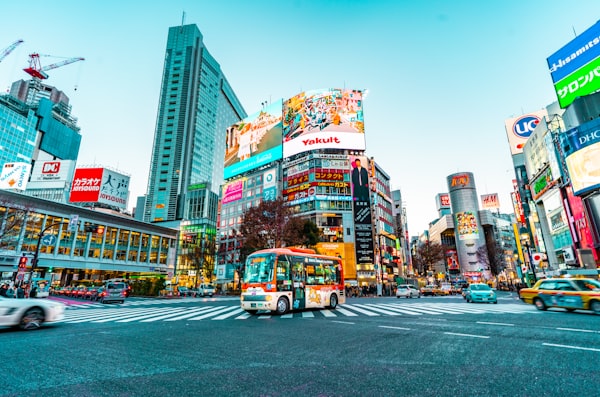
A marble gorge so narrow it receives direct sunlight for only a few minutes each day. A night market that starts where your dinner appetite begins and ends where your willpower does. A high-speed railway that crosses the island in 90 minutes. Tea so carefully grown that the harvest elevation is listed on the packet. Taiwan does not do ordinary versions of things.
Taiwan (officially the Republic of China — 36,193 km² in the western Pacific Ocean — separated from the Chinese mainland by the Taiwan Strait — 23 million people — population density among the highest in the world — the island the Portuguese named Ilha Formosa (“Beautiful Island”) when they first sighted it in 1544 — a name that remains apt and is used by Taiwanese who are proud of it) is consistently cited by experienced Asia travellers as the destination that most surpassed expectations — often described as what Japan was 20 years ago in terms of travel infrastructure, food quality, and the ratio of extraordinary experience to cost, and also as something entirely its own. The island is simultaneously: a world-class food destination (the night markets, the beef noodle soup, the bubble tea invented in Taichung, the Michelin-starred restaurants in Taipei, the high-mountain oolong teas), a serious hiking and natural landscape destination (Taroko Gorge, Yushan National Park, the East Rift Valley cycling route, the Alishan Forest Railway), a Chinese cultural heritage site of significant depth (the National Palace Museum houses more than 700,000 artefacts moved from Beijing in 1949 — considered the finest collection of Chinese art in the world), and one of the most genuinely welcoming travel environments in Asia for Australian visitors.
The five anchor destinations: Taipei (the capital — Taipei 101, the Shilin Night Market, Jiufen, the Beitou hot spring district, the Da’an neighbourhood, the Raohe Street Night Market, the National Palace Museum). Taroko Gorge (the 19km marble canyon in Hualien County on the island’s east coast — one of Asia’s most spectacular gorge landscapes). Sun Moon Lake (the largest lake in Taiwan — Nantou County — the cycling circuit, the Thao indigenous community, the morning fog at dawn). Alishan (the mountain forest reserve at 2,200m — the narrow-gauge forest railway, the sea of clouds below the summit, the sunrise over Jade Mountain). Tainan (the oldest city in Taiwan — 400+ years of temple architecture — the food capital of an island that takes food seriously).
Each of Taiwan’s anchor destinations is a different world — and the island’s transport links are so efficient you can move between them in hours.
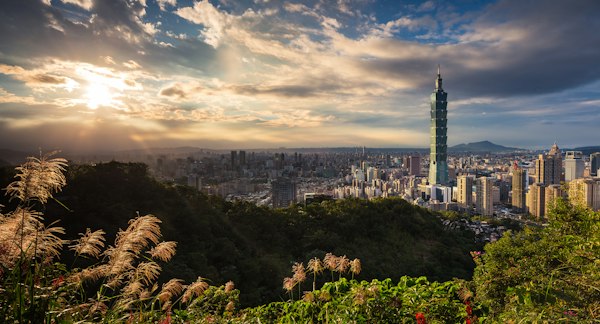
Taipei (the capital — population 2.7 million in the city proper, 7 million in greater Taipei — at the northern end of the island in the Taipei Basin, surrounded by mountains on three sides — the financial, cultural, political, and culinary centre of Taiwan) rewards visitors who explore by neighbourhood rather than by landmark. The landmarks are worth seeing — Taipei 101 (the 509m tower that was the world’s tallest building from 2004 to 2010 — the observation deck on the 89th floor — the 660-tonne tuned mass damper (the gold-painted steel sphere suspended between floors 87–92 — visible from the observation deck — designed to reduce wind-induced building sway by up to 40% — the sphere moves measurably in typhoon conditions and strong wind events, which is both the point and an attraction)), the Chiang Kai-shek Memorial Hall (the white marble complex in the Zhongzheng District — the guard change ceremony (every hour on the hour — the synchronised slow march across the vast marble floor, the white-gloved precision, the ceremony’s formality in contrast with the tourist activity around it)), and the National Palace Museum (the 700,000+ artefact collection — the Jadeite Cabbage (the 19cm carved jade sculpture in the form of a pale green Chinese cabbage — one of the most visited individual museum objects in the world — the queue is real and the cabbage is genuinely extraordinary at close range)) — but the neighbourhoods are where Taipei actually lives: Da’an (coffee shops, bookstores, the night market, the park), Zhongshan (independent boutiques, the Japanese colonial-era Dihua Street fabric market), and Xinyi (Taipei 101’s neighbourhood — the upscale restaurants, the roof terraces, the Taipei Nanshan Plaza). Jiufen (the mountain village 40km northeast of Taipei — the red lantern tea houses on the steep stone steps, the ocean view from the A-Mei Tea House (the building that is widely acknowledged as an inspiration for the spirit world town in Hayao Miyazaki’s Spirited Away (2001) — Miyazaki has neither confirmed nor denied this — the resemblance is specific and the Jiufen tourism industry has not discouraged the association)) is 1 hour by bus from Taipei’s Zhongxiao Fuxing MRT station — the correct day trip from the capital. Beitou (the hot spring district accessible by MRT (30 minutes from central Taipei) — the geothermal hot spring water ranging from 40–100°C — the Beitou Thermal Valley (the Ditan pool — the deep blue-green colour of the radium sulphate spring water — the steam in the morning air) — the public and private hot spring bathhouses available from NTD$200 per person).
Taroko National Park (the 92,000-hectare national park in Hualien County on Taiwan’s east coast — established 1986 — named for the Truku indigenous people who have inhabited the area for over 1,000 years — the park encompasses the Taroko Gorge, the Central Mountain Range (including Nanhu Da Shan at 3,742m), and the coastal strip of eastern Taiwan) is centred on the Taroko Gorge (the 19km marble canyon carved by the Liwu River through the Hsuehshan mountain range — the canyon walls: solid white, grey, and green marble, formed 270 million years ago when limestone was subjected to the heat and pressure of the Eurasian and Philippine tectonic plates colliding — the collision continues at approximately 8cm per year — the gorge is simultaneously being carved by the river and uplifted by the tectonic activity). The canyon’s narrowest sections — particularly at the Swallow Grotto (Yanzikou — where the canyon walls are so close together and so tall that direct sunlight reaches the canyon floor for only minutes per day — the swallows (which nest in the cliff face holes eroded by the river) visible as silhouettes against the strip of sky above) and the Tunnel of Nine Turns (Jiuqudong — the pedestrian tunnel cut through nine separate curves in the marble cliff — the walk through the tunnel with the gorge visible through the openings, the marble walls lit by the filtered light, the Liwu River visible and audible 100m below) — are the gorge’s most iconic sections and both are accessible on foot without a permit. The Baiyang Waterfall Trail (4.4km return — through seven road tunnels repurposed as hiking tunnels (the tunnels were the original road before the current Taroko Gorge Road was completed — the road itself a significant engineering achievement, blasted through solid marble by Japanese engineers during the colonial period and by the National Government’s Veteran General Construction Brigade after 1949 (using soldiers as forced labour — 212 men died in the construction — a monument at the Taroko Gorge entrance commemorates them)) — the waterfall at the trail’s end falls from a hole in the cliff face into a pool — the water curtain walk behind the falls is available when water volume permits). Shakadang Trail (4.1km one way — the teal-green river, the marble boulders, the suspension bridges).
Sun Moon Lake (Riyuetan — at 748m above sea level in Nantou County — the central highlands of Taiwan — the largest lake in Taiwan by surface area (7.93 km²) — named for the shape of its two distinct sections: the eastern section (round, resembling the sun) and the western section (crescent-shaped, resembling the moon) — the lake sits in a caldera formed by prehistoric volcanic activity) is the destination that recalibrates what Taiwanese nature travel means relative to the east coast’s more dramatic gorge landscape. The lake is beautiful in a way that is specifically lake-beautiful — the early morning fog (standard in all seasons, especially November–March — the lake surface invisible from the shore, the islands and the far shore emerging as the fog lifts between 8–10am — the experience of the fog lifting from the lake with the green mountains above and the tea plantations on the lower slopes is the Sun Moon Lake moment). The cycling circuit (the 33km cycling path around the lake– the most popular cycling route in Taiwan — YouBike available at the Shuishe pier — the path is separated from vehicle traffic, well-signed, and passes through aboriginal villages, tea fields, and lakeside viewpoints — the Xiangshan Visitor Center viewpoint (the elevated view of the lake’s full oval shape visible when the fog has cleared) is the circuit’s photographic centrepiece). The Thao indigenous people (one of Taiwan’s 16 officially recognised indigenous peoples — the Thao (population approximately 800 — one of the smallest indigenous groups in Taiwan) have lived on the lake’s shores for centuries — the Lalu Island (the small island in the lake’s centre — sacred to the Thao — traditionally prohibited to non-Thao visitors — the island was significantly reduced in size by the 1999 Chi-Chi earthquake (the 7.6-magnitude earthquake that killed 2,415 people and caused widespread structural damage across central Taiwan — the hotel on Lalu Island collapsed into the lake — the island has not been rebuilt))). The high-mountain oolong tea of the Sun Moon Lake region (Li Shan, Alishan, and Sun Moon Lake oolong — the altitude-grown teas that develop a sweeter, more complex flavour due to the cooler temperatures and slower leaf growth — the tea houses around the lake serve the local ruby red tea (Sun Moon Lake’s signature black tea — developed from Assam cultivars introduced during the Japanese colonial period — the honey-vanilla flavour profile is distinct from any other Taiwanese tea)).
Alishan National Scenic Area (the mountain forest reserve at 2,200m in Chiayi County — the 50km network of hiking trails through ancient cypress and cedar forests — the trees averaging 1,000–2,500 years old with circumferences requiring 10–15 people to encircle — the “Three Generations Tree” (a living example of the Taiwanese sacred tree succession: a dead 1,500-year-old Hinoki cypress (Chamaecyparis obtusa var. formosana) becomes the nurse log for a new cypress, which then hosts its own next generation — three continuous generations visible in a single botanical entity)) is most famous for two specific experiences. The Alishan Forest Railway (the narrow-gauge mountain railway — one of three high-altitude mountain railways in the world — built 1906–1912 during the Japanese colonial period primarily for timber extraction — the 71km line from Chiayi at sea level to Alishan at 2,216m — the railway uses a switchback-and-spiral system to climb 2,200m of elevation in 71km (an average gradient that would be impossible for a conventional adhesion railway), passing through 50 tunnels and over 77 bridges — the journey takes 2.5 hours — the views through the tunnels and over the gorge bridges are among the most dramatic railway views in Asia). The Alishan sunrise and sea of clouds (the Zhushan sunrise viewing platform — a narrow-gauge sunrise train departs the Alishan station at 4–5am (time varies by season and sunrise timing — book the previous evening at the Alishan station — the train fills to capacity — the alternative is the 2km uphill walk to Zhushan in the dark, which is also correct — the walk is faster than waiting for the train) — arriving at the 2,451m Zhushan platform 20–30 minutes before sunrise — the sea of clouds (the cloud deck below the summit that forms when the overnight temperature inversion traps humid air below the mountain — visible in approximately 60–70% of mornings from April to November — when it appears, the sun rises above the cloud horizon and casts the shadows of Jade Mountain (Yushan) and the Central Range peaks across the white cloud surface — the Jade Mountain shadow in particular (Yushan — 3,952m — 20km east of Alishan) cast across the cloud deck in the first minutes of sunrise is the most frequently photographed scene in Alishan)). The Sister Ponds (Jiaoli Pond and Yuantan Pond — the two small lakes linked by a wooden walkway through the cypress forest — the reflection of the trees in the still morning water — the correct post-sunrise walk).
Tainan (population 1.9 million — the oldest continuously inhabited city in Taiwan — the capital of Taiwan from 1683 to 1887 under Qing dynasty administration — founded by Dutch East India Company (VOC) traders who established Fort Zeelandia in 1624 (the Dutch colonial fort — the “Anping Fort” of today — the original fort structure largely replaced by a 19th-century Qing-era tower but the site continuous since 1624 — the fort museum displays the full Dutch, Spanish, and Ming loyalist history of the city’s founding period)) is the city that Taiwanese from other parts of the island visit specifically to eat, specifically for reasons of temple heritage, and specifically because it has more well-preserved traditional street layout than any other Taiwanese city. The temples (Tainan has more than 1,600 registered temples — the highest density of any city in Taiwan — the temples are not tourist attractions as much as functioning community institutions — the largest and most significant: Konfucius Temple (built 1665 — the oldest Confucian temple in Taiwan — the monthly rituals are the most elaborate Confucian ceremonies in Taiwan), Chihkan Towers (the Provintia fort — the Dutch administrative headquarters, rebuilt in Qing-dynasty style), and the Tiandeng Temple complex). The food (Tainan’s food culture is distinct even within Taiwan — the city is particularly known for: Danzai noodles (tan-tsai — small portions of egg noodles in pork broth with a prawn on top — invented in Tainan by a fisherman in the off-season (the “shoulder pole” noodles — named for the shoulder pole used to carry the portable stall)), milkfish congee (wu-yu zhou — the local fish rice porridge — the milkfish (Chanos chanos) farmed in the Tainan coastal ponds for 400 years), and shrimp roll (hsia tsuan — deep-fried prawn in a beancurd skin roll — a street food specific to Tainan that does not exist in its authentic form elsewhere in Taiwan)). The Hayashi Department Store (the 1932 Japanese colonial-era department store — the most intact Art Deco commercial building in Taiwan — the lift operators wear period uniforms — the rooftop shrine (the Shinto shrine on the department store rooftop is one of the only surviving Shinto shrines in Taiwan — most were destroyed or converted after 1945)).
Taiwan’s east coast (the Pacific-facing coastline from Hualien south to Taitung — the East Rift Valley — the section of Taiwan where the Philippine Sea Plate meets the Eurasian Plate most visibly — the landscape result: a flat agricultural valley floor (the Rift Valley — paddy fields, hot air balloon festivals, aboriginal communities) flanked on the west by the Central Mountain Range (peaks above 3,000m visible from sea level — the most dramatic mountain-to-sea proximity in East Asia) and on the east by the Pacific Coastal Range (the narrow range that separates the valley from the Pacific)) is the part of Taiwan that Australian visitors most consistently fail to reach, and the part that experienced Taiwan visitors most consistently return for. The East Rift Valley cycling route (the 180km cycling path from Hualien to Taitung along the valley floor — the farmland, the indigenous Amis and Bunun community villages, the Chishang rice paddies (the source of some of Taiwan’s finest table rice — the Chishang rice brand — the paddies visible from the cycling path as a continuous flat green field with the mountains rising on both sides — the most visually Japanese-feeling landscape in Taiwan)). The Penghu Islands (the Penghu Archipelago — 90 islands in the Taiwan Strait — 45 minutes by ferry from Kaohsiung or 40 minutes by air from Kaohsiung or Taipei — the basalt geology (formed by volcanic activity 8–17 million years ago — the hexagonal basalt column formations visible at the Northern Penghu coast — the Kueibi village basalt cliff), the coral reef diving, the wind-scoured landscape (Penghu has the second-highest average wind speed of any inhabited place in the world — the traditional stone fish traps (weirs) built from basalt on the tidal flats — the stone weirs have been in continuous use since the 17th century), and the spring cherry blossom (the Penghu fireworks festival in April — the most accessible small-island Taiwan experience from Kaohsiung)).
The EasyCard (the contactless IC card available at any Taipei MRT station — initial purchase NTD$100 deposit — loadable at any MRT station, 7-Eleven, or FamilyMart) is the single most useful piece of travel infrastructure in Taiwan. It works on the Taipei MRT, all city buses in Taipei and other major cities, the YouBike bicycle sharing system (docking points every 300–500m in Taipei — the most efficient way to navigate the Da’an neighbourhood and the Daan Forest Park area), convenience store purchases (7-Eleven and FamilyMart are the infrastructure backbone of Taiwanese daily life — they sell hot food, cold food, bus tickets, HSR tickets, train tickets, postage, ATM cash, SIM cards, phone charging, and umbrellas). The 7-Eleven ATM (every 7-Eleven in Taiwan has an international card-compatible ATM — in Taipei this means an ATM approximately every 400 metres — the most reliable way to access NTD cash). The Taiwan Mobile or Chunghwa Telecom SIM card: available at the airport arrivals hall at TPE — unlimited data plans from NTD$300 for 7 days — buy one before leaving the airport. Taiwan’s mobile data coverage is excellent including in Taroko Gorge (surprisingly) and on the east coast train.
Taiwan’s food culture is the result of indigenous Taiwanese ingredients, Chinese regional cuisines (brought by 1.6 million mainlanders in 1949), Japanese colonial influence (50 years), and 70 years of independent culinary evolution. The night market is where it all converges.
Niú ròu miàn — the unofficial national dish. The braised beef shank (simmered 4–6 hours in a broth of soy, rice wine, doubanjiang (fermented spicy bean paste), and star anise — the collagen from the shank reducing to give the broth its specific viscosity), served over thick hand-pulled wheat noodles with a scattering of suan cai (pickled mustard greens — the fermented sharpness that cuts the richness). Taipei holds an annual Beef Noodle Soup Festival (October–November — over 100 restaurants competing — the competition broth categories include spicy, clear, and tomato varieties). The disagreement about which bowl is the best in Taipei is the kind of productive civic argument that a food culture in good health produces. Liu Shandong (the Zhongzheng District institution since 1947) and Yong Kang Beef Noodles (the Da’an District restaurant with a 45-minute queue that begins at 11am on weekends) are the names mentioned most consistently.
Taiwan’s most globally recognised food export. The origin is contested between two Taichung establishments — Chun Shui Tang (which claims to have added tapioca pearls to milk tea in 1988 after a staff member experimented at a meeting) and Tu Tsong He (which claims a similar discovery around the same period). The legal dispute over the name was eventually settled without a definitive winner. The difference between Taiwanese bubble tea and the global imitation: the pearls (the tapioca balls — called zhēnzhū ("pearls") or bōba ("boba") — made fresh daily in traditional shops — the correct pearl texture is Q (the Taiwanese food texture descriptor meaning chewy-but-yielding — an entirely different quality from rubbery or soggy — a fresh pearl has approximately a 4-hour service window from when it is cooked). The tea itself (Taiwanese high-mountain oolong or roasted oolong — not the synthetic flavouring used in most international versions). Chun Shui Tang’s original Taichung location is the correct pilgrimage stop.
Cong you bing — the flaky, layered flatbread scattered with scallions and cooked on a griddle until the exterior is shatteringly crisp while the interior layers remain soft and slightly chewy. The technique (the lamination — the dough rolled flat, painted with sesame oil, scattered with scallion, rolled into a cylinder, then coiled into a disc before being flattened and griddled — the coiling is what creates the layers — the layers are what make the crunch) produces a texture specific to this preparation that cannot be replicated in an oven. The egg variation (the scallion pancake with a fried egg pressed into the surface on the griddle, then rolled — the breakfast version — available from the street stalls that operate from 6–10am near MRT stations — NTD$35–55 each — the most affordable and satisfying breakfast in Taiwan). The Xinjiang lamb variation (lamb fat and cumin added to the scallion filling — the Xinjiangnese street stall variation found in the Zhongshan and Wanhua night market areas of Taipei).
Xiaolongbao — the soup dumpling whose fame in Taiwan is inextricably linked with Din Tai Fung (the Taipei restaurant founded in 1972 as a cooking oil retailer, which pivoted to xiaolongbao in the 1980s, received a Michelin star, and is now considered the international benchmark against which all soup dumplings are measured — the original Xinyi Road branch has a consistent 1–2 hour queue at peak times). The mechanics of a correct xiaolongbao: 18 folds (the standard at Din Tai Fung — counted by quality control inspectors before service — wrapping below 18 is returned to the kitchen), a skin thin enough to be almost translucent, and a gelatin-rich pork and ginger filling (the gelatin — made by reducing pork skin — is solid at refrigerator temperature and becomes the soup when the dumpling is steamed). Eating protocol: lift with chopsticks to a spoon, bite a small hole in the top to release steam, add vinegar and ginger, consume. The xiaolongbao that burns the visitor who bites directly into it is a specific and very consistent Taiwan travel story.
Taiwan’s night markets are not simply food courts — they are the primary social infrastructure of Taiwanese civic life, operating nightly from approximately 4pm until midnight or later. The three most significant: Shilin Night Market (the largest in Taiwan — the Jiantan MRT station exit 1 — the underground food hall and the surrounding street market — the oyster omelette (the ô-á-tsian — the oysters in a sweet potato starch batter on a hot plate, finished with egg and a sweet chilli sauce — the signature Shilin dish), the XXL chicken cutlet (dà jī pái — the chicken breast larger than a human face, battered and fried with basil)), Raohe Street Night Market (Songshan district — more concentrated and navigable than Shilin — the black pepper bun (hú jiāo bǐng — the bun stuffed with pork mince and black pepper, baked in a tandoor-style clay oven adhered to the oven wall — the Chen Family Pepper Bun has occupied its position at the Raohe entrance for 40+ years)), and Fengjia Night Market in Taichung (the largest night market in Taiwan by visitor numbers, not geographic area — the university district market — where new food trends in Taiwan originate before spreading to Taipei).
Taiwan’s high-mountain oolong teas (gāoshān chá — defined as tea grown above 1,000m — the most prized produced above 2,000m at Li Shan and Fushou Mountain) are among the most complex oolong teas in the world. The altitude effect (the cooler temperatures at elevation slow leaf growth — slower growth produces higher concentrations of amino acids and lower concentrations of tannins — the result is a tea with a pronounced sweetness, a floral aroma (the lilac and gardenia notes in a well-made Alishan oolong are not metaphors — they are accurate descriptions of aroma compounds present in the leaf), and a finish that persists for significantly longer than lower-altitude oolongs). The correct way to drink Taiwanese oolong: the Gongfu Cha method (the small clay teapot or porcelain gaiwan — 3–5g of leaf per 100ml of water at 85–90°C — the first steep 30 seconds, subsequent steeps adding 10–15 seconds each — a high-quality Alishan oolong yields 6–8 productive steeps — the character of the tea changes significantly through the steeping sequence). The tea mountain tourism at Alishan and Shanlinxi (the plantation visits, the tea houses, the picking experience (late April and late November are the two main harvest seasons — visitors in these windows can participate in picking and processing)).
Taiwan consistently ranks among the destinations that experienced Asia travellers describe as their most surprising — and the surprise is consistent enough that it must say something structural about how the island is understood before arrival. Part of it is geopolitics: Taiwan’s ambiguous international status means it sits outside the standard destination hierarchy in travel media and tour brochures in a way that Japan, China, and Thailand do not. Part of it is proximity — at 9 hours from Sydney, it is closer than Europe and more time-efficient than most popular Asia destinations — and yet it remains genuinely off the casual radar for most Australian travellers.
The island’s particular combination — extraordinary natural landscape (the gorge, the mountains, the east coast), a food culture that operates at the highest level from a NTD$40 street stall to a Michelin-starred kitchen, a transport system that makes the whole island navigable in a week, and a warmth toward foreign visitors that is not performative — produces a travel experience that is difficult to describe to someone who has not had it and immediately recognised by anyone who has. The return-visit rate among Australians who travel to Taiwan is among the highest of any destination in Asia. This is the data point that matters.
From a Taipei long weekend to the full 12-day island circuit — all bookable through Cooee Tours.
The Taipei deep-dive. Day 1: arrive TPE — MRT to hotel — Raohe Night Market (the black pepper bun at the Chen Family stall, the braised pork rice at the back stalls). Day 2: National Palace Museum (3 hours — Jadeite Cabbage, Meat-shaped Stone, Mao Gong Ding bronze), Shilin Night Market evening. Day 3: Jiufen and Jinguashi (the gold mining ghost town beside Jiufen — the two-village walk on the ridge above the sea — return Taipei for Beitou hot spring evening). Day 4: Chiang Kai-shek Memorial (the guard change — every hour on the hour), Da’an neighbourhood walk (the Yong Kang Street food street — the beef noodle queue), Din Tai Fung for xiaolongbao (reserved). Day 5: Taipei 101 observation deck, Xinyi district lunch, fly home.
The marble canyon — structured for the correct sequence. TRA train Taipei–Hualien (2.5hrs — east coast Pacific views, the moment the train exits the mountains and the ocean appears). Day 1 afternoon: Taroko Gorge entry (Swallow Grotto, Tunnel of Nine Turns). Day 2: full gorge day (Baiyang Waterfall trail — 4.4km return through the repurposed road tunnels — the waterfall from the cliff face — the water curtain walk, Shakadang Trail — the teal-green river and marble boulders). Day 3: morning in Hualien city (the coastline at the Hualien Ocean Park, the stone sculpture market, the AMI indigenous cultural performance at the Amis Folk Center). Return Taipei by afternoon TRA. The guide notes which trails require helmets (the rockfall risk is real — helmets are provided at the Taroko Gorge entrance for NTD$50 and are mandatory on several key trails).
The Alishan experience structured correctly — which means staying overnight. Day 1: HSR Taipei–Chiayi (80 min), then the Alishan Forest Railway (the 2.5-hour climb through 50 tunnels and 77 bridges — the morning departure when the forest is still cool — arrive Alishan village early afternoon). Afternoon: ancient cypress forest walk (the Three Generations Tree, the giant sacred trees — the oldest at 2,500 years — scale calibrated by the guide using the distance it takes to encircle them). Day 2: 4am wake-up — sunrise train to Zhushan platform (or 2km uphill walk — the guide recommends the walk for those who book late, as the train fills first) — the sea of clouds at sunrise, the Yushan shadow across the cloud deck, the Sister Ponds reflection walk after. Return to Chiayi by railway — HSR to Taipei or Tainan.
The Taipei night market food crawl — two markets in one evening, guided by a food specialist who knows which stall at Shilin has been operating since 1968 and which is new and photogenic but mediocre. The sequence: Raohe Street Night Market at 5pm (the Chen Family black pepper bun — first stall on the right entering from the Songshan Temple — queue begins at 4:45pm — the guide queues while the group eats braised pork rice at the stall across the lane). MRT to Shilin at 7pm (the oyster omelette, the XXL chicken cutlet, the stinky tofu (chou dofu — fermented tofu deep-fried until the exterior is crisp and the interior molten — the smell is the obstacle — the guide has a specific approach to getting the group to try it — the success rate is approximately 85%)). The taro ball dessert (yùyuán — the grass-jelly and taro ball dessert from the Shilin stall that has served the same recipe since 1963). Bubble tea from the traditional tea shop (not the chain — the guide specifies). Home by 10pm, full and understanding Taiwan’s food culture from the inside.
The Sun Moon Lake circuit — the cycling, the fog, the tea. HSR Taipei–Taichung (35 min) then express bus to the lake (1 hour). Day 1 afternoon: lakeside arrival — Wenwu Temple (the temple on the northern shore — the view across the lake from the temple forecourt at sunset with the mist beginning on the surface). Ruby red tea at the Ita Thao aboriginal village tea house (the Sun Moon Lake black tea — the Japanese-era Assam cultivar — the tea plantation behind the village visible on the hillside). Day 2: 6am — the fog on the lake (the moment before it lifts — the guide’s assessment of fog conditions each morning from the deck of the guesthouse — “it is thicker than yesterday — the lift will be dramatic”). The 33km YouBike cycling circuit (the Xiangshan Visitor Center viewpoint, the Xuan Guang Temple island access by boat, the Shuishe pier return). Afternoon return to Taichung — HSR to Taipei or onward to Chiayi for Alishan.
Tainan — Taiwan’s oldest city, most temple-dense city, and most interesting food city if you are eating below the Michelin radar. HSR Taipei–Tainan (1hr 45min). Day 1: Anping Fort (the Dutch VOC 1624 foundation — the history from Dutch colonisation through the Ming loyalist Koxinga’s siege and capture in 1662 through Qing governance through Japanese colonisation — 400 years of layered political history in 3 kilometres of waterfront). The Hayashi Department Store (the 1932 Art Deco building, the lift operators in period uniforms, the rooftop Shinto shrine). Danzai noodles at Tu Hsiao Yueh (the original Tainan location — founded 1895 — the shoulder-pole origin story told by the guide while you eat). Day 2: Morning temple circuit (Chihkan Towers, Konfucius Temple 1665, the back-alley temples that are the actual Tainan (not the tourist-curated ones)). Shrimp roll at the Yongquan market (the Tainan-specific preparation — the deep-fried prawn in beancurd skin — not available in this form in Taipei). HSR return.
The National Palace Museum — the 700,000+ artefact collection moved from Beijing in 1949 — the finest collection of Chinese art and imperial artefacts in the world, in the view of most Chinese art historians. The expert-guided tour (the museum requires specific guidance to navigate — at 19 exhibition halls and 700,000 objects, an unguided visit produces the sensation of having seen a lot of Chinese objects without understanding what made any of them significant). The guide’s curation: the Jadeite Cabbage (the carved jade, the exact corner of the museum where it is displayed, the queue management — arriving at 9am before the tour groups), the Meat-shaped Stone (the jasper carved to perfectly replicate a piece of Dongpo pork — the craft deception that has confused visitors for 300 years), the Mao Gong Ding bronze (the Western Zhou dynasty bronze cauldron (c. 850 BCE) with the longest bronze inscription ever discovered — 497 characters — the guide reads sections and explains the Zhou court political context). The Song dynasty ceramics gallery (the celadon — the specific cool grey-green that Song ceramicists spent 500 years perfecting — the best examples are in this museum).
The Alishan oolong tea experience — the plantation visit, the harvest (April and November harvest seasons), and the full Gongfu Cha brewing session with a third-generation tea farmer. The approach by the Alishan Forest Railway (the 2.5-hour mountain climb — the journey part of the experience, not the prelude to it). The tea plantation at 1,600m (the guide explains the altitude effect on oolong: slower leaf growth, higher amino acid concentration, lower tannin content, the floral aroma development that is a function of the temperature differential between day and night at this elevation). The processing (withering, tossing, partial oxidation (oolong is partially oxidised — between 15–85% depending on the style — the Alishan high-mountain style is approximately 20–25% — closer to green tea on the spectrum), rolling, drying — the full sequence demonstrated). The Gongfu Cha session (8 consecutive steeps of the same leaves — the flavour changes documented by the group across the progression). Each visitor takes home 50g of the plantation’s current harvest.
The full Taiwan circuit — the island counter-clockwise. Days 1–3: Taipei (National Palace Museum, Shilin Night Market, Jiufen and Jinguashi day trip, Beitou hot spring, Din Tai Fung). Day 4: TRA train Taipei–Hualien (east coast Pacific views). Days 4–5: Taroko Gorge (Swallow Grotto, Tunnel of Nine Turns, Baiyang Waterfall, Shakadang Trail). Day 6: TRA train Hualien south to Taitung (the Pacific coastal railway — the most scenic section — the coast visible through the train windows), express bus to Sun Moon Lake. Day 7: Sun Moon Lake (morning fog, 33km cycling circuit, ruby red tea). Day 8: Bus to Chiayi, Alishan Forest Railway (afternoon arrival, overnight stay). Day 9: Alishan sunrise (4am train or walk — sea of clouds — Yushan shadow — Sister Ponds walk). HSR Chiayi–Tainan. Tainan afternoon and evening (temple circuit, danzai noodles, shrimp roll). Day 10: Tainan morning — HSR Tainan–Taipei — fly home from TPE.
Taiwan’s climate varies significantly between north and south, coast and mountain. The good news: there is no truly bad time to visit — only trade-offs.
October through December is the consensus best season for Taiwan. The typhoon season has ended (the last major typhoons typically arrive in September — October is statistically very low risk). Temperatures are comfortable: Taipei 18–26°C (cool evenings requiring a light layer — not cold), Hualien and the east coast 20–28°C, Tainan and Kaohsiung 22–30°C (the south stays warmer in winter). The sky clarity (the summer humidity clears in October — visibility from Taipei 101’s observation deck is at its best — the mountains visible from the city). The Taroko Gorge light (the lower sun angle in November–December sends direct sunlight deeper into the gorge than in summer — the marble walls lit from lower angles are more dramatic). The Alishan sea of clouds (more frequent in October–December than in summer). The Taipei Beef Noodle Soup Festival (October–November). The Sun Moon Lake fog (most reliable October–March). This is the window to book first.
March through May is the second-best window. March (cherry blossom in Taipei — Yangmingshan National Park (the volcanic mountains above Taipei — the cherry blossom festival (late February to mid-March — the Xiaoyoukeng and Zhuzihu viewing areas — the azaleas follow the cherry blossom in April)) and in Alishan (the mountain cherry blossom at Alishan — the sakura-lined paths through the cypress forest — late March to early April at 2,200m)). April (the first Alishan oolong tea harvest — the picking and processing experience available to visitors — the Penghu fireworks festival (April — the best window for the Penghu Islands visit)). May (temperatures rising — 25–30°C in Taipei — the plum rains beginning in May–June (the Taiwanese version of the East Asian rainy season — persistent light rain for days at a time — significant but not prohibitive for travel — museums, temples, and covered night markets function normally in plum rain season)).
June through September is the typhoon season — not a reason to avoid Taiwan, but a reason to plan around it. Taiwan averages 3–4 significant typhoon impacts per year, with July–September being the peak months. A significant typhoon causes Taroko Gorge to close for 1–3 days (rockfall risk — the gorge management takes this seriously). The practical approach: build flexibility into any east coast or mountain itinerary in typhoon season — the Taroko Gorge day can be moved to the end of the itinerary rather than the beginning, so that if the gorge is closed on arrival it may open by Day 5. The upside of summer: the festivals (the Pingxi Sky Lantern Festival (the lanterns released over the Keelung River valley — the Chinese New Year period and the Lantern Festival in February are the main events but summer lantern releases occur on the weekends near Pingxi station)), the pool-side resort culture at the southern coast (Kenting National Park — the coral reef snorkelling, the beach clubs), and the green season’s landscape intensity.
For serious hikers: Yushan (Jade Mountain) National Park (Taiwan’s highest peak at 3,952m — the permit system: the Yushan Main Peak trail requires an advance permit from the Forestry and Nature Conservation Agency — permits are allocated by ballot 3 months ahead — the trail is 8.5km one way — the overnight stay at the Paiyun Mountain Hut (3,402m) is mandatory for the summit attempt — the summit section (from the hut to the peak: 2.4km, 550m ascent, typically departing 3am for the sunrise)). April–June and October–November are the windows with the best combination of stable weather, open trail conditions, and permit availability. The Hehuanshan alpine area (3,417m — accessible by bus from Puli — no permit required — the most accessible high-altitude landscape in Taiwan for visitors without a Yushan permit ballot allocation — the pampas grass in October is the standard Hehuanshan golden-hour photograph).
Three structures — from the 5-day Taipei focus to the full 10-day counter-clockwise island circuit.