

South Asia is the region Australians ask the most questions about and return from with the most stories. This guide takes India and its neighbours country by country, explains the monsoon that rules the calendar, and sets out the costs, the health picture and the routes that make a first trip the one people hoped for.
India and its neighbours — Sri Lanka, Nepal, Bhutan, the Maldives — are the part of Asia that Australians approach with the most questions and return from with the most stories. India is not a destination so much as a continent with a single visa: the Taj Mahal and the palaces of Rajasthan in the north, the backwaters and tea hills of Kerala in the south, the Himalayan valleys of Ladakh and Sikkim, a coastline of 7,500 kilometres and 1.4 billion people living it all at once. Sri Lanka is the compact, gentle alternative; Nepal is the mountains; Bhutan is the country that limits its own visitors; the Maldives is the water. This guide takes the region as a set: what each country is for, the season that rules each, what it honestly costs and demands, and how we build it so that the first trip is the one people hoped for.
The countries
| Country | For | Best months | Visa for Australians | Daily cost, mid-range (AUD) |
|---|---|---|---|---|
| India | The Golden Triangle, Rajasthan, Kerala, Varanasi, the Himalaya, wildlife | Oct–Mar (north); Nov–Feb and monsoon for Kerala | e-Visa, apply online | 150–280 |
| Sri Lanka | Beaches, tea country, ancient cities, wildlife, food | Dec–Apr (south-west); May–Sep (east coast) | ETA, apply online | 120–220 |
| Nepal | Kathmandu, the Himalaya, trekking, Chitwan | Oct–Nov and Mar–Apr | On arrival or online | 90–180 |
| Bhutan | Dzongs, monasteries, the Tiger’s Nest, a country apart | Mar–May, Sep–Nov | Visa via licensed operator; daily fee | 350–600 incl. fee |
| Maldives | Overwater villas, reefs, honeymoons | Nov–Apr | On arrival, free | 400–1,500+ |
India
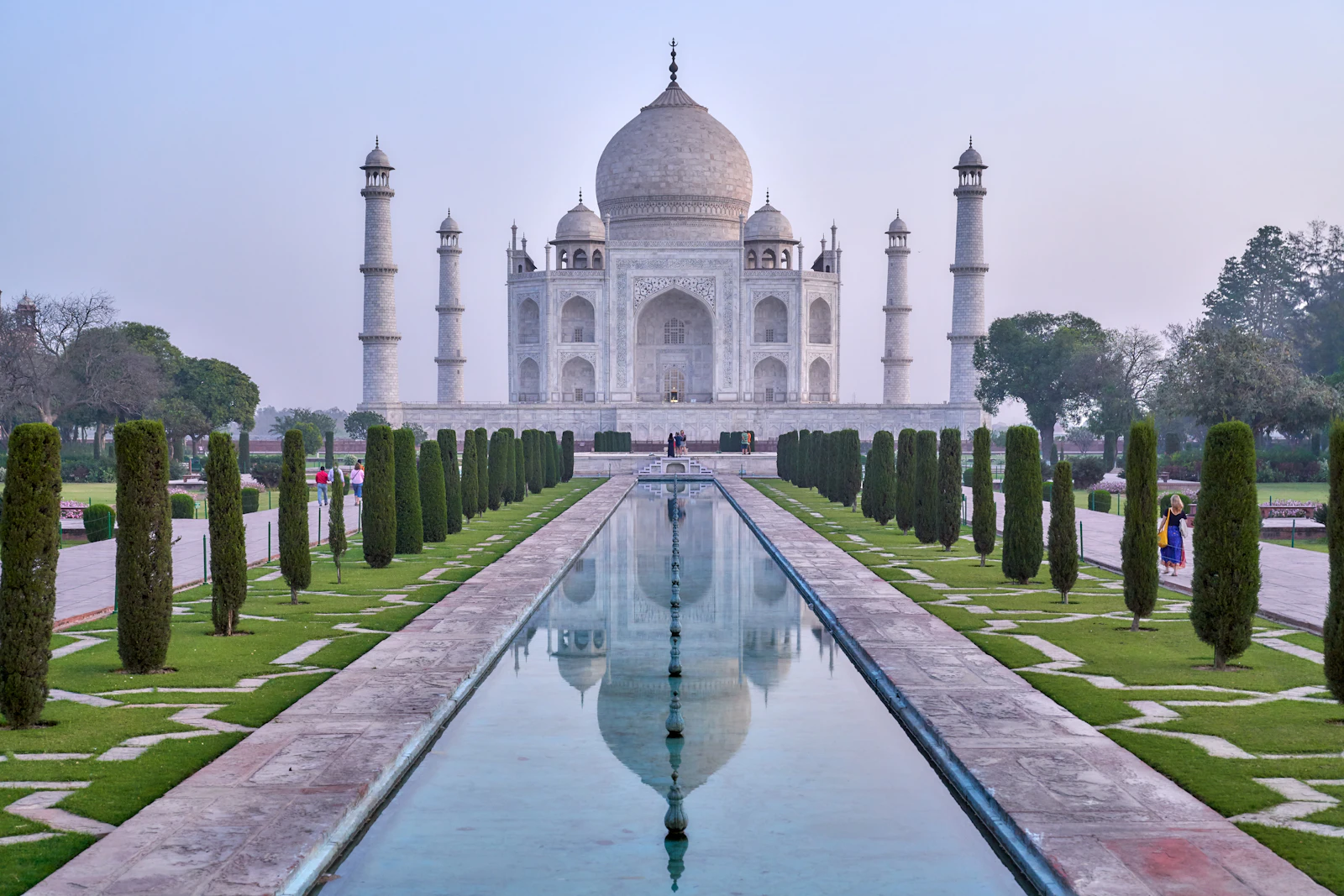
The first trip is almost always the Golden Triangle — Delhi, Agra for the Taj Mahal, Jaipur for the Amber Fort and the pink city — in a week, and it is the right first trip because it holds the country’s most famous sight and its most manageable introduction. From there the routes fan out. Rajasthan extends the triangle into the desert forts and palace hotels of Jodhpur, Udaipur, Jaisalmer and Pushkar. Varanasi on the Ganges is the oldest living city on earth and the most intense experience in the region. Kerala in the south is a different India: green, gentle, Christian and communist by turns, with houseboats on the backwaters, tea plantations at Munnar, Ayurveda and the spice coast. Goa is the beach and the Portuguese churches. Mumbai is the city, Kolkata the intellectual capital, Hampi the ruined empire, Amritsar the Golden Temple. The Himalaya — Ladakh, Sikkim, Darjeeling, Himachal — is a summer trip when the rest of the country is in monsoon. And the wildlife: tigers at Ranthambore, Bandhavgarh and Kanha, elephants and rhinos in Kaziranga. The India travel guide goes into all of it.
Sri Lanka
Everything India offers in a country the size of Tasmania, at a gentler pace: the ancient cities of Anuradhapura, Polonnaruwa and the rock fortress of Sigiriya in the Cultural Triangle; the Temple of the Tooth at Kandy; the tea country around Ella and Nuwara Eliya reached by the most beautiful train ride in Asia; leopards at Yala and elephants at Minneriya; the colonial fort of Galle; whale-watching at Mirissa; the south-coast beaches; and a cuisine of rice and curry, hoppers and kottu that stands with any in the region. Two coasts with opposite seasons, like Thailand: the south-west from December to April, the east (Trincomalee, Arugam Bay) from May to September. Ten to fourteen days on a loop with a driver is the standard trip. Sri Lanka is the country we recommend to Australians who want South Asia and are not sure about India.
Nepal
Kathmandu’s temples and the medieval squares of Bhaktapur and Patan; the lake town of Pokhara under the Annapurnas; the treks — Everest Base Camp in two weeks, the Annapurna Circuit or Sanctuary in ten to eighteen days, the Poon Hill loop in four for people who want the mountains without the altitude; Chitwan’s rhinos and tigers in the lowlands; and a Buddhist and Hindu culture that lives in the streets. October–November after the monsoon has the clearest mountain views; March–April has the rhododendrons. Nepal is the cheapest country in the region and the most rewarding for the physically active. Visas on arrival at Kathmandu.
Bhutan
The last Himalayan kingdom, which limits tourism by charging a Sustainable Development Fee (US$100 a day at the time of writing, reduced from US$200 in 2023) and requiring visitors to book through a licensed operator. In return: the Tiger’s Nest monastery clinging to its cliff above Paro, the fortress-monasteries (dzongs) of Punakha and Thimphu, the Phobjikha valley’s black-necked cranes, a landscape without a single billboard, and a culture that measures Gross National Happiness. Six to ten days, spring or autumn, flown in from Delhi, Kathmandu, Bangkok or Singapore on Druk Air or Bhutan Airlines. Expensive by regional standards and, for those who go, worth every dollar.
The Maldives
A thousand coral islands and a hundred and fifty resorts, each on its own island, reached by seaplane or speedboat from Malé. Overwater villas, house reefs, manta rays and whale sharks, and nothing else — which is the point. November to April is dry; the rest of the year is cheaper and wetter. Four to seven nights, usually as the end of an India or Sri Lanka trip (Colombo to Malé is 90 minutes), and at every price from AUD 400 a night on a local island to AUD 5,000 at the famous names.
When to go
The monsoon rules the subcontinent. The south-west monsoon arrives in Kerala at the start of June and moves north through July, drenching most of India and Nepal until September; the north-east monsoon brings rain to Tamil Nadu and Sri Lanka’s east from October to December. So the classic season for northern India, Rajasthan, Varanasi and the Golden Triangle is October to March — dry, cool at night, warm by day, with December and January foggy in Delhi and cold in the desert nights. Kerala and the south are best November to February, though Kerala’s monsoon (June–August) is the traditional season for Ayurveda and has a following. The Himalaya — Ladakh, Sikkim, the Nepal treks — is a summer and autumn destination, June to October for Ladakh, October–November and March–April for Nepal. April and May are brutally hot on the plains (45°C in Rajasthan) and are when the tigers come to the waterholes and the sightings are best. Sri Lanka’s south-west is December to April, its east May to September. Bhutan is spring and autumn. The Maldives is November to April. The festivals matter too: Diwali (October or November), Holi (March), Pushkar’s camel fair (November), Kerala’s Onam (August–September) and Nepal’s Dashain (October) are worth planning around, and Diwali week books out.

Entry and visas
India issues e-Visas to Australians online: the 30-day tourist e-Visa, and one- and five-year multiple-entry versions, applied for on the official indianvisaonline.gov.in site (beware the lookalike sites) at least a week before travel with a passport photo and a scan of the passport. Sri Lanka uses an Electronic Travel Authorisation applied for online. Nepal issues visas on arrival at Kathmandu airport (15, 30 or 90 days, paid in cash or card) or online in advance. Bhutan visas are arranged by the licensed operator with the Sustainable Development Fee. The Maldives gives a free 30-day visa on arrival. Passports need six months’ validity for all five. Smartraveller is the Australian source, and India’s advice includes regional warnings (Jammu and Kashmir, the north-east border areas) worth reading before you plan.
Getting there and around
Flights
Air India and Qantas fly Sydney and Melbourne to Delhi direct (12–13 hours); everything else is one-stop via Singapore, Kuala Lumpur, Bangkok or the Gulf, which adds three to six hours and often costs less. Colombo is a one-stop from the east coast (Singapore Airlines, Malaysia Airlines, SriLankan via a hub) at 12–14 hours; Kathmandu via Singapore, KL, Bangkok or Delhi; Malé via Singapore or Colombo; Paro via Delhi, Kathmandu, Bangkok or Singapore. Return economy fares run AUD 1,100–1,700 in shoulder season and AUD 1,600–2,400 in the December–January peak.
Within the region
India’s domestic airlines (IndiGo, Air India, Vistara now merged into Air India, Akasa) fly everything for AUD 60–200 a sector and are the way to cover distance. Indian Railways is an experience — the Shatabdi and Vande Bharat expresses between the Golden Triangle cities are fast, clean and worth doing once; the overnight sleepers are for the adventurous. For everything else, a private car and driver is the standard and the reason India works: AUD 60–120 a day including fuel, tolls and the driver’s own accommodation, for a car that stays with you across a whole Rajasthan loop. Sri Lanka runs entirely on car-and-driver (AUD 70–110 a day) with the tea-country train as the exception. Nepal is flights (Kathmandu–Pokhara, Kathmandu–Lukla for Everest) and jeeps. Bhutan is car-and-guide by law. The Maldives is seaplane and speedboat included in the resort transfer.
What it costs
South Asia is cheap on the ground and the region where paying more buys most. A budget traveller does India on AUD 50 a day; a mid-range traveller with a private car, three- and four-star hotels and guides at the major sites spends AUD 150–280; and the heritage-palace tier — the Taj, Oberoi and Leela hotels, the converted maharajas’ palaces of Rajasthan — is AUD 400–900 a night, which is half what the equivalent costs anywhere else in the world. Sri Lanka is 20 per cent cheaper than India mid-range; Nepal cheaper still; Bhutan is AUD 350–600 a day with the fee; the Maldives starts where the others stop. Meals are AUD 5–15 at good local restaurants and AUD 25–60 at hotel dining rooms; monument entries for foreigners are AUD 10–25 (the Taj is about AUD 25 with the mausoleum); a full-day guide AUD 40–80. Twelve days mid-range in India with a car, driver and guides, including a one-stop airfare, is AUD 4,500–6,500 per person; the same in Sri Lanka AUD 3,800–5,500; a two-week Nepal trek all-in AUD 3,500–6,000.

Money and connectivity
Rupees (Indian, Sri Lankan and Nepali are different currencies), ngultrum in Bhutan (pegged to and interchangeable with the Indian rupee), rufiyaa in the Maldives with US dollars accepted at every resort. India is card- and phone-friendly in cities (UPI payments now work for foreigners via prepaid wallets) and cash in the countryside; carry small notes, because nobody has change. ATMs are everywhere in India and Sri Lanka, rarer in Nepal outside the cities, absent on the Nepal trails. An eSIM works in India and Sri Lanka; a local SIM in India requires passport, photo and a day’s wait, and Airtel or Jio at the airport is the fix. Power is 230 V on the round-pin Indian plug; a universal adaptor covers the region. Power cuts are routine outside the big cities; a small torch and a charged power bank are part of the kit, and every good hotel has a generator that kicks in within seconds.
Where to stay
South Asia’s accommodation is its secret weapon. Heritage and palace hotels in Rajasthan — converted forts, havelis and royal residences, from AUD 150 for a small haveli in Jaipur to AUD 900 for the Lake Palace — are stays that exist nowhere else on earth. Tea-estate bungalows in Munnar, Darjeeling and Sri Lanka’s hill country. Kerala houseboats for a night on the backwaters. Jungle lodges at the tiger reserves and Yala. Colonial hotels — the Galle Face in Colombo, the Imperial in Delhi, the Taj Mahal Palace in Mumbai — for an afternoon tea if not a night. Ayurvedic retreats in Kerala and Sri Lanka for a week of treatment. Teahouses on the Nepal trails at AUD 10 a night with the mountain outside. And the Maldives, where the resort is the island. Mid-range Indian city hotels (AUD 80–180) are reliable at the Taj Vivanta, ITC Fortune, Lemon Tree and Radisson tier and unreliable below it; in India, the hotel is where the operator earns their keep.

Pace
India punishes the overloaded itinerary more than any country in Asia. Distances are long, roads are slow, monuments are hot by ten, and the sensory load of a bazaar or a railway station is real. The trips that work have a driver, two nights minimum in each place, a rest afternoon every third day, and a hotel with a pool and a garden to retreat to. Sri Lanka is gentler but its roads are slower than the map suggests: Colombo to Kandy is three hours for 120 kilometres. Nepal is altitude and weather; build in a spare day for a delayed mountain flight. Bhutan sets its own pace by law. The Maldives has none.
The experiences that define the region
- The Taj Mahal at sunrise, and again from the Mehtab Bagh across the river at sunset.
- A night in a palace: Udaipur’s Lake Palace, Jodhpur’s Umaid Bhawan, or one of the hundred smaller havelis and forts.
- Varanasi’s ghats by boat at dawn and the Ganga aarti at dusk.
- A Kerala houseboat on the backwaters, and a night in the tea hills of Munnar.
- Tiger safari at Ranthambore or Bandhavgarh; leopards at Yala.
- The Kandy–Ella train through Sri Lanka’s tea country.
- Sigiriya at opening, before the heat and the steps fill.
- Everest or Annapurna on foot, or the mountain flight from Kathmandu for those who cannot.
- The Tiger’s Nest above Paro, a three-hour climb to a monastery on a cliff.
- An overwater villa in the Maldives and a house reef outside the door.
- Diwali in Jaipur, Holi in Mathura, the Pushkar fair, Kandy’s Esala Perahera in July–August.
- The food: a thali in Rajasthan, dosa in Chennai, hoppers in Colombo, momos in Kathmandu, a Keralan fish curry on a banana leaf.
Health and safety, honestly
India demands more of a traveller than anywhere else in Asia, and the demand is manageable with preparation. Stomach upsets affect most first-time visitors at some point; the defences are bottled water (check the seal), no ice outside good hotels, no raw salads, hot food from busy places, hand sanitiser, and a doctor’s kit with rehydration salts and a course of antibiotics prescribed before you leave. Vaccinations: hepatitis A and B, typhoid, tetanus, and a travel doctor’s advice on rabies (recommended for longer stays and anywhere near monkeys or street dogs), Japanese encephalitis and malaria prophylaxis for rural and lowland areas. Air pollution in Delhi and the northern plains from October to February is severe; those with respiratory conditions should time the trip for February–March or head south. Altitude in Ladakh (3,500 m) and on the Nepal treks needs acclimatisation days built in; we build them. Traffic is chaotic and the reason for the driver. Women travellers report India as more demanding than the rest of Asia and Sri Lanka as gentle; conservative dress, a private car, and a good operator’s choice of hotels resolve most of it. Scams are persistent around the tourist sites and are neutralised by having a guide and a driver. Smartraveller rates India, Sri Lanka and Nepal at “exercise a high degree of caution” with regional exclusions; insurance with medical evacuation is essential, and Delhi, Mumbai, Bangalore and Colombo have excellent private hospitals.
Culture and manners
Hinduism, Buddhism, Islam, Sikhism, Jainism and Christianity share the subcontinent and the rules of respect are consistent: shoes off at every temple, mosque and gurdwara; shoulders and knees covered and heads covered at the Golden Temple and in mosques; no leather at Jain temples; women may be restricted from some inner sanctums; ask before photographing people and never photograph cremations at Varanasi. The right hand for eating and giving. Public affection is not done. Bargaining is expected everywhere except fixed-price shops. Tipping is customary — 10 per cent in restaurants, AUD 5–10 a day for a driver, AUD 10–20 for a guide, small notes for porters and hotel staff — and a driver who has been with you a week is thanked properly. Patience is the master virtue: nothing in South Asia happens on time and everything happens eventually. Namaste, with the palms together, works in India and Nepal; ayubowan in Sri Lanka; kuzuzangpo in Bhutan.
The routes we build most
The Golden Triangle, eight days
Delhi 2 (Old Delhi by rickshaw, Humayun’s Tomb, the Qutb), Agra 2 (the Taj at sunrise, the fort, Fatehpur Sikri on the road), Jaipur 3 (Amber Fort, the City Palace, the observatory, the bazaars), Delhi 1 to fly home. The first trip, and the one that decides whether there is a second.
Rajasthan, two weeks
The triangle plus Ranthambore for tigers, Pushkar, Jodhpur’s blue city and Mehrangarh Fort, a night in the Jaisalmer desert, and Udaipur’s lakes, with a driver throughout and at least two palace nights.
Kerala and the south, twelve days
Kochi 2, Munnar 2, Periyar or Thekkady 1, a houseboat night, Alleppey or Kumarakom 2, Kovalam or Varkala beach 3, with a Madurai or Tanjore temple extension for the committed.
Sri Lanka loop, twelve days
Negombo or Colombo 1, Sigiriya and the Cultural Triangle 2, Kandy 2, the train to Ella 2, Yala 1, Galle 2, the south-coast beach 2. Driver throughout, December to April.
Nepal, twelve days
Kathmandu 3, Pokhara 2, the Poon Hill trek 4, Chitwan 2, Kathmandu 1. Or replace the middle with Everest Base Camp for the fit.
India and Sri Lanka, three weeks
The Golden Triangle, fly Delhi to Colombo, the Sri Lanka loop, and the Maldives for four nights to finish. The best three weeks the region offers.
For different travellers
First-timers to South Asia: Sri Lanka, or the Golden Triangle with a driver and guides. Families: Sri Lanka above all (safe, short distances, wildlife, beaches); Kerala; Rajasthan with older children. Couples: Rajasthan’s palaces, Kerala, the Maldives, Bhutan. Unhurried travellers: Sri Lanka, Kerala and the Golden Triangle with a private car and a slow schedule; India rewards those who do less. The active: Nepal, Ladakh, Bhutan. Wildlife: Ranthambore, Bandhavgarh, Kaziranga, Yala, Chitwan. Food: everywhere, and Kerala, Sri Lanka and Delhi in particular. Spiritual travel: Varanasi, Rishikesh, Bodh Gaya, Amritsar, Kathmandu, Bhutan. The things to do in Asia page groups the region by interest and the Asia tours page shows how we build it.
Frequently asked questions
Is India a good first Asian destination?
It is the most demanding country in Asia and the most rewarding; most people are better served by a first trip to Thailand, Japan or Bali and India as a second or third. If India is the goal, the Golden Triangle with a private driver and guides is the right first trip, and Sri Lanka is the gentle alternative.
When is the best time to visit India?
October to March for the north (Delhi, Agra, Rajasthan, Varanasi) and November to February for the south and Kerala. April–May is very hot but best for tigers; June–September is monsoon on the plains and the season for Ladakh and the Himalaya.
Do Australians need a visa for India?
Yes — an e-Visa applied for online on the official government site at least a week before travel. Sri Lanka needs an online ETA, Nepal issues visas on arrival, Bhutan visas come through a licensed operator, and the Maldives is free on arrival.
How much does a trip to India cost?
Twelve days mid-range with a private car and driver, good hotels and guides at the main sites, including a one-stop airfare, is AUD 4,500–6,500 per person. Palace hotels add AUD 400–900 a night and are the region’s great value.
Is India safe for tourists?
With preparation, yes. The real risks are stomach upsets, traffic and air pollution rather than crime. A private car and driver, a good operator’s hotel choices, bottled water and the recommended vaccinations resolve most concerns. Women travellers find Sri Lanka gentler than India.
Sri Lanka or India?
Sri Lanka for a first trip to the subcontinent: compact, gentle, safe, with beaches, wildlife, tea country and ancient cities in a twelve-day loop. India for the scale, the Taj and Rajasthan, and for people who want the intensity.
How many days do you need for India?
Eight for the Golden Triangle; fourteen for Rajasthan or Kerala properly; three weeks to combine north and south. India rewards doing less, slowly, with a driver.
Can I combine India and Sri Lanka?
Yes: Delhi or Chennai to Colombo is a short flight. Three weeks covers the Golden Triangle, the Sri Lanka loop and a few nights in the Maldives to finish.
Where this leads
Travel guide informs; things to do helps you choose; tours convert.