

Choose sensible travel days, understand airport and rail connections, and avoid trying to cover the whole country by road.
Match transport to the distance
Vietnam's long geography makes transport a central planning decision. A short flight can make sense between the north, centre and south, while a regional train or private transfer can add scenery without consuming an entire holiday day. Compare the full door-to-door journey, including airport check-in, baggage and the final hotel transfer.
Avoid choosing every leg by the cheapest advertised fare. A late arrival, an inconvenient station or a difficult overnight bus can cost the following day in fatigue. Decide where the journey itself is part of the experience and where you simply need an efficient transfer.
Domestic flights
Check the current schedule for your actual date and whether a service is direct. Do not assume that two airports have a nonstop connection because they appear on an old itinerary. Routes and frequencies change, and a flight via another city can take much longer than the map suggests.
Compare checked baggage, cabin baggage, seat selection, change rules and payment charges. Separate bookings can leave you responsible for a missed onward flight, so allow a generous buffer. Recheck the airport and terminal before travelling and keep enough time for road congestion on the approach.
Rail travel
Vietnam's north–south railway serves a sequence of towns and cities, with journey times varying by service. A selected rail leg can be enjoyable; travelling the entire country by train is a much larger time commitment. The Hue–Da Nang section is a useful scenic option to compare with a road transfer over the Hai Van Pass.
Confirm the station, train number, departure date and carriage class. Overnight travel needs a decision about shared cabins, berth positions, luggage and the quality of sleep you can expect. A sleeper night should not be counted as both a hotel night and a full rested sightseeing day. Use the railway's official booking information or a clearly identified booking provider with transparent terms.
Sapa and the mountain connections
The overnight train from Hanoi reaches Lao Cai, not Sapa itself. A further road transfer is required. Road services to Sapa offer another option, but the advertised duration does not include every hotel pickup, break or traffic delay. Choose according to comfort and the total schedule rather than romance alone.
Mountain weather can affect roads and excursions. Do not schedule a remote return immediately before an international departure. If you want Ha Giang or several highland areas, allocate a dedicated regional trip rather than adding a long loop to an already full fortnight.
Private transfers and buses
A private driver can be useful for Hue's dispersed tombs, the Hai Van Pass, rural Ninh Binh or delta accommodation. Agree the vehicle, seat belts, luggage capacity, route, stops, included waiting time and total price. A transfer is not automatically a guided tour; request a guide separately when interpretation matters.
Buses range from straightforward daytime services to sleeper products. Check the departure point, drop-off location, seat or berth format and operator reputation. Travellers who do not sleep comfortably on transport may prefer a hotel and daytime journey even if it costs more.
Taxis and ride-hailing
Use a reputable taxi arrangement, an official airport service or a supported ride-hailing option where available. Confirm the vehicle and driver before entering, and make sure the destination is correct. Airport pickup zones can differ from ordinary taxi ranks; follow the current instructions rather than waiting at an assumed meeting point.
Keep your accommodation address saved in Vietnamese and carry a payment backup. A car is often more practical than a motorcycle taxi for visitors with luggage, children or limited road experience. Do not assume a familiar app brand guarantees availability in every small town.
Cruises, ferries and local boats
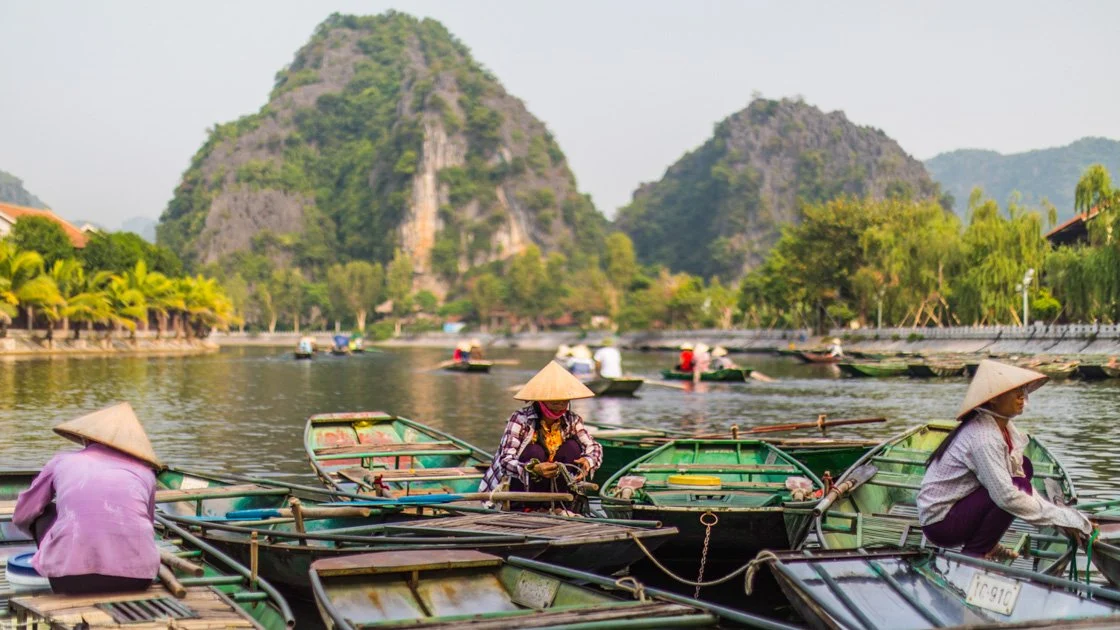
For a bay cruise, confirm the exact port and road transfer. Ha Long, Lan Ha and Bai Tu Long itineraries use different arrangements, and the marketing name alone does not identify where to board. Small-boat activities may be optional and dependent on conditions.
Ferries and island boats can be disrupted by weather. Check current operations and avoid tight onward flight connections. Ask about lifejackets in suitable sizes and the boarding conditions for anyone with mobility needs. A calm-looking photograph is not evidence of the conditions on your travel day.
Road safety and realistic buffers
Use crossings and traffic lights where available and wait for a safe opportunity. Never assume scooters will flow around you, and do not step into a stream of larger vehicles on the strength of generic travel advice. A local guide can help with orientation without removing the need for caution.
Before hiring or riding a motorcycle, verify the licence, permit and insurance requirements for your circumstances. An Australian licence or an easily obtained rental does not establish legal entitlement or insurance cover. For most first-time visitors, cars, trains and organised transfers are simpler choices. Keep a buffer before the flight home and check weather and transport notices when moving between regions.
Planning sources & updates
Reviewed 11 November 2026. Check Smartraveller Vietnam advice, the official Vietnam e-visa portal and Vietnam Tourism before travel. Confirm opening hours, transport, weather and booking terms for your dates. Photography: Vietnam Tourism.