🇵🇹 Country Guide · Iberian Peninsula · Europe

Europe’s Most
Quietly Extraordinary
Country

The westernmost country in continental Europe: a nation of azulejo-tiled facades catching the Atlantic light, fado sung into the small hours in Alfama’s narrow lanes, and the world’s finest custard tart eaten warm from a paper bag on a Lisbon pavement. Portugal is still, despite everything, a country that rewards the visitor who arrives without a script.

~22hrs
Brisbane to Lisbon
90 days
Schengen Visa-Free (AUS)
17
UNESCO World Heritage Sites
300+
Days of Sun Per Year (Algarve)
€ EUR
Currency · Excellent Value
🛂
Entry
Schengen Visa-Free90 days in 180 · AUS passport
💲
Currency
Euro (€)Best value in Western Europe
Gateway
Lisbon (LIS) · Porto (OPO)Also Faro (FAO) for Algarve
🚗
Transport
Train + Hire CarDrive for Alentejo & North
🌡
Best Season
Apr–Jun · Sep–OctAlgarve: May–Oct year-round
Time Zone
WET (UTC+0)WEST UTC+1 in summer
About Portugal

The Atlantic Edge
of an Old Continent

Portugal is the westernmost country of continental Europe — a nation that spent the 15th and 16th centuries sending its ships around Africa and into the Pacific before the rest of Europe had proper maps, and that has been absorbing the consequences of that extraordinary outward impulse ever since. The Age of Discoveries (Os Descobrimentos) left Portugal with Vasco da Gama’s route to India (1498), Brazil (1500), the spice trade that built Lisbon’s Manueline architecture, the bacalhão (salt cod) tradition brought back from Newfoundland fishing grounds, and a cultural consciousness of the world’s oceans that permeates everything from the azulejo tile tradition (the blue-and-white tilework that covers churches, railway stations, and private houses in a tradition inherited and adapted from Dutch and Spanish ceramic art) to the melancholic music of fado.

Portugal occupies the western edge of the Iberian Peninsula — bordered by Spain on its north and east, the Atlantic on its south and west — in a geography that has given it a climate of unusual gentleness: warmer than its latitude suggests, cooled by the Atlantic, with more sun than France but a more temperate summer than Spain’s interior. The country is compact (92,000 km² — about the size of Victoria), which means the diversity of its landscapes — the granite-ribbed north (the Minho, the Douro Valley terraced vineyards, the ancient city of Guimarães), the rolling Alentejo plains planted with cork oak and dotted with whitewashed villages, the Algarve’s limestone sea-stack coastline, and the Atlantic islands of the Azores and Madeira — are all within a day’s travel of each other.

For Australian travellers, Portugal offers the combination of genuine Western European cultural depth, excellent food and wine, a spectacular coastline, and pricing that remains meaningfully below Spain, France, and Italy — a country that feels like a discovery even though it isn’t, and rewards the visitor who invests a week rather than two days. Lisbon and Porto are two of the most beautiful and walkable city destinations in Europe. The Alentejo is the finest unspoilt agricultural landscape in the Iberian Peninsula. The Algarve has the finest beaches in continental Europe. The Douro Valley produces world-class Tawny Port and table wines in a landscape of terraced vineyard precision. And the people — genuinely, persistently, without the performance of it — are among the most hospitable in Europe.

🇵🇹 Portugal at a Glance
  • Population: 10.3 million in 92,212 km² — the size of Victoria, with a similar population
  • 17 UNESCO World Heritage Sites, including the Douro Valley, Sintra, the Historic Centre of Évora, the Alto Douro Wine Region, and the Prehistoric Rock Art of the Côa Valley
  • Pastel de nata (the custard tart): invented by monks at the Jerónimos Monastery in Belém in the 18th century — the original recipe is still used at the Pastéis de Belém bakery, open since 1837
  • Bacalhau (salt cod): eaten in 365 different preparations — one per day of the year, the Portuguese claim. The national dish is genuinely everywhere and genuinely extraordinary when well prepared
  • Port wine: produced exclusively in the Douro Valley, aged in the Vila Nova de Gaia cellars across the river from Porto — the Taylor Fladgate, Sandeman, and Graham’s cellar tours are the most accessible
  • Fado: the melancholic music tradition of Lisbon (Alfama neighbourhood — the authentic version) and Coimbra (the university city’s different, more classical variant) — UNESCO Intangible Cultural Heritage since 2011
  • Schengen visa-free for 90 days; ETIAS pre-registration expected 2025–2026 (check ec.europa.eu)
  • Cost: Portugal is consistently the best-value country in Western Europe for food, accommodation, and wine — budget approximately EUR 100–180 per person per day for a comfortable mid-range experience
Must-See

Portugal’s Essential Destinations

From the tram-laced hills of Lisbon to the Port wine caves of Vila Nova de Gaia, the limestone sea-stacks of the Algarve, and the terraced Douro Valley at harvest. These are the destinations that justify the flight from Australia.

Lisbon Portugal Alfama viewpoint miradouro tram castle sunset Atlantic
🏆 Capital · Seven Hills · Fado

Lisbon

Lisbon is built across seven hills on the northern bank of the Tagus — a city of extraordinary visual drama, where every street ends in a view and the Atlantic light (more golden and less harsh than Mediterranean light) plays constantly on the azulejo-tiled facades. The oldest quarter (Alfama — the Moorish city, unchanged in street pattern since the 8th century, a labyrinth of lanes that the 1755 earthquake that destroyed the rest of Lisbon largely spared) contains the Sé Cathedral (Lisbon’s Romanesque cathedral, begun 1150, with Moorish cloister ruins in the courtyard), the São Jorge Castle (the hilltop Moorish castle with the finest 360° view of Lisbon and the Tagus), and the fado houses (the authentic fado restaurants of the Alfama — Clube de Fado, Parreirinha de Alfama — where the music starts at 9:30pm and finishes when it finishes). The Belém district (4km west along the waterfront — the departure point for Portugal’s great discoveries) contains the Jerónimos Monastery (UNESCO — the most elaborate Manueline building in the world, free on Sundays until 2pm) and the original Pastéis de Belém bakery (open since 1837, the only place using the original monks’ recipe). Chiado (the literary neighbourhood — the Brasileira café, Fernando Pessoa’s bronze statue, the best independent bookshops in Portugal) and the Mouraria (the oldest neighbourhood, the Islamic quarter, now the most multicultural and foodiest part of the city) complete Lisbon’s essential map.

Lisbon District · LIS Airport 20min · 3–5 nights recommended
★ 5.0
Porto Portugal Douro River rabelo boats wine cellars Gaia bridge
Port Wine Capital

Porto & the Douro

North Portugal · OPO Airport · 2–3 nights + Douro
★ 4.9
Algarve Portugal Ponta da Piedade sea stacks limestone cliffs Atlantic
Best European Beaches

The Algarve

Southern Portugal · FAO Airport · 3–7 nights
★ 4.8
Sintra Portugal Pena Palace colourful hilltop Romanticist forest UNESCO
UNESCO · Romantic Palaces

Sintra

Sintra-Cascais · 40min from Lisbon · Day trip
★ 4.8
Alentejo Portugal whitewashed village cork oak plains wheat golden
Cork Oaks · Black Pig

The Alentejo

Central Portugal · Self-drive from Lisbon · 2–3 nights
★ 4.9
Azores Sao Miguel island volcanic lake Sete Cidades Atlantic Portugal
Atlantic Volcanic Island

The Azores

Mid-Atlantic · São Miguel 2hrs from Lisbon
★ 4.9
The Capital, Hill by Hill

Lisbon Neighbourhood Guide

Lisbon is best understood as a series of hills connected by trams, funiculars, and a great deal of walking. Each neighbourhood has its own character, its own miradouro (viewpoint), and its own pace of life.

Alfama Lisbon Portugal narrow lanes azulejo tiles laundry viewpoint
🏠 Oldest Quarter · Fado District
Alfama

Alfama — the Moorish city, its street pattern unchanged since the 8th century — is the most layered and most emotionally powerful neighbourhood in Lisbon. The 1755 earthquake (one of the most destructive in European history — it struck on All Saints’ Day while most of Lisbon was in church, killed 10,000–100,000 people — the estimate range reflects how many survived to be counted — and triggered a tsunami) destroyed most of Lisbon’s medieval fabric. Alfama, on its steep hillside, survived largely intact. The consequence: a neighbourhood of 18th-century and earlier buildings, laundry strung between windows, cats on steps, and the sound of fado drifting up from restaurants in the evening. The Miradouro da Graça — the finest miradouro in Lisbon, quieter than the tourist-heavy Portas do Sol, with a view of the São Jorge Castle, the river, and the 25 de Abril bridge — is at the neighbourhood’s top. The authentic fado houses (Clube de Fado, on Rua São João da Praça; Parreirinha de Alfama, on Beco do Espírito Santo — book for the 9:30pm or later showing) are in the lower Alfama lanes.

São Jorge CastleSé CathedralFado housesMiradouro da Graça
Walk up to the Miradouro da Graça before 9am — the terrace has fresh pasteis de nata from the nearby kiosk, the view is entirely yours, and the morning light on the Tagus estuary is the finest light in Lisbon. Stay until 9:15am when the tour groups begin arriving from the hotels below.
Chiado Lisbon Portugal literary cafe bookshop Brasileira Fernando Pessoa
📚 Literary Quarter · Best Cafés
Chiado & Bairro Alto

Chiado — the literary, intellectual, and cultural neighbourhood on the hill between the Baixa and the São Bento palace — is Lisbon’s most animated daytime neighbourhood and the one that most comfortably absorbs visitors without losing its character. The Brasileira café (Rua Garrett 120 — open since 1905, the café of Fernando Pessoa, the most important Portuguese poet, whose bronze statue sits at a table outside — the coffee is mediocre, the people-watching is excellent, and the interior is beautiful — the only reason to go in) and the Livraria Bertrand (Rua Garrett 73 — the world’s oldest operating bookshop, continuously open since 1732 — Guinness World Record — still a proper bookshop with a good English-language Portugal section) are the neighbourhood anchors. Bairro Alto — directly uphill from Chiado, a grid of 18th-century streets — is Lisbon’s nightlife district: the narrow streets fill with people from 11pm, with music spilling from bars, restaurants, and fado houses until 3–4am.

Livraria BertrandCafé BrasileiraNightlife districtMAAT Museum
The Chiado and Bairro Alto area is served by the Ascensor da Glória (the yellow funicular from the Restauradores square, EUR 3.80 — a legitimate historic tram experience, not a tourist gimmick) and the Elevador de Santa Justa (the Gothic-revival iron lift in the Baixa, EUR 5.50 for the one-way ride up — the view from the top is fine but the lift itself is the experience). Take the Gloria up; walk down through Chiado.
Belem Lisbon Portugal Jeronimos Monastery Torre Manueline waterfront
🏛 Age of Discoveries · Pasteis
Belém

Belém — 6km west of Chiado along the Tagus waterfront — is the district from which Vasco da Gama departed for India in 1497 and where the Manuelino architectural style (Portugal’s distinctive Late Gothic, named for King Manuel I, elaborated with nautical and exotic motifs from the trade routes — rope knots, armillary spheres, coral, and sea creatures in stone) reached its fullest expression. The Jerónimos Monastery (UNESCO — begun 1501, the most extraordinary building in Portugal, its interior cloisters a masterwork of two-storey ornamental stonework — free entry on Sundays before 2pm, otherwise EUR 15 — arrive at opening to have the south portal’s 32-metre carved facade to yourself), the Torre de Belém (UNESCO — the 16th-century defensive tower on the river, now an island at high tide — queue to enter or simply view from the waterfront), and the Padrão dos Descobrimentos (the 1960 concrete monument to the Age of Discoveries — Vasco da Gama, Magellan, and 31 other Portuguese explorers carved along its prow — the mosaic world map on the square in front is the best orientation to the full scale of Portugal’s 15th–16th century reach). The Pastéis de Belém bakery (Rua de Belém 84–92 — open since 1837, the original recipe, the queue is permanent and takes 15–20 minutes, absolutely worth it).

Jerónimos MonasteryTorre de BelémPastéis de BelémMAAT Museum
Go to Pastéis de Belém when it opens (8am daily). The queue at 8:15am is 5 people; at 10am it is 60. Order: three pasteis de nata (the singular is pastel), a small coffee (uma bicá — the Portuguese espresso), a sprinkle of cinnamon, and then stand at the counter and eat them warm. Sit-down in the back rooms is available but the standing-at-the-counter experience is the correct one.
LX Factory Lisbon Portugal creative market industrial neighbourhood
🏭 Creative Hub · Sunday Market
LX Factory & Santos

LX Factory — a former 19th-century industrial complex in the Alcântara district, in the shadow of the 25 de Abril suspension bridge — is Lisbon’s most successful creative repurposing: 23,000m² of old textile mills and warehouses now housing independent restaurants, boutique design shops, street art, a weekly Sunday market (the Feira da LX — the finest flea and craft market in Lisbon, every Sunday 10am–8pm, free entry), and the finest independent bookshop in Portugal (Livraria Ler Devagar — “Read Slowly” — built into a former printing hall, the shelves three stories high under an original cast-iron ceiling — the most beautiful bookshop in Portugal). The adjacent Santos neighbourhood (the “Design District”, now somewhat faded from its mid-2000s designation but retaining good restaurants and the Museu Nacional de Arte Antiga — the finest collection of Portuguese art, including Nuno Gonçalves’s extraordinary 1470 polyptych of the Infante São Vicente, the most important painting in Portuguese art history) is the quieter context.

Feira da LX (Sunday)Ler Devagar bookshopMuseu Arte Antiga25 de Abril bridge view
The Feira da LX on a Sunday morning — arriving at 10:30am when the market opens — is the finest Sunday activity in Lisbon. The combination of vintage clothing, Portuguese ceramics, handmade jewellery, street food, the Ler Devagar bookshop, and the view of the bridge and river from the market’s riverside edge makes LX Factory the most complete single-site experience of contemporary Lisbon culture.
Mouraria Lisbon Portugal multicultural market food stalls fado origin quarter
🌭 Original Fado · Best Food Market
Mouraria & Intendente

Mouraria — the Islamic quarter of medieval Lisbon, squeezed between the Alfama and the Baixa on the slopes below São Jorge Castle — is the neighbourhood where fado is said to have originated (the Museu do Fado is here, on Largo do Chafariz de Dentro — the finest single account of fado’s history and musical development, EUR 5) and is now the most genuinely multicultural neighbourhood in Lisbon, with a concentration of Bangladeshi, Cape Verdean, Mozambican, and Angolan communities (the consequence of Lisbon’s post-colonial immigration from its former African territories) that produces a food diversity unlike anything else in the city. The Mercado de Fusão (the Fusion Market — a food court in a converted courtyard, open lunchtimes and evenings, where 20 counters serve food from Portugal’s former colonies — Cape Verdean cachupa, Angolan moamba, Goan caldeirada) is the finest single food site in Mouraria. The Intendente square (Largo do Intendente — the neighbourhood’s community heart, with a beautiful Portuguese azulejo-tiled building on one side and a permanent local café culture on the other) is the quieter complement.

Museu do FadoMercado de FusãoFado originAfrican food
Lunch at the Mercado de Fusão (open daily from noon, Largo do Intendente Pina Manique) is the single most interesting meal available in Lisbon at EUR 8–12 — a counter of Cape Verdean fish stew or Mozambican matapa (cassava leaves with prawns and peanuts) in the neighbourhood where both the music of fado and the echoes of Portugal’s colonial Atlantic world coexist on the same square.
Príncipe Real Lisbon Portugal antique market jardim gardens palm trees
🟈 Antiques · Best Restaurants
Príncipe Real

Príncipe Real — the hilltop residential neighbourhood west of Bairro Alto, laid out in the 1860s for the Lisbon bourgeoisie — is now the city’s most characterful upscale residential and restaurant district: the antique market at Jardim do Príncipe Real (Saturdays, 9am–8pm — furniture, ceramics, vintage prints, Portuguese azulejo tiles sold individually — the finest antiques browsing in Lisbon), the Natural History Museum in the Polytechnic School (the finest collection of Portuguese natural history — often empty, which is itself remarkable), the flagship stores of the best Portuguese food producers (A Cégue Portuense, the finest conserva (tinned fish) shop in Lisbon — sardines, mackerel, and octopus in beautiful tins, the most portable Portuguese souvenir), and the highest restaurant density of any Lisbon neighbourhood. The Tasca do Chico (Rua do Diário de Notícias 39 — the most critically acclaimed informal fado house in Lisbon, tiny — 10 tables — book weeks ahead through tascadochico.pt) operates in the zone between Príncipe Real and Bairro Alto.

Saturday antiques marketBest restaurantsConserva shopsTasca do Chico (fado)
The Saturday antiques market in the Jardim do Príncipe Real is the finest market in Lisbon — the vintage azulejo tiles sold by individual dealers (EUR 2–20 per tile depending on age and condition) are the most authentic and most portable Portuguese purchase available. Old azulejo tiles from demolished Lisbon buildings, each with a unique painted motif, are genuinely extraordinary objects that fit in hand luggage. Bring cash; arrive by 10am before the best pieces are taken.
Baixa Pombaline Lisbon Portugal grid Praca do Comercio waterfront triumphal arch
🏛 Pombaline Grid · Waterfront
Baixa & Praça do Comércio

The Baixa — the flat lower city between the Alfama and Chiado hills — was completely destroyed by the 1755 earthquake and rebuilt in an extraordinarily systematic 8-year programme by the Marquis of Pombal (the prime minister who organised the reconstruction). The result is the most coherent piece of 18th-century urban planning in Europe: a regular grid of identical-height Pombaline buildings with shared party walls, earthquake-resistant timber frames (the “Pombaline gaiola” — a cage-within-a-cage construction technique invented specifically for the Lisbon reconstruction), and pedestrianised commercial streets that still function as Lisbon’s retail heart. The Praça do Comércio (the riverside square — the Tagus at the south, the triumphal arch at the north, the equestrian statue of King José I in the centre — free) is Lisbon’s grandest public space, at its finest at sunset when the river light turns the square’s yellow buildings amber. The Rua Augusta pedestrian street runs north from the arch to the Rossio square — 600 metres of shops, street musicians, and cafes that function as Lisbon’s main promenade.

Praça do ComércioPombaline architectureRua AugustaRossio square
The Praça do Comércio at sunset — standing on the riverside promenade looking back at the yellow Pombaline facades — is the most magnificent free view in Lisbon. The square’s riverfront terrace cafés (the Time Out Market is 500 metres west — useful for a quick overview of Lisbon’s restaurant scene at accessible prices) are the correct sunset position, with a glass of Vinho Verde and the 25 de Abril bridge visible to the west.
Parque das Nacoes Lisbon Portugal Expo 98 modern architecture waterfront Oriente
🏭 Expo ’98 Legacy · Modern Lisbon
Parque das Nações

Parque das Nações — the Expo ’98 site, 10 minutes from the city centre by Metro — is Lisbon’s most complete example of post-industrial urban regeneration: 5km of former industrial waterfront (oil refineries, slaughterhouses, a rubbish dump) transformed into a riverfront district of contemporary architecture, the largest aquarium in Europe, and a promenade on the northern Tagus. The Oceanarium (one of the finest aquaria in Europe — a central tank the size of a city block, accessible from all four sides, visible through floor-to-ceiling glass — the enormous sunfish is the signature sight; the ocean tank contains hammerhead sharks, sunfish, sea turtles, and manta rays in a single open-ocean ecosystem — EUR 22, book at oceanario.pt), Santiago Calatrava’s Oriente railway station (the finest piece of public infrastructure architecture in Portugal), and the Vasco da Gama bridge (17.2km — the longest bridge in Europe — visible from the waterfront promenade at its full length). The area is family-friendly and architecturally interesting but lacks the lived-in character of the older Lisbon neighbourhoods.

OceanariumOriente stationVasco da Gama bridgeRiverfront promenade
The Oceanarium is the finest half-day activity in Lisbon for families or anyone with an interest in marine life — the central ocean tank is one of the most immersive in the world. Book the first morning slot (10am) for the quietest experience. Combine with a walk along the Parque das Nações waterfront promenade and a look at the Calatrava Oriente station (the structure is as magnificent on the outside as inside) before the Metro back to the city centre.
Lisbon tram 28 historic yellow tram Alfama route iconic Portugal
🚊 Tram 28 · Eéctrico
Lisbon by Tram & On Foot

Lisbon is a city of hills — seven named ones, dozens more unnamed — and the Portuguese word for the hills — “mourarias” — comes from the Moorish origin of many of the oldest settlements. Moving between them requires either the historic trams (the eléctrico — the yellow-painted single-car trams that predate most of Lisbon’s hills being accessible by car), the funiculars (the Gloria, the Bica, and the Lavra — three remaining funiculars from the 1880s), and a great deal of calves-and-quadriceps walking. Tram 28 — the most photographed, the most crowded, the most tourist-saturated — runs from Martim Moniz through the Alfama to Praça do Comércio via the Sé. At 6am, before the tourist crowd, it is an authentic public transport experience. By 10am, it is a queue of visitors in a very slow, very photogenic vehicle. The E24 tram (Campolide to Praça Luís de Camões — also routed through the Alfama, less known, equally scenic) is the correct alternative for anyone who wants the tram experience without the tourist density. The Viva Viagem card (24-hour unlimited card, EUR 6.85 — from any station machine) covers all trams, buses, and Metro.

Tram 28 at 6amFuniculars (Glória, Bica)Viva Viagem cardE24 tram alternative
Take Tram 28 at 6am from the Martim Moniz terminus — you will have the carriage to yourself for the first two stops, the driver will allow you to stand on the front platform (technically not permitted but entirely tolerated at that hour), and the Alfama lanes at dawn, when the tram grinds around corners with 10cm clearance on each side, are the most atmospheric 25 minutes of transit available in any European city.
Beyond Lisbon

Day Trips from Lisbon

Lisbon sits at the centre of one of Europe’s finest day-trip networks. The Sintra mountains, the Arrábida peninsula’s Caribbean-blue water, Évora’s Roman temple, and the Setúbal coast are all within 90 minutes.

Sintra Portugal Pena Palace fairy tale colourful hilltop palace forest
🏛 40min by Train · UNESCO · Most Visited
Sintra

Sintra — the UNESCO World Heritage-listed “cultural landscape” in the Serra de Sintra mountains 40 minutes from Lisbon by train — contains a density of Romantic-era and medieval palatial architecture with no equivalent in Iberia. The Palácio Nacional de Sintra (the royal palace in the town centre, with its two distinctive conical kitchen chimneys visible for miles — the oldest surviving royal palace in Portugal, first documented in 1281, with Manueline and Gothic additions — EUR 10), the Palácio da Pena (the extraordinary Romanticist fantasy palace of King Ferdinand II, built 1842–1854 on a hilltop above the town — yellow, terracotta, and blue, with Moorish, Gothic, Renaissance, and Manueline elements combined in a theatrical whole that is either the greatest folly in Europe or its finest architectural confection — EUR 14 — buy tickets online at parquesdesintra.pt to skip the queue), and the Quinta da Regaleira (a private estate with a neo-Manueline palace, subterranean Initiation Well — a 27-metre spiral well built for Masonic ritual — and a network of tunnels and grottoes — EUR 15) form the Sintra triad. The Convento dos Capuchos (6km from Sintra — a 16th-century Franciscan convent of extraordinary austerity, its cells lined with cork, carved into and around the living rock — the most affecting building in the Sintra mountains) is the experience that stays longest.

From Lisbon
40min train from Rossio
Best time
Weekday morning · Spring
Pena Palace
EUR 14 · Book online
Avoid
Weekend July–Aug
Sintra’s visitor volume in July–August on weekends has reached saturation levels — the Pena Palace queue can be 90 minutes without a pre-booked ticket. Go on a Tuesday or Wednesday morning in May, June, September, or October; buy Pena Palace tickets in advance at parquesdesintra.pt; take the first train from Rossio (departs 6:23am) and be on the palace grounds when the gates open at 9:30am.
Arrábida Natural Park Portugal turquoise sea Atlantic limestone cliffs beach
🌊 45min by Car · Best Beach Near Lisbon
Arrábida Natural Park

The Serra da Arrábida — a limestone mountain range running east–west along the Setúbal Peninsula, south of Lisbon — drops directly into the Atlantic on its southern face, creating a 30km stretch of beaches of extraordinary character: clear water of Caribbean quality (the limestone filtering the runoff maintains visibility to 10–15 metres — exceptional for the Atlantic), water temperatures of 20–23°C in July–August, and a limestone cliff backdrop. The beaches (Portinho da Arrábida, Galapos, Galapinhos — the last accessible only by boat from Portinho, with the fewest visitors) are within a protected natural park and are among the finest beaches within an hour of a European capital. Access is by hire car from Lisbon (no practical public transport for the park beaches); the road through the park — the Estrada de Sesimbra — is one of the finest coastal drives on the Iberian Peninsula, with the Serra dropping into the sea on the left and the Atlantic extending to the horizon on the right. Day trip only from Lisbon — no accommodation on the park beaches; base in Setúbal or return to Lisbon.

From Lisbon
45min by car
Best beach
Galapinhos (boat only)
Best season
Jun–Sep (water warm)
Entry limit
Cars capped in summer
The Arrábida park road limits car entry to the beaches in July–August — check the Parque Natural da Arrábida access rules (icnf.pt) before departure as the number of vehicles allowed to Portinho da Arrábida is capped. The car limit applies from 9am–7pm in peak summer — arrive before 8:30am or after 5pm to guarantee access. A boat from Setúbal to Galapinhos beach (Galapos Tour — EUR 25–30) bypasses the road limit entirely.
Évora Portugal Roman temple Alentejo historic centre UNESCO well-preserved
🏛 1.5hrs by Train · UNESCO · Roman Temple
Évora & the Alentejo

Évora — the UNESCO World Heritage-listed capital of the Alentejo — is one of the best-preserved historic cities in the Iberian Peninsula and the finest day-trip destination from Lisbon for anyone with a genuine interest in history. The Roman Temple of Évora (14 intact Corinthian columns from the 1st–2nd century CE — the best-preserved Roman temple on the Iberian Peninsula outside Tarragona, standing in the city centre, free to view) and the Chapel of Bones (the Igreja de São Francisco — a 16th-century chapel whose walls and ceiling are decorated with the bones and skulls of 5,000 monks, with the inscription “Nós ossos que aqui estamos pelos vossos esperamos” — “We bones here await yours” — EUR 4, one of the most disturbing and most fascinating single rooms in Portugal) are the headline sites. The Alentejo wines (the Herdade do Esporão, Monte d’Oiro, and Esporão estates produce red wines of extraordinary depth from Alicante Bouçhet and Aragonez grapes — the region’s most commercially planted varieties) and the black pig (porco preto) acorn-fed charcuterie (the Alentejo’s version of the Spanish jamon ibérico, served in every restaurant in Évora from EUR 8–15 per plate) make Évora a food destination of the first order.

From Lisbon
1.5hrs by train (Oriente)
Chapel of Bones
EUR 4 · São Francisco church
Roman Temple
Free · City centre
Best for
History · Alentejo wine · Food
Stay overnight in Évora if possible — the city empties of day visitors by 6pm and the evening in the walled city, eating at a traditional Alentejo restaurant (bacalhau à alentejana — salt cod with coriander, garlic, and olive oil — or carne de porco à alentejana — pork with clams — with a glass of Esporão Reserva red) under the Roman columns lit at night is the definitive Alentejo experience. The Pousada dos Lóios (a 15th-century convent converted to a hotel, adjacent to the Roman Temple) is the most atmospheric accommodation in Portugal for the price (from EUR 120/night).
Óbidos Portugal medieval walled town white blue yellow houses castle
🏛 1hr by Bus · Medieval Walled Town
Óbidos

Óbidos — a medieval walled town 80km north of Lisbon, its 12th-century castle walls entirely intact and walkable — is one of Portugal’s most visited small towns and most consistently rewarding ones. The town inside the walls — a single main street (Rua Direita) of white-and-blue-painted houses, flowered balconies, and shops selling ginja (the cherry liqueur served in a chocolate cup — the correct local drink, sold at every shop on the Rua Direita for EUR 1–2) — is small enough to walk entirely in 90 minutes and beautiful enough to justify the detour. The castle walls (walkable for the full circuit — 1.5km, with views of the surrounding Obidos lagoon, the Atlantic visible on clear days — free, though the walk involves some unguarded high sections) are the finest intact medieval fortifications in Portugal. The Libraria de Óbidos (the bookshop established in a 12th-century church — the São Tiago church — bookshelves between the columns, the smell of old stone and paper — the finest single bookshop room in Portugal). The Óbidos Chocolate Festival runs annually in February–March; the Literary Festival (ÉLeituras) in July.

From Lisbon
1hr by Rede Expressos bus
Walls walk
Free · 1.5km circuit
Ginja
EUR 1–2 in chocolate cup
Best for
Half-day · Medieval Portugal
Óbidos is best combined with Nazaré (the surf beach village 30 minutes north — the Praia do Norte, where the world’s largest surfable waves — over 30 metres — are generated by the Nazaré Canyon, the deepest undersea canyon on the European Atlantic coast, and where tow-in surfers ride in November–March). Spend the morning in Óbidos, early afternoon at the Nazaré surf promontory (the Sitio viewpoint above the beach), and return to Lisbon by late afternoon.
Comporta Portugal cork forest flamingos beach rice paddies Alentejo coast
🌿 1.5hrs by Car · The Insider’s Beach
Comporta & the Alentejo Coast

Comporta — 90 minutes south of Lisbon on the Alentejo coast, across the Sado estuary from Setúbal — is the beach destination that Lisbon’s urban sophisticates have been using as their answer to the Hamptons for 30 years. The beach itself — 10km of flat, wide Atlantic sand, backed by pine forests and rice paddies, with flamingos in the Sado Estuary visible from the dunes — is remarkable for its combination of beauty and, relative to the Algarve, quiet. The village (400 permanent residents, dramatically outnumbered in August, human-scale in every other month) has restaurants, a weekly market, and the distinctive cork-and-timber vernacular architecture of the Alentejo coast. The Comporta beach hotel scene (Sublime Comporta, Casas na Areia) is the most architecturally considered hotel landscape in Portugal — low-rise, timber-and-cork construction, minimal intrusion on the pine forest setting. Day trip from Lisbon by hire car only — no practical public transport to the beach.

From Lisbon
1.5hrs by car
Best season
May–Jun · Sep–Oct
Flamingos
Sado Estuary · Year-round
Stay
Sublime Comporta (luxury)
Take the Fertagus car ferry across the Tagus estuary from Setubal (15 minutes) rather than driving through Lisbon’s southern suburbs — it saves 30 minutes and delivers the view of the Arrábida cliffs from the water as a bonus. The ferry terminal is at Tróia; from there, the drive south to Comporta along the peninsula is 25 minutes of flat coastal road through pine forest.
Cascais Portugal coastal town beach Atlantic Estoril casino historic
🏠 40min by Train · Atlantic Riviera
Cascais & the Estoril Coast

Cascais — the Atlantic fishing village turned upscale resort town at the end of the Estoril train line, 40 minutes from Lisbon Cais do Sodré — was, in the early 20th century, the winter residence of European royalty in exile (Alfonso XIII of Spain, Umberto II of Italy, Juan Carlos of Spain before his restoration — the Hotel Palácio in Estoril still carries this atmosphere). The town today: a beautifully maintained historic centre, a working fishing harbour, Atlantic beaches directly accessible from the train station, and the best cycling route accessible from Lisbon — the 30km bicycle path along the Estoril coast (Lisbon to Cascais, mostly flat, with the Atlantic on the left the entire way — hire bikes at the Cais do Sodré waterfront). The Boca do Inferno (Hell’s Mouth — a sea cave 2km west of Cascais where Atlantic waves crash through a limestone archway — free, dramatic in winter when the ocean swells are at their highest). Day trip or overnight; the train from Lisbon costs EUR 2.35 single.

From Lisbon
40min train (EUR 2.35)
Cycling route
30km coast path · Flat
Best for
Half-day · Beach · Cycling
Combine with
Sintra (continue by bus)
The Cascais–Sintra day combines perfectly — train from Lisbon to Cascais (40min), breakfast at the harbour fish market, bus from Cascais to Sintra (30min — Bus 403, EUR 3.50 — the most scenic connection between the two towns, through the Sintra Natural Park). This combination covers both the coast and the mountains in a single day without returning to Lisbon.
The Atlantic Kitchen

Portuguese Food & Wine — Region by Region

Portugal’s food is the product of an Atlantic geography and a maritime history — the world’s finest custard tart, the world’s most elaborate salt cod tradition, Port wine from one of the world’s oldest demarcated wine regions, and an olive oil culture of exceptional quality. Here is how to eat through Portugal.

🍷
🇵🇹 Lisbon & Centro · The Capital’s Kitchen
Pastéis de Nata, Bacalhau & Ginjinha

The pastel de nata — the custard tart — is Portugal’s most exported food item and, eaten warm from the oven at the Pastéis de Belém bakery (the only place using the original 18th-century monks’ recipe — the ingredients are a commercial secret, the egg-yolk to sugar ratio is not disclosed, and the result is categorically better than any copy), the finest baked product in Europe. Eat it warm, with a sprinkle of cinnamon and icing sugar, with a bica (Portuguese espresso). Bacalhau (salt cod) is Portugal’s national ingredient — 365 preparations, one per day of the year, the Portuguese claim, and the claim is not far from the truth. The most essential preparations: bacalhau à Brás (shredded salt cod with eggs, potatoes, black olives, and parsley — the most widely available, a test of any Lisbon kitchen’s quality), bacalhau com natas (baked salt cod with cream — the richest, most controversial preparation — excellent when made with quality ingredients), and bacalhau assado com batatas a murro (roasted salt cod with smashed potatoes and olive oil — the simplest and often the best). Ginjinha — the sour cherry liqueur — is Lisbon’s street drink, served from tiny bars (the A Ginjinha on Largo de São Domingos — the smallest and oldest, open since 1840 — serves a glass with or without a cherry for EUR 1.50 standing at the counter). Time Out Market (Mercado da Ribeira, Av. 24 de Julho — the most commercially successful food hall in Europe, 40 restaurant stalls representing Lisbon’s best chefs at accessible prices — the correct introduction to the full range of Portuguese cooking, EUR 5–20 per dish).

Pastel de nataBacalhau à BrásGinjinhaCarne de porco à alentejanaAmeijoas à Bulhão PatoBifanas (pork rolls)
🍵
🇵🇹 Porto & the North · Tripas & Francesinha
Vinho Verde, Francesinha & Port Wine

Porto’s most famous dish is the francesinha — a sandwich of bread, wet-cured ham, linguiça sausage, fresh sausage, and steak, covered in melted cheese and bathed in a tomato-beer-and-brandy sauce, served with chips in the sauce — a dish that is either a masterwork of Portuguese-French fusion or a deeply unreasonable breakfast, depending entirely on context. It was invented in Porto in the 1950s by a returnee from France who adapted the croque-monsieur to local ingredients; every Porto restaurant has a different recipe for the sauce, and the quality range is enormous. The Café Santiago (Rua Passos Manuel 226) is the reference address; order the francesinha with a Super Bock beer, not wine. Vinho Verde (“green wine” — not green in colour, but young and lightly sparkling — the white is the version that the world knows, made primarily from Alvarinho/Albarinno and Loureiro grapes in the Minho region — extremely refreshing, low alcohol 8–11%, excellent with seafood) is the wine of the north. Port wine: aged in the Vila Nova de Gaia cellars across the Douro from Porto — the Taylor Fladgate cellar tour and tasting (from EUR 12 — includes a 10-year Tawny and an LBV Port) is the standard introduction; the Ramos Pinto terrace on the Gaia riverside is the finest location for an evening tasting glass with the Porto skyline reflected in the river.

FrancesinhaVinho VerdePort wine (Tawny, LBV, Vintage)Caldo verdeBifanas à moda do PortoTripas à moda do Porto
🌼
🇵🇹 Alentejo · Black Pig, Cork, & Big Reds
Porco Preto, Bread Soup & Alentejo Wines

The Alentejo — the vast interior plain south of Lisbon, covering one third of Portugal’s land area, planted with cork oak (Portugal produces 50% of the world’s cork supply — the bark is harvested every nine years from living trees without cutting them down, a sustainable forestry practice of 800 years), wheat, and olive trees — has a food culture of extraordinary simplicity and quality. Porco preto (the Iberian black pig — acorn-fed, slow-growing, producing charcuterie of exceptional quality — presunto (dry-cured ham), chouriço, morcela — the Portuguese equivalent of the Spanish jamón ibérico, produced in the Alentejo and Algarve foothills and available in every restaurant in the region from EUR 8–15 per plate of mixed charcuterie). Açorda alentejana (the Alentejo bread soup — a 10-minute preparation of stale bread, poached eggs, garlic, coriander, and olive oil — Portugal’s most underrated dish, the one that looks like nothing and tastes like everything). Migas (fried bread with pork fat — the Alentejo side dish that accompanies almost every meat main course). The Alentejo wines: the region produces Portugal’s most internationally acclaimed table wines from Alicante Bouçhet (a deep, ink-coloured variety rarely found outside the Alentejo) and Aragonez (Tempranillo). Esporão, Herdade das Cortes de Cima, Monte d’Oiro, and Cartuxa are the benchmark estates.

Porco preto charcuterieAçorda alentejanaMigasAlentejo red wineQueijo de Évora (sheep’s cheese)Carne de porco à alentejana
🌎
🇵🇹 Algarve · Cataplana & Fresh Seafood
Cataplana, Grilled Sardines & Algarve Almonds

The Algarve’s food culture is defined by the sea and the Arab heritage of the eight centuries of Moorish rule that gave the region its name (al-Gharb — “the west” in Arabic). The cataplana — a copper clam-shell cooking vessel of Moorish design — gives its name to the dish: a slow-cooked seafood or pork-and-clam stew sealed and steamed in the copper vessel at the table, opened in the dining room with a theatrical burst of steam — the definitive Algarve cooking experience. The cataplana de marisco (shellfish cataplana — amejoas, cirîo, linguado, camarão — in a white wine, garlic, and coriander broth) at any restaurant in Lagos, Tavira, or Sagres is the correct order. Grilled sardines (sardinhas assadas — fresh sardines grilled over charcoal, a slice of bread soaked in the oil, a glass of Alentejo red — available June–September when sardines are in season and at maximum size) are the most characteristically Portuguese eating experience available at any price (EUR 8–14 for a full portion of 6). Algarve sweets: the Dom Rodrigo (egg yolk and almond pastry) and the figo seco recheado (dried figs stuffed with almonds and spiced with fennel — the Arab confectionery legacy).

Cataplana de mariscoSardinhas assadasAmijoas à Bulhão PatoDom RodrigoPercebes (barnacles)Figos secos recheados
☕ Eating in Portugal
Best value in Western Europe: A three-course lunch at a local tasca (traditional restaurant) with wine: EUR 10–15. A proper dinner for two at a quality restaurant with a bottle of regional wine: EUR 50–80. Portugal is 30–40% cheaper than Spain and 50–60% cheaper than France for comparable quality.
Meal times: Lunch 12:30–3pm; dinner 7:30–10:30pm. The Portuguese eat late — arriving at 7pm for dinner is early, and many restaurants don’t fill until 9pm.
The couvert: Bread, butter, olives, or pâté placed on the table without ordering are not free — they are the couvert (cover charge), typically EUR 1–4 per person. You can decline them by saying “não quero” (I don’t want them) and they will be removed without charge.
The bica: Portuguese espresso (uma bicá) is the correct coffee — short, strong, served at the counter, EUR 0.70–1.20 standing. A galão (milky coffee in a tall glass — the Portuguese equivalent of a flat white) at breakfast. Never a cappuccino after noon.
Petiscos: Portuguese tapas — small plates of conservas (tinned sardines or mackerel in olive oil), ameijoas (clams), chouriço flambéed at the table — are the best informal eating format in Portugal and available in every petiscaria (petisco bar). Order three or four to share.
Tipping: Not culturally embedded but appreciated — rounding up or leaving EUR 2–5 for a full dinner is generous and normal. The couvert is not a tip. No obligation to tip for quick counter service.
🍷 Portuguese Wine Map
🍾Vinho Verde: Minho region — young, light, slightly sparkling. The Alvarinho (white) is the finest; Loureiro and Trajadura also important. Drink young and cold.
🍷Douro table wines: The same region as Port, now producing extraordinary dry reds (Touriga Nacional, Touriga Franca) — Niepoort, Quinta do Crasto, and Ramos Pinto are the benchmark estates.
🍷Alentejo: The most internationally celebrated Portuguese region for big red wines — Alicante Bouçhet, Aragonez (Tempranillo), Trincadeira. Full-bodied, structured, often exceptional value.
🍾Setúbal/Lisboa: The João Pires Muscat and the Bacalhôa estates produce some of Portugal’s finest whites and the best Moscatel de Setúbal (a dessert wine of extraordinary fragrance).
🍷Port wine: Exclusively from the Douro Valley — Tawny (aged in oak, nutty, amber), LBV (Late Bottled Vintage — single-year, unfiltered, the Port for dinner), Vintage (declared only in exceptional years — the finest). Taylor’s, Graham’s, and Quinta do Vesúvio are the benchmark houses.
What to Do

Portugal’s Unmissable Experiences

A country where the greatest experiences are often also the cheapest — a glass of Vinho Verde at a harbour café, a warm pastel de nata at 8am, a fado house at midnight. These are the ones that stay.

Fado Lisbon Alfama Portugal traditional music performance fadista guitar
Fado in Alfama — The Real Thing

Fado — the music of saudade, the Portuguese untranslatable concept of longing for something that is absent or irrecoverably lost — is Lisbon’s most distinctive cultural contribution to the world (UNESCO Intangible Cultural Heritage since 2011). The authentic fado experience is in the Alfama’s small restaurant-houses (the “fado houses” — not the large tourist shows with overpriced menus), where the fadista performs 3–4 songs, is replaced by another, and the room maintains the intense respectful silence (silence during fado is mandatory — talking is as rude as talking in a concert) while the music takes its time. Clube de Fado (Rua São João da Praça 92 — book at clube-de-fado.com — the finest fado programme in Lisbon, dinner from EUR 35) and the Tasca do Chico (10 tables — book weeks ahead at tascadochico.pt — the most intimate and critically celebrated) are the reference addresses.

Book weeks ahead · Dress smart · 9:30pm start
Porto Douro Valley wine Rabelo boat terraced vineyards harvest sunset
Douro Valley Harvest

The Douro Valley — the Alto Douro Wine Region (UNESCO) — is one of the world’s most spectacularly beautiful wine landscapes: 250,000 hectares of terraced vineyards carved into the schist hillsides above the Douro river, in a valley so steep and so narrow that mechanisation was impossible for most of its history and the vineyards were shaped by hand. The grape harvest (vindima — late September to mid-October) fills the quintas (the wine estates) with pickers, the smell of fermenting must fills the air, and the terraced hillsides are striped with colour. A boat cruise along the Douro (from Porto, the Barca d’Alva five-day river cruise, or the half-day Douro cruises from Régua — the most scenic section — EUR 30–45) at harvest time is the finest single experience in Northern Portugal.

Sep–Oct harvest · Porto or Régua gateway
Algarve Ponta da Piedade Lagos sea stacks rock formations boat cave tour
Ponta da Piedade Grottos by Kayak

Ponta da Piedade — the limestone sea-stack formation 2km south of Lagos in the western Algarve — is the most photographically extraordinary coastal landscape on the European Atlantic. The stacks, grottos, and natural arches (the formations created by thousands of years of Atlantic wave erosion into the golden limestone) are accessible from above via the clifftop walk (free, 2km from Lagos town centre) or from below by kayak (the most revelatory approach — the grottos are only accessible from sea level, and paddling through them with the late afternoon light filtering through the arches is the Algarve experience at its most fundamental). Kayak tours from Lagos (multiple operators — LagosKayak.pt — EUR 25–40 for a 2.5–3hr guided tour — no experience required) depart from the Lagos beach.

EUR 25–40 · Lagos · May–Oct
Sintra Convento dos Capuchos cork lined cells rock monastery Portugal
The Convento dos Capuchos

The Convento dos Capuchos — a Franciscan convent of extraordinary austerity in the Sintra mountains, 6km from Sintra town — is the most affecting single building in Portugal. Founded in 1560, it was inhabited by monks who had taken vows of poverty so severe that the cells (carved into and around the living granite rock) are lined with cork against the cold and damp, and so small that an adult must stoop to enter. Lord Byron visited in 1809 and described it as “the most beautiful sight I ever beheld.” The contrast with the Pena Palace (30 minutes away by road — the most visually extravagant building in the Sintra mountains) is total and deliberate — the same century, the same mountain, the widest possible human extremes of luxury and renunciation in the same landscape. EUR 8; accessible by car from Sintra or by a demanding 5km walk through the forest.

EUR 8 · Sintra mountains · Hire car from Sintra
Nazaré Portugal surfing big wave Praia do Norte winter surf XXL
Watching the Nazaré Big Waves

Nazaré’s Praia do Norte has produced the largest surfable waves in recorded history — Rodrigo Koxa’s 2017 wave measured at 24.38 metres (the current world record), Garrett McNamara’s 2011 wave that put Nazaré on the global surfing map at 23.7 metres — generated by the Nazaré Canyon (the deepest underwater canyon on the European Atlantic shelf, funnelling North Atlantic swells directly to the beach at amplified height). The season: November–March, when North Atlantic storms generate the consistent large swells. The viewpoint (Fort of São Miguel Arcânjo on the Sitio headland above the beach — free, the most dramatic surfing viewpoint in the world) allows watching the tow-in surfers from 50 metres directly above the breaking waves. Even on days without tow-in surfing, the Praia do Norte in winter has waves of 8–12 metres that are the most physically impressive natural spectacle on the Portuguese coast.

Nov–Mar · Free · 1hr from Lisbon or Óbidos
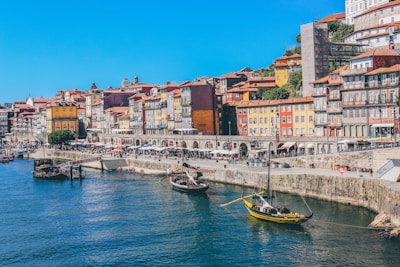
Porto Ribeira waterfront colourful facades Dom Luis bridge reflection
Porto — The Ribeira & the Gaia Cellars

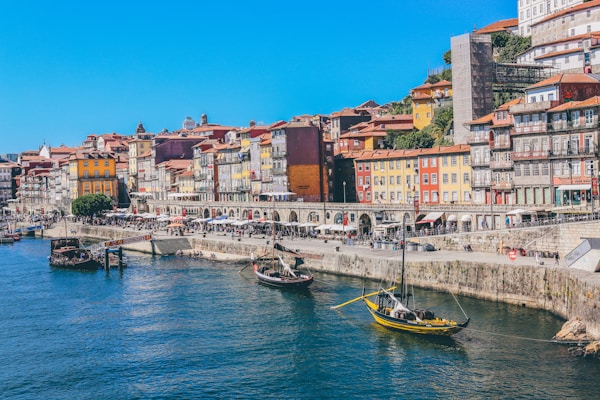
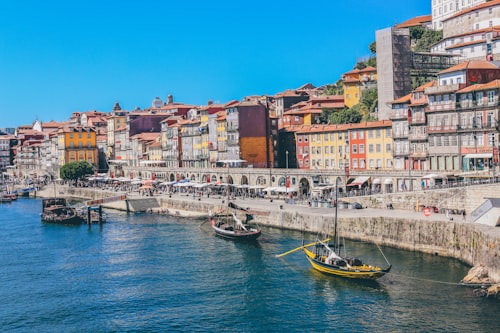
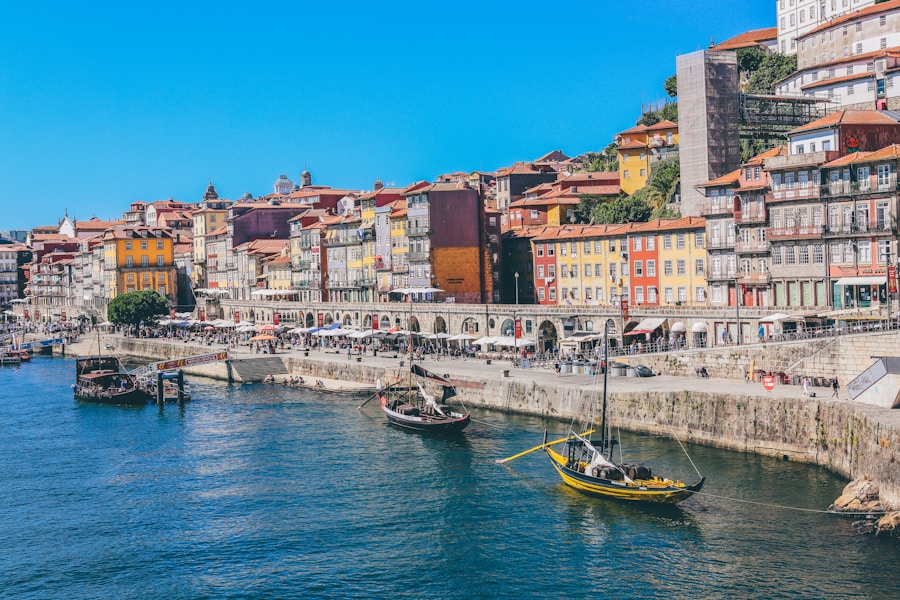
Porto’s Ribeira — the medieval waterfront quarter, its pastel facades reflected in the Douro at the foot of the Dom Luís bridge — is one of the most visually compelling city waterfronts in Europe, and the view from the upper deck of the double-decker iron bridge (designed by Théophile Seyrig, an Eiffel associate, 1886 — the upper deck at 60m gives the full panorama of Porto and Gaia) at sunset is the finest single viewpoint in Northern Portugal. The Vila Nova de Gaia Port wine cellars across the river (walk the lower deck of the Dom Luís bridge — 5 minutes — then up the hillside of cellars) offer the Taylor Fladgate, Sandeman, Graham’s, and Calem cellar tours (EUR 12–22 — include tastings of two or three Port styles). The evening tasting glass at the Ramos Pinto riverside terrace (a glass of 10-year Tawny for EUR 4, the Porto skyline opposite in the last light) is the best EUR 4 experience in Portugal.

Year-round · Cellar tour EUR 12–22
Azores Sao Miguel island Sete Cidades volcanic lake green caldeira hiking
The Azores — Sete Cidades Crater

The Azores — nine volcanic islands in the mid-Atlantic, 1,500km west of Lisbon, equidistant from Europe and North America — are among the most extraordinary island landscapes on earth. São Miguel (the largest — accessible from Lisbon in 2 hours by SATA or TAP) contains the Sete Cidades caldeira (a collapsed volcanic crater 12km in diameter containing two crater lakes — one green, one blue, linked by a bridge — with the crater rim accessible by road and the lake viewpoint at Vista do Rei the finest volcanic landscape view in the Atlantic). The Furnas thermal valley (bubbling mud pools, hot springs, the Lagoa das Furnas cooked by geothermal heat at the lake floor — the Cozido das Furnas — a meat and vegetable stew cooked underground in the volcanic heat, served at the lakeside restaurant Restaurante Tonys — order 24hrs ahead) is the most extraordinary cooking tradition in the Portuguese-speaking world.

2hrs from Lisbon · April–October best
Lisbon azulejo tiles blue white Portugal National Tile Museum facade
The National Tile Museum

The Museu Nacional do Azulejo — in a 16th-century convent in eastern Lisbon (10 minutes from Oriente station — tram or taxi) — is the most complete single account of the azulejo tile tradition (the decorative glazed ceramic tile that defines Portuguese architectural culture, inherited and transformed from Moorish, Dutch, and Spanish ceramic art over 600 years). The museum’s centrepiece: a 23-metre panoramic tile panel of Lisbon’s pre-earthquake waterfront (1738 — the most detailed image of 17th-century Lisbon in existence, showing the city exactly as it appeared 17 years before the earthquake that destroyed it). The convent church (the Madre de Deus — the 18th-century tile programme on the walls is the finest in Lisbon) is included in the EUR 7 entry ticket. Allow 2 hours; the gift shop sells reproduction tiles and small azulejo panels that are the most authentically Portuguese souvenir available in the city.

EUR 7 · Open Tue–Sun · Eastern Lisbon
When to Visit

Portugal Through the Seasons

Portugal’s climate is among the mildest in Western Europe — warm but not extreme, wet in winter in the north, reliably sunny in the Algarve. The best months depend entirely on what you’re going for.

🌸
Spring — The Finest Season
March – May

Spring is Portugal’s finest season: the wildflowers (the Alentejo plains bloom with poppies, lupins, and wild orchids from February through April in a display that rivals any in Europe), the temperatures are ideal (18–24°C), the Algarve beach season opens (water at 17–19°C — cold but swimmable), and the crowds are below summer peak. The Douro Valley blossoms (almond trees in February – March — one of the most beautiful seasonal spectacles in Portugal — the White Nights of the Douro festival in Sabrosa), the Lisbon Festival de Lisboa (international theatre and performance, June), and the Lisbon Book Fair (Parque Eduardo VII, late May–June — the largest outdoor book fair in the world by attendance) all fall in spring. Book accommodation 6–8 weeks ahead; the best Lisbon and Algarve hotels fill quickly in May.

Summer — Peak & Festivals
June – August

Portuguese summer is the season of the Festas de Santos Populares (the Popular Saints Festivals — June 12–13 is Santo António, Lisbon’s patron saint, when the entire Alfama neighbourhood is decorated with coloured paper and sardines are grilled on every corner — the most characteristically Lisbon event of the year), the Algarve’s peak beach season (water 22–25°C, reliably sunny, crowds at maximum in July–August — Faro and the eastern Algarve are less crowded than Lagos and the western), and the Douro Valley harvest preparations. Lisbon in August is hot (30–35°C) and many residents leave — the city is quieter but fully operational. The Sinusite festival at Sintra (July) and the Sudowoodo festival near Évora (the Alentejo music tradition) are the cultural summer highlights.

🍂
Autumn — Harvest & Quiet
September – November

Autumn is Portugal’s second-finest season and, for wine and food travellers, the best. The Douro Valley harvest (late September – mid-October — the vindima, when the terraced vineyards are picked by hand, the quintas are full of activity, and the air in the valley smells of fermenting must) is the most sensory season on the Iberian Peninsula. The Algarve beach season extends to October (water still 21–23°C, crowds dramatically reduced, prices 20–30% below August). The Alentejo in October — the cork oak harvest (every nine years per tree), the olive harvest beginning in November — is the most quietly beautiful version of the interior. The Lisbon Marathon (first Sunday in October) and the Porto Marathon (second Sunday in December) are the major road running events.

Winter — Light, Price & Big Waves
December – February

Portuguese winter is mild by European standards (Lisbon averages 14–16°C in January — warmer than Sydney in July) and offers the lowest prices, the fewest tourists, and the most authentic version of the cities. The Algarve in January is almost empty — a peculiar and beautiful experience of having the sea-stack coast to yourself, the village restaurants serving locals rather than visitors, and the accommodation prices at a fraction of summer. Nazaré’s big waves (November–March — the Praia do Norte surf season) are the natural spectacle. The Douro Valley in December — bare terraced vines, low river mist, the quintas quiet after harvest — has the most atmospheric landscape of any Portuguese season. Christmas in Lisbon (the Feira de Natal at Parque Eduardo VII, the Christmas lights on the Av. da Liberdade — the finest Christmas tree street in Portugal) adds a seasonal layer.

Expert Tips for Portugal

From the team who has eaten at Pastéis de Belém at 8am, watched the Nazaré waves from the fort in December, and understood that saudade is not actually untranslatable — it just requires experiencing.

01
The Couvert Is Not a Scam — But You Can Refuse It

Every Portuguese restaurant will place bread, butter, olives, tinned fish, or other small items on the table without being asked. This is the couvert (cover) — a practice inherited from the tavern tradition of the 18th century, now formalised as a charge of EUR 1–4 per person. It is listed on the menu and on the final bill. It is legal, transparent, and represents real value in most restaurants (the bread, cheese, and presunto at a good Alentejo restaurant is worth considerably more than its EUR 3 couvert charge). However, you can decline the couvert entirely by saying “não quero, obrigado/a” (I don’t want, thank you) when the items are placed; they will be removed without charge and without offence. The confusion is when visitors eat the items and then question the charge — once eaten, the couvert is owed. The rule: look at what’s brought, decide if you want it, say no politely if you don’t, and the question resolves cleanly. The couvert in a quality Alentejo tasca — fresh sourdough, soft sheep’s cheese, olives cured with herbs and lemon — is worth keeping every time.

02
Go to Porto as Well as Lisbon

The overwhelming majority of Australian visitors to Portugal visit Lisbon and the Algarve, leaving Porto to the European travellers who fly directly from London or Paris. This is a mistake of the first order. Porto is one of the most beautiful cities in Western Europe — the Ribeira waterfront, the Dom Luís bridge at sunset, the Gaia Port wine cellars, the extraordinary tile facades of the São Bento station (the interior is a single large hall decorated with 20,000 blue-and-white azulejo tiles depicting scenes from Portuguese history — the finest tile programme in Portugal, free to enter), the Livraria Lello (the Gothic-revival bookshop that J.K. Rowling visited before writing Hogwarts — book tickets online, EUR 5, redeemable against a book purchase) and the francesinha are individually extraordinary; together they make Porto the finest 2–3 day city stay in Iberia after Lisbon. The train from Lisbon to Porto (Alfa Pendular — 2hrs 45min, EUR 25–55 booked ahead at cp.pt) is the correct connection.

03
Portugal Is Best with a Hire Car for at Least Part of the Trip

Lisbon and Porto are both entirely walkable and their day trips (Sintra, Cascais, Porto day cruises on the Douro) accessible by train. But the Alentejo, the Algarve coast beyond the main resort towns, the Douro Valley quintas, and the Costa Vicentina (the wild surf coast of the Alentejo and Algarve — arguably Portugal’s finest stretch of Atlantic coast, accessible only by car) all require a hire car for meaningful exploration. The Portuguese road network is excellent, the roads are well-signed, the driving culture is no more difficult than Spain’s, and fuel costs are comparable to Australia. Hire from Lisbon airport on arrival for any circuit including the Alentejo or the Algarve coast west of Lagos; return the car at Lisbon or Faro. The Via Verde (automatic toll) transponder is worth adding at rental — Portugal’s motorways use electronic tolling on most routes, and the via verde unit avoids the complexity of prepaid cards at toll booths.

04
Portugal Has the Best Value Wine in Western Europe

Portuguese wine is consistently the finest value in Western Europe, partly because it is still not as well-known internationally as Spanish or French wine, and the price-to-quality ratio is exceptional. A restaurant-quality Alentejo red wine costs EUR 12–20 at a Lisbon wine shop for a bottle that would cost EUR 30–50 if it came from Tuscany or Burgundy. Vinho Verde whites (fresh, low-alcohol, excellent with seafood) cost EUR 5–12 at supermarkets for genuinely high-quality bottles. Port wine (buy at the Gaia cellars directly or at a specialist shop — Napoleon, A Perola do Bolhao in Porto, or the WINE BE in Lisbon) at EUR 25–60 for a quality Tawny or LBV is extraordinary value for wines that in Australia retail at AUD 60–150. The Modelo and Continente supermarkets carry an exceptional wine selection at near-cellar-door prices — a proper Portuguese wine education costs EUR 50–100 in supermarket experiments and is worth every cent.

Before You Go

Getting to & Around Portugal

Lisbon is a long way from Brisbane. But it is one of the most rewarding long-haul destinations in Europe, and the connections from the Middle Eastern hubs are excellent.

Flights from Brisbane to Portugal
  • No direct Australia–Portugal service. All routings connect through at least one hub. Total journey time from Brisbane: 22–28 hours depending on routing and layover length. The Gulf carrier routings (Emirates via Dubai, Qatar via Doha, Etihad via Abu Dhabi) are the most frequently available and competitively priced options.
  • TAP Air Portugal via the European hubs: TAP is Portugal’s national carrier, based at Lisbon Humberto Delgado Airport. TAP does not fly direct from Australia but connects well from London (Heathrow — 2.5hrs), Frankfurt (2.5hrs), Paris CDG (2hrs), and Madrid (1hr). A British Airways or Iberia flight from Australia via London or Madrid connecting to TAP to Lisbon is one routing; the full-service carrier for the final leg. TAP’s stopover programme allows a free multi-day Lisbon or Porto stopover en route between the UK/Europe and the Americas — useful for travellers combining Portugal with North America.
  • Emirates via Dubai: Brisbane–Dubai–Lisbon is the single most frequently booked Australian routing to Portugal — approximately 22–24 hours total, the Dubai hub has multiple Lisbon daily departures, and Emirates’ product quality is consistently excellent. Often the best-value fare. The A380 service on the Dubai–Lisbon route provides good comfort for the final 6-hour leg.
  • Qatar Airways via Doha: Brisbane–Doha–Lisbon — approximately 23–25 hours, Qatar’s Doha hub has good Lisbon connections, and Qatar’s business class product (the QSuite) is the finest long-haul upgrade available on any Middle Eastern carrier. Economy fares are competitive year-round.
  • Open-jaw routing — fly into Lisbon, out of Porto or Faro: One of Portugal’s great logistical advantages is the proximity of its airports: LIS (Lisbon), OPO (Porto, 280km north), and FAO (Faro/Algarve, 280km south) are all served by low-cost European carriers from each other and from Spain, France, and the UK. Flying into Lisbon and out of Faro (or Porto) on a one-way routing adds negligible cost and eliminates the return backtrack. Check open-jaw fares at the same time as single gateway fares.
  • Best booking window: June–August peak: book 3–5 months ahead. Spring (April–May): 10–14 weeks. Autumn (September–October): 8–10 weeks. Winter: 6–8 weeks. January fares from Brisbane to Lisbon are typically among the year’s cheapest. The Algarve peak (July–August) has the most expensive accommodation but competitive airfares due to high charter volume from the UK and Northern Europe.
  • ETIAS — check before departure: Portugal is a Schengen Area member. Australian passport-holders enter visa-free for 90 days in any 180-day period. ETIAS (European Travel Information and Authorisation System — EUR 7, valid 3 years) is expected to launch for Australian visitors in 2025–2026. Check ec.europa.eu for current requirements before booking.
🚊
Getting Around Portugal
  • CP (Comboios de Portugal) — national rail: The Alfa Pendular high-speed train (not actually high-speed by European standards — 200km/h maximum, more of a quality intercity service) connects Lisbon (Oriente station) to Porto (Campanhã — 2hrs 45min, EUR 25–55 booked ahead), Coimbra (1hr 30min, EUR 15–35), and Faro (3hrs 15min, EUR 20–50). Book at cp.pt (English available) or the CP app. For the Douro Valley: the regional train from Porto (Campanhã) to Pinhão (the Douro Valley wine village — 2hrs 30min, EUR 12–18) follows the river valley for the final hour in one of the finest rail journeys in Iberia.
  • Hire car — essential for the Alentejo, Douro quintas, and Algarve west: Portuguese motorways are excellent and well-tolled. The Via Verde transponder (included with most hire car bookings or added at EUR 3–5/day) handles all electronic tolls automatically — add it to avoid confusion at toll plazas. Without Via Verde, the alternative is a prepaid toll card (CTT EASYTOLL or pay-in-advance with the rental company). Standard European licences and Australian licences are both valid. Portuguese road culture is aggressive by Australian standards — fast overtaking, close following — but the roads are well-maintained and well-signed.
  • Lisbon transit — Viva Viagem card: The Viva Viagem card (available at any Metro station for EUR 0.50 — the card itself — plus loaded credit) covers all Lisbon Metro, trams, buses, and the Carris ferry network. The 24-hour unlimited travel card (Zapping — load EUR 6.85) is the best value for any day involving more than 4 transit journeys. Tram 28 (the famous yellow tram through Alfama — heavily crowded in tourist hours) and the E15 (the modern tram to Belém — 30 minutes from Cais do Sodré) use the Viva Viagem card. Uber is available in Lisbon and functions well — typically EUR 5–12 for intra-city journeys.
  • Porto transit: Porto’s Metro (6 lines, EUR 1.35 per journey with Andante card — available at any Metro station) connects the airport (Aeroporto station — Line E, 35 minutes to the city centre, EUR 2.15) to the city efficiently. The most useful line for visitors: Line D (the yellow line, connecting Porto Campanhã station to the Jardim do Morro in Gaia via the Dom Luís bridge lower deck). Porto’s historic trams (Lines 1, 18, and 22) are legitimate historic vehicles rather than tourist gimmicks, covering the waterfront and the Bonfim district.
  • Flixbus and Rede Expressos: Long-distance buses (Rede Expressos — redeexpressos.pt — and Flixbus) connect all Portuguese cities at lower prices than the rail and with more flexibility on routing (particularly for towns not on the main rail lines — Óbidos, Évora, the Alentejo towns). Évora from Lisbon: 1hr 45min by express bus (EUR 13–17) versus 1hr 30min by train (EUR 12–18 — comparable, train slightly more convenient from Oriente station).
  • Ferries — the Tagus and the Douro: The Transtejo ferries across the Tagus (from Cais do Sodré to Cacilhas — 10 minutes, EUR 1.35 — the cheapest and most scenic crossing in Lisbon, giving the view of the Alfama and the 25 de Abril bridge from the water) are a legitimate and cheap Lisbon transport option. The Douro river taxis in Porto (connecting the Ribeira to the Gaia waterfront — EUR 3–5) add to the riverside experience. The Setúbal–Tróia car ferry (Fertagus — 15 minutes, EUR 5–9 one way including car) is the access route for Comporta and the Alentejo coast.
💰
Budget Guide — What Portugal Costs
  • Best value in Western Europe: Portugal is consistently the cheapest Western European country for food, accommodation, wine, and activities — typically 30–50% cheaper than Spain and 50–70% cheaper than France for comparable quality. A comfortable mid-range visit (3-star accommodation, two meals per day including one restaurant, attractions, and transport) costs approximately EUR 100–180 per person per day — compared to EUR 150–250 for the same experience in Spain or EUR 200–350 in France.
  • Currency: Euro (€). Cards (Visa and Mastercard) are accepted at hotels, larger restaurants, and shops. In smaller towns, village restaurants, and the traditional tascas, cash is preferred or required — always carry EUR 30–50 in cash. The Multibanco ATM network (the Portuguese ATM system — widely available, even in small Alentejo villages) accepts all major international cards with no Portuguese fee (your home bank’s international fee applies).
  • Accommodation: Budget (hostel or guesthouse — pensão): EUR 35–70/night. Mid-range (3-star hotel or boutique B&B): EUR 80–160/night. Boutique (4-star, good location): EUR 150–280/night. The pousadas (historic hotels in converted castles, monasteries, and palaces — operated by a national chain — pousadas.pt — start from EUR 90/night and represent the finest value heritage accommodation in Western Europe; the Pousada de Évora and the Pousada do Palácio de Estói in the Algarve are the benchmarks). The Alentejo rural tourism (quintas, agriturismos, herdades — farmhouses and wine estates offering room and breakfast — EUR 80–150/night) is the most authentic and characterful accommodation format in Portugal outside the cities.
  • Food costs: The prato do dia (the dish of the day — typically a main course, bread, and a drink for EUR 8–12) at any Portuguese tasca is the finest food-value combination in Western Europe. A full three-course lunch with wine at a traditional restaurant: EUR 15–25. A quality dinner for two with a bottle of regional wine: EUR 50–80. The highest tier (fine dining — restaurants like Belcanto in Lisbon, the two-Michelin-star restaurant by chef José Avillez, or the Largo do Paço in Amarante): EUR 100–200 per person for a full tasting menu. Street food: Pastéis de nata EUR 1.20–1.50, a bica (espresso) EUR 0.70–1.20, a bifana (pork roll) EUR 2–4.
  • Activities and attractions: Most major Portuguese museums: EUR 4–15. The Jerónimos Monastery (EUR 15, free Sundays until 2pm), the Sintra Pena Palace (EUR 14 — book at parquesdesintra.pt to skip the queue), the Museu Nacional do Azulejo (EUR 7), the Museu Nacional de Arte Antiga (EUR 10). The Time Out Market (free entry, pay per dish — EUR 5–20), the Port wine cellars in Gaia (EUR 12–22 including tastings), the Convento dos Capuchos (EUR 8). Many of Portugal’s finest experiences are free: the miradouros (viewpoints), the beach at Comporta, the Roman Temple in Évora, the Praça do Comércio at sunset.
  • The Lisboa Card: The Lisboa Card (EUR 30/24hrs, EUR 51/48hrs, EUR 62/72hrs) includes free entry to 34 museums and monuments (including the Jerónimos Monastery, MAAT, and the National Tile Museum), unlimited Lisbon transit, and discounts on boat tours and Sintra attractions. For a museum-focused 2–3 day Lisbon stay, the card is good value — the Jerónimos entry alone (EUR 15) plus the Tile Museum (EUR 7) plus unlimited transit gets close to break-even on the 24-hour card. Available at the Lisbon tourism offices or online at visitlisboa.com.
Day by Day

Portugal Itineraries for Australians

A country compact enough to circuit in 12 days, deep enough to reward 3 weeks. Three Portugal routes designed around the long-haul from Australia.

⌛ 10 Days · The Classic Portugal
Lisbon, Sintra, Alentejo & Porto
Cities · History · Wine · Food
Days 1–3
Lisbon. Day 1: Belém (Jerónimos Monastery at opening, Pastéis de Belém for breakfast). Day 2: Alfama morning walk (miradouro da Graça at 8am, Sé Cathedral, São Jorge Castle). Evening: fado dinner at Clube de Fado (pre-booked). Day 3: Chiado (Livraria Bertrand, Café Brasileira), Mouraria food tour, Príncipe Real antiques. LX Factory evening if Sunday.
Day 4
Sintra day trip. First train from Rossio (6:23am). Pena Palace (pre-booked, first entry 9:30am). Quinta da Regaleira after lunch (fewer queues in the afternoon). Convento dos Capuchos by hire car or taxi. Return to Lisbon for late dinner in Bairro Alto.
Days 5–6
Alentejo. Hire car from Lisbon. Day 5: Évora (Roman Temple, Chapel of Bones, Pousada dos Lóios overnight). Day 6: Monsaraz (the hilltop fortified village above the Alqueva reservoir — the finest view in the Alentejo), Herdade do Esporão winery lunch, drive through cork oak forest to Comporta. Return hire car to Lisbon or keep for Porto.
Days 7–8
Porto. Alfa Pendular train Lisbon–Porto (2hrs 45min). Day 7: Ribeira waterfront, São Bento station tiles, Dom Luís bridge at sunset. Evening: Gaia cellars tasting (Taylor Fladgate). Day 8: Livraria Lello, Mercado do Bolhão (the city’s historic iron market — renovated, fully reopened), francesinha at Café Santiago for lunch.
Days 9–10
Douro Valley. Regional train Porto–Pinhão (2.5hrs — the finest rail journey in Iberia). Quinta do Crasto or Ramos Pinto wine tasting with lunch on the terrace. Afternoon boat back downstream. Return Porto – Depart OPO or return to LIS.
Book This Itinerary →
⌛ 14 Days · Lisbon to the Algarve
South Portugal & the Coasts
Beaches · History · Food · Self-Drive
Days 1–4
Lisbon. Four full days: all nine neighbourhoods in sequence — Belém, Alfama, Chiado/Bairro Alto, Mouraria, Príncipe Real, Baixa, LX Factory (Sunday if timed), Parque das Nações (Oceanarium). Two fado evenings: one at Tasca do Chico (intimate, book weeks ahead), one at Clube de Fado. Sintra day trip (Day 4).
Day 5
Cascais & Estoril coast. Train from Lisbon to Cascais (40min, EUR 2.35). Hire bicycle at the station. Cycle the Estoril coast path (30km, flat, Atlantic left). Lunch at Cascais fish market. Return to Lisbon late afternoon.
Days 6–7
Alentejo interior. Hire car from Lisbon. Évora overnight (Pousada dos Lóios — Roman Temple dinner). Day 7: Beja (the Roman city — the finest Roman mosaic collection in Portugal at the Museu Regional de Beja), Mértola (the walled Islamic city at the confluence of the Guadiana — one of the most beautiful small towns in Portugal).
Days 8–11
Algarve. Drive south from Mértola to Tavira (the eastern Algarve — the most architecturally intact Algarve town, whitewashed rooftops, Roman bridge over the Gilão). Day 9: Lagos (Ponta da Piedade kayak tour). Day 10: Sagres (the southwestern tip of Europe — the fortress, the Atlantic in three directions, the most dramatic headland in Portugal). Day 11: beach day at Meia Praia (Lagos) or Praia da Marinha (Lagoa — the finest beach in the central Algarve).
Days 12–14
Return north: Comporta & Setúbal. Drive north from Algarve via the Alentejo coast. Day 12: Comporta (beach, flamingos, lunch at Comporta Café). Day 13: Arrábida Natural Park (Portinho da Arrábida beach — arrive early). Day 14: return car to Lisbon, final bica and pastel de nata at Belém, depart LIS.
Book This Itinerary →
⌛ 10 Days · Lisbon & the Azores
Atlantic Portugal
Capital · Volcanic Islands · Unusual Portugal
Days 1–4
Lisbon. The essential Lisbon circuit: Belém, Alfama, fado evening, Chiado, Mouraria, Príncipe Real Saturday market. National Tile Museum (Museu do Azulejo) — the pre-earthquake Lisbon tile panorama is the essential complement to any Alfama walk. Time Out Market for a comprehensive overview of Portuguese cuisine in a single evening.
Days 5–9
São Miguel, Azores. SATA or TAP flight Lisbon–Ponta Delgada (2hrs, from EUR 80 return booked ahead). Day 5: Sete Cidades caldeira (hire car from Ponta Delgada — 30min, drive to Vista do Rei viewpoint). Day 6: Furnas Valley (bubbling mud pools, geothermal pools, Cozido das Furnas lunch — book 24hrs ahead at Restaurante Tonys). Day 7: whale watching (São Miguel is one of the world’s finest whale-watching destinations — sperm whales and blue whales year-round, peak April–October — Futurismo or Terra Azul operators — EUR 55–70). Day 8: Nordeste coast (the island’s wildest eastern tip — cliff walks, volcanic rock pools, the Ribeira dos Caldeirões park). Day 9: Ponta Delgada city (the black basalt baroque architecture, the Portas da Cidade gateway, the Mercado da Graça — pineapple grown in greenhouses heated by volcanic steam, the Azores’ most distinctive produce — buy one at the market).
Day 10
Return to Lisbon — Depart. Flight Ponta Delgada–Lisbon (2hrs). Final evening in Alfama or direct connection home. If time: the Museu Nacional de Arte Antiga (the São Vicente polyptych — the most important painting in Portuguese art history — is worth the taxi ride to Santos for anyone with 2 hours before a late flight).
Book This Itinerary →

A warm pastel de nata
at 8am in Belém.
That is where it starts.

Our Portugal specialists have the Tasca do Chico fado reservation confirmed weeks before your arrival, the Alentejo pousada booked in the 15th-century convent beside the Roman Temple, and the correct Douro train timing for the sunset above Pinhão. They know which Évora restaurant serves the finest açorda alentejana, which Algarve beach is empty in September, and where the best-value 10-year Tawny is poured overlooking the Porto skyline at evening. After 35 years building Iberian itineraries for Australians, we know the difference between visiting Portugal and experiencing it. Come to us.

Plan My Portugal Trip Call 0409 661 342

Trusted by 50,000+ Australian travellers · ATAS Accredited · 35+ Years

More Europe Guides

More European Travel Guides