🇪🇸 Country Guide · Iberian Peninsula · Europe

Where Dinner
Starts at Ten
and the Night Has Barely Begun

The country where lunch starts at 2pm, dinner at 10pm, and a city going quiet before midnight is considered an early night. Seventeen autonomous regions, each functioning as a distinct cultural world. The finest food culture in Europe, currently. The most booking-constrained UNESCO site on earth. And one city — Barcelona — that has spent a century building a cathedral that will redefine what architecture is capable of.

~22hrs
Brisbane to Madrid/Barcelona
90 days
Schengen Visa-Free (AUS)
50
UNESCO World Heritage Sites
17
Autonomous Regions
€ EUR
Currency
🛂
Entry
Schengen Visa-Free90 days in 180 · AUS passport
💲
Currency
Euro (€)Good value vs UK & France
Gateways
Madrid (MAD) · Barcelona (BCN)Also Málaga (AGP) for Andalusia
🚊
Transport
AVE High-Speed RailMadrid–Barcelona 2.5hrs
🌡
Best Season
Apr–Jun · Sep–OctAvoid Aug in cities; Andalusia
🚫
Book Early
Alhambra TicketsSell out months ahead
About Spain

Seventeen Regions,
One Extraordinary Country

Spain is not one destination — it is seventeen. The seventeen autonomous communities of Spain are the result of a constitutional settlement that followed the Franco dictatorship (1939–1975) and that granted genuine cultural and political autonomy to regions with distinct linguistic and historical identities: Catalonia (Catalan-speaking, economically dominant, architecturally extraordinary), the Basque Country (Euskera-speaking, gastronomically world-leading), Andalusia (the Moorish south, the origin of flamenco, the Alhambra, the white villages of the sierra), Castile and León (the heartland of the Spanish language and the Spanish empire, its meseta dotted with Romanesque churches and medieval cities), Galicia (Celtic, green, rainy — the Santiago de Compostela pilgrimage, the finest seafood in Spain), and Valencia (the origin of paella, the City of Arts and Sciences, the Mediterranean beach culture at its most developed). Each region is genuinely different in language, food, architecture, and character, and the most rewarding way to visit Spain is to choose one or two regions and go deep rather than trying to cover them all in one trip.

Spain has been at the centre of European history for two millennia — a Roman province, a Visigothic kingdom, an Islamic civilisation of extraordinary sophistication (Al-Andalus — the caliphate period from the 8th to the 15th century produced mathematics, astronomy, medicine, and philosophy that constituted the most advanced civilisation in the Western world), a Catholic monarchy that expelled its Jewish and Muslim populations in 1492 and simultaneously dispatched Columbus westward, a colonial empire that controlled most of the Americas for 300 years, and a modern democracy that has produced Pedro Almóodovar, Rafael Nadal, FC Barcelona, and the world’s most innovative restaurant (El Bulli — closed 2011, its influence ongoing). To travel in Spain is to move through this layered history at every turn — from the Roman aqueduct at Segovia (122 CE, still standing, no mortar, 166 arches) to the Sagrada Família’s towers still rising above Barcelona’s Eixample grid.

For Australian travellers, Spain is the Iberian alternative to Italy — comparable in cultural depth, comparable in food quality, broadly comparable in climate, but with a different and in many ways more immediately accessible personality. The Spanish are less formal than Italians in social interaction, the food culture is more participatory (the tapas tradition places the diner in permanent motion through a variety of small plates and establishments), and the cities are more uniformly excellent: Madrid and Barcelona are both genuinely great world cities; Seville, Bilbao, and Valencia are individually more interesting than most European cities of comparable size.

🇪🇸 Spain at a Glance
  • Population: 47.4 million in 505,990 km² — the second largest country in the EU by area
  • 50 UNESCO World Heritage Sites (2024) — including Gaudí’s works in Barcelona, the Alhambra, the Camino de Santiago, Salamanca, Córdoba’s mosque-cathedral, Seville’s cathedral, and the Roman city of Segovia
  • AVE (Alta Velocidad Española): the high-speed rail network — Madrid to Barcelona 2hrs 30min, Madrid to Seville 2hrs 30min, Madrid to Valencia 1hr 40min — the most extensive high-speed rail network in Europe after China
  • The Alhambra in Granada: the most visited monument in Spain (2.7 million visitors annually) and the most difficult to book — tickets sell out 3–6 months in advance
  • Jamón ibérico de bellota: acorn-fed Iberian pig, the finest cured meat in the world — produced in Extremadura and Andalusia, aged 36–48 months, available in Madrid’s Mercado de San Miguel or the Salamanca market from EUR 8–25 per plate
  • La Tomatina (last Wednesday of August, Buñol), San Fermín/Running of the Bulls (7–14 July, Pamplona), Feria de Abril (two weeks after Easter, Seville) — Spain’s three most internationally famous festivals
  • Schengen visa-free for Australian passport-holders; ETIAS pre-registration expected 2025–2026
  • Spanish dining hours: lunch 2–4pm, dinner 9–11pm — restaurants are often closed or serving only drinks at 7pm; accepting this and adjusting to Spanish meal times is the single most important step toward eating well in Spain
Must-See

Spain’s Essential Destinations

From Gaudí’s unfinished masterpiece to the Moorish palace that has no architectural equal in Europe. These are the destinations that most completely justify the flight from Australia.

Barcelona Sagrada Familia Gaudi cathedral towers spires Spain modernism
🏆 UNESCO · Gaudí · 143-year Build

Barcelona

Barcelona is the capital of Catalonia, a Mediterranean port city of 1.6 million, and the only city on earth where a single architect’s vision so permeates the urban fabric that it constitutes a travel destination in itself. Antoni Gaudí (1852–1926) left seven buildings in Barcelona, each UNESCO World Heritage-listed: the Sagrada Família (begun 1882, still under construction, consecrated 2010, estimated completion 2026–2032 — the towers already standing are the most extraordinary architectural achievement of the 20th century), the Casa Batlló (the “House of Bones” — the undulating facade, the dragon-scale roof, the interior lit by a central lightwell of graduated blue tiles — EUR 35 — book at casabatllo.es for the night experience, a theatrical immersive tour), the Casa Milà (La Pedrera — the stone quarry, the rooftop terrace of chimney warriors — EUR 28), and the Park Güell (the mosaic benches, the gingerbread gatehouses, the tilted colonnade — EUR 14 for the monumental zone — book at parkguell.barcelona). The Eixample — the grid of octagonal-cornered city blocks designed by Ildefons Cerdà in 1860 that contains most of Gaudí’s buildings — is the most coherent and most extraordinary piece of 19th-century urban planning in Europe. The Gothic Quarter (El Gòtic), the Barceloneta beach, the Boqueria market (touristified but still functioning — go before 9am), and the El Raval and Poblenou districts complete Barcelona’s essential map.

Catalonia · BCN Airport 40min · 3–5 nights recommended
★ 5.0
Alhambra Granada Spain Moorish palace Nasrid fortress Sierra Nevada
Most Booking-Constrained Site in Europe

The Alhambra, Granada

Andalusia · Granada · Book 3–6 months ahead
★ 5.0
Madrid Prado Museum Gran Via Royal Palace Spain capital city
Capital · Prado · Nightlife

Madrid

Castile · MAD Airport 30min · 3–4 nights
★ 4.9
Seville Spain Alcazar Palace flamenco Giralda tower Andalusia
Flamenco · Real Alcázar

Seville

Andalusia · SVQ Airport · 2–3 nights
★ 4.9
San Sebastian Basque Country pintxos bar food Spain beach La Concha
Most Michelin Stars per Capita

San Sebastián

Basque Country · 1hr from Bilbao · 2–3 nights
★ 5.0
Bilbao Guggenheim Museum Basque Country Spain Frank Gehry titanium
Guggenheim · Basque Food

Bilbao

Basque Country · BIO Airport · 2 nights + Donostia
★ 4.8
Seventeen Autonomous Communities

Spain by Region

Spain’s seventeen regions function as distinct cultural worlds. Choose your region deliberately — a week in Andalusia is a fundamentally different trip from a week in the Basque Country or Catalonia.

Catalonia Barcelona Gaudi Sagrada Familia architecture Mediterranean
Catalonia · Northeast Spain
Catalonia

Catalonia — with Barcelona as its capital — is the wealthiest and most internationally-visited region in Spain, an autonomous community with a distinct Catalan-language culture and a long independence movement that makes its political relationship with Madrid the most contested in Spain. Barcelona is the anchor: Gaudí’s seven UNESCO buildings, the Eixample grid, the Gothic Quarter’s Roman and medieval layering, the Barceloneta beach, and a restaurant scene (Disfrutar — ranked #1 in the World’s 50 Best in 2024, El Celler de Can Roca in Girona — three Michelin stars) that is the most innovative in Europe. Beyond Barcelona: Girona (a beautifully intact medieval city 40 minutes north by AVE — the Game of Thrones filming location for Braavos, the Jewish quarter of El Call, the cathedral that appears to defy structural logic), Tarragona (the finest Roman ruins on the Iberian Peninsula — UNESCO — amphitheatre, circus, and city walls), and the Costa Brava (the northern Catalan coast — Salvador Dalí’s Theatre-Museum in Figueres and his house in Cadaqués, the Cap de Creus landscape).

BarcelonaGironaTarragonaFigueresSitges
Barcelona Travel Guide →
Andalusia Alhambra Seville Cordoba white villages flamenco Moorish Spain
Andalusia · Southern Spain
Andalusia

Andalusia — the eight provinces of southern Spain, from the Atlantic coast of Huelva to the Mediterranean foothills of Almería — is where the Moorish civilisation of Al-Andalus was concentrated and where its architectural and cultural legacy is most powerfully present. The three UNESCO cities (Granada’s Alhambra, Seville’s Cathedral and Real Alcázar, and Córdoba’s Mezquita-Catedral — the mosque-cathedral that is the most architecturally extraordinary building in Spain) form the essential Andalusian circuit. The Pueblos Blancos (white villages — Ronda, Arcos de la Frontera, Zahara de la Sierra, Grazalema — whitewashed hill towns in the Sierra de Grazalema, each dramatically sited, collectively the most beautiful small-town landscape in Iberia), the Costa de la Luz (the Atlantic coast of Cádiz — the finest beaches in Andalusia, the least developed coastline in southern Spain), and the Doñana National Park (Europe’s most important wetland bird sanctuary — flamingos, Iberian lynx, Spanish imperial eagle) complete the Andalusian landscape.

GranadaSevilleCórdobaRondaCádizMálaga
Andalusia Travel Guide →
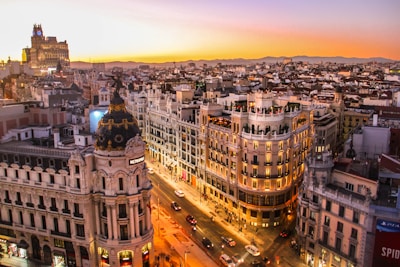
Madrid Royal Palace Prado Museum Gran Via Puerta del Sol Spain capital
Community of Madrid · Central Spain
Madrid & Castile

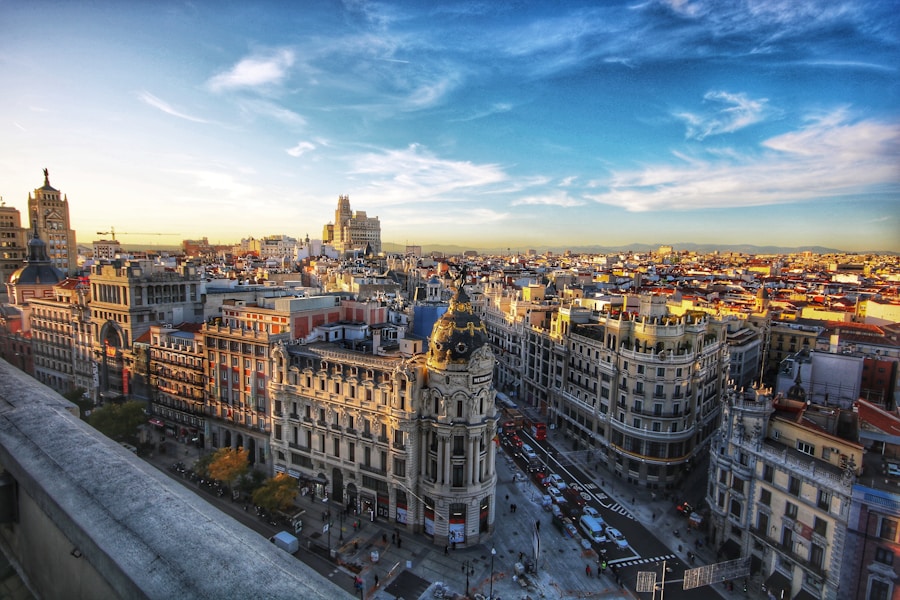
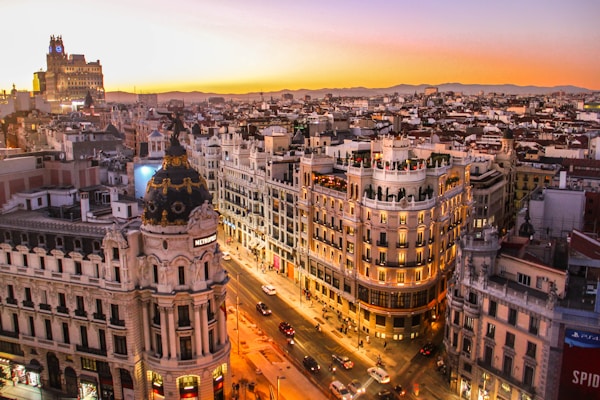
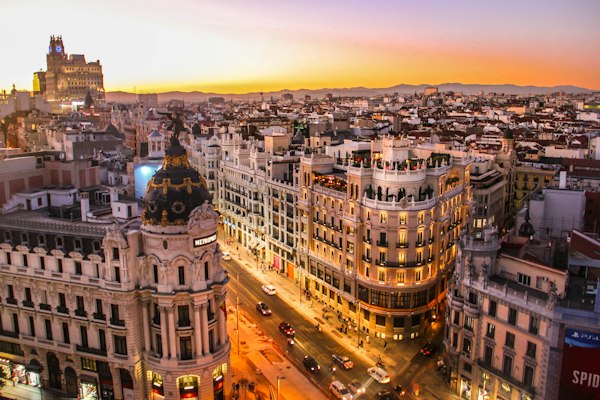
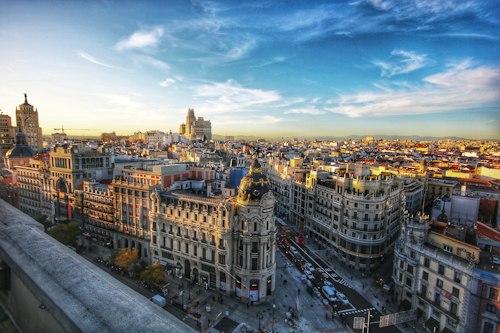
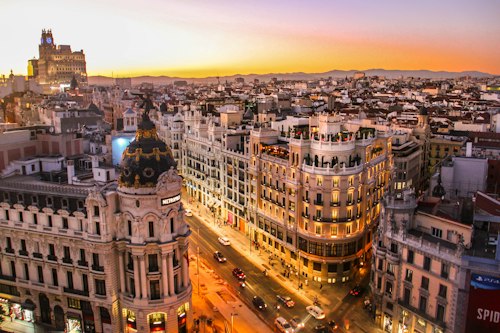
Madrid — Spain’s capital, at 667m altitude on the Castilian meseta — is Europe’s highest capital city and the country’s cultural and administrative heart. The Prado Museum (the finest collection of Spanish, Italian, and Flemish painting in the world — Velázquez’s Las Meninas, Goya’s Black Paintings and the Third of May, El Greco, Raphael, Titian, Rubens — in a Neoclassical building by Juan de Villanueva, 1819 — the single most important art museum in Spain, free evenings from 6–8pm Monday–Saturday), the Museo Reina Sofía (Picasso’s Guernica — the most politically charged painting of the 20th century, in the same room as the studies and preparatory sketches — free evenings from 7–9pm Monday, Wednesday–Saturday; Sunday from 1:30pm — free all day), and the Thyssen-Bornemisza Museum (the private collection that spans from medieval through contemporary — the most chronologically complete single collection in Madrid) together form the Paseo del Arte — the three-museum art walk of incomparable density. The Mercado de San Miguel (the iron-and-glass 1916 market — now a food hall, touristified, but the jamón ibérico and the vermouth-and-anchovy combination is correct). Day trips: Toledo (50min by AVE — the medieval city that held Christian, Muslim, and Jewish communities simultaneously — UNESCO), Segovia (30min by AVE — the Roman aqueduct, the Alcázar that inspired Disney’s Cinderella Castle), Salamanca (2hrs — the finest university city in Spain).

MadridToledoSegoviaSalamancaÁvila
Madrid Travel Guide →
Basque Country San Sebastian pintxos food bars La Concha beach Guggenheim Bilbao
País Vasco · Northern Spain
The Basque Country

The Basque Country — País Vasco — is Spain’s most anomalous region: a small territory with a language (Euskera) unrelated to any other language on earth, the highest Michelin-star density per capita of any region on the planet, an industrial capital (Bilbao) that reinvented itself through a single architectural commission, and a coastal city (San Sebastián — Donostia in Basque) that has arguably the world’s finest food culture per square kilometre. Bilbao’s Guggenheim Museum (Frank Gehry’s titanium-clad 1997 building — the moment when a single building transformed a post-industrial city into an international destination, the “Bilbao Effect” — EUR 18, book at guggenheim-bilbao.eus — the collection is secondary to the building’s spatial experience) and San Sebastián’s pintxo bars (the Basque version of tapas — small pieces of bread loaded with extraordinary combinations, displayed on bar counters and ordered with a glass of txakoli, the slightly sparkling local white wine — the Parte Vieja’s 30 bars form the greatest food street per square metre in Europe) are the twin experiences that define the Basque Country for visitors.

San SebastiánBilbaoVitoria-GasteizGetariaHondarribia
Basque Country Guide →
Valencia Spain City of Arts Sciences paella Mediterranean coast beaches
Valencia · Eastern Mediterranean Spain
Valencia & the Costa Blanca

Valencia — Spain’s third city (800,000), on the Mediterranean coast — is the origin of paella (the authentic Valencian paella contains rabbit, chicken, green beans, and snails — no seafood in the original recipe — cooked in a bomba rice variety over orange-wood fire, available at the rice restaurant belt south of the city — Casa Salvador at Cullera, the benchmark) and of one of the most visually arresting architectural complexes in Europe. The City of Arts and Sciences (Santiago Calatrava and Félix Candela, 1998–2005 — the Hemisfèric, the Science Museum, the Palau de les Arts opera house, the Oceanogràfic — built in the dry bed of the Turia river, the riverbed itself converted into a 9km linear park after a 1957 flood — the finest piece of civic urban design in Spain) is the reason architects make special trips. La Fallas festival (mid-March — the burning of enormous satirical papier-mâché sculptures in every neighbourhood, the most visually spectacular festival in Spain), and the Costa Blanca beaches south of the city (Benidorm — the high-density British resort city — avoided; Altea, Calpe, Jávea — the quieter, more beautiful alternatives) complete Valencia’s offer.

ValenciaAlicanteBenidormJáveaMorella
Valencia Travel Guide →
Galicia Santiago de Compostela pilgrimage cathedral green Spain northwest
Galicia · Northwest Atlantic Spain
Galicia & the Camino

Galicia — the green, Celtic, Atlantic northwest of Spain — is the region most distinct from the stereotypical Spanish image: rainy (more annual rainfall than most of Ireland), deeply Celtic in its folk music and cultural heritage, with a landscape of deep river estuaries (rías) that are the finest shellfish-farming environment in Europe, a cuisine built on the finest octopus (pulpo a la gallega — the Galician octopus dish eaten everywhere in Spain but made best in the source region), and the destination of the Camino de Santiago — the medieval pilgrimage route to the cathedral of Santiago de Compostela (the reputed burial site of St James the Apostle — the Cathedral, begun 1075, with its Baroque Obradoiro facade and Romanesque interior, is one of the most magnificent buildings in Spain). The ría estuaries (the Rías Baixas — the lower rías — produce 90% of Spain’s mussels and the finest albaríño white wine, the correct accompaniment to Galician shellfish). The Costa da Morte (the “Coast of Death” — the wild Atlantic cape west of Santiago, the lighthouse at Fisterra — the traditional “end of the world” for pilgrims) is the most dramatically atmospheric coastal landscape in the Iberian Peninsula.

Santiago de CompostelaA CoruñaPontevedraVigoFisterra
Galicia Travel Guide →
The Most Booking-Constrained Site in Europe

The Alhambra — Complete Booking & Visit Guide

The Alhambra in Granada receives 2.7 million visitors annually in a complex that can accommodate only 6,600 per day in the Nasrid Palaces — the critical ticket. Here is everything needed to actually get in.

1
Understand What the Alhambra Actually Is

The Alhambra (from the Arabic “Al-Hamra” — the Red One, for the iron-oxide colour of its walls) is a 13th–14th century Nasrid palace complex on a hill above Granada, the last and most sophisticated capital of Islamic Spain before the Reconquista’s completion in 1492. It is not one building — it is a fortified city of palaces, gardens, and military structures spread across 142,000 square metres. The Nasrid Palaces (Palacios Nazaríes) — the three successive private palace suites of the Nasrid sultans, with their stalactite (muqarnas) vaulted ceilings, arabesque plaster walls, and reflecting pools — are the specific thing that people come to see and the specific thing that requires the pre-booked timed entry. The Generalife gardens (the summer palace and terraced gardens above the palace complex) and the Alcazaba (the 9th-century military fortress with the Torre de la Vela — the finest view of Granada and the Sierra Nevada) are included in the general Alhambra entry and are significantly less booking-pressured. The gardens alone — the most elaborately designed formal garden landscape in Western Europe, with water channels, fountains, and cypresses — would justify the visit without the palaces.

The Alhambra is at its most beautiful (and most comprehensible) when the Sierra Nevada snow is still visible on the peaks above Granada in April and May — the combination of the palace walls’ warm terracotta against the white mountain background is the image that has defined the Alhambra’s visual identity since the 18th-century Romantic travellers’ paintings.
2
Book the Nasrid Palaces Entry at alhambra-tickets.es

The official booking site is alhambra-tickets.es — the only legitimate source for the Nasrid Palaces timed entry ticket. The daily Nasrid Palace entry is divided into three 1.5-hour time slots: morning (8:30am–2pm), afternoon (2pm–6pm), and nocturnal (7:30pm–9:30pm, runs March–October, Friday and Saturday nights year-round). Each slot has a specific entry time for the palaces printed on the ticket — you must present at the Nasrid Palace entrance within 30 minutes of your allocated time; late arrivals are refused. The general Alhambra complex ticket (which covers the Generalife, Alcazaba, and the permanent exhibition areas, but NOT the Nasrid Palaces) is separately available and does not sell out as quickly.

WARNING: Multiple third-party reseller sites charge EUR 30–60 in “service fees” above the official price for the same tickets. Always book directly at alhambra-tickets.es (EUR 19 for day visit, EUR 18 for nocturnal). The official site’s release schedule is described below.
The morning session (8:30am entry, arriving at the Nasrid Palaces at your allocated time — the first slots are typically 8:30am or 9:00am) has the best light inside the muqarnas halls and the fewest visitors at the first entry time. The nocturnal visit (the Nasrid Palaces lit by candles and footlights, the courtyard pools reflecting the carved plasterwork — extraordinary, but the detail visible in the ceilings is limited by the low light) is a different and more atmospheric experience than the day visit, not a substitute.
3
The Release Schedule — When Tickets Become Available

The Alhambra releases tickets on a rolling 90-day advance window. Tickets for a specific date become available exactly 90 days before that date — for example, tickets for 15 June are released on 16 March at 8am Spanish time (9am AEST, 10am AEDT). At this exact moment, the available day-visit tickets for popular dates (April, May, June, September, October — particularly weekends) sell out within minutes. The process: (1) create an account at alhambra-tickets.es in advance; (2) set a reminder for exactly 90 days before your intended visit date; (3) have your payment details entered and ready; (4) be logged in and on the booking page at 8am Spanish time. If the specific date sells out in the initial release, check daily for cancellations — a small number of returns appear each day as itineraries change. A date that is “sold out” in March frequently has 10–20 available tickets by the day before from cancellations.

If your Spain travel dates are fixed and include Granada, book the Alhambra before booking flights. The Alhambra ticket availability is the true constraint on the trip, not the airfare. Many Australian visitors arrive in Granada only to discover the site is sold out for their entire stay.
4
What to See Inside — The Three Palace Suites

The Nasrid Palaces contain three successive palace suites visited in sequence. The Mexuar (the first, most public palace — the audience chamber and council room, with an oratory prayer room with the finest view of the Albaicín neighbourhood across the valley). The Comares Palace (the formal state palace — the Torre de Comares contains the Salón de los Embajadores — the Throne Room, with a cedar muqarnas ceiling of extraordinary complexity representing the seven heavens of the Islamic cosmos; the Patio de los Arrayanes — the myrtle courtyard with its long rectangular reflecting pool, the most photographed space in the Alhambra). The Palace of the Lions (the private sultan’s palace — the Patio de los Leones, with its central fountain supported by 12 marble lions and surrounded by 124 marble columns, the finest single architectural composition in Islamic Western art; the two lateral halls — the Sala de las Dos Hermanas and the Sala de los Abencerrajes — with their extraordinary honeycomb muqarnas domes). Allow a full 1.5 hours minimum inside the palaces; 2 hours is better.

Look at the plasterwork without photographing it first. The muqarnas ceilings and arabesque wall panels are mathematically coherent — they are all generated from a small number of repeating geometric modules — and the full spatial experience of standing under a stalactite dome requires looking up with both eyes, not through a screen. Photograph after looking; not instead of.
5
Granada Beyond the Alhambra

Granada is a university city of 240,000 with a quality of urban life that the tourist focus on the Alhambra consistently underestimates. The Albaicín (the old Moorish quarter on the hill opposite the Alhambra — narrow lanes, carmen gardens, the Mirador de San Nicolás with the most celebrated view of the Alhambra — and the caves of the Sacromonte neighbourhood above, where the gitano flamenco tradition of Granada has been practiced for centuries). The Capilla Real (the Royal Chapel — the mausoleum of Ferdinand and Isabella, the monarchs who completed the Reconquista and commissioned Columbus — their lead coffins visible through a grate below the altar, their monument above — EUR 5). The free tapas tradition of Granada — uniquely in Andalusia, every drink in Granada’s tapas bars includes a free tapa (a small plate of food, selected by the bar, with each drink round — the longer you stay, the more elaborate the tapas become). A three-drink Granada tapas circuit costs EUR 6–9 in drinks and feeds two people adequately.

The free tapas with every drink at Granada’s bars is not a tourist gimmick — it is a genuine local tradition that makes Granada the most affordable restaurant city in Andalusia. The bars around the Calle Elvira and the Realejo neighbourhood (the former Jewish quarter — Campo del Príncipe and surrounding streets) offer the best quality free tapas in the city. Order a cañita (small beer), receive a tapa; order another, receive a different and usually more elaborate tapa.
🏛 Alhambra Fast Facts
📅Book: alhambra-tickets.es — the only official booking site. EUR 19 day visit, EUR 18 nocturnal. Do NOT pay reseller premiums.
Release time: Tickets release exactly 90 days ahead at 8am Spanish time (9am AEST, 10am AEDT in summer).
Nasrid Palace entry: Your ticket specifies your exact 30-minute entry window — be at the Nasrid Palace entrance within this window or be refused.
📋Daily limit: 6,600 visitors per day to the Nasrid Palaces — divided across morning, afternoon, and nocturnal sessions.
👁Best slot: The first morning entry (8:30am or 9am) for daylight and fewest crowds. The nocturnal is beautiful but dimly lit — both are extraordinary.
🚶Getting there: Bus C3 from Gran Vía de Colón (EUR 1.40), taxi from city centre (EUR 7–10), or a 45-minute walk uphill from the Albaicín.
Allow: 4–5 hours for the full complex (Alcazaba, Nasrid Palaces, Generalife gardens). Bring water — the site is extensive and exposed in summer heat.
🍴Eat after: The Alhambra restaurant on the complex is overpriced. Walk down to the Realejo for Granada’s free tapas tradition — order a beer, receive lunch.
⚡ If You Can’t Get Tickets
📌Check daily: Log in at alhambra-tickets.es at 9am Spanish time — cancellations from the day are processed overnight and released each morning.
🌈Sold-out alternatives: The Generalife gardens and the Alcazaba can be visited on a General Visit ticket (no Nasrid Palaces — EUR 10) without timed booking. The gardens alone are among the finest in Europe.
🏠The Albaicín view: The Mirador de San Nicolás at sunset gives the definitive Alhambra exterior view — free, no booking, overwhelmingly beautiful. It is a legitimate partial substitute for those who cannot enter.
📅Adjust dates: Weekdays in November–February have the highest last-minute availability. If your itinerary has flexibility, book Granada for shoulder season.
The Finest Food Culture in Europe

Spanish Food & Tapas — Region by Region

Spain’s food culture is the most innovative in Europe and the most regionally distinct. Understanding which foods belong to which region is the difference between eating well and eating extraordinarily well.

San Sebastian pintxos Basque Country Spain bars txakoli wine
🇪🇸 Basque Country · País Vasco
Pintxos & the World’s Greatest Food City

The Basque Country has the highest density of Michelin stars per capita of any region on earth — a fact that originates in the peculiar intensity of the Basque relationship with food as cultural identity. San Sebastián has more Michelin stars per square kilometre than anywhere except possibly a few streets of Tokyo. The pintxo (the Basque version of tapas — from the Spanish “pincho”, a spike — small pieces of bread loaded with extraordinary combinations, displayed on bar counters, selected and consumed with a glass of txakoli, the slightly sparkling local white wine, or a small beer) is the food form that defines the Basque eating culture. The correct pintxo bar circuit: arrive in the Parte Vieja (the old town) at 7pm, start at the Bar Zeruko (the finest creative pintxos in San Sebastián — molecular gastronomy in miniature on a slice of bread), move to La Cuchara de San Telmo (the back bar with the finest traditional pintxos, served from behind the counter rather than displayed — order the foie gras escalope on toast), continue to Bar Txepetxa (the anchovy specialist — the finest anchovies in Spain, 15 preparations), and finish with the Borda Berri (the slow-cooked egg with idiazabal cheese). Budget EUR 2–4 per pintxo, EUR 2–3 per txakoli. The best pintxo circuit costs EUR 30–40 per person and constitutes the finest value food experience in Europe.

PintxosTxakoli wineBacalao al pil-pilMarmitako (tuna stew)Idiazabal cheeseAnchoas de Getaria
The San Sebastián pintxo circuit is best done on an empty stomach starting at 7pm — eat standing at bars, order one or two pintxos at each, move to the next bar. Sitting down at a table is the tourist iteration; standing at the counter is the Basque iteration and yields better food at lower prices. Do not arrive before 7pm — the pintxos are not freshly made until the evening service.
Spain tapas jamón ibérico Madrid Seville Andalusia food culture traditional
🇪🇸 Andalusia & Castile · The Traditional South
Jamón Ibérico, Gazpacho & Traditional Tapas

Andalusia is the origin of the tapas tradition (the story — possibly apocryphal — that a piece of bread was placed over a glass of sherry to keep flies out, and that bar owners eventually added food to the bread as an attraction) and the region where tapas culture is most deeply embedded. In Andalusia (outside Granada, where tapas are free with drinks — the exception to the rule), tapas are ordered and paid for, but the culture of eating while drinking and moving between bars over the course of several hours is the correct dining format. Gazpacho (the cold tomato soup — Andalusian in origin, ideally made with garden tomatoes and drunk from a glass as a refresher, not eaten as a formal course) and salmorejo (the thicker, richer Córdoba version, topped with jamón and hard-boiled egg) are the defining Andalusian summer dishes. Jamón ibérico de bellota — the acorn-fed black pig of Extremadura and Huelva, cured for 36–48 months, the finest cured meat in the world — is available in every bar and market in Spain but should be eaten in Madrid or Seville where the jamón cutting (the jamonero slicing the leg by hand with a specific curved knife — a craft and a performance) is taken most seriously. The Cinco Jotas brand (5J) and the Joselito brand are the benchmark producers; at EUR 15–25 per plate in a quality bar, jamón ibérico de bellota at its finest is the single best value premium food experience in Spain.

Jamón ibérico de bellotaGazpachoSalmorejoTortilla españolaPata negraManzanilla sherry
Order jamón ibérico de bellota (not “jamón serrano” — serrano is the mountain ham, a different product) at a bar where the leg is visible and being cut to order. The Mercado de San Miguel in Madrid and the Mercado de Triana in Seville are the most reliable locations for quality jamón at sensible prices. EUR 18–25 for a plate of hand-cut bellota at a quality bar is the correct price; EUR 8 is almost certainly serrano, not ibérico.
Spain paella Valencia seafood rice saffron dish traditional authentic
🇪🇸 Valencia & the Mediterranean Coast
Paella, Horchata & the Sea’s Harvest

Paella is the most internationally recognised Spanish dish and the most consistently misrepresented outside its origin region. The authentic Valencian paella contains rabbit, chicken, garrofón (a large flat bean), green beans (judías verdes), and optionally snails — cooked in a wide shallow steel pan (the paellera) over an orange-wood fire, finished with socarrat (the caramelised crust of rice at the bottom of the pan — the most desired element, the sign of correct cooking). No seafood in the original recipe. No cream. No onion (onion releases moisture; a dry, individual grain of rice is the goal). Seafood paella (paella de marisco) and mixed paella exist and are valid dishes, but are not the “original.” Eat paella for lunch (it is a lunch dish — never dinner in Valencia), at a restaurant outside the Valencia city centre (the tourist paella on the seafront uses inferior rice and is often pre-made), ideally at the rice restaurant belt south of the city. Casa Salvador (Cullera, 45 minutes south of Valencia) is the benchmark. Fideuà (the pasta version of paella — thin noodles in the same pan with seafood, the Gandía coastal dish) and arròs a banda (rice cooked in fish stock, served separately from the fish used to make the stock) are the Valencian paella’s two closest relatives. Horchata (the cool, sweet drink made from tiger nuts — chufas — a sweet, milky-looking non-dairy drink served with fartons, the elongated doughnut — available from the original Granà horchateriàs in Valencia’s old town) is the definitive Valencian non-alcoholic experience.

Paella valencianaFideuàArrós a bandaHorchata con fartonsAgua de Valencia (cava cocktail)Esgarraet (roasted pepper salad)
The single most important piece of Spanish food advice: eat paella for lunch only, at a restaurant that cooks it to order (not from a chafing dish), and accept that you will wait 20–30 minutes for it to be made. The socarrat — the caramelised rice crust — is the sign of correct cooking; if there is no socarrat, the fire was too low or the pan too deep. Scrape the bottom of the pan; the socarrat is the reason.
Spain wine Rioja La Rioja tempranillo cellar barrel aging red wine
🇪🇸 La Rioja, Ribera del Duero & Rias Baixas
Spanish Wine — The Complete Map

Spain has the most planted wine vineyard area in the world (nearly 1 million hectares) and a wine culture of extraordinary regional variety. La Rioja (the benchmark red wine region — Tempranillo-based, with a unique oak-ageing classification system: Crianza — 2 years, Reserva — 3 years, Gran Reserva — 5 years minimum — the Gran Reservas of López de Heredia and La Rioja Alta are benchmarks at EUR 25–60 in Spanish restaurants for wines of extraordinary age and quality), Ribera del Duero (Castile’s red wine region, higher altitude than Rioja, producing more structured and powerful Tempranillo — Vega Sicilia, Pesquera, and Pago de Carraovejas are the benchmark estates, the wines of Spain most comparable in prestige to Bordeaux), Priorat (Catalonia — the most mineralically intense and expensive Spanish red, from old-vine Garnacha and Cariñena on llicorella — slate and mica soils — EUR 30–100+ per bottle at Clos Mogador, Álvaro Palacios), and the Rías Baixas white wine region (Galicia — Albariño, the finest white wine in Spain and one of the finest in the world for seafood — fresh, aromatic, with the Atlantic salinity of the ría estuaries built into its character) form the four pillars of Spanish wine. Sherry (Jerez — the fortified wine from Andalusia — Fino, Manzanilla, Amontillado, Palo Cortado, Oloroso, Pedro Ximénez — the most varied and least understood wine tradition in Spain, the Manzanilla drunk icy cold with jamón or anchovies is the most perfect wine-food combination in Iberia) is the most underrated.

Rioja Gran ReservaRibera del DueroPrioratAlbariño (Rías Baixas)Manzanilla sherryCava (Catalan sparkling)
The finest Spanish wine value: a Rioja Reserva from López de Heredia, La Rioja Alta, or Muga in a Spanish restaurant costs EUR 18–35 for a bottle that demonstrates everything the Rioja classification system can achieve. Compare this to an equivalent-quality Bordeaux or Burgundy at EUR 80–150 for the same structural quality. The Rioja wine-to-price ratio is the best in European fine wine; the Gran Reservas are among the most age-worthy wines in the world.
Barcelona market La Boqueria food stalls fresh produce seafood Spain
🇪🇸 Catalonia · Barcelona & the Northeast
New Catalan Cuisine & the World’s Best Restaurant

Catalonia is the origin of the most influential restaurant movement in contemporary world cuisine — the avant-garde Catalan cooking that Ferran Adrià perfected at El Bulli (Roses, Costa Brava, 1994–2011 — closed, now a culinary foundation). El Bulli — three Michelin stars, five times “World’s Best Restaurant” — developed spherification, espumas (foams), and the deconstruction of classic dishes into their constituent flavours in new forms — the most consequential culinary innovation since nouvelle cuisine in 1970s France. Its legacy: the current generation of Barcelona restaurants. Disfrutar (ranked #1 World’s 50 Best 2024 — the three alumni of El Bulli — book at en.disfrutarbarcelona.com 6–9 months ahead — EUR 250–300 per person for the tasting menu), Tickets (Albert Adrià’s tapas bar — the more accessible sibling, EUR 80–120 — book at ticketsbar.es 2–3 months ahead), and the El Celler de Can Roca in Girona (Joan, Josep, and Jordi Roca’s three-Michelin-star temple — book at cellercanroca.com one year ahead — the booking queue is managed by lottery — EUR 200–265 per person) are the three Barcelona-region restaurants that require advance planning at the level of an Alhambra ticket. The mid-range Catalan cuisine: pa amb tomàquet (bread rubbed with tomato and olive oil — the Catalan default bread course, EUR 2–3, universally available, immediately distinctive), the esqueixada (salt cod salad with tomato and onion), and the crema catalana (the original crème brûlée, with orange and cinnamon infusion, in a shallow terracotta dish) are the accessible, characterful baseline.

Pa amb tomàquetEsqueixadaBotifarra (Catalan sausage)Crema catalanaCavaCatalan cream spinach with raisins and pine nuts
Disfrutar is the world’s best restaurant (2024) and booking it requires 6–9 months’ advance planning — but it is in Barcelona, one of the most visited cities in Europe, and is genuinely accessible for Australian visitors with sufficient advance planning. Set a reminder for the opening of the relevant booking window (check en.disfrutarbarcelona.com for current release schedules). The lunch service is marginally more accessible than dinner.
Madrid churros chocolate thick hot drink breakfast Spain traditional
🇪🇸 Madrid & Castile · The Capital’s Food
Cocido Madrileño, Churros & the Art of Late Breakfast

Madrid’s food culture is the most metropolitan in Spain — a city that draws food traditions from all seventeen regions and has been elaborating them for 400 years in the court culture of the Spanish capital. The cocido madrileño — the Madrid chickpea, vegetable, and meat stew, served in three courses (the broth first, then the vegetables, then the meats — morcillo beef, chorizo, black pudding, chicken) — is the most emblematic Madrid dish, available at Lhardy (the 1839 restaurant on the Carrera de San Jerónimo — the oldest restaurant in Madrid, its downstairs counter serving consommé and croquetas since the 19th century) or at La Bola (Calle de la Bola 5 — the finest traditional cocido in the city, cooked in individual terracotta pots in a wood-burning oven — lunch only, EUR 30–40 for the full set). Churros con chocolate: the Madrid breakfast — fried dough sticks dipped in thick hot chocolate at the Chocolatería San Ginés (Pasadizo de San Ginés 5 — open 24 hours, the post-nightclub traditional breakfast destination — churros at 4am with the tablao flamenco crowd is as Madrid as it gets). The bocadillo de calamares (squid ring sandwich on a baguette — the Madrid street food staple, available from the bars on the Plaza Mayor and surrounding streets, EUR 3–4 — the best is at Bar La Campana on the Calle Botoneras).

Cocido madrileñoChurros con chocolateBocadillo de calamaresTortilla de patatasVermut (vermouth)Croquetas de jamón
The Madrid vermut tradition (el vermut — vermouth, drunk between midday and 2pm on weekends, with olives and a small tapa — the Bodega de la Ardosa on Calle Colón, serving their own barrel vermouth since 1892) is the finest pre-lunch ritual in Spain. Order a glass of vermut rojo (red vermouth) with ice and an orange slice, a plate of olives, and a tortilla de patatas — this is the Madrid Sunday at its most characteristically itself.
What to Do

Spain’s Unmissable Experiences

The country that invented the movida, the siesta, and the 11pm dinner. These are the experiences that deliver Spain most completely — from the Prado’s Goya to the Guggenheim’s Gehry to a flamenco performance that starts at midnight and ends when it ends.

Sagrada Familia interior Gaudi Barcelona nave towers light stained glass
Sagrada Família Interior — First Morning Entry

Gaudí’s Sagrada Família — begun 1882, consecrated 2010, still under construction — is the most complex building project in the world and the most visited monument in Spain. The exterior (the naturalistic Nativity façade and the geometric Passion façade) is magnificent; the interior is a genuinely different order of architectural experience. The nave (32 branching columns supporting a vaulted ceiling of hyperbolic paraboloids — the geometry of the natural world expressed in concrete and stone) in morning light, with the stained glass flooding the stone forest in amber and blue, is the finest interior space in contemporary architecture. Book at sagradafamilia.org — mandatory pre-booking, EUR 26 basic, EUR 36 with tower access (the towers give the only close view of the ceramic spire finials). First morning entry (9am) for the best light and fewest visitors.

EUR 26–36 · Book at sagradafamilia.org · 9am entry
Prado Museum Madrid Goya Las Meninas Velazquez Spanish painting art
The Prado’s Free Evening Hours

The Prado Museum — the finest collection of Spanish art in the world, and one of the three or four greatest art museums on earth — offers free admission Monday–Saturday 6–8pm, Sunday 5–7pm. In these two hours, Velázquez’s Las Meninas (the most philosophically complex painting in Western art — the self-portrait that interrogates the act of looking itself), Goya’s Saturn Devouring His Son and the Third of May 1808, El Greco’s The Trinity, and Rubens’s The Three Graces are accessible without the daytime queue. Arrive at 6pm (join the queue at 5:45pm, which forms before the doors open), walk directly to the Velázquez rooms on the ground floor, spend 30 minutes with Las Meninas unimpeded, and then move to the Goya Black Paintings on the first floor. Leave at 7:30pm for dinner at 9pm — the two most important hours in any Madrid itinerary.

Free 6–8pm Mon–Sat · EUR 15 otherwise
Flamenco performance Seville Spain Andalusia dancer authentic tablao
Authentic Flamenco — Knowing the Difference

Flamenco is Andalusian (specifically Seville, Jerez de la Frontera, and Granada’s gitano caves) in origin — a form combining cante (the singing, always the centrepiece), the guitar (accompaniment and counterpoint), baile (the dance), and palmas (hand-clapping), each in improvised dialogue. The difference between authentic and tourist flamenco: authentic flamenco (the palos — the specific forms: soleá, seguiriya, bulería, alegrías) has silence and internal tension; the dance is in service of the cante; the emotional register is duende — the untranslatable quality of genuine feeling in performance. The best Seville flamenco: Casa de la Memoria (Calle Cuna 6 — book at casadelamemoria.es — EUR 22 — 90 people maximum, the most intimate authentic flamenco space in Seville). In Madrid: Cardamomo (Echegaray 15 — EUR 40 including a drink — the most consistently excellent tablao in Madrid).

EUR 22–40 · Book ahead · Seville or Madrid
Guggenheim Museum Bilbao Frank Gehry titanium exterior Spain architecture
Guggenheim Bilbao — Architecture as Destination

The Guggenheim Bilbao (Frank Gehry, 1997 — titanium panels on a complex curved steel structure, built in the former industrial shipyard district of the Nervión River) is the building that most conclusively demonstrated that a single architectural commission could transform a city’s cultural and economic trajectory — the “Bilbao Effect” is now a planning concept used worldwide. The building’s spatial experience (the atrium — the “boat” — the curving galleries — Richard Serra’s The Matter of Time installation in Gallery 104 — eight serpentine Cor-Ten steel sculptures that create a labyrinth of experiential space navigated by the body, not the eye — the finest large-scale sculpture installation in Europe) is the primary reason to visit. The collection is secondary. EUR 18 — book at guggenheim-bilbao.eus. Combine with the pintxo bars of Bilbao’s Casco Viejo (old town).

EUR 18 · guggenheim-bilbao.eus · Bilbao
Park Güell Gaudi Barcelona terrace mosaic city view Mediterranean
Park Güell — The Mosaic Terrace at Sunrise

Gaudí’s Park Güell (1900–1914 — a planned residential development that was never completed, converted to a public park and UNESCO-listed) contains the famous mosaic terrace (the Plaça de la Natura — the bench/balustrade of trencadís mosaic with its views over Barcelona to the Mediterranean), the gingerbread gatehouses, the hypostyle room of 86 Doric columns, and the viaducts. The monumental zone (EUR 14 — the terrace, gatehouses, and hypostyle room) requires a timed entry — book at parkguell.barcelona. The best strategy: book the first morning entry (8am) and arrive at the terrace as the Barcelona skyline catches the first light, before the day’s 4,000 time-slot visitors have arrived. The park’s free zones (the paths above the monumental zone, with views of Gaudí’s viaducts and the city) are accessible without a ticket at any time.

EUR 14 · 8am first entry · parkguell.barcelona
Córdoba Mezquita mosque cathedral interior columns arches Islam Christian Spain
The Córdoba Mezquita — Early Morning

The Mezquita-Catedral de Córdoba — the Great Mosque converted into a Cathedral, the most architecturally extraordinary building in Spain after the Alhambra — contains 856 columns of jasper, onyx, marble, and granite, arranged in double rows under red-and-white striped horseshoe arches, creating a forest of columns that extends in every direction to the building’s outer walls. Built from 785 CE and expanded over three centuries, then partially demolished by the Christian cathedral inserted into the mosque’s centre in 1523 (“You have built something ordinary and destroyed something unique” — the remark attributed to King Carlos I on seeing the completed cathedral; possibly apocryphal but cited for 500 years). Free entry for Sunday morning Mass (8:30–10am) — the most extraordinary free experience in Andalusia. Day visits EUR 13; arrive at 10am opening for the quietest conditions in the column forest.

Free at 8:30am Sunday · EUR 13 otherwise · Córdoba
La Boqueria Barcelona market food stalls Ramblas morning fresh produce
Mercado de la Boqueria at 7:30am

La Boqueria (the Mercat de Sant Josep de la Boqueria — on La Rambla — 1836 in its current iron-and-glass form, the most visited market in Spain) has been so thoroughly captured by tourist commerce that by 10am it is largely occupied by overpriced smoothie and seafood bars oriented to visitors rather than buyers. At 7:30am — when the market opens and before the La Rambla tourist flow begins — the Boqueria is genuinely functioning: the fish, meat, and vegetable stalls serving the local restaurant and residential trade, the bars selling breakfast to the stall-holders and early delivery workers, and the full extraordinary variety of the market’s produce visible and priced correctly. The Bar Pinotxo (stall 466–467 — the oldest continuously running breakfast counter in the market, famous for chickpeas with black pudding, salt cod tortilla, and cava at 8am — a genuine Barceloneta institution) is the destination.

Free entry · 7:30am · Bar Pinotxo for breakfast
Camino de Santiago pilgrimage route trail Spain Galicia walking pilgrim
The Camino de Santiago

The Camino de Santiago — the network of pilgrimage routes converging on the Cathedral of Santiago de Compostela in Galicia — has been walked since the 9th century and currently receives over 350,000 pilgrims annually. The most popular route (the Camino Francés — the French Way — 780km from Saint-Jean-Pied-de-Port in the French Pyrenees to Santiago — typically 30–35 days at 25km/day) passes through Pamplona, Burgos, and León, each with its own extraordinary Romanesque and Gothic cathedral. The shortest segment that awards the Compostela certificate (the pilgrim’s certificate): the last 100km from Sarria to Santiago (4–5 days walking). For Australian visitors, the Camino Portugués (the Portuguese Way — from Porto or Lisbon, the last 115km from Tui at the Portuguese border to Santiago — 5–6 days, flatter and more populated than the French Way) is the most practical short Camino from Portugal.

Walking · Last 100km from Sarria · Year-round
When to Visit

Spain Through the Seasons

Spain’s climate ranges from the Atlantic wet north to the semi-arid Almería south — the most varied climate range within a single European country. The correct season depends entirely on which region you’re visiting.

🌸
Spring — The Finest Season
March – May

Spring is Spain’s finest travel season. The Andalusian wildflowers (the Coto de Doñana, the Sierra de Grazalema — orchids, peonies, narcissus) bloom in March–April; the orange blossom in Seville fills the city with fragrance in late March; the Feria de Abril (Seville’s spring fair — two weeks after Easter, a citywide celebration of casetas, sherry, and flamenco dressing — the finest urban festival in Spain) opens in late April. The Alhambra with Sierra Nevada snow is at its visual peak in April. La Fallas in Valencia (mid-March) is the most pyrotechnically spectacular festival in Spain. Temperatures are ideal across all regions (18–26°C in Andalusia, 15–22°C in Catalonia and the Basque Country). Book accommodation 8–12 weeks ahead for Easter and Feria de Abril — Seville hotels sell out months in advance for these periods.

Summer — Coast & Festivals
June – August

Spanish summer divides sharply by region. The coast (the Costa Brava, the Basque coast, the Costa de la Luz) is at its best in summer: beach season fully open, long days, the warmest water (22–26°C). The interior cities are extreme: Madrid in July reaches 38–42°C, Seville 40–44°C — genuinely uncomfortable for sightseeing in the middle of the day. Andalusia’s white villages and the Meseta are best avoided in July–August midday. The San Fermín festival (7–14 July, Pamplona — the Running of the Bulls — a genuinely dangerous event watched by enormous crowds — book accommodation 12+ months ahead), La Tomatina (last Wednesday of August, Buñol — a tomato fight in the streets), and the Bilbao Big Week (Aste Nagusia — August, the Basque Country’s largest festival) are the summer festival highlights.

🍂
Autumn — Wine Harvest & Quiet
September – November

Autumn is Spain’s second-finest season. September: the Rioja and Ribera del Duero grape harvests begin (mid–late September — the bodegas are in production, the vineyards still full of fruit, the air in the wine country heavy with fermentation — La Rioja’s La Batalla del Vino wine festival at Haro in late June is the prelude, but September in the wine regions is the genuine thing). The Basque Country and Catalonia are ideal in September–October. The Costa Brava and the Balearic Islands (Mallorca, Menorca) have their finest weather in September with reduced crowds. The Alhambra in October: the lowest visitor volumes of any month with acceptable weather, the best availability of last-minute tickets, and the Sierra Nevada in its first October snow dusting.

Winter — Andalusia & the Ski Season
December – February

Winter in Spain divides completely by region. Andalusia in January: 14–18°C in Seville and Granada — the best time to visit both cities (the Alhambra’s lowest visitor volumes, the cheapest accommodation, the most manageable museum queue times, the orange trees in fruit, the Sierra Nevada ski season at its operational peak — the Sierra Nevada ski resort (Sol y Nieve — 2hr drive from Granada) is the only ski resort in southern Europe with skiing into April). Northern Spain in winter (the Basque Country, Galicia, Cantabria) is rainy, cold, and still fully functioning for pintxos culture and Guggenheim visits. Barcelona in January: 10–14°C, mostly sunny, minimal queues at all Gaudí sites — the finest time to visit Barcelona for the unhurried experience.

Expert Tips for Spain

From the team who has booked the Alhambra 90 days out at 8am Spanish time, eaten at Bar Pinotxo before the tourists arrived, and understood that 9pm dinner is not late in Spain — it is the beginning.

01
Book the Alhambra Before You Book Your Flights

The Alhambra is the single most booking-constrained cultural site in Europe. The 6,600 daily visitors allowed in the Nasrid Palaces sell out within minutes of release (exactly 90 days ahead at 8am Spanish time) for popular dates from March through October. The correct approach: (1) decide your Granada dates; (2) set a reminder for exactly 90 days before, noting that 8am Spanish time is 9am AEST or 10am AEDT in summer; (3) create an account at alhambra-tickets.es in advance with payment details saved; (4) be logged in and on the booking page at that exact time. If the specific date has already released (within 90 days), check daily at 9am Spanish time for cancellation releases. Do not pay the EUR 30–60 reseller premium — the official price is EUR 19 at alhambra-tickets.es. Many Australian visitors arrive in Granada only to find every available date sold out. This is preventable with 90-day advance planning.

02
Adjust to Spanish Meal Times — Immediately

The single most important cultural adaptation for eating well in Spain is accepting that meal times are genuinely different from Australian norms and that fighting them produces poor outcomes. Lunch is served from 2–4pm; dinner from 9–11pm. Many restaurants are closed between 4pm and 8pm or serve only drinks. Arriving at a restaurant at 7pm for dinner in Madrid or Seville is arriving before the kitchen has started dinner service — you will be served, but the tapas bar will be empty, the kitchen will not be at full capacity, and the food will reflect it. Arriving at 9:30pm for dinner in any Spanish city is the correct time — the kitchen is at full capacity, the room is animated, and the food is as good as it gets. This is not a schedule you adapt to in one day — it is a sleep and eating schedule shift that rewards the visitor who commits to it from day one. Eat a late breakfast (10–11am), a proper lunch (2:30pm), a small afternoon merienda (5:30pm), and dinner at 9:30pm. This is the Spanish day.

03
The AVE Is Your Best Tool — Not Budget Airlines

Spain’s AVE (Alta Velocidad Española) high-speed rail network is the most extensive in Europe outside China and connects the major Spanish cities at speeds of up to 310km/h. Madrid to Barcelona: 2hrs 30min (EUR 40–80 booked ahead); Madrid to Seville: 2hrs 30min (EUR 30–70); Madrid to Valencia: 1hr 40min (EUR 25–60); Barcelona to Valencia: 3hrs (EUR 25–65). Book at renfe.com (English available) or the Renfe app — prices are significantly cheaper when booked 2–4 weeks ahead. The trains depart from and arrive at central city stations (Madrid Atocha, Barcelona Sants — both well-connected to the metro) rather than airports 30–50 minutes from the centre. For city-to-city journeys under 4 hours, the AVE is faster door-to-door than flying when airport transfer time is included — and cheaper, more comfortable, and more scenically interesting.

04
Spain Is Seventeen Destinations — Choose Deliberately

The most common Spain travel mistake: trying to visit Barcelona, Madrid, Seville, Granada, and the Basque Country in a single two-week trip. This is physically possible (the AVE makes it so) and culturally impoverishing — you will have seen a lot of Spain and understood none of it. Spain rewards depth. Spend five days in Andalusia (Seville, Córdoba, Granada — connected by bus or car — and the Pueblos Blancos as a day drive), or four days in the Basque Country (Bilbao and San Sebastián — 90 minutes apart), or three days in Barcelona and three in Catalonia (Girona, Tarragona, the Dalí triangle). The regions are culturally coherent; the cross-country sprint is not. First-time visitors: choose Andalusia plus Madrid, or Barcelona plus the Basque Country. Second visit: go where you didn’t go the first time.

Before You Go

Getting to & Around Spain

Madrid and Barcelona are both excellent entry points. The AVE does the heavy lifting between cities. Book the Alhambra before you book anything else.

Flights from Brisbane to Spain
  • No direct Australia–Spain service. All routings connect through at least one hub. Total journey time from Brisbane: 22–28 hours. Both Madrid (MAD — Adolfo Suárez Madrid-Barajas) and Barcelona (BCN — Josep Tarradellas Barcelona-El Prat) are major international airports with extensive Middle Eastern and European hub connections.
  • Emirates via Dubai (recommended): Brisbane–Dubai–Madrid or Brisbane–Dubai–Barcelona — approximately 22–24 hours total, frequently the best-value routing with strong schedules from Brisbane. Emirates operates A380 service on both the Dubai–Madrid and Dubai–Barcelona routes, providing superior comfort on the final 7-hour leg. The Dubai hub has multiple daily departures to both Madrid and Barcelona.
  • Qatar Airways via Doha: Brisbane–Doha–Madrid or Barcelona — approximately 23–25 hours. Qatar serves both Madrid and Barcelona with strong frequency; their QSuite business class product is the finest long-haul upgrade currently available on any Middle Eastern carrier. Economy fares are competitive with Emirates year-round.
  • Iberia via Madrid or London: Iberia (Spain’s national carrier) operates from Australia via partner oneworld carriers — Qantas codeshare and British Airways via London connect to Iberia Madrid (3hrs from London Heathrow). From Madrid, Iberia’s domestic and European network is the most extensive Spanish hub option. Iberia’s Vueling subsidiary operates extensive Spanish domestic and intra-European routes from both Madrid and Barcelona.
  • Open-jaw routing — fly into Barcelona, out of Málaga (or vice versa): Spain’s geography rewards the open-jaw approach: fly into Barcelona (BCN), travel south by AVE through Madrid, Córdoba, Seville, and Granada, and exit from Málaga (AGP) — the gateway to Andalusia’s Costa del Sol and a short bus ride from Marbella. The open-jaw routing adds minimal cost and eliminates the northern-to-southern backtrack.
  • Best booking window: Spring peak (April–May, particularly Seville’s Feria de Abril and Easter): book 4–6 months ahead — Seville accommodation for Feria week sells out 6–12 months ahead. Summer (June–August): 10–14 weeks. Autumn (September–October): 8–10 weeks. Winter: 6–8 weeks is generally sufficient, with January offering the year’s cheapest fares from Australia to Madrid and Barcelona.
  • ETIAS — check before departure: Spain is a Schengen Area member. Australian passport-holders enter visa-free for 90 days in any 180-day period. ETIAS (EUR 7, valid 3 years) is expected to launch for Australian visitors in 2025–2026. Check ec.europa.eu for current requirements before booking.
🚊
Getting Around Spain
  • Renfe AVE — the correct intercity transport: Spain’s high-speed rail network (Alta Velocidad Española) is the most extensive in Europe and the fastest way to move between Spanish cities. Key journey times: Madrid–Barcelona 2hrs 30min (EUR 40–80), Madrid–Seville 2hrs 30min (EUR 30–70), Madrid–Valencia 1hr 40min (EUR 25–60), Madrid–Málaga 2hrs 20min (EUR 30–65), Barcelona–Valencia 3hrs (EUR 25–65). Book at renfe.com or the Renfe app (English available); prices are significantly cheaper 2–4 weeks ahead. The Tarjeta Multi (a loaded transport card) is useful for regional commuter trains but not AVE, which requires separate booking.
  • Bus — for destinations not on the AVE: Spain’s intercity bus network (ALSA — the dominant operator — alsa.es; Avanza Bus; Socibus for Andalusia) covers destinations not served by the AVE — particularly important for the Andalusian white villages (Ronda, Arcos, Grazalema — accessible from Jerez or Málaga by ALSA bus) and the smaller Castilian cities. ALSA’s Granada–Seville service (3hrs, EUR 12–22) is significantly more scenic than the Madrid–Seville AVE for anyone already in Andalusia.
  • Hire car — for the Pueblos Blancos and rural Spain: The white villages of the Sierra de Grazalema, the Extremadura (Cáceres, Mérida — the finest Roman city in Spain), the Picos de Europa (the Cantabrian mountain national park), and the Rioja wine route all require a hire car for meaningful exploration. Spanish roads are excellent; the motorway (autopista) network is fast and well-maintained, though the Andalusian toll motorways can be expensive (EUR 15–25 for a 100km stretch on some routes). Alternative: use the slower national roads (carreteras nacionales) which are free and for rural travel almost as fast as the autopistas. Hire from Madrid or Seville for the Andalusia circuit; return the car at Málaga for the southern exit.
  • City metro and bus: Madrid’s Metro (13 lines — EUR 1.50–2 per single journey depending on zone; the 10-trip card, EUR 12.20, is the best value for a multi-day Madrid stay — available from any Metro machine) and Barcelona’s Metro and TMB bus network (EUR 2.55 per single journey; the T-Casual 10-trip card, EUR 11.35, is the best value — available from Metro machines, covers all TMB transport). Seville’s tram (Metrocentro — the 1-line heritage tram through the tourist centre, EUR 1.40) and Granada’s bus network are the secondary city transport options.
  • Taxi and rideshare: Uber operates in Madrid, Barcelona, Seville, and Bilbao in a limited regulated format (UberX is available). Cabify (the Spanish rideshare competitor) operates in more Spanish cities than Uber. Official taxis (white in Madrid — black and yellow in Barcelona — metered) are reliable and generally fairly priced. From Madrid Barajas airport to the city centre: EUR 33 (fixed rate for the taxi to city centre — confirmed on the dashboard). From Barcelona El Prat airport: EUR 35–45 by taxi; the Aerobus (EUR 6.75 one way, 35 minutes to Plaça de Catalunya) is the most convenient airport transfer.
  • Renfe Cercanías (commuter rail) for day trips: The Cercanías network (suburban commuter trains from major city stations) covers day trip distances efficiently. From Madrid Atocha or Chamartín: Toledo (AVE, 30min, EUR 13–20), Segovia (AVE, 30min, EUR 15–25), El Escorial (Cercanías line C-8a, 1hr, EUR 3.50). From Barcelona Sants: Girona (AVE or Avant, 40min, EUR 15–30), Tarragona (AVE, 30min, EUR 10–20), Sitges (Cercanías line R2S, 35min, EUR 3.50).
💰
Budget Guide — What Spain Costs
  • Overall value: Spain is one of the best-value destinations in Western Europe — cheaper than France, marginally cheaper than Italy (outside tourist hot spots), and significantly cheaper than the UK or Scandinavia. Madrid and Barcelona command the highest prices; Andalusia, Galicia, and Castile are significantly cheaper. Budget approximately EUR 100–200 per person per day for a comfortable mid-range experience (3-star hotel, two meals, activities, and transport).
  • Accommodation: Budget hostel (private room): EUR 40–80/night. Mid-range hotel (3-star, city centre): EUR 90–180/night. Boutique (4-star): EUR 160–320/night. Paradores — the network of historic hotels in converted castles, palaces, and monasteries (paradores.es) — start from EUR 80–110/night and represent the finest value heritage accommodation in Spain; the Parador de Granada (inside the Alhambra complex — the only hotel on the site — EUR 250–450/night, but also the only hotel that allows guests to visit the Alhambra grounds before and after public opening hours) is the most coveted hotel in Spain. Seville during Semana Santa (Holy Week) and Feria de Abril: prices triple; book 6–12 months ahead for these periods.
  • Food — the remarkable value: The menú del día (the fixed-price lunch menu — available at almost every Spanish restaurant from 2–4pm Monday–Friday, covering a first course, second course, dessert, bread, and a drink for EUR 10–15) is the most extraordinary food value in Europe and arguably the world. A full three-course lunch with wine at a quality restaurant in Madrid costs EUR 12–18 on the menú del día. A proper dinner at a quality restaurant with wine: EUR 35–60 per person. The premium tier (Disfrutar, El Celler de Can Roca, DiverXO — Madrid’s three-Michelin-star restaurant by chef David Muñoz): EUR 200–350 per person for a full tasting menu.
  • Key paid attractions: The Alhambra EUR 19 (alhambra-tickets.es), the Sagrada Família EUR 26–36 (sagradafamilia.org), the Prado Museum EUR 15 (free 6–8pm Mon–Sat), the Guggenheim Bilbao EUR 18, the Mezquita-Catedral de Córdoba EUR 13, the Real Alcázar de Seville EUR 14.50, Casa Batlló EUR 35, the Reina Sofía (Guernica) EUR 12 (free 7–9pm Mon, Wed–Sat and Sunday 1:30pm–close). The Picasso Museum in Barcelona (EUR 14 — free on Thursday evenings and the first Sunday of each month). Pre-booking is mandatory for the Alhambra and Sagrada Família; strongly recommended for the Reina Sofía (Guernica), Casa Batlló, and the Bilbao Guggenheim in peak season.
  • Tipping: Spain does not have a tipping culture equivalent to the USA. Rounding up the bill or leaving EUR 1–3 for a casual meal and EUR 3–5 for a quality restaurant dinner is appreciated but never expected. For tapas bar counter service: no tip required. For a long, formal dinner: 5–10% is generous and appreciated. The “menú del día” price never includes a tip; the full sit-down dinner price does not include a service charge in most Spanish restaurants. If you received exceptional service, leave something; if you received ordinary competent service, leaving nothing is completely normal.
  • The España Pass (Renfe): The Eurail Spain Pass (available to non-EU residents including Australians — at eurail.com) provides a set number of AVE travel days within a specific period (3 days within 1 month from EUR 199; 10 days within 2 months from EUR 489). For a trip involving 4+ AVE journeys, the pass can represent value; for 1–3 AVE journeys, individual tickets booked in advance at renfe.com are almost always cheaper. Calculate based on your specific itinerary before buying.
Day by Day

Spain Itineraries for Australians

Three Spain circuits — each designed around the principle that depth beats breadth, the AVE does the connecting, and the Alhambra ticket is booked before the flights.

⌛ 10 Days · Andalusia Circuit
Seville, Córdoba, Granada
The Moorish South · Flamenco · Tapas
Days 1–3
Seville. Day 1: arrive (MAD then AVE 2.5hrs, or fly into SVQ direct). The Real Alcázar at 9:30am opening (EUR 14.50 — book at alcazarsevilla.org — the Moorish palace-within-a-palace, second only to the Alhambra). Day 2: Seville Cathedral + La Giralda (the minaret converted to a bell tower — the largest Gothic cathedral in the world), the Barrio Santa Cruz afternoon. Evening: flamenco at Casa de la Memoria (book at casadelamemoria.es). Day 3: day trip to Jerez de la Frontera (AVE connection, 45min — sherry bodegas, the Royal Andalusian School of Equestrian Art — the horses dance to music).
Day 4
Córdoba. AVE Seville–Córdoba (45min). The Mezquita-Catedral (arrive at 10am opening, EUR 13 — or free at 8:30am Sunday Mass). The Judería (the medieval Jewish quarter — the Sinagoga, one of three surviving medieval synagogues in Spain). The Patios Festival (if May — the Córdoba private patio competition when city residents open their extraordinary flower-filled courtyards to the public — the most beautiful urban seasonal event in Spain). Return Seville by late evening or continue to Granada.
Days 5–7
Granada. Day 5: The Alhambra (PRE-BOOKED — morning entry). Generalife gardens afternoon. Day 6: The Albaicín (Mirador de San Nicolás at sunset — the view of the Alhambra against the Sierra Nevada), free tapas circuit in the Realejo. Day 7: Capilla Real, the Granada Cathedral, a final free tapas evening before moving on.
Days 8–9
Pueblos Blancos. Hire car from Granada. Ronda (the gorge, the bullring — the oldest in Spain, the Puente Nuevo spanning the gorge — the most dramatic small-city setting in Andalusia), Arcos de la Frontera (the Moorish hilltop town above the Guadalete), Zahara de la Sierra (the castle, the mountain reservoir below). Return car to Seville or Málaga for departure.
Day 10
Málaga or Seville departure. Final morning: the Málaga Picasso Museum (the birthplace of Pablo Picasso — the finest collection of his work outside the Paris Picasso Museum, EUR 14 — book at museopicassomalaga.org) or a final vermouth in the Seville Triana market. Fly home from AGP or SVQ.
Book This Itinerary →
⌛ 10 Days · Barcelona & the North
Catalonia, Basque Country & Navarre
Gaudí · Pintxos · Guggenheim · Wine
Days 1–3
Barcelona. Day 1: arrive BCN. Sagrada Família first morning entry (9am — pre-booked at sagradafamilia.org). Eixample neighbourhood afternoon. Day 2: Park Güell (8am entry — pre-booked), the Gothic Quarter (El Born district, the Basilica de Santa Maria del Mar — the finest Gothic church in Barcelona). La Boqueria at 7:30am. Day 3: Casa Batlló evening experience (pre-booked at casabatllo.es — EUR 35 — the theatrical night tour), Barceloneta beach morning, El Raval and the MACBA afternoon.
Day 4
Girona day trip. AVE Barcelona–Girona (40min, EUR 15–30). The El Call Jewish quarter (the most intact Jewish quarter in Catalonia), the Cathedral (the nave wider than any Gothic nave in Europe — a structural claim that required a papal commission to adjudicate when it was built), the Game of Thrones filming locations. Return Barcelona evening.
Days 5–6
San Sebastián. AVE or high-speed train Barcelona–San Sebastián (5hrs — book ahead at renfe.com). Day 5: La Concha beach, the Parte Vieja pintxo circuit beginning at 7pm (Bar Zeruko, La Cuchara, Bar Txepetxa — the anchovy trinity, Borda Berri). Day 6: Monte Igueldo cable car (the 1912 funicular — the finest view of La Concha bay), the Museo San Telmo (the finest Basque cultural museum), the Aquarium (the shark tunnel).
Days 7–8
Bilbao. Bus San Sebastián–Bilbao (1.5hrs, EUR 7 — Pesa bus). Day 7: Guggenheim Bilbao (pre-booked — spend at least 2hrs; Richard Serra’s The Matter of Time sculpture installation alone justifies the visit). Casco Viejo pintxo circuit evening. Day 8: Museo de Bellas Artes (the finest collection of Spanish Baroque outside the Prado — free Tuesday), Ribera Market (the iron market on the river — the finest food market in the Basque Country), Ria de Bilbao waterfront walk.
Days 9–10
La Rioja wine route. Hire car from Bilbao (or train to Haro — 2hrs, EUR 15). Bodegas in Haro (López de Heredia — the most traditional Gran Reserva producer in La Rioja — tour and tasting EUR 15–25, book ahead), Laguardia (the walled medieval village — Ysios winery by Santiago Calatrava — the architecture alone justifies the stop). Return Bilbao for departure flight home.
Book This Itinerary →
⌛ 14 Days · Grand Spain
North to South by AVE
All Regions · Food · Art · History
Days 1–3
Barcelona. Sagrada Família (9am first entry), Gaudí buildings circuit (Casa Batlló, Casa Milà — La Pedrera rooftop), Park Güell (8am), Gothic Quarter, La Boqueria 7:30am. Disfrutar lunch or Tickets dinner if booked months ahead.
Day 4
Madrid. AVE Barcelona–Madrid (2.5hrs). Arrive afternoon — Prado Museum free evening entry (6–8pm, join queue at 5:45pm). Las Meninas and the Goya Black Paintings. Dinner at 9:30pm in the Malasaña neighbourhood.
Days 5–6
Madrid. Day 5: Reina Sofía free evening (Guernica — 7pm), Thyssen-Bornemisza afternoon (EUR 13). Mercado de San Miguel for a jamón ibérico and vermouth lunch. Day 6: Toledo day trip (AVE, 30min — the city of three cultures) or Segovia (AVE, 30min — the Roman aqueduct, the Alcázar). Return Madrid for 9pm dinner.
Days 7–8
Seville. AVE Madrid–Seville (2.5hrs). Day 7: Real Alcázar (9:30am — pre-booked), Barrio Santa Cruz. Day 8: Seville Cathedral and Giralda, a sherry lunch in Triana (the neighbourhood across the Guadalquivir — the home of ceramics, flamenco, and the finest vermouth bars in Seville). Evening flamenco at Casa de la Memoria.
Day 9
Córdoba. AVE Seville–Córdoba (45min). The Mezquita-Catedral (free at 8:30am Sunday or EUR 13 otherwise). The Judería. The Patio Festival (if May). Return Seville or continue south.
Days 10–12
Granada. Bus or train from Córdoba (2hrs). Day 10: The Alhambra (PRE-BOOKED — morning session). Generalife afternoon. Day 11: Albaicín, Mirador de San Nicolás sunset, free tapas circuit. Day 12: Capilla Real, day drive to the Pueblos Blancos (Ronda or Úbeda — the finest Renaissance town in Andalusia, UNESCO).
Days 13–14
Málaga & Costa de la Luz. Day 13: Málaga Picasso Museum (birthplace and finest collection), the Málaga Alcazaba. Day 14: Costa de la Luz (Cádiz — the oldest continuously inhabited city in the Western world, its white baroque old city on a sea-surrounded peninsula) or the drive west to Jerez for one final fino sherry before departure from AGP or SVQ.
Book This Itinerary →

The Alhambra at sunrise.
Pintxos at 8pm in Donostia.
The Prado free at six o’clock. You earned these.

Our Spain specialists have the Alhambra Nasrid Palaces ticket reserved 90 days out at 8am Spanish time, the Sagrada Família tower entry booked, and the San Sebastián pintxo circuit mapped from Bar Zeruko to Bar Txepetxa with the correct txakoli. They know the Barcelona breakfast counter that has been serving cava and chickpeas since the 1930s, the Seville flamenco house that holds 90 people and starts when the artist is ready, and the La Rioja bodega that still ages its Gran Reserva the way it did in 1890. After 35 years building Spanish itineraries for Australians, we know where Spain keeps its best secrets. Come to us.

Plan My Spain Trip Call 0409 661 342

Trusted by 50,000+ Australian travellers · ATAS Accredited · 35+ Years

More Europe Guides

More European Travel Guides