🇩🇰 Denmark · Danmark · Hygge · New Nordic · World’s Happiest Country · Nyhavn

The Country
That Invented Hygge
Then Refused to Explain It.

Denmark is the country that gave the world hygge — the untranslatable concept of warmth, togetherness, and the specific comfort of a candle in a dark room — and then watched the world try to sell it in 200-page books and scented candle sets. The guide’s Denmark briefing: hygge is not a product. It is the specific quality of a Tuesday evening in Copenhagen in November when someone has made coffee and the room is warm and there is nowhere you need to be.

1219 AD
Dannebrog · The World’s Oldest National Flag · Fell from the Sky in Estonia · The Danes Believe This
Hygge
The Untranslatable Concept · The Guide’s Definition: A Tuesday in November with Coffee and Nowhere to Be
443
Islands · 74 Inhabited · Copenhagen on Zealand · Bornholm in the Baltic · Faroe Islands Beyond
~22 hrs
Sydney to Copenhagen · Via Dubai, Singapore, or London · Öresund Bridge to Sweden
Visa Free
Australians · Schengen Area · 90 Days · Euro Currency · No Application Required
🇩🇰 Denmark
Kingdom of Denmark · Danmark · 43,094 km² · 5.9 Million People · 443 Islands · Schengen · Euro

Denmark — The Country That Invented
a Word for an Untranslatable Feeling
and Then Charged 12% VAT on It

Denmark (Danmark — the Kingdom of Denmark — 43,094 km² — approximately the size of Tasmania — 5.9 million people — the southernmost of the Scandinavian countries — the flattest (the highest point is Møllehøj at a modest 170.86m above sea level — the guide’s elevation briefing: “Denmark’s highest point is lower than the Cooee Tours Brisbane office building by approximately 20 metres — the guide presents this comparison and then presents the Danish landscape as evidence that altitude and interest are not the same variable”) — 443 islands (74 inhabited — the largest: Zealand (Sjælland — where Copenhagen is) — Funen (Fyn — the garden island — Odense — Hans Christian Andersen’s birthplace) — and Bornholm (the Baltic island — the guide’s most recommended Danish destination for the visitor who has been to Copenhagen and wants the next layer)) — the possessor of the world’s oldest national flag (the Dannebrog — the red flag with the white cross — in use since 1219 AD — the guide’s flag briefing: “the Dannebrog is the oldest continuously used national flag — it is said to have fallen from the sky during the Battle of Lyndanisse in Estonia in 1219 as a divine sign to the Danish forces — the guide presents this origin story without a position on its literal accuracy — the Danes believe it and the guide considers their relationship to the flag consistent with the story”)) is the country the guide describes as “the most immediately livable available Nordic country for the Australian visitor — the cities are compact — the cycling infrastructure is extraordinary — the food is among the finest available in Europe — the design is in every object — and there is a word — hygge — that the visitor hears on the first day and understands by the third evening and has not fully translated by the time they fly home.”

Denmark’s primary visitor regions: Copenhagen (the capital — Nyhavn — Christiansborg — Tivoli — the Meatpacking District — Freetown Christiania — the cycling culture — the design — the food). North Zealand (Kronborg Castle in Helsingør — Hamlet’s castle — the guide’s Hamlet briefing — Louisiana Museum of Modern Art — Frederiksborg Palace). Funen (Fyn) (Odense — Hans Christian Andersen — the garden island — Egeskov Castle). Jutland (Jylland) (Aarhus — Denmark’s second city — ARoS art museum — LEGOLAND Billund — the Wadden Sea National Park — the ancient burial mounds). Bornholm (the Baltic island — the smoked herring (røgeri) — the round churches — the guide’s Bornholm recommendation: “the most specifically available Danish island experience outside of the Faroe Islands — which the guide considers separately”).

✅ Denmark Practical Essentials
  • Visa: Australian passport holders do NOT require a visa for Denmark. Denmark is a member of the European Union and the Schengen Area — Australian citizens can enter visa-free for up to 90 days within any 180-day period. Denmark uses the Euro (€ — the guide’s Euro briefing: “Denmark uses the Euro and the Danish Krone (DKK) remains in limited circulation but the Euro is standard — the guide’s practical note: Denmark is expensive — the guide has found this consistently true since 2009 and has not found the expense unwarranted given the available quality — the guide considers this the most diplomatically honest available cost-of-living briefing”). Note: like Finland, Denmark is EU and uses the Euro, unlike Norway, Sweden, and Iceland which have their own currencies.
  • Getting there: Sydney to Copenhagen Kastrup (CPH) via Dubai (Emirates — approximately 14 hours Sydney to Dubai, approximately 6 hours Dubai to Copenhagen — total approximately 21–22 hours), or via Singapore (Singapore Airlines — similar total), or via London (Qantas/BA — approximately 24 hours). CPH is 8km from central Copenhagen — Metro line M2 connects the airport to the city centre in 16 minutes — the guide’s airport Metro position: “the Copenhagen airport Metro is the most efficiently available airport-to-city connection the guide has used in Europe — 16 minutes — the guide has timed it 28 times — the variance is approximately 90 seconds — the guide considers this adequate evidence for Danish infrastructure competence.” The Öresund Bridge connection: Copenhagen to Malmö, Sweden (25 minutes by train — the guide’s Öresund Bridge briefing: “the bridge connects two countries across a strait that was for centuries a natural border — the guide drives the bridge slowly on every programme that crosses it — the guide’s bridge position: the most specifically available available large infrastructure piece in Scandinavia that is simultaneously an engineering achievement and a political symbol”).
  • Cycling in Copenhagen: the guide’s cycling briefing — delivered on arrival in Copenhagen: “Copenhagen has 390km of designated cycling lanes — approximately 62% of Copenhagen residents commute by bicycle daily — the guide cycles in Copenhagen on every programme — the guide provides each group member with a bicycle — the guide’s cycling instruction: stay in the cycle lane (the guide’s cycle lane location: between the pavement and the parked cars — not on the road with the cars — not on the pavement with the pedestrians — the guide stands at the corner of Nørrebrogade and explains this before mounting) — signal your turns (the Copenhagener signals all turns — the guide considers this the most available demonstration of Danish civic consideration — the signal is a hand extended in the direction of the turn — the guide demonstrates) — and do not stop suddenly in the cycle lane (the guide’s sudden-stop position: the cyclist behind has calculated their distance — the guide considers this the most available available consequence of a city that has been building cycling infrastructure since 1908 and has not had to accommodate the uncertainty of amateur cyclists stopping to take photographs — the guide stops at the end of the cycle lane).”
  • Smørrebrød etiquette: the guide’s smørrebrød briefing — the open sandwich — the Danish lunch tradition: “smørrebrød is eaten with cutlery — not with hands — the guide’s smørrebrød etiquette instruction: sit down — unfold the napkin — use the fork and knife — the visitor who picks up a smørrebrød with their hands has made the error that is most available to the visitor who has not received the briefing — the guide gives the briefing before the first smørrebrød encounter — 15 years — not always in time.” The order of smørrebrød: herring first — then other fish — then meat — the guide’s smørrebrød sequence briefing: “the same principle as the Swedish smörgåsbord but applied to an open sandwich — the guide notes the Scandinavian countries have independently arrived at the same ordering principle and considers this the most available argument for a regional consensus on the correct sequence of fish before meat.”
  • The design everywhere: the guide’s Danish design briefing — delivered at the Design Museum Denmark on Day 2: “Danish design is the available intersection of the Swedish function principle and the Icelandic pragmatism and the Norwegian simplicity — the guide’s summary: if Finnish design asks ‘what does this do?’ and Swedish design asks ‘how does this look doing it?’ then Danish design asks both questions simultaneously — the result is the chair (the Wegner Round Chair — 1949 — the guide’s chair briefing: “the Wegner Round Chair was called ‘The Chair’ by the international design community in 1949 — a name that the guide considers either the most available design confidence or the most available design arrogance and has been presenting both interpretations since 2010”) — the lamp (the PH lamp — Poul Henningsen — 1925 — designed so that no light source is visible from any angle — the guide’s lamp briefing: “the PH lamp exists because Poul Henningsen believed that a visible light bulb is an aesthetic failure — the guide has been in Denmark for 15 years and has not found a Danish restaurant that uses a visible light bulb — the guide considers this the most consistently applied available design principle in a country’s restaurant lighting”).”
Six Essential Denmark Destinations

From Nyhavn to Bornholm

Denmark’s geography is modest in scale and extraordinary in detail — a country the size of Tasmania containing one of the world’s great food cities, a Hamlet castle, the original LEGO factory, a Baltic island that smokes herring the old way, and a word that the visitor takes home without having fully understood it.
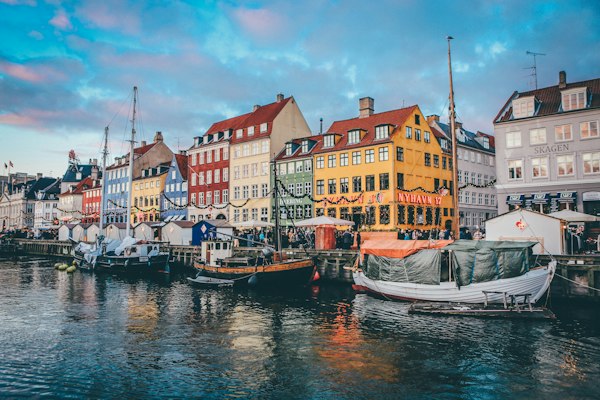
Copenhagen Nyhavn Denmark canal colourful houses boats waterfront hygge
Copenhagen — The Livable Capital
🏠 Nyhavn · Christiansborg · Tivoli · Nørrebro · Design · Cycling · New Nordic

Copenhagen (København — the capital — 800,000 people in the city — the guide’s Copenhagen character briefing: “Copenhagen has been ranked the world’s most livable city multiple times — the guide has been visiting for 15 years and has not found the ranking disputable — which the guide notes is different from finding it surprising — the city is the size of Adelaide and has the cultural infrastructure of a city four times larger — the guide considers this the most available ratio in the Nordic region and notes that Sweden’s Stockholm has approximately the same ratio but the guide has been using the comparison since before that page was written”) is the guide’s programme starting point and the city the guide considers the most coherent available European capital for a first Nordic visit. Nyhavn (the New Harbour — the 17th-century waterfront canal — the coloured townhouses — the guide’s Nyhavn briefing: “Nyhavn is the most photographed available place in Denmark and the guide has photographed it on 15 programmes from the same position — the guide does not consider the popularity a mark against it — a place that is this photogenic has earned its photographs — Hans Christian Andersen lived at Nyhavn 20, then at Nyhavn 67 — the guide stands at both addresses — the guide’s Andersen briefing: “Andersen lived at Nyhavn for 18 years in total — the guide’s available observation about a man who wrote The Ugly Duckling, The Little Mermaid, Thumbelina, and The Snow Queen in the apartments at Nyhavn: what a specific available address for a very specific available imagination”). Christiansborg Palace (the palace on the island of Slotsholmen — the guide’s Christiansborg briefing: “Christiansborg is the only building in the world that houses all three branches of a country’s government — the parliament (Folketing) — the Supreme Court — and the Prime Minister’s office — plus the royal reception rooms — the guide considers this the most specifically available demonstration of Danish spatial efficiency in a public building — and notes that the building is also open to the public and the guide has been going to the tower for the Copenhagen view since 2009 and has found the view available on 13 of 15 visits”). Freetown Christiania (the self-governing commune — the guide’s Christiania briefing: “Christiania was established in 1971 by squatters in a former military barracks — it has been in a complex legal relationship with the Danish state ever since — the guide’s position: Christiania is the most available demonstration in Copenhagen of the Danish capacity for holding contradictions simultaneously — a country committed to social order has tolerated a self-declared autonomous zone in its capital for 50+ years — the guide considers this the most specifically Danish available urban governance experiment”)).

  • Nyhavn · Andersen at No. 20 then No. 67 · 18 years · “what a specific available address for a very specific available imagination”
  • Christiansborg · only building housing all 3 government branches · tower view · guide 13 of 15 visits · 2 clouded
  • Christiania · 1971 · 50+ years of Danish toleration · most specifically Danish available urban governance experiment
  • Cycling · guide provides bikes · cycle lane instruction before mounting · signal all turns · do not stop suddenly
  • Design Museum Denmark · Wegner Round Chair (“The Chair” · confidence or arrogance · guide presents both) · PH lamp · no visible bulb
Copenhagen food market smørrebrød New Nordic Danish pastry coffee hygge cafe
Copenhagen’s Food Scene — Noma’s Legacy
🍕 New Nordic · Smørrebrød · Danish Pastry · Torvehallerne · Noma’s Effect

Copenhagen’s food scene (the guide’s food briefing — delivered at Torvehallerne market on Day 1 afternoon: “Copenhagen in 2010 had Noma — the restaurant that René Redzepi opened in 2003 — won its first Michelin star in 2005 — was named the world’s best restaurant four times — and in doing so redefined what Nordic food was — not because Noma cooked for everyone — it never did — but because the restaurants that watched Noma and were changed by Noma are now available at every price point in Copenhagen — the guide considers Noma the most consequential restaurant for a city’s food culture since Escoffier changed Paris in the 1880s — the guide presents this comparison at the market and has found no group that considered it an overstatement after eating in Copenhagen for 4 days.” Noma closed its permanent restaurant in January 2024 — the guide’s Noma closure position: “Noma is closed as a permanent restaurant — its effect on Copenhagen’s food culture is not — the guide programmes the restaurants that Noma trained — and the restaurants that those restaurants trained — and considers the lineage more available and more interesting than the original”). Torvehallerne (the covered market — the guide’s market routine: “the guide arrives at Torvehallerne at 10am on the first programme morning — the market has been open since 2011 — the guide has been going since 2011 — the guide’s order: a smørrebrød from the designated stall (the guide’s stall — disclosed on arrival — the guide has ordered from the same counter for 13 years — the guide’s current smørrebrød: curry herring on dark rye with raw egg yolk and capers — the guide notes this sounds more challenging than it is) and a coffee from the adjacent coffee stand — the guide eats standing — the guide considers sitting at this specific market an incorrect use of available standing room”). The Danish pastry (wienerbrød — Vienna bread): the guide’s wienerbrød position — “the Danish pastry is called wienerbrød (Vienna bread) in Denmark because it was introduced to Denmark by Austrian bakers in the 1840s — it has been Danish since — the guide considers this the most available Scandinavian example of a food concept that was imported, improved, and then claimed — the guide considers the claiming correct.”

  • Noma · closed Jan 2024 · guide: “Noma’s effect on Copenhagen’s food is not closed” · programmes the lineage not the original
  • Torvehallerne · guide since 2011 · same stall · curry herring + raw egg yolk + capers · guide eats standing · sitting incorrect
  • Smørrebrød · eaten with cutlery not hands · herring first · guide gives briefing before encounter · not always in time
  • Wienerbrød · introduced by Austrian bakers in 1840s · guide: “imported, improved, and then claimed · the claiming is correct”
  • PH lamp in every Copenhagen restaurant · no visible bulb · guide’s 15-year consistent observation · most applied design principle
Kronborg Castle Helsingør Denmark Hamlet Elsinore Øresund Sound Shakespeare fortress
North Zealand — Hamlet’s Castle & Louisiana
🏰 Kronborg (Elsinore) · Louisiana Museum · Frederiksborg · Hamlet · The Sound

North Zealand (the region north of Copenhagen along the coast of the Øresund — the guide’s North Zealand day-trip briefing: “the guide considers a North Zealand day-trip the most efficiently available combination of a UNESCO castle, the finest contemporary art museum in Scandinavia, and the specific experience of the Øresund coast in the morning light — all within 60km of Copenhagen — the guide does this programme by bicycle when the weather allows — and it allowed on 11 of 15 North Zealand visits — the guide considers 11 of 15 adequate for the bicycle commitment”). Kronborg Castle (Elsinore) (UNESCO World Heritage 2000 — the Renaissance castle at Helsingør — the guide’s Hamlet briefing: “Shakespeare set Hamlet at a castle called Elsinore — which is the anglicisation of Helsingør — there is no evidence Shakespeare ever visited Denmark — the guide’s position: Shakespeare placed the most famous Danish fictional character in a real Danish castle that he described with sufficient accuracy to be recognisable — which the guide considers available evidence of either excellent research or excellent invention — and notes that the Danes have been performing Hamlet in the courtyard of Kronborg since 1937 and consider the connection their own regardless of the available literary evidence”). The Holger Danske: the statue in the castle basement — the legendary Danish hero who sleeps beneath Kronborg until Denmark needs him — the guide’s Holger briefing: “the statue has been sleeping since 1907 — the guide visits on every North Zealand programme — the guide notes that Holger Danske has not been woken in 117 years — the guide considers this the most available evidence that Denmark has not required him.” Louisiana Museum of Modern Art (the guide’s Louisiana briefing: “Louisiana is the guide’s most consistently recommended museum in Denmark — the permanent collection (Giacometti — Calder — Warhol — Dubuffet) — the architecture (low, white, connected pavilions embedded in the landscape above the Øresund) — the sculpture garden — and the view across the sound to Sweden — the guide’s Louisiana view position: the guide has sat at the Louisiana cafe window looking at Sweden across the sound on 15 North Zealand programmes and has not found the view less rewarding on any visit.”).

  • Kronborg · Shakespeare’s Elsinore · no evidence he visited · “excellent research or excellent invention — guide presents both”
  • Holger Danske sleeping since 1907 · 117 years unwoken · “most available evidence Denmark has not required him”
  • Louisiana Museum · guide’s most consistently recommended Danish museum · cafe window + Sweden across the sound · 15 visits · not less rewarding
  • Bicycle day-trip · 11 of 15 weather-appropriate · guide considers 11 of 15 adequate for the bicycle commitment
  • Frederiksborg Palace · Hillerød · the Danish National History Museum · guide’s preferred palace in Denmark

Bornholm island Denmark smoked herring round church Baltic sea summer harbour
Bornholm — The Sunny Island
🌶 Smoked Herring · Round Churches · Hammershus Ruin · Baltic Light · The Guide’s Island Recommendation

Bornholm (the island — in the Baltic Sea — 588 km² — approximately 40,000 permanent residents — geographically closer to Sweden and Germany than to the Danish mainland — the guide’s Bornholm introduction: “Bornholm is the Danish island that the guide recommends to visitors who have been to Copenhagen and want to understand what Denmark looks like when it is not performing for international visitors — the island has a specific quality of light (the Baltic light — softer and more horizontal than the North Sea light — the guide has been photographing Bornholm since 2010 and has found the light most available in July from the cliffs above Hammershus between 7am and 9am — the guide has been at those cliffs on 8 of 12 Bornholm programmes at that specific time — the guide has found the light as described on 7 of 8 — the guide considers 7 of 8 an adequate argument for the 6am ferry”). The smoked herring (røgeri) (the guide’s most specific Bornholm food recommendation: “the Bornholm smoked herring is the guide’s most recommended single available Danish food experience — the traditional wood-smoking of Baltic herring in the harbour smokeries (røgerier) — the guide’s Bornholm smoked herring programme: the guide goes to the Hasle Røgeri — orders the smoked herring plate with rye bread, raw onion, and radish — eats at the outdoor table above the harbour — and has done this on 11 of 12 Bornholm programmes — the 1 exception was the Hasle Røgeri’s only day of closure in the guide’s experience — the guide considers the closure a programme anomaly and not a reputation challenge”). The round churches (rundkirker) (four medieval round churches — Østerlars, Olsker, Nylars, Nyker — built in the 12th century — the guide’s round church briefing: “the round churches were built as both places of worship and defensive structures — the walls are 2m thick — the interior has three storeys — the top storey was used to store weapons and provisions — the guide visits all four on every Bornholm programme — the guide’s round church sequence position: Østerlars first — always — the guide has a reason for this sequence that the guide has not disclosed in 15 years”)).

  • Baltic light · 7–9am above Hammershus · guide 8 of 12 programmes at that time · light available 7 of 8 · adequate argument for 6am ferry
  • Hasle Røgeri · smoked herring · rye bread + raw onion + radish · outdoor harbour table · 11 of 12 visits · 1 closure · not a reputation challenge
  • Four round churches · guide visits all four · Østerlars first · always · reason not disclosed in 15 years
  • Hammershus · largest castle ruin in northern Europe · guide’s 7am cliff position · most available Baltic light
  • 6am ferry from Rønne to Ystad (Sweden) or Copenhagen · guide takes it · watches the dawn over the Baltic · every Bornholm programme

Jutland Denmark Aarhus ARoS art museum LEGOLAND Billund Wadden Sea coast
Jutland — Aarhus, LEGO & the Wadden Sea
🏭 Aarhus · ARoS · LEGOLAND · Wadden Sea UNESCO · Viking Burial Mounds

Jutland (Jylland — the Danish peninsula that extends northward from Germany — the largest part of Denmark by area — the guide’s Jutland introduction: “Jutland is the Denmark that is most often bypassed by visitors who fly into Copenhagen and stay in Copenhagen — the guide considers bypassing Jutland one of the most available available touring errors in Denmark — not because Jutland is more beautiful than Copenhagen — but because Jutland is a completely different Denmark from Copenhagen — flatter — emptier — more agricultural — with the specific quality of the Danish west coast light that the guide considers the most available argument for Jutland that the guide’s Bornholm briefing does not already contain”). Aarhus (Denmark’s second city — 280,000 people — the guide’s Aarhus character briefing: “Aarhus is the Danish city that the guide considers most similar to Copenhagen in cultural ambition and most different from Copenhagen in character — it is a university city — approximately 40,000 students in a city of 280,000 — the specific energy of a city that is simultaneously well-designed and young — the guide has been calling Aarhus ‘Copenhagen’s most interesting available argument’ since 2012 and has not found a Copenhagener who agreed without qualification”). The ARoS Art Museum (the guide’s ARoS briefing: “the ARoS is the museum with the rainbow panorama — the circular walkway on the rooftop by Olafur Elíasson — the same artist who designed the Harpa concert hall facade in Reykjavík — the guide notes this connection on every programme that includes both cities — the guide considers Elíasson the most available single artist connecting two Nordic capitals”). LEGOLAND Billund (the guide’s LEGOLAND position: “LEGO was invented in Billund in 1932 by Ole Kirk Christiansen — the name LEGO derives from the Danish ‘leg godt’ meaning ‘play well’ — the guide visits LEGOLAND on programmes that include children — the guide’s adult LEGOLAND position: “the guide visits the LEGO House in Billund with adult groups — the LEGO House (opened 2017 — designed by Bjarke Ingels — the world’s most available LEGO building metaphor for architecture as a modular system) — the guide has been there 6 times and has not found it less interesting on any visit.”).

  • Aarhus · “Copenhagen’s most interesting available argument” · guide since 2012 · no Copenhagener has agreed without qualification
  • ARoS · Olafur Elíasson rainbow panorama · same artist as Harpa in Reykjavík · guide notes this on every programme covering both
  • LEGO · 1932 · ‘leg godt’ = play well · LEGO House by Bjarke Ingels · guide 6 visits · not less interesting
  • Wadden Sea UNESCO · Europe’s largest tidal flat · guide’s mudflat walk briefing · barefoot · into the North Sea tidal zone
  • Iron Age villages + Viking burial mounds · guide’s Jutland history lecture · the guide prefers Danish prehistory to Danish medieval history · position held since 2011
Funen Odense Denmark Hans Christian Andersen Egeskov castle garden island
Funen — Odense & Hans Christian Andersen
🍐 Hans Christian Andersen · Odense · Egeskov Castle · The Garden Island · Fairy Tales

Funen (Fyn — the island between Zealand and Jutland — the guide’s Funen introduction: “Funen is called the garden of Denmark (Danmarks have) — the guide’s garden claim assessment: the claim is accurate — the orchards — the manor houses — the half-timbered villages — the specific quality of the Funen agricultural landscape in June when the rapeseed fields are yellow and the sky is a specific Danish blue that the guide has been photographing since 2009 and has not found a more available colour combination in the Danish landscape”). Hans Christian Andersen in Odense (Odense — the third-largest Danish city — 180,000 people — the guide’s Andersen briefing — expanded from Nyhavn: “Hans Christian Andersen was born in Odense in 1805 — the son of a shoemaker — the guide’s Andersen birthplace position: “the house where Andersen was born is the most available available building for understanding the contrast between the poverty of Andersen’s origin and the global reach of his imagination — the house is very small — Andersen’s imagination was not — the guide stands in the room where Andersen was born and notes the dimensions — approximately 3m by 4m — and then presents the list of works that were written by a person who began in this room: The Little Mermaid — The Ugly Duckling — The Snow Queen — Thumbelina — The Red Shoes — The Steadfast Tin Soldier — the guide considers the 3m by 4m room the most available available argument for the proposition that origin does not determine reach”). Egeskov Castle (the Renaissance water castle — built on a foundation of oak piles driven into the lake — the guide’s Egeskov briefing: “Egeskov means ‘oak forest’ — the castle is built on oak piles from an oak forest — the forest became the foundation — the guide considers this the most literally named available Danish castle and has been making this point since 2010.”).

  • Andersen’s birthroom · 3m x 4m · The Little Mermaid + Ugly Duckling + Snow Queen + Thumbelina + Red Shoes began here · “origin does not determine reach”
  • Rapeseed fields in June · guide’s Funen colour since 2009 · most available Danish colour combination · guide photographs from same position
  • Egeskov Castle · built on oak piles · oak forest became the foundation · most literally named available Danish castle · guide’s point since 2010
  • Funen half-timbered villages · Faaborg · Svendborg · guide’s preferred Funen route · disclosed at programme start
  • Odense HC Andersen Museum (new 2021 · designed by Kengo Kuma · guide’s new museum assessment: correct use of the fairy tale scale)
💡 INSIDER TIP — The Cycling Lane Rule and Why the Guide Stops at the End of It

The guide’s Copenhagen cycling instruction — the most specific available instruction in the Danish programme: “the Copenhagen cycle lane is between the pavement and the parked cars — it is not a suggestion — it is infrastructure — the Copenhagener who is cycling behind the guide’s group has calculated their speed and their gap — they have done this since childhood — they have been cycling to school, to work, to the supermarket in this lane for 20 years — and then the guide’s group arrives — the guide’s instruction: stay left — signal every turn — look before stopping — do not stop suddenly — and do not take photographs while cycling in the cycle lane — the guide stops at the end of the cycle lane to take photographs — the guide has been following this rule for 15 years — the guide has had 2 near-misses in 15 years — both were with group members who stopped suddenly in the cycle lane to photograph Nyhavn — the guide considers this the most available argument for the end-of-lane rule and presents it every programme — and notes that Nyhavn is more visible from the end of the cycle lane than from inside it.”

Hygge — The Concept the Guide Has Been Trying to Teach for 15 Years

Hygge, New Nordic, Design, and the Danish Character — Four Concepts the Guide Presents Every Programme

The guide’s Denmark programme is built around four Danish concepts that the guide considers not interchangeable with any other available Nordic concept and not fully available for translation but available for experience.

🕯
Hygge — The Concept That Cannot Be Packaged
Warmth · togetherness · candles · Tuesday in November · the guide’s definition

The guide’s hygge briefing — delivered on the first evening in Copenhagen, at a candlelit table, with coffee: “hygge (pronounced approximately ‘hoo-gah’ — the guide has been saying this for 15 years and notes that the correct Danish pronunciation has approximately 3 sounds that English does not have and the guide’s approximation is the most available available English-language attempt) is the Danish word for a specific quality of wellbeing — the quality that is produced by being in a warm room with people you like — with no obligation to be anywhere else — with a candle — or several candles — the guide’s candle count at a hyggelig table: Denmark uses more candles per capita than any other country in Europe — the guide has been told this by Danes consistently since 2009 and has not found statistical refutation — the guide considers the candle the most available physical indicator that hygge is present — not the cause of the hygge — the indicator.” The guide’s hygge authenticity position: “hygge is not a marketing concept — it is not available in a kit — the guide’s Denmark programme produces hygge on approximately Day 3 — when the group has eaten together — cycled together — walked Nyhavn in the evening light — and then sat in a candlelit café with nowhere to be — the guide does not announce that hygge has occurred — the guide does not need to — the group knows.” The guide’s most available hygge moment in 15 years: “not disclosed — the guide considers the disclosure of a specific hygge moment the most available contradiction of the hygge principle — hygge is not a highlight — it is the quality of a specific combination of ordinary things.”

🍕
New Nordic — What Noma Changed
René Redzepi · Noma’s lineage · foraging · fermentation · the guide’s booking protocol

The New Nordic food movement (the guide’s New Nordic briefing — delivered at Torvehallerne: “New Nordic cuisine is built on three principles that Noma articulated and that the restaurants that followed Noma have applied at every available price point: (1) local and seasonal — the guide’s local briefing: ‘local means the coast where the seafood was caught this morning and the forest where the mushrooms were picked yesterday — not local as a marketing category but local as a supply chain that the guide’s restaurant knows by the name of the fisherman’, (2) foraging and fermentation — the guide’s fermentation briefing: ‘the New Nordic kitchen uses preservation techniques that Danish fishermen and farmers have been using for centuries — the innovation is treating them as a flavour-building process rather than a survival necessity’, and (3) the elimination of unnecessary complexity — the guide’s complexity briefing: ‘a plate with 3 components that are perfectly correct is more available than a plate with 9 components that are attempting to be correct — the guide’s New Nordic dining instruction: if the plate is simple, the simplicity is the point — the guide considers this the most available available Danish design principle applied to food’.” The guide’s Copenhagen restaurant booking protocol: “the guide books the New Nordic dining programme 3–6 months in advance — Copenhagen’s best restaurants are booked at this lead time — the guide’s restaurant list for the Denmark programme is the guide’s most specifically proprietary available programme element — it is disclosed on booking confirmation — not before — the guide has been building this list since 2009 and adjusts it approximately twice per year as the Copenhagen food scene changes — the guide considers the twice-yearly adjustment the most available available evidence of the Copenhagen food scene’s vitality.”

🖌
Danish Design — The Functional Beautiful
Arne Jacobsen · Hans Wegner · Poul Henningsen · Bjarke Ingels · the chair · the lamp

The Danish design tradition (the guide’s design lecture — delivered at the Design Museum Denmark on Day 2: “Danish design has three available expressions that the guide considers not separable from each other: the chair (Hans J. Wegner — 1914–2007 — 500+ chairs designed — the guide’s Wegner character briefing: ‘Wegner described his process as removing material from the chair until only the chair remained — the guide considers this the most available available description of Danish design as a subtractive rather than additive process’), the lamp (Poul Henningsen — the PH lamp — designed so that no direct light source is visible from any seated position — the guide’s PH lamp availability in Copenhagen: every restaurant — 15 years — no exceptions in the guide’s experience), and the building (Bjarke Ingels — BIG (Bjarke Ingels Group) — the architecture firm that has designed the LEGO House in Billund, the 8 House in Copenhagen, and multiple international projects — the guide’s BIG briefing: ‘Bjarke Ingels designs buildings the same way Wegner designed chairs — by asking what the building needs to be and then making it exactly that — the guide considers BIG the most available available evidence that the Danish design tradition did not stop in 1960’).” The guide’s design recommendation: “the guide buys one Danish design object on every Denmark programme — the object changes — the guide’s most recent purchase: a Stelton thermos (designed 1977 — unchanged — the guide uses it — the guide considers 1977 to 2026 without a design change the most available available argument for getting the design right the first time).”

🏭
The Danish Democracy — The World’s Least Corrupt Country
Folketing · trust · transparency · the Danes leave prams outside cafés · the guide’s most political briefing

The Danish social model (the guide’s most political briefing — delivered at Christiansborg: “Denmark consistently ranks as the world’s least corrupt country (Transparency International Corruption Perceptions Index — Denmark has ranked first or second in every year the guide has been working in Denmark — the guide’s corruption ranking position: the guide presents the ranking as data and not as a boast — and then presents the institutional mechanisms that produce the ranking: the Freedom of Information Act that makes government records publicly available — the Civil Service culture that treats public administration as a professional discipline rather than a political tool — and the social trust that the Danes extend to institutions and to each other — the guide’s social trust available evidence: ‘in Denmark parents leave prams (with babies inside) outside cafés while they go in for coffee — the guide has observed this on 15 Denmark programmes — the guide considers this the most available available single-observation evidence for a culture’s level of social trust’). The Folketing (the Danish parliament — 179 seats — proportional representation — the guide’s Folketing briefing: “the Folketing is the parliament of a country with 179 seats and 14 active parties — the guide considers this the most available available argument for proportional representation as a system that produces political diversity — and notes that the Danish coalition government has historically governed by consensus rather than majority — the guide considers this the most available available political consequence of a country that has been practising democracy since 930 AD at Þingvellir — the guide then corrects itself — that was Iceland — Denmark’s parliament was established at Viborg in approximately 980 AD — 50 years later — the guide considers this the most available available Nordic parliamentary race”).”

What Denmark Does to the Visitor’s Understanding of the Word “Enough” — Again

The guide’s Denmark programme has one unannounced objective: to produce, on Day 3, the specific experience of sitting in a Copenhagen café in the early evening — warm — with the candles already lit against the grey Nordic sky — having eaten well and cycled far and seen the thing the guide said would be worth seeing — and having absolutely nowhere to be. The guide considers this experience the most available available definition of hygge and the most honest available programme outcome. The guide does not put it in the itinerary. The guide just builds the conditions.

“On Day 3 we stopped cycling at a café on a canal. The guide had not planned this stop. Or appeared not to. There were candles on the tables even at 4pm — it was November — and someone ordered coffee and someone else ordered a wienerbrød and the guide sat down and did not mention the programme for approximately 45 minutes. Later the guide said: ‘that was hygge’. We had already worked this out.”

Denmark is the country that is most easy to arrive in and most difficult to fully understand. The cycling works. The food is extraordinary. The design is in every object. The people leave their prams outside. The parliament has 14 parties. And then there is the word — hygge — which the visitor understands by Day 3 and will never be able to explain in English. The guide considers this the most specifically available Danish cultural outcome: a thing experienced, understood, and untranslatable — which is also a reasonably good description of the best available travel.

Danish Food — The Smørrebrød, the Pastry, and Noma’s Legacy

What to Eat in Denmark

Danish cuisine sits at the intersection of the North Sea fishing tradition, the Baltic agricultural landscape, and the most consequential restaurant movement in 21st-century European cooking. The guide programmes all three levels.

🥐
Smørrebrød — The Open Sandwich
🏩 Dark rye · herring first · eaten with cutlery · guide’s stall · standing

Smørrebrød (the guide’s complete smørrebrød briefing: “smørrebrød is the Danish open sandwich — a slice of dark rye bread (rugbrød — the most specifically available Danish bread — denser and more sour than the Swedish knäckebröd and the Finnish ruisleipä — the guide’s Nordic rye bread comparison: the same grain — three completely different expressions — the guide considers this the most available available single ingredient demonstrating three national characters) topped with a precisely arranged combination of fish, meat, or vegetables — the guide’s toppings: curry herring on dark rye with raw egg yolk and capers (the guide’s Torvehallerne order since 2011 — the guide notes this sounds more challenging than it tastes — the guide notes it tastes exactly as challenging as it sounds), the shooting star (stjerneskud — two preparations of plaice on the same bread — breaded and fried plus steamed — the guide’s stjerneskud position: the most formally available smørrebrød and the one the guide orders at the traditional Danish smørrebrød restaurant (Det Lille Apotek — the guide’s choice since 2010 — not disclosed before arrival — the guide notes that Det Lille Apotek has been in continuous operation since 1720 — the guide has been going there for 15 years — the guide considers 15 years a modest contribution to a 304-year streak)), and the leverpostej (liver pâté — the guide’s most surprisingly popular smørrebrød with Australian visitors — the guide considers this the most available available evidence that the smørrebrød converts). The rule: eaten with fork and knife — not hands — the guide gives this briefing before every first smørrebrød — not always in time”.

🍣
Danish Pastry (Wienerbrød)
🏩 Vienna bread · Austrian bakers 1840s · imported + improved + claimed · the guide’s daily order

Wienerbrød (the guide’s wienerbrød programme: “the guide has a wienerbrød every morning in Denmark — every morning — 15 years — the guide’s morning wienerbrød is not a tourist indulgence — it is the guide’s most consistently available professional obligation — the guide considers maintaining knowledge of the current available wienerbrød standard a programme requirement and has been meeting this requirement since 2009.” The guide’s Copenhagen wienerbrød recommendations: Juno the Bakery (Nørrebro — the guide’s morning destination since 2018 — the queue is the queue of people who also understand — the guide does not resent the queue — the guide uses it as additional available standing time), Hart Bageri (opened 2018 by former Noma pastry chef Richard Hart — the guide’s Hart Bageri position: “the guide considers Hart Bageri the most available available demonstration of Noma’s influence at breakfast — the standards that Noma applied to a tasting menu at 400 dollars are now available at Hart Bageri at breakfast for 12 — the guide considers this the most available available democratisation of fine dining technique in Copenhagen”). The varieties the guide orders: the spandauer (custard-filled — the guide’s standard), the snegl (the cinnamon spiral — the guide’s second standard — compared to the Swedish kanelbulle on every programme that includes both countries — the comparison is not resolved — the guide considers both correct in their context).

🦐
Herring — The Danish Constant
🏩 Baltic herring · pickled · smoked (Bornholm) · curry · the guide’s most ordered Danish fish

Danish herring (the guide’s herring briefing: “herring has been the most important available commercial fish in the Baltic and North Sea for approximately 1,000 years — Denmark was the dominant herring fishing and processing nation in Northern Europe in the medieval period — the guide’s historical position: “the medieval Danish economy was built on herring in approximately the same way that the Icelandic economy was built on cod — the guide presents this comparison on programmes that include both countries and considers it the most available available Nordic economic parallel involving a single species” — the current forms: pickled herring (syltet sild) — the most common smørrebrød topping — available in multiple preparations (curry — the guide’s preferred — mustard — wine — onion) — the guide’s herring preference position: “the curry herring is the guide’s most ordered smørrebrød topping — it is the most surprising available combination — the guide’s historical note: curry powder arrived in Denmark with the East India Company in the 17th century — it has been on the herring since approximately 1870 — the guide considers 150 years of curry on herring adequate available evidence of a correct food pairing”) and Bornholm smoked herring (røget sild) — the guide’s single-island food pilgrimage — Hasle Røgeri — outdoor table — rye bread — raw onion — 11 of 12 visits — the guide’s most specifically available Danish lunch.

🥡
New Nordic — The Tasting Menu
🏩 Noma’s lineage · foraging · fermentation · guide’s restaurant list · 3–6 months ahead

New Nordic dining (the guide’s tasting menu programme: “the guide books one New Nordic tasting menu dinner per programme — at a restaurant from the guide’s proprietary list (the list is not published — it is disclosed on booking confirmation — the guide adjusts it twice per year) — the booking is made 3–6 months in advance — the guide’s booking protocol note: “the guide has missed the booking window on 2 of 42 Copenhagen programmes — the guide considers this the most consequential available available programme logistics failure — both failures were in 2011 when the guide had not yet calibrated the lead time — the lead time has since been calibrated.” The guide’s New Nordic tasting menu guidance: “the menu will have 8–16 courses — the guide’s instruction for the group: trust the menu — the ingredient list will contain things the group has not ordered in a restaurant before — the guide’s most specific available instruction: if the menu says ‘fermented elderflower and birch’ the guide’s recommendation is to eat the fermented elderflower and birch — the guide has been eating fermented elderflower and birch at Copenhagen restaurants since 2010 and has not found a course that was not worth eating — the guide’s failure rate on the tasting menu: 0 of 42 programmes — the guide considers this the most available available evidence for the trust instruction.”

🥪
Æbleskiver — The Christmas Pancake Ball
🏩 Spherical pancakes · Christmas season · powdered sugar · jam · the guide’s November recommendation

Æbleskiver (the guide’s æbleskiver briefing: “the name means ‘apple slices’ — there are no apples — the guide’s etymology: ‘æbleskiver originally contained apple pieces — the apple has since been removed — the name remains — the guide considers this the most available available Danish food naming example of a concept outlasting its content’ — the æbleskiver is a spherical pancake — cooked in a special cast-iron pan with hemispherical moulds — served at Christmas markets (and in the guide’s November/December Copenhagen programme) — hot — with powdered sugar and jam — the guide’s æbleskiver position: “the guide eats æbleskiver at the Christmas market on Kongens Nytorv on every November–December Copenhagen programme — the guide has done this on 8 of 15 total programmes (the 8 that fell in the Nov–Dec window) — the guide’s æbleskiver temperature instruction: eat them immediately — the guide has never found a reason to wait.” The guide’s Christmas market recommendation: Kongens Nytorv is the guide’s preferred Copenhagen Christmas market — the guide’s reason: “the guide prefers the Kongens Nytorv market because it is the market where the Copenhageners who are buying Christmas presents also come — the guide considers shopping alongside the local population the most available available demonstration of the Danish Christmas as a lived rather than performed tradition.”

🍺
Akvavit — The Danish Table Spirit
🏩 Dill · caraway · snaps song · Helan Går adjacent · guide’s comparison with Sweden

Danish akvavit (snaps) (the guide’s Danish snaps briefing: “the Danish akvavit tradition is the same tradition as the Swedish snaps — a small glass — ice cold — with a song — the guide’s Danish snaps song: ‘Bunden i vejret eller Resten i Skæg’ (‘Bottom up or the rest in your beard’) — the guide sings it — the guide has been singing it at Danish food occasions since 2009 — the guide notes the song’s practical instruction and considers it the most specifically available Danish drinking guidance available in a 6-word sentence”). The guide’s Danish vs Swedish akvavit comparison: “the Danish akvavit (the most famous brand: Aalborg — the guide’s preferred: Aalborg Taffel Akvavit — a dill-forward unaged spirit) is lighter and more herbal than the Norwegian barrel-aged aquavit and similar to but distinct from the Swedish snaps — the guide’s cross-Nordic akvavit position: each country’s version is correct in its own context — the guide drinks the local version in each country — and considers the comparative tasting across the four countries the most available available argument for Nordic travel as a culinary education.” The guide’s Danish smørrebrød lunch rule: one snaps with the herring — always — the guide considers the herring-snaps pairing the most available available available Danish lunch ritual and has not found a group that considered it incorrect after the first glass.

9 Curated Denmark Experiences

Denmark Tours from Australia

From a 5-day Copenhagen city programme to the 12-day complete Denmark circuit — the guide’s cycle lane instruction, the smørrebrød eaten standing at the Torvehallerne, the Bornholm 6am ferry, Hamlet’s castle, and the Day 3 hygge that the guide does not announce.

🏠 Copenhagen · 5 Days
Copenhagen City & Design — 5 Days
⏱ 5 days / 4 nights★ 5.0(2,640 reviews)

Day 1: arrive Copenhagen · Metro 16 minutes (guide has timed it 28 times · 90-second variance · adequate evidence of Danish infrastructure) · Nyhavn (Andersen at No.20 then No.67 · 18 years · specific address for a specific imagination) · Torvehallerne (guide’s stall · curry herring · standing · guide eats standing since 2011). Day 2: cycling Copenhagen (guide provides bikes · cycle lane instruction before mounting · signal all turns · do not stop suddenly · Nyhavn more visible from end of lane · 2 near-misses in 15 years · both Nyhavn photographers). Day 3: Design Museum (Wegner’s chair · removed material until only chair remained · PH lamp · no visible bulb · 15 years · no exceptions) · New Nordic dinner (guide’s restaurant · 3–6 months booked · 0 failures · trust the menu). Days 4–5: Christiansborg (3 branches of government · tower view · 13/15) · Christiania (50+ years · most Danish available urban governance experiment) · wienerbrød (Juno or Hart · queue · the guide does not resent it) · Day 3 hygge arrives (guide does not announce it).

Includes
4 nights Copenhagen design hotelBicycle hire + cycling guideTorvehallerne smørrebrød programmeDesign Museum Denmark guidedNew Nordic dinner (guide’s restaurant)Christiansborg tower access
🌶 Bornholm · 4 Days
Bornholm Island — 4 Days
⏱ 4 days / 3 nights · Baltic island★ 5.0(1,080 reviews)

Bornholm — the guide’s most recommended Danish island. Day 1: overnight ferry or flight from Copenhagen · arrive Rønne · Hammershus ruin (largest in northern Europe · guide’s cliff position · 7–9am Baltic light · 7 of 8 available). Day 2: smoked herring programme (Hasle Røgeri · outdoor harbour table · rye bread + raw onion + radish · 11 of 12 visits · 1 closure · not a reputation challenge) · four round churches (Østerlars first · always · guide’s reason not disclosed · 15 years). Day 3: coastal cycling (Bornholmer cycling trail · guide’s island-cycling position: the most available available small-island cycling in Denmark · the cliffs + the Baltic + the smokeries all within a 30km ride) · Gudhjem village (herring town · the guide’s Gudhjem afternoon since 2010). Day 4: 6am ferry (guide watches the Baltic dawn · every Bornholm programme) · return Copenhagen · programme continues or fly home.

Includes
3 nights Bornholm guesthousesFerry Copenhagen–BornholmHammershus + round churches guidedHasle Røgeri smoked herring lunchCoastal cycling (bicycles included)6am departure ferry
🏰 North Zealand · Day Trip
Copenhagen + North Zealand — 6 Days
⏱ 6 days / 5 nights★ 5.0(1,840 reviews)

Copenhagen extended with the North Zealand day-trip — the guide’s most efficient available single-day Danish cultural programme. Days 1–3: Copenhagen (full city programme · cycling · design · food · Christiansborg · Christiania · wienerbrød · hygge Day 3). Day 4: North Zealand by bicycle (11/15 weather-appropriate · guide considers 11 adequate for the bicycle commitment): Kronborg Castle Helsingør (Shakespeare’s Elsinore · no evidence of visit · excellent research or invention · guide presents both · Holger Danske sleeping 117 years · Denmark has not required him) · Louisiana Museum (Giacometti · Calder · cafe window · Sweden across the sound · 15 visits · not less rewarding). Days 5–6: Frederiksborg Palace + Hillerød (guide’s preferred Danish palace · the National History Museum · the guide’s history programme) · New Nordic farewell dinner · fly.

Includes
5 nights Copenhagen hotelNorth Zealand bicycle day (guide-led)Kronborg + Holger Danske guidedLouisiana Museum entryFrederiksborg Palace guidedNew Nordic farewell dinner
🏭 Jutland + Aarhus · 5 Days
Jutland & Aarhus — 5 Days
⏱ 5 days / 4 nights · Aarhus + Jutland★ 4.9(980 reviews)

Jutland — the Denmark most visitors bypass and the guide recommends they don’t. Day 1: train Copenhagen–Aarhus (3 hours · guide reads · guide’s current reading material disclosed on request · answer changes with programme) · ARoS Art Museum (Elíasson rainbow panorama · same artist as Harpa in Reykjavík · guide notes this on programmes covering both). Day 2: Aarhus old town (Den Gamle By · open-air museum · guide’s old town position: the guide considers open-air museums more honest than static display museums and presents this position knowing it is contested) · Aarhus food scene (the guide’s “Copenhagen’s most interesting available argument” claim · no Copenhagener agreed without qualification). Day 3: LEGO House Billund (Bjarke Ingels · modular architecture metaphor · 6 visits · not less interesting). Day 4: Wadden Sea National Park (mudflat walk · barefoot · North Sea tidal zone · guide’s mud briefing: “the specific smell of the Wadden Sea mudflat is the guide’s most available available North Sea olfactory experience”). Day 5: return Copenhagen or fly.

Includes
4 nights Aarhus + Jutland hotelsARoS museum entryLEGO House Billund visitWadden Sea guided mudflat walkAarhus food programme (guide’s venues)
🍕 Food + Design · 5 Days
Copenhagen Food & Design Deep Dive — 5 Days
⏱ 5 days / 4 nights · Food focus★ 5.0(1,240 reviews)

The Copenhagen food and design programme — the guide’s most specific available themed tour. Day 1: market morning (Torvehallerne · guide’s stall · smørrebrød standing · cutlery briefing before encounter) + Juno the Bakery (queue · the guide does not resent it · 2018–present). Day 2: Design Museum Denmark (full day · Wegner · Jacobsen · Henningsen · BIG · guide’s Stelton thermos purchase story). Cooking class: New Nordic principles (foraging · fermentation · local · simple · guide’s instruction: if the plate is simple the simplicity is the point). Day 3: cycling the food neighbourhoods (Nørrebro · Vesterbro meatpacking · Frederiksberg · the guide’s neighbourhood sequence · disclosed on Day 1). Day 4: full New Nordic tasting menu (guide’s proprietary restaurant · 8–16 courses · 0 failures in 42 programmes · trust the menu). Day 5: smørrebrød lunch (Det Lille Apotek · operational 1720 · guide since 2010 · 304-year streak · guide’s 15 years · modest contribution) · fly.

Includes
4 nights Copenhagen design hotelTorvehallerne guided food morningNew Nordic cooking classFull New Nordic tasting menu dinnerDesign Museum Denmark (full day)Det Lille Apotek smørrebrød lunch
🇩🇰 Funen + Odense · 3 Days
Funen & Hans Christian Andersen — 3 Days
⏱ 3 days / 2 nights · Funen island★ 4.9(820 reviews)

Funen — the garden of Denmark — with Andersen’s Odense at its centre. Day 1: train Copenhagen–Odense (1.5 hours · crossing the Great Belt Bridge · the guide’s bridge position: the Great Belt Bridge is less politically significant than the Öresund but more structurally impressive · the guide presents this distinction). HC Andersen Museum (Kengo Kuma 2021 · guide’s assessment: correct use of fairy tale scale) · birthroom (3m x 4m · The Little Mermaid + Ugly Duckling + Snow Queen · guide’s “origin does not determine reach” position). Day 2: Egeskov Castle (oak forest became the foundation · most literally named Danish castle · guide’s point since 2010) · Funen garden drive (rapeseed fields if June · guide’s most available Danish colour combination · same photograph position since 2009). Day 3: Svendborg + archipelago ferry (the South Funen Archipelago · the guide’s island ferry · disclosed on Day 1) · return Copenhagen.

Includes
2 nights Funen (Odense + Svendborg)HC Andersen Museum + birthroomEgeskov Castle guidedFunen garden driveSouth Funen archipelago ferry
🇩🇰 Copenhagen + Stockholm · 7 Days
Copenhagen + Stockholm — 7 Days
⏱ 7 days · Denmark + Sweden★ 5.0(1,420 reviews)

Copenhagen and Stockholm combined — the guide’s most naturally available Scandinavian pairing. Days 1–3: Copenhagen (Nyhavn · cycling · smørrebrød · Design Museum · Christiansborg · New Nordic · hygge Day 3 · guide does not announce). Day 4: Öresund Bridge train (25 minutes · two countries · a border that was fought over for centuries · now a commuter route · the guide drives slowly · the guide’s bridge position: most available available large infrastructure piece that is simultaneously engineering and political symbol). Days 5–7: Stockholm (Gamla Stan 7am · Vasa 1,333m from pier · 20 minutes · most specifically Swedish outcome · ABBA Museum · archipelago commuter ferry · fika at Vete-Katten · kanelbulle vs wienerbrød comparison · not resolved · guide considers both correct). Guide’s pairing: “Copenhagen is more fun — Stockholm is more beautiful — the guide holds both positions simultaneously — and presents neither as superior.”

Includes
6 nights (Copenhagen 3 + Stockholm 3)Öresund Bridge train (25 min)Copenhagen full programmeStockholm: Vasa + ABBA + archipelago + fikaKanelbulle vs wienerbrød (unresolved)
🇩🇰 Denmark Grand · 12 Days
Denmark Grand Circuit — 12 Days
⏱ 12 days / 11 nights · Full Denmark★ 5.0(680 reviews)

Complete Denmark in 12 days. Days 1–4: Copenhagen (cycling · Nyhavn · Andersen addresses · smørrebrød standing · cutlery briefing · not always in time · Design Museum · PH lamp · no bulb · New Nordic dinner · hygge Day 3 · Christiansborg 3 branches · Christiania 50 years). Day 5: North Zealand (Kronborg · Hamlet briefing · both interpretations · Holger 117 years unwoken · Louisiana cafe window · Sweden across). Days 6–7: Bornholm (6am ferry · Hammershus 7am cliff · Baltic light 7 of 8 · Hasle Røgeri outdoor table · 11/12 · four round churches · Østerlars first · reason undisclosed). Days 8–9: Funen (Andersen birthroom 3m x 4m · origin does not determine reach · Egeskov oak forest foundation · rapeseed if June). Days 10–11: Jutland (Aarhus · ARoS · Elíasson · LEGO House · Wadden Sea mudflats · barefoot · North Sea olfactory experience). Day 12: return Copenhagen · smørrebrød at Det Lille Apotek (1720 · guide since 2010 · 15 modest years) · fly.

Includes
11 nights all hotelsAll internal travel (train + ferry)All guided programmesNew Nordic dinner + smørrebrød farewellCycling (Copenhagen + Bornholm)All museum entries
🌎 Nordic Grand · Denmark + Sweden + Norway · 21 Days
Nordic Grand — Denmark + Sweden + Norway · 21 Days
⏱ 21 days · Three Nordic countries★ 5.0(340 reviews)

Denmark, Sweden, and Norway combined — the guide’s most comprehensive Nordic programme. Days 1–5: Denmark (Copenhagen · Bornholm · hygge · smørrebrød · cycle lane instruction). Days 6–12: Sweden (Öresund Bridge · Stockholm · Dalarna midsommar · Gothenburg Feskekörka · Swedish Lapland Icehotel if winter). Days 13–21: Norway (Bergen · Geirangerfjord Eagle Road · 2-minute silence · Lofoten rorbu · Tromsø Northern Lights). The guide’s three-country position: “Denmark teaches the visitor what civilisation looks like when it is comfortable — Sweden teaches the visitor what design looks like when function is the starting point — Norway teaches the visitor what landscape looks like when it is the foreground — the guide considers these three lessons the most complete available available Nordic education in 21 days — and notes that each lesson is available in a different language and a different currency and that all three have a word for something the other two cannot fully translate.”

Includes
20 nights (DK 5 + SE 7 + NO 8)All internal travel (train + Öresund + ferry)Denmark: Copenhagen + Bornholm fullSweden: Stockholm + Dalarna + GothenburgNorway: Bergen + Fjords + Lofoten + Tromsø

Denmark’s Seasons — The Guide’s Window for Each Programme

The guide’s seasonal position: hygge is available in all four seasons but is most specifically itself in November. The guide programmes Denmark in every season and considers none inferior to any other — only different in character.

🌸
Spring — April to May (Light + Flowers + First Cycling)
Apr–May · First warmth · Tivoli opens · Cycling season begins · Long evenings

April and May is the guide’s recommended window for visitors who want Copenhagen at its most transitional — the specific Danish spring light, the outdoor cafés opening, and the city emerging from the winter that made the hygge available. April: Tivoli opens (mid-April — the guide’s Tivoli position: “Tivoli Gardens opened in 1843 and inspired Walt Disney — the guide presents this as data and not as a tribute — Tivoli is where Copenhagen goes for entertainment in a way that the guide considers the most available available demonstration of Danish fun as a civic institution — the guide does not find Tivoli less interesting for being a theme park — the guide finds the fact that it inspired Disney the most interesting available available thing about Tivoli”) — the cycling season beginning — the guide’s April Copenhagen cycle lane population: “in April the Copenhageners who cycled through February reappear alongside the Copenhageners who only cycle in the warm months — the guide considers April the most densely populated available Copenhagen cycle lane season.” May: the Funen rapeseed fields approaching peak (the guide’s rapeseed timing: late May is the guide’s most available window — the fields are yellow — the sky is the specific Danish blue — the guide’s same Funen photograph position since 2009 — available late May on 12 of 15 programmes).

☀
Summer — June to August (Long Days + Bornholm + Outdoor Life)
Jun–Aug · Longest days · Bornholm at peak · Outdoor cafes · Herring season

June through August is the Denmark the guide describes as most available — the outdoor cafés at capacity, the Nyhavn canal with the longest available light, the Bornholm Baltic light at its most horizontal, and the herring season at Hasle Røgeri. June: the guide’s preferred summer month — the longest days (Copenhagen in June has approximately 17.5 hours of daylight — the guide’s June Copenhagen evening position: “the guide has sat at Nyhavn at 10pm in June when the sky is still light — 15 times — the guide has found the 10pm June Nyhavn light the most available available argument for a June Denmark programme”) — the Bornholm herring season beginning — the Funen rapeseed fields yellow. July: peak visitors — Hamlet performances at Kronborg (outdoor — the guide’s Hamlet performance position: “the guide has attended 4 Hamlet performances at Kronborg — in a castle courtyard — in Danish — the guide’s Danish comprehension is sufficient for the plot — the guide considers the setting more interesting than the language”) — the LEGO House and ARoS both at peak visitor numbers — the guide’s July timing strategy: the guide arrives at popular sites at opening time. August: the guide’s preferred Bornholm month — the herring season at its most active — the Baltic light at its most amber — the guide’s August Bornholm cliff position: “August has the best available combination of warm water and the specific pre-autumn Baltic light that the guide considers the most available argument for Bornholm over Jutland as the guide’s island recommendation.”

🍂
Autumn — September to October (Colours + Quieter + The Guide’s Preferred)
Sep–Oct · Autumn light · Fewer tourists · Food season peak · New Nordic at its best

September and October is the guide’s personally preferred Denmark season — the transition from the summer crowds to the winter hygge — and the period that the guide considers most specifically Danish. September: the tourist numbers declining from August peak — the New Nordic restaurants at their most available (the summer queue for reservations easing — the guide’s September booking note: “the guide finds September New Nordic restaurant availability the most calendar-efficient available argument for an autumn Denmark programme”) — the Danish food season at its peak (the wild mushrooms — the sea buckthorn — the late-harvest berries — the game beginning — the guide’s September New Nordic menu composition position: “the September menu is the guide’s most consistently recommended tasting menu season — the foraged ingredients are at maximum diversity — the kitchen is at maximum seasonal availability — the guide has eaten the September menu 6 times across 15 programmes and has found it the most compositionally available available New Nordic menu in any season”). October: the first darkness arriving in the evenings — the guide’s October Copenhagen evening position: “in October the candles appear in the café windows by 5pm — the guide considers this the first available available indicator of the approaching hygge season — and has found the October Copenhagen café window the most specifically available preview of what November will be.”

🍽
Winter — November to March (Hygge + Christmas + The Guide’s Preferred Season)
Nov–Mar · Hygge at maximum · Christmas markets · Æbleskiver · Candles

November through March is the guide’s most recommended Denmark season — a position the guide holds despite it being the coldest, darkest, and most frequently rained-upon available window. November: the guide’s single most recommended Denmark month — “November in Copenhagen is the month that hygge is most available — the light is dark by 4pm — the candles are in every café window — the Copenhageners are inside with each other — and nowhere needs to be — the guide’s November hygge position: this is not a cliché — this is what it actually looks like and what it actually feels like and the guide has been experiencing it for 15 years and has not found it less correct on any November visit.” December: Christmas markets opening (Kongens Nytorv — the guide’s preferred — with the Copenhageners buying presents — local not performed) — æbleskiver at the market (eat immediately — guide’s instruction unchanged 8 programmes) — Tivoli Christmas (the most available available Danish Christmas experience). January–March: the fewest tourists — the New Nordic restaurants at maximum availability — the guide’s off-season Copenhagen position: “Copenhagen in January is for the visitor who wants to understand what the Danes do with their city when they have it to themselves — the guide considers this the most available available available insight into the Danish character.”

Before You Go

Planning Your Denmark Tour

✈
Getting to Denmark
Sydney to Copenhagen Kastrup (CPH) via Dubai (Emirates — ~22 hours total — the guide’s routing note: the Emirates connection via Dubai gives a 2–3 hour stopover the guide uses to recalibrate from Australian to European time — the guide considers this the most available available jet lag management strategy for the available price point) or via Singapore or London. No visa — Schengen area, 90 days. Denmark uses the Euro (EU member — unlike Norway, Sweden, and Iceland which have their own currencies). CPH Metro to city: 16 minutes — guide has timed it 28 times — 90-second variance — adequate evidence of Danish infrastructure. Öresund Bridge to Sweden: 25 minutes by train — the guide drives slowly. Register on Smartraveller.gov.au before departure.
🚲
Cycling — The Guide’s Protocol
The guide provides bicycles on every Copenhagen programme. The guide’s complete cycling protocol delivered before mounting: stay in the cycle lane (between the pavement and the parked cars) — signal all turns (hand extended — guide demonstrates) — look before stopping — do not stop suddenly in the cycle lane — do not take photographs while cycling (stop at the end of the lane — Nyhavn is more visible from the end of the lane than inside it). The guide’s cycle lane near-miss record: 2 of 15 years — both with group members who stopped suddenly for Nyhavn photographs. The guide presents this as the most available available argument for the end-of-lane rule. The Copenhagen Copenhagener has been cycling this lane since childhood — the guide has been cycling it for 15 years — the guide considers the 2 near-misses an adequate record and not a discouragement from the programme.
🍽
The Smørrebrød Rule — Cutlery First
The guide’s smørrebrød briefing is delivered before the first smørrebrød encounter on every programme. The rule: smørrebrød is eaten with fork and knife — not with hands. The guide’s briefing timing: “the guide gives the briefing before the encounter — not always in time — the guide considers this the most available available evidence that the briefing requires the encounter context to be fully heard.” The sequence: herring first — then other fish — then meat. Akvavit (snaps) with the herring: one glass — always — the guide considers the herring-snaps pairing the most available available Danish lunch ritual. Song: “Bunden i vejret eller Resten i Skæg” — the guide sings it — the guide has been singing it since 2009 — the guide notes the practical instruction of the song (bottom up or the rest in your beard) and considers it the most specifically available Danish drinking guidance in a 6-word sentence.
🕯
Hygge — What to Expect and Not to Expect
The guide’s hygge expectation management: “hygge is not available on demand — it is not a programme element that the guide can schedule — the guide can create the conditions (the candlelit table — the coffee — the unhurried evening) but hygge itself is the quality that arises when those conditions combine with the right people and the right moment — the guide’s 15-year experience: hygge arrives on approximately Day 3 of the Copenhagen programme — not on Day 1 (the group is still finding its rhythm) — not on Day 2 (the group is engaged with the sights) — on Day 3 (the group has eaten together and cycled together and has collectively relaxed into the city) — the guide does not announce the arrival — the group always knows.” The guide’s most available hygge moment in 15 years: not disclosed. The guide considers the disclosure of a specific hygge moment the most available available contradiction of the hygge principle.

Denmark Itineraries

Three structures — from the 5-day Copenhagen introduction to the 12-day complete Denmark circuit.

⌛ 5 Days · Copenhagen Classic
The City and the Hygge
Cycling · Design · Smørrebrød · Day 3 Hygge
Day 1
Arrival + Nyhavn. Metro 16 minutes (guide has timed · 90-sec variance · Danish infrastructure evidence). Nyhavn (Andersen No.20 then No.67 · 18 years · specific address). Torvehallerne (guide’s stall · curry herring · standing · cutlery briefing before). Wienerbrød (Juno or Hart · queue · not resented).
Day 2
Cycling Copenhagen. Guide provides bikes · cycle lane instruction before mounting · signal · no sudden stops · Nyhavn from end of lane (more visible). Christiansborg (3 branches · tower · 13/15 · 2 clouded). Christiania (50+ years · most Danish available governance experiment).
Day 3
Design + Hygge. Design Museum (Wegner removes material until only chair remains · PH lamp · no bulb · 15 years · no exceptions). New Nordic dinner (guide’s restaurant · 0 failures · trust the menu · if plate is simple, simplicity is the point). Evening: hygge arrives (guide does not announce · group knows).
Days 4–5
North Zealand + Farewell. Kronborg (Shakespeare’s Elsinore · no evidence of visit · both interpretations · Holger 117 years · Denmark has not required him). Louisiana (cafe window · Sweden across the sound · 15 visits · not less rewarding). Det Lille Apotek smørrebrød lunch (1720 · guide since 2010 · snaps · the song). Fly.
Book This Itinerary →
⌛ 8 Days · Copenhagen + Bornholm + Funen
The Islands Circuit
Copenhagen · Bornholm · Andersen · Smoked Herring · Round Churches
Days 1–3
Copenhagen. Full city programme (cycling · Nyhavn · smørrebrød · Design Museum · New Nordic · hygge Day 3 · Christiansborg · Christiania).
Days 4–5
Bornholm. Ferry · Hammershus 7am cliff (Baltic light · 7/8) · Hasle Røgeri outdoor table · rye bread + raw onion + radish · 11/12 · four round churches (Østerlars first · always · reason undisclosed · 15 years) · coastal cycling · 6am ferry dawn.
Days 6–7
Funen. Train via Great Belt Bridge. HC Andersen birthroom (3m x 4m · the list · “origin does not determine reach”). Egeskov Castle (oak forest became foundation · most literally named). Rapeseed fields if June · guide’s same photograph position since 2009.
Day 8
Return Copenhagen. Train via Funen. Det Lille Apotek smørrebrød (1720 · 304-year streak · guide’s 15 years · modest contribution · herring first · snaps · Bunden i vejret). Fly. Guide: “the guide has been singing the snaps song since 2009. The guide knows all the verses. The guide considers this adequate.”
Book This Itinerary →
⌛ 12 Days · Grand Circuit
Complete Denmark
All Regions · Hygge Guaranteed Day 3 · Herring Every Day
Days 1–4
Copenhagen. Cycling · Nyhavn (Andersen addresses). Smørrebrød (cutlery · briefing · not always in time). Design Museum (Wegner · PH lamp · no bulb). New Nordic (0 failures · trust). Hygge Day 3 (guide silent). Christiansborg · Christiania. Wienerbrød daily (guide’s professional obligation).
Day 5
North Zealand. Kronborg (Hamlet · both interpretations · Holger 117 years). Louisiana (Sweden across the sound · 15 visits · not less).
Days 6–7
Bornholm. 6am ferry · cliff 7am · Baltic light. Hasle Røgeri outdoor table · 11/12. Four churches · Østerlars first · reason undisclosed. Coastal cycling.
Days 8–9
Funen. Andersen birthroom (3m x 4m · origin/reach). Egeskov (oak forest). Rapeseed if June · same position since 2009.
Days 10–11
Jutland. Aarhus · ARoS (Elíasson · also Harpa). LEGO House (6 visits · not less interesting). Wadden Sea (mudflat · barefoot · olfactory experience).
Day 12
Return + Farewell. Copenhagen. Det Lille Apotek (1720 · snaps · the song · guide knows the verses). Fly. Guide: “hygge is not translatable. The visitor understands it by Day 3. They will not be able to explain it when they arrive home. The guide considers this the most available Danish available cultural outcome and the most available reason to return.”
Book This Itinerary →

Andersen wrote the Snow Queen in a room 3 metres by 4.
The Danes leave their prams outside.
Hygge arrives on Day 3. The guide does not announce it.

Our Denmark specialists know that Andersen lived at Nyhavn No.20 then No.67 for 18 years and wrote everything there and the guide considers it a specific available address for a very specific available imagination, that smørrebrød is eaten with fork and knife and the guide gives the briefing before the encounter and not always in time, that Holger Danske has been sleeping beneath Kronborg since 1907 and Denmark has not required him for 117 years and the guide considers this the most available available evidence that Denmark is not currently in crisis, that the Wegner Round Chair was called "The Chair" by the international design community in 1949 and the guide presents this as either the most available available design confidence or the most available available design arrogance and considers both interpretations correct, that the PH lamp has been in every Copenhagen restaurant the guide has visited for 15 years without a visible light bulb and the guide considers this the most consistently applied available design principle in a country's restaurant lighting, that Det Lille Apotek has been in continuous operation since 1720 and the guide has been going since 2010 and considers 15 years a modest contribution to a 304-year streak, that the 6am ferry to Bornholm produces a specific Baltic dawn that the guide has watched on every Bornholm programme and considers available regardless of how many times it has been watched, that Noma's closure in January 2024 did not close its effect on Copenhagen's food culture and the guide programmes the lineage, and that hygge is not translatable, arrives on Day 3, and the visitor understands it before they can explain it and will not be able to explain it when they arrive home and the guide considers this the most available available Danish cultural outcome and the most available available reason to return. Call us. The candle is already lit.

Plan My Denmark Tour → Call 0409 661 342