A glacier 30 kilometres long that calves icebergs the size of apartment buildings while you watch, the crack and thunder audible from the boardwalk two hundred metres away. A waterfall system four times wider than Niagara that appears over the jungle canopy before it is heard. A city where the tango was born in the brothels and tenements of the immigrant port district and is now danced in the streets by people who learned it from their grandparents. Argentina is the country where the superlatives are accurate.
Argentina (La República Argentina — the Argentine Republic — 2.78 million km² — the eighth-largest country on Earth — stretching from the subtropical jungle of the Iguazú borderlands in the far north to the sub-Antarctic tip of Tierra del Fuego in the far south — a latitudinal span of 3,700km that encompasses five distinct climate zones, three of the world’s most dramatic natural spectacles, one of South America’s most cosmopolitan capitals, and a wine region that has redesigned the world’s understanding of what altitude does to a Malbec grape) is the South American country that most consistently surprises visitors who approach it with calibrated expectations. The surprise is not that it is better than expected — the surprise is that it is different from expected — more European in manner, more dramatic in landscape, more operatic in emotion, and more invested in the quality of the meal than the research suggested.
Argentina’s four anchor regions for the international visitor: Buenos Aires (the capital — the “Paris of South America” — a comparison the city resents and partially earns — the tango, the steakhouses, the bookshops, the football, the sprawling barrio diversity from San Telmo’s colonial streets to Palermo’s design restaurants). Patagonia (the south — the Perito Moreno Glacier, Torres del Paine (in Chilean Patagonia — a 2-hour drive from El Calafate), the Peninsula Valdés whale watching, the Fitz Roy massif at El Chaltén, and Ushuaia at the end of the world). Iguazú Falls (the northeast — 275 individual cascades over a 2.7km horseshoe — the single most visited natural site in South America). Mendoza (the Andean wine country — the Malbec — the high-altitude Luján de Cuyo and Uco Valley vineyards — the view of the snow-capped Andes from the wine estate terrace).
Argentina’s geography runs the length of a continent. The guide’s instruction for first-time visitors: do not try to see everything on the first trip. Choose two anchor regions and do them correctly.
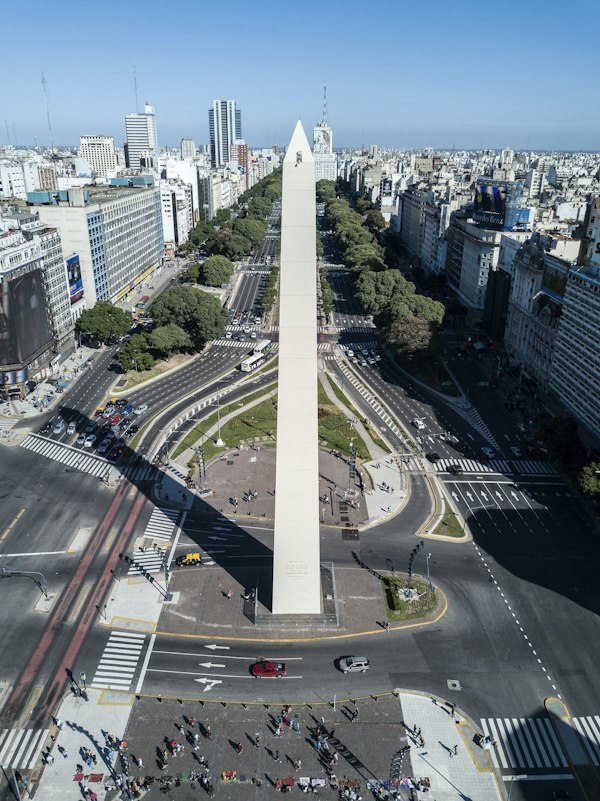
Buenos Aires (the capital of Argentina — founded twice (the first attempt in 1536 abandoned after conflict with indigenous peoples — the second founding in 1580 by Juan de Garay — the city that has been continuously inhabited since) — metropolitan population approximately 15 million — the most European city in South America in architecture, in cultural sensibility, and in the specific melancholy that the Argentines call “porteño” (the quality of being from the port — the Buenos Aires disposition, the mix of pride, nostalgia, and slightly theatrical suffering that the guide describes as “the specific emotional register of a city that knows it was once among the wealthiest in the world and has complicated feelings about what happened next”)) is a city that rewards walkers, eaters, and anyone willing to stay up past midnight. The tango (the dance that was born in the late 19th century in the conventillos — the crowded tenement boarding houses — of the San Telmo and La Boca port districts — the dance of the immigrant underclass (the Italian, the Spanish, the Polish, the Eastern European Jewish immigrants who arrived at the port of Buenos Aires between 1880 and 1930 in one of the largest voluntary migrations in human history — the guide’s position: “the tango is the most honest available account of what it feels like to arrive somewhere new and not know how things work — the dance was invented by people who did not know how things worked — the dance shows this”) — the milonga (the tango social dancing event — not the tango show for tourists, which is choreographed and technically excellent — the milonga is the social dance event where Argentines who learned tango from their grandparents dance with strangers according to a specific social protocol (the cabeceo — the invitation by nod across the room — the guide explains this before bringing the group to a milonga — the group observes but does not attempt the cabeceo — the guide has observed this instruction being disregarded twice — both occasions were instructive)). The barrios: San Telmo (the oldest neighbourhood — the colonial-era streets — the Sunday feria (the antique market) — the tango dancers at street corners), Palermo (the largest barrio — further divided into Palermo Soho (the designer boutiques and restaurants) and Palermo Hollywood (the media production studios and the best restaurant strip in the city)), La Boca (the colourful corrugated iron buildings of the Caminito street museum — the guide’s instruction: stay on Caminito — the streets beyond are a different environment — the guide states this without alarm and the group follows the instruction). The parilla (the Argentine steakhouse — the grill — the guide’s steak briefing: the Argentine beef (the grass-fed Pampas cattle — the guide explains the Pampas (the 750,000 km² of temperate grassland that covers the central provinces of Argentina — the grassland that feeds the cattle that produce the beef that the guide considers the finest available anywhere on Earth — the guide has been challenged on this and has not modified the position)), the cut (the guide orders the bife de chorizo — not a chorizo sausage — a sirloin cut specific to Argentine butchery — the guide explains the confusion before the group asks), the cooking (the parrillero (the grill master) — the hardwood charcoal (the quebracho — the Argentine hardwood that burns hot and slow — the guide identifies the quebracho smoke before the restaurant is visible), the point (the guide orders the beef “a punto” — medium — the guide notes that ordering well-done in a Buenos Aires parilla is a social choice that the guide will not judge but will note))).
The Perito Moreno Glacier (the glacier in the Los Glaciares National Park — UNESCO World Heritage since 1981 — accessible from the town of El Calafate in Argentine Patagonia — 80km by road from El Calafate — a 30km-long, 5km-wide river of ice descending from the Southern Patagonian Ice Field (the third-largest freshwater reserve on Earth after the polar ice sheets)) is one of the few glaciers in the world that is not in significant retreat (the Perito Moreno advances at approximately 2m per day and calves at approximately the same rate — a dynamic equilibrium — the guide’s description: “most glaciers are retreating — the Perito Moreno is roughly breaking even — this is not a success story but it is a different story from most”). The calving (the ice calving from the glacier’s face — the terminus of the glacier reaches the southern arm of Lake Argentino and intermittently dams it — when the pressure builds, sections of ice — the guide estimates the smaller calvings at the size of a 5-storey building and the larger at the size of a city block — break from the face and fall into the lake with a crack that is audible from the boardwalk system approximately 200m away — the sound: the guide describes it as “a specific combination of rifle shot and thunder — it cannot be described adequately — the first calving the guide witnessed was in 2008 and the guide still turns toward the sound before the thought completes”). The boardwalk system (the steel walkway and viewing platforms that run along the southern bank of Lake Argentino facing the glacier terminus — approximately 3km of walkways at various levels — the guide takes the group to each level and identifies the best calving zones — the southern sector of the glacier face has historically produced the largest calvings — the guide positions the group at the southern viewpoint from approximately 10am and considers the wait not a wait but an occupation). The glacier walk (the mini-trekking option — the guided walk on the glacier surface — the crampons, the ice axes — the specific blue of the ice seen from within 5m — the guide’s position: “you cannot understand how blue glacier ice is from the boardwalk — you can only understand it from 1m above the surface — if the group has the fitness for the walk, the walk is correct”)).
Torres del Paine National Park (Parque Nacional Torres del Paine — the Chilean national park approximately 2 hours by road from El Calafate across the border — the three granite towers of Torres del Paine (the “Towers of Paine” — the three monolithic granite spires rising to 2,850m (Torre Sur), 2,800m (Torre Central), and 2,600m (Torre Norte) — the towers formed by the magmatic intrusion of granite into older sedimentary rock approximately 12 million years ago, followed by the glacier erosion that exposed and carved the current profiles — the guide’s geological briefing at the trail start: “the granite was always there — the ice carved everything else away — the towers are what remains when the ice removes everything softer”)) is the destination that consistently tops the “world’s best hikes” lists and consistently delivers the experience those lists describe, which is unusual. The W-Trek (the 5-day circuit of the park — the standard multi-day trek — walking the shape of the letter W — covering the Mirador Las Torres (the hike to the base of the towers — the lake at the base — the reflection of the towers in the moraine lake at dawn — the guide’s standard instruction: “the 4am start is not optional — the towers are in cloud by 9am on approximately 60% of days — the 4am departure catches the light and the reflection — the group protests at 3:30am and stops protesting at the lake”), the Valle del Francés (the hanging glaciers — the granite walls — the condors (Vultur gryphus — the Andean condor — the 3.3m wingspan — the bird visible at the Valle del Francés on the majority of visits — the guide does not promise the condor — the guide’s instruction: “look at the top of the granite wall — not the sky — the condor is often visible at the ridgeline before it launches”)), and the Glacier Grey (the Grey Glacier — the accessible face of the Southern Patagonian Ice Field — the blue icebergs in Grey Lake)). El Chaltén and Fitz Roy (the Argentine village at the base of the Fitz Roy massif (Cerro Fitz Roy — 3,405m — the jagged granite peak whose silhouette appears on the Patagonia clothing brand logo — the guide notes this connection without endorsing any commercial interpretation of it — the mountain predates the brand by a geological epoch) — the Laguna de los Tres day hike (4–5 hours ascent — the view of the Fitz Roy towers from the moraine above the lake — the guide’s description of arriving at Laguna de los Tres: “the view at the top of the scree is one of the most abruptly extraordinary things that the Argentine landscape does — the guide has been here 40 times — the guide still pauses at the ridgeline before looking up”)).
Iguazú Falls (Cataratas del Iguazú — the waterfall system on the border of Argentina and Brazil — the Iguazú River (a tributary of the Paraná River) dropping 60–82m over a 2.7km horseshoe-shaped escarpment — 275 individual cascades (the number varies with water volume — in flood season the cascades merge into approximately 150 — in low water they separate into 275 — the guide uses the low-water figure as the benchmark because the individual cascade character is most visible) — UNESCO World Heritage on both the Argentine side (since 1984) and the Brazilian side (since 1986) — the most visited natural site in South America) are the waterfall system where the guide consistently encounters visitors who have seen the photographs, managed their expectations, arrived at the Garganta del Diablo (the Devil’s Throat — the main horseshoe cascade — the largest single drop — the viewing platform at the edge of the Throat) and stopped speaking for a period the guide clocks at an average of 4.2 minutes. The guide has been timing this response for 11 years and considers the data significant. The Argentine side vs the Brazilian side (the guide’s comparison, delivered before departure from Puerto Iguazú: “the Argentine side you are inside the falls — the water is on your face — the sound is total — you are in the falls. The Brazilian side you are looking at the falls — the panoramic view — the full scale — you are opposite the falls. The correct visit does both. The guide recommends the Argentine side first because disorientation before panorama is the correct order”). The Garganta del Diablo (the walkway system that extends to the edge of the Throat — the platform at the Throat’s lip — the spray — the guide’s waterproof briefing (“any camera that is not rated waterproof will be wet — the guide has a dry bag — the group uses the dry bag — the guide has one camera casualty in 11 years — a tripod-mounted DSLR — the photographer knew the risk and the guide respected the decision”)). The coatis (Nasua nasua — the ring-tailed, raccoon-related mammals of the Iguazú forest — bold, habituated to visitors, and specifically interested in unattended backpacks and food — the guide’s instruction: “hold your bag — do not feed the coatis — a habituated coati is the most persistent mammal you will encounter outside of a museum gift shop”)).
Mendoza (the city and wine region in the eastern foothills of the Andes — the province covering the Precordillera range from approximately 760m (the low-altitude Luján de Cuyo sub-region) to approximately 1,500m (the high-altitude Uco Valley — the Viños Chicos and Gualtallary areas that now produce what the global wine press considers Argentina’s finest single-vineyard Malbecs)) is the destination where the guide is most frequently asked “why didn’t we book more time here?” — specifically by visitors who allocated 2 days and discovered they needed 4. The Malbec (the grape — Malbec (Vitis vinifera ‘Cot’ in France — where it originated in Cahors in southwest France and was brought to Argentina by the agronomist Michel Aimé Pouget in 1853 — the grape that performed modestly in France (where it was a blending variety) and spectacularly in Mendoza (where the high altitude, the intense sunlight, the low humidity, and the cold nights produced a grape of extraordinary depth and fruit concentration — the guide’s summary of the Malbec migration: “Malbec left France for Argentina in 1853 like many people who had not yet found the right conditions to become what they were capable of”)). The altitude effect (the guide’s standard winery talk: “at 900m altitude, the UV radiation is approximately 40% higher than at sea level — the vine responds to UV stress by producing thicker skin and more polyphenols — this is the same mechanism that produces a suntan in a human — the vine’s suntan is the colour, tannin, and antioxidant complexity in the glass — the Uco Valley at 1,400m is the vine at maximum stress — the result is not a comfortable wine — it is a wine that has worked for what it is”). The winery visits (Zuccardi Valle de Uco (the guide’s preferred winery — the stone architecture on the Uco Valley plain — the view of the Andes from the winery terrace — the Zuccardi family’s soil classification project (the most comprehensive soil mapping of a single appellation in the southern hemisphere — the guide explains the soil classification (the different alluvial profiles — the sand, the clay, the loam, the schist — and their effect on the grape) and the group tastes in the order the guide specifies — the guide specifies an order and does not apologise for it — the Catena Zapata museum winery (the Mayan pyramid-inspired architecture — the high-altitude Adrianna Vineyard), and the Achaval Ferrer (the guide’s malbec recommendation for purchase — the guide considers the Quimera — the blend — the most underpriced wine produced in Mendoza today — this position has not changed in 8 years).
Ushuaia (the southernmost city on Earth — at 54°S latitude on the Beagle Channel — the channel named for HMS Beagle, the ship that carried Charles Darwin through these waters in 1832 and 1833 — Darwin’s observations of the Yamana indigenous people of Tierra del Fuego in the Beagle Channel becoming part of his developing theory of natural selection — the guide notes the connection without declaring it comfortable — the Yamana were effectively destroyed by the contact with European missionaries that followed Darwin’s observation of them) is the gateway city for Argentine Patagonia’s southernmost experiences and for Antarctica expeditions. The Tierra del Fuego National Park (the park that begins at the edge of Ushuaia and extends south and west into the Andes — the southernmost national park in the world — the Lapataia Bay trail (the 3km walk to the endpoint of Ruta Nacional 3 — the Argentine national highway that begins in Buenos Aires 3,079km to the north — the guide’s note: “this is the end of the road in the literal sense — the sign at Lapataia Bay says 12,500km to Alaska — the group photographs the sign — the guide has photographed the group at this sign 200 times — the sign has not moved”)). The Beagle Channel boat trip (the half-day navigation of the Beagle Channel — the sea lion colonies on the rocky outcrops (the South American sea lion (Otaria flavescens) — the guide distinguishes from the Patagonian fur seal (Arctocephalus australis) — both visible on the rock colonies — the guide can identify the species from the boat at 50m and considers identification a minimum courtesy to the animal), the Magellanic penguin colony on Isla de los Pájaros, the Les Eclaireurs Lighthouse (the lighthouse consistently misidentified as the “Lighthouse at the End of the World” — Julio Verne’s lighthouse is actually at San Juan de Salvamento 200km to the east — the guide makes this correction without expecting it to affect the photograph)). The Antarctica connection (Ushuaia is the primary departure port for Antarctic Peninsula expeditions — the 2-day Drake Passage crossing — the Cooee Tours Antarctic programme departs from the Ushuaia port — the guide recommends adding a 10–14 day Antarctic expedition as the logical extension of the Patagonia itinerary for visitors with the available time and budget).
Península Valdés (the UNESCO World Heritage Site on the Atlantic coast of Argentine Patagonia — accessible from Puerto Madryn — 1 hour by road) is the wildlife destination within the Argentina circuit that specifically rewards the September–December timing — the window when the southern right whale (Eubalaena australis) calves and nurses in the sheltered waters of the Golfo Nuevo and Golfo San José bays that the peninsula encloses. The southern right whale (the whale — Eubalaena australis — the same whale hunted to near-extinction in the Southern Ocean whaling era (the name “right whale” derived from whalers’ designation of it as the “right” whale to hunt: slow-moving, buoyant, and rich in oil — the guide presents this etymology directly) — now recovering — the Península Valdés population (approximately 2,000 individuals using the Golfo Nuevo as a nursery) is the largest single gathering of southern right whales in the world — the whale-watching boats at Puerto Piramides navigate to within 30m of nursing mothers and calves — the guide’s briefing: “the whale is curious — the calf is very curious — the guide has had a whale surface within 5m of the boat on 6 occasions — on 5 of those occasions the guide was calm — the sixth was different”). The orca (killer whale) beaching (the specific orca behaviour unique to Península Valdés — the deliberate beaching of orcas on the shore of Punta Norte at the northern tip of the peninsula to hunt sea lion pups — one of only two locations in the world where this hunting technique is observed (the other being the Crozet Islands in the sub-Antarctic) — the behaviour observable January–March from the Punta Norte lookout — the guide books the Punta Norte dawn position (5:30am — the group is not told the time until the night before — the guide’s position: “the information about the 5:30am departure time is better received at 8pm the night before than at the moment of booking”)). Also at Península Valdés: the Magellanic penguin colony at Punta Tombo (the largest Magellanic penguin colony on the mainland — approximately 1 million penguins — visible September–April — the guide walks through the colony on the marked path — the penguins have the right of way on the path — the guide enforces this).
The single most important food briefing the guide delivers in Argentina is the steak order. The Argentine beef (grass-fed Pampas cattle — the same grassland that has fed cattle for 400 years — a natural system with no feedlot equivalent in terms of depth of flavour) is best served at the parilla at medium (“a punto” in Argentine Spanish). The cuts: the bife de chorizo (sirloin — the guide’s primary recommendation — not a chorizo sausage — the guide explains this every time and has not stopped finding it necessary to explain), the ojo de bife (rib-eye — more marbling, more fat, more flavour — the guide’s recommendation for visitors who have eaten rib-eye before and want to understand the altitude the Pampas beef adds), and the vacío (the flank — the traditional Pampas working cut — slower to cook, deeply flavoured, the guide’s recommendation for visitors who want to understand what the gauchos ate). Order medium. The Argentine chimichurri (the herb sauce — parsley, oregano, garlic, white wine vinegar, olive oil — not a marinade — a condiment — applied at the table, not before or during the cook — the guide applies it correctly and the group observes before applying their own). The provoleta (the grilled provolone cheese — the standard parilla appetiser — served on the grill in a cast iron pan — eaten with bread before the steak arrives — the guide orders this without asking the group because the correct answer is always yes).
Mendoza produces 70% of Argentina’s wine. The guide has an opinion about every winery in the Luján de Cuyo and Uco Valley. The group tastes in the order the guide specifies and does not apologise for having opinions.
Luján de Cuyo (the flatland sub-region south of Mendoza city — the original Argentine Malbec territory — the alluvial fans from the Andes depositing rich sandy-loam soils across the vine-growing area at 760–1,050m altitude) is where the Argentine Malbec style was established and codified. The wines here are typically fuller, rounder, and more immediately accessible than the Uco Valley — the lower altitude producing more consistent heat accumulation, less UV stress, and an earlier ripening window. The guide’s Luján de Cuyo programme: Achával Ferrer (the guide’s standing Quimera recommendation — the blend of Malbec, Cabernet Franc, Merlot, and Cabernet Sauvignon from old vines — the guide considers it the most underpriced wine produced in Mendoza today and is willing to state this in the winery — the winery team has heard the guide say this and does not disagree), Clos de los Siete (the Michel Rolland-advised estate — seven boutique wineries on a single property — the guide notes that Rolland’s flying winemaker presence has raised the technical floor of Argentine winemaking — and also notes the critics who argue it has smoothed regional character — the group tastes and decides), the Chacras de Coria village (the wine village 15km from Mendoza city — the cycling option (the guide rents bikes from the Chacras village — the flat roads through the vine rows — the poplar windbreaks — the Andes visible at the end of every road — the guide’s cycling note: “the correct direction is always toward the Andes — you will know when you have gone far enough because the Andes will be large”)).
The Uco Valley (the sub-region 75km south of Mendoza city — the higher-altitude extension of the Mendoza wine country — rising from approximately 1,050m in the Tunuyán area to 1,500m in the Gualtallary area — the valley floor flanked by the Andes to the west (the peaks reaching 6,000m and visible from any point in the valley on a clear day — the specific visual — the guide’s description: “working in a vineyard with the 6,000m Andes as the view is the specific aesthetic reason that several northern-hemisphere winemakers have moved to Mendoza permanently”)) is where the global wine press now focuses its Argentine attention. The Zuccardi Valle de Uco (the guide’s first Uco Valley stop — the stone winery building designed by the architect Rafael Iglesia — the soil classification project (the most comprehensive mapping of soil variation within a single wine appellation in the southern hemisphere — José Alberto Zuccardi’s decade-long project to understand how the different alluvial deposits, calcareous layers, and clay concentrations of the Uco Valley floor affect the Malbec — the guide explains this project at the winery before the tasting because the tasting makes more sense when you know the question the winemaker is answering)). The Gualtallary area (the highest and coolest part of the Uco Valley — the limestone and calcareous soils — the wines that have attracted the most international critical attention (the Achaval Ferrer Bella Vista from this area — the Clos de los Siete parcels here — the Zuccardi Alluvia single-vineyard series)). The guide’s Uco Valley note: “the Uco Valley Malbec is not the Argentine Malbec of 2005 — it is the wine the grape was working toward — the altitude found the character”.
The winery asado lunch (the guide’s preferred Mendoza experience — the fire set by the winery’s parrillero (the grill master) at 10am — the quebracho charcoal — the 4-hour cook for the slow cuts — the group arriving at noon — the provoleta first — the Malbec poured at the table from the estate’s own production — the guide’s wine-pairing briefing: “the Malbec from this vineyard has been paired with the meat from this region’s cattle for 170 years — this is a pairing that evolution has already optimised — the guide does not improve on it”). The asado sequence: the provoleta (grilled provolone cheese — the appetiser), the chorizo criollo (the small Argentine pork sausage — not the Spanish chorizo — the guide explains the distinction before the group asks), the morcilla (the blood sausage — the guide presents this to the group with full information — the guide notes that morcilla with Malbec is the specific pairing that converts approximately 60% of the group’s initially hesitant members), the beef (the bife de chorizo — the vacío — the asado de tira (the short ribs — slow-cooked 4 hours over indirect heat — the guide’s description: “the asado de tira at this cook time is the specific argument for patience that Argentine cooking makes and that Argentine cooking is correct to make”)). The Malbec throughout. The view of the Andes over the vine rows throughout. The guide does not speak much during the asado lunch. The asado speaks for itself.
Buying Mendoza wine to take home: the guide’s standard pre-winery briefing on wine acquisition: “the wine you buy at the winery is typically 30–50% cheaper than the same wine at the Mendoza bottle shop — which is 60–80% cheaper than the same wine at an Australian wine merchant — which is 200% cheaper than a restaurant in Sydney will charge — the guide recommends buying at the winery and not asking the question “will this fit in my luggage” before determining how much you want”. Shipping wine from Mendoza: the major wineries (Zuccardi, Achaval Ferrer, Catena Zapata, Clos de los Siete) all offer international shipping — the guide manages the shipping logistics for the group as part of the Cooee Tours Mendoza programme — the wine is shipped via a Mendoza wine exporter directly to the visitor’s Australian address — the Australian import duty and biobiosecurity inspection is the visitor’s responsibility and the guide provides the import documentation. The guide’s six specific recommendations: Zuccardi Valle de Uco Alluvia (the single-vineyard Malbec to cellar — the guide recommends 5–8 years), Achaval Ferrer Quimera (the blend — the guide’s most consistent value recommendation — drink now or cellar 3–5 years), Catena Zapata Adrianna Vineyard White Bones (the high-altitude Chardonnay — the guide’s answer to the question “is there more to Mendoza than red?”), Clos de los Siete (the value blend — the entry-point to the Uco Valley quality level — the guide’s gift recommendation), Achaval Ferrer Malbec Mendoza (the approachable estate Malbec — the guide’s recommendation for group dinners in Australia), and the winery’s current reserve single-vineyard selection (whatever the winemaker is most proud of today — the guide asks directly and takes the recommendation seriously).
Argentina is the country where the guide most consistently observes visitors recalibrating their sense of scale. The Perito Moreno Glacier is not a glacier in the sense that a visitor from Europe or Australia has previously understood glaciers — from photographs of retreating ice in the Alps or the Rockies. The Perito Moreno is 30km long, 5km wide, and 60m tall at its face. The icebergs that calve from it are the size of apartment blocks. The sound of the calving is audible from 200 metres. None of these facts prepare the visitor for the experience of standing on the boardwalk and watching it happen. The guide has been watching it happen for 16 years.
Argentina is also a country that engages with its own contradictions without resolving them — the most literate country in South America (the highest bookshop-per-capita rate in the world, the Buenos Aires Book Fair the second-largest in the world after Frankfurt), which has defaulted on sovereign debt nine times; the country that produces the world’s finest Malbec and some of its finest beef, which has experienced 100% annual inflation in recent years; the country of the tango — the music of longing, of arriving somewhere new, of the specific grief of the immigrant — danced in the streets of the city whose grandchildren still dance it. Argentina does not ask the visitor to resolve its contradictions. It asks them to eat the steak and watch the glacier and be present for the fact of the country.
Argentine cuisine is built on three pillars: beef from the Pampas, wine from the Andes foothills, and the Italian and Spanish immigrant kitchen that arrived at the port of Buenos Aires between 1880 and 1930.
The asado (the Argentine barbecue — the cooking event — the social institution — the meal that Argentines eat on Sundays, on public holidays, on birthdays, at weddings, and at every occasion that requires a gathering of more than four people — the guide’s position: “the asado is not a meal — it is the expression in food of the Argentine value system — the value: good things take time and should not be rushed — the quebracho charcoal burns for 4 hours — the asado de tira cooks for 4 hours — anyone who says this is inefficient is not eating the result”). The parrillero (the grill master — the person whose job at any Argentine gathering is the fire and the meat — typically male, typically the person in the group who is most serious about fire — the guide is the parrillero on any trip that involves a private asado — the guide has been building quebracho fires since he was 12 — the group does not touch the grill). The sequence: the kindling (the wood chips and the larger quebracho logs — the fire built to the side of the grill, not under it — the coals raked under the grill once they are ready — the group watches the fire — the guide’s instruction: “the fire is ready when you cannot hold your hand 30cm above the grill for more than 3 seconds — this is the correct test and the only test”). The sequence of grilling: the provoleta (10 minutes), the chorizos and morcillas (20 minutes), the chicken (30–40 minutes), the ribs (2–3 hours), the vacío and bife (15–20 minutes). The Malbec throughout. The guide’s description of the moment when everything is ready simultaneously: “this happens once per parrillero per year and they never tell anyone they planned it”.
Empanadas (the stuffed pastry — the half-moon shaped dough parcel — baked (horno) or fried (frito) — filled with a regional variation of the standard filling or with alternatives — the standard Argentine empanada filling: the beef picadillo (minced beef with onion, hard-boiled egg, green olive, and cumin — the combination that the guide describes as “the most information in the smallest volume available in Argentine street food”)) are the most portable, most democratic, and most regionally variable food in Argentina. The regional variations: the Sañta Fe empanada (fried, lighter pastry, more liquid filling), the Tucumán empanada (the province considered the empanada capital of Argentina — baked, larger, the filling wetter, the guide’s preferred regional style — the guide states this preference directly and has defended it in Tucumán to the satisfaction of the guide’s Tucumáno guide colleague who now agrees that the guide is correct), the Saltena (the Salta empanada — spicier, the cumin more present, the paprika evident — the Northern Argentine signature). The repulgue (the crimped edge — the way the empanada is sealed — the specific fold technique that simultaneously seals the pastry and identifies the filling — in a traditional Argentine kitchen, each filling has its own repulgue — the guide can identify the filling from the fold — the guide has demonstrated this correctly on every trip for 11 years — on one occasion the baker had used the wrong fold — the result was a beef empanada that the guide announced would be ham-and-cheese — it was not — the guide considers this the most instructive pastry experience of their career).
Dulce de leche (the caramelised milk spread — produced by slowly heating sweetened milk until the sugars caramelise and the liquid reduces to a thick, amber-coloured paste — the flavour: a deeper, more complex caramel than any European caramel analogue — the guide’s description: “dulce de leche tastes like what caramel would taste like if caramel were Argentine” — a description that the guide acknowledges is circular and maintains regardless) is the foundational sweet flavour of the Argentine kitchen — applied to medialunas (the Argentine croissant — slightly sweeter and more buttery than the French original — the guide eats one at every Buenos Aires breakfast and considers this the correct daily allocation), spread inside alfajores (the layered sandwich biscuit — two cornstarch shortbread rounds with dulce de leche between them, the whole rolled in coconut or dipped in chocolate — the Havanna brand from Mar del Plata — the guide buys the group Havanna alfajores at the airport before departure from Buenos Aires and considers this the correct Argentina souvenir), swirled into ice cream (the Argentine ice cream (helado) — Italian gelato tradition brought by the immigrant community — Buenos Aires has more heladería per capita than Rome — the dulce de leche con brownie flavour — the guide orders this every time and has not considered an alternative in 11 years). The guide’s instruction for carrying dulce de leche home to Australia: “glass jars are allowed — check the luggage airline weight — declare the dulce de leche on the Australian customs form under ‘food products’ — it is permitted — the guide has managed this import successfully 200+ times without a single confiscation”.
Maté (the infused drink made from the dried leaves of the yerba maté plant (Ilex paraguariensis — a native South American tree) — prepared in a gourd (the “mate” — traditionally a dried calabash gourd, now also wood, ceramic, or metal) — drunk through a filtered metal straw (the bombilla — the metal straw with a filter basket at the immersed end that prevents the yerba leaves from being drawn into the mouth — the guide explains the bombilla technique before the group’s first shared mate — the technique is not difficult but is specific: do not move the bombilla once placed — the guide has observed this instruction disregarded approximately 60% of the time — the blocked bombilla is the consequence) is the national drink of Argentina and the social institution that frames most Argentine working-day interactions. The guide’s mate briefing: “mate is bitter — the first time is a specific bitterness that the visitor may not expect — the second time is less bitter — the fifth time you understand why Argentines drink it throughout the day — the tenth time you understand why they carry it in a thermos and drink it while walking to work — the guide has been at the fifth time since approximately 2008”. The social protocol: the cebador (the person preparing the mate — typically the most senior or most hospitable person in the group) prepares the gourd, drinks the first mate (the preparation mate — the harshest infusion — the cebador takes this one because the cebador is being helpful), then passes the gourd to each person in turn — each person drinks the whole gourd, passes it back — the cebador refills and passes to the next person — the circle continues. Saying “gracias” (thank you) when returning the gourd means you are finished — not that you are grateful — the guide has clarified this distinction approximately 2,000 times.
The Buenos Aires breakfast (the café con leche or cortado (the espresso with a small amount of milk — the guide orders a cortado — the guide has ordered a cortado at every Buenos Aires café for 11 years — the guide considers it the correct daily calibration for Argentine coffee which runs stronger than Australian café espresso), the medialuña (the Argentine croissant — smaller and sweeter than the French original — made with lard rather than butter in the traditional version — glazed with sugar syrup — the guide’s description: “the medialuña is what a croissant would be if it decided to be Argentine — smaller, sweeter, more immediately satisfying, and eaten in a quantity that would concern a French nutritionist”) with dulce de leche (the correct application — the medialuña split open — the dulce de leche applied generously — eaten in the café over the newspaper or the phone — the porteño morning ritual observed the same way in the café on the corner of Palermo as in the café on the corner of San Telmo as in the café across the street from the Congress), the Buenos Aires café culture (the café as office, as sitting room, as social club — the ley del mozo (the unwritten rule: a Buenos Aires café table is yours for as long as you occupy it — no one will suggest you leave — the mozo (the waiter) will bring additional water without being asked — the guide’s note: “the most civilised room available in Buenos Aires for approximately AUD$5 is the corner café table at 9am with a cortado and two medialunas”)).
Locro (the thick, slow-cooked winter stew — the most ancient dish in the Argentine culinary tradition — pre-Columbian in origin — made from hominy corn (the maize treated with alkali — the same process as Mexican nixtamal — the guide explains the chemical process and then notes that this explanation has never made anyone want the locro more but has never made anyone want it less), white beans, pumpkin, pork (the salted pork belly, the chorizo criollo, the pork ribs — multiple cuts cooked together until indistinct — the guide’s description: “the locro is a stew that has been cooking since before the Spanish arrived and has seen no reason to change the approach”), and the grasita colorada (the red pork lard — the finishing sauce — rendered lard with paprika and green onion — poured over the locro at the table — the guide pours this at the table with a specific emphasis that the group eventually asks about — the guide’s answer: “the grasita colorada is the most honest available expression of the pre-modern Argentine approach to flavour — you pour it over everything and the question of whether this is healthy has never been relevant to anyone involved in its production”)) is the dish the guide orders in the Salta or Tucumán restaurants of the north and the dish that most clearly illustrates the regional diversity of Argentine cooking beyond the Buenos Aires steakhouse. The locro is eaten on cold days, on the Patria national holidays (the 25th of May and the 9th of July — Argentine independence days — when locro vendors appear in every Argentine city square), and on any occasion when the guide is in a restaurant that makes it correctly.
From a 5-day Buenos Aires and Iguazú focus to the full 14-day Argentina grand circuit — designed around the Patagonian summer season, the Mendoza harvest, and the guide’s steak order.
Buenos Aires in 5 days — the correct allocation for the city. Day 1: arrive · San Telmo (the Sunday feria · the tango dancers at street corners · the guide’s briefing on the cabeceo before the milonga visit). Day 2: Recoleta (the cemetery · Eva Perón’s tomb (the guide’s Evita briefing: “the most politically contested tomb in South America — the guide presents all interpretations and endorses none”) · the Recoleta Cultural Centre · the famous bookshop El Ateneo Grand Splendid (the theatre converted to bookshop — the guide considers it the most beautiful bookshop in the world — this is a contested claim — the guide contests it without yielding)). Day 3: La Boca (Caminito · stay on Caminito · the guide enforces this) · Palermo restaurant lunch · milonga evening (the guide explains the cabeceo — the group observes — the guide watches the room). Day 4: the parilla (the guide’s chosen parilla · the bife de chorizo briefing · the chimichurri instruction · the provoleta (always yes) · the guide orders for the table). Day 5: Mendoza flight or continue.
The Perito Moreno Glacier in 3 days — including the glacier walk. Day 1: fly Buenos Aires to El Calafate (3 hours) · the steppe landscape approaching El Calafate (the guide’s note: “the Patagonian steppe is not dramatic — it is specifically empty — the emptiness is the point — the glacier appears from this emptiness and is therefore more extraordinary”) · El Calafate town (the calafate berry — the local legend: “who eats the calafate will return to Patagonia” — the guide notes that calafate is also available in jam form in every El Calafate shop). Day 2: glacier (boardwalk system · the guide positions the group at the southern viewpoint from 10am · the first calving · the sound · the guide turns before the thought completes · the mini-trekking on the glacier (crampons · the specific blue from 1m above the surface)). Day 3: boat safari on Lake Argentino (the southern arm · the icebergs calved from the glacier floating in the lake · the guide identifies the iceberg age by colour (white = air-filled = recently calved · blue = compressed = older · the specific blue deepens with age · the oldest visible icebergs a blue that has no name in English and that the guide calls “the colour that ice makes when it has been patient for a very long time”)).
The Torres del Paine W-Trek — 5 days — refugio-to-refugio. Day 1: arrive Puerto Natales (transfer from El Calafate — 2 hours across the border) · gear check (the guide reviews boots · waterproofs · layers · the guide has specific opinions about boot choice and will state them). Day 2: Mirador Las Torres (the 4am start · the guide wakes the group · the group protests · 3 hours to the moraine lake · the reflection of the towers in the lake · the cloud-free window is 6–9am on approximately 40% of days · the guide has seen it on the other 60% and considers those days instructive in a different way). Day 3: Valle del Francés (the condor · the guide’s ridgeline instruction · the hanging glaciers). Day 4: Glacier Grey (the blue icebergs in Grey Lake · the view of the Southern Patagonian Ice Field — the guide’s view across the ice field: “this is where the Perito Moreno starts” — the geography visible from this point). Day 5: return Puerto Natales · the guide’s post-trek dinner recommendation (the chupe de centolla — the king crab chowder — Puerto Natales — the guide has eaten this after every W-Trek since 2011 — the guide considers it the correct reward).
Iguazú Falls from both sides — the correct visit. Day 1: fly Buenos Aires to Puerto Iguazú (2 hours) · afternoon at the Argentine side (the guide’s sequencing: the lower circuit first (the individual falls close — the spray — the coatis — the guide’s instruction on the coatis), the upper circuit second (the overview), the Garganta del Diablo last (the 4.2-minute average silence — the guide has a stopwatch — the guide times the group — the result is announced at dinner). Day 2: Brazilian side (the guide accompanies the group across the border · the panoramic walkway · the full-scale view of the Garganta from the other direction · the guide’s comparison: “inside the falls vs opposite the falls — both correct — the Argentine side first because disorientation before panorama is the right order”) · boat under the falls (the raft that goes under the Iguazú cascades — the guide is specific: “you will be completely wet — not spray-damp — completely wet — leave the camera in the dry bag — or bring a camera you are prepared to lose — neither choice has been wrong in 11 years”). Day 3: bird park · return Buenos Aires or continue.
Mendoza in 4 days — Luján de Cuyo and Uco Valley. Day 1: fly Buenos Aires to Mendoza (2 hours) · Chacras de Coria cycling (the guide rents bikes · the flat vine-row roads · the Andes at the end of every road · the guide’s cycling instruction: “always ride toward the Andes — you know you have gone far enough when they are large”) · Achaval Ferrer tasting (the Quimera · the guide’s 8-year position on the underpricing · the group buys). Day 2: Uco Valley (the drive south · the Andes growing as you approach · Zuccardi Valle de Uco (the stone winery · the soil classification briefing before tasting · the guide specifies the tasting order · the asado lunch at the winery · the guide does not speak much during the asado lunch · the asado speaks for itself)). Day 3: Catena Zapata (the pyramid winery · the Adrianna Vineyard story · the White Bones Chardonnay · the guide’s answer to “is there more than red?”) · Mendoza city wine bar evening (the Arístides neighbourhood · the guide’s bar · the guide’s second-bottle recommendation). Day 4: Mendoza market · return Buenos Aires or fly home.
El Chaltén and the Fitz Roy massif — the Argentine trekker’s capital — in 3 days. Day 1: drive from El Calafate to El Chaltén (3 hours · the flat steppe · the Fitz Roy towers appearing 30km before El Chaltén · the guide’s note: “the Fitz Roy silhouette appears on the steppe horizon and the group becomes quiet — this is the correct response — the guide times the transition from conversation to silence — the record is 40km (the clearest day I have worked here in 10 years)”) · evening in El Chaltén (the guide’s cerveza artesanal recommendation · the El Chaltén craft beer has improved significantly since 2018 · the guide updates this assessment annually). Day 2: Laguna de los Tres (4–5 hours ascent · the scree section (the guide’s instruction at the base of the scree: “this is the hardest 45 minutes — do not look at how far is left — look at where the next step is — this instruction is correct”) · the ridgeline (the guide pauses · the group pauses · the guide looks up first · always) · the Laguna de los Tres (the view · abruptly extraordinary · guide has been here 40 times · still)). Day 3: Laguna Torre (the view of Cerro Torre — the 3,128m needle of granite — the ice mushroom on the summit — the guide’s Cerro Torre story: Cesare Maestri’s contested first ascent claim in 1959 — the bolt ladder he drilled into the final face in 1970 — “the greatest controversy in climbing history — the guide has an opinion — it is not the guide’s opinion to share on a hiking tour”).
Península Valdés — the UNESCO wildlife reserve — southern right whales and orca in 3 days. Day 1: fly Buenos Aires to Trelew (1.5 hours) · drive to Puerto Madryn · guide briefing on the whale season (the guide’s note on the southern right whale name — the etymology — the guide presents this directly — the group’s response is consistent). Day 2: whale watching from Puerto Piramides (the whale-watching boats · the guide positions the group on the starboard side · the guide’s reasoning: “the mothers tend to approach from the south — the starboard side faces south from the standard departure route — the guide has no scientific basis for this except 14 years of successful positioning”) · Punta Norte afternoon (the orca viewing (January–March) or the sea lion colony (all season) · the 5:30am departure time announced the night before). Day 3: Punta Tombo penguin colony (the 1 million Magellanic penguins · the guide walks the path · the penguin has right of way · the guide enforces this) · return Buenos Aires.
Ushuaia — the end of the world — in 3 days. Day 1: fly Buenos Aires to Ushuaia (3.5 hours · the view on approach · the Beagle Channel · the mountains descending to the water · the guide’s note at the airport gate: “you are now south of any city you have ever been in — this is the southernmost commercial airport on Earth — the continent of Antarctica is 1,000km south — this is the correct context for the next 3 days”) · Tierra del Fuego National Park afternoon (the Lapataia Bay trail · the Ruta 3 end sign · the guide photographs the group · the sign has not moved). Day 2: Beagle Channel boat trip (the sea lions · the guide identifies species at 50m · the penguins on Isla de los Pájaros · the Les Eclaireurs Lighthouse · the guide makes the Verne correction · not expecting it to affect the photograph · it does not). Day 3: the End of the World Train (the historic Tren del Fin del Mundo · the original prison supply train · the guide’s prison history briefing · the Ushuaia penal colony (1884–1947) · the guide’s note: “Argentina sent its criminals to the end of the world — the end of the world is now one of the most expensive tourist destinations in the southern hemisphere — this transition has taken 80 years and the guide finds it instructive”).

The complete Argentina in 14 days — Buenos Aires, Mendoza, Iguazú, and Patagonia. Days 1–3: Buenos Aires (San Telmo · Recoleta · El Ateneo bookshop · milonga · the parilla (guide orders) · La Boca (stay on Caminito)). Days 4–5: Mendoza (Chacras de Coria cycling · Zuccardi asado lunch · Achaval Ferrer Quimera · the wine purchase logistics). Day 6: Iguazú (fly Buenos Aires to Iguazú · Argentine side · the lower + upper circuits · Garganta del Diablo · guide times the silence). Day 7: Brazilian side (the panoramic view · the boat under the falls · completely wet · the guide’s position on camera risk (stated before)). Days 8–9: Buenos Aires transit + El Calafate. Day 10: Perito Moreno Glacier (the boardwalk · the southern viewpoint from 10am · the sound · the guide turns · the mini-trekking · the specific blue). Days 11–12: El Chaltén (Laguna de los Tres · the ridgeline pause · the guide first · always). Day 13: Torres del Paine day trip (the towers · the 4am departure · the reflection · the moraine lake). Day 14: Ushuaia (the end sign · Beagle Channel · fly home).
Argentine summer (December–February) is Australian summer. The guide’s annual Argentina programme runs November–March, with March the guide’s single preferred month for the complete circuit.
December through February is Argentine summer — and the primary window for Patagonian trekking (Torres del Paine W-Trek, El Chaltén, and the Fitz Roy area). Patagonia in summer: the long daylight hours (El Calafate receives 18+ hours of daylight in December — the guide times the sunrise at 4:30am and the sunset at 10:30pm — the glacier at 9pm in the long southern evening light is a specific visual the guide considers worth staying up for), the wind (the Patagonian wind — the guide’s single most consistent fact about Patagonia: “the wind is real — the W-Trek guide briefing includes a wind speed forecast — on days above 80km/h, the ridgeline sections of the W-Trek are closed — the guide has been on the ridgeline in 60km/h wind and considers it approximately correct for the environment”), and the crowd (the Patagonian tourist peak — the Torres refugios are full — book 6 months ahead — the guide manages this booking as part of the Cooee Tours programme). Buenos Aires in January: 30–38°C — the city is at its hottest — the parilla at 38°C is a specific choice — the guide recommends Buenos Aires in spring or autumn for preference but does not discourage the summer visit for visitors who have a fixed Argentina window.
March through May is the guide’s preferred Argentina window and the month with the most concentrated portfolio of optimal conditions across multiple regions. March specifically: the Mendoza harvest season (the vendimia — the grape harvest — the specific window when the wineries are at their most active — the guide walks the group through the harvest at Zuccardi — the hand-picking of the Malbec — the guide has done this every March since 2015 and regards it as the most contextualised wine tasting available in the southern hemisphere), the Patagonia window still open (the W-Trek and El Chaltén accessible in March — the crowd lower than January — the wind beginning to calm — the autumn light on the granite towers producing the colour photographs that the guide considers the best available), and the Iguazú water levels elevated (the Paraná River system peaks March–April — the falls at their most powerful — the Garganta del Diablo in full flood — the guide extends the visitor silence timing by approximately 30 seconds). April–May: the Buenos Aires autumn (20–26°C — the jacaranda trees in bloom — the guide’s preferred Buenos Aires moment — the purple canopy over the Palermo streets — the guide photographs the jacaranda at the same intersection on Callao and Corrientes every April since 2012).
June through August is Argentine winter — the guide’s least recommended season for Patagonian trekking (the W-Trek refugios close in May — El Chaltén is accessible but the summit conditions on Laguna de los Tres are winter conditions — the guide does not recommend the Fitz Roy area without winter mountaineering experience in June–August). Buenos Aires in winter: the guide’s position is that Buenos Aires is excellent in winter — the cultural calendar peaks (the ballet, the opera, the theatre — the Teatro Colón (the Buenos Aires opera house — one of the world’s five finest opera houses — the guide has been inside it 80 times and has sat in different seats every visit and has not yet found a bad seat) — the bookshops — the guide considers Buenos Aires in winter the most literary city experience available in South America — a claim the guide is willing to argue). Mendoza in winter: the Andean ski resorts (Las Leñas — the most powder-oriented ski resort in South America — the Andes receiving significant June–August snowfall — the guide does not ski but considers this a personal limitation rather than a programme limitation).
September through November is Argentine spring — the guide’s second-preferred window and the one with the best Península Valdés whale-watching season. September: the southern right whale calving season begins in Golfo Nuevo — the peak calving is September–October — the guide’s preferred whale-watching month is October (the calves are larger, more mobile, and more likely to approach the boat — the whale within 5m — the 6 occasions). October: the Torres del Paine and El Chaltén season opens — the refugios reopen — the book 6 months ahead advice applies from the first day the October trek is available. The Perito Moreno is accessible year-round but the October access is before the summer crowds arrive — the guide’s preferred glacier month is October for this reason. Buenos Aires in October–November: 20–26°C — the jacaranda trees bloom in November (the Buenos Aires streets — the purple canopy — the guide’s November Buenos Aires photographs are the most consistent quality of all the seasons — the jacaranda at the intersection of Callao and Corrientes — the guide has a specific light angle at 4pm in November that has not changed since 2012). The guide recommends October–November for first-time Argentina visitors who cannot manage the March timing.
Three structures — from the 7-day Buenos Aires and Patagonia focus to the full 14-day grand circuit.