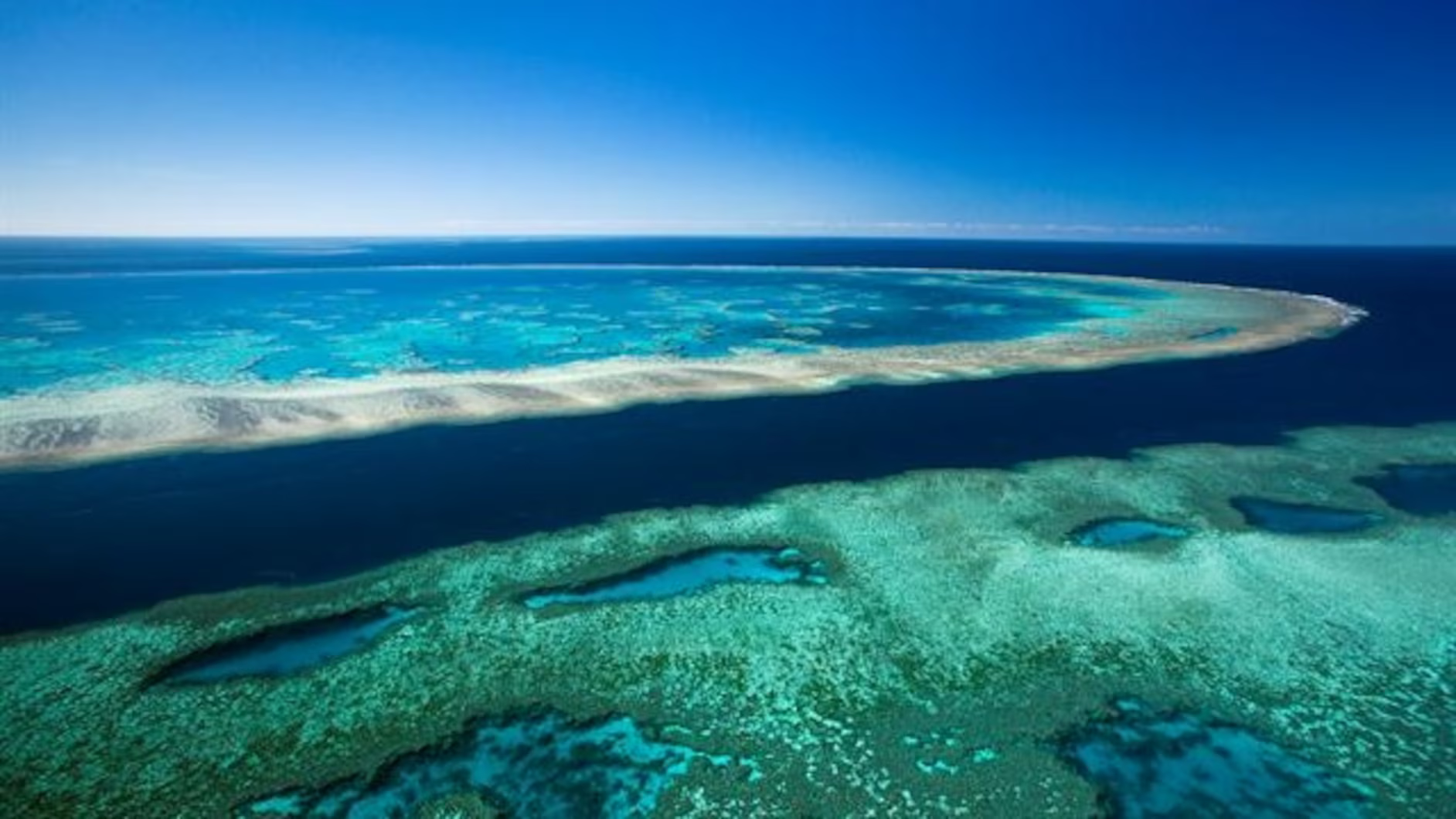
Stretching along the Queensland coast, the Great Barrier Reef is home to thousands of marine species, spectacular coral gardens and unforgettable diving and snorkelling experiences.
The reef offers something for everyone: world-class diving and snorkelling, glass-bottom boat tours, scenic flights and island escapes. Whether you’re after colourful coral gardens, encounters with sea turtles, or a relaxed beach holiday on a tropical cay, the Reef delivers.
Top experiences
Certified scuba diving on outer-reef sites
Guided snorkel trips for families and first-timers
Whale watching (seasonal — typically June to October)
Helicopter and seaplane scenic flights over the reef
Island stays: Hamilton Island, Lizard Island, Fitzroy Island
Wildlife highlights
Look out for green and loggerhead turtles, reef sharks, manta rays, giant clams and a dazzling assortment of tropical fish. Many operators include guided marine-education presentations so you can learn about reef ecology while you visit.
Sustainable travel & conservation
The Great Barrier Reef Marine Park Authority (GBRMPA) and local operators work to protect reef health through zoning, visitor education and sustainable practices. When booking, choose operators that follow reef-safe sunscreen policies, limit anchor damage and support reef research or community programs.
Featured tours & experiences
(Links will be added to these Cooee Tours pages.)
Full-day snorkel and outer-reef cruise — depart Cairns
Certified dive packages — 1-2 day liveaboard options
Whitsundays island and reef combo tours
Eco-educational reef cruises with marine biologist
Sample itinerary — 3 days
Day 1: Arrive in Cairns, coastal walk and evening reef briefing.
Day 2: Full-day outer-reef snorkel cruise with glass-bottom boat option.
Day 3: Optional scenic flight over the reef or island day trip to Fitzroy/Hamilton Island.
When to go
The dry season (June–November) gives the best visibility and lower rainfall. November to May is warmer with a risk of storms and reduced visibility; stinger season (box jellyfish) runs roughly from November to May in northern waters, so operators may provide stinger suits or advise alternate sites.
Month-by-month at a glance
June–August: Cool, dry, great visibility; ideal for diving.
September–November: Warmer, still dry; excellent snorkelling.
December–February: Hotter, occasional storms and stingers; many islands are lush and green.
March–May: Transition months; variable weather but good deals on accommodation.
Conservation & how you can help
The Reef faces pressures from climate change, coral bleaching, water quality issues and extreme weather. Visit responsibly: choose certified operators, avoid single-use plastics, use reef-safe sunscreen and support local conservation projects and research funds where possible.
Responsible visitor checklist
Wear reef-safe sunscreen and protective swimwear.
Do not touch, stand on or collect coral or marine life.
Listen to guides and follow all safety and environmental briefings.
FAQ
Is the Great Barrier Reef worth visiting?
Absolutely — it’s a unique marine ecosystem with accessible snorkelling and diving for many skill levels.
Do I need to be a strong swimmer?
Many tours are family-friendly and provide flotation and guided snorkel instruction. Inform the operator of any concerns when booking.
How do zoning rules affect visitors?
The Reef is zoned to protect habitats. Some areas are no-take zones — chosen tour operators plan visits to permitted sites that balance visitor experience and conservation.
Ready to book?
Choose reef tours based on your accommodation gateway (Cairns, Port Douglas, Airlie Beach). We’ll add direct booking links here — or contact our team for tailored itineraries.
A Great Barrier Reef visit is a choice between different gateways, vessel types and ways of experiencing the water. An outer reef trip from Cairns or Port Douglas can suit a traveller who wants snorkelling or diving to be the main event. A reef island day can give a family or mixed group time ashore as well as an optional water activity. A pontoon or a boat that offers viewing from above the water can work for a party with guests who want to stay dry. Choose what you want to do and how you want to board before choosing the cheapest fare.
The Great Barrier Reef stretches along a large part of Queensland's coast. The departure port determines what you can visit within a comfortable day and may change the type of site or equipment available. Build the plan around the base where you will actually spend the night. Using one shore day as movable time lets you make more of a marine trip when the operator has an opening and conditions suit the group.
Pick the reef gateway around your itinerary
Cairns and Port Douglas
Cairns is a practical base when you want a mix of activities in town and a broad choice of departures. Confirm which terminal and vessel appear on the booking, since check-in depends on the operator and the location may be unfamiliar. Some bookings offer a transfer from accommodation and others expect you to arrive independently. Check the departure time along with the latest time the supplier can take late passengers.
Port Douglas can make sense if you are staying further north and want to spend the full day on the water without travelling into Cairns first. The selection of departures will differ from Cairns. Look at how much time the trip spends at a particular reef, the facilities of the vessel and whether you can spend part of the day on a platform or watching from a dry area. Larger parties should ask the supplier if there is a set place to meet before boarding.
Townsville, Magnetic Island and the Cassowary Coast
From Townsville, you can combine a city and island stay with a separately planned marine trip. Look at which departures actually operate on your dates and whether you want local fringing reef, an island day or a trip further offshore. If you spend time on Magnetic Island, see which parts of your visit are reachable by public transport, where facilities are located and whether the beach or bay suits activities given the conditions on the day.
For Mission Beach, separate an excursion to Dunk Island from a dedicated reef itinerary. A boat that lands on a nearby island may have a different objective from a trip focused on offshore viewing. Check the current schedule and whether the operator expects you to board from a specific mainland wharf. Plan a workable road transfer to the Cassowary Coast when deciding whether to stay in a village before the trip.
The Whitsundays
An Airlie Beach stay can support sailing, a Whitehaven landing, an island transfer or an outer reef day. Those itineraries have different lengths and different kinds of time ashore. If one member of your party wants to spend hours in the water and another wants a beach and a short walk, ask the crew for the expected daily plan and which alternatives are offered. The right balance depends on the particular route.
For an island stay, confirm whether a mainland departure needs a separate connection. When using more than one operator, build time between the services and check what happens if the earlier trip is delayed. It is easier to manage a day when everyone understands which operator will contact them and how to change the day if the sailing is cancelled.
Compare a boat, a pontoon and an island visit
A boat touring several sites can be useful when everyone is comfortable spending most of the day on board or in the water. Check shade, seating and toilet facilities. Ask what dry options exist throughout the day. When the crew moves between locations, find out whether you can stay seated with your gear and how preparation for the water works if you join only one of the stops.
A pontoon trip may allow one member of the group to watch while a more confident swimmer snorkels in an approved area. Some trips offer a glass-bottom boat, a semi-submersible or another way to view the reef without getting wet. Each facility has its own access requirements. Ask about the remaining space between the terminal, the vessel and each viewing area and whether a mobility aid can accompany you.
An island day can be a better fit for people who value time ashore. Check whether your fare includes the crossing only or includes a meal, equipment, a guided experience or use of particular facilities. Some visitors enjoy seeing what is available near land and taking a walk. Others may value an offshore site enough to choose a separate day trip. Both choices depend on weather, current services and your comfort in the water.
Ask the practical questions before paying
Start with where you check in, the true length of the day and whether transport on land is included. Then ask how much time is available for each part of the visit, which arrangements are optional and what happens when the supplier changes sites because of conditions. If you are arriving from a town away from the marina, allow time for an ordinary delay on the road and a safe place to park.
If you want to dive, confirm eligibility, required documentation, qualification if applicable and any medical information the provider asks for. Ask the provider and your airline for relevant guidance if flying is part of your travel schedule. If you are snorkelling for the first time, describe your experience to the operator and ask how it supports beginners. Discuss requirements directly with the operator before paying. A place on a boat by itself does not settle suitability for specific activities.
Compare group budgets by the expected cost of the whole day. Add purchases such as hotel pickup, lunch, viewing options, equipment and photos where they are optional. Ask what a change or refund under the actual booking terms covers. It is useful to check whether boat and accommodation are paid under one policy or several. Put the operator's contact and reporting details where everyone can see them.
Use a sensible itinerary for your group's size and confidence
For a family trip, build the day around the youngest person's feeding, comfort and shade needs. Ask whether child equipment fits the age or size of your child and what an adult can do with a child who wants a rest. If one parent is in the water, the other may be able to take a different activity at a different time. Confirm the way the crew manages this on their specific boat.
For a group that includes people who do not want to enter the water, make the dry itinerary a real experience. Consider commentary, an above-water viewing option or time ashore in a place where the group can meet again. Ask how the operator times the activity so the extra stop does not coincide with other plans. Shade, seating, a regular toilet and a realistic transfer usually matter as much as views.
For a group that wants a longer day in the water, compare the actual time allocated to the activity, including the briefing and changeovers. Ask whether guided activities are separate bookings, whether the operator provides a buoyancy aid and how the site choice is made. Keep expectations realistic about wildlife and visibility. Nature sightings and sea conditions vary on every trip. A trusted operator will explain conditions and adapt its plan.
Allow extra time for marine weather
Leave one interval uncommitted in a stay when the marine trip is important. If the operator moves the day, use a planned land activity unplugged from that sailing. In Cairns a city visit or a look inland can help fill the day. At Port Douglas, allow a separate rainforest day with appropriate access planning. In Townsville, a waterfront and city outing provides a land-based alternative. The aim is to give the weather-dependent activity room to change.
On the day, tell the crew about support you need and follow their site and equipment directions. Talk to a pharmacist or appropriate health professional about personal motion sickness or any health concerns before travel if needed. A quiet stretch of shore is a useful option if a long marine crossing is a challenge. If you are taking a larger group, be clear about where individuals can make their own choice between travelling and staying ashore.
Help protect the reef by following your guide and the Reef Authority's visitor rules. Avoid touching coral or marine animals and give animals the room to move freely. Keep equipment secure, follow directions about where to enter the water and use paths or marked areas ashore. Take all rubbish back with you. A good day allows time to see the ecosystem without asking the crew to ignore the restrictions that help protect it.
What to carry and how to meet the boat
Keep the booking confirmation on your phone and offline, including the name of the booked operator and the number for changes. Note which terminal or wharf the booking uses. If travel includes separate providers, preserve the time zone, location and contact for each service. On a boat day, protect what must stay dry, carry a layer for changes in conditions and bring the items the operator tells you to take.
If you plan to bring footwear, personal snorkel equipment or a mask with a prescription, ask what is suitable and which equipment the operator already provides. For passengers with support requirements, tell the provider how much help will be needed between check-in and the activity, and check how medicines or supplies can be stored. Make the enquiry specific enough for the operator to give a firm answer about the vessel you will use.
Group leaders can place one person near the departure desk and one at the planned meeting point if the area is busy. Decide how late someone can arrive, how to let the supplier know a party is running late and whether a shore alternative is already arranged. Avoid combining a tight airport return with a trip where the finish can move. Where possible book the marine day in the middle of the stay.
Build a land-and-reef route
If you have two nights in one place, make the middle day the major outing and keep both arrival and departure relatively simple. Over three nights, one day can be marine and the other can be a short forest, cultural or city outing. If the weather favours different dates, you will have the option to swap where suppliers allow it. Save the drive between gateways for a separate day if a boat check-in is early.
When requesting a quote, give the preferred departure port, available date range, number of swimmers and passengers who want dry options, plus hotel and access details. Ask which activities are confirmed and which the operator will decide according to conditions. If the trip is one portion of a coach itinerary, provide the driver's time window and ideal meeting point. This lets the organiser check which excursion fits the rest of your day before selling it to the group.