Public transport in the world's great cities has changed more in the last three years than in the previous thirty. Contactless payment now works on the metros of London, Sydney, Singapore, New York, Paris, Hong Kong and dozens of others. Smartcards remain essential in Tokyo, Seoul and most of mainland China — but increasingly as a backup, not a requirement. Fare caps make day-passes obsolete in cities that have them; off-peak discounts reward travellers willing to dodge rush hour; airport surcharges still ambush the unprepared.
This is the Cooee Tours pillar guide — a global overview that links out to city-by-city deep dives, written from the perspective of travellers actually doing the trip. Use it to compare cities, plan multi-stop trips, and find the universal principles that work everywhere. Then click through to the city you're heading to for the granular detail: fares, routes, scenic transit, airport workarounds, FAQs.
The 2026 Contactless Revolution
The single biggest change for international travellers this decade is that you usually don't need to buy a local transport card anymore. London started it in 2014; Sydney joined in 2024; New York's OMNY rollout completed in 2023; Singapore opened SimplyGo in 2024; Paris is finishing its rollout through 2025–2026. The world's transit systems are quietly converging on the same payment standard: tap your contactless Visa, Mastercard, Amex, or phone wallet, and you're moving.
Tap Your Card or Phone
Works in 35+ major cities including London, Sydney, New York, Singapore, Hong Kong, Brussels, Helsinki, Rio de Janeiro, and dozens more. Same fares, same caps, same transfer rules as the local smartcard. Use the same card for every trip to capture daily and weekly caps automatically.
Buy a Local Card
Still essential in Tokyo, Osaka, Seoul, Taipei, most mainland Chinese cities, and many smaller European systems. Buy from station vending machines on arrival — usually $10–15 deposit refundable on departure. Also needed in contactless cities if you want child/senior fares.
Single Paper Tickets
Available at vending machines almost everywhere — and almost always 15–30% more expensive than tapping a card. They never include caps or transfers. Only buy these if you're making a single trip and have no other option.
Tapping your home credit card abroad means each ride may attract a foreign transaction fee (typically 2–3.5%). On short trips this is trivial; on multi-week trips with daily transport use, the fees add up. Counter with: a no-foreign-fee travel card (Wise, Revolut, Australian travel debit cards), or buy the local smartcard if you're staying more than five days in one city.
The fastest way to tap on in cities that support it — your iPhone or Apple Watch can pay without unlocking. Set up before you arrive: add your card to Apple Wallet, then choose Express Travel Pass and select that card. Google Pay offers similar functionality on Android. Works seamlessly in London, Sydney, New York, Singapore, Tokyo (limited lines), and others.
The Global Smartcards Comparison
Every major city has its own transit card — with its own quirks. This table compares the cards you'll encounter most often, whether contactless is a substitute, and where to find a daily fare cap. Use it to decide whether to buy locally on arrival or just tap your phone.
| City | Local Card | Contactless? | Daily Cap | Airport |
|---|---|---|---|---|
| Sydney | Opal | ✓ Yes (2024+) | $19.30 weekday / $9.65 weekend | +$17.92 surcharge |
| London | Oyster | ✓ Yes (2014+) | £8.90 zones 1–2 | Heathrow Express premium |
| New York | OMNY / MetroCard | ✓ Yes (2023+) | $34 weekly cap | JFK AirTrain separate fare |
| Tokyo | Suica / Pasmo | ~ Limited lines | No cap (day passes) | Narita Express / Skyliner |
| Singapore | EZ-Link / SimplyGo | ✓ Yes (2024+) | No cap (day passes) | Covered (no surcharge) |
| Hong Kong | Octopus | ✓ Yes (limited) | No cap (monthly passes) | Airport Express premium |
| Paris | Navigo Easy | ✓ Yes (rolling out) | No cap (zone passes) | RoissyBus / RER B separate |
| Berlin | BVG ticket / VBB | ✓ Yes (2023+) | €9.50 day ticket | BER airport zone surcharge |
| Amsterdam | OV-chipkaart | ✓ Yes (2024+) | €9.00 day ticket | Train to Schiphol covered |
| Rome | Metrebus | ~ Rolling out | €7.00 day ticket | Leonardo Express premium |
| Barcelona | T-Casual / Hola BCN | ~ Some lines | Hola BCN day passes | Aerobús separate |
| Seoul | T-Money | × No | No cap | AREX Express premium |
| Dubai | Nol Card | ~ Limited | No cap (day passes) | Metro covers DXB |
✓ Yes means contactless cards and phone wallets work identically to the local card. ~ Limited means it works on the main metro but not all bus or commuter lines — carry the local card too. × No means you must buy the local smartcard. Daily caps and surcharges are current as of May 2026 and may change — verify on the local operator's website before travelling.
Choose Your Destination
Click through to any city for the full transport deep-dive — payment, modes, fares, scenic routes, airport options, FAQs. Australian cities form the launch cluster; international guides are rolling out through 2026.
Australia — The Launch Cluster
Australia's metro cities each run their own smartcard — Opal, Myki, Go Card, SmartRider, Metrocard, Greencard — but the user experience converges quickly. All accept (or are rolling out) contactless. All have daily caps in some form. All have an airport surcharge with a workaround.
- 📍 Gold Coast — G:link tramComing
- 📍 Perth — SmartRiderComing
- 📍 Adelaide — MetrocardComing
- 📍 Hobart — GreencardComing
United Kingdom
Japan
France
Paris finished its contactless rollout in 2025. Navigo Easy still useful for longer stays and RER zones.
- 📍 Paris — Metro, RER, VelibComing
Singapore & Hong Kong
Italy & Spain
Germany & Netherlands
United States
Coast-to-coast contrasts — New York's subway, San Francisco's cable cars, LA's growing Metro.
- 📍 New York — Subway & OMNYComing
- 📍 San Francisco — Muni & BARTComing
United Arab Emirates
The Middle East's newest metro icon — Dubai Metro runs directly from the airport into the heart of the city.
- 📍 Dubai — Metro & Nol CardComing
Featured Guide: Sydney
Sydney is the first city published in full — the template every other city in this cluster will follow. Use it as a reference for the level of detail you can expect from upcoming guides.
Sydney Transport Guide 2026
The complete Sydney visitor guide — Opal vs contactless, the Sunday $2.80 cap, the iconic Manly Ferry, Sydney Metro, airport workarounds via Bus 420, scenic routes and day trips to the Blue Mountains.
The Airport Surcharge Trap (And How To Beat It)
Nearly every major city in the world charges a premium to use the airport rail link. It's the single most reliable hidden cost for international travellers — and almost every city has a workaround. The pattern: take a regular bus or local service from the airport to the first non-airport station, then transfer to the standard metro at standard prices. You save anywhere from $10 to $30 per person.
| City | Airport Premium | Workaround | Saving |
|---|---|---|---|
| Sydney | +$17.92 access fee (Airport Link) | Bus 420 to Mascot Station, then T8 train | ~$14 per person |
| London (Heathrow) | Heathrow Express £25 | Piccadilly Line (Oyster fare zones 1–6) | ~£15 per person |
| London (Gatwick) | Gatwick Express £19.80 | Southern / Thameslink off-peak service | ~£10 per person |
| Hong Kong | Airport Express HK$115 | Bus A21 / S1 to Tung Chung, then MTR | ~HK$80 per person |
| Tokyo (Narita) | Narita Express ¥3,070 | Keisei Access Express or Skyliner promo | ~¥1,500 per person |
| Rome (Fiumicino) | Leonardo Express €14 | FL1 regional train via Trastevere | ~€6 per person |
| Paris (CDG) | CDGVAL + RER B €11.45 | RoissyBus to Opéra direct €16.20* | *Time saving, not cost |
| Dubai | None | Metro Red Line direct from DXB | Already optimal |
Three situations justify paying the airport premium: you're carrying heavy luggage and the workaround involves bus transfers, you're arriving very late at night when local services are infrequent, or you have multiple travellers (where rideshare becomes competitive). Otherwise, the workaround almost always wins — especially for solo travellers and couples with carry-on only.
Universal Money-Saving Principles
These work in almost every city in the world — the names of the cards and apps change, but the underlying logic doesn't.
Always look for a daily or weekly cap
If the city offers fare caps (London, Sydney, New York), use the same payment method all day to capture them automatically. If it doesn't (Tokyo, Paris, Berlin), buy a day or week pass on day one and stop counting trips.
Never buy single paper tickets
The single-ride paper ticket is always 15–30% more expensive than the smartcard or contactless rate — it's the city's way of subsidising regular users. Tap a card or buy a day pass instead, no matter how short your stay.
Travel off-peak whenever possible
Most cities offer 20–30% discounts outside rush hour (typically before 6:30am, 10am–3pm, after 7pm weekdays, and all weekend). Tourist attractions don't require peak-hour arrival — plan accordingly.
Find the airport workaround
Almost every city has one. Search "[city] airport public transport without surcharge" before you arrive — or check the city's section in this guide. Usually a bus from the airport to the nearest non-airport station, then standard metro fares.
Walk distances under 1.5km
City centres are often deceptively walkable. A 1km walk takes 12 minutes — usually faster than waiting for the next service. You'll see more, save the fare, and avoid the underground. Use Google Maps to compare walking vs transit time honestly.
Use rideshare only when transit fails
Uber, Bolt and Grab are useful for late nights, heavy luggage, and suburban destinations — but a day of unlimited public transport often costs less than a single rideshare trip. Default to transit; rideshare on exceptions.
Watch for transfer discounts
Many cities give you a free or discounted transfer between modes if you tap within 60–90 minutes — Sydney's $2 transfer discount, London's Hopper bus fare, New York's free transfer. Treat connected trips as one journey, not several.
Tap on AND tap off where required
Most train, metro and ferry systems charge a maximum default fare if you forget to tap off. Buses are usually flat-fare and tap-on-only. Check the city's rules before your first ride — one forgotten tap-off can cost you the equivalent of a day pass.
Planning a multi-city trip?
Cooee Tours offers fully-guided experiences across Australia and curated international itineraries — with the transport logistics already sorted.
Plan My Trip →Essential Apps for International Travellers
Five apps cover almost every city in this guide. Download them before you leave home — international roaming makes first-day setup harder than it needs to be.
Citymapper
The single best route planner for international cities — 50+ supported including London, NYC, Paris, Tokyo, Sydney, Singapore. Real-time, multi-modal, intuitive.
Google Maps
Universal fallback — integrated transit data for nearly every major city. Download offline maps of your destinations before flying.
Uber / Bolt / Grab
Uber works in most of the world. Bolt dominates Eastern Europe and parts of Africa. Grab is the standard across Southeast Asia. Install all three for full coverage.
Wise / Revolut
Multi-currency travel cards with no foreign transaction fees. Essential for tapping public transport abroad without bleeding 2–3% per ride to your home bank.
Google Translate / Papago
Camera translation for station signs, ticket machines, and operator announcements. Papago is significantly better than Google Translate for Korean and Japanese.
Some cities have a transport authority app that's genuinely better than Citymapper for the local network — TripView in Sydney, TfL Go in London, Tokyo Metro app for service alerts, MTR Mobile in Hong Kong. The individual city guides in this cluster will flag which local apps are worth installing.
Twelve Universal Tips for Any City
- Test your tap before peak hour. First ride should be a quiet station mid-morning so you can troubleshoot if your card isn't recognised. Walking up to a packed gate during rush hour is a bad first experience.
- Carry a backup payment method. If your phone runs out of battery or your card glitches, having a second contactless card means you're still moving. Useful especially at airport arrivals.
- Use the same payment device all day. Daily caps only accumulate against one card. Switching between Apple Pay and a physical card mid-day resets the cap counter and costs you money.
- Learn the local equivalent of "tap on / tap off". Some cities require both (Sydney, Hong Kong); some only tap on (London buses); some have proof-of-payment with random inspections (Berlin, Vienna, Melbourne). Fines for missing taps are real.
- Don't trust the airport ticket counter. Airport ticket counters routinely sell tourist day-pass cards that are more expensive than buying a smartcard or tapping contactless. Walk past, get to the gates, tap as a local would.
- Photograph the metro map before going underground. Mobile data drops in tunnels. A screenshot of the network map saved to your phone gallery beats hoping for signal at every station.
- Note the last train time. Most cities stop running between midnight and 1am — some earlier. Tokyo Metro stops at 12:30am sharp; rideshare prices triple immediately. Plan your night accordingly.
- Sit on the side with the view. Many cities have a "scenic side" on key routes — right side on the Sydney Manly Ferry, left side on the London Underground going north on the Jubilee, right side on Hong Kong's Star Ferry. Local guides will tell you which.
- Don't eat or drink on the metro. Singapore fines you. Tokyo will not eject you but everyone will know you're a tourist. Adopt local norms — you'll travel more comfortably.
- Stand right on escalators in transit hubs. Standing left blocks commuters walking up. This rule is consistent across London, Tokyo, Singapore, Hong Kong, Sydney, Toronto and most of the West. Tourists who stand left get sighed at globally.
- Keep small change for legacy systems. Some buses in older European systems, rural connections, and night services still require cash or coins. Carry a few small notes in the local currency as backup.
- Read the city guide before you arrive. Each city has 2–3 specific quirks that catch first-time visitors. Five minutes of reading the Cooee Tours city transport guide saves an hour of confusion on day one.
Frequently Asked Questions
Do I need to buy a local transport card in every city I visit?
No — in 2026, contactless credit and debit cards (Visa, Mastercard, Amex) plus Apple Pay and Google Pay work on the metro, bus and train networks of more than 35 major cities including London, Sydney, New York, Singapore, Paris, Hong Kong and Brussels.
You only need a physical local card in cities where contactless still isn't accepted (most of Japan, Seoul, mainland China, Taipei), if you need child/senior fares, or if your home bank charges high foreign transaction fees that make the math worse than buying locally.
Which cities have the best public transport for travellers?
For sheer ease of use, Singapore, Hong Kong, Tokyo, London and Zurich consistently top global rankings — frequent service, English signage, integrated fares, late operation. Tokyo wins on punctuality; London on coverage; Singapore on cleanliness.
For scenic value, Sydney (harbour ferries), Hong Kong (Star Ferry), Lisbon (trams) and Istanbul (Bosphorus ferries) turn ordinary commutes into postcard moments. For sheer affordability, Budapest, Prague and Mexico City deliver the most network for the lowest fare.
How do I avoid airport transport surcharges?
Almost every major city charges a premium for the airport rail link — and almost every city has a workaround. The pattern: take a regular bus from the airport to the first non-airport station, then transfer to a normal train or metro.
Examples: Sydney — Bus 420 to Mascot Station saves $14. London Heathrow — Piccadilly Line saves £15 over Heathrow Express. Hong Kong — Bus A21 to Jordan station saves HK$80 over Airport Express. Tokyo Narita — Keisei Access Express saves ¥1,500 over Narita Express. See the airport-surcharge table earlier in this guide for the full list.
What apps should I install before international travel?
Citymapper (best route planner, 50+ cities), Google Maps (universal — download offline maps before arriving), Uber or Bolt or Grab (depending on region), the local transport authority's app for service alerts, and a translation app for non-English-speaking cities (Papago for Korean, Pleco for Chinese, Google Translate for general use).
Also worth installing before you leave: a multi-currency travel card app like Wise or Revolut to avoid foreign transaction fees on every tap-on.
What is a fare cap and which cities offer them?
A fare cap is a daily or weekly maximum charge — once you hit it, all further travel that period is free. You don't activate anything; tap normally and the cap applies automatically.
Cities with strong cap systems include London (£8.90 daily zones 1–2), Sydney ($2.80 Sunday cap, $19.30 weekday), New York ($34 weekly cap on OMNY). Many other cities don't cap — instead they sell explicit day or week passes (Tokyo, Paris, Berlin, Singapore). Either approach works; the cap is just more forgiving if you don't pre-commit to a pass.
Is contactless payment the same as using a smartcard?
In most cities that support it — London since 2014, Sydney 2024, New York 2023, Singapore 2024 — contactless payment works identically to the local smartcard. Same fares, same caps, same transfer rules.
Differences: foreign transaction fees on your home card may apply (2–3% per ride), you can't load child or concession fares onto a generic contactless card, and a few cities like Hong Kong only accept specific networks (Mastercard, Visa, but not Amex). For trips longer than five days in one city, buying the local smartcard often works out cheaper than tapping a foreign card.
Which cities still require their own physical transport card?
As of 2026, you'll still need a local card in: most of Japan (Suica, Pasmo, ICOCA — contactless is rolling out gradually on some lines), Seoul (T-Money), most mainland Chinese cities (where Alipay or WeChat Pay are the workaround for foreigners), Taipei (EasyCard preferred for transfer discounts), and many smaller European cities not yet on contactless.
Buy these from station vending machines on arrival — usually $10–15 refundable deposit. Many travellers keep them as souvenirs after the deposit refund is too small to bother with at departure.
How safe is public transport at night in major cities?
Generally very safe in the cities Cooee Tours covers — Singapore, Tokyo, Hong Kong, Sydney, London, Zurich, Vienna are all rated extremely safe at night with strong CCTV and staffed stations.
Use standard awareness everywhere: stay in main carriages near other passengers, keep valuables out of sight, and prefer well-lit central stations over remote suburban ones late at night. Most major cities also offer night-bus alternatives once the metro closes — check the city-specific guide for the local night-network details.
How much should I budget for public transport on a typical city visit?
Rough daily budgets for unlimited public transport in 2026 (in AUD equivalent): Bangkok or Budapest $5–8, Lisbon or Prague $6–10, Sydney or Singapore $13–15, London or New York $11–14, Paris or Tokyo $9–12, Zurich or Oslo $15–20.
Most cities offer 3-day or 7-day passes at meaningful discounts to single-trip fares — usually 30–50% cheaper than buying each day individually. Worth doing the math on day one before deciding.
Should I use Uber or public transport in unfamiliar cities?
Public transport is almost always cheaper, often faster (no traffic), and gets you closer to local life. Use rideshare for: arrival from the airport with heavy luggage, late nights when metro is closed, suburban destinations not served by transit, and emergency situations.
In most major cities, a daily fare cap means unlimited public transport costs less than a single Uber ride. The exception: cities with cheap rideshare and limited transit (most US cities outside NYC/SF, parts of Southeast Asia, the Middle East — though Dubai is changing that).
Related Travel Guides
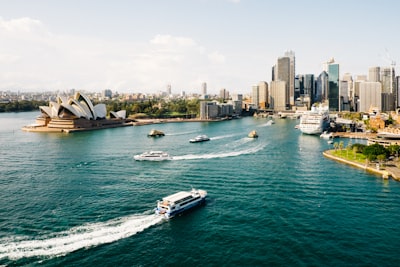
Sydney Transport Guide
The first city in the cluster — live now

Highway 1 Big Lap Guide
Drive 14,500km around Australia's coast

Cairns Travel Guide
Reef, rainforest & tropical adventures

Queensland Wildlife Guide
Koalas, reef, platypus & eco experiences

Sunshine Coast Road Trips
Blackall Range & hinterland drives