Melbourne
Laneways alive with street art, world-class dining, the MCG, and iconic landmarks — plus day trips to the Great Ocean Road, Yarra Valley, and Phillip Island. Four seasons in one day, endless things to discover.
Melbourne is Australia's second-largest city and its undisputed cultural capital — a metropolis of world-class dining, vibrant arts, legendary sport, and fascinating history. Founded in 1835, the city grew dramatically during the Victorian gold rush of the 1850s, leaving behind a legacy of grand architecture and cultural institutions that define Melbourne's character today.
The city is renowned for its intricate laneways filled with street art and hidden cafés, its passionate coffee culture (Melbourne is widely considered Australia's coffee capital), the roar of the crowd at the MCG, and the elegant sweep of the Royal Botanic Gardens. Melbourne's free CBD tram zone makes exploring the city centre effortless, and the City Circle Tram provides a loop of all major inner-city landmarks.
Beyond the city, Melbourne is the perfect base for exploring Victoria: the Great Ocean Road (Twelve Apostles) begins just 90 minutes away, the Yarra Valley and Healesville Sanctuary are an hour east, and the iconic Puffing Billy Railway winds through the Dandenong Ranges.
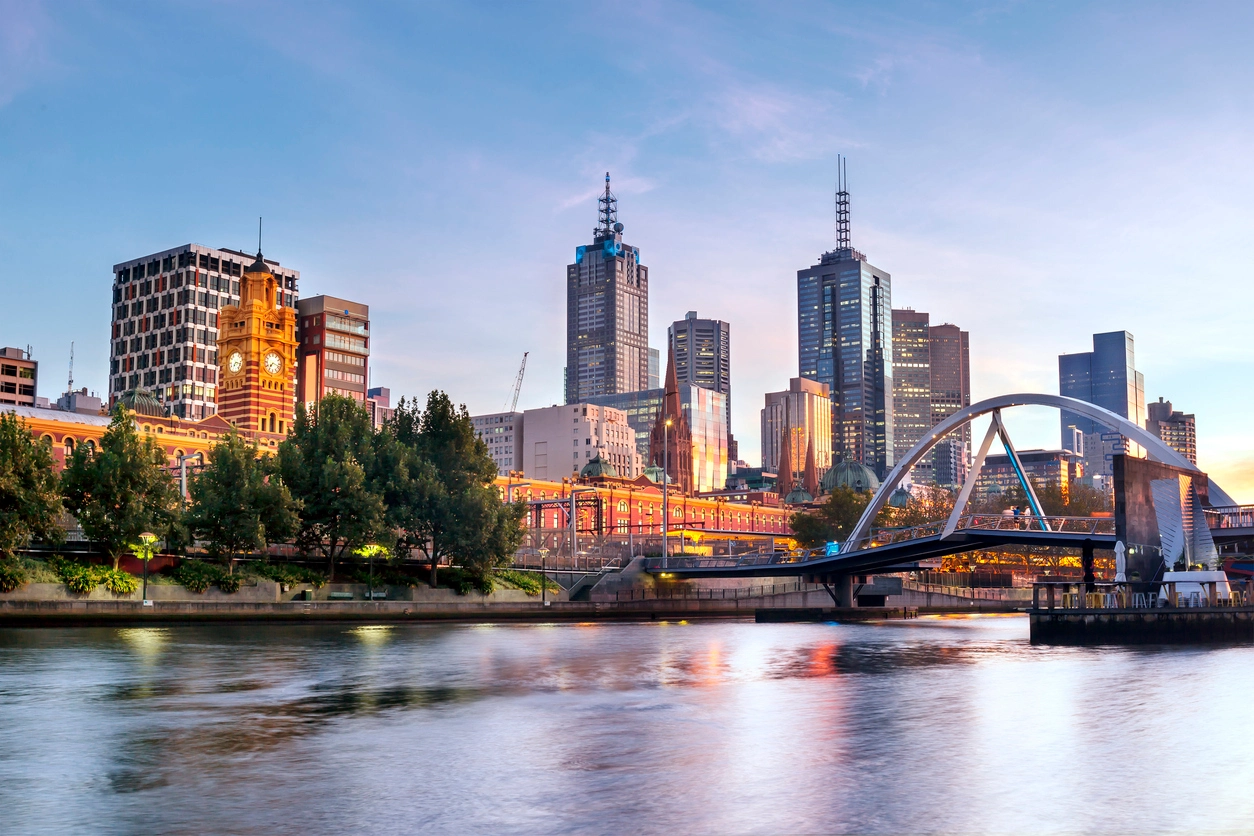
From iconic street art laneways to world-class museums, sporting temples, and coastal day trips — Melbourne delivers something extraordinary at every turn
Melbourne's laneways are world-famous outdoor galleries — constantly evolving, never repeating. Hosier Lane is the city's most celebrated, with floor-to-ceiling murals and commissioned works from local and international artists. Nearby AC/DC Lane, Rutledge Lane, and Caledonian Lane each have their own distinct character. The laneways also house hidden espresso bars, boutique shops, and acclaimed restaurants.
Federation Square — opened 2002 — is Melbourne's beating heart, built on the site of a former railway yard opposite the iconic Flinders Street Station. Its controversial angular architecture has become part of Melbourne's identity. The Square houses the Australian Centre for the Moving Image (ACMI), the Ian Potter Centre: NGV Australia, and the Koorie Heritage Trust. Flinders Street Station's Edwardian dome (opened 1910) is Melbourne's most photographed landmark.
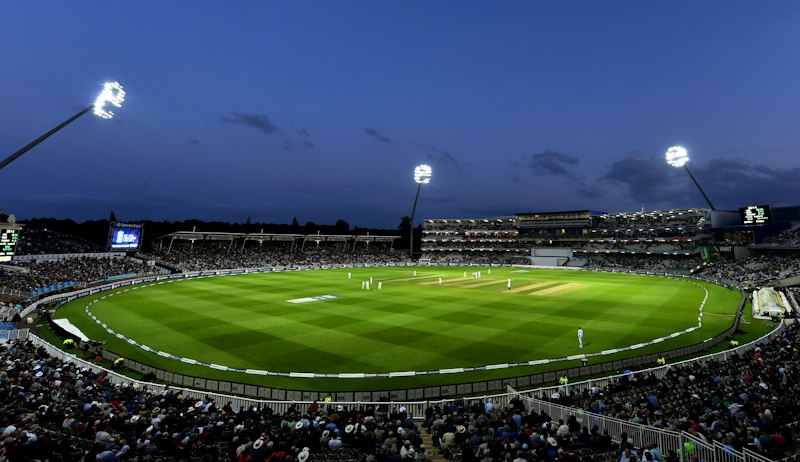
The spiritual home of Australian cricket and AFL football — the MCG seats 100,024 and is the largest stadium in Australia and the 11th largest in the world. It hosts the Boxing Day Test Match (cricket), AFL Grand Final, State of Origin and major concerts. Even when no event is on, the guided MCG stadium tour takes visitors through the Long Room, media centre, and the National Sports Museum. The MCG precinct also has excellent restaurants and bars.
A tranquil 38-hectare oasis on the banks of the Yarra River, just south of the CBD. The Royal Botanic Gardens contain over 8,500 plant species, ornamental lakes, and beautifully manicured landscapes. Join a free Aboriginal Heritage Walk (runs daily) to learn about the Wurundjeri people's connection to this land. Alternatively, pack a picnic and watch the black swans glide across the lake. The Gardens are free to enter and open every day.
The Southern Hemisphere's highest public observation point occupies the entire 88th floor of the gold-topped Eureka Tower (297 metres, completed 2006) in Southbank. At 285 metres above ground, the panoramic views extend to Port Phillip Bay, the Dandenong Ranges, and on clear days, Phillip Island. The signature attraction is "The Edge" — a glass cube that extends 3 metres out from the building, leaving you suspended in mid-air above the city streets. Vertigo guaranteed.
Established in 1878 and still going strong, "Queen Vic Market" is the largest open-air market in the Southern Hemisphere — occupying 7 hectares at the top of Melbourne's CBD. Shop for fresh produce, gourmet foods, artisanal products, clothing, and souvenirs across its many sheds and stalls. The food court is a multicultural feast. Various evening market events, including the popular Summer Night Market (November to March), transform the space after dark.
Australia's oldest and most visited art museum, the NGV has two magnificent locations: NGV International on St Kilda Road (opened 1861) showcases international art from antiquity to today, while Ian Potter Centre: NGV Australia at Federation Square holds the world's most comprehensive collection of Australian art. Permanent collections are free. The NGV's blockbuster international exhibitions draw massive crowds — book ahead for these.
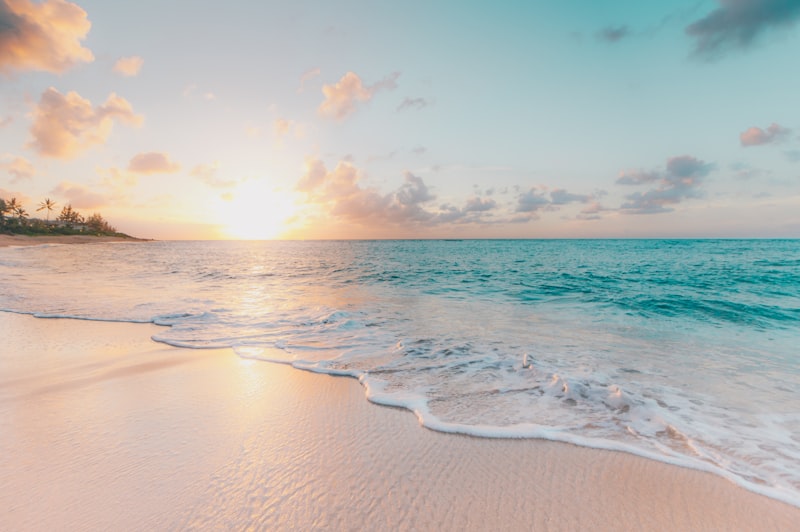
St Kilda is Melbourne's most iconic bayside suburb — home to the historic Luna Park fun fair (opened 1912), the esplanade and its weekend craft market, the bohemian Acland Street café strip, and the St Kilda breakwater where a colony of Little Penguins returns each evening at dusk. A short drive further is Brighton Beach, famous for its 82 colourful bathing boxes (the most Instagrammed sight in Melbourne) along the shores of Port Phillip Bay.
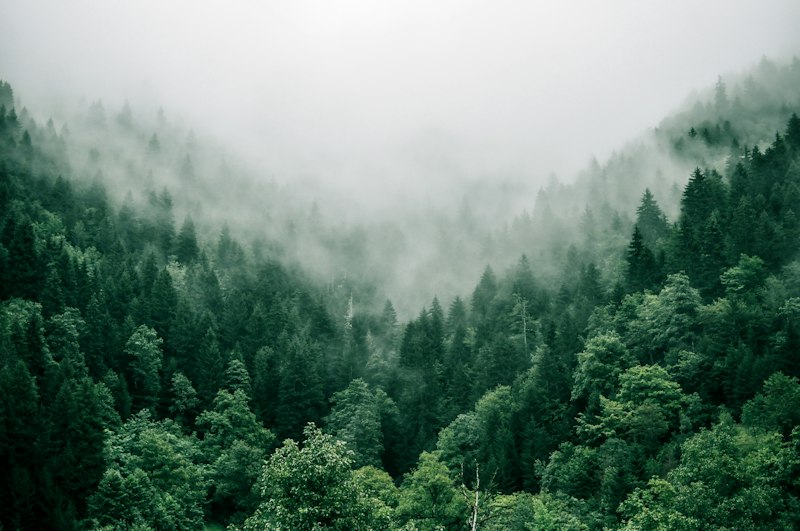
One of the world's finest preserved steam railways, Puffing Billy winds through the lush forests of the Dandenong Ranges — just one hour east of Melbourne. Passengers (including kids who love to dangle their legs from the open carriages) travel through mountain ash forests, fern gullies, and picturesque countryside. The route runs between Belgrave and Lakeside. Combine with a visit to the Dandenong Ranges National Park for walks among towering mountain ash trees.
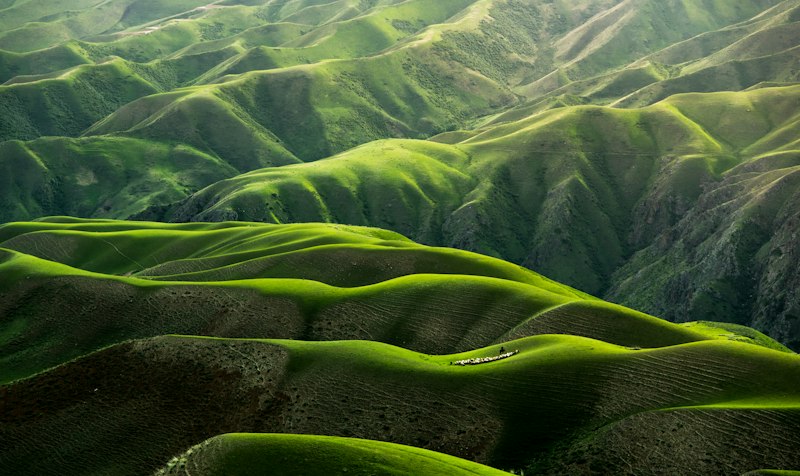
Just one hour east of Melbourne, the Yarra Valley is Victoria's premier wine and food region — rolling green hills dotted with over 80 cellar doors. The valley's iconic Healesville Sanctuary is a world-class wildlife park set in native bushland, specialising in Australian animals in naturalistic habitats — koalas, platypus, wombats, Tasmanian devils, and wedge-tailed eagles. A Yarra Valley food and wine tour from Melbourne is the perfect day out for groups and couples alike.
Phillip Island hosts the world's largest Little Penguin colony, with over 32,000 penguins waddling ashore at sunset every single night of the year. The famous Penguin Parade is one of Australia's most visited wildlife events. The island also has the Koala Conservation Reserve, world-class surf at Woolamai and Summerland Beach, and seals at the Nobbies. Phillip Island also hosts the MotoGP Australian Motorcycle Grand Prix each October.
The world-famous Great Ocean Road begins just 90 minutes from Melbourne at Torquay. Day tours from Melbourne take in the iconic Twelve Apostles, Loch Ard Gorge, Bells Beach (home of the Rip Curl Pro), wild koalas at Cape Otway, and ancient rainforests in Great Otway National Park. We recommend 2–3 days for the full experience — see our Great Ocean Road Guide for the complete itinerary.
Melbourne is the sporting and events capital of Australia — with a calendar that runs from January to November without pause
Grand Slam tennis at Melbourne Park (Rod Laver Arena). One of the world's four Grand Slams — 2 weeks of world-class tennis in the summer heat.
Formula 1 comes to Albert Park Lake in inner Melbourne. One of the world's most prestigious motorsport events — a spectacular street circuit atmosphere.
The largest annual comedy festival in Australia — and one of the biggest in the world — transforming venues across the city for 4 weeks.
Australian Rules Football's flagship event at the MCG — 100,000 passionate fans, pre-game entertainment and the pinnacle of the AFL season.
"The race that stops a nation" — the world's most famous handicap horse race at Flemington Racecourse. Cup Day (first Tuesday in November) is a Victorian public holiday.
Cricket's most iconic annual Test match — Australia vs the touring nation. Day 1 typically draws over 80,000 fans to the MCG. A Melbourne Christmas tradition.
Melbourne is famous for its unpredictable climate — locals say you can experience all four seasons in one day. Here's what to expect each season.
20–40°C. Warm and mostly sunny — but Melbourne's "cool change" fronts can drop temperatures by 20°C in an hour. Ideal for cricket, outdoor dining, and beach days. Book accommodation early — peak season.
15–25°C. Best time to visit. Mild, settled weather, spectacular autumn colours in the gardens and parks, and fewer crowds. March brings the F1 Grand Prix and Comedy Festival.
6–14°C. Cool and sometimes wet — bring a good jacket. But winter Melbourne is cosy: world-class restaurants and cafés are especially wonderful. AFL footy season is in full swing.
12–22°C. Beautiful wildflowers in the parks, Melbourne Cup in November, and warming temperatures. Spring racing carnival brings glamour to Flemington. A superb time to explore the Yarra Valley.
Common questions from visitors planning a Melbourne trip
We are one of Australia's most trusted travel companies — exceptional customer service, luxury coach travel, and knowledgeable guides who bring Melbourne to life.
City tours · Great Ocean Road · Yarra Valley · Phillip Island · Puffing Billy · Small groups