The only surviving Wonder of the Ancient World, built with 2.3 million tonnes of stone to a precision modern engineers study with respect. A valley cut into limestone holding 65 royal tombs, one discovered intact in 1922 with its gold still inside after three thousand years. A river 6,650km long that made civilisation possible, flowing through a desert that has not changed since the Pharaohs watched it. Egypt holds history at a scale that makes all other historical destinations feel like approximations.
Egypt (Misr — the Arabic name of the country (the same name in Arabic used by the Pharaohs in the ancient Egyptian language) — the Arab Republic of Egypt — 1,010,408 km² in northeastern Africa and the Sinai Peninsula — 106 million people — the most populous country in the Arab world and the most populous in Africa — the country whose eastern corner (the Sinai) bridges Africa and Asia at the Suez Canal) is the most visited country in Africa and one of the oldest continuously inhabited civilisations on Earth — a fact that does not fully register until you are standing at the base of the Great Pyramid (approximately 2560 BCE — 4,586 years from the current year) looking up at a structure that was already 2,500 years old when Julius Caesar arrived in Egypt, that has been standing for longer than Christianity has existed, that the ancient Greeks considered the most extraordinary object built by humans, and that has never been adequately explained in the sense that the architectural community has never reached complete consensus on exactly how it was built with the tools available in 2560 BCE.
Egypt’s four anchor regions: Cairo and the Giza Plateau (the pyramids — the Sphinx — the Grand Egyptian Museum (GEM — opened 2023 — the largest archaeological museum in the world — the complete Tutankhamun collection in a single building for the first time) — the Islamic Cairo bazaars — the Citadel). Upper Egypt (the ancient sites of the Nile Valley south of Cairo — Luxor (the ancient city of Thebes — the Valley of the Kings, the Karnak Temple Complex, the Luxor Temple) and Aswan (the Nubian culture, the Philae Temple, Abu Simbel 280km further south)). The Nile cruise (the dahabiya traditional sailboat or the cruise ship from Luxor to Aswan — the standard delivery mechanism for the Upper Egypt sites). The Red Sea coast (Hurghada, Sharm el-Sheikh — the coral reef diving (the SS Thistlegorm wreck — the most consistently voted best dive site in the world) — the beach infrastructure).
Egypt’s historical sites are concentrated in two areas: the Cairo–Giza plateau in the north and the Luxor–Aswan–Abu Simbel corridor in the south — connected by the Nile and best experienced in sequence.
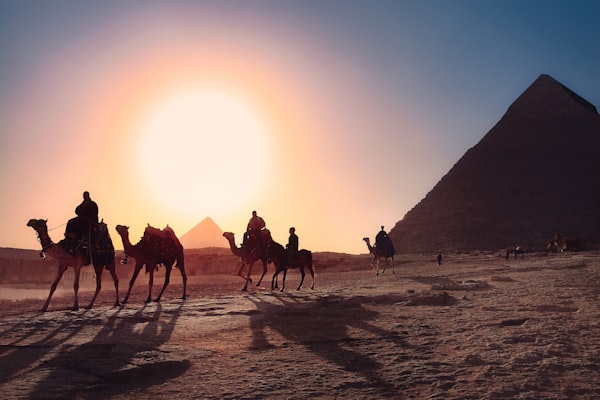
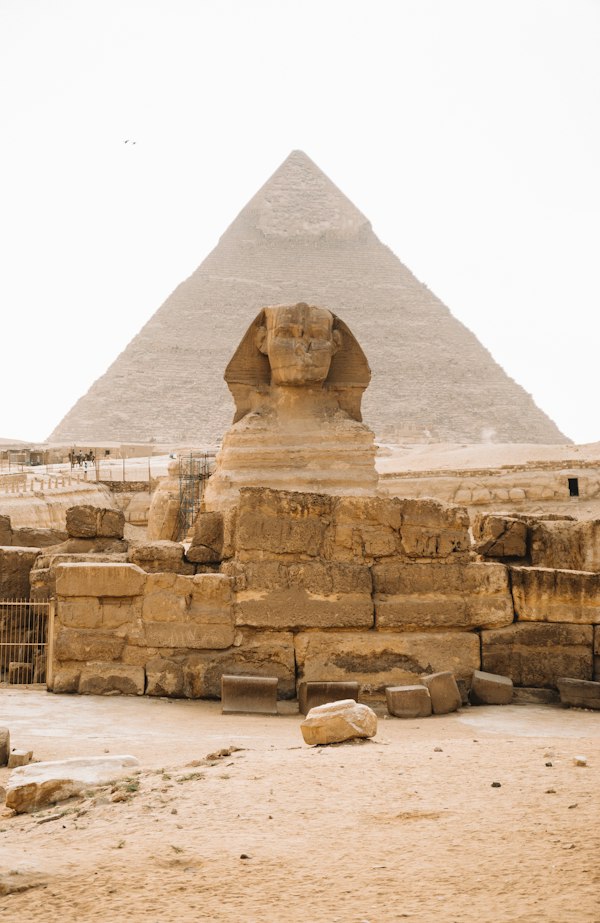
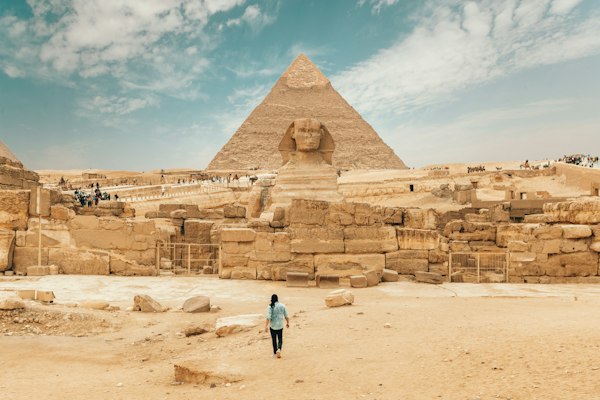
The Giza Pyramid Complex (the plateau on the western edge of Cairo — the three main pyramids (Khufu, Khafre, and Menkaure — built in that order between approximately 2560 and 2510 BCE — the Fourth Dynasty of the Old Kingdom — the Pyramid of Khufu (the Great Pyramid — the largest of the three — 146.5m at its original height, now 138.8m after the loss of its limestone casing — the base dimensions of 230.4m on each side — constructed from approximately 2.3 million stone blocks averaging 2.5–15 tonnes — the guide’s first fact at the Pyramids: “the total weight of the Great Pyramid is approximately 5.9 million tonnes — the Empire State Building weighs 365,000 tonnes — the Great Pyramid weighs 16 Empire State Buildings — it was built without a wheel, without a pulley, and without iron”)) is the only surviving ancient Wonder of the World and the only major ancient monument in the world that looks exactly like its photographs from the outside and nothing like them from within 100 metres — the scale simply does not register photographically. The interior of the Great Pyramid (the entry is via the original Robbers’ Tunnel cut in the 9th century CE — the ascent of the Grand Gallery (the corbelled limestone passage 47m long and 8.7m high — the most significant surviving internal architectural space in the ancient world — the guide allows the group to stop at the bottom of the Grand Gallery and be silent for 30 seconds — the silence at the bottom of the Grand Gallery in a 4,500-year-old room is not like any other silence the visitor has experienced) — the King’s Chamber (the granite burial chamber — the empty red granite sarcophagus — the guide explains that the sarcophagus (6’ long × 3’ wide × 3’ deep) is too large to have been brought through the pyramid passages — it was placed in the chamber before the roof was constructed — the pyramid was built around the sarcophagus — this is the kind of fact that requires sitting with for a moment to process fully)). The Great Sphinx (Horem Akhet — “Horus of the Horizon” — the limestone statue of a lion’s body with a human head — 73.5m long, 20.2m wide, 20.2m high — carved from the bedrock of the Giza plateau in a single monolithic piece — the date of carving debated (the most accepted scholarly position is the reign of Khafre (approximately 2530 BCE) — the weathering patterns on the Sphinx body have been used to argue an earlier date (the “water erosion hypothesis” — the guide presents the debate accurately without declaring a winner) — the missing nose (the guide addresses the Napoleon’s cannon story directly — Napoleon’s army was in Egypt in 1798 — the Sphinx’s nose was already missing before Napoleon arrived — a medieval Arabic chronicler (al-Maqrizi) documented its absence in the 15th century CE — the nose was removed approximately 400 years before Napoleon was born — the guide has delivered this correction approximately 2,000 times and it is still surprising to visitors every time))).
The Valley of the Kings (Wadi Biban el-Moluk — “Valley of the Gates of the Kings” — the narrow desert valley cut into the limestone cliffs of the Theban necropolis on the west bank of the Nile at Luxor — the royal burial site of the New Kingdom pharaohs from approximately 1539 BCE (the beginning of the New Kingdom) to approximately 1075 BCE (the end of the New Kingdom — the Third Intermediate Period transition) — 65 tombs cut into the valley walls and floor, collectively forming the largest single concentration of royal burial architecture in the world) is the site where the visitor most clearly understands the Egyptian obsession with the afterlife (the “Duat” — the Egyptian underworld — the journey of the dead through the 12 hours of the night — the decorative programme of the royal tombs (the Amduat, the Book of the Dead, the Book of Gates — the religious texts and their associated imagery covering every surface of the tomb walls from the entrance corridor to the burial chamber — the pigments (the Egyptian blue (CaCuSi2O6 — the world’s first synthetic pigment — produced by the Egyptians by approximately 2600 BCE — still vivid in the tomb walls after 3,300 years — the guide explains why: the sealed, humidity-controlled environment of the tomb preserved the pigment in conditions more stable than a museum)). KV62 — the Tomb of Tutankhamun (the most famous tomb in the valley — not the most spectacular (the tombs of Ramesses VI, Seti I, and Thutmose III have more elaborate and better-preserved decoration) but the most significant historically: the intact tomb of a minor pharaoh (Tutankhamun ruled for approximately 9–10 years, dying at approximately 18–19 years of age — the cause of death still debated (the most recent CT scan analysis suggests multiple contributing factors including severe malaria and a leg fracture — not the dramatic assassination narratives of the early 20th century)) discovered by Howard Carter on 4 November 1922 after five years of systematic searching (the “Carter Method” — the grid-by-grid excavation of the valley floor — the final season funded by Lord Carnarvon who had threatened to withdraw funding — the find coming on what Carter had told the team would be “one more week”). The complete Tutankhamun collection (5,398 objects including the gold death mask, the innermost gold coffin, the gilded shrine, the canopic chest) is now at the Grand Egyptian Museum at Giza — the KV62 tomb itself contains the sarcophagus (with the mummy) and the decorative walls). The Tomb of Seti I (KV17) (the deepest and most elaborate tomb in the valley — 137m deep — the complete astronomical ceiling (the oldest surviving astronomical ceiling in the world — the northern constellations depicted with the specific figures that would become the basis of the Greco-Roman zodiac) — currently undergoing conservation and intermittently open).
The Karnak Temple Complex (the Ipet-isut — “the Most Select of Places” in ancient Egyptian — the vast precinct of religious architecture on the east bank of the Nile at Luxor — built, expanded, and modified by successive pharaohs from approximately 2055 BCE to approximately 100 BCE — a span of construction activity of nearly 2,000 years involving contributions from approximately 30 successive pharaohs — the result: a complex of temples, pylons (the monumental gateways), sanctuaries, obelisks, and sacred lakes covering approximately 200 hectares — the largest religious building complex ever constructed — Notre-Dame Cathedral could fit within the Hypostyle Hall alone) is the site in Luxor that most rewards repeated visits (the guide has been bringing groups through Karnak for 18 years and says he discovers something new on approximately 40% of visits — this is either a testament to Karnak’s complexity or to the guide’s attention — the guide suggests it is both). The Hypostyle Hall (the Great Hypostyle Hall — built primarily under Ramesses II — 102m wide × 53m deep — 134 columns arranged in 16 rows — the 12 central columns 21m high and 3.5m in diameter (the guide demonstrates the diameter by having the group join hands around a single column — the join requires 6–8 adults — the guide photographs this every time — the photograph is always the same — the guides’ delight in it has not diminished)) — the column capitals (the papyrus bundle capitals on the outer columns and the papyrus-flower (open) capitals on the inner columns — the original polychrome paint still visible on the inner surfaces (the protected inner surfaces retained paint that the exposed outer surfaces lost — the guide’s flashlight technique: the torch applied to the carved surface at a low angle reveals the pigment register that daylight washes out)). The Avenue of Sphinxes (the 2.7km processional avenue connecting Karnak to Luxor Temple — the ram-headed sphinxes (the sacred animal of Amun, the Karnak patron deity) — the avenue restored and opened in its complete form in 2021 — the evening walk from Karnak to Luxor Temple along the restored avenue is the guide’s preferred Luxor experience). Obelisks of Hatshepsut (the two obelisks commissioned by the female pharaoh Hatshepsut — the taller of the two (29.6m) still standing — the original gold electrum tip visible in the weathering patterns at the summit — the hieroglyphic text on the base explaining that Hatshepsut had the obelisks clad in electrum “whose brilliance illuminated Egypt like the Aten”). The Sacred Lake (the large rectangular artificial lake (120m × 77m) adjacent to the temple precinct — used for ritual bathing and the sacred barque procession — the morning light across the lake at 7am before the tour groups arrive).
Abu Simbel (the Great Temple of Ramesses II and the smaller Temple of Nefertari — cut into the sandstone cliff face at the second cataract of the Nile (in what is now Nubia, southern Egypt) — built approximately 1264–1244 BCE — the 20-year construction project of Ramesses II (the pharaoh who is the most represented human figure in the surviving architectural record of ancient Egypt — 67 years on the throne, approximately 180 children, temples at Karnak, the Ramesseum, Abu Simbel, and statues placed in temples throughout Egypt — the guide describes Ramesses II as “the most effective self-promoter in human history before the invention of social media”) — the four 20m-high seated statues of Ramesses II at the facade of the Great Temple (each statue carved from the sandstone cliff face — the left knee of the southernmost statue damaged by an earthquake in antiquity — the damage repaired with smaller blocks by ancient Egyptian builders — visible today — the guide points this out as one of the oldest documented archaeological repairs in human history)) is the most remote major archaeological site accessible to visitors in Egypt and the site with the most extraordinary origin story. The UNESCO relocation (between 1964 and 1968, the construction of the Aswan High Dam would have submerged the Abu Simbel temples completely under the rising Lake Nasser. The UNESCO international campaign — participating nations: approximately 50 — the cost: approximately USD$40 million (roughly USD$350 million in today’s terms) — the method: the temples were cut into approximately 807 numbered blocks (the largest block approximately 30 tonnes), lifted 65m up the cliff face, and reassembled on a purpose-built artificial hill above the new water level — the entire internal orientation of the temples was preserved exactly (the alignment of the sanctuary remains oriented so that the sun illuminates the innermost sanctum on two specific days of the year — October 22 and February 22, the dates believed to correspond to the birthday and coronation of Ramesses II) — the most complex archaeological engineering operation ever undertaken — the guide describes the UNESCO campaign as “the moment the world decided that some things were too important to belong to any single nation or economic project”). The solar alignment event (on October 22 and February 22 each year, the rising sun penetrates 65m into the temple sanctuary and illuminates the four seated statues at the innermost chamber (Ramesses II, Amun, Ra-Horakhty, and Ptah — only Ptah, the god of darkness, remains in shadow throughout)). The Temple of Nefertari (the smaller temple adjacent to the Great Temple — dedicated to the goddess Hathor and to Nefertari, Ramesses’ chief queen — the only instance in Egyptian history where a pharaoh dedicated a temple to his queen at the same scale as his own (the conventional reading is that Ramesses II valued Nefertari extraordinarily highly — the inscription above the Nefertari temple entrance states “for whom the sun does shine” — an inscription applied to a goddess — the guide’s position: whatever the political context of a royal monument, this is a remarkable inscription for a pharaoh to commission about a human being)).
Cairo (Al-Qahira — “The Victorious” — the capital of Egypt — population approximately 21 million in the greater metropolitan area — the largest city in Africa and the Arab world — founded in 969 CE by the Fatimid Caliph al-Mu’izz as a new administrative capital adjacent to the existing settlement of Fustat (the first Islamic capital of Egypt, founded 641 CE — 28 years after the Prophet Muhammad’s death)) is the city most visitors to Egypt arrive in and significantly underestimate — allocating two days before flying south to Luxor when three or four would be the correct investment. The Grand Egyptian Museum (GEM) (the museum opened in phases from 2022 — the complete public opening in late 2023 — located at the base of the Giza plateau 2km from the Great Pyramid — the largest archaeological museum in the world (480,000 m² total area — the main exhibition hall alone larger than any previous Egyptian Museum) — the complete Tutankhamun collection (5,398 objects — the gold death mask, the innermost gold coffin, the golden throne, the canopic shrine, the gilded chariot, the alabaster containers, the papyrus documents — displayed together for the first time since 1922 when they were excavated — the Tutankhamun galleries at GEM represent the single most significant reorganisation of displayed antiquities in the history of Egyptian archaeology)). The Khan el-Khalili (the bazaar — the commercial district that has occupied the same location since approximately 1382 CE when the Burji Mamluk sultan Barquq built the caravanserai that gave the district its character — the covered lanes of goldsmiths, spice merchants, cotton traders, brass-workers, papyrus sellers — the guide’s routing through Khan el-Khalili avoids the tourist-facing first 50m of the bazaar (where the prices are approximately 300% above local value) and navigates to the working sections of the market (the actual Cairene commercial space — the coffee roasters at the Fishawi Coffee House (operating continuously since 1773 — the guide’s claim, which he acknowledges may be exaggerated by approximately 30 years, but maintains on principle))). The Citadel (Qal’at al-Jabal) (the medieval Islamic fortification built by Saladin from 1176 CE — the hilltop position commanding the best view of Cairo in any direction — the Muhammad Ali Mosque (the Ottoman-Baroque mosque built 1830–1848 — the Albanian-born Muhammad Ali Pasha who ruled Egypt 1805–1848 and is generally credited with the modernisation of the Egyptian state — his mausoleum within the mosque) and the view of the Giza pyramids from the Citadel terrace at sunset (the triangular profiles visible through the haze on a clear afternoon — the guide times the Citadel visit for 4:30–5pm for the correct light angle)).
Aswan (the ancient Swenett — the Greco-Roman Syene — the city at Egypt’s southern boundary — at the first cataract of the Nile — the granite-strewn rapids that historically marked the southern limit of navigable Nile travel from the north — the source of the red Aswan granite used in the obelisks and statues visible throughout Egypt — the quarries visible from the Nile at the southern edge of the city — a place where the river is at its most dramatic: the Nile narrowing between the Elephantine Island (the ancient island settlement at the city centre) and the golden dunes of the west bank visible from the Aswan corniche) is the city that the guide consistently describes as the most beautiful location on the Nile — the Nubian light (the specific quality of the light at 24°N latitude, in a dry climate, with the granite rock reflecting amber — the 6pm light on the Nile at Aswan is the guide’s most consistently cited example of a natural colour that has no equivalent in Australia — the guide is from Melbourne). The Philae Temple (the Temple of Isis on the island of Agilkia — reached by motor launch from the Aswan corniche — the temple originally located on the island of Philae (“the pearl of the Nile” — the island now completely submerged below Lake Nasser) — relocated by UNESCO between 1972 and 1980 (the second major UNESCO Egyptian rescue after Abu Simbel) to the nearby island of Agilkia, where every stone was reassembled in its original relationship — the temple of Isis, the last operating pagan temple in the Roman Empire (closed by the Emperor Justinian in 535 CE — 80 years after the Western Roman Empire had already fallen — the Isis cult outlasting Rome itself — the guide notes that this makes the Philae Temple the location of the last recorded use of the hieroglyphic script (an inscription dating from 394 CE) — and the last use of the Demotic Egyptian script (452 CE) — the end of a writing system that had existed for 3,500 years))). The Unfinished Obelisk (the largest obelisk ever attempted — if completed it would have been approximately 42m tall and weighed 1,200 tonnes — still lying in the granite quarry where it was abandoned after a crack appeared during cutting (approximately during the reign of Hatshepsut — 1479–1458 BCE) — the guide walks the group along the obelisk showing the cutting marks (the tool marks left by the dolerite balls (the stone hammers used to shape the granite — dolerite is harder than granite and leaves a specific percussion pattern) — the guide demonstrates the cutting technique with a small dolerite sample)). The Nubian village (the Nubian community of the Aswan area — the Nubians were displaced by the construction of the Aswan High Dam and the rising of Lake Nasser (the dam was completed in 1970 — approximately 100,000 Nubians were resettled, the majority to the Kom Ombo area north of Aswan — the guide addresses the displacement history directly)).
The Egyptian Red Sea coast (the western shore of the Red Sea — from the Suez Canal in the north to the Sudanese border in the south — the Hurghada and Sharm el-Sheikh resort areas the primary visitor destinations) provides the beach and diving component that most Egypt visitors either add as a 3–5 day extension or book as a standalone beach holiday combined with a Cairo–Giza day trip. The SS Thistlegorm (the British armed merchant navy vessel sunk in October 1941 by a German Heinkel He-111 bomber while anchored in the Straits of Gubal at the northern end of the Red Sea — the ship was carrying war supplies (the cargo holds still containing the motorbikes (BSA M20s — still sitting in their original positions in the hold), the trucks, the rifles, the ammunition, the railway wagons — the entire cargo of a 1941 supply ship preserved underwater for over 80 years) — consistently voted one of the top three dive sites in the world — accessible from Hurghada (2–3 hours by boat) or Sharm el-Sheikh (1–2 hours) — the guide who does not dive has never led this part of the programme — the Thistlegorm dive is led by the dive centre operator — the guide asks the dive group what they saw and records their answer for the dinner conversation). The Red Sea coral reef system (the Egyptian Red Sea has one of the most diverse coral reef systems in the world — the near-complete absence of river sediment inflow (there are no rivers entering the Red Sea from the Arabian Peninsula) combined with the high salinity and clear water producing exceptional visibility (30–40m average) and coral cover). The snorkelling (the house reefs at Hurghada and Sharm el-Sheikh (the reef accessible from the beach — no boat required — the guide’s recommendation for non-divers: the Ras Mohammed National Park (the southernmost tip of the Sinai Peninsula — accessible from Sharm el-Sheikh by boat — the current that brings open-water species to the wall — the shark patrol point — the guide goes snorkelling here and describes it as “the best argument for learning to dive that exists in Egypt”)).
The Grand Egyptian Museum (GEM — opened in its complete form in late 2023 after a phased opening from 2021 — located at the base of the Giza plateau with the Great Pyramid visible from the atrium) is the most significant development in Egyptian heritage tourism in the past 50 years and is not yet fully integrated into the standard itineraries of most tour operators. The complete Tutankhamun collection (5,398 objects — which previously were scattered between the old Egyptian Museum in Tahrir Square (where many were in storage, unstaffed, unlabelled, or in conditions that drew consistent criticism from the archaeological community) and other locations) is now displayed together in a single dedicated gallery for the first time since Howard Carter excavated them in 1922. Seeing the gold death mask and the innermost gold coffin and the gilded throne and the canopic shrine in a single space — with lighting, context, and conservation conditions that the old museum did not provide — is categorically different from the fragmented experience that Egypt visitors had for the previous 100 years. Allocate a minimum of 4 hours to the GEM. A full day is better. The guide schedules the GEM visit in the late afternoon when the morning Giza plateau visitors have dispersed, arriving at 2pm and staying until closing.
The Nile cruise (Luxor to Aswan or the reverse — 225km by river — 3–4 nights on the standard cruise ship or 5–7 nights on the traditional dahabiya) is the delivery mechanism for the Upper Egypt sites and the most contextualised way to experience them.
The Nile (the world’s longest river at 6,650km — from its most remote source, the Kagera River in Burundi, to the Mediterranean coast of Egypt — flowing north through 11 countries — the only major river in the world that flows north through a desert without losing significant volume to evaporation until reaching the delta — the ancient Egyptians called the fertile land along the Nile banks “Kemet” (the Black Land — the dark alluvial soil deposited by the annual Nile flood) and the desert beyond “Deshret” (the Red Land — the barren desert that sustained no life and was associated with chaos and death) — the entire Egyptian civilisation existed in the Kemet — a narrow band of cultivable land averaging 15km wide on each bank of the Nile through Egypt) was the annual flood (the inundation — the Akhet season in the ancient Egyptian calendar — typically June through September — the Nile rising from the rains and snowmelt of the Ethiopian Highlands (the Blue Nile carries approximately 80% of the Nile’s annual water volume and sediment — the White Nile provides the consistent base flow) and depositing the rich volcanic sediment from the Ethiopian plateau onto the Egyptian farmland — the process that made the Nile Valley the most productive agricultural land in the ancient world (Herodotus, visiting in approximately 450 BCE, called Egypt “the gift of the Nile” — a phrase that has survived in the Western description of Egypt ever since) that sustained a civilisation of extraordinary complexity for 3,000+ years. The Aswan High Dam (completed 1970 — the dam that ended the annual Nile flood — the dam that enabled the irrigation of 840,000 additional hectares of farmland — and the dam that created Lake Nasser (5,250 km²) behind it, submerging the Nubian homeland and requiring the UNESCO rescue of the Abu Simbel and Philae temples — the guide addresses all three consequences at Aswan — the trade-offs are real and the guide presents them honestly).
The standard Nile cruise (the motor cruise ship — the purpose-built river vessel designed for the Luxor–Aswan run — typically 60–80 cabins on 3 decks — a sun deck, a dining room, and a lounge — all-inclusive meals — the shore excursion programme managed by the cruise guide) provides the most efficient way to see the Upper Egypt sites: the standard 4-night cruise covers Karnak Temple (Day 1), Luxor Temple (Day 1 evening), the Valley of the Kings and Deir el-Bahri / Hatshepsut Temple (Day 2), Edfu Temple (Day 3 — the best-preserved temple in Egypt — the Ptolemaic temple of Horus — the guide’s preference for the Edfu approach by horse-drawn calesh from the dock rather than the motorised alternative), Kom Ombo Temple (Day 3 afternoon — the double temple dedicated to both Horus and Sobek (the crocodile god) — the only dual-deity temple in Egypt — the preserved mummified crocodiles in the adjacent museum), the Aswan sites (Days 4–5 — the Philae Temple, the Unfinished Obelisk, the Nubian village) and the option of flying to Abu Simbel from Aswan airport. The river between sites: the Nile visible from the ship’s sun deck as the vessel moves between stops — the felucca sailboats (the traditional lateen-sailed wooden boats of the Nile — unchanged in design for 1,000+ years) visible on the river — the sugar cane and date palms on the banks — the Islamic call to prayer reaching the deck from the riverbank mosques at dawn and dusk — the desert visible at the edge of the agricultural strip — the guide’s description of watching the boundary between the Black Land and the Red Land from the deck of a moving ship as “the most concise available summary of what Egypt is”.
The dahabiya (the traditional Egyptian two-masted sailing boat — the “dahabeeyah” of the 19th-century travellers — the vessel described by Florence Nightingale (who sailed the Nile in 1850) and Gustave Flaubert (who made the journey in 1849) and Amelia Edwards (who wrote the defining Victorian account of Nile travel, “A Thousand Miles Up the Nile” in 1877) as the correct way to experience the river — the guide has read all three accounts and recommends reading at least one before departure) is the slow, wind-powered, small-group alternative to the standard motor cruise. The contemporary dahabiya: 8–16 passengers maximum (the authentic dahabiya — not the larger motor-assisted boats that use the name — the guide distinguishes between them before booking), 5–7 nights between Luxor and Aswan, propelled primarily by sail (the motor used only when the wind is insufficient — the guide identifies the wind direction each morning and explains the relevance to the day’s sailing plan), with personal cabins and shared deck space (the deck of a dahabiya at anchor on the Nile at night — no other vessels — the stars — the croaking of frogs on the bank — the occasional call to prayer from a village mosque — the guide has described this same setting every evening for 8 years — it does not become ordinary). The dahabiya also stops at sites that the motor cruise does not include (the smaller Ptolemaic temples, the Nubian rock-cut tombs at Qubbet el-Hawa, the riverbank villages at midday — the guide arranges the midday village lunch (the cook negotiates directly with the local family)).
The sites between Luxor and Aswan that most visitors encounter on the cruise and that benefit from the guide’s context: Edfu Temple (the Temple of Horus at Edfu — the best-preserved major temple in Egypt — completed in 57 BCE (the Ptolemaic period — the Greek dynasty who ruled Egypt from 305 BCE after Alexander the Great’s conquest) — the preserved polychrome paint on the interior walls — the massive granite statue of the falcon god Horus at the entrance — the guide’s calesh approach from the dock: the horse-drawn carriages have been the standard Edfu transport for 150 years — the guide uses them specifically). Kom Ombo Temple (the double temple — the only temple in Egypt dedicated to two equal deities — Horus the Elder on the south (right) side and Sobek the crocodile god on the north (left) side — every architectural element mirrored exactly — the guide points out the mummified crocodiles (approximately 100 crocodile mummies from the associated crocodile cult — the Nile crocodile (Crocodylus niloticus) was associated with Sobek and kept in a sacred enclosure at Kom Ombo) in the adjacent Crocodilopolis museum). Deir el-Bahri (Hatshepsut’s Mortuary Temple) (the colonnaded funerary temple of the female pharaoh Hatshepsut — built into the natural limestone amphitheatre of the Theban necropolis —1479–1458 BCE — the guide’s Hatshepsut narrative: the female pharaoh who ruled Egypt for over 20 years as a full pharaoh (wearing the false beard (the ceremonial beard of kingship — not a reference to her biology but a reference to the office) — whose images were systematically defaced after her death by her successor Thutmose III (or possibly later by Amenhotep II — the defacement timing is still debated — the guide presents the debate accurately)).
Egypt consistently produces an experience that visitors struggle to describe with their existing vocabulary because the country operates at a time scale that the human mind is not designed to process naturally. The Great Pyramid was built 4,586 years ago. The Karnak Temple received contributions from pharaohs across a span of 2,000 years. The last hieroglyphic inscription was made in 394 CE — 119 years before the fall of Rome — and the hieroglyphic writing system had already been in use for 3,500 years at that point. The civilisation that built all of this was already ancient when the Greeks arrived to study it. Most visitors take approximately 36 hours in Egypt to stop making mental conversions and start simply being in the presence of these objects. The guide’s practice is not to explain what is in front of the group during this transition — but to be available for questions when the scale starts to settle.
Egypt is also a country navigating the relationship between its ancient inheritance and its present — the Grand Egyptian Museum represents a 50-year commitment finally delivered — and the Nubian displacement narrative (the 100,000 people relocated for the Aswan Dam — still within living memory for the eldest Nubian community members) is a part of Egypt that the guide does not skip when walking the group through Aswan. The correct Egypt tour holds both: the Pyramid and the present — the Grand Gallery and the guide from Aswan whose grandmother’s village is under the water.
Egyptian cuisine is the oldest documented food culture in the world (bread and beer recorded in the tomb of Ramesses III — both in large quantities — the ancient Egyptians were the world’s first recorded bakers and brewers).
Koshari (the Egyptian national dish — the most commonly consumed street food in Cairo and throughout Egypt — a combination of lentils (brown lentils cooked until soft), short-grain rice (cooked separately and layered), macaroni (the pasta element — the guide’s note: the macaroni was introduced to Egypt during the brief Italian presence in the 19th century and has been in the dish ever since — the Egyptians did not invent the combination but they perfected it), fried onions (the defining element — the onions are sliced thin, fried in oil until deeply caramelised and almost crisp — the guide demonstrates the correct colour (“a specific mahogany — darker than a tan — lighter than burnt”)), a sharp tomato sauce (with vinegar, garlic, and cumin), and a spiced chilli sauce (the da’a — the garlic vinegar sauce applied separately). The assembly is always in order — rice first, lentils second, macaroni third, chickpeas fourth, tomato sauce fifth, fried onion sixth, da’a to taste — and mixed at the table. The Koshari al-Tahrir (the restaurant at the base of the Tahrir Square flyover — open since 1955 — the guide’s specific recommendation in Cairo — the portion costs approximately EGP 40 (approximately AUD$0.80) — the queue at noon is approximately 15 minutes — the guide considers the queue part of the dining experience and does not apologise for it). Koshari is the correct first meal in Egypt. It sets the register: complex, layered, affordable, communal, and specific.
Ful medames (the slow-cooked fava bean dish — the Egyptian breakfast and one of the oldest documented dishes in human history — fava beans (Vicia faba) ground into a paste or left whole, cooked for hours in their soaking liquid, and finished with olive oil, lemon juice, cumin, and salt — the combination documented in Egyptian papyrus records as a regular component of the diet from approximately 3000 BCE onward — making ful medames the single oldest continuously consumed dish with a documented history in the world — the guide notes this at breakfast with approximately the same frequency as he notes the age of the Pyramids — both facts are approximately equally extraordinary) is eaten at every level of Egyptian society — the same dish from a cart on the Luxor corniche at 6am (EGP 20) and from the breakfast buffet at the Sofitel Winter Palace (EGP 120 — the same dish — the Sofitel version has better olive oil). The correct ful medames: the beans slightly mashed (not completely smooth — texture is part of the dish), the lemon applied generously, the olive oil pooled on the surface, the cumin visible in the grounds at the bottom of the bowl, the “aysh baladi” (the Egyptian flatbread — the bread whose name translates as “rural life” — leavened with the same wild yeast tradition used in Egypt since the New Kingdom) on the side to tear and scoop with. The guide eats ful medames every morning in Egypt. He has done so for 14 years. He has not become tired of it.
Ta’ameya (the Egyptian falafel — the original falafel — the Coptic Christian community of Egypt who first made it as a protein-rich substitute for meat during Lent — the key distinction from the Lebanese falafel (which uses chickpeas): the Egyptian version uses fava beans exclusively — the result is a lighter, greener, and more delicate fritter than its chickpea equivalent — the colour inside when broken open is specifically brilliant green (the fresh broad bean — uncooked — the colour coming from the bean itself rather than from herbs — the guide holds the broken ta’ameya up to the light to show the colour and the contrast with the brown exterior every time — the reaction is consistent). The ta’ameya is shaped flatter than the Lebanese falafel (the disc shape rather than the ball) — fried in the oil that has been at temperature since 5am — available from street carts in every Egyptian city from approximately 5:30am until they run out (typically by 10am — the guide’s instruction: “if you arrive after 9:30am and they have ta’ameya, the oil is yesterday’s and you should get the ful instead”). Eaten in the aysh baladi with fresh tomato and cucumber, the tahini sauce, and the white cheese (“gibna bayda” — the white brined cheese — similar to feta — the guide’s specific instruction on the assembly sequence of the ta’ameya sandwich takes approximately 3 minutes and is delivered in the same order every time).
Kofta (the minced meat preparation — the Egyptian version: finely minced lamb (or mixed beef and lamb), blended with finely grated onion (the onion grated rather than chopped — the onion moisture is a critical variable in the kofta’s texture — too much moisture and the mixture does not hold on the skewer — the experienced kofta cook squeezes the grated onion before adding it), cumin, coriander, and black pepper — shaped by hand around a flat metal skewer — grilled over charcoal (the specific Egyptian charcoal — the guide is adamant about the distinction between Egyptian charcoal-grilled kofta and gas-grilled kofta — the flavour difference is categorical — the guide takes the group to restaurants with visible charcoal grills specifically)). The Egyptian restaurant dinner (the Nile-facing restaurants in Luxor and Aswan — the kofta, the grilled kofta, the tahini, the salata baladi (the Egyptian salad — diced tomato, cucumber, and onion with lemon and olive oil), the molokhia (the deep green soup made from the leaves of the jute plant (Corchorus olitorius) — slimy, specific, and acquired — the guide describes it as “the dish that divides every group I have ever brought to Egypt into two permanent camps from which they never move”), and the Om Ali (the Egyptian bread pudding — the guide’s dessert — layers of puff pastry (or croissant in the modern version), warm milk, cream, nuts, and raisins — baked until the top is caramelised — “the most accurate available dessert argument for why Egypt is not just an archaeological destination”)).
Ahwa (the Arabic word for both coffee and the coffee house — in Egyptian Arabic, the word performs dual duty as the name of the establishment and the name of the drink served in it — the Egyptian coffee house tradition (the ahwa — the neighbourhood coffee house — the men of the neighbourhood sitting at small tables with backgammon boards and water pipes (shisha) and small glasses of tea or coffee — the ahwa as the social institution of Egyptian public life — the guide describes it as “the closest the contemporary Middle East gets to the ancient Greek agora” — a comparison the guide makes carefully and with attribution)). The Egyptian coffee (the Turkish-style coffee — finely ground, prepared in the kanaka (the long-handled brass pot) directly on the flame — served in small glasses without filtering (the grounds settle to the bottom — the guide’s instruction: “stop drinking before the glass is empty — the last centimetre is not coffee — it is silt”) — ordered as “sada” (no sugar), “ariha” (little sugar), “mazbut” (medium sugar — the most common order), or “ziyada” (extra sweet — the guide orders ziyada and describes the result as “the correct amount of sugar for a person who has been looking at limestone all day”)). Mint tea (“shai bi-na’na’” — the hot tea poured over fresh mint leaves — the standard alternative to coffee in the ahwa — the tea poured from height (the pouring technique that aerates the tea — 30cm above the glass — the guide demonstrates at the first opportunity and gets it on the table approximately 20% of the time)).
Feteer meshaltet (the layered Egyptian flatbread — the pastry that most food historians identify as the ancestor of the modern layered pastry tradition — the dough (a simple white flour dough) is stretched by hand to transparency, folded over layers of samn (the clarified butter — the Egyptian ghee), stretched again, folded again, and repeated until the dough has 20–30 alternating layers of dough and butter — the result when baked: a flaky, layered pastry that is simultaneously bread and pastry — consumed in Egypt as both savoury (filled with white cheese, egg, or spinach) and sweet (drenched in honey and sprinkled with sesame seeds). The feteer is baked in the round stone oven (the furun — the ancient Egyptian bread oven — the same basic design as the clay ovens depicted in the tomb paintings at Luxor and Saqqara) and sold by weight from specialist feteer shops (“feteerayas”) throughout Cairo and Luxor. The guide’s introduction to feteer meshaltet: the Khan el-Khalili area in Cairo, the feteera near the Sayyidna al-Hussein Mosque — the guide orders the mixed (half savoury with cheese, half sweet with honey) and the group eats it standing at the shop front counter — the guide has done this at 10am on every Cairo visit for 12 years and regards it as the most important 20 minutes in the Cairo programme.
From a 5-day Cairo and Pyramids focus to the full 12-day Egypt grand circuit — designed around the correct seasons, the Grand Egyptian Museum, and the Upper Egypt sites that reward a specialist guide.
Cairo and the Giza plateau in 4 days — the Pyramids, the Grand Egyptian Museum, the Islamic city, and the Egyptian time scale. Day 1: arrive Cairo · koshari at Koshari al-Tahrir (the guide’s instruction: “eat it before you ask what is in it”). Day 2: Giza Plateau (7am opening · the guide in position before the group · Great Pyramid exterior — scale; interior — Grand Gallery (silence — 30 seconds — the guide times it); King’s Chamber · the Sphinx · the Napoleon nose correction). Grand Egyptian Museum afternoon (2pm · Tutankhamun galleries · the gold death mask · 4 hours minimum). Day 3: Islamic Cairo (Khan el-Khalili · the guide’s deep routing · Fishawi Coffee House · feteer meshaltet at the Hussein Mosque square · the Citadel (Saladin · Muhammad Ali Mosque · pyramid view from the terrace at 4:30pm)). Day 4: Saqqara (the Step Pyramid of Djoser — 2648 BCE — the first pyramid ever built — the prototype for all subsequent pyramids — designed by Imhotep (the architect-vizier — the first named architect in human history — later deified by the Egyptians for his achievements)). Fly home or continue to Upper Egypt.
The classic Nile cruise — Luxor to Aswan — 4 nights — the standard delivery of the Upper Egypt sites. Day 1: Karnak Temple (7am · before the tour buses · Hypostyle Hall · guide’s torch on inner column paint · 6 people encircle the central column · the guide photographs this · 4,000th time). Luxor Temple evening (lit by night · the Avenue of Sphinxes walk from Karnak). Day 2: West Bank (Valley of the Kings · KV62 Tutankhamun · KV9 Ramesses VI (the decoration — guide’s recommendation for the most spectacular) · Deir el-Bahri Hatshepsut Temple · Colossi of Memnon). Day 3: Edfu Temple (calesh from dock · the guide on the horse-drawn carriage explaining the Ptolemaic architecture while navigating the traffic) · Kom Ombo (the double temple · the crocodile mummies). Day 4: Aswan (Philae Temple · Unfinished Obelisk · Nubian village · felucca at sunset · the light on the Nile). Day 5: optional Abu Simbel flight (AUD$150 additional · strongly recommended · 45min from Aswan airport · arrive before 8am).
The traditional dahabiya — the slow Nile — the 19th-century travel tradition of Florence Nightingale and Flaubert — with a maximum of 12 passengers. The 6-night itinerary covers all standard cruise sites plus the sites the motor cruise does not stop at (the Qubbet el-Hawa Nubian rock-cut tombs · the Greco-Roman temple at Esna · the midday village lunch (the cook negotiates with the family · the guide manages the expectation that the meal will not be in an hour · the meal will be in two hours · the guide is correct)). The evenings: anchor away from the cruise ship fleet · the deck · the stars · no other vessels visible in either direction · the croaking from the bank · the call to prayer from the riverside mosque at dawn · the guide’s evening talk (the day’s sites in the broader historical narrative — the talk the guide has given 200+ times — still evolving — still being revised). Wind-powered when the wind allows · motor when it does not · the guide explains the Nile wind patterns (the prevailing north wind — the “imbah” — that blows upriver, allowing traditional Nile boats to sail south against the current and drift north with the current on the return — the same wind that made the Nile a two-way highway for 5,000 years).
Abu Simbel — the UNESCO-relocated temples of Ramesses II — 280km south of Aswan — accessible by a 45-minute flight from Aswan Airport or a 3.5-hour road convoy. The guide’s strong preference: fly (the convoy involves a 4am departure · 7 hours total of driving · the temples at 7:30am with everyone from the convoy · the guide’s position: the flight takes 45 minutes and produces the same temples). 5am departure from Aswan hotel · Aswan Airport · 45-minute flight over Lake Nasser (the 5,250 km² lake · the flooded Nubian homeland · visible from the aircraft window · the guide names the submerged sites as they pass below). Arrive Abu Simbel at 6:30am · the guide in position at the Great Temple facade before the charter buses arrive. The four 20m statues of Ramesses II (the seated colossus · the earthquake damage on the left southern statue · the ancient repair blocks · the guide finds the repair and the group does not believe it is a repair until the guide demonstrates the scale difference). The interior (the hypostyle hall · the eight Osirid pillars of Ramesses II · the battle of Kadesh reliefs (1274 BCE — the largest chariot battle in ancient history — Ramesses II vs. the Hittite Empire — both sides claimed victory — the guide’s commentary: “the first known peace treaty in human history was signed in 1259 BCE between Ramesses and the Hittites — both sides had claimed to win the battle for 15 years — the copy of the treaty is in the Istanbul Archaeological Museum — the UN uses a copy of it as their logo for disarmament)). Temple of Nefertari. Fly return Aswan by noon.
The Luxor West Bank in 2 days — the correct allocation for a site that most tours compress into a single morning. Day 1: Valley of the Kings (early morning · 6 tombs over 2 visits (standard entry covers 3 · the guide selects the additional tickets based on which tombs are open and which the guide rates as correct for the group’s interests) · KV62 Tutankhamun (the guide’s narrative: the Carter story — the five years of searching — the Carnarvon ultimatum — “one more week” — the step cut in the rock — November 4 1922 — “wonderful things” (Carter’s response when asked what he saw through the initial opening — the guide delivers this every time without irony and without diminishment)) · KV9 Ramesses VI (the astronomical ceiling · the entire Book of the Dead rendered on the burial chamber wall) · KV11 Ramesses III (the scenes of daily Egyptian life — the butchers · the bakers — the guide notes the ancient Egyptian bread and beer tradition — Ramesses III was buried with both in quantity)). Day 2: Deir el-Bahri Hatshepsut Temple (the colonnaded sanctuary · the Punt expedition reliefs (the trading expedition to the Land of Punt — somewhere in what is now the Somali coast — depicted in extraordinary detail) · the Colossi of Memnon (the two 18m seated statues of Amenhotep III · the ancient tourist attraction (the Greek and Roman visitors who came to hear the “singing of Memnon” — the cracking sound produced by the thermal expansion of the damaged northern statue at dawn — described in 100+ ancient inscriptions on the statue legs)).
The Red Sea diving extension — structured around the SS Thistlegorm and the Ras Mohammed National Park. Base at Hurghada (2 hours from Cairo by road — or 1-hour direct flight from Cairo). Day 1: arrival · house reef morning dive (orientation · the Egyptian Red Sea briefing · the buoyancy review). Day 2: SS Thistlegorm (2.5-hour boat departure at 6am · the wreck at 16–30m · the BSA motorbikes in the hold · the guide’s briefing before the first dive: the October 1941 bombing raid · the Heinkel He-111 · the crew who survived · the cargo that did not move for 80 years · the WWII history that most Egypt visitors do not know is part of the Egypt itinerary). Day 3: Ras Mohammed National Park (the live-aboard day boat from Hurghada or Sharm el-Sheikh · the wall diving · the current · the hammerhead sharks (seasonal) · the napoleon wrasse · the guide snorkels at Ras Mohammed and describes the experience as “the best argument for learning to dive that exists in Egypt”). Days 4–5: free diving days · house reef · PADI skills if relevant · the beach. Optional: Cairo day trip (fly Hurghada–Cairo · Giza Plateau · GEM · fly return).
Saqqara — the oldest pyramid complex in Egypt — and Memphis — the ancient capital — as a full day from Cairo. The Step Pyramid of Djoser (the oldest stone monument in the world built at monumental scale — approximately 2648 BCE — 63m tall — 6 mastaba steps — designed by the architect-vizier Imhotep (the first named architect in human history — later deified by the ancient Egyptians and equated with Asclepius by the Greeks — the guide’s position: Imhotep is the most underappreciated figure in the entire Egyptian story — the man who invented the concept of building in stone at monumental scale — the guide is specifically animated about this and it is the most engaged the group sees the guide on any single day)). The Djoser funerary complex (the mortuary temple, the dummy buildings, the serdab (the sealed chamber containing the ka-statue of Djoser — visible through two small slits — the stone eyes of the statue looking through the slits toward the North Star — because the circumpolar stars that never set were associated with the eternal afterlife)). The Serapeum (the underground galleries containing the burials of the Apis bulls — the sacred bulls associated with the god Ptah — the massive granite sarcophagi (each approximately 70 tonnes — the guide asks the group how many people are required to move a 70-tonne granite box using only the tools available in ancient Egypt — the answer involves levers and patience and a workforce the guide estimates at approximately 2,000). Memphis (the ancient capital — the colossal recumbent statue of Ramesses II (the museum exhibit — the statue too large to display vertically — the viewing platform above the horizontal statue — the guide points out the specific cartouche of Ramesses II on the statue’s belt)).
The Karnak Sound and Light Show — the evening programme at Karnak Temple — the 200-hectare complex lit progressively as the narration walks the group through the temple’s history — begins with the Avenue of Sphinxes (the guide walks the 2.7km avenue from Luxor Temple to Karnak in the late afternoon before the show — the walk available since 2021 when the full avenue was restored — the sunset on the sphinx statues). The show (90 minutes · available in multiple languages · the narration begins at the First Pylon · the group walks through the Hypostyle Hall in darkness with the columns lit individually · the guide’s pre-show briefing: “the Sound and Light is not a substitute for the Karnak morning visit — it is a different experience — the darkness changes what is visible — the guide will be available for questions throughout but the narration is the primary guide for this visit” · the Sacred Lake spectacle (the finale · the lake surface lit · the reflections of the temple columns in the water · the guide’s note: “the Sacred Lake reflection at night is the most accurate rendering of the original intention of the lake — the Egyptians used the lake for ritual reflection of the temple as part of the solar barque procession — the Sound and Light recreates this without knowing it”)).
The complete Egypt in 12 days — the Pyramids, the Grand Egyptian Museum, the Nile cruise, and Abu Simbel. Days 1–4: Cairo (Giza Plateau · Grand Pyramid interior · Sphinx (Napoleon nose correction) · Grand Egyptian Museum (4hrs · 2pm arrival · Tutankhamun complete collection) · Islamic Cairo · Khan el-Khalili · Citadel · Saqqara + Step Pyramid · Imhotep). Days 5–9: Nile Cruise (fly Cairo–Luxor · Karnak Temple 7am · guide’s torch on inner column paint · Luxor Temple evening · Valley of Kings · KV62 + KV9 · Deir el-Bahri Hatshepsut · Colossi of Memnon · Edfu calesh · Kom Ombo crocodile mummies · Aswan: Philae · Unfinished Obelisk · felucca sunset). Day 10: Abu Simbel (fly 5am · 6:30am arrival · Great Temple · four 20m colossus statues · Kadesh reliefs · peace treaty story · Nefertari temple · the inscription). Days 11–12: Aswan at leisure · Nubian village · the guide’s dinner conversation (the Aswan High Dam trade-offs · the Nubian displacement · honest). Fly Aswan–Cairo–home. All 11 nights · all major site entries.
Egypt does not have a monsoon. The only meaningful seasonal variable is temperature. The Nile Valley (Luxor and Aswan) is significantly hotter than Cairo, and both are significantly hotter in summer than the guide recommends.
October through April is Egypt’s best travel window — the guide’s strong recommendation for all first-time Egypt visitors. The temperatures: Cairo (18–24°C in December–January — occasionally cool at night), Luxor (22–28°C in December — warm days, cool evenings — the correct temperature for walking through the Hypostyle Hall without the heat removing the experience), Aswan (slightly warmer than Luxor — 25–30°C in winter). November–December: the consensus best month for the guide — the summer visitors have gone, the Christmas peak has not yet arrived, the crowd density at the Giza plateau and the Valley of the Kings is the lowest of the year. The guide’s single most specific recommendation: “go in November”. January–February: the Christmas high season is ending — the temperatures are the coolest of the year — the Nile cruise boats are less crowded — the Grand Egyptian Museum wait times are lower. March–April: the temperatures are warming — Luxor reaches 35°C by April — still acceptable for morning site visits (5–10am) — the afternoon visits become difficult — the guide restructures the programme around the early morning and the late afternoon, with a hotel rest from 11am–3pm. The Khamsin (the seasonal sandstorm — typically March–May — hot, dry, sand-carrying wind from the Sahara — visibility can reduce to 200m — the guide monitors the forecast and adjusts outdoor site visits accordingly).
May through September is Egypt’s summer — and the guide’s consistent position is that most visitors who choose this window do so for logistical reasons (school holidays, ticket prices) and regret the heat component at Luxor, Aswan, and Abu Simbel. The temperatures: Cairo (35–40°C in July) — Luxor (40–45°C in July — the guide’s description: “the Valley of the Kings in July at 11am is an accurate simulation of what it is like to be inside an oven. The ancient Egyptians chose the west bank location in part because the rock provided natural temperature regulation of the burial chambers. The modern visitor does not benefit from this in the same way”) — Aswan (45–50°C in July — the highest summer temperatures in Egypt). The early morning exception: visitors who travel in summer and are willing to begin site visits at 5–6am and be back at the hotel by 10am can manage the Upper Egypt sites with significant discomfort but manageable safety. The Nile cruise cabins are air-conditioned. The Grand Egyptian Museum in Cairo is air-conditioned. The Giza Plateau is not. The Red Sea exception: the Red Sea resort areas (Hurghada, Sharm el-Sheikh) are viable year-round because the activity (diving, snorkelling, beach) is conducted in the water — the water temperature is warm but the immersion makes the ambient temperature manageable. Summer Red Sea diving is a legitimate and popular choice.
The Abu Simbel solar alignment event (the two days each year — October 22 and February 22 — when the rising sun penetrates the full 65m length of the temple sanctuary and illuminates the four inner statues (Ramesses II, Amun, Ra-Horakhty, and Ptah)) is an event that draws significant additional visitors to Abu Simbel and is both genuinely extraordinary and genuinely crowded. The original solar alignment was designed for the dates believed to correspond to the birthday (October 22) and coronation (February 22) of Ramesses II. When the temples were relocated by UNESCO in 1964–1968, the alignment was preserved with extraordinary precision — an alignment accuracy the guide describes as “more impressive than the relocation itself in terms of the technical precision required”. Cooee Tours does not specifically programme the solar alignment event (the additional crowd at the Abu Simbel site on those two days significantly reduces the quality of the visit) — but visitors who specifically want the alignment should book accommodation in Abu Simbel for the night before (October 21 or February 21) to arrive at the temple before the day-trip flights from Aswan and ensure the correct inner sanctuary position. The guide recommends the regular visit as providing an experience of equivalent quality without the alignment-day crowd.
Ramadan (the Islamic holy month of fasting — the dates follow the Islamic lunar calendar and shift approximately 11 days earlier each year — falling in different seasons across a 33-year cycle) is a period during which Egypt presents differently to visitors — and the guide’s position is that visiting during Ramadan is neither better nor worse than non-Ramadan but is specifically different in ways that reward understanding. During the daylight hours of Ramadan: restaurants and cafes in non-tourist areas close — public eating and drinking are inappropriate (the guide briefs the group on the etiquette — eating in the vehicle or in the hotel is the correct approach during fasting hours), the public tempo is slower, and some tourist site staff may be quieter or less engaged in the afternoon. After sunset (Iftar): the Egyptian evening becomes intensely alive — the Iftar meal (the breaking of the fast) is the most important meal of the day and the most social — the restaurants fill simultaneously at the call to prayer — the streets in the Khan el-Khalili and the Islamic Cairo districts have a specific energy after Iftar that is unlike any other time of year — the guide takes the group to an Iftar meal in a Cairo neighbourhood restaurant on the first evening and describes it as the single most culturally specific meal experience available in Egypt. The guide recommends against avoiding Ramadan — and against not understanding what Ramadan is.
Three structures — from the 6-day Cairo and Nile essentials to the full 12-day Egypt grand circuit.