

The route we recommend to people on their second trip and, increasingly, their first: Tokyo, then the Hokuriku Shinkansen to Kanazawa, the thatched farmhouses of Shirakawa-go, the old sake town of Takayama, Kyoto with a guided morning, Hiroshima and a night on Miyajima, and Osaka to fly home. Everything the classic route has, with the crowds removed.
Kyoto has 1,600 temples and, in April and November, the crowds to match. Kanazawa has a garden as fine as any of them, a geisha district as intact as Gion, a samurai quarter, the best fish market on the Sea of Japan coast and a fraction of the visitors, because it took a bullet train to get there until 2015. Takayama is an Edo merchant town in the mountains with morning markets and sake breweries; Shirakawa-go is the postcard of thatched farmhouses under the snow; and the Hokuriku Shinkansen has joined them all to Tokyo in two and a half hours. This itinerary takes that route to Kyoto and then continues to Hiroshima and Miyajima, so that in fourteen days you have the modern capital, the old capital, the mountains, the sea and the most moving morning in the country. It is the trip we build most for people who have done the Golden Route, and the one we suggest to first-timers who would rather have the traditional Japan than the famous one.
Why this route
Because the Golden Route is a line and Japan is a country. Tokyo to Kyoto by Shinkansen passes through the middle of Honshu without stopping, and the middle of Honshu — the Alps, the Sea of Japan coast, the old provincial capitals — is where the traditional Japan the guidebooks describe actually is, unvisited by coaches because the coaches go to Kyoto. Kanazawa gives you a great garden, a geisha quarter and a samurai district you can walk through alone at nine in the morning. Shirakawa-go and Takayama give you the mountains, the farmhouses, the hearth and the sake. Then Kyoto, which is still Kyoto, and Hiroshima, which everyone should see once. It is a fortnight rather than eleven days, and two ryokan rather than one, and it is the trip people describe when they say they want to see “the real Japan”.
At a glance
| Duration | 14 days / 13 nights |
|---|---|
| Route | Tokyo (3) → Kanazawa (2) → Shirakawa-go & Takayama (2) → Kyoto (4) → Hiroshima & Miyajima (1) → Osaka (1) |
| Fly | Into Tokyo Haneda, home from Osaka Kansai |
| Best months | Mid-October for colour in the Alps and mid-November in Kyoto; mid-April for late blossom in the mountains; late May for the green; January–February for Shirakawa-go under snow |
| Pace | Moderate: six bases in fourteen days, two ryokan nights, one guided morning, day bags on the mountain leg |
| Style | Private itinerary, independent travel with everything pre-booked |
| Suits | Second-time visitors, photographers, anyone who wants traditional Japan without the coaches, couples, active older travellers |
| Accommodation | City hotels in Tokyo, Kanazawa, Kyoto and Osaka; ryokan in Takayama and on Miyajima |
| Price | Quoted per departure in AUD; see below |

Day by day
Day 1: Arrive Tokyo
Land at Haneda in the morning, the Keikyu line or a private car to a hotel by Tokyo Station — chosen for the Hokuriku Shinkansen on day four — and a soft first afternoon: the Imperial Palace East Garden across the road, Nihonbashi’s old merchant streets, the Mitsukoshi depachika for a first look at the food, and an early yakitori dinner under the railway arches at Yurakucho, where the smoke and the salarymen have been there since the 1950s.
Day 2: Tokyo: the old city
Senso-ji at eight, the Skytree, Ueno Park and its museums, the Yanaka backstreets where the temples and the bathhouses and the shops that sell one thing have survived everything, and the evening at a tempura counter in Asakusa. A slower Tokyo day than the Classic route’s, because this trip is about the traditional country and it begins here.

Day 3: Tokyo: the new city, and a choice
Meiji Shrine, Harajuku, Omotesando, Shibuya at dusk, and teamLab in the evening — or, for those who have done Tokyo before, a day in Kamakura for the Great Buddha and the Zen temples, back by five. The suitcases are packed tonight for forwarding to Kanazawa; the day bag carries three days.
Day 4: The Hokuriku Shinkansen to Kanazawa
Two and a half hours north-west through the mountains: Nagano, the tunnels under the Alps, and the descent to the Sea of Japan. Kanazawa was the seat of the Maeda lords, the richest domain after the shogun’s, and was never bombed; its old quarters are intact. The afternoon in Higashi Chaya, the geisha district of wooden tea houses, a gold-leaf ice cream (the city makes 99 per cent of Japan’s gold leaf), and dinner at a counter in the Katamachi district: nodoguro, the blackthroat perch that the Sea of Japan is famous for, and the local crab in season.

Day 5: Kanazawa: the garden and the market
Kenroku-en at opening, one of Japan’s three great gardens, with its two-legged lantern and the ropes that hold the pines up under snow; the castle park beside it; the Nagamachi samurai district with the Nomura house; the 21st Century Museum of Contemporary Art and its swimming pool you walk under; and lunch at Omicho market, a kaisendon of the morning’s fish. The afternoon at the D.T. Suzuki Museum, the calmest building in Japan, and the Myoryu-ji “ninja temple” with its hidden stairs, booked ahead. Kanazawa is the Kyoto that never became crowded, and the city where the day ends with the fish market’s counters closing and the tea-house district lighting its lanterns without a coach in sight.
Day 6: Shirakawa-go and Takayama
Suitcases go ahead to Kyoto; the day bag carries two nights. The Nohi bus into the mountains, 75 minutes to Shirakawa-go, the World Heritage village of gassho-zukuri farmhouses with their steep thatched roofs like praying hands, built to shed the four metres of snow that fall here. The Ogimachi viewpoint, a farmhouse interior with its silkworm loft, lunch of Hida beef over the irori hearth, and the bus on to Takayama by late afternoon. Takayama’s old town, Sanmachi, is three streets of Edo-period sake breweries and merchant houses; the evening is a brewery tasting and dinner of hoba miso and the local beef.
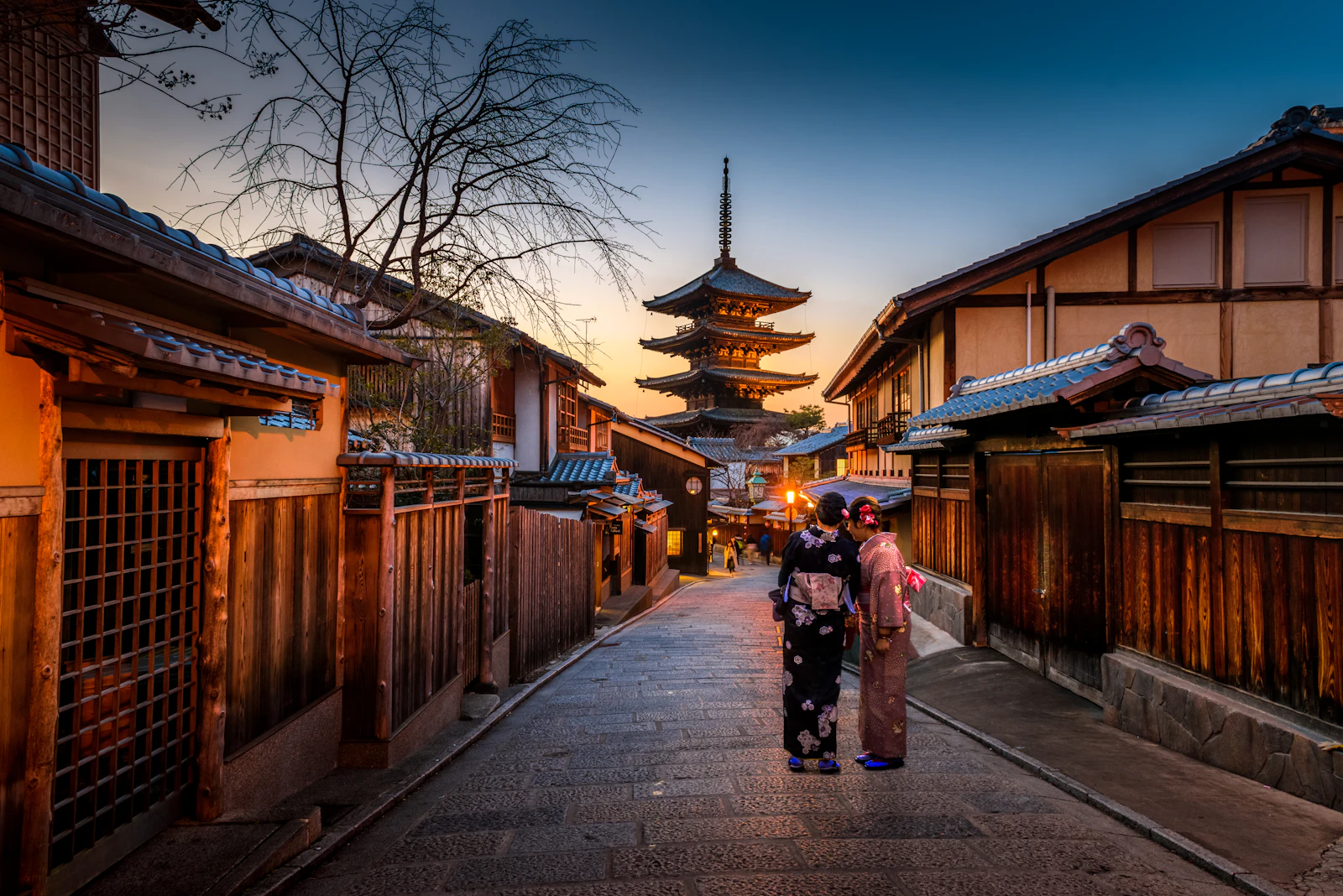
Day 7: Takayama
The two morning markets by the river and the old town hall at seven, before the day-trippers arrive from Nagoya. The Takayama Jinya, the only surviving shogunate provincial office; the Yatai Kaikan with the festival floats that parade in April and October; the Hida Folk Village of relocated farmhouses on the hill; and the afternoon free, for the Higashiyama temple walk or a second brewery. A ryokan tonight, with a kaiseki of mountain vegetables and Hida beef and a bath under the eaves. If the trip is in January or February, Shirakawa-go is under snow and lit on selected evenings; we time the route for it, with the Shirakawa-go night in a farmhouse minshuku on the illumination weekends for those who book a year out.
Day 8: Takayama to Kyoto
The Hida express down the Hida river gorge to Nagoya, two and a half hours of cliffs and rapids, and the Shinkansen on to Kyoto in 35 minutes; or the alternative, the bus back through Shirakawa-go to Kanazawa and the Thunderbird express to Kyoto, which many prefer for a second look at the farmhouses. Kyoto by mid-afternoon, the suitcases in the room, and the first evening in Gion, the lanes of Hanamikoji at dusk and an obanzai dinner.

Day 9: Eastern Kyoto with a guide
Fushimi Inari at 6.30, then the eastern hills with a licensed guide: Kiyomizu-dera, the Ninenzaka lanes, Kodai-ji, Maruyama Park, the Philosopher’s Path to Ginkaku-ji, done by early afternoon with the crowds arriving behind you. A tea house on the Kamo river, and the evening free in Pontocho.
Day 10: Kyoto: Arashiyama and the north-west
The bamboo grove at opening, Tenryu-ji, the Okochi Sanso villa, and if the season allows the Sagano scenic railway through the gorge. The afternoon at Kinkaku-ji and Ryoan-ji, Nishiki Market on the way back, and the kaiseki dinner we book before the flights, at a house with a garden.
Day 11: Kyoto: the hills, or Nara
A choice made at booking. Ohara, 40 minutes north by bus: Sanzen-in’s moss garden and Jakko-in, temples as fine as the centre’s with almost no one in them, and the village’s pickle shops. Or Kurama and Kibune, the mountain shrine and the river-terrace restaurants. Or the classic Nara day: the deer, Todai-ji’s Great Buddha, Kasuga Taisha’s lanterns. Back in Kyoto for a last dinner at a tempura or yakitori counter.
Day 12: Hiroshima
The Shinkansen west, 1 h 40 min, and a full morning at the Peace Memorial Park: the A-Bomb Dome, the Children’s Monument with its paper cranes, the museum, the cenotaph. It is not easy and it is essential. Lunch of Hiroshima-style okonomiyaki, layered with noodles, at Okonomimura. The afternoon ferry to Miyajima, forty minutes: the great torii of Itsukushima Shrine standing in the sea at high tide, the deer, the ropeway up Mount Misen for the Inland Sea, and a night in a ryokan on the island after the day-trippers’ last ferry has left and the torii is lit.
Day 13: Miyajima to Osaka
A morning on the island — the shrine at low tide, when you can walk to the torii; Daisho-in temple’s five hundred statues; oysters grilled on the main street — and the ferry and Shinkansen to Osaka by mid-afternoon, 1 h 30 min. Dotonbori at night: takoyaki, okonomiyaki the Osaka way, the canal, and a last yakiniku with the best wagyu you can afford.
Day 14: Depart from Kansai
A last Osaka morning — Kuromon Market for breakfast, the Hankyu depachika for omiyage — and the airport express to Kansai for the evening flight home. Fourteen days, six towns, two ryokan, and the Japan that the Golden Route drives past. Most people who take this route have taken the Classic one; most who take it first say they would do it again before the Classic.
Variations and extensions
Twelve days without Hiroshima: Kyoto to Osaka on day twelve and home on day thirteen; the route most people take when leave is short. Sixteen days with Matsumoto and Kamikochi (mid-April to mid-November): from Takayama the bus to Kamikochi for a day in the alpine valley under the Hotaka peaks — the finest single day’s walking in Japan in October — then Matsumoto’s black castle and the Shinano express to Nagoya and Kyoto. The reverse: in via Kansai, out via Tokyo, which suits a party joining from Korea and puts Tokyo’s energy at the end. The snow version (January–February): Shirakawa-go under two metres of snow and illuminated on the festival weekends, the Takayama ryokan with the hearth lit, Kanazawa’s Kenroku-en with its rope-held pines, and Kyoto empty and cheap; Hiroshima and Miyajima are clear and cold. With Nagano and the snow monkeys: a night at Yudanaka between Tokyo and Kanazawa for the Jigokudani macaques in their hot spring. Unhurried: three nights in Kanazawa, two in Takayama with a car and driver for Shirakawa-go, Green Car throughout, and the guided morning extended to a day; see our unhurried Japan page.
Eating on this route
This is the eating route. Kanazawa’s Omicho market and its counters serve the Sea of Japan’s fish — nodoguro, sweet shrimp, and from November the snow crab that the whole coast waits for; the city’s kaiseki houses rival Kyoto’s at two-thirds the price, and its sushi is the best west of Tokyo. Takayama is Hida beef — on skewers at the market, over the hearth at the ryokan, as sushi at the stalls — and hoba miso grilled on a magnolia leaf, mitarashi dango, and the seven sake breweries of the old town with their cedar balls hanging over the door. Shirakawa-go’s farmhouse lunch is river fish, mountain vegetables and Hida beef. Kyoto is the kaiseki we book and the tofu, the pickles and the market. Hiroshima is the layered okonomiyaki and the oysters of the bay, grilled on Miyajima’s main street. Osaka is the last night’s wagyu. Along the way: the gold-leaf soft-serve of Higashi Chaya, Kanazawa’s wagashi shops that supplied the Maeda tea ceremony, the pickled vegetables of Ohara, the momiji manju maple cakes of Miyajima, and a bento for the Hida express bought at Takayama station, which is the only proper way to travel that gorge. Two ryokan dinners and a Kyoto kaiseki are included; the rest is yours, with the bookings made for the counters that need them. Our food guide has the regional dishes.
What is included
- Return economy airfare from Sydney, Melbourne or Brisbane (open-jaw where the route allows), with premium economy and business on request
- Airport transfers at both ends by rail express or private car according to the party
- All Shinkansen and express-train seats reserved, Green Car on request
- Accommodation as described, with breakfast at hotels and dinner and breakfast at ryokan
- Luggage forwarding between cities so you travel with a day bag
- A Suica card loaded for each traveller, or set up in your phone wallet before departure
- Pre-booked entries and experiences named in the itinerary
- A detailed day-by-day document with maps, train times and restaurant suggestions
- Australian consumer-law protection and a Cooee contact in Brisbane throughout
- Hokuriku Shinkansen, Nohi bus and Hida express seats reserved
- Two ryokan nights (Takayama and Miyajima) with kaiseki dinner and breakfast
- A half-day licensed guide in eastern Kyoto on day nine
- Kenroku-en, Myoryu-ji, the Shirakawa-go farmhouse and Miyajima ropeway entries
- A Kyoto kaiseki dinner reserved
- Day bags on the Alps leg with suitcases forwarded Tokyo to Kanazawa and Kanazawa to Kyoto
Not included
- Lunches and most dinners (Japan is the best country in the world to eat out in, and we would rather you chose)
- Travel insurance (required)
- Personal spending, optional experiences not named, and tips (there are none in Japan)
- Japan Rail Pass (only included where the route makes it pay)
- The Takayama and Kanazawa sake tastings and the Hida Folk Village entry, which we book on request
Where you stay
Tokyo: a hotel by Tokyo Station or in Marunouchi for the Hokuriku Shinkansen — the Marunouchi Hotel, the Tokyo Station Hotel itself for an upgrade, or a Mitsui Garden — three nights. Kanazawa: the Hyatt Centric by the station or a machiya-style inn in the old town, two nights. Takayama: a ryokan in the old town or the Hida hills with an onsen and dinner, one night, and a night in Shirakawa-go in a farmhouse minshuku for those who want it (booked months ahead; basic, shared bathrooms, unforgettable). Kyoto: a hotel in Higashiyama or by the station, or a machiya for a group, four nights; in colour season we sleep in Osaka or Otsu when Kyoto is gone. Miyajima: a ryokan on the island — the Iwaso or the Kinsuikan — for the torii lit at night without the day-trippers. Osaka: Namba, for the airport express.
What it costs
Fourteen days with two ryokan nights and a guided morning is priced above the Classic route by the extra days and the mountain inns; mid-October, the season this route is built for, sits between the shoulder and the Kyoto colour peak, and the Kanazawa and Takayama legs are unaffected by Kyoto’s pricing. We do not publish a from-price for this itinerary because two factors move it by thousands: the season (cherry blossom and autumn colour cost 30–40 per cent more than late May or early October on flights and hotels combined) and the accommodation tier (a business hotel and a good ryokan against a five-star and a top-tier ryokan). We quote every departure individually in Australian dollars with everything above included, so the figure you see is the figure you pay. The Japan costs guide sets out the underlying numbers line by line so you can see how the quote is built. The Hokuriku Arch or JR West passes sometimes pay on this route and we include them where they do.
Practical notes
Entry: Australians do not need a visa for Japan for stays under 90 days; complete Visit Japan Web before you fly. Some Australian medicines are prohibited or need a permit — see our entry guide. Money: cards work in cities; carry cash for small restaurants and temples; no tipping. Fitness: a normal Japan day is 15,000–20,000 steps; the itinerary can be paced down. Luggage: forwarded between cities; travel with a day bag. Etiquette: shoes off in ryokan and temples, quiet on trains, wash before the bath. Children and older travellers: both adjust easily; apartment hotels and Green Car rail are the usual changes. The Alps leg is day-bag travel for two nights; ryokan provide yukata, toiletries and slippers, so the bag is small. Shirakawa-go and Takayama are cold from November to March and the farmhouses are heated by hearth; a coat and boots with grip for the snow version. The Hida express is a scenic train and a window seat is reserved. Miyajima’s deer are bolder than Nara’s; hold the map. The Hiroshima Peace Museum is graphic and children under ten may find it hard; the park and the island are for everyone. Trains: the Hokuriku Shinkansen from Tokyo, the Hida express from Takayama and the Sanyo Shinkansen to Hiroshima are all reserved; the Nohi bus between Kanazawa, Shirakawa-go and Takayama is booked in advance because it fills in October and February. Luggage: forwarded Tokyo to Kanazawa and Kanazawa to Kyoto, so the two mountain nights are day-bag nights; the ryokan supply everything else. Fitness: Kenroku-en, Shirakawa-go and Miyajima involve slopes and steps; the Misen ropeway removes the climb; the walking is otherwise city walking, 12,000–18,000 steps a day, and the itinerary paces down easily.
How to book
Send us your preferred dates, your departure city and the names and ages of the party through the enquiry form or on 0409 661 342. We check the season against the route, confirm availability at the hotels and inns that matter, and send an itinerary and a quote in Australian dollars within two working days. A deposit holds the booking; the balance is due before departure under our booking conditions. Travel insurance is required and we can recommend a policy.
Frequently asked questions
How many days is the Japanese Alps itinerary?
Fourteen days and thirteen nights. It can be shortened or extended; the day-by-day above is the shape we start from.
When is the best time to do the Japanese Alps itinerary?
Mid-October for the colour in the Alps (Kamikochi and the Hida valley turn first) with Kyoto starting a month later; mid-November puts Kyoto at peak with the Alps bare. Mid-April has late blossom in Takayama and the spring festival on the 14th–15th. Late May is fresh green and value. January–February is the snow version with Shirakawa-go lit. Avoid Golden Week and Obon.
Is this a group tour or a private itinerary?
A private itinerary built for your party and your dates, not a fixed-departure group. Guides join for the days named; the rest is independent travel with everything pre-booked.
Are flights included?
Yes: return economy from Sydney, Melbourne or Brisbane, open-jaw where the route allows, with premium economy and business on request. Other Australian cities connect via those three.
Do I need a Japan Rail Pass?
Only where the route makes it pay, in which case we include it. For most routes individual reserved tickets are cheaper since the 2023 repricing, and we book them.
Who is this itinerary for?
Anyone who has done Tokyo and Kyoto and wants the country between them; photographers; couples; active older travellers who like a ryokan and a mountain town; and first-timers who would rather see traditional Japan without the crowds than tick the famous names. Less suited to families with young children, who do better on the Classic route with its theme-park days.
What happens if the cherry blossom or autumn colour shifts?
We keep the middle of the trip on flexible bookings and adjust the order of cities when the forecasts firm up in mid-March or October. Our blossom guide explains the method.
How much does it cost?
Quoted per departure in Australian dollars with flights, rail, accommodation, transfers, luggage forwarding and named experiences included. Season and accommodation tier move the total; the Japan costs guide shows the underlying numbers.
Related
Tours convert; things to do informs. If you are still choosing, the things-to-do page is the step before this one.