Plan a relaxed Jeonju overnight stay with traditional streets, regional food and practical advice for choosing a hanok room and a manageable route.
Jeonju suits travellers who want to spend time in a place rather than race through a list of attractions. Traditional streets and food give the visit a natural rhythm: explore, sit down, eat and return to a neighbourhood after the busiest part of the day.
Two days with one overnight stay can make a useful introduction. The plan below is intentionally gentle and should be adjusted around arrival time and the places that interest you. It is not a restaurant-ranking list or a promise that every venue will be open on your dates.
Why consider Jeonju?
Jeonju Hanok Village is known for its concentration of traditional buildings, and the city is associated with dishes such as bibimbap and bean-sprout rice soup. That gives food and streetscape a central role in the experience rather than making meals a pause between larger attractions.
The visit can complement a city-heavy trip, but it still requires travel time. Compare it with other possible additions to your route. If you are already moving frequently between Seoul, Gyeongju and Busan, ask whether another overnight stop will be enjoyable or simply make the schedule busier.
Day 1: arrive, settle in and explore a small area
Allow for the journey from the transport arrival point to your accommodation. Leave luggage only where storage has been confirmed, then begin with a short walk to understand the surrounding streets. There is no need to choose the longest route immediately.
Make lunch part of the experience. Look at menus and portions before ordering, particularly if several dishes are intended for sharing. A well-chosen sit-down meal may be more satisfying than buying many snacks before you know what you want to try.
Spend the afternoon exploring traditional streets, shops or a cultural experience that appeals to you. Check any workshop’s language, duration and booking conditions in advance. Leave enough time to enjoy it without watching the clock for another appointment.
Evening: enjoy the benefit of staying overnight
Return to the area after resting at your accommodation. An overnight stay allows you to choose dinner without the pressure of an immediate return journey. It also gives you a chance to notice a different atmosphere from the middle of the sightseeing day.
Do not assume a market or special evening programme operates every night. Check current arrangements and keep an ordinary restaurant option available. If you want a particular meal, confirm that it is offered at the branch and service time you intend to visit.
Day 2: breakfast, one focused visit and an easy departure
Use the second morning for breakfast and one experience you have deliberately chosen: another street walk, a heritage visit or a craft interest. Keep the plan close enough to retrieve luggage and reach your onward transport comfortably.
If you prefer a slower pace, repeat a favourite part of the village rather than seeking another attraction. The advantage of staying overnight is depth, not the obligation to fill every remaining hour. A quiet morning can be the most memorable part of the visit.
Approach Jeonju’s food with curiosity
Bibimbap is a useful starting point, but compare the specific version and ingredients offered. Bean-sprout rice soup and set meals may also appeal. Ask about meat, seafood, broths and sauces if you have dietary restrictions; a vegetable-heavy appearance is not enough to establish suitability.
Plan meals and snacks together. If lunch is substantial, leave the afternoon for tea or a smaller taste rather than buying food continuously. Check prices before ordering and be clear about the number of servings, especially when sharing with children or a group.
What to ask before booking a hanok stay
Traditional accommodation can add atmosphere, but the practical details vary. Ask whether sleeping is on a bed or floor bedding, whether the bathroom is private and whether you will need to negotiate steps. Confirm heating, cooling, sound insulation and the space available for luggage.
Travellers who find floor seating or low bedding difficult should not assume that every hanok property is suitable. A conventional hotel nearby can still provide easy access to the village. Choose a room that supports a comfortable night, not only one that looks appealing in photographs.
Respect the neighbourhood
Treat residential lanes and private courtyards with care. Keep noise down, avoid blocking doors and follow instructions about photography. A traditional neighbourhood is not simply a backdrop for visitors; people live and work around the places you are exploring.
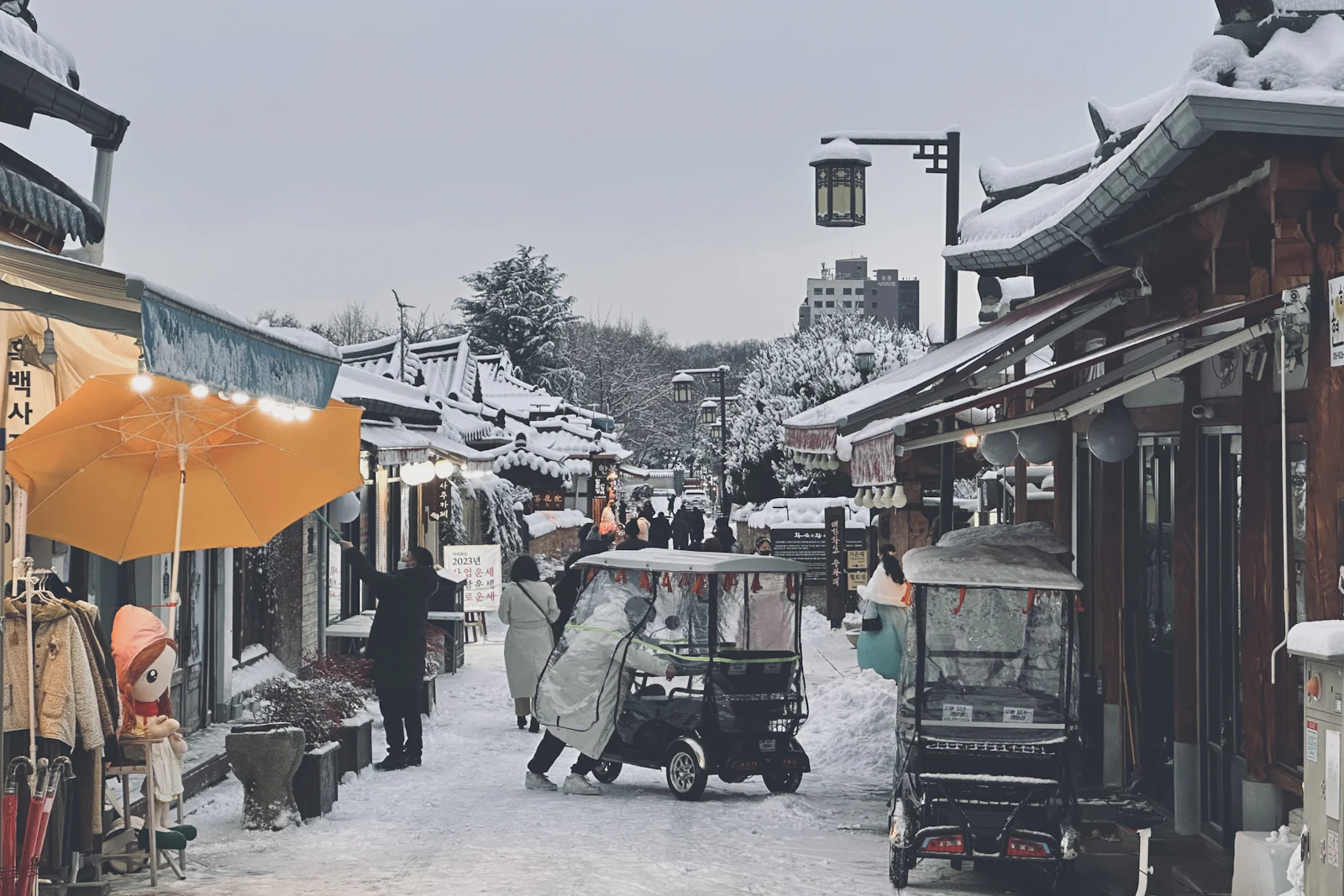
Wear footwear suited to walking and allow for rain or cold. If the visit falls in winter, icy or slippery surfaces can change the route you comfortably manage. Use local conditions to decide how far to walk rather than insisting on a plan made months earlier.
When Jeonju is the right addition
Choose Jeonju if you enjoy regional food, traditional streets and a slower overnight experience. It may be less suitable if your main interests are coastal scenery or a short, highly efficient city break. The strongest itinerary includes places for a reason, and Jeonju’s reason is often the pleasure of taking your time.
Frequently asked questions
Is Jeonju worth an overnight stay?
It can be, especially if food and traditional streets are central to your interests. The overnight stay gives you an evening and a relaxed morning.
Do I have to stay in a hanok?
No. A conventional hotel may suit your comfort or access needs better, while still allowing time in the village.
Is bibimbap always vegetarian?
No. Ingredients, toppings and sauces vary. Confirm the actual preparation with the restaurant if you have dietary requirements.
Official information and further reading
Use the official links below to confirm current opening arrangements, access and travel requirements before booking. Routes are editorial suggestions; prices shown as examples are not offers.