

East Asia is the four-season, rail-connected half of the continent, and the region Australians go back to most. This guide takes the four countries as a set: what each is for, how they differ, when to go, what it costs, and how they combine into one trip.
East Asia — Japan, South Korea, Taiwan and China — is the four-season, rail-connected, high-order half of the continent, where the trains run to the second, the cities are among the safest on earth, and the temples and palaces sit a subway ride from the neon. For Australians it is the far end of a ten-hour overnight flight and the region that most rewards a second and third visit. This guide covers the four countries as a set: what each is for, how they differ, when to go, how to move between them, what it costs, and the ways we combine them.
The four countries
| Japan | South Korea | Taiwan | China | |
|---|---|---|---|---|
| Visa for Australians | None, 90 days | None, 90 days (K-ETA waived at time of writing) | None, 90 days | Required; apply in advance (transit exemptions exist) |
| Flight from east coast | 9–10 h direct | 10–11 h direct | 9 h direct (Taipei) | 9–12 h; direct to Shanghai, Guangzhou, Beijing |
| Best months | Apr–May, Oct–Nov | Apr–May, Sep–Nov | Oct–Dec, Mar–Apr | Apr–May, Sep–Oct |
| Daily cost, mid-range (AUD, ex-flights) | 220–350 | 180–280 | 150–230 | 150–260 |
| Transport | Shinkansen; best rail on earth | KTX; excellent | HSR west coast; good rail east | HSR network larger than the rest of the world combined |
| English | Signage good; spoken limited | Signage good; spoken limited | Signage in Taipei; limited elsewhere | Limited; apps essential |
| Typical first trip | 10–12 days | 8–10 days | 7–10 days | 10–14 days, often escorted |
Japan
The most-visited East Asian country from Australia and the one with the deepest infrastructure for visitors. Tokyo, Kyoto, Osaka and Hakone make the classic ten days; Hiroshima, the Alps, Hokkaido and Kyushu are the second trip. Cherry blossom in early April and autumn colour in November are the famous seasons and the expensive ones; late May and early October give the same weather at a third less. Japan is the most expensive of the four on the ground and the most polished. Our Japan travel guide, things to do, tours and journal cover it in full.
South Korea
Seoul, Busan, Gyeongju and Jeju, in eight to twelve days. Modern with tradition woven through rather than the reverse, cheaper than Japan by a fifth, the best food in the region by some reckonings, and a direct flight from Sydney, Brisbane and Melbourne. Spring and autumn are the seasons; summer is monsoon, winter is skiing and bargains. The South Korea travel guide is the foundation.
Taiwan
The under-visited one: Taipei and its night markets, Taroko Gorge, Sun Moon Lake, Alishan and Tainan, in a week to ten days on the high-speed rail. Safe, cheap, superbly organised, with the best street food in the region and a friendliness toward visitors that is remarked on by everyone who goes. October to December and March to April. The Taiwan travel guide and things to do pages have the detail.
China
Beijing and the Great Wall, Xi’an and the Terracotta Army, Shanghai, Guilin’s karst, the Yangtze, and a high-speed rail network that makes it all reachable. Visa required, payments run through WeChat and Alipay (both now accept foreign cards), and the Great Firewall means a VPN or an eSIM that routes around it. More Australians travel China escorted than independently and the reasons are practical rather than safety-related: language, payments and the scale. The China travel guide covers the visa and the apps.
How they differ
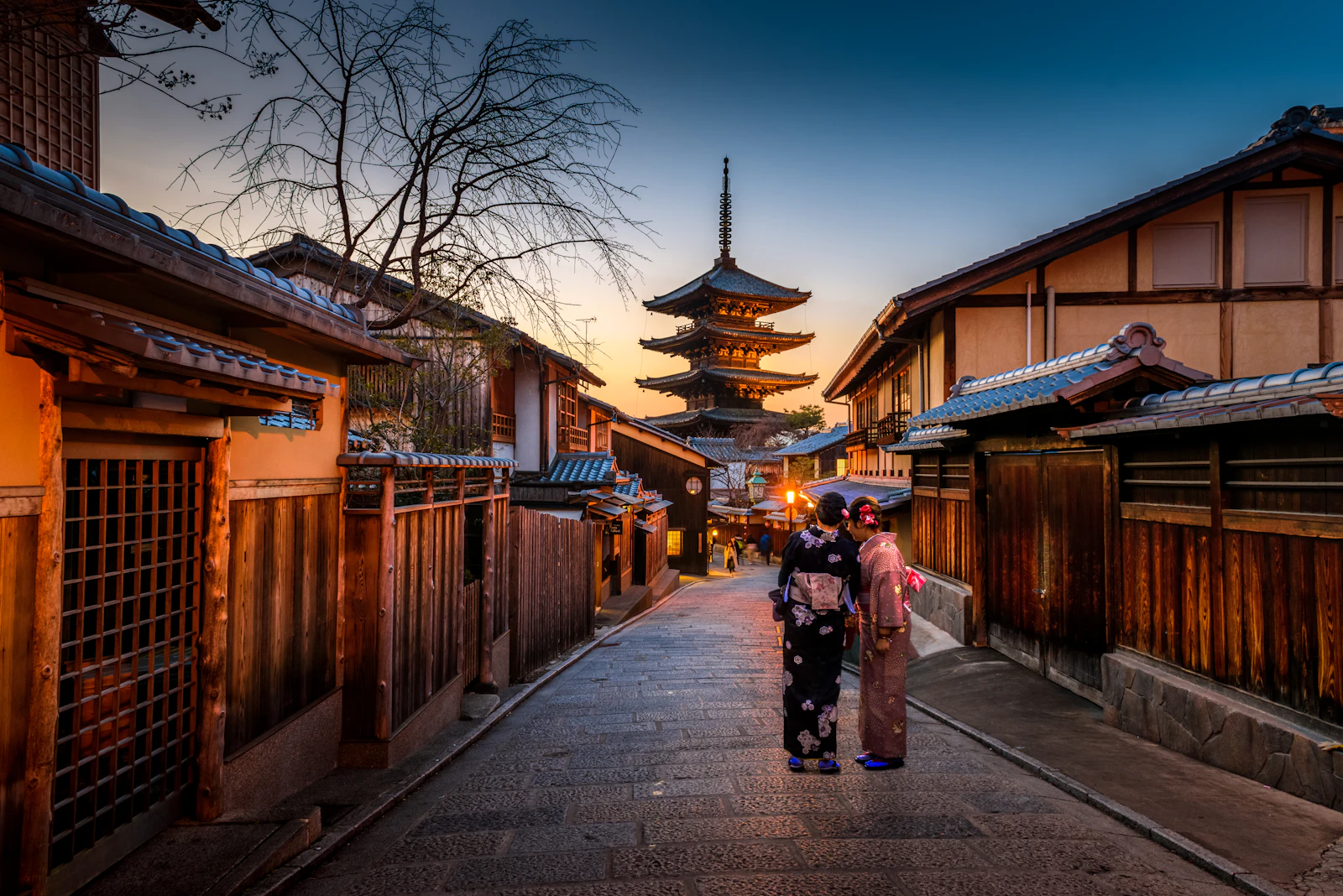
Travellers ask which to choose and the honest answer is that they are less alike than the map suggests. Japan is tradition with modernity layered on: the etiquette, the ryokan, the temples, the quiet. Korea is modernity with tradition woven through: louder, faster, more sociable, with palaces and hanok villages rather than a whole preserved city. Taiwan is the friendliest and the most relaxed, a country that combines Chinese heritage, Japanese colonial infrastructure and its own island culture, and that treats visitors as guests rather than customers. China is the scale — the Wall, the army, the cities of twenty million — and the one where the practical friction (visa, payments, internet, language) is highest. Food differs sharply: Japan restrained and seasonal, Korea spicy, fermented and communal, Taiwan a street-food culture built on night markets, China eight regional cuisines each larger than most countries’. Our Japan vs South Korea comparison goes deeper on the two most-chosen.
When to go
All four share the temperate pattern: spring (April–May) with blossom, warm dry days and the region’s prettiest fortnight; summer (June–August) with the East Asian monsoon — Japan’s tsuyu, Korea’s jangma, Taiwan’s plum rains — followed by heat, humidity and typhoon season into September; autumn (October–November), the best season everywhere, with clear skies, autumn colour and the ginkgo gold of Seoul and Tokyo; and winter (December–February), cold and dry in Japan and Korea (skiing in Hokkaido and Pyeongchang), mild and damp in Taipei, bitter in Beijing. Peak crowds and prices land on cherry blossom (late March–early April), Japan’s Golden Week (29 April–5 May), China’s National Day (1–7 October) and Lunar New Year (late January or February), when the whole region travels. The best time to visit Asia page lays the calendars side by side.

Getting there and between
All four are direct flights from the Australian east coast of nine to eleven hours, overnight northbound with morning arrivals. Between them: Tokyo or Osaka to Seoul is two hours; Seoul to Taipei two and a half; Taipei to Tokyo three; Shanghai to any of them two to three. The Busan–Fukuoka ferry takes three hours and is the pleasant way to join Korea and Japan. Open-jaw international tickets — into one country, home from another — are priced by the full-service carriers at little or no premium and are how every multi-country trip we build begins. Inside each country, rail: Japan’s Shinkansen and regional passes, Korea’s KTX and Korail Pass, Taiwan’s HSR down the west coast, China’s vast high-speed network bookable through Trip.com. A car is worth it only in Hokkaido, Jeju, rural Taiwan and parts of Kyushu.
What it costs
Taiwan and China are the value, Korea the middle, Japan the top, but the spread is narrower than it looks: a mid-range traveller spends AUD 150–230 a day on the ground in Taiwan, AUD 180–280 in Korea, AUD 220–350 in Japan, with China between Taiwan and Korea outside the luxury tier. Flights are similar to all four. Hotels are the variable — Kyoto in blossom week costs three times Tainan in November — and food is cheap everywhere by Australian standards. A ten-day mid-range trip to any one country, with a shoulder-season airfare, runs AUD 3,500–5,500 per person; a fortnight across two countries AUD 5,500–8,000.
The experiences that define the region
- Cherry blossom in Kyoto, Seoul’s Yeouido or Taiwan’s Alishan, and the autumn colour that follows seven months later.
- A night in a ryokan or hanok: tatami and kaiseki in Japan, ondol floors and a courtyard in Korea.
- Onsen and jjimjilbang: the hot-spring bath culture of Japan and the 24-hour sauna culture of Korea; Taiwan’s Beitou springs sit between them.
- The night markets of Taipei, Tainan and Taichung, which have no equal anywhere.
- The Great Wall at Mutianyu and the Terracotta Army: two of the handful of sights on earth that exceed their photographs.
- High-speed rail as an experience in itself: Fuji from the Shinkansen window, the KTX along the Nakdong, the HSR down Taiwan’s plain.
- Temples and palaces: Kyoto’s 1,600, Seoul’s five, Taipei’s Longshan, Beijing’s Forbidden City.
- The food, in every register from a Tokyo sushi counter to a Seoul barbecue to a Taipei stinky-tofu stall to a Sichuan hotpot.
- Skiing in Hokkaido’s powder and Korea’s Olympic resorts.
- The DMZ, the strangest day trip on earth, ninety minutes from Seoul.
Combining countries
Japan and Korea, two weeks
Tokyo, Hakone, Kyoto (7–8 nights), then fly Osaka–Seoul or ferry Fukuoka–Busan, and Seoul with Busan or the DMZ (5–6 nights). The most popular combined trip we build, and the order can be reversed. Spring or autumn.
Taiwan and Japan, two to three weeks
A week in Taiwan — Taipei, Taroko, the lake — then Taipei to Osaka and the Japanese Golden Route. Taiwan first, because the pace rises rather than falls. October–November or March–April.
Korea and Taiwan, twelve days
Seoul and Busan, then Busan or Seoul to Taipei, and the Taiwan west coast on the HSR. The value combination: two countries, no visa, and a lower daily cost than Japan alone.
China with a neighbour
Beijing, Xi’an and Shanghai escorted for ten days, then Shanghai to Tokyo or Seoul for a week independent. The visa is the only friction; the flights are two hours.
Ten days in each country
Japan
Tokyo four nights (Shinjuku, Asakusa, Shibuya, a Nikko or Kamakura day), Hakone one (ryokan), Kyoto four (Fushimi Inari at dawn, the eastern hills, Arashiyama, a Nara day), Osaka one, home from Kansai. The Golden Route, and golden for a reason.
South Korea
Seoul five nights (palaces, Bukchon, Gwangjang, Namsan, Hongdae, the DMZ), KTX to Gyeongju one, Busan three (Gamcheon, Jagalchi, Haeundae), home via Seoul or Busan’s Gimhae through a hub.
Taiwan
Taipei four nights (night markets, the Palace Museum, Jiufen, Beitou), Hualien and Taroko two, HSR to Taichung and Sun Moon Lake two, Tainan two, home from Taipei via the HSR in ninety minutes.
China
Beijing four nights (the Forbidden City, Mutianyu Great Wall, the hutongs, the Summer Palace), high-speed rail to Xi’an two (the Terracotta Army, the city wall by bicycle, the Muslim Quarter), fly or rail to Shanghai three (the Bund, the French Concession, a Suzhou or Zhujiajiao day). Escorted or privately guided throughout.
The four capitals, side by side
| Tokyo | Seoul | Taipei | Beijing | |
|---|---|---|---|---|
| Population (metro) | 37 million | 26 million | 7 million | 22 million |
| Nights for a first visit | 4 | 4–5 | 3–4 | 3–4 |
| The one sight | Senso-ji and the Skytree | Gyeongbokgung in hanbok | Taipei 101 and the Palace Museum | The Forbidden City |
| The day trip | Nikko or Kamakura | The DMZ | Jiufen and Yehliu | The Great Wall at Mutianyu |
| The food street | Omoide Yokocho, Shinjuku | Gwangjang Market | Shilin or Raohe night market | Ghost Street (Guijie) |
| Airport to city | Haneda 30 min; Narita 60 | Incheon 45 min by AREX | Taoyuan 35 min by MRT | Daxing 40 min; Capital 30 |
| Mid-range hotel, per night (AUD) | 220–350 | 150–280 | 130–220 | 120–250 |
Eating across the region
Japanese food is the most recognised and the most restrained: sushi, ramen, tempura, kaiseki, with umami and seasonality doing the work that chilli does elsewhere. Korean food is spicy, fermented and communal — barbecue wrapped in lettuce, kimchi with everything, stews shared from a single pot, fried chicken with beer. Taiwanese food is a night-market culture: beef noodle soup, xiaolongbao (Din Tai Fung began in Taipei), oyster omelettes, stinky tofu, bubble tea (invented in Taichung), and a Japanese-influenced cafe scene. Chinese food is not one cuisine but eight, and the traveller meets Beijing’s duck and dumplings, Xi’an’s hand-pulled noodles and lamb, Shanghai’s sweet-and-soy braising, Sichuan’s numbing heat and Cantonese dim sum according to the route. Street food is safe where turnover is high in all four; tap water is drinkable in Japan and treated in Korea and Taiwan, and bottled in China. Vegetarians do best in Taiwan, which has a large Buddhist vegetarian tradition and a vegetarian restaurant in every neighbourhood, and hardest in Korea, where fish sauce and meat stock are in most things. Our Asia food guide covers all of it.
For different travellers
First-timers to Asia
Japan or Taiwan. Both are safe, orderly, easy to navigate and forgiving of mistakes; Japan has more for the visitor to see, Taiwan is cheaper and gentler.
Families
Japan (Disney, Universal, teamLab, the deer of Nara, snow in Hokkaido), then Korea (Everland, Lotte World, the beaches of Busan, Jeju) and Taiwan (safe, cheap, night markets and hot springs). China with children is best escorted.
Unhurried travellers
All four suit older travellers, with Japan and Taiwan easiest on step-free access and luggage forwarding, Korea close behind, and China on a private itinerary with a driver. Fewer bases, Green Car rail and one more onsen night are the adjustments.
Food-led trips
Tokyo, Osaka and Seoul are three of the world’s great eating cities and are two hours apart; Taipei’s night markets and Chengdu’s Sichuan cooking are the deep cuts.
History and culture
Kyoto and Nara; Gyeongju; Beijing and Xi’an; Tainan. A three-week trip could link the four old capitals of the region and see 2,500 years of East Asian history in the order it happened.
Beyond the capitals: the second-trip East Asia
Japan: Kanazawa, Takayama and Shirakawa-go in the Alps; Hiroshima and Miyajima; Hokkaido in winter or summer; Kyushu’s onsen loop; the Setouchi art islands; Okinawa’s reefs. Korea: Jeonju’s hanok village and bibimbap; Seoraksan’s autumn hiking; Andong’s folk village; the temple stay at Haeinsa; Gangneung’s coast. Taiwan: the east coast from Hualien to Taitung; the Mae Salong-like tea hills of Alishan; Kinmen and Penghu islands; the Matsu archipelago. China: Guilin and Yangshuo’s karst by bamboo raft; Chengdu’s pandas and hotpot; Zhangjiajie’s pillars; Yunnan’s Lijiang and Dali; the Yangtze cruise through the Three Gorges; Hangzhou’s West Lake and Suzhou’s gardens an hour from Shanghai. These are the places the ten-day trip cannot hold and the reason people return.
The seasons, side by side
| Month | Tokyo | Seoul | Taipei | Beijing |
|---|---|---|---|---|
| January | 10 · cold, clear | 1 · cold, dry | 19 · mild, damp | 2 · bitter |
| April | 19 · blossom | 17 · blossom | 25 · warm | 20 · dust risk, mild |
| July | 30 · humid, rainy season ends | 29 · monsoon | 34 · hot, typhoons | 31 · hot, wet |
| October | 22 · clear, ideal | 20 · clear, ideal | 27 · best month | 19 · best month |
| December | 12 · sunny, dry | 3 · cold, dry | 20 · grey | 4 · cold, dry |
Where to stay, by country
Japan: business hotels (Dormy Inn, Mitsui Garden) for the cities, one or two ryokan nights for the experience, apartment hotels for families, a Kyoto machiya for groups; sleep in Osaka when Kyoto is at peak. Korea: mid-range hotels in Myeongdong or Insadong, a hanok guesthouse night in Bukchon or Jeonju, a jjimjilbang for the story, Haeundae for Busan’s beach. Taiwan: Taipei’s design hotels around Zhongshan and Ximending, a hot-spring hotel in Beitou or Jiaoxi, a lakeside room at Sun Moon Lake, a heritage guesthouse in Tainan. China: international chains for reliability, a courtyard hotel in a Beijing hutong for atmosphere, the Bund for Shanghai’s view. Prices run Taiwan cheapest, then China and Korea, then Japan, with the peak weeks doubling everywhere. The where to stay in Asia page covers the accommodation types across the continent.
Pace and the number of countries
Two countries in two weeks works; three in two weeks does not, and three in three weeks only just. Each border costs a day — the flight, the airport, the new currency and transport card, the first evening finding your feet — and the pleasures of East Asia are the pleasures of settling in: the neighbourhood you learn, the noodle shop you go back to, the train line you stop checking. Our default for a fortnight is one country done well, or two with the split at roughly eight and six nights.
Practical notes across the region
Apps
Google Maps works in Japan and Taiwan, is hobbled in Korea (use Naver Map or Kakao Map) and blocked in China (use Apple Maps or Baidu, and a VPN). Suica, T-money and EasyCard are the transport cards of Japan, Korea and Taiwan and all can be bought on arrival or, for Suica, loaded into the phone before you leave. Papago beats Google Translate for Korean. Alipay and WeChat Pay with a foreign card linked are how China is paid for now.
Medicines
Japan prohibits pseudoephedrine and amphetamine-type ADHD medications and requires an import certificate for some others; Korea and Taiwan are less strict but still control narcotics and psychotropics; China requires prescriptions for controlled medicines. Check each country’s list against everything you take, carry prescriptions and original packaging, and see our Japan entry guide for the worst case.
Money
Yen, won, New Taiwan dollars and renminbi: four currencies, none of which is worth carrying between countries. Japan still wants cash at small restaurants and temples; Korea and Taiwan are card-first with cash for markets; China is phone-first through Alipay and WeChat Pay with a foreign card attached. ATMs at 7-Eleven (Japan, Taiwan) and marked “Global” (Korea) take Australian cards. Tax-free shopping exists in all four with different thresholds and passports required at the till. Prices include tax in Japan, Korea and Taiwan; no tipping in any of them, and in China a small tip for a private guide or driver is appreciated but never expected.
Etiquette
Shoes off indoors in all four. Quiet on trains in Japan and Taiwan, more relaxed in Korea and China. No tipping in Japan, Korea or Taiwan; not expected in China. Two hands for cards and gifts. Chopsticks never upright in rice. Bathe before entering any hot spring. Respect for elders is structural in Korea and China. And in all four, a smile and a bow of the head go further than any phrasebook.
Safety and health
Japan, Korea and Taiwan are among the safest countries on earth; China is safe for visitors with the ordinary big-city cautions. Healthcare is excellent in all four and expensive without insurance. Earthquakes are a fact of life in Japan and Taiwan; typhoons brush all four from July to October; air quality is a spring issue in Korea and a year-round one in northern China. Smartraveller rates Japan, Korea and Taiwan at its lowest advisory level and China one step higher.
How Cooee plans East Asia
As one itinerary across as many countries as you want: open-jaw international flights, every rail sector reserved, hotels chosen by district, ryokan and hanok nights placed where they belong, private transfers where luggage or arrivals warrant them, and the experiences that sell out booked before you go. Quoted in Australian dollars under Australian consumer law. The things to do in Asia page groups the region’s experiences by interest and the Asia tours page shows the shapes we start from.
Frequently asked questions
Which East Asian country should I visit first?
Japan for the deepest visitor infrastructure and the classic first trip; South Korea if food, modern culture and value matter more; Taiwan for the easiest, friendliest and cheapest week. China rewards an escorted first visit because of the visa, language and payment friction.
Do Australians need visas for East Asia?
Not for Japan, South Korea or Taiwan (90 days each; Korea’s K-ETA is waived for Australians at the time of writing). China requires a visa arranged in advance, with limited transit exemptions.
When is the best time to visit East Asia?
April–May and October–November across the whole region: mild, dry, blossom in spring and colour in autumn. Avoid the June–July monsoon, the August heat and the regional holiday peaks (Golden Week, Chinese National Day, Lunar New Year).
Can I combine Japan and Korea in one trip?
Yes, and it is the most popular multi-country trip we build: two hours by air between Tokyo or Osaka and Seoul, or three hours by ferry from Fukuoka to Busan. Two weeks covers both well.
Is East Asia expensive?
Japan is the dearest on the ground (AUD 220–350 a day mid-range), Korea and China the middle, Taiwan the value (AUD 150–230). Flights are similar to all four. Food is cheap everywhere relative to Australia; peak-season hotels are the cost driver.
Is China difficult to travel independently?
More than the other three: visa, limited English, payments through Alipay/WeChat, and blocked Western apps. It is done, but most Australians choose escorted or privately guided China and independent Japan, Korea or Taiwan.
How long is the flight from Australia to East Asia?
Nine to eleven hours direct from the east coast to Tokyo, Seoul, Taipei or Shanghai, usually overnight with a morning arrival. Perth is shorter to all four.
What is the safest country in Asia for tourists?
Japan, South Korea and Taiwan are all among the safest in the world, with very low crime and excellent healthcare. Singapore matches them in South-East Asia.
Where this leads
Travel guide informs; things to do helps you choose; tours convert.