Practical etiquette for Korean restaurants, transport, temples and residential streets, with a respectful approach that avoids rigid stereotypes.
Good travel etiquette begins with noticing how a place works. You do not need to perform an elaborate set of customs to be welcome in South Korea. A polite manner, attention to signs and willingness to follow a host’s instructions are more useful than trying to memorise a rigid list of rules.
Customs vary by setting, generation and individual preference. Treat the suggestions below as a starting point for respectful behaviour, not a description of how every Korean person acts. If someone gives you a clear instruction, follow that instruction rather than an assumption from a travel article.
Greetings and everyday exchanges
A friendly greeting and a small nod can make an interaction easier. Keep requests clear and allow time for communication, especially when neither person is using their first language. Speaking more loudly rarely solves a misunderstanding.
When handing over or receiving something in a more formal interaction, using both hands can show care. You do not need to exaggerate the gesture. Watch the situation and respond naturally rather than turning an ordinary transaction into a performance.
Shoes, floors and indoor spaces
Look for shoes at the entrance, a raised floor or a sign asking you to remove footwear. This can occur in homes, traditional accommodation and some dining or cultural settings. Follow the host’s arrangements and place shoes neatly rather than blocking the entry.
Choose socks and footwear that make the process comfortable if your itinerary includes traditional stays or venues. If removing shoes or sitting on the floor is difficult, ask about alternatives before booking. Practical access questions are better raised early than discovered at the door.
At the table
Observe how the meal is served and ask if you are unsure about shared dishes. Avoid leaving chopsticks or a spoon standing upright in rice. Use utensils appropriately and do not handle food with your fingers except where that is part of the way a dish is eaten, such as making a wrap.
In a hosted or more formal meal, follow your host’s lead about beginning and sharing. In an ordinary restaurant, focus on considerate behaviour rather than worrying about every movement. Keep phones and belongings out of the way of food and other diners.
Ordering, portions and payment
Check whether a dish is intended for one person or for sharing, and whether a restaurant has a minimum order. Ask before assuming a large group can order only a small number of servings. If a venue uses self-service water, utensils or ordering screens, follow its system.
Tipping is not generally customary. Pay through the normal process and thank the staff. If a service charge or special condition appears on the menu, read it before ordering rather than comparing it with habits from another country.
Public transport and shared space
Keep conversations and devices at a considerate volume. Allow people to leave before boarding and avoid blocking doors with luggage. Follow signs about seating and priority areas, and be ready to make space for someone who needs it.
If you are studying a map or reorganising bags, step aside from the main flow. Large stations can be busy even when you are unfamiliar with the route. Giving yourself extra time makes it easier to be patient and avoids turning a small navigation problem into a hurried interruption for others.
Temples and cultural sites
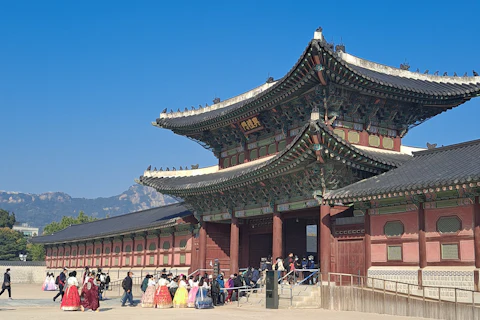
Remember that a temple may be an active place of worship. Keep your voice low, use permitted entrances and follow photography instructions. Do not assume that a beautiful interior is open for unrestricted sightseeing simply because the grounds welcome visitors.
Dress and behave with respect for the setting. If a ceremony or private activity is underway, give it space. A quiet observation from an appropriate area is often more meaningful than pushing closer for a photograph.
Residential streets and photographs
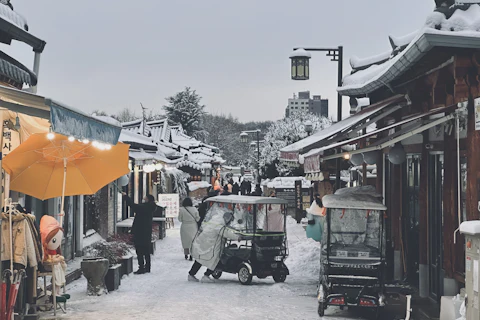
Traditional neighbourhoods are not theme parks. Avoid blocking doorways, peering into homes or taking close photographs of residents without permission. Keep group conversations and camera instructions quiet, particularly in narrow lanes.
Bukchon has specific visitor restrictions in designated areas. Follow current local notices and official guidance rather than assuming every street is available at any hour. Similar courtesy applies wherever people live alongside popular visitor routes, even without a formal restriction.
When you make a mistake
A brief apology and a change in behaviour are usually more useful than a long explanation. Travel involves learning, and nobody understands every venue immediately. If staff redirect you, accept the correction and move on politely.
The aim is not to appear perfectly knowledgeable. It is to make your presence comfortable for the people sharing the place with you. That approach works in a busy market, a family-run restaurant and a quiet temple alike.
Frequently asked questions
Do I need to tip in South Korea?
Tipping is not generally customary. Follow the venue’s normal payment arrangements and read any stated charges before ordering.
Should I remove my shoes everywhere?
No. Look for signs and follow the host or venue’s instructions. Homes, traditional stays and some restaurants may have shoe-removal areas.
Can I photograph traditional houses?
Respect private spaces, residents and local restrictions. Do not block entrances or assume a residential lane is available for sightseeing at all hours.
Official information and further reading
Use the official links below to confirm current opening arrangements, access and travel requirements before booking. Routes are editorial suggestions; prices shown as examples are not offers.