

Thailand has too much to see, and the trip is decided by choosing well: which coast in which month, how long in Bangkok, whether the north is worth the flight. This page groups the country by region and interest so you can see what a fortnight actually holds.
Thailand is the destination where the gap between a good trip and a mediocre one is decided almost entirely by choosing well, because there is too much of it. Two coastlines with opposite seasons, a capital that rewards five days and punishes two, a mountainous north that is a different country in food and pace, ruined kingdoms an hour from Bangkok that most visitors never see, and islands that range from full-moon-party to no-electricity. This page is the map: Thailand region by region, what each one is for, what to do there, and honest notes on the month it works. The Thailand travel guide has the practical layer — visas, money, transport, health — and the tours page is where we turn a choice into an itinerary.
Thailand in five regions
| Region | For | Best months | Nights |
|---|---|---|---|
| Bangkok | Temples, food, markets, nightlife, the river | November–February; fine year-round | 3–5 |
| The Andaman coast (Phuket, Krabi, Phi Phi, Khao Lak) | Limestone bays, diving, resorts, families | November–April | 4–7 |
| The Gulf coast (Koh Samui, Phangan, Tao, Hua Hin) | Beaches, diving, the winter alternative | January–September; best Feb–Apr and Jun–Aug | 4–7 |
| The north (Chiang Mai, Chiang Rai, Pai, Mae Hong Son) | Hill culture, temples, elephants, cool season, food | November–February; avoid March–April burning season | 3–6 |
| Central plains and the east (Ayutthaya, Sukhothai, Kanchanaburi, Khao Yai, Koh Chang) | History, national parks, quieter islands | November–February | 1–4 |
Bangkok
Full guide: things to do in Bangkok →
Give it more nights than you planned.
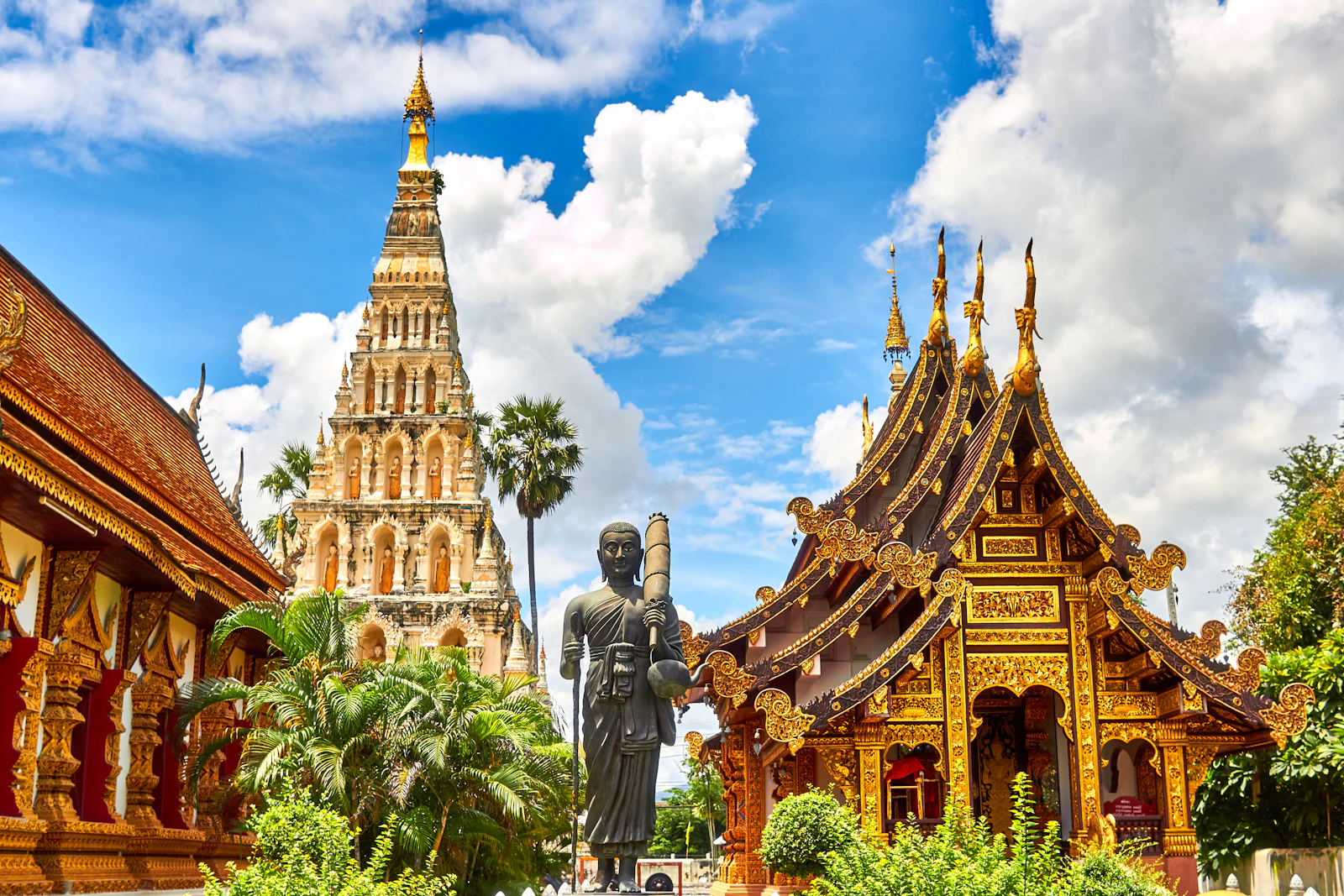
Bangkok is a city of eleven million that first-timers cross off in two days and second-timers give a week. The Grand Palace and Wat Phra Kaew, Wat Pho with its reclining Buddha and massage school, and Wat Arun across the river are the great sights and take one morning done early and properly dressed (shoulders and knees covered, no exceptions). After that the city opens out: the Chao Phraya river and its khlong canals by longtail boat, the old quarter of Rattanakosin and the Chinatown of Yaowarat at night, Chatuchak weekend market’s 15,000 stalls, the Jim Thompson House, the rooftop bars of Silom and the sky-high malls of Siam, the street-food sois of Ari and Banglamphu, and the floating markets and the Maeklong railway market an hour out of town.
It is also the best-value eating city in Asia: a AUD 3 bowl of boat noodles, a AUD 40 tasting menu, and everything between. The BTS Skytrain and MRT metro cover the modern city, the river boats cover the old one, and Grab covers the gaps. Heat is the constraint — plan temples for 8 am, malls and museums for the afternoon, and the river at sunset.
What to do
- Grand Palace and Wat Pho — open at 8.30; go then, dressed properly, and be done by 11
- Wat Arun at sunset — from the Tha Tien pier or a riverside bar
- Chinatown, Yaowarat Road — street food from 6 pm; the kingdom’s best
- Chatuchak Weekend Market — Saturday and Sunday from 9; everything, twice
- Longtail boat through the Thonburi khlongs — an hour, AUD 40–60 for the boat
- Jim Thompson House — the silk magnate’s teak house and garden
- A Thai cooking class — half a day with a market visit, AUD 40–70
- Muay Thai at Rajadamnern or Lumpinee — the real thing, AUD 50–120
- Rooftop sunset — Vertigo at the Banyan Tree, Sky Bar at Lebua, or a cheaper one in Chinatown
- Ayutthaya day trip — 80 km north, by train, boat or car; see below
The Andaman coast: Phuket, Krabi, Phi Phi and Khao Lak
Limestone, turquoise water, and the November-to-April half of the year.
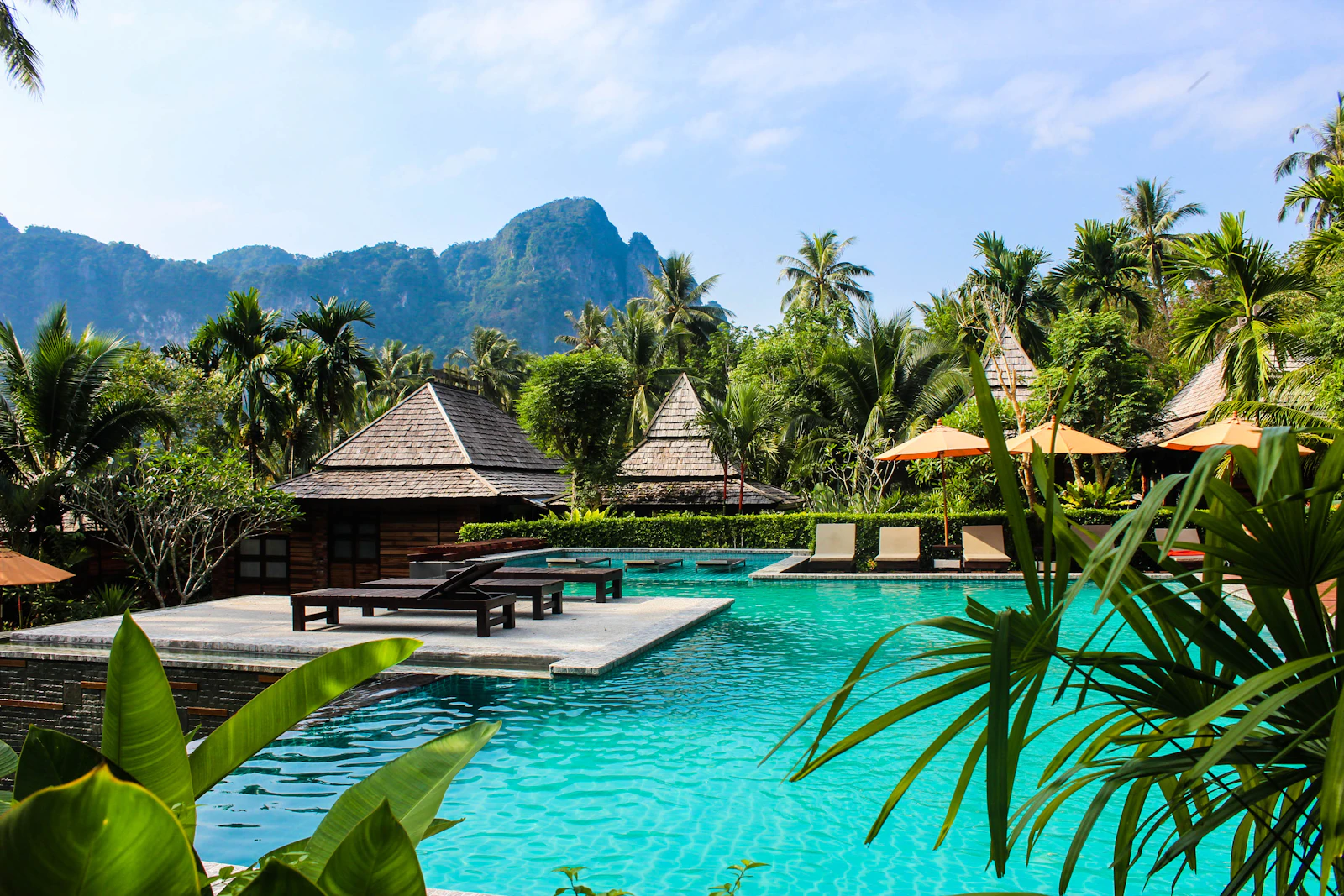
The west coast facing the Andaman Sea is the Thailand of the photographs: sheer limestone karsts rising from green-blue water, long-tail boats, and the beaches of Railay, Phi Phi and the Similan Islands. Phuket is the biggest island and the flight hub, with everything from Patong’s nightlife to the quiet northern beaches and the old Sino-Portuguese town; Krabi and its beaches (Ao Nang, Railay, reachable only by boat) are smaller and more beautiful; Koh Phi Phi is the day-trip or the party island; Khao Lak, an hour north of Phuket, is the quiet resort coast and the gateway to the Similans, among the best diving in Asia; Koh Lanta and Koh Yao Noi are the slow ones.
The season is absolute. November to April is dry, calm and clear; May to October is the south-west monsoon, with rough seas, red flags, closed national parks (the Similans shut from mid-May to mid-October) and days of rain. Prices halve in the monsoon for a reason. If your dates are June to September, go to the Gulf coast instead.
What to do
- Phang Nga Bay by boat — James Bond Island, the sea caves of Koh Panyee, kayaking through the hongs
- Railay Beach — climb the limestone, or watch others; the Phra Nang cave beach
- Four Islands tour from Krabi — Poda, Chicken, Tup and Phra Nang in a day
- Similan Islands liveaboard — two to four nights, November–April, world-class diving
- Phuket Old Town — Sino-Portuguese shophouses, Sunday walking street, the best coffee on the island
- Big Buddha and Wat Chalong — Phuket’s hilltop and its most important temple
- An ethical elephant sanctuary — Phuket Elephant Sanctuary or Elephant Nature Park’s southern branch; no riding
- Koh Phi Phi and Maya Bay — the bay reopened with visitor limits; go on the earliest boat
- Khao Sok National Park — rainforest, limestone and the floating raft houses of Cheow Lan lake, inland from Khao Lak
- Sunset at Promthep Cape — Phuket’s southern tip
The Gulf coast: Koh Samui, Koh Phangan, Koh Tao and Hua Hin
The other coast, with the other season.
The islands off the east coast in the Gulf of Thailand run on a different calendar: their wet season is October to December (with November the worst), and they are at their best from January to April and again in June to September, exactly when the Andaman is closed. Koh Samui is the developed one, with an airport, the Chaweng and Lamai beach strips, five-star resorts and the Big Buddha; Koh Phangan is famous for the Full Moon Party at Haad Rin and, on every other beach, quiet and wellness retreats; Koh Tao is the dive-training capital of the world, cheap and cheerful; Ang Thong Marine Park is the archipelago between them. Hua Hin, three hours south of Bangkok on the mainland, is the royal seaside town, golf and family resorts, and the beach you add to a Bangkok trip without flying.
The Gulf is calmer, shallower and less dramatic than the Andaman; the beaches are longer and the water in Samui is not as clear as Krabi’s. Its virtue is the season and the ease. Fly Bangkok–Samui direct in an hour, or the cheaper Surat Thani flight and ferry.
What to do
- Ang Thong Marine Park — 42 islands, kayaking and the Emerald Lake, a day from Samui
- Learn to dive on Koh Tao — the Open Water course in three days, AUD 400–500
- Full Moon Party, Koh Phangan — once; then the north-coast beaches for the rest
- Big Buddha and Wat Plai Laem — Samui’s temples on the north-east coast
- Fisherman’s Village, Bophut — Friday walking street and the best restaurants on Samui
- Hua Hin night market and Cicada — food and crafts, weekends
- Khao Sam Roi Yot — the caves and marsh of the national park south of Hua Hin
- Kite-surfing, Hua Hin — the steady Gulf wind, February–April
- Na Muang waterfalls — Samui’s interior
- A wellness retreat — Samui and Phangan have some of Asia’s best; Kamalaya is the famous one

The north: Chiang Mai, Chiang Rai, Pai and the hills
Cooler, slower, greener, and the best food in the country.
Chiang Mai is the northern capital and the city Australians fall in love with: a moated old town of 300 temples, the mountain temple of Doi Suthep above it, the Sunday walking street, the night bazaar, khao soi curry noodles, coffee grown in the hills, and a pace that Bangkok cannot manage. Around it: the elephant sanctuaries of the Mae Taeng valley (Elephant Nature Park set the ethical standard; no riding, no shows), Doi Inthanon, Thailand’s highest mountain, hill-tribe villages, cooking schools, the artisans of San Kamphaeng and Bo Sang. Chiang Rai, three hours north, has the White Temple, the Blue Temple and the Black House, the Golden Triangle where Thailand, Laos and Myanmar meet on the Mekong, and the tea plantations of Mae Salong. Pai is the backpacker valley three hours west over 762 bends; Mae Hong Son beyond it is the quiet Shan border town.
The cool season, November to February, is the reason to come: 15–28°C, clear skies, the Yi Peng and Loy Krathong lantern festivals in November. March and April are the burning season, when agricultural fires fill the valleys with smoke and the air quality is among the worst in the world; avoid the north then. The rains from June to October are green and manageable.
What to do
- Doi Suthep at dawn — the 306 steps, the view, the monks’ chanting
- Elephant Nature Park — a full day with rescued elephants; book weeks ahead
- The Sunday Walking Street — Ratchadamnoen Road from 4 pm
- A cooking class with a market tour — Chiang Mai’s are the best in Thailand
- Doi Inthanon — the summit, the twin pagodas, the Karen villages and the Wachirathan falls
- Yi Peng lantern festival — November full moon; the mass release is ticketed
- The White Temple, Chiang Rai — Wat Rong Khun, and the Blue Temple and Black House the same day
- The Golden Triangle and the Mekong — from Chiang Rai; the Opium Museum is excellent
- The Mae Hong Son loop — four days by car or motorbike through Pai and the border hills
- Khao soi — at Khao Soi Khun Yai or Khao Soi Mae Sai; lunch, not dinner — they sell out

Central Thailand and the east: Ayutthaya, Sukhothai, Kanchanaburi, Khao Yai and Koh Chang
The history and the parks most itineraries skip.
Ayutthaya, 80 km north of Bangkok, was the Siamese capital for four centuries and one of the largest cities on earth until the Burmese sacked it in 1767; its brick prangs and headless Buddhas — Wat Mahathat with the Buddha head in the tree roots, Wat Chaiwatthanaram on the river — are a World Heritage site and the easiest history day in the country. Sukhothai, further north, was the first Thai capital and its walled park of lotus-pond temples is, to many, more beautiful still. Kanchanaburi, two hours west of Bangkok, is the Bridge on the River Kwai, the Death Railway and the war cemeteries where Australian prisoners of war are buried; Hellfire Pass, with its Australian-built memorial and museum, is the most affecting place in Thailand for an Australian. Khao Yai is the closest national park to Bangkok, with wild elephants, gibbons, waterfalls and, oddly, vineyards. Koh Chang and Koh Kood, near the Cambodian border, are the eastern islands: less developed, best November to April, and a good add-on to a Bangkok-and-Cambodia route.
What to do
- Ayutthaya by bicycle — the ruins are flat and close; go early, hire a bike at the station
- Sukhothai Historical Park — one or two nights; the loy krathong festival in November is where the tradition began
- Hellfire Pass Memorial — Australian-run, free, and essential; combine with the railway ride to Nam Tok
- The Bridge on the River Kwai and the war cemetery — Kanchanaburi town
- Erawan Falls — seven tiers of turquoise pools in the national park near Kanchanaburi
- Khao Yai wildlife — a guided night drive for elephants, a morning for gibbons and hornbills
- Koh Kood — Thailand’s quietest big island; no nightlife, extraordinary beaches
- The Maeklong railway market — the train through the stalls, an hour from Bangkok
- Damnoen Saduak or Amphawa floating market — Amphawa on a weekend evening is the better one
- Lopburi — the monkey town and its Khmer ruins, on the way to Sukhothai

By interest
Families
Phuket and Khao Lak in the dry season for the resorts and calm water; Koh Samui as the year-round option; Hua Hin for a beach without a flight; Chiang Mai for elephants and a cooking class the children will remember; Bangkok for two days of tuk-tuks, the Skytrain and a river boat. Thailand is the easiest country in South-East Asia with children: short flights, kids’ clubs, mild food available everywhere, and a culture that adores them.
Couples and honeymoons
Koh Yao Noi or Koh Lanta on the Andaman side, Koh Kood in the east, the Samui north coast, a Khao Sok raft house, and a Chiang Mai boutique hotel in the old town. Thailand’s spa culture is the best in the world and priced accordingly — a two-hour treatment at a good resort is AUD 80–150.
Food
Bangkok for everything, Chiang Mai for northern (khao soi, sai oua sausage, nam prik ong), Isaan food (som tam, larb, grilled chicken) at the north-eastern stalls in every city, southern curries in Phuket, seafood on every coast. Street food is safe where the turnover is high, and the rule is the queue. Cooking classes in Chiang Mai and Bangkok are the best in Asia.
Active
Diving at the Similans, Koh Tao, Koh Lanta and Koh Lipe; rock climbing at Railay; kayaking in Phang Nga Bay and Khao Sok; trekking in the north from Chiang Mai and Chiang Rai; cycling the Mae Hong Son loop or the Ayutthaya ruins; Muay Thai training camps in Phuket and Chiang Mai; golf around Hua Hin, Pattaya, Phuket and Chiang Mai, covered on our Thailand golf tours page.
Culture and history
Bangkok’s royal temples, Ayutthaya and Sukhothai, Kanchanaburi’s war history, the Lanna temples of Chiang Mai, the Khmer ruins of Phimai and Phanom Rung in the north-east, and the hill-tribe cultures of the far north. Thai Buddhism is everywhere and welcoming; dress with shoulders and knees covered, remove shoes, never point feet at a Buddha, and women should not touch monks.
Unhurried travel
Bangkok’s river hotels, Hua Hin, Chiang Mai’s old town and a Samui resort make a fortnight with short transfers, air-conditioned everything, excellent hospitals and a gentleness toward older visitors that is part of the culture. Heat is the thing to manage: early mornings, midday rest, evening outings.
Festivals
Songkran, Thai New Year, 13–15 April: the national water fight, wildest in Chiang Mai and Bangkok’s Silom. Loy Krathong and Yi Peng, the November full moon: floating baskets on every river, lanterns in the northern sky. The Vegetarian Festival in Phuket, October: nine days of Chinese-Thai devotion and startling piercings. Chinese New Year in Bangkok’s Chinatown. The King’s Birthday, 28 July, and the Queen Mother’s, 12 August, are public holidays with lights and closures.
Practical notes that change the plan
Getting between regions
Bangkok to Chiang Mai is an hour’s flight or the overnight sleeper train (13 hours, second-class berths, oddly enjoyable). Bangkok to Phuket, Krabi, Samui and Chiang Rai are all direct flights of 60–90 minutes on Thai, Bangkok Airways, AirAsia, Nok and Vietjet, and Bangkok Airways flies Chiang Mai–Samui and Chiang Mai–Phuket direct. Bangkok’s two airports are far apart — Suvarnabhumi for most international and full-service domestic, Don Mueang for the low-cost carriers — and a connection between them needs three hours. Ferries link the islands from Krabi, Phuket, Surat Thani, Chumphon and Trat. Hua Hin, Ayutthaya and Kanchanaburi are trains or a private car. Between towns in the north, a car and driver is the comfortable option and cheap.
Temple rules
Shoulders and knees covered, shoes off, hats off, no pointing feet at Buddha images, no climbing on anything, no photographs where signed, and women do not touch or hand things directly to monks. The Grand Palace enforces the dress code at the gate and rents cover-ups; most other temples trust you. A light sarong in the day bag solves it everywhere.
Heat and pace
Thailand is hot in every month and the trip that works is built around it: one big thing before ten, shade or water at midday, the second thing after four, the evening for markets and the river. Two temples a day, not five. Air-conditioned transport between them. A pool at the hotel is not a luxury in April.
Booking the experiences
The ethical elephant sanctuaries, the Similan liveaboards, the good cooking schools, the Yi Peng lantern release and the better Muay Thai seats all sell out and are worth booking before you fly. Day tours to the islands can be bought on the day at any beach, and the difference between the AUD 30 boat and the AUD 90 boat is the number of people on it. We book the first list for guests and advise on the second.
The season, by coast, in one paragraph
November to February is the cool, dry season everywhere and the best time for the whole country; it is also peak, with Christmas and Chinese New Year the most expensive weeks. March to May is hot everywhere and smoky in the north. June to October is the south-west monsoon on the Andaman coast (Phuket, Krabi, Phi Phi, Khao Lak) and in Bangkok and the north, with afternoon storms rather than all-day rain in the cities; the Gulf coast (Samui, Phangan, Tao) is dry then and wet from October to December. So: Andaman in the northern winter, Gulf in the Australian winter, Bangkok and the north from November to February, and never the north in March or April.
How the regions combine
- Ten days, first trip, November–April: Bangkok 3, Chiang Mai 3, Phuket or Krabi 4.
- Ten days, June–September: Bangkok 3, Chiang Mai 3, Koh Samui 4.
- Two weeks, history and beach: Bangkok 3, Ayutthaya 1, Kanchanaburi 1, Chiang Mai 3, Krabi 5.
- Two weeks, islands only, dry season: Phuket 3, Khao Lak and the Similans 4, Krabi and Railay 4, Koh Lanta 3.
- Thailand and Cambodia: Bangkok 3, Siem Reap 3 (an hour by air), then the beach of your season.
- Bangkok only: five nights, with Ayutthaya and the floating markets as days out, is a complete holiday.
The Thailand tours page shows these as itineraries we build; the Thailand vs Bali comparison helps if the choice is between countries rather than regions.
Frequently asked questions
What are the best things to do in Thailand?
Bangkok’s Grand Palace, Wat Pho and Chinatown; the limestone bays of Phang Nga and Krabi; an ethical elephant sanctuary near Chiang Mai; the Ayutthaya ruins; diving at the Similan Islands or Koh Tao; the northern temples and night markets; and the food, everywhere.
Which is better, Phuket or Koh Samui?
Phuket and the Andaman coast (Krabi, Phi Phi) have the dramatic scenery and are best November to April. Koh Samui and the Gulf coast are calmer and are the choice for June to September, when the Andaman is in monsoon. The month decides.
How many days do you need in Thailand?
Ten for Bangkok, Chiang Mai and one coast; fourteen to add the history sites or a second island. Five days in Bangkok alone, with day trips, is a full holiday.
Is Chiang Mai worth visiting?
Yes, in the cool season (November to February) especially: temples, elephant sanctuaries, the best food in the country and a pace Bangkok cannot offer. Avoid March and April, the smoky burning season.
Are elephant rides ethical in Thailand?
No. Choose a sanctuary with no riding, no shows and no bathing crowds — Elephant Nature Park near Chiang Mai set the standard and there are good sanctuaries near Phuket and Kanchanaburi. Observation, feeding and walking alongside are the ethical model.
What should I see near Bangkok?
Ayutthaya (80 km north, the old capital), Kanchanaburi (the River Kwai bridge and Hellfire Pass), the Maeklong railway market and Amphawa floating market, and Khao Yai National Park. All are day trips or one-night stays.
When is the rainy season in Thailand?
May to October on the Andaman coast, in Bangkok and the north; October to December on the Gulf coast. Rain in the cities is usually an afternoon storm; on the Andaman islands the monsoon closes parks and beaches.
Is Thailand good for families?
One of the best in Asia: short flights, resorts with kids’ clubs, calm water on the right coast in the right month, mild food everywhere, and a culture that welcomes children. Phuket, Khao Lak, Samui, Hua Hin and Chiang Mai are the family bases.
Want someone else to drive?
Things to do informs; tours convert. The next step is the Thailand tours page, or a conversation about your dates.