

Thailand rewards planning more than almost anywhere in Asia because its two coasts have opposite seasons and its city, north and islands suit different trips. These are the six shapes we build most; the month you can travel decides the coast, and the rest is built around your party.
The itineraries
Bangkok and the beaches
Three nights in the capital, then one island region — Andaman or Gulf by the month, never both. The shape most first-timers should take.
- 7–10 days
- One internal flight
- Temples plus beach
- Any month, coast chosen for it
Classic Thailand: Bangkok, Chiang Mai and the south
City, northern mountains and an island coast — the classic fortnight, with an ethical elephant sanctuary and a cooking school in the north.
- 12–14 days
- Two internal flights
- Elephant sanctuary
- Nov–Feb or Jun–Sep
The Gulf islands
Koh Samui, Koh Phangan and Koh Tao by ferry within one group — the Thai answer to the Australian winter school holidays.
- 10–12 days
- Best Jun–Sep
- Dive course on Tao
- Families and couples
The Andaman coast
Phuket, Krabi, Railay and Koh Lanta — limestone scenery, longtail boats and the Similans in season.
- 8–12 days
- Best Nov–Apr
- Longtail day trips
- Similan liveaboard option
Thailand and Bali
Bangkok and the Thai north, then a four-hour flight to Bali for Ubud and a villa on the coast — two countries in the shoulder months when both are dry.
- 14–16 days
- April or October
- Two cultures
- Villa finish
Thailand golf tours
Hua Hin, Pattaya, Phuket and Chiang Mai courses with caddies, and the beach or the city between rounds.
- 8–12 days
- Nov–Feb
- Black Mountain, Siam CC
- Non-golfers catered for
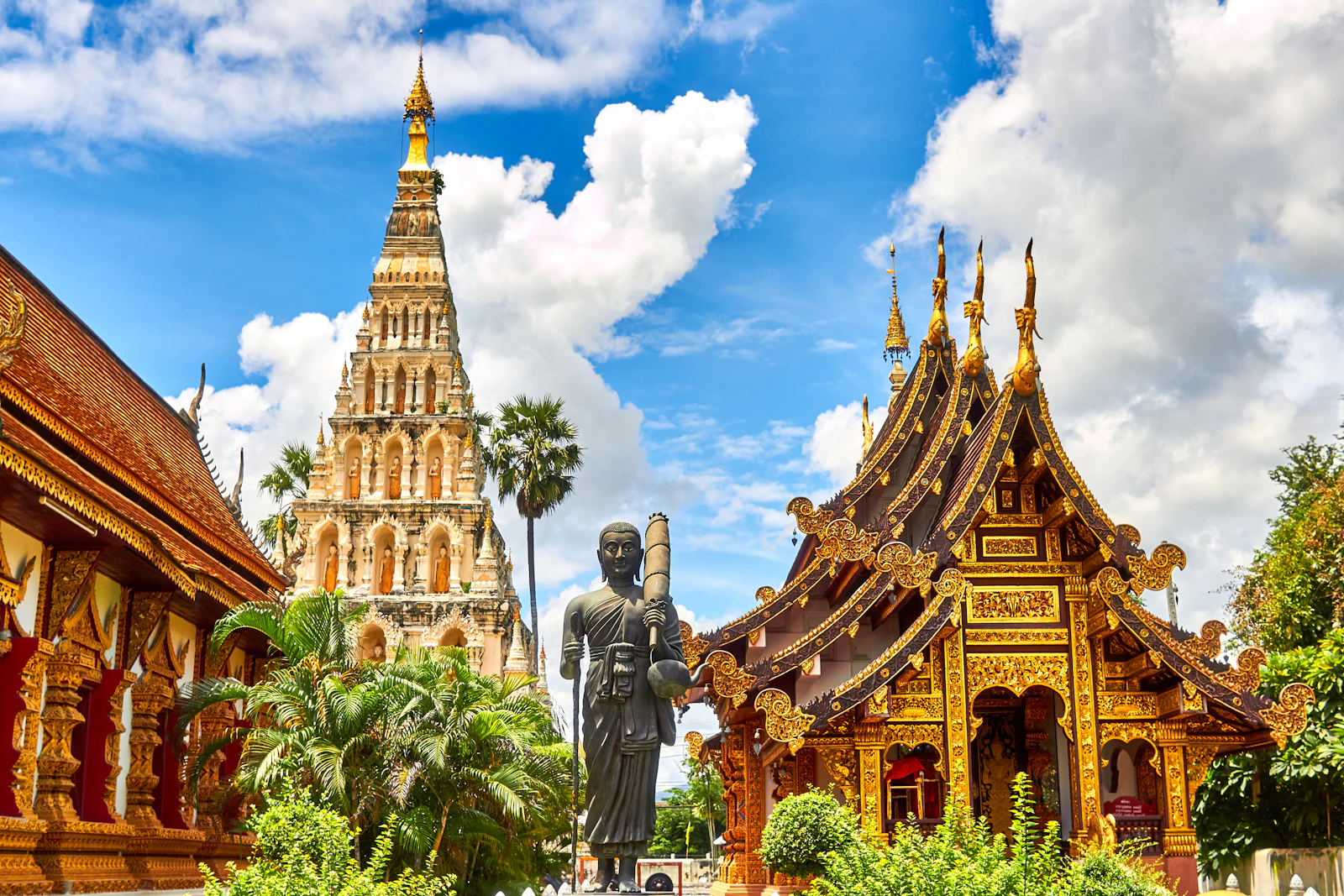
How a Thailand itinerary is built
Three decisions make a Thai itinerary and we make them in order. The month chooses the coast: the Andaman (Phuket, Krabi, Khao Lak, Lanta) from November to April, the Gulf (Samui, Phangan, Tao, Hua Hin) from June to September, and either in the shoulder weeks of April–May and October; a resort in monsoon is cheap for a reason and we do not book one. The length chooses the regions: a week is Bangkok and one coast, a fortnight adds Chiang Mai and the north, and three weeks adds the history (Ayutthaya, Sukhothai, Kanchanaburi) or Cambodia. And the party chooses the style: family resorts with kids’ clubs and calm water on the right beach, a couple’s island with a boat between it and the mainland, a food-led trip built on the markets and the cooking schools. Bangkok is three nights on every route, done in the mornings before the heat; internal flights rather than roads for the distances; a private driver for Chiang Mai and the countryside; and the elephant sanctuary, the Similans boat and the better Muay Thai seats booked before departure because they sell out. The things to do in Thailand page is region by region and is the step before choosing.
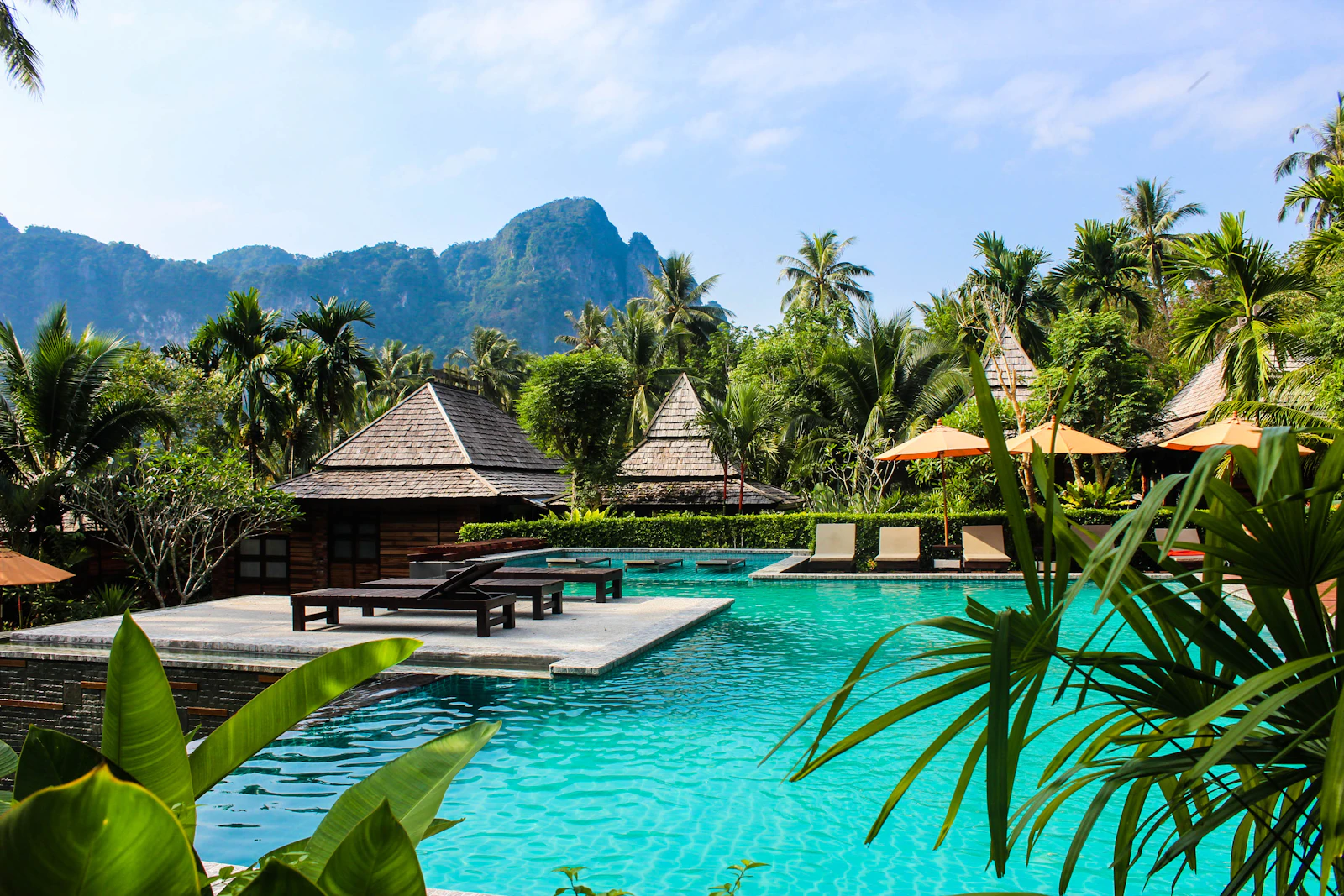
What every itinerary includes
- Return airfare from Sydney, Melbourne or Brisbane, open-jaw where the route allows; premium economy and business on request; other cities via those three
- Every transfer, train, ferry and internal flight in the itinerary, reserved and ticketed
- Accommodation as described, chosen by district and by what the night is for, with the bed configuration confirmed in writing
- Guides on the days where a guide changes the day, and a driver where the country runs on drivers
- The entries and experiences that sell out, booked before departure
- Entry-requirement and medication checks for every traveller, a pre-departure pack six weeks out, and a day-by-day document with maps and timings
- A quote in Australian dollars, Australian consumer-law protection, and a Cooee contact in Brisbane throughout
When to go
November to February is the cool, dry season for Bangkok, the north and the Andaman coast and the peak for prices, with Christmas and Chinese New Year the most expensive weeks. March to May is hot everywhere and smoky in the north; the Gulf is fine. June to October is the south-west monsoon on the Andaman side and in Bangkok and the north — afternoon storms in the cities, closed parks on the islands — and the dry season on the Gulf coast, which is why Australians go to Samui in July. The Gulf’s own wet is October to December. Songkran (13–15 April) is the water-fight New Year; Loy Krathong and Yi Peng on the November full moon are worth planning around. The things to do page has the season by region and the best time to visit Asia page the whole calendar.

Pricing
We quote each itinerary per departure in Australian dollars, with everything above included, so the figure you see is the figure you pay. We do not publish from-prices for international itineraries because the season and the accommodation tier move the total by thousands, and a from-price built on the cheapest week and the smallest room would be a number nobody actually pays. Each itinerary page explains what moves its price and links to the country’s costs guide, which sets out the underlying numbers line by line.
How to book
Choose an itinerary above, or tell us what you want and we will suggest one. Send your dates, your departure city and the party through the enquiry form or on 0409 661 342. We check the season against the route, confirm the hotels and inns that matter, and send an itinerary and a quote within two working days. A deposit holds it; the balance falls due before departure under our booking conditions; travel insurance is required.

Still choosing?
Tours convert; things to do informs; the journal attracts. If you are not ready to pick an itinerary, the step before this one is the things-to-do page.