

The Thai fortnight in its classic shape: three nights in Bangkok done in the mornings, four in Chiang Mai for the elephants, the mountain temple and the best cooking school in the country, and five on the coast of your season. Two internal flights, a driver in the north, a guide where a guide matters, and the whole thing on one booking.
This is the fortnight that has defined an Australian trip to Thailand for forty years, and it still works because its three parts are three different countries. Bangkok is the capital at full volume: royal temples, canals, markets and the best street food in the region, done in the mornings before the heat. Chiang Mai is the north: cooler, slower, greener, with a moated old town of 300 temples, the mountain shrine of Doi Suthep, the ethical elephant sanctuaries of the Mae Taeng valley and a cooking-school tradition that is the best in the country. The coast is the coast of your season — the Andaman’s limestone bays from November to April, the Gulf’s long beaches from May to October — for the boats, the reef and the sand. Two 70-minute flights join them; the trip runs city to mountain to sea and winds down as it goes. The things to do in Thailand page covers each region in depth.
Why this route
Because Thailand is three countries and a first trip that sees only Bangkok and a beach has missed the one people go back for. Chiang Mai is cooler, slower and greener than the rest of the kingdom, its old town is walkable, its temples are living rather than royal, its elephants are the ethical ones, and its food is a cuisine of its own; four nights there between the capital and the coast is what turns a beach holiday into a Thai trip. The two 70-minute flights cost little and save days on the road; the order — city, mountain, sea — winds the trip down; and the coast is still chosen by the month, so the fortnight works from November to February and again from June to September. It is the itinerary that has been the classic for forty years, and the reason is that it was right.
At a glance
| Duration | 14 days / 12 nights in Thailand |
|---|---|
| Route | Bangkok (3) → fly → Chiang Mai (4) → fly → Krabi, Phuket or Khao Lak (5) [Nov–Apr] / Koh Samui (5) [May–Oct] |
| Fly | Into Bangkok Suvarnabhumi, home from the coast via Bangkok on one ticket |
| Best months | November to February for all three regions; June to September for Bangkok, the north (green season) and the Gulf coast; avoid March–April in the north |
| Pace | Moderate: three bases, two internal flights, mornings out and afternoons free |
| Style | Private itinerary; a guide in Bangkok; a car and driver in Chiang Mai; a resort on the coast |
| Suits | First and second trips, couples, families with children over five, food-led travellers |
| Accommodation | A river hotel in Bangkok, a boutique hotel in Chiang Mai’s old town, a resort on the coast |
| Price | Quoted per departure in AUD |
Day by day
Day 1: Arrive Bangkok
The early-morning arrival, a private car to the river hotel, the pool, a first bowl of noodles, the river at dusk and an early night. The trip has fourteen days and the first is for arriving.
Day 2: The royal city with a guide
The Grand Palace and Wat Phra Kaew at 8.30 opening, Wat Pho and the reclining Buddha with a massage at the temple school, the ferry to Wat Arun, and lunch in the old quarter, all with a licensed guide and the car waiting. The afternoon at the pool; the evening in Chinatown, three stalls, three dishes.
Day 3: Canals, silk and a rooftop
A longtail through the Thonburi khlongs, the Jim Thompson House, lunch at its restaurant, and an afternoon of your own — Chatuchak on a weekend, the Siam malls, the Erawan shrine, a cooking class. Sunset from a rooftop and dinner in the sois of Ari or Thonglor. Suitcases packed for the north.

Day 4: Fly to Chiang Mai
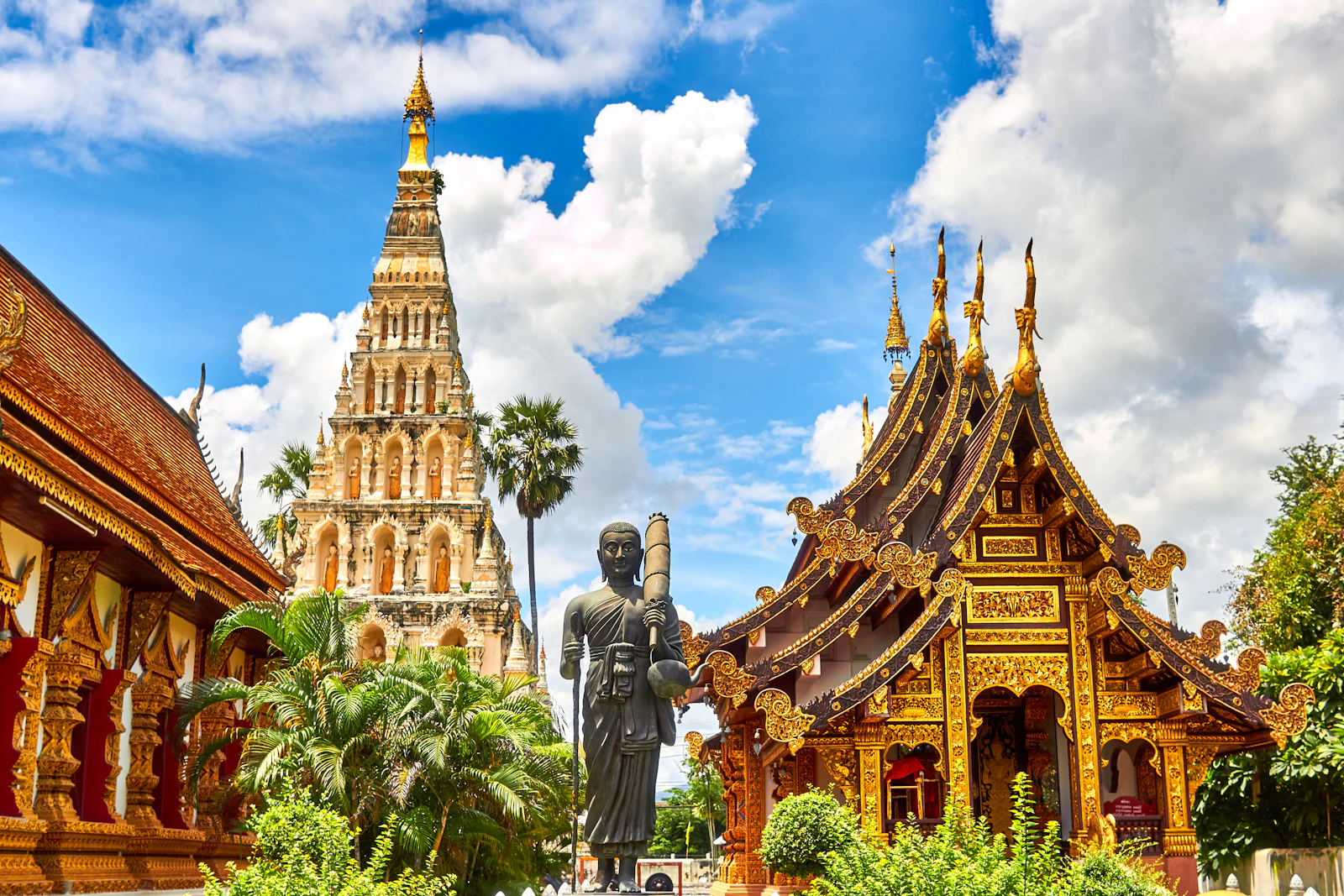
The 70-minute flight north to the old Lanna capital and a boutique hotel in the moated old town or the Nimman cafe district. The afternoon on foot: Wat Chedi Luang’s ruined stupa, Wat Phra Singh, the moat, and the cool-season evening at the night bazaar or, if it is a Sunday, the walking street on Ratchadamnoen Road from four, which is the best market in the north.
Day 5: The elephants
A full day at an ethical elephant sanctuary in the Mae Taeng valley — Elephant Nature Park, which set the standard, or one of the smaller projects that follow it: no riding, no shows, no bathing crowds; observing, feeding, walking alongside rescued elephants in a river valley, with lunch in the pavilion. Booked weeks ahead because it sells out. Back by five; a quiet dinner in the old town. The sanctuary day is the one guests mention first when they come home, and the one that changes what the children want to be; it is also the one we book before the flights, because the good projects cap their numbers and the July and December dates go months ahead.
Day 6: Doi Suthep and the cooking school
Doi Suthep at seven, the mountain temple above the city, up the 306 naga steps before the tour buses, with the view over the valley and the monks’ morning chant; then the cooking school — a market tour first, five dishes cooked and eaten, a recipe book to take home — which in Chiang Mai is the best in Thailand: a morning class starts at the Warorot or Muang Mai market with a basket, moves to an open-air kitchen in the rice fields, and ends with green curry, pad thai, tom yum, a stir-fry and mango sticky rice cooked by you and eaten under a tree. The evening free, and nobody hungry.
Day 7: The loose northern day
A choice made at booking, or on the day. Doi Inthanon, Thailand’s highest mountain, with the twin pagodas, the Karen villages and the Wachirathan falls, by car and guide. Or a day to Chiang Rai for the White Temple, the Blue Temple and the Black House, three hours each way. Or the artisans of San Kamphaeng and Bo Sang, the hot springs, and a slow afternoon. Or nothing but Nimman’s cafes and a massage. Doi Inthanon is the choice for most: the summit in cloud, the two royal pagodas with their gardens, the Karen village market, the falls, and a temperature ten degrees below the city.
Day 8: Fly to the coast
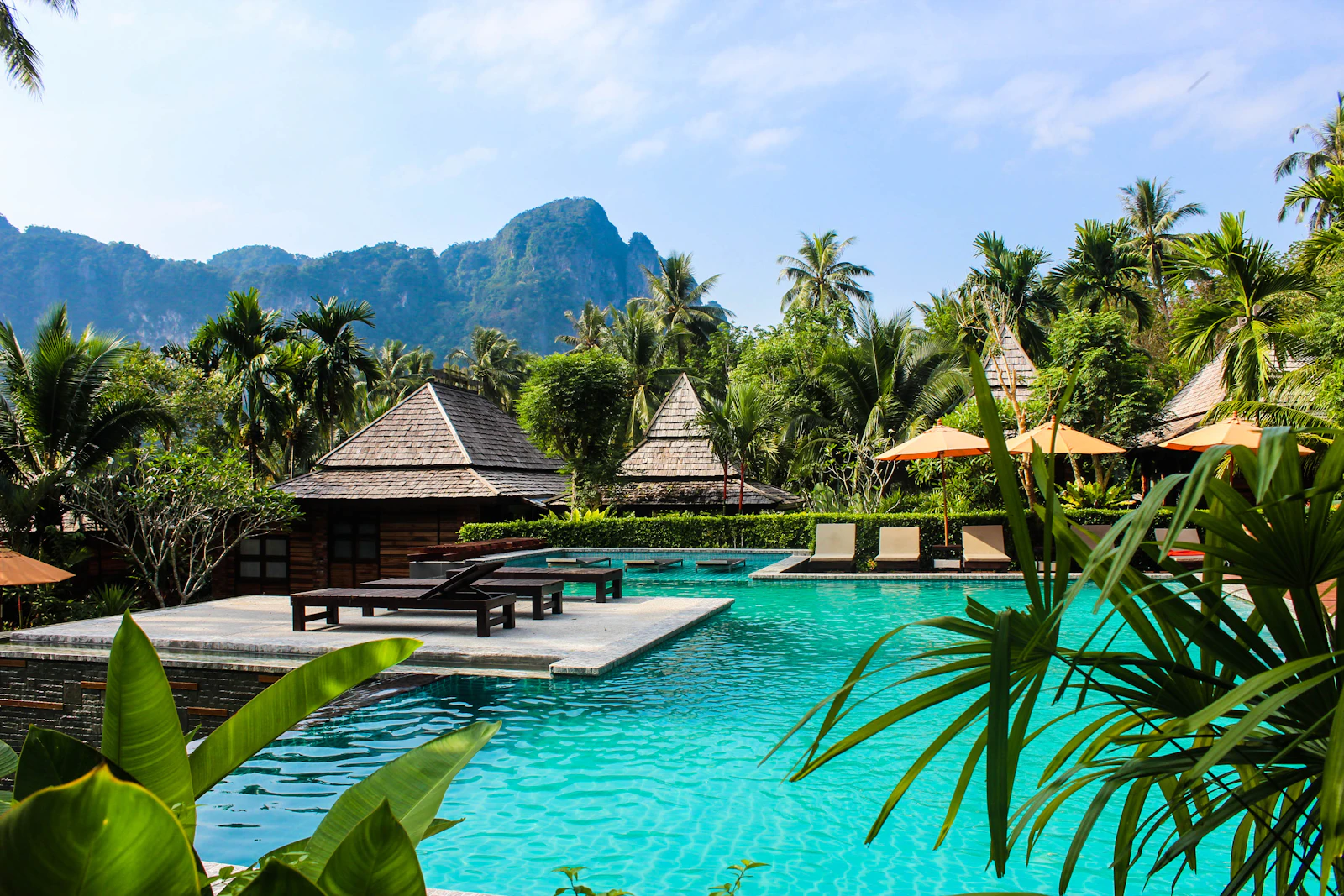
A direct flight from Chiang Mai to Phuket or Krabi (Bangkok Airways, November–April) or to Koh Samui (May–October), two hours, and the resort by mid-afternoon. The water, then dinner on the sand.
Day 9: The island boat
The Andaman’s Four Islands or Hong Islands from Krabi, Phang Nga Bay from Phuket, or Ang Thong Marine Park from Samui — the small boat, the early departure, the beaches before the crowds.

Day 10: The beach
No schedule. The resort’s sand, a massage, a walk at low tide, the sunset. The day people try to cut when they plan and ask for more of when they are there.
Day 11: The reef or the cliffs
Snorkelling at the Similans (Andaman, in season) or Koh Tao (Gulf); a Railay day for the cliffs and the cave beach; a kayak in the mangroves; or a second beach day. The best restaurant on the coast, booked.
Day 12: The loose coastal day
Phuket’s old town and Big Buddha, Krabi’s tiger-cave temple, Samui’s Fisherman’s Village and the Na Muang falls, or the pool and a book.
Day 13: The last day
A late checkout, the last lunch on the sand, and a private transfer to the airport for the evening flight to Bangkok and the connection home; or a final night in Bangkok for a last Chinatown dinner if the flights favour it.
Day 14: Home
Land in Australia in the morning. Fourteen days, three Thailands, and the north the part nobody expected to like most. The second trip, when it comes, usually starts in Chiang Mai.
Variations and extensions
Sixteen days with the history: Ayutthaya and Kanchanaburi (the River Kwai and Hellfire Pass) between Bangkok and the flight north, two nights, for the party that wants the old capital and the Australian war history. With Chiang Rai: two nights added in the north for the White Temple, the Golden Triangle and the Mekong, and the tea hills of Mae Salong, by car from Chiang Mai. With Sukhothai: the first Thai capital’s lotus-pond temples as an overnight between Bangkok and Chiang Mai, by flight to Sukhothai’s own small airport. The Mae Hong Son loop: four days by car through Pai and the Shan border hills in place of the loose northern day, for the party with time and a taste for hairpins. Eleven days: Bangkok two, Chiang Mai three, the coast four; the shortest version that keeps all three regions. The food version: a second cooking class in Bangkok, a street-food night tour in Chinatown, the Or Tor Kor market, khao soi at the shops that sell out by one, and the Isaan stalls, with a food-guided walk in each city. With Cambodia: Angkor for three nights between Chiang Mai and the coast, by flight via Bangkok, on our Cambodia pages. With Laos: the slow boat from Chiang Rai down the Mekong to Luang Prabang, two days, then the flight back to Bangkok and on to the coast — the north extended into the gentlest country in the region.
What a day looks like. Bangkok: one big thing before ten, the pool through the heat, the river or Chinatown from five. Chiang Mai: the temple or the mountain at seven while it is cool, the market or the class through the middle, the old town or the night bazaar in the evening. The coast: the boat at eight or nothing at all, lunch on the sand, the afternoon in the water, the sunset from the resort. Two temples a day, never five; a car between the things that are not walkable; and the loose day in each region kept loose. The document we send has the timings, and the driver in Chiang Mai has the flexibility to change them.
Eating on this route
Three regions, three cuisines. Bangkok is the everything city: boat noodles, pad thai from the stall with the queue, Chinatown at night, the Or Tor Kor market, mango sticky rice in season, and a top-end dinner (Sorn, Le Du, Gaggan, or the river terraces) booked before departure. Chiang Mai is the north: khao soi, the curry noodle that is lunch and not dinner because the good shops sell out by one; sai oua herb sausage; nam prik ong and the dips with sticky rice; a khantoke dinner of northern dishes on low tables; the Sunday walking street’s stalls; and the cooking school on day six, which begins in a market and ends with five dishes and a recipe book. The coast is grilled fish and prawns on the sand, the southern curries that are hotter than the north’s, the night markets of Krabi and Bophut, and fruit at every stall. Chiang Mai’s cafe culture — coffee grown in the hills above the city — is the surprise of the trip for most Australians. Spice is reduced on request everywhere; children eat well; dietary cards in Thai are provided and the cooking school adapts its menu. The Asia food guide has the Thai regions.
What is included
- Return economy airfare from Sydney, Melbourne or Brisbane, open-jaw where the route allows; premium economy and business on request
- All internal flights, ferries and speedboats named in the itinerary, ticketed
- Private airport and hotel transfers throughout, and a car and driver on the touring days
- Accommodation as described with breakfast; villas with a cook where named
- Guides on the days named, licensed and English-speaking
- Pre-booked entries and experiences named in the itinerary
- Thailand Digital Arrival Card guidance and entry checks for every traveller
- A day-by-day document with maps, timings and restaurant suggestions
- Australian consumer-law protection and a Cooee contact in Brisbane throughout
- A half-day licensed guide and car for the royal city on day two
- A private longtail through the Thonburi khlongs on day three
- The ethical elephant sanctuary day on day five, booked in advance
- The Doi Suthep morning and a full cooking class with market tour on day six
- A car and driver in Chiang Mai for the touring days
- The island boat day on day nine on a small-group or private boat
- Both internal flights (Bangkok–Chiang Mai, Chiang Mai–coast) and the coast–Bangkok connection homeward
Not included
- Lunches and most dinners
- Travel insurance (required)
- Personal spending, optional experiences not named, and tips (modest and appreciated in Thailand: about 10 per cent at restaurants without a service charge, small notes for drivers and porters)
- Boat and dive trips beyond those named
- The Doi Inthanon or Chiang Rai day on day seven, which we book on request
- The Similans or Koh Tao dive day on day eleven
Where you stay
Bangkok: on the river (the Peninsula, the Mandarin Oriental, the Shangri-La, the Chatrium) for the longtails and the view, or on the Sukhumvit line for the food sois and serviced apartments. Chiang Mai: a boutique hotel inside the moat — the Rachamankha, the Tamarind Village, the Ping Nakara by the river, or one of the dozen restored-house hotels at the mid-range — or the Four Seasons in the rice fields for the top; families often prefer the Nimman district for the cafes. The coast: as the Bangkok and the beaches route — Krabi, Phuket or Khao Lak in the Andaman season, Samui in the Gulf season, the resort chosen for the beach it sits on and the party in the water.
Chiang Mai’s hotels are the pleasure of the route: the restored-house boutique hotels inside the moat are among the best-value stays in Asia, with a courtyard pool, a dozen rooms, breakfast under the frangipani and the temples a walk away. The old town is quiet after nine; Nimman is livelier and suits families who want cafes and a supermarket; the river hotels north of the city suit those who want a garden. All three are ten minutes from the airport, which is the closest to a city centre of any in Thailand.
What it costs
Fourteen days for two with a guide in Bangkok, a driver in the north, the elephant day, the cooking school and a mid-range resort, in November or June, is the version most people book; Christmas adds half again, and the elephant sanctuary and the cooking school are fixed costs that do not move with the season. We do not publish a from-price because two factors move it by thousands: the season (Christmas–New Year and the July school holidays cost 30–50 per cent more than early November or May on flights and resorts combined) and the resort tier (a four-star with a kids’ club against a five-star with a pool villa). We quote every departure individually in Australian dollars with everything above included. The South-East Asia guide sets out the underlying daily numbers, and Thailand’s own costs article is in the journal queue.
Practical notes
Entry: Australians enter Thailand visa-free for 60 days; the Thailand Digital Arrival Card is completed online before you fly and we send the link. Passports need six months’ validity. Health: hepatitis A and typhoid vaccinations are recommended; dengue is present year-round and repellent morning and dusk is the defence; bottled or filtered water; hot food from busy places; a travel doctor six weeks out. Hospitals in Bangkok, Phuket, Samui and Chiang Mai are excellent and insurance is required. Money: baht; cards at hotels and good restaurants, cash for markets, stalls, drivers and temples; ATMs everywhere. Heat: every month is hot; the itinerary puts the outing in the morning and the pool in the afternoon. Temple dress: shoulders and knees covered, shoes off; the Grand Palace enforces it at the gate. Etiquette: heads are sacred and feet are lowly; the royal family is protected by law; lose your temper and you lose the argument. Motorbikes: the leading cause of Australian injuries in Thailand; not hired on our itineraries. Apps: Grab for rides, Google Maps, Google Translate’s camera for menus. The north’s season: November to February is the cool season and the reason to go — 15–28°C, clear skies, the Yi Peng and Loy Krathong lantern festivals on the November full moon. March and April are the burning season, when agricultural fires fill the valleys with smoke and the air quality is among the worst in the world; we do not route Chiang Mai in those months. June to October is green, wet in the afternoons and manageable. Elephants: the sanctuary we book has no riding, no shows and no bathing crowds; that is the whole test, and the parks that fail it are not on our itineraries whatever they call themselves. Chiang Mai’s flights: Bangkok Airways flies Chiang Mai to Phuket and Samui direct, which is the leg that makes the fortnight work without a Bangkok change; on days it does not, the connection is through Bangkok on one ticket. Families: the elephant day and the cooking school are the children’s days; the Bangkok mornings are kept to two temples; the resort has the kids’ club and the calm water. Older travellers: the car and driver in Chiang Mai, the Doi Suthep funicular instead of the steps, a guide for both Bangkok days, and a resort with a lift and a level path to the sand. Loy Krathong and Yi Peng: if the trip falls on the November full moon, the north is where to be — floating baskets on the Ping river and lanterns in the sky over the old town — and the mass lantern release is a ticketed event we book in advance; hotels in Chiang Mai fill for the week and the itinerary is set around it.
How to book
Send us your preferred dates, your departure city and the names and ages of the party through the enquiry form or on 0409 661 342. We check the season against the route, confirm availability at the hotels and inns that matter, and send an itinerary and a quote in Australian dollars within two working days. A deposit holds the booking; the balance is due before departure under our booking conditions. Travel insurance is required and we can recommend a policy.
Frequently asked questions
How many days is the Classic Thailand itinerary?
Fourteen days with twelve nights in Thailand. It can be shortened or extended; the day-by-day above is the shape we start from.
When is the best time for the Classic Thailand itinerary?
November to February, when all three regions are in season and the north is cool; June to September for Bangkok, the green north and the Gulf coast; the April–May and October shoulders for either coast. Not March–April, when the north is smoky. Christmas–New Year and July are the peaks.
Is this a group tour or a private itinerary?
A private itinerary built for your party and your dates, not a fixed-departure group. Guides and drivers join on the days named; the rest is independent with everything pre-booked.
Are flights included?
Yes: return economy from Sydney, Melbourne or Brisbane, open-jaw where the route allows, plus every internal flight and ferry named. Premium economy and business on request.
Do Australians need a visa for Thailand?
No — 60 days visa-free. The Thailand Digital Arrival Card is completed online before departure and we send the link with the pre-departure pack.
Who is this itinerary for?
First-time visitors who have a fortnight; second-time visitors who did Bangkok and a beach and want the north; couples; families with children from about five (the elephants and the cooking school are the days they remember); and food-led travellers, for whom Chiang Mai is the reason.
Is Thailand safe?
Yes, with the ordinary cautions: traffic (we do not hire motorbikes), water and food (bottled water, busy stalls), sun and rips on the beaches, and petty scams around the famous sites, which a driver and a guide remove. Smartraveller rates Thailand at “exercise a high degree of caution” with regional notes we follow.
How much does it cost?
Quoted per departure in Australian dollars with flights, internal flights, transfers, accommodation, drivers, guides and named experiences included. Season and resort tier move the total; the South-East Asia guide shows the underlying numbers.
Related
Tours convert; things to do informs. If you are still choosing, the things-to-do page is the step before this one.