

The shape most first-timers should take: three nights in Bangkok done in the mornings, with a guide for the royal city and a longtail for the canals, then a flight to one island region — the Andaman from November to April, the Gulf from May to October — for five nights of boats, reef and sand. The month decides the coast; the rest is built around you.
Thailand is two coasts with opposite seasons and a capital that punishes anyone who gives it two nights and rewards anyone who gives it three. This route is built on those two facts. Bangkok first, for the temples at opening, the canals by longtail, Chinatown at night and the river at dusk, done in the mornings before the heat; then a 70-minute flight to the coast that is dry in the month you can travel — Krabi, Phuket or Khao Lak from November to April, Koh Samui from May to October — and five nights of the boats, the reef and the sand. It is the trip we book most for a first visit and the one that produces the most second visits, because nine days in the right two places beats fourteen in the wrong five. The things to do in Thailand page explains the regions this route chooses between.
Why this route
Because the two coasts have opposite seasons and most people do not know it until they are standing on a red-flagged beach in July. This route makes the month the first decision and everything else follow it: the Andaman’s limestone and clear water from November to April, the Gulf’s calm shallows and long beaches from May to October, and Bangkok either way, because the capital is fine in every month if the temples are done at opening and the afternoons are spent by the river. Three nights in the city and five on the coast is the ratio that lets the trip wind down; one internal flight is the right number of airports; and a guide for the royal city on the second morning is the one hour of expertise that changes the whole visit. It is not the trip that sees the most of Thailand. It is the one that sees two parts of it well, and the one that leaves people wanting the north, which is what the classic fortnight is for.
At a glance
| Duration | 9 days / 8 nights (11 with Ayutthaya and Kanchanaburi) |
|---|---|
| Route | Bangkok (3) → fly → Krabi, Phuket or Khao Lak (5) [Nov–Apr] / Koh Samui (5) [May–Oct] |
| Fly | Into Bangkok Suvarnabhumi, home from the coast via Bangkok on one ticket |
| Best months | Any: the coast is chosen for the month |
| Pace | Easy: two bases, one internal flight, mornings out and afternoons in the water |
| Style | Private itinerary; a guide for the royal city; a driver in Bangkok; a resort on the coast |
| Suits | First-timers, couples, families, anyone with nine days and a need for a beach |
| Accommodation | A river or Sukhumvit hotel in Bangkok; a four- or five-star resort on the coast |
| Price | Quoted per departure in AUD |
Day by day
Day 1: Arrive Bangkok
The overnight flight from Australia lands at Suvarnabhumi in the early morning. A private car meets you and the hotel on the river or the Sukhumvit line has the room ready early where we can arrange it. The first day is slow by design: the pool, a first bowl of boat noodles at a shophouse near the hotel, a walk to the river at dusk for the longtails and the light, and an early dinner. Bangkok is three hours behind Brisbane and the body clock barely notices. If the flight is a daytime one landing in the evening, the first day becomes the second and the temples move a morning later; we build the timing around the flight we book.
Day 2: The royal city
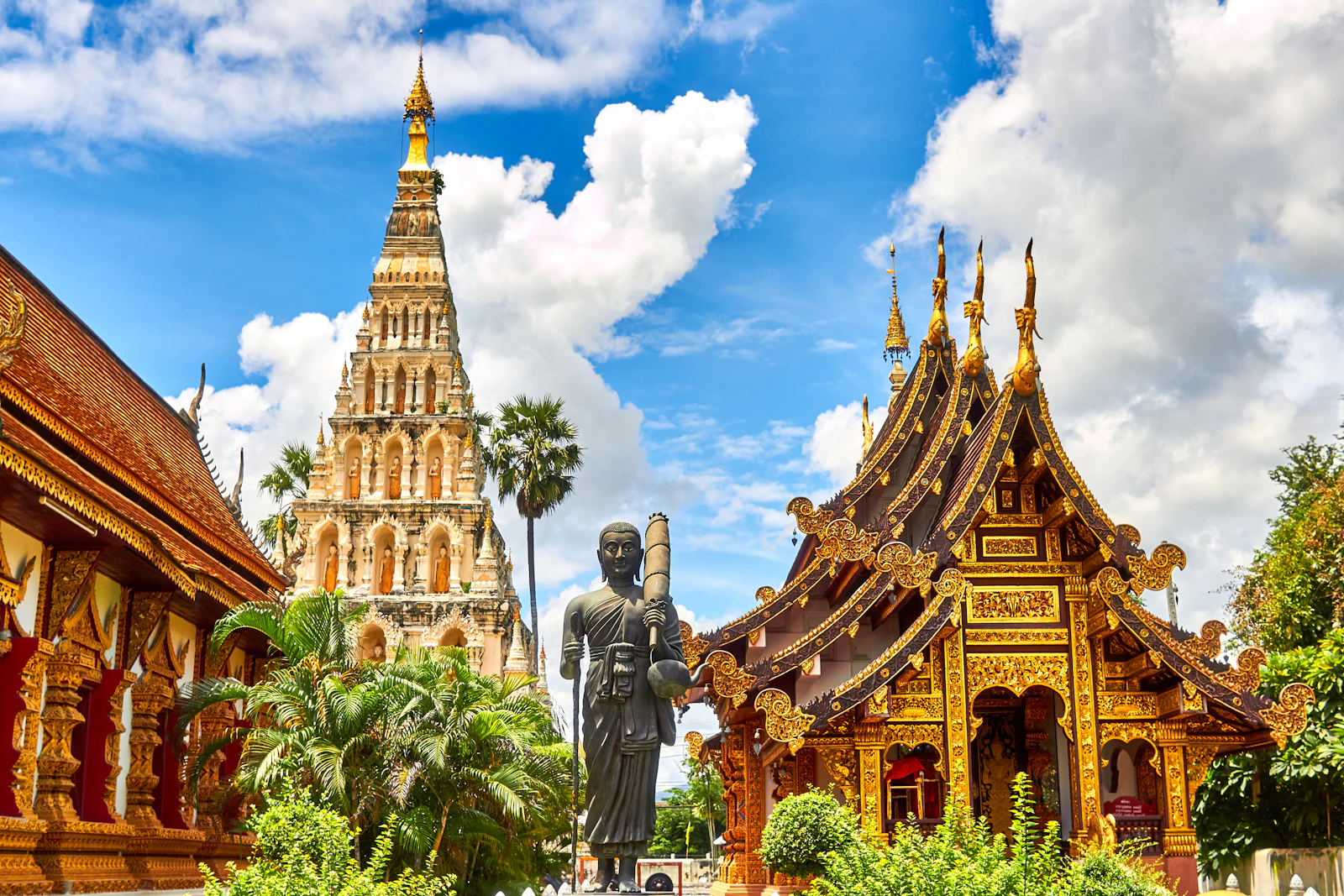
A guide and a car at eight. The Grand Palace and Wat Phra Kaew at 8.30 opening, before the heat and the coaches, dressed for it; Wat Pho and the reclining Buddha next door, with a thirty-minute massage at the temple’s own school; then across the river by ferry to Wat Arun and its porcelain spire. Lunch in the old quarter. The afternoon at the pool, and the evening in Chinatown: Yaowarat Road from six, the stalls lit, and dinner eaten at three of them — the crab omelette at the corner, the grilled squid two stalls down, the mango sticky rice from the cart at the end — with the guide’s list of which three, because Yaowarat has two hundred and they are not equal.
Day 3: The river and the canals
A longtail boat through the Thonburi khlongs in the morning — stilt houses, floating vendors, the artist’s house, the temple with the catfish — then the Jim Thompson House, the silk magnate’s teak compound and garden, and lunch at its restaurant. The afternoon is a choice: Chatuchak market if it is a weekend, the malls of Siam if the heat has won, or a cooking class with a market visit. A rooftop at sunset — Vertigo, or a cheaper one in Chinatown — and dinner in the Ari or Thonglor sois where Bangkok eats.
Day 4: Fly to the coast
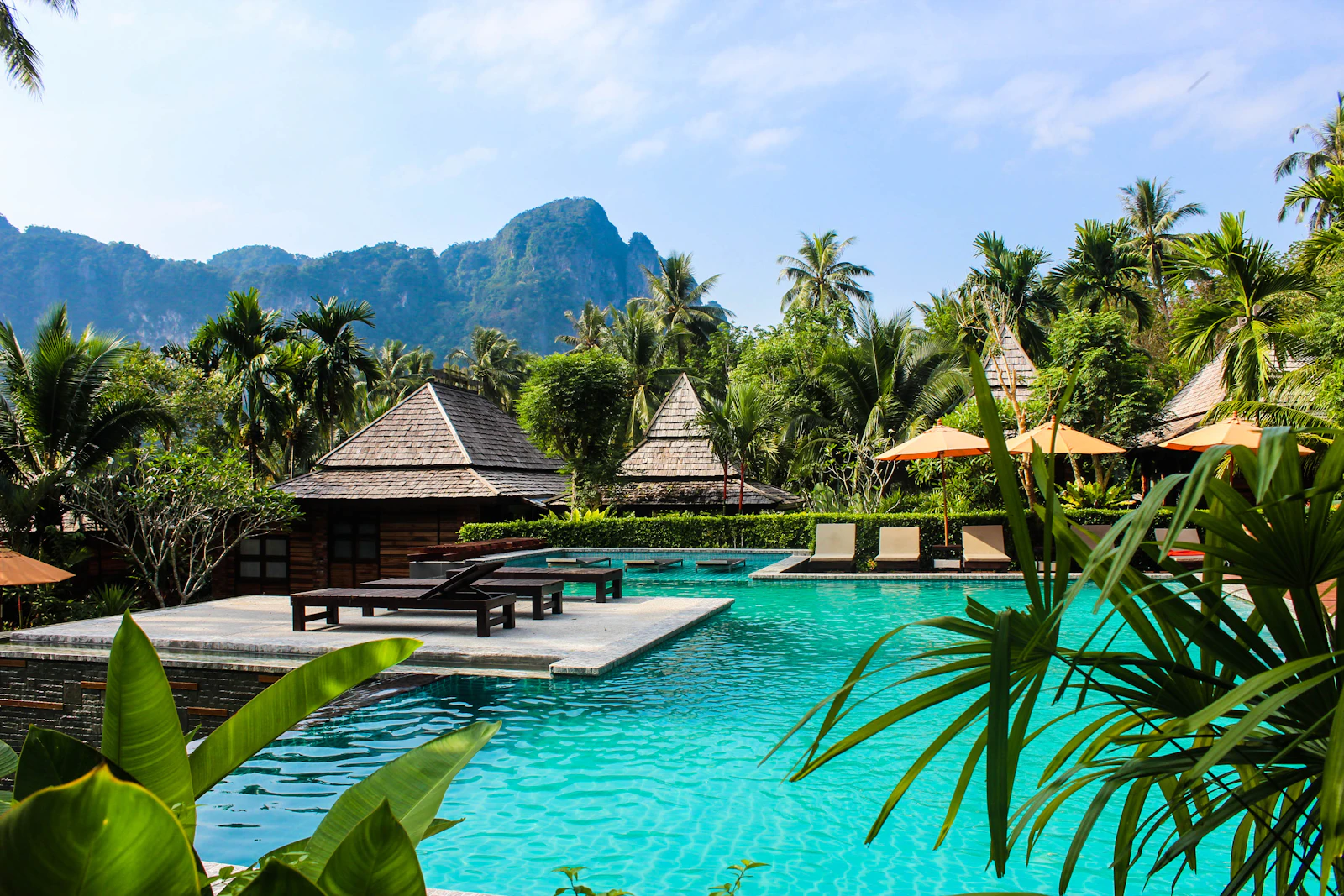
A morning flight from Bangkok to Krabi or Phuket (Andaman, November–April) or to Koh Samui (Gulf, May–October), 70 to 90 minutes, and a private transfer to the resort by lunch. The afternoon in the water, or asleep. The coast has been chosen for the month before anything else on this itinerary was, and the resort has been chosen for the beach it sits on; the transfer is a private car with a name board, not the airport taxi rank, and the driver knows which villa.

Day 5: The islands by boat
The day trip that the coast is famous for. From Krabi: the Four Islands by longtail — Poda, Chicken, Tup and the Phra Nang cave beach at Railay — or the Hong Islands by speedboat. From Phuket: Phang Nga Bay, James Bond Island and the sea caves of Koh Panyee by kayak. From Samui: Ang Thong Marine Park’s 42 islands, the Emerald Lake and a kayak. We book the smaller boat on every coast, because the difference between the AUD 30 boat and the AUD 90 boat is the number of people on it.
Day 6: The beach
No boat, no schedule. The resort’s beach or pool, a massage under the trees, lunch of grilled fish at the sand-floored restaurant, a walk at low tide. On Samui, the Big Buddha and the Fisherman’s Village walking street in the evening if it is a Friday; on the Andaman, Phuket’s Sino-Portuguese old town with its shophouses and Sunday walking street, or Krabi’s night market by the river. The beach day is the one that people try to cut when they plan and the one they ask for more of when they are there.

Day 7: The second boat, or the reef
Snorkelling from a speedboat at the Similans (Andaman, from Khao Lak or Phuket, in season) or at Koh Tao (Gulf, from Samui); a Railay day for the climbing and the cliffs; or a spa day. Dinner at the best restaurant on the coast, booked: on Samui, the Jungle Club above Chaweng or the beach restaurants of Bophut; at Krabi, the cliffside at Railay; at Phuket, the seafood on Rawai’s front or the old town’s Blue Elephant.
Day 8: The loose day
Nothing planned, which after a week of temples, canals and boats is the day the itinerary has been building toward. Most people spend it exactly where they are; some take a second boat; some go to Phuketsome go to Phuket’s Big Buddha or Samui’s Na Muang waterfalls with the driver.rsquo;s Big Buddha or Samuisome go to Phuket’s Big Buddha or Samui’s Na Muang waterfalls with the driver.rsquo;s Na Muang waterfalls with the driver, who is on call all day. The last dinner on the sand.
Day 9: Depart
A late checkout, a private transfer to the airport, and the flight home via Bangkok on a single ticket, with the connection timed generously and the Bangkok transit under three hours. Nine days, two Thailands, and a tan the office will notice. The homeward connection at Suvarnabhumi is on a single ticket, so a delayed island flight is the airline’s problem rather than yours, and the transit is airside without clearing immigration.
Variations and extensions
Eleven days with the history: two more Bangkok-area nights — Ayutthaya by early bicycle from the station for the brick prangs and the Buddha head in the tree roots, and Kanchanaburi for the River Kwai bridge, the war cemetery and Hellfire Pass, the Australian-built memorial that is the most affecting place in Thailand for an Australian. Seven days: Bangkok two, the coast four; the shortest version that still works. Two coasts in the shoulder: in April–May or October, when both sides are workable, Krabi and Samui in one trip — the only weeks we suggest it. Hua Hin instead of a flight: the royal seaside town three hours south by car, for families who want the beach without the airport and a resort strip with golf and a night market. Koh Lanta or Koh Yao Noi: the quieter Andaman islands for couples, a speedboat from Krabi or Phuket. The dive version: a Similans liveaboard (November–April) or a Koh Tao Open Water course (any month) in place of the beach days, on our Andaman and Gulf islands routes. With Cambodia: three nights at Angkor between Bangkok and the coast, an hour’s flight each way, for the party that wants a great monument with the beach.
Choosing the coast, in detail. The Andaman (west) coast faces the Indian Ocean and has the scenery — limestone towers rising from green-blue water, the long-tail boats, Railay’s cliffs, the Similans’ reefs — and the sharper season: November to April is calm, clear and dry; from May the south-west monsoon brings rough seas, red flags, closed national parks and days of rain, and the prices halve for a reason. Within it, Phuket is the hub with the airport, the nightlife of Patong, the family beaches of Kata and Karon and the quiet north; Krabi is smaller, more beautiful and the base for the island boats; Khao Lak is the calm resort coast an hour north of Phuket and the port for the Similans; Koh Lanta is the family island with long empty beaches. The Gulf (east) coast is calmer and shallower, with longer beaches and less dramatic water, and its season is inverted: dry from January to April and June to September, wet from October to December. Koh Samui has the airport, the resorts and the strips; Koh Phangan is the quieter neighbour outside the full-moon nights; Koh Tao is the dive island. For the Australian winter holidays the Gulf is the Thai answer; for the Christmas holidays it is the Andaman. We put the month on the table before the brochure.
Eating on this route
Bangkok is the region’s great eating city and three nights is a start: boat noodles at AUD 3 from a shophouse, the pad thai at the stall with the queue, som tam from an Isaan cart, Chinatown’s Yaowarat Road at night (the crab omelette, the grilled squid, the bird’s-nest stalls), the Or Tor Kor market for lunch, mango sticky rice from April to June when the mangoes are right, a khao soi if the north is not on the route, and one dinner at the top — Gaggan, Le Du, Sorn, or the river-terrace restaurants — booked before departure. On the coast: grilled fish and prawns on the sand, the resort’s Thai kitchen, the night market in Krabi town or Bophut’s Fisherman’s Village, southern curries that are hotter than the north’s, and fruit — mangosteens, rambutans, the dragonfruit — at every stall. Spice is real and every kitchen reduces it on request (mai phet); children eat pad thai, satay, fried rice and fruit and are happy. A cooking class with a market visit on day three is the most-booked optional on the route. The Asia food guide has the Thai section.
Food safety, since it is the question every first-timer asks: the rule is turnover. A busy stall with a queue of locals is safer than a quiet restaurant with a long menu; hot food cooked in front of you is safe almost anywhere; the hazards are tap water, ice from a bucket rather than a bag, raw vegetables washed in the tap and cut fruit that has sat in the sun. Bottled water, hotel ice, peel your own fruit, hand sanitiser, and most travellers eat their way through the trip without incident. Hepatitis A and typhoid vaccinations cover the serious end, and a travel doctor’s kit with rehydration salts sits in the bag for the mild one.
What is included
- Return economy airfare from Sydney, Melbourne or Brisbane, open-jaw where the route allows; premium economy and business on request
- All internal flights, ferries and speedboats named in the itinerary, ticketed
- Private airport and hotel transfers throughout, and a car and driver on the touring days
- Accommodation as described with breakfast; villas with a cook where named
- Guides on the days named, licensed and English-speaking
- Pre-booked entries and experiences named in the itinerary
- Thailand Digital Arrival Card guidance and entry checks for every traveller
- A day-by-day document with maps, timings and restaurant suggestions
- Australian consumer-law protection and a Cooee contact in Brisbane throughout
- A half-day licensed guide and car for the royal city on day two
- A private longtail through the Thonburi khlongs on day three
- The island boat day on day five on a small-group or private boat
- The Bangkok–coast flight and the coast–Bangkok connection on the homeward ticket
Not included
- Lunches and most dinners
- Travel insurance (required)
- Personal spending, optional experiences not named, and tips (modest and appreciated in Thailand: about 10 per cent at restaurants without a service charge, small notes for drivers and porters)
- Boat and dive trips beyond those named
- The cooking class, rooftop bar and second boat day, which we book on request
Where you stay
Bangkok: on the river — the Peninsula, the Mandarin Oriental, the Shangri-La or the Chatrium tier — for the longtails from the hotel pier and the view, or on the Sukhumvit Skytrain line for the food sois and the serviced apartments families prefer. Andaman: Krabi’s Ao Nang or Railay (the Rayavadee for the top, a dozen good mid-range resorts on Ao Nang), Phuket’s Kata, Karon or the northern beaches, or Khao Lak for the calm coast and the Similans. Gulf: Koh Samui’s north coast (Bophut, Maenam) for quiet, Chaweng for the strip, or the resorts of the south-east for families. The resort is chosen for the beach it sits on, not the island: beach quality varies within a single island and we book by the sand.
What it costs
Nine days for two in a four-star river hotel and a good mid-range resort in early November or May is the version most people book; the same trip at Christmas costs half as much again. We do not publish a from-price because two factors move it by thousands: the season (Christmas–New Year and the July school holidays cost 30–50 per cent more than early November or May on flights and resorts combined) and the resort tier (a four-star with a kids’ club against a five-star with a pool villa). We quote every departure individually in Australian dollars with everything above included. The South-East Asia guide sets out the underlying daily numbers, and Thailand’s own costs article is in the journal queue.
Practical notes
Entry: Australians enter Thailand visa-free for 60 days; the Thailand Digital Arrival Card is completed online before you fly and we send the link. Passports need six months’ validity. Health: hepatitis A and typhoid vaccinations are recommended; dengue is present year-round and repellent morning and dusk is the defence; bottled or filtered water; hot food from busy places; a travel doctor six weeks out. Hospitals in Bangkok, Phuket, Samui and Chiang Mai are excellent and insurance is required. Money: baht; cards at hotels and good restaurants, cash for markets, stalls, drivers and temples; ATMs everywhere. Heat: every month is hot; the itinerary puts the outing in the morning and the pool in the afternoon. Temple dress: shoulders and knees covered, shoes off; the Grand Palace enforces it at the gate. Etiquette: heads are sacred and feet are lowly; the royal family is protected by law; lose your temper and you lose the argument. Motorbikes: the leading cause of Australian injuries in Thailand; not hired on our itineraries. Apps: Grab for rides, Google Maps, Google Translate’s camera for menus. The coast decision is made at booking from your month and confirmed against the Thai Meteorological Department’s season before the deposit; a resort in monsoon is cheap for a reason and we do not book one. Bangkok’s two airports are 50 km apart — the coast flights leave from Suvarnabhumi on Thai and Bangkok Airways and from Don Mueang on the low-cost carriers, and we book the one that connects to the homeward flight without a transfer. Families: the resort is chosen for calm water and a kids’ club, the Bangkok hotel for a pool and a serviced-apartment layout, the royal-city morning is kept to two temples and finished by eleven, the longtail is the children’s favourite hour of the trip, and the island boat day is the small boat with life jackets in every size, checked before we book it. Couples: Railay or Koh Yao Noi rather than Ao Nang, a river hotel in Bangkok, and the rooftop at sunset booked with a table at the edge. Older travellers: a car and guide for both Bangkok days, the boat day made a private longtail with a shaded canopy, and the resort with a lift and a level path to the sand.
How to book
Send us your preferred dates, your departure city and the names and ages of the party through the enquiry form or on 0409 661 342. We check the season against the route, confirm availability at the hotels and inns that matter, and send an itinerary and a quote in Australian dollars within two working days. A deposit holds the booking; the balance is due before departure under our booking conditions. Travel insurance is required and we can recommend a policy.
Frequently asked questions
How many days is the Bangkok and the Beaches itinerary?
Nine days and eight nights. It can be shortened or extended; the day-by-day above is the shape we start from.
When is the best time for the Bangkok and the Beaches itinerary?
Any month, because the coast is chosen for it: Krabi, Phuket or Khao Lak from November to April, Koh Samui from May to October, and either in the April–May and October shoulders. November and May are the value months; Christmas–New Year and July are the peaks. Bangkok is best from November to February and fine in every month if the outings are in the mornings.
Is this a group tour or a private itinerary?
A private itinerary built for your party and your dates, not a fixed-departure group. Guides and drivers join on the days named; the rest is independent with everything pre-booked.
Are flights included?
Yes: return economy from Sydney, Melbourne or Brisbane, open-jaw where the route allows, plus every internal flight and ferry named. Premium economy and business on request.
Do Australians need a visa for Thailand?
No — 60 days visa-free. The Thailand Digital Arrival Card is completed online before departure and we send the link with the pre-departure pack.
Who is this itinerary for?
First-time visitors to Thailand and to Asia; couples with nine days; families with children of any age (the resort and the beach are chosen for them); and anyone who wants the capital’s temples and a proper beach without a fortnight. The two-coast rule makes it the itinerary that works in every month.
Is Thailand safe?
Yes, with the ordinary cautions: traffic (we do not hire motorbikes), water and food (bottled water, busy stalls), sun and rips on the beaches, and petty scams around the famous sites, which a driver and a guide remove. Smartraveller rates Thailand at “exercise a high degree of caution” with regional notes we follow.
How much does it cost?
Quoted per departure in Australian dollars with flights, internal flights, transfers, accommodation, drivers, guides and named experiences included. Season and resort tier move the total; the South-East Asia guide shows the underlying numbers.
Related
Tours convert; things to do informs. If you are still choosing, the things-to-do page is the step before this one.