

South-East Asia is the Australian escape: close, warm, cheap and endlessly varied. This guide takes it country by country, explains the two monsoons that decide when to go where, and sets out the costs, the logistics and the routes we build most.
South-East Asia is the Australian escape: six to nine hours from the east coast, warm all year, cheap on the ground, and varied enough that a lifetime of trips would not exhaust it. Thailand and Bali are where most Australians start; Vietnam, Cambodia and Laos are where they go next; Malaysia, Singapore and the Philippines fill the gaps and the stopovers. This guide takes the region as a set: each country in a paragraph, the two monsoons that decide when to go where, what it costs, how to move between countries, health and safety honestly, and the routes we build most.
The countries
| Country | For | Best months | Visa for Australians | Daily cost, mid-range (AUD) |
|---|---|---|---|---|
| Thailand | Bangkok, two coasts, Chiang Mai, food, families | Nov–Feb (Andaman); Jun–Sep (Gulf) | None, 60 days | 120–200 |
| Vietnam | Hanoi to Saigon, Halong Bay, Hoi An, food, history | Mar–Apr, Oct–Nov (varies by region) | e-visa, 90 days | 100–180 |
| Cambodia | Angkor, Phnom Penh, the south coast | Nov–Mar | e-visa or on arrival, 30 days | 110–180 |
| Laos | Luang Prabang, the Mekong, slow travel | Nov–Feb | e-visa or on arrival, 30 days | 90–160 |
| Indonesia (Bali) | Beaches, temples, villas, surf, Java and beyond | May–Sep | e-VOA, 30 days | 120–220 |
| Malaysia | KL, Penang food, Langkawi, Borneo wildlife | Dec–Feb west coast; Jun–Aug east | None, 90 days | 110–180 |
| Singapore | The stopover, food, families, order | Year-round | None, 90 days | 250–400 |
| Philippines | Palawan, Cebu, Boracay, diving | Dec–May | None, 30 days | 110–190 |
Thailand
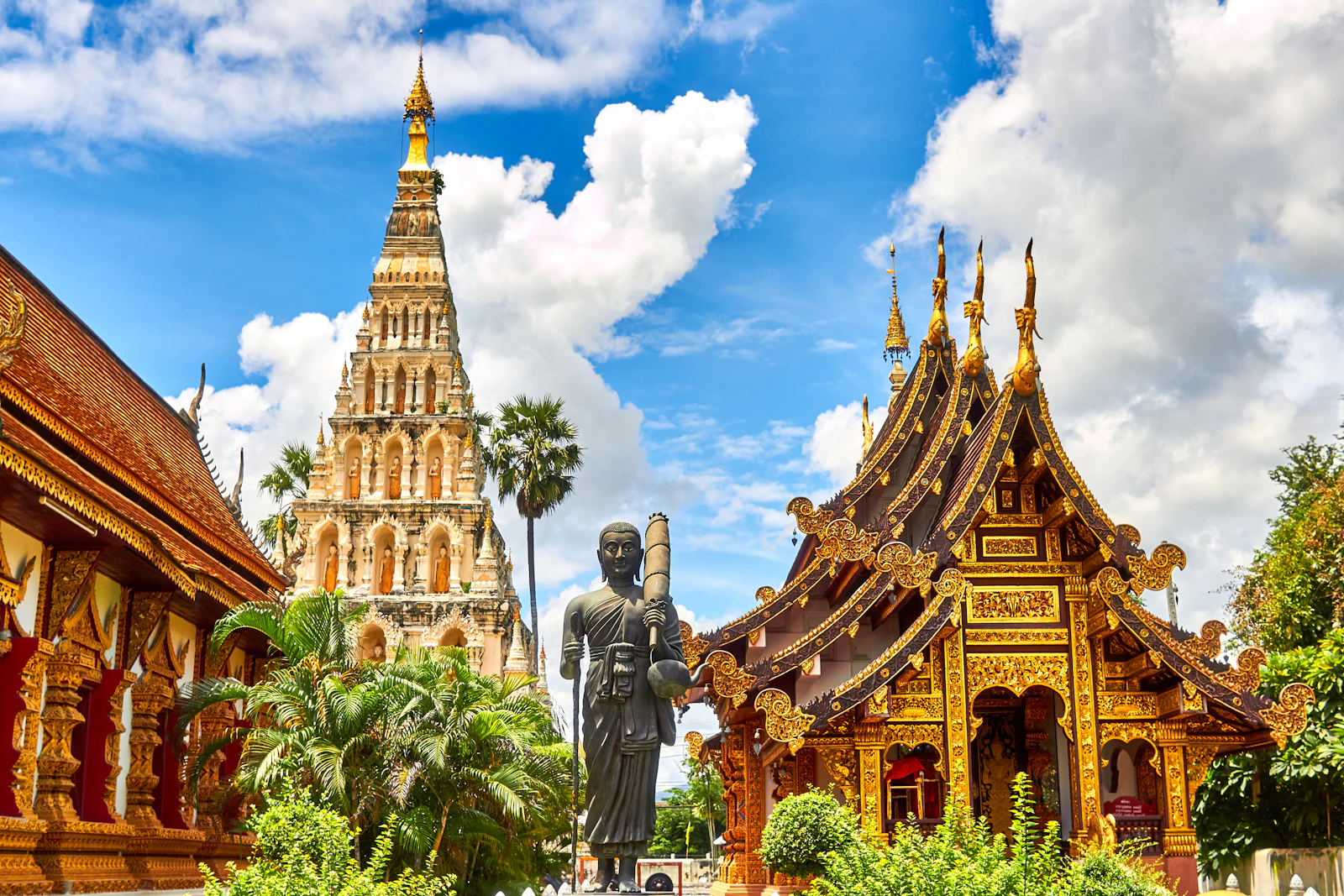
The most-visited country in the region and the one that rewards planning most, because its two coasts have opposite seasons. Bangkok for three to five days, the Andaman coast (Phuket, Krabi, Khao Lak) from November to April, the Gulf coast (Samui, Phangan, Tao) from January to September, Chiang Mai and the north in the cool months, and Ayutthaya and Kanchanaburi for history an hour or two from the capital. Australians enter visa-free for 60 days. The Thailand travel guide and things to do in Thailand cover it region by region.
Vietnam
A country best travelled top to bottom: Hanoi’s old quarter and Halong Bay, the imperial city of Hue, the lantern town of Hoi An, the beaches of Da Nang and Nha Trang, Ho Chi Minh City and the Mekong Delta, with the Reunification Express or short flights between them. Three climate zones mean there is always a good region — the north is best in autumn and spring, the centre from February to August, the south from December to April. The food is among the best in the world and the cheapest. Australians need an e-visa, applied for online in a few days. The Vietnam travel guide has the full picture.
Cambodia
Angkor is the reason: the largest religious monument on earth and a hundred other temples in the forest around Siem Reap, seen over three days with a guide who knows which one to be at when. Phnom Penh holds the Royal Palace and the Killing Fields and Tuol Sleng, which are hard and necessary; Battambang is the gentle provincial town; the south coast (Kampot, Kep, Koh Rong) is the beach. November to March is dry and cooler. Cambodia combines with Vietnam or Thailand in a fortnight without strain. The Cambodia travel guide covers the temples and the practicalities.
Laos
The slowest country in the region and, for many, the favourite: Luang Prabang, the World Heritage temple town on the Mekong where the monks collect alms at dawn; the two-day slow boat from the Thai border; Vang Vieng’s karst; the Plain of Jars; and now the Laos–China railway, which has cut Vientiane to Luang Prabang from a day’s drive to two hours. November to February for the cool, dry weather. A week added to Thailand or Vietnam, or ten days on its own for people who want the pace. The Laos travel guide has the detail.
Indonesia and Bali
Bali is six hours from the east coast and the most familiar of all Australian destinations abroad: Ubud’s rice terraces and temples, the beach clubs of Seminyak and Canggu, the cliffs of Uluwatu, the day trip to Nusa Penida, volcano sunrises, villas with private pools, surf, spas and a food scene that has matured into something excellent. Beyond it, Java for Borobudur and Yogyakarta, Lombok and the Gili Islands, and Komodo for the dragons and the diving. The dry season is May to September. Australians use the e-VOA. The Indonesia travel guide and the Bali travel guide cover it.
Malaysia and Borneo
Kuala Lumpur for the towers and the food, Penang’s George Town for the best street food in the region and the shophouse heritage, the Cameron Highlands for tea, Langkawi for the beach, Malacca for the history. On the other side of the sea, Malaysian Borneo — Sabah and Sarawak — is the wildlife trip: orangutans at Sepilok and in the wild at the Kinabatangan, Mount Kinabalu, the Danum Valley rainforest, Sipadan’s diving. Peninsular Malaysia’s west coast is best from December to February and the east coast from June to August; Borneo is best from March to October. No visa for Australians. The Borneo travel guide covers the wildlife side.
Singapore
The stopover that became a destination: Gardens by the Bay, the hawker centres (Maxwell, Lau Pa Sat, Old Airport Road), Sentosa for families, the Night Safari, Little India and Kampong Glam, and a level of order and cleanliness that makes it the easiest city in Asia for a first-timer or an older traveller. Three nights is plenty and two is common on the way to Europe. It is the dearest place in the region by a distance; the hawker meals are the equaliser at AUD 5–8.
The Philippines
Seven thousand islands and the best beaches in Asia: Palawan’s El Nido and Coron for the lagoons and the wreck diving, Cebu and Bohol for whale sharks and the Chocolate Hills, Boracay for the resort beach, Siargao for surf. English is an official language, which makes it the easiest country in the region to travel independently. December to May is dry; the typhoon season from July to October is real. Manila is the hub and not the destination. Australians enter visa-free for 30 days.
Myanmar
Bagan, Inle Lake and Mandalay are among the region’s great sights and are, at the time of writing, off the map: Smartraveller advises Australians not to travel to Myanmar because of the conflict following the 2021 coup, and we do not book it. We note it here because people ask, and because it will return.
When to go: the two monsoons
South-East Asia sits between two monsoon systems and the trick to the region is knowing which side of the line you are on. The south-west monsoon, roughly May to October, brings rain to Thailand’s Andaman coast, the whole of Bangkok and northern Thailand, Laos, Cambodia, Vietnam’s south, peninsular Malaysia’s west coast and Bali (though Bali’s wet is November to March, on the Australian pattern). The north-east monsoon, roughly November to February, brings rain to Thailand’s Gulf coast, Malaysia’s east coast, Vietnam’s central coast (October to December is the worst) and the Philippines’ east. So the region’s classic season — November to February — is dry and cool for Bangkok, the Andaman, Cambodia, Laos, northern Vietnam and KL, and wet for Samui, Vietnam’s centre and the east coasts. March to May is hot everywhere and smoky in the north. June to September is wet in most places but not badly — afternoon storms, green landscapes, half-price hotels — and is the dry season for Bali, the Gulf islands and Malaysia’s east coast, which is why Australians travel to exactly those places in the winter school holidays. The best time to visit Asia page maps it month by month.

What it costs
South-East Asia is the cheapest region in the world to travel well in. A mid-range traveller — three-star-plus hotels, restaurant meals, private drivers for day trips, a guide at the big sights — spends AUD 100–200 a day on the ground in Vietnam, Cambodia, Laos, Thailand, Bali and Malaysia; AUD 250–400 in Singapore. Luxury is the bargain: five-star resorts in Thailand and Bali that would be AUD 900 a night in Australia are AUD 300–500, and a private villa with staff in Bali is AUD 400–800 for a family. Flights from the east coast run AUD 700–1,100 return in shoulder season to Bali, Bangkok, Singapore and KL, more to Hanoi or Saigon (usually one-stop, though direct flights from Sydney and Melbourne exist), and AUD 1,000–1,600 in the December–January and June–July peaks. Ten days mid-range in one country including airfare is AUD 2,500–4,000 per person; a fortnight across two countries AUD 4,000–6,000. The Asia journal has country-level cost articles.
Getting there and around
Flights from Australia
Bali (Denpasar) is six hours from the east coast and under four from Perth, direct on Jetstar, Virgin, Qantas and Garuda. Bangkok is nine hours direct on Thai, Qantas and Jetstar. Singapore is eight on Singapore Airlines, Qantas, Jetstar and Scoot; KL eight on Malaysia Airlines and AirAsia X; Manila eight on Philippine Airlines and Qantas. Hanoi and Ho Chi Minh City are eight to nine hours direct on Vietnam Airlines and Vietjet from Sydney and Melbourne, or one-stop via Singapore or Bangkok. Cambodia and Laos are reached via Bangkok, Singapore, KL or Saigon.
Between countries
The region’s low-cost carriers — AirAsia, Vietjet, Scoot, Cebu Pacific, Lion, Nok, Bangkok Airways — make hops of one to two hours for AUD 60–200: Bangkok–Siem Reap, Saigon–Phnom Penh, Hanoi–Luang Prabang, KL–Bali, Singapore–anywhere. Land crossings are possible (Bangkok to Siem Reap by road, Saigon to Phnom Penh by bus or Mekong boat, the slow boat into Laos from Chiang Rai) and are part of the trip for people who have the time. Within countries: Vietnam’s trains and short flights, Thailand’s flights and sleeper train, the Laos–China railway, Malaysia’s ETS trains, Cambodia’s roads, Bali’s private drivers. Rail is an experience rather than a system here; flights are the workhorse.
On the ground
Grab is the ride app across the region (except Bali, where Gojek competes and hotels arrange drivers). A private car and driver for a day costs AUD 50–100 in most countries and is how most people do Bali, Angkor and the Thai countryside. Tuk-tuks, songthaews and motorbike taxis fill the gaps; agree the fare first. Motorbike hire is cheap and the leading cause of Australian injuries in the region — insurance requires a motorcycle licence and a helmet and most travellers have neither.

Money and connectivity
Cash matters more here than in East Asia: baht, dong, riel (US dollars are used alongside it in Cambodia), kip, rupiah, ringgit and pesos, with ATMs in every town and fees of AUD 3–8 a withdrawal. Cards work at hotels and good restaurants; markets, drivers and temples are cash. Never carry more than a day’s worth. An eSIM bought before departure or a local SIM at the airport for AUD 10–20 gives ten days of data; Wi-Fi is universal. Grab, Google Maps, Google Translate (camera mode reads Thai and Vietnamese menus), XE for the currencies, and Smartraveller are the apps. Power is 220–240 V; plug types vary by country and a universal adaptor covers them. Hotels in Vietnam and Cambodia will hold your passport at check-in as a legal requirement; take a photograph of it first and collect it the night before you leave, not at six in the morning with a taxi waiting.
The experiences that define the region
- Angkor at dawn and the forest temples of Ta Prohm and Beng Mealea.
- Halong Bay on an overnight junk, and its quieter cousin Lan Ha Bay.
- Street food: Bangkok’s Chinatown, Hanoi’s old quarter, Penang’s hawker streets, Saigon’s pho at 6 am.
- The Mekong: the slow boat to Luang Prabang, the delta from Saigon, Kampot’s river.
- Bali’s rice terraces and temples, and a sunrise on Mount Batur.
- The islands: Phi Phi, Railay, the Gilis, El Nido, the Perhentians, Koh Rong.
- Ethical elephant sanctuaries in Chiang Mai and the orangutans of Borneo.
- Hoi An by lantern light, and a suit made in two days.
- Luang Prabang’s alms-giving at dawn, watched quietly from across the street.
- A cooking class in any of the capitals, with the market visit first.
- Diving at Sipadan, the Similans, Koh Tao, Komodo and Tubbataha.
- The hawker centres of Singapore, and a Singapore Sling at Raffles for the tourists we all are.
Health and safety, honestly
The region is safe for visitors: violent crime against tourists is rare, the risks are traffic, water and mosquitoes. Traffic is the leading cause of serious injury; motorbikes are the specific problem. Tap water is not drinkable anywhere in the region except Singapore; bottled or filtered water, ice from hotels and good restaurants is fine, street ice is usually factory-made and fine too. Dengue is present year-round in every country, worst in the wet season, and repellent is the defence; malaria is a risk only in rural and border areas (parts of Cambodia, Laos, Borneo, Papua) and a doctor’s advice on prophylaxis is worth having for those. Vaccinations: hepatitis A and typhoid are recommended for most of the region, tetanus up to date, and Japanese encephalitis for long rural stays; see a travel doctor six weeks before. Food from busy stalls is safer than food from quiet restaurants; the rule is turnover. Rabies exists; do not pat the dogs and monkeys. Scams are petty and predictable — the closed-temple tuk-tuk driver, the gem shop, the taxi without a meter — and Grab removes most of them. Smartraveller rates Thailand, Vietnam, Cambodia, Laos, Malaysia, Singapore and Bali at “exercise normal safety precautions” or “high degree of caution” and the Philippines and Indonesia with regional variations. Insurance with medical evacuation is essential; the best hospitals (Bangkok, Singapore, KL) are excellent and expensive, and elsewhere evacuation to them is the plan.
Culture and manners
Buddhism shapes Thailand, Laos, Cambodia, Myanmar and Vietnam; Islam shapes Malaysia, Indonesia (outside Hindu Bali) and the southern Philippines; Catholicism the rest of the Philippines. Temple dress everywhere is shoulders and knees covered, shoes off, hats off, feet never pointed at a Buddha image; women do not touch monks in Buddhist countries; mosques require full covering and often a headscarf for women. Heads are sacred and feet are lowly across the region: do not touch a child’s head, do not point with your feet. The Thai royal family is protected by law from any disrespect. Lose your temper and you lose the argument everywhere. Bargaining is expected in markets and not in shops with price tags. Tipping is modest and appreciated (10 per cent in restaurants that do not add service, a dollar or two for drivers and porters) but not the American obligation. Learn hello and thank you in each country; it is repaid many times over.

Where to stay
The region’s accommodation runs from AUD 15 guesthouses to AUD 2,000 villas and the mid-range is where the value lives. Boutique hotels in restored shophouses (Hoi An, George Town, Luang Prabang, Bangkok’s old quarter) at AUD 120–250 are the region’s signature stay. Beach resorts in Thailand, Bali and the Philippines at AUD 200–500 give five-star service at three-star Australian prices. Private villas with a pool and staff in Bali, Phuket and Samui suit families and groups at AUD 300–900 a night for the whole house. Overnight boats — a Halong Bay junk, a Mekong cruise, a Similans liveaboard — are stays in their own right. Homestays in Vietnam’s north and Laos give the village experience for AUD 20–40. Singapore is the exception to every price above. Book the December–January and July peaks months ahead; the rest of the year a fortnight is fine. The where to stay in Asia page covers the types in detail.
Pace and the number of countries
South-East Asia tempts people into four countries in two weeks because the flights are short and cheap, and the trip that results is a sequence of airports. Each border costs most of a day and a new currency; the pleasures of the region — the second morning at the same pho stall, the driver who now knows what you like, the beach you stop photographing — are the pleasures of staying. Our default for ten days is one country; for a fortnight, two; for three weeks, the Indochina loop. Vietnam alone rewards a fortnight. Cambodia and Laos each add five to seven days to a neighbour without strain. Bali is a base, not a stop.
The routes we build most
Thailand only, ten days
Bangkok 3, Chiang Mai 3, then the coast of your season 4. The first trip for most Australians.
Vietnam top to bottom, two weeks
Hanoi 3 with a Halong overnight, Hue 1, Hoi An 3, Saigon 3 with the Mekong and Cu Chi, and a beach at Da Nang or Phu Quoc if there is time. Fly in to Hanoi, out of Saigon.
Vietnam and Cambodia, sixteen days
The Vietnam route compressed to eleven days, then Saigon to Siem Reap by air for three nights at Angkor and two in Phnom Penh, or the reverse.
The Indochina loop, three weeks
Bangkok, fly to Luang Prabang, the Laos railway to Vientiane, fly to Hanoi, down Vietnam, Siem Reap, back to Bangkok. The full classic.
Bali and beyond, twelve days
Ubud 3, Uluwatu or Seminyak 4, then Java for Borobudur and Yogyakarta 3 or the Gilis 3.
Malaysia and Borneo, two weeks
KL 2, Penang 3, fly to Sabah: Kota Kinabalu 2, Sepilok and the Kinabatangan 3, Danum Valley 2.
Singapore stopover, three nights
Gardens by the Bay, the hawker centres, Sentosa or the Night Safari, and Kampong Glam, on the way to anywhere.
For different travellers
First-timers to Asia: Thailand, Bali or Singapore — easy, familiar, forgiving. Families: Bali villas, Thailand’s resorts, Singapore, and Vietnam for older children. Couples: Hoi An, the Gilis, Krabi, Luang Prabang, a Bali villa. Unhurried travellers: Vietnam with a driver, Singapore, Bali’s resorts, and Angkor with a guide and an early start. Food-led trips: Vietnam, Penang, Bangkok, Singapore. History: Angkor, Hue, Ayutthaya, Luang Prabang, Malacca and George Town, Kanchanaburi and the Sandakan memorial for Australians. Beaches: the Philippines and Thailand, then Bali and Malaysia. Wildlife: Borneo, Komodo, the elephants of Chiang Mai. The things to do in Asia page groups the region by interest and the Asia tours page shows how we build it.
Frequently asked questions
Which South-East Asian country should I visit first?
Thailand or Bali: closest, easiest, best set up for visitors, and the ones where a first mistake costs least. Vietnam is the usual second, Cambodia and Laos the third.
When is the best time to visit South-East Asia?
November to February for Bangkok, the Andaman coast, Cambodia, Laos, northern Vietnam and Malaysia’s west coast. June to September for Bali, Thailand’s Gulf islands and Malaysia’s east coast. There is always somewhere dry.
Do Australians need visas for South-East Asia?
No visa for Thailand (60 days), Malaysia, Singapore or the Philippines (30 days). Vietnam needs an e-visa applied for online; Cambodia and Laos issue e-visas or visas on arrival; Indonesia uses the e-Visa on Arrival. Check Smartraveller before travel.
How much does South-East Asia cost?
AUD 100–200 a day on the ground for a mid-range traveller in most countries, AUD 250–400 in Singapore. Ten days including airfare from the east coast is AUD 2,500–4,000 per person; luxury is the region’s bargain.
Is South-East Asia safe?
Yes for visitors, with the risks being traffic (especially motorbikes), water, mosquitoes and petty scams rather than crime. Insurance with medical evacuation is essential. Smartraveller currently advises against travel to Myanmar.
Can I do Vietnam and Cambodia together?
Easily: Saigon to Siem Reap or Phnom Penh is an hour by air or a day by road or Mekong boat. Sixteen days covers Vietnam top to bottom and three nights at Angkor.
What vaccinations do I need for South-East Asia?
Hepatitis A and typhoid are recommended for most of the region, tetanus should be current, and Japanese encephalitis or malaria prophylaxis may apply for rural or border stays. See a travel doctor six weeks before departure.
Is Bali part of South-East Asia?
Yes — Bali is an Indonesian island, and Indonesia is the region’s largest country. Bali’s dry season (May to September) follows the Australian pattern rather than the mainland monsoon calendar.
Where this leads
Travel guide informs; things to do helps you choose; tours convert.