

Three islands, one ferry line, and the season that makes them: Koh Samui for the resorts and the marine park, Koh Phangan’s quiet north coast for the beaches nobody photographs, and Koh Tao for reefs you swim to from the sand. Dry from May to September, when the Andaman coast is closed, which is why this is the Thailand for the winter school holidays.
The Gulf of Thailand’s islands run on the opposite calendar to the Andaman’s: their wet season is October to December, and from January to April and again from June to September they are dry, calm and shallow while Phuket and Krabi are under the south-west monsoon. That makes them the Thailand for the Australian winter, and the three big islands sit in a line served by one ferry company, so a trip can hop between them without an airport. Samui has the flights, the resorts and Ang Thong Marine Park; Phangan, away from the full-moon beach, is the quiet one with the jungle and the retreats; Tao is the dive island with reefs you swim to from the beach. Eleven days gives each its due and puts the ferries in the mornings. The things to do in Thailand page explains the two coasts and their seasons, and this route is the Gulf half.
Why this route
Because from May to September the Andaman coast is closed — national parks shut, red flags on the beaches, rough seas and rain — and the Gulf is dry, and most people planning a July trip to Thailand do not know it until the resort booking is made. This route is the Gulf done properly: not one island for ten days, but the three big ones in a line, each for what it does best, joined by a ferry company rather than an airport. Samui’s resorts and its marine park; Phangan’s empty north coast; Tao’s reef from the sand. It is the Thai beach trip for the Australian winter holidays, and it is why our Samui bookings peak in the weeks when Phuket’s are empty. The scenery is gentler than the Andaman’s and the water is not as clear as Krabi’s; the beaches are longer, the swimming is calmer, and the family with a six-year-old and the couple who want to snorkel from the sand are both better served here in July than anywhere on the other coast. Honest comparison is the whole job, and the Gulf wins on the calendar.
At a glance
| Duration | 11 days / 10 nights |
|---|---|
| Route | Bangkok (transit) → Koh Samui (4) → ferry → Koh Phangan (2) → ferry → Koh Tao (3) → ferry → Samui (1) |
| Fly | Into Bangkok and straight on to Samui; home from Samui via Bangkok on one ticket |
| Best months | January to April and June to September; the July school holidays are the peak; avoid October to December, the Gulf’s wet season |
| Pace | Easy: three islands, three ferries of under two hours, boat days alternating with beach days |
| Style | Private itinerary; resorts on Samui and Phangan, a dive resort or beach hotel on Tao; the boats and the dive course booked |
| Suits | Families in the June–July holidays, couples, divers and snorkellers, anyone who wants a Thai beach in the Australian winter |
| Accommodation | A north-coast resort on Samui; a quiet-coast resort or retreat on Phangan; a beach hotel on Tao |
| Price | Quoted per departure in AUD |

Day by day
Day 1: Arrive Bangkok, connect to Samui
The overnight flight lands at Suvarnabhumi in the morning and the Bangkok Airways connection to Koh Samui leaves from the same terminal: 70 minutes, and the island’s small palm-thatched airport by lunchtime. A private transfer to the resort on the north coast, the pool, the water, and the first sunset from the sand. The Gulf is three hours behind Brisbane and dry from May to September, which is the whole reason for the route. The Bangkok Airways connection is on the international ticket, the bags are checked through, and the first afternoon is in the water.
Day 2: Samui: the island
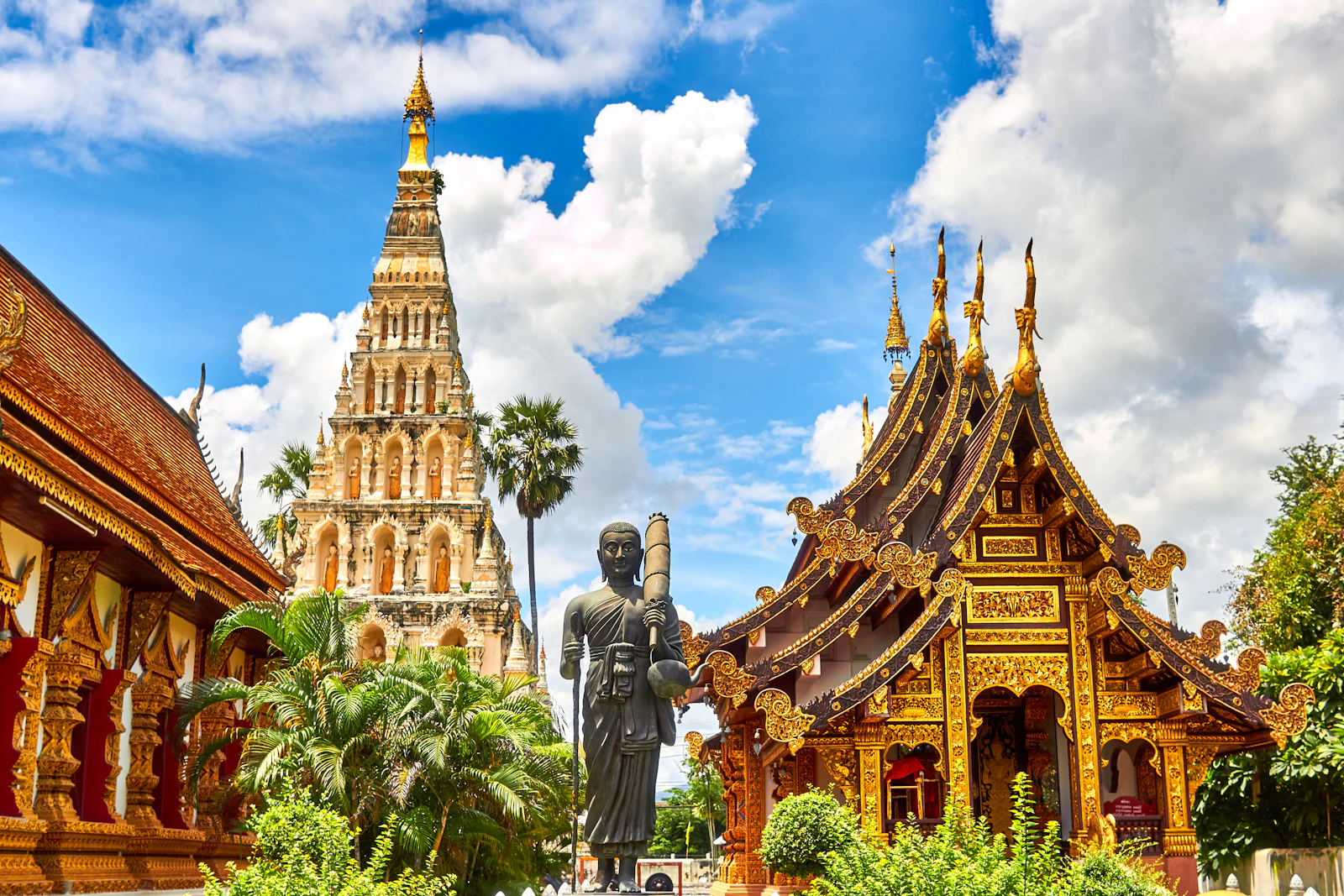
A car and driver for the loop: the Big Buddha and Wat Plai Laem on the north-east, the Na Muang waterfalls in the interior, the Grandfather and Grandmother rocks, lunch at a beach restaurant at Lamai, and the Fisherman’s Village at Bophut in the evening — the old Chinese shophouse street with the best restaurants on the island and, on Fridays, the walking market.
Day 3: Ang Thong Marine Park
The day the Gulf is famous for: a speedboat or a slower boat to the 42 islands of Ang Thong, the Emerald Lake on Koh Mae Ko by the steps, kayaking between the limestone islets, snorkelling at Koh Wua Talap and the viewpoint climb for the archipelago below. The small boat, the early departure. Back by four, sun-struck and salt-crusted, with the Emerald Lake’s green on every camera.
Day 4: The beach
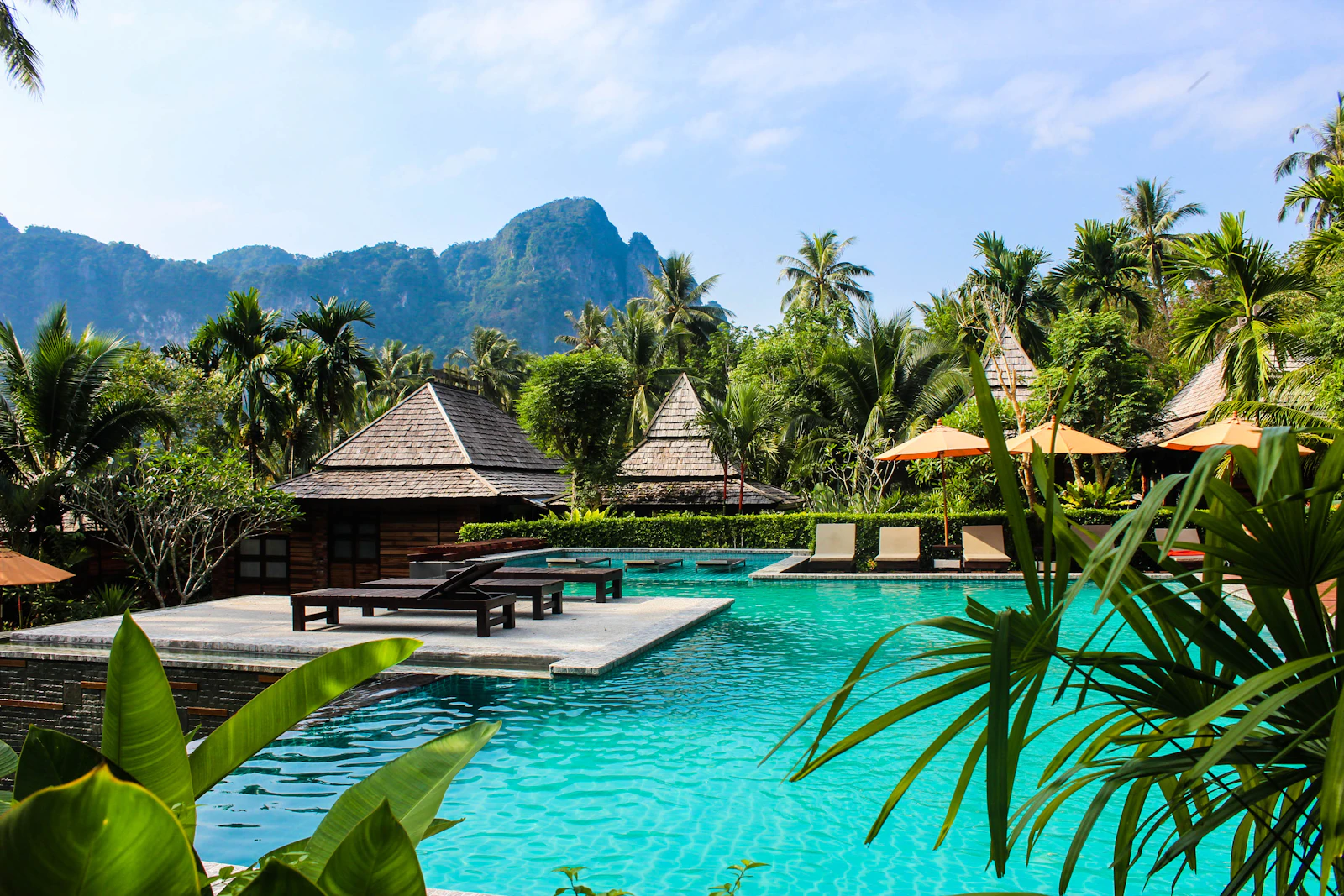
No schedule. The resort’s beach, a massage, a longtail to a neighbouring bay, the sunset. Samui’s north coast at Maenam and Bophut is calm and shallow and the reason we put families here.
Day 5: Ferry to Koh Phangan
The Seatran or Lomprayah ferry from Samui, thirty to forty minutes, and a transfer to the north or west coast — not Haad Rin, unless the full moon is the point. Phangan outside the party is a different island: jungle interior, quiet beaches at Thong Nai Pan and Haad Salad, yoga and wellness retreats, and a pace slower than Samui’s. The afternoon in the water at a beach with no one on it. Phangan is the island the ferry timetable was built for — Samui to the pier at Thong Sala in half an hour, a taxi across the jungle spine to the north coast — and the transition from resort island to quiet island happens in the forty minutes of that drive.
Day 6: Phangan: the quiet side
A longtail to Bottle Beach, reachable only by boat; the Than Sadet waterfall and the royal inscriptions; the Phaeng viewpoint; or a yoga class and a massage at the retreat. Dinner at a beach restaurant with the lanterns. If the full moon falls in the trip and the party wants it, Haad Rin from ten and a taxi back at two; if not, the north coast does not know it is happening.

Day 7: Ferry to Koh Tao
The ferry north, an hour to ninety minutes, to the dive island: three kilometres by seven, a hundred dive shops, and reefs from the beach. The resort at Sairee or the quieter Chalok Baan Kao; the afternoon snorkelling straight off the sand at Shark Bay or Aow Leuk, where blacktip reef sharks patrol the shallows at dusk and are the size of a labrador and as interested.
Day 8: Koh Tao: the reef
For divers, the first day of an Open Water course (three days, the most-issued certificate on earth is issued here) or fun dives at Chumphon Pinnacle and Sail Rock, where whale sharks pass from March to May and again in September. For snorkellers, the round-island longtail: Mango Bay, Aow Leuk, Shark Bay, Japanese Gardens and the sandbar at Koh Nang Yuan, which we time for early morning before the day boats from Samui arrive. Whale sharks are seen at Chumphon Pinnacle and Sail Rock most often from March to May and again in September; nothing guarantees them and the dive schools do not pretend to.
Day 9: Koh Tao: the second day
The course continues, or the John-Suwan viewpoint at dawn, the Sairee beach walk, a second snorkel, and the sunset bars. The island has the best budget-to-mid-range value in the Gulf and the least resort infrastructure; it is for people who came for the water.
Day 10: Back to Samui
The morning ferry back to Samui, two hours, and a last night on the north coast: the Fisherman’s Village, the best dinner of the trip booked at the water’s edge, and the resort’s pool for the last swim of the trip.
Day 11: Depart
A late checkout, the Samui flight to Bangkok and the connection home on one ticket. Eleven days, three islands, one ferry company, and the Australian winter spent in the dry. The Samui flight is timed to the international connection at Suvarnabhumi on one ticket, so a delayed island departure is the airline’s problem, and the Bangkok transit is airside.
Variations and extensions
Eight days, two islands: Samui four and Tao three, skipping Phangan, for divers; or Samui four and Phangan three for families. With Bangkok: three nights in the capital first, the Bangkok and the beaches shape with the Gulf as its coast. With Chiang Mai: the classic fortnight in the green season, with Samui direct from Chiang Mai on Bangkok Airways. Samui only, ten days: one resort, the marine park, the island day and a second boat, for the party that does not want to move; the north coast in July is the most-booked family week we sell in Thailand. The dive version: Open Water on Tao (three days), Advanced (two more), and a liveaboard from Samui to the Ang Thong and Sail Rock sites, with the beach days cut. The wellness version: Kamalaya on Samui’s south coast or a Sri Thanu retreat on Phangan for the whole trip, with the boats as day trips. Hua Hin instead: for those who want the Gulf without an island — three hours south of Bangkok by car, the royal seaside town with the family resorts, the golf and the night market, in the same dry season.
What a day looks like. Boat days start at eight and end by four, with the marine park, the round-island longtail and the dive boats all leaving early to beat the day trippers from the bigger islands; beach days start whenever. The ferries are morning sailings so the afternoon belongs to the new island. Dinner is early and on the sand almost everywhere; the islands go quiet by ten outside Chaweng and Haad Rin. Sunscreen at seven, a rash vest for the snorkel, reef shoes for the rocky bays, and a dry bag on every boat. The itinerary alternates a boat day with a beach day on purpose, because three boat days in a row is how a beach holiday becomes a commute.
Eating on this route
The Gulf islands eat well and simply. Samui: the Fisherman’s Village restaurants (the Shack for grill, Coco Tam’s for the beanbags and the sunset), Bophut’s Friday walking street, the Jungle Club above Chaweng, seafood at Bang Po on the north coast where the boats come in, and the night markets at Lamai and Chaweng for the stalls. Phangan: beach restaurants with lanterns at Thong Nai Pan, the vegan and raw-food cafes of Sri Thanu (the island is the wellness capital of the Gulf), the Thong Sala night market on the pier. Tao: barbecue on the beach at Sairee, the dive-shop cafes, the fish restaurants at Chalok, and a bar with a view at John-Suwan for the sunset. Southern Thai food is the hottest in the country — the coconut curries, the fish with turmeric, the fermented-shrimp dips — and every kitchen will make it mild; grilled fish, satay and fried rice are the mild default and the children’s. Fruit is the Gulf’s glory in the dry months: mangoes until June, then mangosteens and rambutans. The Asia food guide has the rest.
What is included
- Return economy airfare from Sydney, Melbourne or Brisbane, open-jaw where the route allows; premium economy and business on request
- All internal flights, ferries and speedboats named in the itinerary, ticketed
- Private airport and hotel transfers throughout, and a car and driver on the touring days
- Accommodation as described with breakfast; villas with a cook where named
- Guides on the days named, licensed and English-speaking
- Pre-booked entries and experiences named in the itinerary
- Thailand Digital Arrival Card guidance and entry checks for every traveller
- A day-by-day document with maps, timings and restaurant suggestions
- Australian consumer-law protection and a Cooee contact in Brisbane throughout
- The Bangkok–Samui and Samui–Bangkok flights on the international ticket
- All three ferries (Samui–Phangan–Tao–Samui) with pier transfers
- A car and driver for the Samui island day
- The Ang Thong Marine Park day on a small boat with kayaks
- A round-island snorkelling longtail on Koh Tao
- Resort transfers by private car on each island
Not included
- Lunches and most dinners
- Travel insurance (required)
- Personal spending, optional experiences not named, and tips (modest and appreciated in Thailand: about 10 per cent at restaurants without a service charge, small notes for drivers and porters)
- Boat and dive trips beyond those named
- The Open Water dive course or fun dives on Koh Tao, booked on request with a school we know
- Full Moon Party transport
Where you stay
Samui: the north coast — Bophut, Maenam, Choeng Mon — for calm water and the Fisherman’s Village (the Anantara Bophut, the Peace Resort, the Bandara, or the Four Seasons and the Six Senses at the top); Chaweng for the strip and the nightlife; Lamai for the family beach. Phangan: Thong Nai Pan or Haad Salad on the quiet coasts (the Anantara Rasananda, the Santhiya, or a dozen good beachfront mid-range resorts), or a wellness retreat at Sri Thanu; never Haad Rin unless the full moon is the point. Tao: Sairee for the beach and the sunset bars, Chalok Baan Kao for quiet, with the dive resorts (Ban’s, Big Blue) or the beach hotels (the Sensi Paradise, the Haad Tien) and, at the top, the villas at Jamahkiri. The resort on every island is chosen for the beach it sits on and confirmed for the room configuration; Tao’s accommodation is simpler than Samui’s and we say so.
Two things worth knowing about Gulf resorts. First, the tide: the north coast of Samui and several Phangan bays have a wide tidal range and a beach that is swimming at ten and a walk at four; the resorts we book have pools for the low-tide hours and we tell you the tide table. Second, the season for the rates: the Gulf’s peak is the northern-hemisphere winter and the Australian July, and its value months are May, June and September, when the same room on the same beach is a third cheaper and the weather is identical.
What it costs
Eleven days for two on the north coast of Samui, a quiet-coast resort on Phangan and a beach hotel on Tao, in June or February, is the version most people book; the July school holidays add 30–50 per cent on flights and Samui’s resorts, and Tao’s prices hardly move. We do not publish a from-price because two factors move it by thousands: the season (Christmas–New Year and the July school holidays cost 30–50 per cent more than early November or May on flights and resorts combined) and the resort tier (a four-star with a kids’ club against a five-star with a pool villa). We quote every departure individually in Australian dollars with everything above included. The South-East Asia guide sets out the underlying daily numbers, and Thailand’s own costs article is in the journal queue. The ferries and the marine-park boat are fixed costs; the dive course is AUD 400–550 per person and is the one optional that most people take.
Practical notes
Entry: Australians enter Thailand visa-free for 60 days; the Thailand Digital Arrival Card is completed online before you fly and we send the link. Passports need six months’ validity. Health: hepatitis A and typhoid vaccinations are recommended; dengue is present year-round and repellent morning and dusk is the defence; bottled or filtered water; hot food from busy places; a travel doctor six weeks out. Hospitals in Bangkok, Phuket, Samui and Chiang Mai are excellent and insurance is required. Money: baht; cards at hotels and good restaurants, cash for markets, stalls, drivers and temples; ATMs everywhere. Heat: every month is hot; the itinerary puts the outing in the morning and the pool in the afternoon. Temple dress: shoulders and knees covered, shoes off; the Grand Palace enforces it at the gate. Etiquette: heads are sacred and feet are lowly; the royal family is protected by law; lose your temper and you lose the argument. Motorbikes: the leading cause of Australian injuries in Thailand; not hired on our itineraries. Apps: Grab for rides, Google Maps, Google Translate’s camera for menus. Ferries: Lomprayah’s catamarans and Seatran’s ferries run several times a day and we book the morning sailings; the Samui–Tao leg is two hours and can be choppy in the shoulder weeks; seasickness tablets for those who know they need them. Diving: Koh Tao issues more Open Water certificates than anywhere on earth and the schools range from excellent to cheap; we book the former. Medical clearance for the course is the diver’s responsibility and insurance must name diving. The Full Moon Party: at Haad Rin on Phangan, monthly, 20,000 people, and outside the north coast’s awareness; we do not build the itinerary around it and will if asked, with a taxi home booked. Swimming: the Gulf is calm and shallow, and the north coast of Samui and the Phangan bays are where we put families; the east coast has occasional rips in the shoulder months. Sun: the sea breeze hides it; rash vests and reef shoes. Season: October to December is wet and we do not route the Gulf then; November is the worst month; January to April and June to September are dry. Families: Samui’s north coast, the marine park with kayaks, Phangan’s quiet beaches and Tao’s snorkelling from the sand suit children over about five; the ferries are the adventure. Couples: the Phangan retreats and Tao’s smaller bays.
How to book
Send us your preferred dates, your departure city and the names and ages of the party through the enquiry form or on 0409 661 342. We check the season against the route, confirm availability at the hotels and inns that matter, and send an itinerary and a quote in Australian dollars within two working days. A deposit holds the booking; the balance is due before departure under our booking conditions. Travel insurance is required and we can recommend a policy.
Frequently asked questions
How many days is the Gulf Islands itinerary?
Eleven days and ten nights. It can be shortened or extended; the day-by-day above is the shape we start from.
When is the best time for the Gulf Islands itinerary?
January to April and June to September, when the Gulf is dry; the June–July Australian school holidays are the natural fit and the peak. Avoid October to December, the Gulf’s wet season, when the Andaman is the coast instead. Whale sharks at Koh Tao are most seen from March to May and in September.
Is this a group tour or a private itinerary?
A private itinerary built for your party and your dates, not a fixed-departure group. Guides and drivers join on the days named; the rest is independent with everything pre-booked.
Are flights included?
Yes: return economy from Sydney, Melbourne or Brisbane, open-jaw where the route allows, plus every internal flight and ferry named. Premium economy and business on request.
Do Australians need a visa for Thailand?
No — 60 days visa-free. The Thailand Digital Arrival Card is completed online before departure and we send the link with the pre-departure pack.
Who is this itinerary for?
Families in the winter school holidays who want a Thai beach that is dry in July; couples who want an island trip without an airport at every stop; snorkellers and divers, for whom Koh Tao is the reason; and anyone doing Thailand between May and September, when the Gulf is the coast that works.
Is Thailand safe?
Yes, with the ordinary cautions: traffic (we do not hire motorbikes), water and food (bottled water, busy stalls), sun and rips on the beaches, and petty scams around the famous sites, which a driver and a guide remove. Smartraveller rates Thailand at “exercise a high degree of caution” with regional notes we follow.
How much does it cost?
Quoted per departure in Australian dollars with flights, internal flights, transfers, accommodation, drivers, guides and named experiences included. Season and resort tier move the total; the South-East Asia guide shows the underlying numbers.
Related
Tours convert; things to do informs. If you are still choosing, the things-to-do page is the step before this one.