

Bangkok done in the mornings, Chiang Mai for the elephants and the cooking school, then a flight south to Bali for the rice terraces, the springs, Nusa Penida and a villa on the coast. Two countries, one booking, and the shoulder months of April–May and October, which are the only weeks both are dry at once.
Thailand and Bali are the two most-booked Asian destinations from Australia and almost nobody does them together, because their seasons do not overlap: Thailand’s Andaman coast and north are dry from November to April and Bali is dry from May to September. The overlap is the shoulder — late April to May, and October — when the Thai north is past its burning season and Bali is drying out, or Bali is still dry and Thailand’s monsoon has not quite closed. In those weeks this route works, and it works well: the capital and the mountains of Thailand for a week, then a flight south to the island for a week of rice terraces, temples, the Nusa Penida cliffs and a villa on the coast. It is a trip of contrasts — Buddhist and Hindu, mainland and island, the coach-and-tuk-tuk city and the driver-and-villa island — and the two halves are each done the way we do them alone. Our Thailand vs Bali comparison is the article that usually comes before it.
Why this route
Because these are the two places Australians go most and they are usually a choice, and in the shoulder weeks they do not have to be. Thailand’s capital and its north are the mainland at its best — the royal city, the canals, the mountain temple, the elephants, the cooking school; Bali is the island at its best — the terraces, the springs, the dance, the Penida cliffs, the villa and the pool. They are four hours apart by air and share nothing but the heat, and the change from one to the other on day eight is the pleasure of the route. Fifteen days lets each be done the way it should be, in the two windows a year when the calendar allows both. It is the trip we build for people who read the comparison and could not decide, and it settles the argument by refusing it.
At a glance
| Duration | 15 days / 13 nights |
|---|---|
| Route | Bangkok (3) → Chiang Mai (4) → fly → Ubud (3) → the Bali coast (3) |
| Fly | Into Bangkok, home from Denpasar; Chiang Mai–Bali via Bangkok or KL on one ticket |
| Best months | April–May and October only: the shoulder weeks when Thailand’s north is past the smoke and Bali is dry, or Bali is still dry and Thailand is not yet wet |
| Pace | Moderate: four bases, three flights, a driver in the north and in Bali |
| Style | Private itinerary; a guide in Bangkok; a car and driver in Chiang Mai and Bali; a villa or resort on the coast |
| Suits | Second trips to either country, couples, families with older children, anyone with a fortnight and two countries on the list |
| Accommodation | A river hotel in Bangkok, a boutique hotel in Chiang Mai, a rice-field hotel or villa in Ubud, a villa or resort on the coast |
| Price | Quoted per departure in AUD |
Day by day
Day 1: Arrive Bangkok
The morning arrival at Suvarnabhumi, a private car to a river hotel, the pool, a first bowl of boat noodles at a shophouse near the hotel, and the river at dusk for the longtails and the light. Bangkok is three hours behind Brisbane; the first day is for arriving.
Day 2: The royal city with a guide
The Grand Palace at 8.30, Wat Pho and the massage school, the ferry to Wat Arun, lunch in the old quarter, and Chinatown at night, all with a licensed guide and the car waiting. Two temples before eleven, the afternoon at the pool, and Yaowarat Road from six with the guide’s list of which three stalls.
Day 3: Canals and the rooftop
A longtail through the Thonburi khlongs in the morning — stilt houses, the artist’s house, the temple with the catfish — then the Jim Thompson House and lunch at its restaurant, a free afternoon for Chatuchak or the malls or a cooking class, and sunset from a rooftop before dinner in the Ari sois.

Day 4: Fly to Chiang Mai
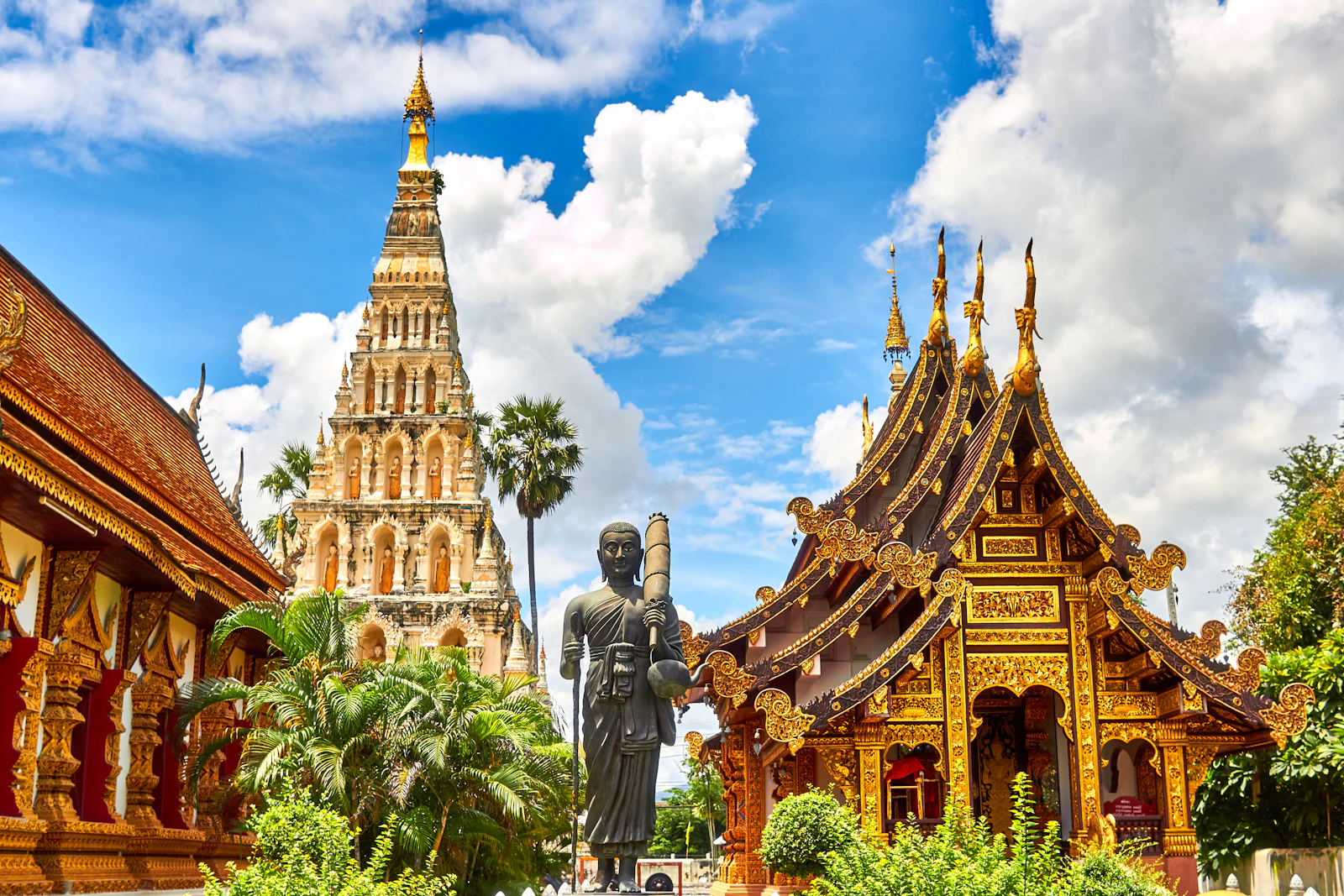
The 70-minute flight north to the old Lanna capital, a boutique hotel inside the moat, and the old town on foot: Wat Chedi Luang’s ruined stupa, Wat Phra Singh, the moat at dusk, and the Sunday walking street on Ratchadamnoen Road from four if the day allows, which is the best market in the north.
Day 5: The elephants
A full day at an ethical elephant sanctuary in the Mae Taeng valley: no riding, no shows, no bathing crowds; rescued elephants in a river valley, observed, fed and walked alongside, with lunch in the pavilion. Booked weeks ahead because the good projects cap their numbers. Back by five.
Day 6: Doi Suthep and the cooking school
The mountain temple at seven, up the naga steps before the buses, then the cooking school with its market tour, five dishes cooked and eaten under a tree, and a recipe book to take home; the best cooking school in Thailand is here and this is its morning.

Day 7: The loose northern day
Doi Inthanon by car, Chiang Rai’s White Temple as a long day, or nothing but Nimman’s cafes and a massage. Doi Inthanon is the usual choice: the summit, the twin royal pagodas, the Karen village market and the Wachirathan falls, ten degrees cooler than the city.
Day 8: Fly Chiang Mai–Bali
The flight south via Bangkok or Kuala Lumpur, six to eight hours all told, landing at Denpasar in the evening; a private car through the traffic to Ubud, an hour, and the villa or the hotel in the rice fields. The Bali levy and the e-VOA are handled at the airport on our instructions. A late dinner and bed; the second country begins in the morning with a different smell in the air.
Day 9: Ubud
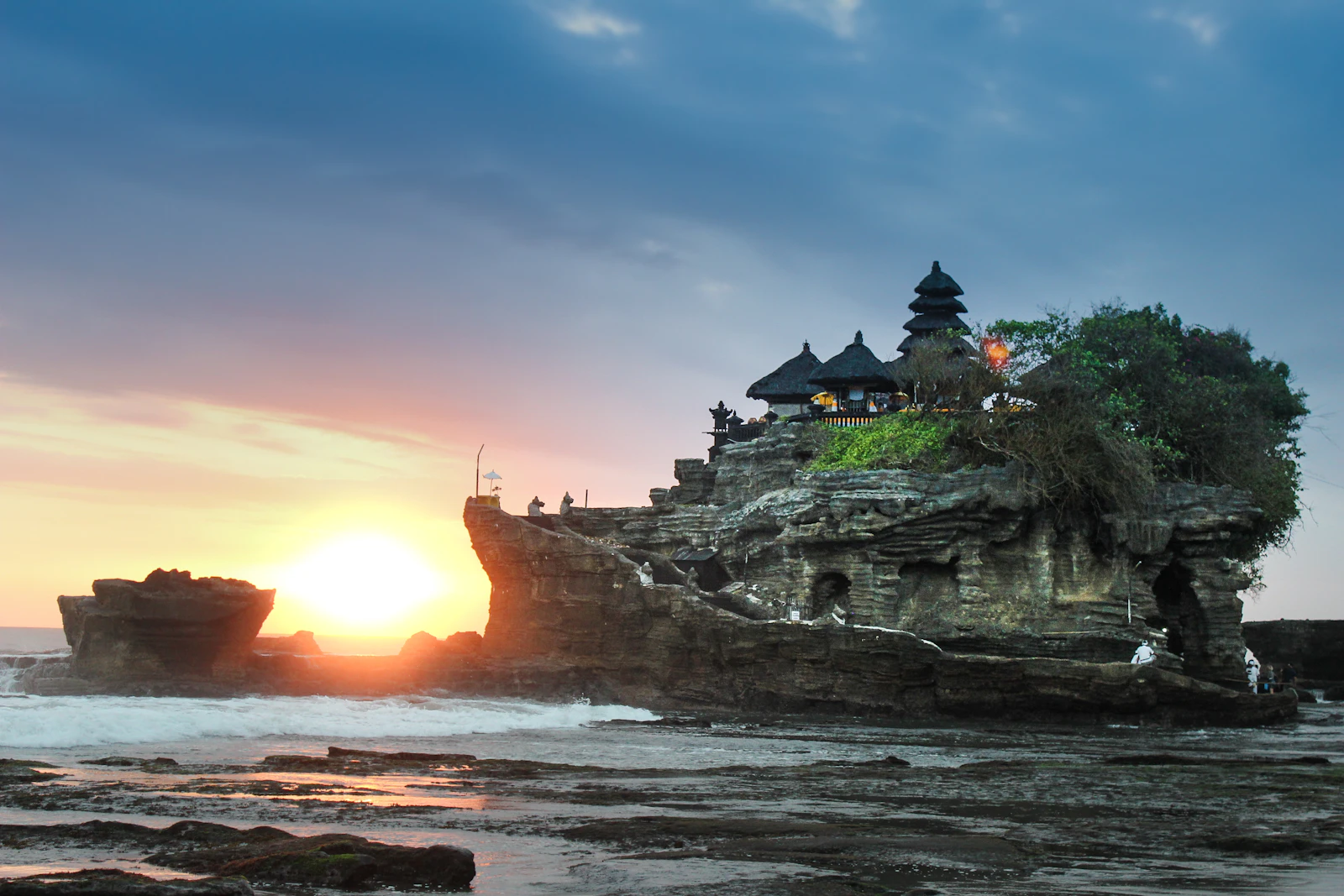
The rice terraces at Tegallalang early, before the swings and the coaches; Tirta Empul’s holy springs, where you can bathe with the locals; the Monkey Forest; and the afternoon in Ubud’s town — the palace, the market, a gallery, a coffee — with a driver all day. A Balinese dinner and a kecak or legong dance at the palace in the evening.
Day 10: Ubud: the second day
A choice at booking: Mount Batur at dawn (a 3 am start, a two-hour climb, the sunrise over the caldera and the lake), or the Campuhan Ridge walk at seven and the Sidemen valley by car for the rice terraces without the crowds, a Balinese cooking class at a village compound, and a spa afternoon. Dinner at one of Ubud’s restaurants, which have become some of the best in Asia and need booking a week ahead in the dry season.
Day 11: Ubud to the coast
A slow morning, the driver, and the coast by lunch: a villa in Seminyak or Canggu for the sunsets and the beach clubs, a resort at Nusa Dua or Sanur for calm swimming with children, or the cliffs of the Bukit for a couple. The afternoon in the pool, the sunset from the sand, dinner at a beach restaurant. The coast is where the trip winds down: after a capital, a mountain town and Ubud’s temples, three nights with a pool and a driver on call and nothing that has to be seen.
Day 12: Nusa Penida
The fast boat from Sanur, 40 minutes, and a car around the island: the Kelingking cliff and its T-rex headland, Broken Beach and Angel’s Billabong, Crystal Bay for the snorkel and, in season, the mantas at Manta Point from a boat. A long day, rough roads, and the most photographed coast in Indonesia; the mantas are seen most reliably from April to November and never guaranteed, and Kelingking’s viewpoint is a look, not a swim — the descent is for the sure-footed and the beach below has rips. Back by five, salt-crusted, on the last fast boat.
Day 13: The coast: the loose day
The beach, the pool, a surf lesson at Canggu or Kuta, a beach club, a spa, Uluwatu’s temple on its cliff at sunset with the kecak dance, and a seafood dinner on the sand at Jimbaran with the fishing boats lit.
Day 14: The last day
A late checkout, the last lunch at the warung the driver recommended on day eleven, a last swim, and the private car to Denpasar for the evening flight home, six hours to the east coast, landing before midnight with the Bali levy receipt in the passport.
Day 15: Home
Two countries, three kinds of trip — the capital, the mountains, the island — and a suitcase that smells of frangipani and lemongrass. The Denpasar flight is six hours to the east coast and lands before midnight; the Bangkok half of the ticket was open-jaw, and the two countries were one booking with one number in Brisbane, which is the part that made it easy.
Variations and extensions
Twelve days: Bangkok two, Chiang Mai three, Ubud three, the coast three; the shortest version that keeps both countries. Bali first: in October, Bali at the start while it is still dry and Thailand at the end as the north clears — Denpasar in, Bangkok out. With a Thai beach: in late April or October the Andaman or the Gulf is workable, and three nights at Krabi or Samui can replace the Chiang Mai leg for a party that wants two coasts rather than the north; four bases become three flights. Bali and beyond: the Bali week extended to Java for Borobudur and Yogyakarta, or the Gilis, on our Bali and beyond shape. Families: a villa in Ubud and a villa at Sanur, Waterbom on the loose day, the elephant day and the cooking school in the north kept, the Bangkok mornings cut to two temples; see Bali for families. The wellness version: Ubud’s retreats for the Bali week in place of the coast, on the wellness and villas shape. With Cambodia: Angkor for three nights between Chiang Mai and the Bali flight, via Bangkok, for the party that wants a great monument and can stretch to eighteen days.
Eating on this route
Two cuisines and the contrast is the point. Thailand: Bangkok’s Chinatown at night and its boat noodles, the north’s khao soi and sai oua and the cooking school on day six, mango sticky rice if the mangoes are in. Bali: Ubud’s babi guling roast pork at lunch (Ibu Oka or a village warung), bebek betutu slow-roast duck, nasi campur as the default plate, satay from a cart, the Balinese cooking class at a village compound on day ten, and Ubud’s restaurant scene — Locavore and its successors, the raw-food cafes, the Indonesian fine-dining that has arrived in the last decade — which is now among the best in Asia. The coast: Jimbaran’s seafood on the sand with the boats lit, the beach clubs of Seminyak and Canggu, and the warungs a street back from the front where the food is better and a third of the price. Balinese food is spice pastes and sambal rather than chilli heat and is milder than Thai; both countries reduce the spice on request; children eat satay, fried rice, fruit and are content. Bali’s methanol-poisoning cases from counterfeit spirits are real: beer, wine or spirits from a reputable bar, never a cheap cocktail from a beach shack. The Asia food guide has both.
What is included
- Return economy airfare from Sydney, Melbourne or Brisbane, open-jaw where the route allows; premium economy and business on request
- All internal flights, ferries and speedboats named in the itinerary, ticketed
- Private airport and hotel transfers throughout, and a car and driver on the touring days
- Accommodation as described with breakfast; villas with a cook where named
- Guides on the days named, licensed and English-speaking
- Pre-booked entries and experiences named in the itinerary
- Thailand Digital Arrival Card guidance and entry checks for every traveller
- A day-by-day document with maps, timings and restaurant suggestions
- Australian consumer-law protection and a Cooee contact in Brisbane throughout
- The Bangkok–Chiang Mai and Chiang Mai–Bali flights (via Bangkok or KL) on one ticket
- A half-day licensed guide and car for the royal city on day two
- A private longtail through the Thonburi khlongs on day three
- The ethical elephant sanctuary day and the Chiang Mai cooking class
- A car and driver in Chiang Mai and throughout Bali
- The Nusa Penida fast boat and island car
- The Bali e-VOA and levy guidance, and airport transfers at Denpasar
- A Balinese dance evening and a Jimbaran seafood dinner
Not included
- Lunches and most dinners
- Travel insurance (required)
- Personal spending, optional experiences not named, and tips (modest and appreciated in Thailand: about 10 per cent at restaurants without a service charge, small notes for drivers and porters)
- Boat and dive trips beyond those named
- The Mount Batur sunrise climb, the surf lesson and the beach clubs, booked on request
- The Indonesian e-VOA fee (about AUD 50) and the Bali levy (IDR 150,000), paid on arrival
Where you stay
Thailand: as the classic fortnight — a river hotel in Bangkok and a restored-house boutique hotel inside Chiang Mai’s moat. Ubud: a hotel in the rice fields or the gorge (the Alila, the Kayon, the Bisma Eight, or the Four Seasons Sayan and the Mandapa at the top), or a villa with a pool for a family, ten minutes from the town by the driver. The Bali coast: chosen for who is in the water — a Seminyak or Canggu villa for the sunsets and the beach clubs, Nusa Dua or Sanur for calm swimming with children, the Bukit’s cliff resorts (the Alila Uluwatu, Bulgari, or the mid-range at Bingin) for a couple — with the villa licence and the pool fence confirmed before we take a deposit. The Bali tours page has the coast in detail.
What it costs
Fifteen days across two countries is priced as the classic Thai fortnight’s Bangkok and Chiang Mai legs plus a Bali week with a driver and a villa, with the Chiang Mai–Bali sector (AUD 250–450) the only addition a single-country trip would not have; the shoulder months this route is built for are the value months in both countries, which is a second reason to take it then. We do not publish a from-price because two factors move it by thousands: the season (Christmas–New Year and the July school holidays cost 30–50 per cent more than early November or May on flights and resorts combined) and the resort tier (a four-star with a kids’ club against a five-star with a pool villa). We quote every departure individually in Australian dollars with everything above included. The South-East Asia guide sets out the underlying daily numbers, and Thailand’s own costs article is in the journal queue. A villa on the coast for a family or a group is often cheaper than two hotel rooms and includes breakfast cooked in.
Practical notes
Entry: Australians enter Thailand visa-free for 60 days; the Thailand Digital Arrival Card is completed online before you fly and we send the link. Passports need six months’ validity. Health: hepatitis A and typhoid vaccinations are recommended; dengue is present year-round and repellent morning and dusk is the defence; bottled or filtered water; hot food from busy places; a travel doctor six weeks out. Hospitals in Bangkok, Phuket, Samui and Chiang Mai are excellent and insurance is required. Money: baht; cards at hotels and good restaurants, cash for markets, stalls, drivers and temples; ATMs everywhere. Heat: every month is hot; the itinerary puts the outing in the morning and the pool in the afternoon. Temple dress: shoulders and knees covered, shoes off; the Grand Palace enforces it at the gate. Etiquette: heads are sacred and feet are lowly; the royal family is protected by law; lose your temper and you lose the argument. Motorbikes: the leading cause of Australian injuries in Thailand; not hired on our itineraries. Apps: Grab for rides, Google Maps, Google Translate’s camera for menus. The season is the constraint and it is narrow. Late April to mid-May: the Thai north is clearing after the March–April smoke, Bangkok is at its hottest, and Bali is beginning its dry. October: Bali is at the end of its dry with short afternoon storms, Thailand’s north is green and the rains are easing, and Bangkok is at the tail of its wet. In both windows the weather is good rather than perfect in each country, and the trade is worth it; outside them, the route is Thailand in monsoon or Bali in the wet, and we do not book it. Entry: Thailand visa-free with the Digital Arrival Card; Indonesia on the e-VOA (online before departure or on arrival, about AUD 50) plus the Bali levy and the All Indonesia arrival card; we send the links and check the current rules, which have changed several times since 2022. The flight: Chiang Mai to Bali connects through Bangkok (Thai, Bangkok Airways then Thai or Garuda) or KL (AirAsia) in six to eight hours; we book the one that lands in daylight where possible. Bali’s coast: the west (Kuta, Seminyak, Canggu) has rips and drownings every year; the east and south (Sanur, Nusa Dua, Jimbaran) have the calm water; the villa is placed accordingly. Health: dengue in both countries and the same rule of repellent; Bali belly is real and the rule of bottled water and busy warungs covers most of it; hospitals in Bangkok, Chiang Mai and Bali (BIMC, Siloam) are good and insurance is required. Nyepi: the Balinese day of silence in March or April closes the island, including the airport, for 24 hours; the itinerary checks the date. Motorbikes: not hired on this route in either country.
How to book
Send us your preferred dates, your departure city and the names and ages of the party through the enquiry form or on 0409 661 342. We check the season against the route, confirm availability at the hotels and inns that matter, and send an itinerary and a quote in Australian dollars within two working days. A deposit holds the booking; the balance is due before departure under our booking conditions. Travel insurance is required and we can recommend a policy.
Frequently asked questions
How many days is the Thailand and Bali itinerary?
Fifteen days with thirteen nights across the two countries. It can be shortened or extended; the day-by-day above is the shape we start from.
When is the best time for the Thailand and Bali itinerary?
Late April to mid-May, and October — the only windows when Thailand’s north and Bali are both dry enough. Outside them one country or the other is in monsoon and we route a single country instead. Both windows are value weeks in both countries, which is a second reason to take them.
Is this a group tour or a private itinerary?
A private itinerary built for your party and your dates, not a fixed-departure group. Guides and drivers join on the days named; the rest is independent with everything pre-booked.
Are flights included?
Yes: return economy from Sydney, Melbourne or Brisbane, open-jaw where the route allows, plus every internal flight and ferry named. Premium economy and business on request.
Do Australians need a visa for Thailand?
No — 60 days visa-free. The Thailand Digital Arrival Card is completed online before departure and we send the link with the pre-departure pack.
Who is this itinerary for?
Travellers who have a fortnight and two countries on the list; couples; families with children over about six (the elephants, the cooking school, the terraces, the Penida boat); second visits to either country; and anyone who has read our Thailand vs Bali comparison and refused to choose.
Is Thailand safe?
Yes, with the ordinary cautions: traffic (we do not hire motorbikes), water and food (bottled water, busy stalls), sun and rips on the beaches, and petty scams around the famous sites, which a driver and a guide remove. Smartraveller rates Thailand at “exercise a high degree of caution” with regional notes we follow.
How much does it cost?
Quoted per departure in Australian dollars with flights, internal flights, transfers, accommodation, drivers, guides and named experiences included. Season and resort tier move the total; the South-East Asia guide shows the underlying numbers.
Related
Tours convert; things to do informs. If you are still choosing, the things-to-do page is the step before this one.