🇳🇱 Country Guide · Northwestern Europe

A Country That
Shouldn’t Exist
— and Does, Magnificently

One quarter of the Netherlands lies below sea level — a nation wrested from the ocean by engineering and willpower over eight centuries. The most cycle-friendly country on earth. The greatest concentration of 17th-century Dutch Masters outside the Louvre. Canals that predate Australia by 200 years. And in spring, fields of tulips that go all the way to the horizon.

23M
Bicycles (17M people)
~22hrs
Brisbane to Amsterdam
90 days
Schengen Visa-Free (AUS)
165+
Amsterdam Canals
7M
Keukenhof Tulips in Bloom
🛂
Entry
Schengen Visa-Free90 days in 180 · AUS passport
💲
Currency
Euro (€)Cards near-universally accepted
Gateway
Amsterdam Schiphol (AMS)Excellent hub connections
🚲
Transport
Cycle or TrainOV-chipkaart for all transit
🌸
Tulip Season
Mid-Mar – Mid-MayKeukenhof late Mar–May
Time Zone
CET (UTC+1)CEST UTC+2 in summer
About the Netherlands

The Country That Built
Itself From the Sea

The Netherlands is, in a literal and engineering sense, a human achievement. Approximately 26% of the country lies below sea level — the lowest point is 6.7 metres below — and a further 29% is susceptible to river flooding. The entire system of dikes, polders, pumping stations, and storm surge barriers that keeps this land dry and habitable is the largest ongoing hydraulic engineering programme in human history, begun in the 13th century and continuously maintained and expanded. The Dutch relationship with water is not metaphorical — it is existential, and it has shaped the national character in ways that permeate the culture: the pragmatism, the engineering ingenuity, the cooperative governance, the extraordinary density of infrastructure in a country the size of Tasmania.

The 17th century — the Dutch Golden Age — was the period when the Netherlands controlled the world’s most powerful trading empire (the Dutch East India Company was the first publicly listed multinational corporation), produced Rembrandt van Rijn, Johannes Vermeer, and Frans Hals within a generation of each other, built the canal ring of Amsterdam that UNESCO World Heritage-listed in 2010, and imported the tulip from the Ottoman Empire and then triggered the world’s first speculative financial bubble around it (Tulip Mania, 1637 — a single tulip bulb briefly traded for ten times an average annual salary). The Rijksmuseum, the Van Gogh Museum, and the Anne Frank House in Amsterdam together form one of the most important 500-square-metre concentrations of cultural significance in the world.

For Australian travellers, the Netherlands offers something that most European destinations do not — a country small enough to be comprehensively explored in a week, flat enough to be cycled, with a density of genuine cultural content that rewards the visitor who is not merely moving from city to city. Amsterdam is extraordinary; so is Rotterdam (Europe’s most architecturally experimental city), Delft (the blue pottery, the Vermeer context, the perfectly intact canal town), Utrecht (the most characterful Dutch city after Amsterdam, consistently undervisited), and the Keukenhof tulip fields in spring (one of the world’s great seasonal spectacles, 7 million bulbs in bloom across 32 hectares).

🇳🇱 Netherlands at a Glance
  • Population: 17.9 million in 41,543 km² — the most densely populated country in the EU
  • 23 million bicycles for 17 million people — the highest bike-to-person ratio in the world
  • Amsterdam’s canal ring: 165 canals, 1,500 bridges, 2,500 houseboats — UNESCO World Heritage since 2010
  • Schiphol Airport (AMS): the 3rd busiest airport in Europe — an exceptional hub for onward European connections
  • Keukenhof Gardens: 32 hectares, 7 million bulbs, open annually from late March to mid-May — the world’s largest tulip display
  • Rijksmuseum: 8,000 objects on display from 1 million in the collection — Rembrandt’s Night Watch, Vermeer’s The Milkmaid
  • Schengen visa-free for Australian passport-holders for 90 days in any 180-day period; ETIAS pre-registration expected 2025–2026
  • OV-chipkaart: the contactless transit card that covers all Dutch trains, trams, buses, and metros — load with credit at any station
Must-See

Netherlands’ Essential Destinations

A country the size of Tasmania with more cultural density per square kilometre than almost anywhere in Europe. These are the destinations that most completely justify the journey from Australia.

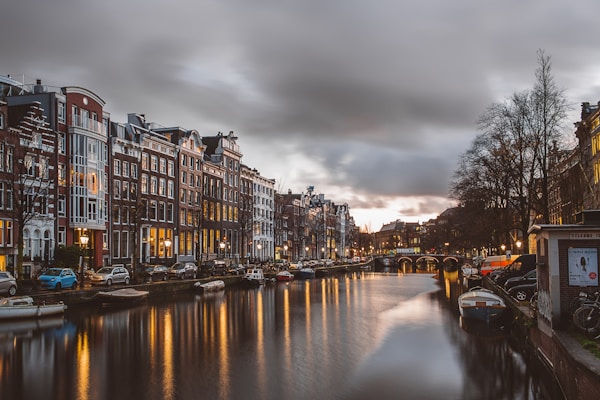
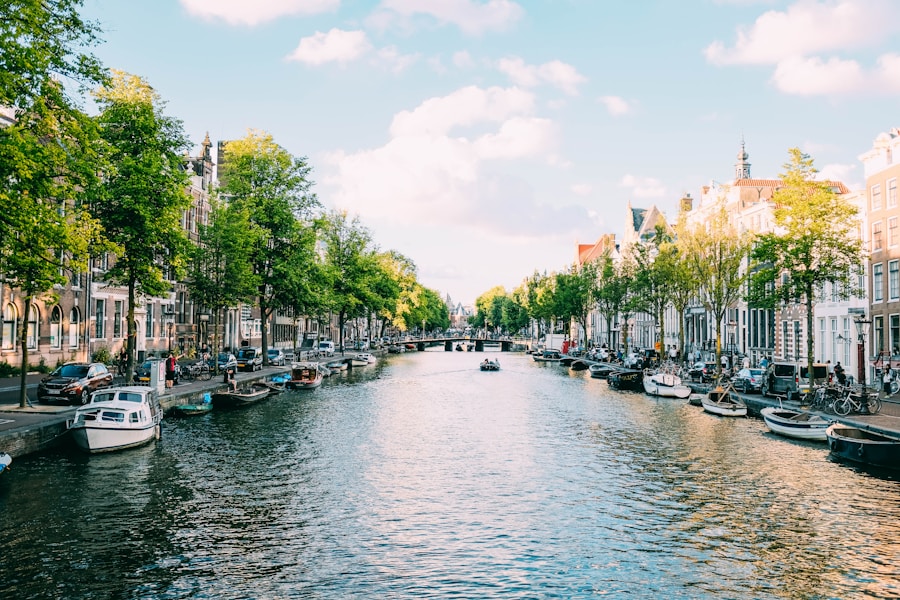
Amsterdam canal ring Jordaan neighbourhood houses reflections golden hour Netherlands
🏆 UNESCO World Heritage · Golden Age

Amsterdam

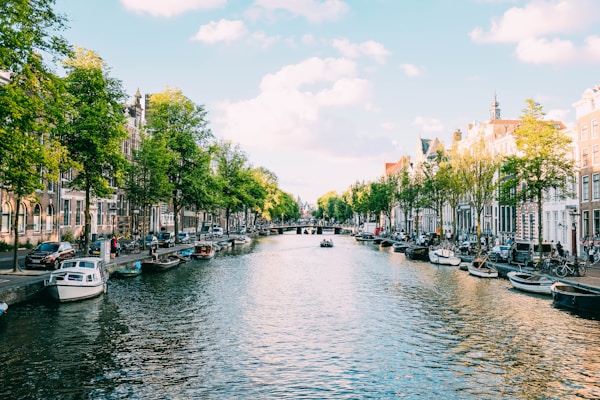
Amsterdam is built on approximately 11 million wooden piles driven into the peat — the oldest dating from the 17th century, preserved by the permanently waterlogged soil. The canal ring (the Herengracht, Keizersgracht, and Prinsengracht — the three main concentric canals dug in the 1610s–1660s, lined with the distinctive narrow-fronted gabled houses of the Dutch Golden Age) is UNESCO World Heritage-listed and best experienced on foot in the early morning before the tourist boats fill the water. The Rijksmuseum (Rembrandt’s Night Watch — 3.63 metres tall, dramatically backlit, the centrepiece of Gallery of Honour), the Van Gogh Museum (the world’s largest Van Gogh collection — 200 paintings, 500 drawings, the Bedroom and Sunflowers in the same building), and the Anne Frank House (the secret annex where Anne Frank hid for two years — mandatory pre-booking months ahead at annefrank.org) form the cultural core. The Jordaan neighbourhood — the former workers’ district west of the canal ring, now Amsterdam’s most characterful residential area — is the correct neighbourhood for restaurants, brown cafés (bruine kroegen), and the Saturday Noordermarkt organic market.

North Holland · AMS Airport 20min · 3–5 nights recommended
★ 4.9
Keukenhof tulip fields Netherlands spring flowers blooming April
🌸 Spring Only · Mar–May

Keukenhof & Tulip Fields

Lisse · 30min from Amsterdam · Late Mar–May only
★ 4.9
Rotterdam cube houses Erasmus bridge modern architecture Netherlands
Architecture Capital

Rotterdam

South Holland · 40min from Amsterdam · Day trip or overnight
★ 4.7
Delft blue pottery canal Netherlands historic old town Vermeer
Vermeer · Blue Pottery

Delft

South Holland · 1hr from Amsterdam · Half-day to full day
★ 4.8
Kinderdijk windmills Netherlands UNESCO sunset reflection canal
UNESCO · 19 Windmills

Kinderdijk

South Holland · Near Rotterdam · Day trip
★ 4.8
Utrecht Netherlands canal wharves terraces Dom Tower city
Most Underrated Dutch City

Utrecht

Utrecht Province · 30min from Amsterdam · Day trip or overnight
★ 4.8
The Capital, Canal by Canal

Amsterdam Neighbourhood Guide

Amsterdam is best understood as a series of distinct neighbourhoods separated by canals — each with its own character, pace, and reason to linger. Here is how the city divides.

Amsterdam Jordaan neighbourhood canal houses flowers window boxes
🏠 Most Characterful · Best for Eating
The Jordaan

The Jordaan — the former working-class neighbourhood west of the Prinsengracht, built in the 17th century as housing for artisans and immigrants — is now Amsterdam’s most beloved residential district: narrow alleys (hofjes — the hidden courtyard almshouses, the most atmospheric and most overlooked spaces in Amsterdam), the Saturday Noordermarkt organic market (7am–2pm, the best place to understand contemporary Amsterdam food culture — raw milk cheese, heritage tomatoes, artisan bread, street stroopwafel made while you wait), brown cafés (De Twee Zwaantjes, Café 't Smalle — the oldest, from 1786), and the best independent restaurant density of any Amsterdam neighbourhood. The Bloemgracht (“Flower Canal”) is the Jordaan’s finest canal — narrower and quieter than the main ring, with some of the most beautiful 17th-century facades in the city.

Noordermarkt (Sat)Brown cafésHofjesBest restaurants
Walk the Jordaan on Saturday morning between 7 and 10am — the market is at its best before the crowds arrive, the canal bridges have the early light, and the neighbourhood bakers have the first bread out. The hofje at Karthuizershof (Karthuizersstraat 21) — push open the door in the street wall — is the finest example: a courtyard of 1650s almshouses in complete silence 30 metres from a busy street.
Amsterdam canal ring Herengracht Keizersgracht Golden Bend mansions
🏛 Golden Age Wealth · Museums
The Canal Ring — Grachtengordel

The UNESCO-listed canal ring — the Herengracht (“Lords’ Canal”), Keizersgracht (“Emperor’s Canal”), and Prinsengracht (“Prince’s Canal”), dug in a series of concentric arcs in the 1610s–1660s — is Amsterdam’s defining structure and the physical form of the Dutch Golden Age’s ambition. The Golden Bend (Gouden Bocht) on the Herengracht between Leidsestraat and Vijzelstraat — where the most successful Amsterdam merchants built the widest and most elaborately ornamented facades (double-plot houses, the extraordinary privilege of the 17th-century merchant class) — is the peak of Dutch Golden Age residential architecture. The Anne Frank House (Prinsengracht 263 — the exact address matters; the secret annex is the back section of the building, accessible through the revolving bookcase — book months ahead at annefrank.org; the experience of standing in the rooms where two years of hiding happened is one of the most quietly devastating in European cultural tourism).

Anne Frank HouseGolden BendHouseboat cultureEvening canal walk
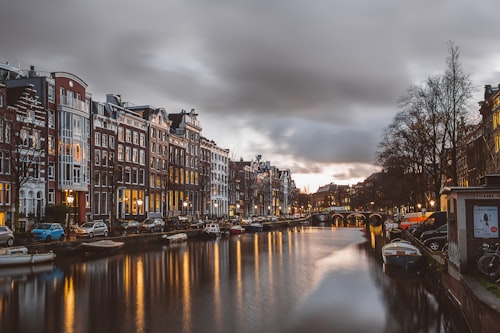
The canal ring at dusk — the hour between 8 and 9pm in summer when the bridge lamps come on, the house interiors are lit but the curtains are still open (the Dutch tradition of not closing curtains — a cultural legacy of the Calvinist belief that one should have nothing to hide), and the canal water reflects the gabled facades — is the most beautiful version of Amsterdam. Walk the Keizersgracht from Leidsestraat to Brouwersgracht.
Amsterdam Museumplein Rijksmuseum square grass pool reflection
🏭 Rijksmuseum · Van Gogh
Museumplein & Oud-Zuid

The Museumplein — the large open square in Amsterdam’s southern belt — anchors the city’s three major museums: the Rijksmuseum (the national museum of Dutch history and art — Rembrandt’s Night Watch, Vermeer’s The Milkmaid, the Delftware collection, 80 rooms across 8,000 objects — book at rijksmuseum.nl; the first entry slot at 9am gives Gallery of Honour before the crowds build), the Van Gogh Museum (200 paintings, 500 drawings — Bedroom in Arles, Wheatfield with Crows, Almond Blossom — book at vangoghmuseum.nl at least 2 weeks ahead in peak season), and the Stedelijk Museum (the municipal modern and contemporary art museum — Mondrian, Malevich, Karel Appel — often overlooked in favour of the Rijksmuseum and Van Gogh, consistently excellent). The Oud-Zuid (“Old South”) district surrounding Museumplein — the P.C. Hooftstraat (Amsterdam’s luxury shopping street, the equivalent of Milan’s Via Montenapoleone), the Vondelpark (the largest city park, free, full of cyclists and picnickers).

RijksmuseumVan Gogh MuseumStedelijkVondelpark
The Rijksmuseum’s Night Watch is in Gallery of Honour — the principal room of the museum, at the far end of the building. Book the first 9am entry slot, walk directly past everything to Gallery of Honour without stopping, spend 15 minutes with the Night Watch before the room fills, and then work back through the collection. By 10:30am the room is crowded; by 11:30am it is shoulder-to-shoulder.
Amsterdam De Pijp Albert Cuyp Market street market food stalls
🌭 Best Street Food · Multicultural
De Pijp

De Pijp (“The Pipe” — named for its long, narrow tenement streets) is Amsterdam’s most multicultural and most food-focused neighbourhood, built in the 1870s–1890s as working-class housing and now home to the city’s most vibrant street market and restaurant scene. The Albert Cuyp Market — Amsterdam’s largest street market, running daily Monday–Saturday, 9am–5pm, along the Albert Cuypstraat — sells Dutch street food (raw herring from stalls — hollandse nieuwe, the lightly cured young herring eaten whole with onion and gherkin — the most characteristically Dutch single food experience), stroopwafels, poffertjes (the small fluffy pancakes with butter and icing sugar), Indonesian food (the Dutch colonial legacy means Indonesian cuisine is the second cuisine of the Netherlands — the rijsttafel, a “rice table” of 20–30 small Indonesian dishes, originated in the colonial period and is still the finest Dutch–Indonesian food tradition in the world outside Indonesia), and Surinamese roti. De Pijp is also the birthplace of Heineken — the original brewery (now the Heineken Experience museum) is on Stadhouderskade.

Albert Cuyp MarketIndonesian foodRaw herring stallsHeineken Experience
Eat raw herring (hollandse nieuwe) at the Albert Cuyp Market — the correct way is to hold it by the tail above your head and lower it into your mouth, though tilting the head back and taking it in two or three bites is equally acceptable. The herring season runs May–August when the hollandse nieuwe is at its freshest and most delicate. Any other time of year, the herring is good but not the same product.
Amsterdam Negen Straatjes Nine Streets boutique shopping canal houses
🛒 Nine Streets · Independent Shops
De Negen Straatjes — The Nine Streets

The Nine Streets (De Negen Straatjes) — nine short streets connecting the three main canals west of the Spui — form Amsterdam’s finest boutique shopping and café district, concentrated into 30 minutes’ walking distance. The streets (Reestraat, Hartenstraat, Gasthuismolensteeg, Berenstraat, Wolvenstraat, Oude Spiegelstraat, Runstraat, Huidenstraat, Wijde Heisteeg) hold independent bookshops (Mendo — the most beautiful design bookshop in Amsterdam), vintage clothing (Episode — the best selection in the city), antique dealers, independent Dutch design studios, and the city’s best cafés for people-watching (Café Winkel 43 — the apple cake is specifically worth the visit, and the terrace at the Noordermarkt is the finest outdoor café seating in the city on a Saturday morning). The Nine Streets are at their best in April and May, when the spring light comes through the canal bridges and the window boxes are in bloom.

Boutique shoppingNoordermarkt accessWinkel 43 apple cakeDesign shops
Café Winkel 43 on the Noordermarkt square serves what is widely considered Amsterdam’s finest apple cake (appeltaart) — a tall, dense Dutch-style cake with a pastry crust, served warm with fresh cream. On Saturday mornings when the Noordermarkt is running, the queue extends onto the square; arrive before 9am or after 2pm. The terrace faces the market and the Noorderkerk (1623, the oldest Protestant church in Amsterdam still in use).
Amsterdam Noord NDSM Wharf creative industrial street art Netherlands
🏭 Creative Quarter · Ferry from Centraal
Amsterdam Noord

Amsterdam Noord — on the north bank of the IJ, reached by free ferry from Amsterdam Centraal station (5 minutes, runs 24/7) — is the city’s most rapidly evolving neighbourhood and the destination for Amsterdam’s creative and cultural avant-garde. The NDSM Wharf (a former shipyard of extraordinary scale — 100,000m² of industrial space converted into creative studios, event venues, the IJ Hallen (Europe’s largest flea market, monthly weekends — ijhallen.nl), the MOXY hotel, the Montana art space, and the Pllek beach bar and restaurant beside the IJ — the finest informal waterfront dining in Amsterdam) is the neighbourhood centrepiece. The Eye Filmmuseum (the striking angular white building directly across from Centraal station — the architecture is reason enough to cross the IJ; the programme of classic and contemporary cinema is world-class) and the A’DAM Tower (the revolving restaurant at the top, the swing-over-the-edge experience on the roof at 100m — over18, not for the vertiginous) complete Noord’s offer.

NDSM WharfEye FilmmuseumFree IJ ferryIJ Hallen flea market
The free IJ ferry from Centraal station’s north exit runs every 5–10 minutes, 24 hours a day, and is the most useful free public service in Amsterdam. Cross to Noord at sunset for dinner at Pllek (a beach bar built on a barge, with a sand beach and the skyline of Amsterdam across the water — one of the finest outdoor dining positions in the city) and return via the late ferry.
Amsterdam Red Light District De Wallen canal old church historic
🏛 Oldest Quarter · Most Misunderstood
De Wallen — The Old Centre

De Wallen (“The Walls” — the old city’s medieval fortifications) is Amsterdam’s oldest neighbourhood and its most complex: the famous red-light district, but also the city’s finest medieval architectural core. The Oude Kerk (the Old Church — begun in 1306, the oldest building in Amsterdam, standing in the middle of the red-light district, the floors of the nave are gravestones, Rembrandt’s first wife Saskia is buried here) is the most historically significant building in the city. The neighbourhood’s canal structure — the Oudezijds Voorburgwal and Oudezijds Achterburgwal, the narrow water streets of the medieval city — predates the formal canal ring by two centuries and has a different, older character. The Nieuwmarkt square (the Waag — a 1488 weigh-house building, now a restaurant in a medieval gatehouse) is the neighbourhood’s commercial heart. The city of Amsterdam is actively restructuring the red-light district — reducing the number of window brothels and introducing cultural businesses — as part of an ongoing programme since 2008. The neighbourhood is safe, historically extraordinary, and entirely worth exploring in daylight.

Oude Kerk (1306)Medieval canalsNieuwmarktRembrandt’s neighbourhood
The Oude Kerk at opening time (10am Mon–Sat, 1pm Sun — entry EUR 17.50) is one of Amsterdam’s most powerful experiences. The 700-year-old nave, the medieval floor of thousands of grave slabs, Rembrandt’s wife Saskia’s grave marker in the Lady Chapel, and the extraordinary light through the original 15th-century stained glass — all framed by the red-light windows visible through the church’s own windows on the Oudekennissteeg side. Nothing in Amsterdam better illustrates the Dutch talent for pragmatic coexistence.
Amsterdam Plantage botanical garden Jewish quarter zoo Artis
🌿 Jewish History · Botanic Garden
Plantage & the Eastern Islands

The Plantage (“Plantation” — once the market gardens east of the old city) is Amsterdam’s most historically layered neighbourhood: the centre of the Jewish community that made up 10% of Amsterdam’s pre-war population (of 80,000 Dutch Jews, 102,000 were deported and murdered — the Netherlands had the highest Jewish death rate of any Western European country under German occupation). The Dutch Resistance Museum (Verzetsmuseum — the finest account of how ordinary Dutch people responded to the occupation, from collaboration to resistance — essential context for the Anne Frank House), the Dutch Jewish History Museum (Joods Historisch Museum — in four historic synagogues), the Hortus Botanicus (the Botanic Garden — established 1638, the VOC’s medicinal plant collection, a 300-year-old cycad tree, the butterfly house — EUR 11, one of the most calming hours available in Amsterdam). The Eastern Docklands (Java Island, Borneo Island — the most innovative residential architecture of the 1990s, built on former harbour islands — a free architecture walk).

Resistance MuseumJewish History MuseumHortus BotanicusArchitecture islands
The Dutch Resistance Museum (Verzetsmuseum) is the most emotionally powerful museum in Amsterdam and the essential companion to the Anne Frank House — it answers the question of what the Anne Frank story was embedded in. Open Tue–Fri 10am–5pm, Sat–Mon 11am–5pm. Entry EUR 15. Allow 2 hours. The junior section (presenting the occupation through four children’s experiences — a Jewish child, a child of a Resistance member, a child of a collaborator, a child from the Dutch East Indies) is the finest junior museum section in the Netherlands.
Amsterdam cycling bicycle culture bike path city streets Netherlands
🚲 Cycling Capital · Everywhere
Amsterdam by Bicycle

The bicycle in Amsterdam is not a tourist activity — it is the primary mode of transport for 63% of all journeys made by residents. The city’s 500km of dedicated cycling infrastructure makes cycling both faster and more pleasant than any alternative for distances under 6km. Hire from MacBike (the largest operator — three locations including Centraal station) or Swapfiets (the subscription service with the distinctive blue front tyre — short-term memberships available). The correct rental: a Dutch-style upright city bike (no gears needed — Amsterdam is flat), not a racing or mountain bike. The Vondelpark to Museumplein to the Jordaan canal circuit is 45 minutes cycling; the full canal ring circuit is 90 minutes. Rules: cycle on the dedicated paths (always), ring your bell at pedestrians on the path (they are in the wrong, and the bell is the Dutch legal notification), do not use your phone, do not ride two abreast on busy paths, and lock your bike with two locks (one through the frame and rear wheel, one to a fixed object — Amsterdam has a dedicated bicycle theft industry).

MacBike hire500km cycle pathsVondelpark circuitUse two locks
The single most disorienting moment for new visitors to Amsterdam is stepping off a tram onto a dedicated cycling path and being narrowly missed by a fast-moving cyclist — who is legally in the right. Always look both ways before crossing any painted or marked surface in Amsterdam — the cycling paths are not pavements and have priority over pedestrians at virtually every conflict point. When in doubt, stand completely still and let cyclists pass.
Beyond Amsterdam

Day Trips from Amsterdam

The Netherlands is compact enough to be comprehensively explored by train from Amsterdam — every significant destination in the country is within 90 minutes. Here are the six essential day trips.

Keukenhof tulip fields Netherlands Lisse spring April millions flowers
🌸 30min · Lisse · Mar–May Only
Keukenhof & the Tulip Bulb Fields

Keukenhof — 32 hectares of landscaped gardens in Lisse, 30 minutes from Amsterdam, planted with 7 million tulip, hyacinth, daffodil, and narcissus bulbs — is open for approximately eight weeks per year (late March to mid-May — the exact dates are announced each year at keukenhof.nl) and receives 1.5 million visitors annually in that window. Inside Keukenhof: the patterned parterres of the formal gardens, the woodland garden (tall naturalised drifts of narcissus under beech trees), the glass pavilions (hothouses containing the most exotic tulip varieties and the displays of cut flowers), and the windmill at the garden’s edge with its view across the Bollenstreek — the tulip bulb district — where the commercial field bulbs bloom simultaneously in flat strips of magenta, yellow, red, and white across the polder landscape. The fields surrounding Keukenhof (along the N208 and N444 roads, accessible by bicycle from the garden entrance — bike hire available at the garden) are, in a genuinely good tulip year, more spectacular than the garden itself. Combine Keukenhof with a bicycle ride through the bulb fields for the full spring Netherlands experience.

From Amsterdam
30min bus from Schiphol
Entry
EUR 20 · Book online
Open
Late Mar–Mid May only
Best time
Early morning (opens 8am)
Book Keukenhof entry online in advance (keukenhof.nl) — tickets are limited by time slot to manage crowd density, and popular dates (weekends in mid-April) sell out weeks ahead. Arrive at opening (8am) to experience the gardens before the tour groups arrive from 10am. The combination bus-and-entry ticket from Amsterdam Centraal or Schiphol (EUR 32 — covering return transport and garden entry) is the most convenient option.
Delft Netherlands blue pottery canal Nieuwe Kerk Market Square Vermeer
🏭 1hr by Train · South Holland
Delft

Delft is the most perfectly intact 17th-century Dutch canal town — and in many ways the most complete single-day Dutch experience available. The market square (Markt — the Nieuwe Kerk with William of Orange’s mausoleum and the tombs of every Dutch monarch since 1584, and the Stadhuis of 1618 across the square) is the finest townscape in the Netherlands. The Delft Blue pottery tradition (Delftware — the tin-glazed earthenware in blue and white that imitated Chinese porcelain and became one of the most influential export crafts of the 17th-century Dutch empire): the Royal Delft factory (Koninklijke Porceleyne Fles — operating continuously since 1653, the only original Delft factory still making traditional ware, the factory tour shows the hand-painting process — EUR 16 — book at royaldelft.com). Johannes Vermeer was born and died in Delft — the Vermeer Centrum Delft reconstructs his working environment and the social context in which he made the 37 paintings that are his entire known output. The Prinsenhof museum (where William of Orange was assassinated in 1584 — the bullet holes are still in the wall, marked with glass covers) is the finest single historical site in Delft.

From Amsterdam
1hr by train direct
Royal Delft tour
EUR 16 · royaldelft.com
Best for
Pottery · Vermeer · History
Combine with
Rotterdam (30min away)
Combine Delft with Rotterdam on the same day — they are 15 minutes apart by train. Delft in the morning (Royal Delft factory tour before the tour groups arrive at 11am, market square for lunch), Rotterdam in the afternoon (the Markthal and the cube houses — 2 hours sufficient for a first visit). Return to Amsterdam from Rotterdam Centraal (40 minutes by Intercity Direct).
Rotterdam Markthal architecture cube houses Erasmus bridge skyline Netherlands
🏛 40min by Train · Europe’s Architecture Lab
Rotterdam

Rotterdam — bombed flat by the Luftwaffe in 1940 (the Rotterdam Blitz destroyed the entire city centre in 15 minutes, killing 800 and leaving 78,000 homeless) — was rebuilt in the post-war period without the 17th-century canal-house constraint that governs Amsterdam and Delft, and has become the most architecturally experimental city in Europe as a result. The Cube Houses (Kubuswoningen — Piet Blom’s 1984 tilted yellow cubes on concrete stilts, one open as a show-house — EUR 3.50 — the most photographed building in Rotterdam), the Markthal (MVRDV’s 2014 horseshoe-shaped food market with a 36,000m² interior mural — the largest artwork in the Netherlands — free entry, best at lunch), the Erasmusbrug (the cable-stayed “Swan” bridge across the Maas — the most elegant bridge in the Netherlands), and the Museum Boijmans Van Beuningen (one of the finest collections of Dutch and Flemish Old Masters outside Amsterdam — undergoing renovation, but the Depot — the world’s first publicly accessible art depot — is open on Museumpark). The Port of Rotterdam — the largest port in Europe — offers harbour tours (Spido — from EUR 15) through an industrial landscape of extraordinary scale.

From Amsterdam
40min by Intercity Direct
Cube House
EUR 3.50 · Open daily
Markthal
Free · Best at lunch
Port tour
EUR 15 · Spido cruises
The best single Rotterdam experience is walking the Wilhelminapier — the former Holland America Line departure pier, now hosting the Hotel New York (in the original HAL building — where hundreds of thousands of Dutch emigrants departed for America — the Art Nouveau interior is outstanding, the terrace restaurant excellent), the Fenix Food Factory (craft food market in a former warehouse), and the view back across the Maas to the Erasmusbrug and the skyline. Best in late afternoon light.
Kinderdijk windmills Netherlands UNESCO sunset reflection canal South Holland
🌄 1hr from Amsterdam · UNESCO Windmills
Kinderdijk

Kinderdijk — the UNESCO World Heritage-listed cluster of 19 windmills at the confluence of the Lek and Noord rivers, 15km east of Rotterdam — is the most complete surviving example of the Dutch windmill drainage system that kept the low-lying polders habitable before modern electric pumping stations. The 19 windmills (built 1738–1740) stand in two parallel rows across the polder landscape, reflected in the drainage canal — an image of the Netherlands so definitively that it appears on Dutch identity documents. The windmill cluster is accessed by ferry from Rotterdam (45 minutes, Waterbus line 20 from Rotterdam Erasmusbrug — the most scenic approach), by bicycle from Rotterdam (15km — flat and well-signposted), or by tour bus. Two windmills are open for interior visits (one is still inhabited by a miller’s family — the only working-inhabited windmill in the Netherlands open to visitors). Best visited at sunset in late spring when the long evening light rakes across the polders and the canal reflections are at their most golden.

From Rotterdam
45min by Waterbus
Entry
EUR 10 · Book online
Best time
Sunset · Late spring
UNESCO
19 windmills · 1740
Kinderdijk at sunset in May is the definitive Dutch landscape experience — the horizontal evening light, the windmill sails silhouetted against a wide sky, the polder canal perfectly still. Arrive by the last Waterbus of the afternoon and stay until the light fails. The walk along both sides of the drainage canal takes 45 minutes and covers all 19 windmills. After dark, take the Waterbus back to Rotterdam and the Intercity Direct to Amsterdam.
Utrecht Dom Tower canal wharves terraces Netherlands historic city
🏙 30min by Train · Most Underrated Dutch City
Utrecht

Utrecht — the Netherlands’ fourth largest city (390,000) and, on most counts, its most underrated — has a character distinctly different from Amsterdam: a university city (30,000 students among 390,000 residents — the highest student-to-population ratio in the Netherlands) with a medieval city centre that is intact in a way that Amsterdam’s is not, a canal system with a unique two-level structure (the wharves run a full storey below street level, with the terrace cafés at wharf level and the cycling city above — a spatial arrangement found nowhere else in the Netherlands), and the Dom Tower (112m — the tallest church tower in the Netherlands, standing alone since the nave collapsed in a 1674 tornado — climb to the top on a guided tour for the finest view of the Dutch polder landscape). The Centraal Museum (the largest municipal collection in the Netherlands — the Rietveld collection and the Dick Bruna archive — Bruna created Miffy in Utrecht in 1955) and the Music in Utrecht district (the TivoliVredenburg concert complex — five halls in one building, the finest concert facility in the Netherlands) round out the city.

From Amsterdam
30min by train direct
Dom Tower
EUR 14 · Guided only
Best for
Canal wharves · Local pace
Unique
2-level canal system
Utrecht’s wharf-level terrace cafés (the Oudegracht canal, the most beautiful stretch between the Bakkerbrug and the Twijnstraat bridges) are the finest outdoor café seating in the Netherlands outside Amsterdam — you sit a full storey below the cycling city, at water level, in a medieval stone vault. Lunch at De Winkel van Sinkel (in an 1839 neoclassical building on the Oudegracht — the most historically significant café in Utrecht) or at any of the wharf-level terraces in May sunshine.
Haarlem Netherlands Frans Hals museum historic city centre church market
🏠 15min by Train · Often Skipped, Always Rewarding
Haarlem

Haarlem — 15 minutes from Amsterdam Centraal by train, the capital of North Holland Province — is the Dutch city most often visited as a day trip and most often cited as the surprise favourite of those who do. The Grote Markt (the market square — the Grote of Sint-Bavokerk, the Gothic church that dominates the square and contains the Müller organ that the 10-year-old Mozart played in 1766, and the Stadhuis of 1250 — the oldest town hall still in use in the Netherlands) is the finest historic market square in the Netherlands outside Delft. The Frans Hals Museum (two locations — the Hof and the Hal — containing the world’s largest collection of works by Frans Hals, the Golden Age portraitist who painted the Laughing Cavalier — the most exuberant single painting of the Dutch Golden Age) is the reason art historians visit. The Teylers Museum (the oldest museum in the Netherlands, founded 1784 — the original display cases intact, fossils, minerals, drawings by Raphael and Michelangelo from the original collection — a museum that is itself the exhibit) is the reason everyone else should visit.

From Amsterdam
15min by train direct
Frans Hals Museum
EUR 20 · Two locations
Teylers Museum
EUR 17.50 · Oldest in NL
Best for
Day trip · No crowds
Haarlem is the best half-day trip from Amsterdam — 15 minutes each way, a compact historic centre that takes 2 hours to walk, exceptional museums, and none of the tourist pressure of Amsterdam. Take the train in the morning, visit the Teylers Museum first (the 18th-century oval hall is the most beautiful museum room in the Netherlands), cross the square for the Grote Kerk, lunch at a canal-side café, afternoon Frans Hals Museum. Back to Amsterdam by 5pm.
What to Do

Netherlands’ Unmissable Experiences

A country that has resolved the friction between cycling, waterways, urban density, and an extraordinary concentration of art and history. These are the experiences that deliver it most completely.

Rijksmuseum Amsterdam Night Watch Rembrandt Gallery of Honour
Rijksmuseum — The Night Watch Up Close

Rembrandt’s Night Watch (1642) — 3.63 metres high, 4.37 metres wide, depicting the Amsterdam civic guard company of Captain Frans Banninck Cocq — is hung at the end of Gallery of Honour with its own dedicated room and custom lighting that changes through the day. At the 9am first entry slot (book at rijksmuseum.nl), Gallery of Honour has perhaps 20 people in it. At noon, 200. The painting’s scale, the management of darkness and light, the sense of frozen theatrical movement — none of this survives reproduction. It requires the room and the 15 minutes of sustained looking that only the first-entry slot reliably provides.

EUR 22.50 · Book first 9am slot · rijksmuseum.nl
Anne Frank House Amsterdam Prinsengracht secret annex museum
Anne Frank House — The Secret Annex

The Anne Frank House (Prinsengracht 263) is one of the most important and most emotionally demanding sites in European cultural tourism. Anne Frank hid in the concealed rooms at the back of this canal house from July 1942 to August 1944 — 761 days. The diary she kept during this period, published by her father Otto after the war (the only member of the eight people in hiding to survive Auschwitz), has been translated into 70 languages and is the most widely read account of the Holocaust by a survivor. The visit takes approximately 75 minutes; the rooms are empty of furniture (removed during the occupation to prevent identification) but the revolving bookcase is in place. Book months ahead at annefrank.org — the house operates strict timed entry with daily visitor limits; walk-up tickets are rarely available.

EUR 16 · Book months ahead · annefrank.org
cycling Netherlands bike path flat polder landscape tulip fields spring
Cycling the Tulip Bulb Fields

The Bollenstreek — the tulip bulb district between Haarlem and Leiden along the North Sea coast — is best experienced by bicycle in April when the commercial fields are in full bloom: 25km routes through flat polder landscape with fields of tulips, hyacinths, and daffodils in horizontal strips of colour from roadside to horizon. Hire a bicycle at Haarlem station (15 minutes from Amsterdam) and follow the marked Bollenstreek route through Hillegom, Lisse (Keukenhof), and Noordwijkerhout. The best single stretch: the fields between Lisse and Hillegom along the N208, typically in peak colour the first two weeks of April. No admission; no booking; the most freely accessible Dutch spring experience.

Apr–May · Free · Hire bike at Haarlem station
Amsterdam brown cafe bruine kroeg Dutch beer jenever interior
A Dutch Brown Café — Bruine Kroeg

The bruine kroeg (brown café — named for the nicotine-browned walls and wooden interiors of these traditional Dutch pubs, established over centuries) is the social institution of Amsterdam life. Dark wood, candlelight, Dutch gin (jenever — the juniper-based spirit that preceded and influenced English gin, served in the distinctive tulip glass, drunk standing at the bar — Jenever Distillery De Ooievaar in Amsterdam produces the finest traditional jenever still available), Dutch lager (Amstel and Heineken are the city beers; craft beer has entered the bruine kroeg through establishments like Brouwerij 't IJ, brewing inside a 1725 windmill), and the deep satisfaction of a city that has not over-engineered the pub. Café 't Smalle (Egelantiersgracht 12 — from 1786, the most beautiful bruine kroeg in Amsterdam, terrace on the canal).

From EUR 3 · Year-round · Jordaan district
Dutch food stroopwafel herring poffertjes cheese Netherlands market
Dutch Food — The Market Circuit

Dutch food is underrated globally but extraordinary when eaten fresh and in context. The essential market circuit: raw herring (hollandse nieuwe — the most Dutch single food; season May–August; buy from a street fish stall at the Albert Cuyp Market or at the Vishandel at the Noordermarkt), stroopwafel (the caramel waffle sandwich — buy from a market stall where they are made fresh and still warm, not from a petrol station), aged Gouda (the farmhouse Gouda — boerenkaas — aged 24 months is a completely different product from the young supermarket Gouda; the Reypenaer Cheese Shop on Singel 182 has the finest aged selection in Amsterdam), and poffertjes (the small silver dollar pancakes served with butter and icing sugar — from any market stall in the Netherlands, best on a cold day). The rijsttafel (the Indonesian “rice table” — 20–30 small dishes from the Dutch colonial tradition — Tempo Doeloe on Utrechtsestraat or Blauw on Amstelveenseweg are the finest in Amsterdam).

Albert Cuyp Market · Noordermarkt (Sat) · Free to browse
Amsterdam canal boat tour golden hour evening reflection houses
Canal Boat at Golden Hour

The Amsterdam canal ring is best seen from the water — at the level it was designed to be viewed from, the perspective of the 17th-century merchant boats and the houseboats that have lined the canals since the 1960s. Rondvaart canal boats (the large glass-topped tourist boats — EUR 17–22 for a 75-minute circuit) depart from multiple points. The better option: a small open boat hire (Rent a Canal Bike — pedal boats, EUR 12/hr, or a motorised whisperboat from Canal Company, EUR 45/hr for up to 7 people — no licence required) that allows self-navigation at your own pace into the smaller canals not reached by the large tourist boats. Best at the golden hour — the 90 minutes before sunset when the gabled facades turn amber and the canal water reflects the houses in perfect symmetry.

Self-hire EUR 45/hr · Tour EUR 22 · Golden hour best
Van Gogh Museum Amsterdam Sunflowers Bedroom self-portrait paintings
Van Gogh Museum — The Bedroom in Person

The Van Gogh Museum holds the world’s largest collection of Vincent van Gogh’s work — 200 paintings and 500 drawings, including The Bedroom (1888), Almond Blossom (1890 — painted for his newborn nephew), Wheatfield with Crows (among his last paintings before his death, July 1890), and the Sunflowers series. The museum’s permanent collection is arranged chronologically, following Van Gogh’s development from the dark Nuenen period through the Antwerp and Paris transformations to the explosive colour of Arles and the final Auvers period. Book at vangoghmuseum.nl — minimum 2 weeks ahead in peak season (April–September), 4 weeks for weekend dates. The first entry slot (9am) is the quietest. Allow 2–2.5 hours for the permanent collection.

EUR 22 · Book 2–4 weeks ahead · vangoghmuseum.nl
Netherlands Deltaworks storm surge barrier flood protection engineering
Deltaworks — The Engineering of Survival

The Deltaworks — the system of dams, sluices, locks, dikes, and storm surge barriers built in the Dutch provinces of Zeeland and South Holland following the catastrophic North Sea flood of 1953 (2,000 deaths, 9% of Dutch agricultural land permanently inundated) — is widely regarded as one of the seven wonders of the modern world. The Maeslantkering storm surge barrier (near Rotterdam — two enormous floating gates, each the size of the Eiffel Tower laid on its side, that close automatically when surge water threatens Rotterdam) is accessible by tour (Watersnoodmuseum, Ouwerkerk — 1.5hrs from Amsterdam by car). The Watersnoodmuseum at Ouwerkerk (four huge concrete caissons used to close the flood breaches in 1953, now converted into a museum of the disaster and its aftermath) is the most emotionally powerful engineering museum in Europe.

1.5hrs from Amsterdam · Tour from EUR 12
When to Visit

Netherlands Through the Seasons

The Netherlands rewards every season differently. Spring has the tulips; summer has the longest days and the cycling culture at its most animated; autumn has the fallen leaves on the canals; winter has the Christmas markets and the empty museums.

🌸
Spring — The Tulip Season
March – May

Spring is the Netherlands’ peak season and its most internationally famous — the tulip fields bloom from mid-March (first hyacinths and early tulips) through mid-May (late tulips and alliums), with the peak of the Keukenhof display and the Bollenstreek field colour typically falling in the first two weeks of April. The exact date varies by 1–2 weeks annually depending on winter temperatures — check keukenhof.nl from February for the season forecast. Amsterdam in April — the canal ring in blossom, the houseboats with window boxes in bloom, the terraces reopened — is the city at its most photographically beautiful. Accommodation prices are at peak in April–early May; book 3–4 months ahead for any April weekend in Amsterdam.

Summer — The Long Light
June – August

Dutch summer is brief (June–August, temperatures 18–25°C) and celebrated with extraordinary intensity — the Dutch understanding that summer is not guaranteed produces a joyful urgency in the outdoor culture that is immediately infectious for visitors. The canal terraces fill by 4pm, the Vondelpark is covered with picnickers, the Amsterdam beaches (Bloemendaal aan Zee and Zandvoort, 30 minutes from Amsterdam by train) are crowded. Museum queue times reach their peak in July–August — pre-booking all major Amsterdam museums is essential. The evening light in Amsterdam in June (sunset not until 10:30pm at midsummer) is the finest light in the city — the long horizontal evening rays on the canal facades are the Dutch Masters’ light, still available for free.

🍂
Autumn — The Finest Season
September – November

Autumn is the Netherlands’ finest season for the discerning visitor. September: the summer crowds have left, prices drop 20–30% below summer peak, the Vondelpark and the canal-side trees turn gold, and the museum booking windows open to same-day availability at the major sites. The IJ Hallen flea market (Amsterdam Noord — September–October dates are the most fully stocked of the year). Amsterdam Light Festival (late November through January — the canal ring lit by art installations after dark — a genuinely beautiful winter addition). October is arguably the finest single month: all the cultural life of summer without the summer prices or density.

Winter — Christmas & Quiet Museums
December – February

Dutch winter (4–8°C, frequently grey and wet, occasionally snowy) is a genuine winter — but Amsterdam handles it better than most cities. The museum queue times in January–February drop to the year’s lowest — walk-up tickets are sometimes available at the Van Gogh Museum and the Rijksmuseum on weekday mornings. The Amsterdam Light Festival (late November–January) lights the canal ring with floating installations visible by rondvaart boat or on foot. The Christmas market at the Museumplein is modest by German or Belgian standards but the Jordaan’s interior warmth — the bruine kroegen, the hofje candles, the sound of the Westerkerk bells — is the most atmospheric version of Amsterdam in winter. Lowest accommodation prices of the year in January–February.

Expert Tips for the Netherlands

From the team who has cycled the tulip fields at 7am in April, understood why the Dutch leave their curtains open, and waited 45 minutes for Winkel 43’s appeltaart on a Saturday morning.

01
Book the Anne Frank House the Moment You Confirm Your Dates

The Anne Frank House is the most booking-constrained major tourist site in Northern Europe — daily visitor numbers are strictly limited, and tickets released at annefrank.org sell out within minutes of each release window (typically 8 weeks ahead). The site recommends booking as soon as the date becomes available in the online system — set a diary reminder, have your payment details ready, and book the moment the window opens. If you miss the advance tickets, a small number of day-of tickets are released at 9am online each morning — check annefrank.org at exactly 9am Amsterdam time (10am in summer CEST — Amsterdam is UTC+2 in summer). Do not rely on being able to walk up. The house is the defining experience of any Amsterdam visit and is non-negotiable for anyone who reads the diary or knows the story; building your Amsterdam itinerary around a confirmed Anne Frank booking is the correct planning approach.

02
The OV-chipkaart Is Your Single Transit Tool

The OV-chipkaart (“OV” = Openbaar Vervoer, public transport) is the contactless transit card that covers all Dutch national trains, Amsterdam trams, buses, and metro, and the transit systems of every other Dutch city. Load it with credit at any NS (Dutch Rail) ticket machine or service desk on arrival at Schiphol — a minimum balance of EUR 20 is recommended. The card eliminates the need for separate tickets on any Dutch public transport. On national trains, always check in (tap the yellow card reader at the platform gate or at the train door) and check out (tap again on arrival — failure to check out results in a maximum fare deduction). For Amsterdam specifically: the GVB single-journey tickets are significantly more expensive than the OV-chipkaart rate for the same journey. The I Amsterdam City Card (from EUR 65/24hrs) bundles unlimited transit with free museum entry and is worth calculating if visiting 3+ paid attractions per day — the Rijksmuseum + Van Gogh Museum + Stedelijk alone justifies the card price.

03
The Tulip Fields Are Free and Better Than Keukenhof

Keukenhof is magnificent — 7 million bulbs in 32 hectares of landscaped gardens, the finest cultivated tulip display in the world — and worth the EUR 20 entry and the early arrival. But the commercial bulb fields of the Bollenstreek, which stretch from Haarlem to Leiden along the North Sea coast, are in a genuinely good April year more spectacular than the garden — because the scale is different. Where Keukenhof shows you tulips beautifully arranged in a garden, the Bollenstreek shows you tulips as an agricultural phenomenon: 25-kilometre strips of magenta and yellow and white across a flat polder landscape under a wide Dutch sky, free to cycle through, free to stand in the middle of, with no other tourists in sight if you get off the main road. Hire a bicycle at Haarlem station (EUR 10/day) and follow the bulb route (Bollenstreek Fietsroute — marked on all cycling maps) through the fields in the first two weeks of April.

04
Cards Work Everywhere — But Carry Some Cash

The Netherlands has one of the highest rates of cashless payment in Europe — the vast majority of Dutch transactions are by PIN (debit card) or contactless. The Albert Heijn supermarkets, all museums, most restaurants, all major transit, and virtually all shops accept cards. However, some traditional markets (the Noordermarkt organic section on Saturday mornings), small street stalls, and some older brown cafés are still cash-only or cash-preferred — and the cash-only spots are often the best ones. Carry EUR 30–50 in cash and replenish at any ABN AMRO, ING, or Rabobank ATM (widely available, no foreign card surcharge beyond your own bank’s international fee). The Maestro card system (the Dutch domestic debit standard) is different from Visa/Mastercard — Australian Visa and Mastercard debit and credit cards work at all terminals, but inform your bank before departure to prevent fraud flags on European transactions.

Before You Go

Getting to & Around the Netherlands

Schiphol is one of Europe’s finest hub airports. The train network covers the entire country. A bicycle covers everything else.

Flights from Brisbane to Amsterdam
  • No direct Australia–Netherlands service. All routings connect through at least one hub. Total journey time from Brisbane: 22–26 hours. Amsterdam Schiphol (AMS) is one of Europe’s best-connected hub airports — onward connections to the rest of Europe, the UK, and beyond are exceptionally frequent and well-priced.
  • KLM Royal Dutch Airlines via Singapore or Hong Kong: KLM operates a direct Amsterdam–Singapore and Amsterdam–Hong Kong service, connecting to Qantas (through the Qantas–KLM/Air France partnership) from Australian cities. Brisbane–Singapore–Amsterdam is approximately 23–24 hours total and is often the most competitively priced routing. KLM’s onboard service is consistently excellent for European carriers.
  • Emirates via Dubai: The Emirates routing (Brisbane–Dubai–Amsterdam) is approximately 22–24 hours and is frequently the best-value option with good schedule options from Brisbane. Emirates’ Dubai hub has excellent connections and the A380 service on the Dubai–Amsterdam route offers superior comfort at competitive fares.
  • Qatar Airways via Doha, Etihad via Abu Dhabi, Singapore Airlines via Singapore: All serve Amsterdam from Brisbane via their respective hubs with competitive fares and good schedules. Schiphol is a major destination for all Middle Eastern carriers; the competition keeps pricing keen year-round. SQ to Schiphol is particularly strong on the business class product for those considering an upgrade.
  • Schiphol as a European hub: One major advantage of Amsterdam as a gateway: Schiphol’s position as the third-busiest airport in Europe (after Heathrow and Charles de Gaulle) means onward connections to any European city are frequent, cheap, and well-timed. Arriving in Amsterdam and then connecting to Berlin, Zurich, Copenhagen, or Prague by KLM or easyJet is straightforward and efficient. Using Amsterdam as the entry point for a multi-country European itinerary is a sound strategy.
  • Best booking window: April (tulip peak): book 3–4 months ahead — this is the most sought-after time and both flights and accommodation sell out early. June–August (summer): 10–14 weeks ahead. September–October (autumn, best value): 8–10 weeks. November–February: 6–8 weeks is generally sufficient. January fares to Amsterdam from Australia are typically among the year’s lowest despite the cold weather.
  • ETIAS — check before departure: The Netherlands is a Schengen Area member. Australian passport-holders enter visa-free for 90 days in any 180-day period. The European Travel Information and Authorisation System (ETIAS) is expected to launch for Australian visitors in 2025–2026 — a pre-registration similar to the US ESTA (expected EUR 7, valid 3 years). Check ec.europa.eu for current requirements before booking.
🚊
Getting Around the Netherlands
  • NS (Dutch Rail) — the backbone: The Dutch national rail network (Nederlandse Spoorwegen — NS) covers every major Dutch city with frequent, reliable services. Key journey times: Amsterdam–Rotterdam 40min (Intercity Direct — EUR 1.30 supplement over standard fare), Amsterdam–The Hague 50min, Amsterdam–Utrecht 30min, Amsterdam–Delft 1hr, Amsterdam–Haarlem 15min. Trains run every 15–30 minutes on all main routes. Book at ns.nl (English available) or use the NS app. The OV-chipkaart (contactless transit card — load at any NS machine) covers all Dutch national trains at the standard fare; purchase at Schiphol on arrival.
  • Bicycle — the correct transport in Amsterdam: Hire a bicycle for any Amsterdam stay of more than one day. MacBike (three city-centre locations including Centraal station — from EUR 10/day), Yellow Bike (guided and self-guided tours — EUR 15/day), or Swapfiets (subscription service — short-term memberships from EUR 19.50/week). A city bike (Dutch upright style, no gears needed — Amsterdam is flat) is the correct choice. Always use two locks (the bicycle theft rate in Amsterdam is the highest in Europe — a cable lock alone is insufficient; use one D-lock through the frame and rear wheel, one cable lock to a fixed object). Amsterdam’s 500km of dedicated cycling infrastructure makes cycling faster than taxis for most city journeys under 5km.
  • Amsterdam’s GVB trams and metro: The GVB network (trams, buses, metro, and the free IJ ferries to Noord) covers Amsterdam comprehensively. Trams 1, 2, 5, and 7 cover the main tourist axis from Centraal station through the centre to Museumplein and the Oud-Zuid. The OV-chipkaart covers all GVB services. Single-journey paper tickets are significantly more expensive — avoid them. The metro (four lines) connects the outer districts efficiently but covers little of the historic centre (the soft peat soil makes underground construction extremely expensive — the Noord–Zuid line completed in 2018 after 15 years of construction at EUR 3.1 billion).
  • Hire car — only for specific trips: A hire car is useful for the Deltaworks, the Zeeland coast, and the Noord-Brabant region. In Amsterdam, a hire car is counterproductive — parking EUR 7.50–10/hour in the centre, strict and enforced. Outside the Randstad (the urban ring of Amsterdam, Rotterdam, The Hague, Utrecht), the Dutch road network is excellent and a hire car enables access to the quieter provinces (Drenthe, Friesland, Zeeland). Hire from Schiphol on arrival; standard European driving licences and Australian licences are both valid.
  • Waterbus and canal transport: The Waterbus (waterbus.nl) connects Rotterdam to Dordrecht, Kinderdijk, and the South Holland waterway network. Line 20 from Rotterdam Erasmusbrug to Kinderdijk (EUR 5.10 single with OV-chipkaart) is the most useful route for visitors. Amsterdam’s free IJ ferry from Centraal station north exit runs 24/7 to Amsterdam Noord and is the single most useful free public service in the city. Canal boat tours (Rondvaart Amsterdam — from EUR 17) depart from multiple Centraal area departure points.
  • Schiphol airport to Amsterdam city centre: The Amsterdam–Schiphol Intercity train (every 15 minutes from 5am–midnight, EUR 5.90, 17 minutes to Centraal station — buy with OV-chipkaart or at the NS machines in the airport arrivals hall) is the fastest and most convenient airport transfer. Taxi: EUR 35–45 (fixed rate from Schiphol to Amsterdam centre — use the Schiphol Taxi stand, not unmarked drivers). Rideshare (Uber): operates at Schiphol (the Uber pick-up point is at Vertrek Level 0) — typically EUR 28–40 depending on surge pricing.
💰
Budget Guide — What the Netherlands Costs
  • Currency and payment: Euro (€). Cards (Visa and Mastercard) are accepted virtually everywhere in the Netherlands. The Dutch use contactless payment at a rate among the highest in Europe — tap to pay is standard at every supermarket, museum, restaurant, and transit terminal. Australian Visa and Mastercard debit and credit cards work at all terminals. Carry EUR 30–50 cash for markets and older brown cafés. The ABN AMRO, ING, and Rabobank ATMs are the most widely available and have no foreign card surcharges beyond your own bank’s international fee.
  • Accommodation — Amsterdam premium: Amsterdam commands a significant accommodation premium relative to other Dutch cities and comparable European destinations. Budget hostel (dorm or private): EUR 40–90/night. Mid-range hotel (3-star, city centre): EUR 150–280/night. Boutique hotel (4-star, canal house): EUR 250–450/night. The Canal Houses (the converted 17th-century merchant houses now operating as small hotels — Pulitzer Amsterdam, The Dylan, Hotel V Nesplein): EUR 350–750/night. Peak April prices add 30–50% to any category. Alternative: Airbnb and self-catering apartments in the Jordaan or De Pijp typically offer better value than hotels at equivalent comfort levels. Day trip accommodation from Utrecht or Haarlem (30 min from Amsterdam, 40–60% cheaper) is a viable strategy for budget-conscious travellers.
  • Museum costs — the main daily expenditure: Rijksmuseum EUR 22.50, Van Gogh Museum EUR 22, Anne Frank House EUR 16, Stedelijk EUR 20, Moco Museum EUR 22.50, Rembrandt House EUR 17. The I Amsterdam City Card (EUR 65/24hrs, EUR 85/48hrs, EUR 100/72hrs) includes free entry to 70+ museums and unlimited transit — break-even is easily reached if visiting 3+ paid attractions per day. For the Rijksmuseum and Van Gogh Museum alone: EUR 44.50 versus EUR 65 for the 24-hour City Card (which also includes transit and additional museums) — the card pays off in most 2-day museum-focused Amsterdam itineraries.
  • Food — good at all price levels: Dutch eating costs: supermarket lunch (Albert Heijn — the dominant Dutch supermarket chain, ubiquitous in Amsterdam — a fully assembled lunch of bread, cheese, and a drink costs EUR 5–8), brown café lunch (a bitterballen — the deep-fried Dutch meat ragout balls — and a beer: EUR 12–18), sit-down Dutch dinner (a mid-range restaurant: EUR 30–55 per person including a glass of wine), Indonesian rijsttafel dinner (the finest Dutch dining tradition, EUR 35–55 per person — Tempo Doeloe or Blauw are the reference restaurants). Eating at the Albert Cuyp Market for lunch (herring, stroopwafel, poffertjes) costs EUR 10–15 for a thoroughly satisfying market experience. Overall mid-range daily food budget: EUR 50–90 per person.
  • Bicycle hire: EUR 10–20/day from city hire operators (MacBike, Yellow Bike). For a 4-night Amsterdam stay, EUR 40–80 for bicycle hire is the single most useful expenditure after museum tickets — it replaces trams and walking for every intra-city journey and adds the canal circuit and Vondelpark to the city’s accessible geography. Two locks are essential and usually included in the hire price — confirm at pickup.
  • Overall daily budget: Budget: EUR 80–120 per person (hostel/Airbnb, supermarket meals, 1 paid museum). Mid-range: EUR 180–280 per person (3-star hotel, two meals, 2 museums, transit). Comfortable: EUR 300–450 per person (boutique hotel, full meals, daily activities, premium canal boat). April weekend premium: add 30–50% across all categories. The cheapest time: January–February, when accommodation prices are 40–50% below April peak and museums are uncrowded.
Day by Day

Netherlands Itineraries for Australians

A country you can comprehensively explore in a week — or spend a fortnight doing properly. Both are rewarding. Both start in Amsterdam.

⌛ 5 Days · Amsterdam Focus
The Essential Amsterdam
Museums · Canals · Neighbourhood Life
Day 1
Arrive & Orientate. OV-chipkaart from Schiphol. Hire bicycle. Canal ring afternoon ride — Keizersgracht to Brouwersgracht. Brown café at Café 't Smalle for jenever. Dinner in the Jordaan.
Day 2
Museum Day. Rijksmuseum first entry 9am (pre-booked) — Night Watch before the crowds. Van Gogh Museum afternoon (pre-booked). Museumplein at sunset. Tram back to centre for dinner.
Day 3
Anne Frank & Jordaan. Anne Frank House (pre-booked — morning slot). Jordaan afternoon: the Noordermarkt hofjes, De Negen Straatjes shopping, Winkel 43 appeltaart. Canal boat self-hire at golden hour (EUR 45/hr for 7).
Day 4
Day trip: Haarlem + Keukenhof (Apr–May) or Utrecht (any season). April: train to Haarlem (15min), Teylers Museum, bicycle to tulip fields (Bollenstreek route), Keukenhof afternoon (pre-booked). Any season: Utrecht — Dom Tower, Oudegracht wharves, canal lunch.
Day 5
Noord & Farewell. Free IJ ferry to Amsterdam Noord. Eye Filmmuseum (architecture + morning coffee). NDSM Wharf exploration. Lunch at Pllek. Afternoon: De Wallen (Oude Kerk) or Plantage (Resistance Museum). Depart.
Book This Itinerary →
⌛ 8 Days · Full Netherlands
Amsterdam to Rotterdam Circuit
Museums · Windmills · Tulips · Architecture
Days 1–3
Amsterdam. Rijksmuseum (9am first slot), Anne Frank House, Jordaan cycling circuit, Van Gogh Museum, canal boat at golden hour, Dutch Resistance Museum in Plantage. Saturday Noordermarkt if timing allows.
Day 4
Haarlem + Keukenhof (Apr–May) or Haarlem only. Train Amsterdam–Haarlem (15min). Teylers Museum, Frans Hals Museum, Grote Kerk. April: bicycle the Bollenstreek fields, Keukenhof (pre-booked). Evening back to Amsterdam.
Day 5
Utrecht day trip. Train Amsterdam–Utrecht (30min). Dom Tower guided climb, Oudegracht wharf lunch, Centraal Museum (Rietveld collection + Miffy archive), Rietveld Schröderhuis (the 1924 De Stijl masterwork — guided tour, pre-book at centraalmuseum.nl). Return to Amsterdam.
Day 6
Train south: Delft + Rotterdam. Train Amsterdam–Delft (1hr). Royal Delft factory tour (morning — pre-book), Markt square, Vermeer Centrum. Train Delft–Rotterdam (15min). Cube Houses, Markthal lunch, Erasmusbrug walk. Hotel Rotterdam overnight.
Day 7
Kinderdijk + Rotterdam afternoon. Waterbus to Kinderdijk (45min) — morning windmill visit. Return Rotterdam. Wilhelminapier (Hotel New York terrace for lunch), Depot Boijmans Van Beuningen, port harbour tour (Spido). Overnight Rotterdam.
Day 8
The Hague (optional) + Depart. Train Rotterdam–The Hague (20min). Mauritshuis museum (Vermeer’s Girl with a Pearl Earring — the original, EUR 18.50 — book at mauritshuis.nl). Binnenhof (the Dutch Parliament). Return Schiphol by Intercity from Den Haag Centraal. Depart.
Book This Itinerary →
⌛ 10 Days · Netherlands + Belgium
The Low Countries
Amsterdam · Bruges · Ghent · Rotterdam
Days 1–3
Amsterdam essentials. Rijksmuseum, Anne Frank House, Van Gogh Museum, Jordaan, canal circuit. The core Amsterdam cultural programme in 3 focused days.
Day 4
Haarlem & Tulips (Apr–May) or Amsterdam Noord. Context for the Dutch landscape before moving south to Belgium.
Day 5
Train to Bruges, Belgium (2.5hrs via Rotterdam and Antwerp). Bruges — the most perfectly preserved medieval city in Northern Europe, the canals, the Markt square, the Belfort tower (366 steps, the finest view in Flanders). Overnight Bruges.
Day 6
Bruges & Ghent. Morning in Bruges (Groeningemuseum — the Flemish Primitives including Memling’s St Ursula shrine — EUR 14). Afternoon train to Ghent (30min) — the Ghent Altarpiece (Van Eyck’s 1432 polyptych — the most technically extraordinary painting in European art, recently restored — EUR 10 at Sint-Baafskathedraal). Overnight Ghent.
Day 7
Ghent fully. Graslei and Korenlei waterfront, Gravensteen castle (1180 — the most intact medieval castle in Belgium, EUR 14), the Saturday morning market at Sint-Jacobs, Ghent’s restaurant scene (waterzooi — the Ghentish chicken stew — at Pakhuis or Brasserie Keizershof).
Days 8–9
Rotterdam & Delft. Train Ghent–Rotterdam (1.5hrs via Antwerp). Day 8: Rotterdam architecture (Cube Houses, Markthal, Wilhelminapier), Kinderdijk afternoon by Waterbus. Day 9: Delft (Royal Delft, Vermeer Centrum, Markt square). Train Delft–Schiphol (1hr 15min).
Day 10
Final Amsterdam morning + depart. Final Jordaan coffee. Fly home from Schiphol.
Book This Itinerary →

A bicycle. A canal.
Seven million tulips.
And the Night Watch before the crowds arrive.

Our Netherlands specialists have the Anne Frank House booking made four months in advance, the OV-chipkaart loaded and waiting at Schiphol, and the exact cycling route through the Bollenstreek tulip fields marked for the second week of April. They know which Jordaan brown café serves the finest jenever poured traditionally at the bar, which Kinderdijk waterbus timing delivers the sunset windmill reflection at its most golden, and where to eat the finest hollandse nieuwe herring in Amsterdam in June. After 35 years building European itineraries for Australians, we know the Netherlands properly. Let us build your version of it.

Plan My Netherlands Trip Call 0409 661 342

Trusted by 50,000+ Australian travellers · ATAS Accredited · 35+ Years

More Europe Guides

More European Travel Guides