The Honest Case for Portugal
When Australians think about Europe, they tend to default to Paris, Rome, Barcelona, or London — the iconic cities that have dominated the conversation for decades. Portugal sits just outside that default list, and it is a significant oversight. Portugal is currently visa-free for Australians, cheaper than every one of those cities, safer than most of them, and genuinely beautiful in a way that is distinct from anywhere else in Europe. The food is excellent. The wine is outstanding. The people are warm and speak English well. And it gets more sunshine than almost anywhere else on the continent.
The honest drawback: the flight is long — 22 to 28 hours with connections. That is worth knowing and planning for. But for Australians who make the trip, Portugal consistently delivers the Europe they were hoping for without the cost, the crowds, or the sense that the authenticity has been polished away for the benefit of tourists.
📌 Entry Facts for Australians
✅ Visa Right Now
No visa required for Australians. Enter visa-free for up to 90 days in any 180-day Schengen period. No application, no fee, no pre-registration needed as of April 2026.
🛡️ ETIAS — Coming Late 2026
ETIAS (like US ESTA) is expected to launch Q4 2026. Online form, ~€7–20, valid 3 years. NOT yet operational — do not pay any website claiming to offer it now. Verify at travel-europe.europa.eu.
📄 Passport Rules
Must be valid for at least 3 months beyond your planned departure from the Schengen Area. Issued within the last 10 years. The 10-year rule catches some Australians off guard — check before booking.
🌐 90/180 Schengen Rule
Your 90 days applies across ALL 29 Schengen countries combined — not just Portugal. If combining with France, Spain, or Italy, count all Schengen days together. The new EES digital system tracks this automatically from April 2026.
🛣️ Safety
Smartraveller: Exercise Normal Safety Precautions — the lowest risk level. Portugal is one of Europe’s safest countries and consistently ranks in the top 10 globally on the Global Peace Index.
💵 Currency
Euro (€). €1 ≈ A$1.73 (April 2026). Cards widely accepted everywhere in cities; carry a small amount of cash for rural markets, small tascas, and parking machines.
⚠️ ETIAS Update — April 2026
The EU’s ETIAS electronic travel authorisation is confirmed for late 2026 but is not yet operational. Australians visiting Portugal right now need no pre-registration whatsoever — you simply arrive with your passport. When ETIAS does launch, it will be an online form taking minutes, costing approximately €7–20, valid for 3 years. It is not a visa. Do not pay any third-party website claiming to offer ETIAS applications — the official EU system is not yet open. The Entry/Exit System (EES) — digital biometric borders replacing passport stamps — is rolling out from April 2026 and is free and done at the border.
🇧🇪 7 Reasons Portugal is Europe’s Best Value for Australians
It’s Cheaper Than Every Other Major Western European Destination
An espresso in Lisbon costs €0.70–1.10 (~A$1.20–1.90). The same drink in Paris is €3.50–5. A prato do dia — a three-course lunch with soup, main, dessert, and a drink — costs €8–12 (~A$14–21) at a traditional tasca. A full restaurant dinner is €20–30 (~A$35–52) per person at a quality mid-range establishment. Portugal ranks 60th in the world cost of living index — significantly cheaper than France (26th), Germany (29th), or the UK (22nd). Budget travellers can live well in Portugal for A$95–138 per day all-inclusive. Mid-range travellers spend A$140–250.
The Food is World-Class and Genuinely Affordable
Portugal’s food culture is not as globally celebrated as France or Italy’s, which is exactly why it still delivers remarkable value. The country is obsessed with freshness: grilled fish caught that morning, clams from local beds, cheeses from mountain villages, and bread that actually means something. The pastel de nata — a custard tart first made by monks at Jerónimos Monastery in Lisbon and sold commercially by Pastéis de Belém since 1837 — is one of Europe’s great culinary treasures and costs approximately A$2.50. Bacalhau (salt cod) has more than 365 traditional recipes — one for every day of the year. The seafood is extraordinary. The wines — Vinho Verde, Douro reds, Alentejo blends, and port — are world-class and priced for locals, not tourists.
It’s Visa-Free and English-Friendly
No visa, no pre-registration, no application as of April 2026 — just your passport. Portugal is also one of the most English-proficient non-English-speaking countries in Europe. The EF English Proficiency Index consistently ranks Portugal in the top 10 globally. In Lisbon, Porto, and tourist areas, you can navigate virtually every situation in English. Menus, museums, transport, and hotels are comprehensively available in English. This is a meaningful practical advantage for Australian travellers who find language barriers a source of travel anxiety.
The Climate is Outstanding — 3,300 Hours of Sunshine
The Algarve receives approximately 3,300 hours of sunshine per year — more than almost anywhere else in mainland Europe, and more than the Gold Coast (which gets around 2,900 hours). Lisbon averages 2,800 hours of sunshine annually, making it the sunniest capital city in Europe. Even in winter, Lisbon sits at 12–18°C — warmer than Sydney winter days. Spring (April–May) and autumn (September–October) offer 20–26°C with very low rainfall. For Australians who value warmth, light, and outdoor living, Portugal delivers these in abundance and over an extended season.
Extraordinary Diversity in a Small Geography
Portugal is roughly the size of Tasmania, but it packs in a diversity of landscapes and experiences that larger European countries struggle to match. Lisbon’s hilly, cobblestoned, azulejo-tiled cityscape. Porto’s UNESCO Ribeira district and port wine caves across the Douro. The Algarve’s sea-carved limestone arches and golden cliff beaches. The Douro Valley’s UNESCO terraced vineyards and river estates. The Alentejo’s medieval white villages, cork forests, and ancient megalithic monuments. Sintra’s fairy-tale palaces 35km from Lisbon. All of this within a country you can drive end-to-end in six hours. A 10-day itinerary can genuinely cover all of the above.
One of Europe’s Safest Countries
Portugal consistently ranks in the top 10 of the Global Peace Index — one of the world’s most respected safety rankings. The Australian Government’s Smartraveller advisory for Portugal is Exercise Normal Safety Precautions — the lowest risk level. Petty theft in tourist areas (pickpocketing on tram 28 in Lisbon is a known issue) is the primary concern, not violent crime. For Australian solo travellers, couples, and families, Portugal presents an exceptionally low-risk European destination.
Port Wine, Vinho Verde, and One of the World’s Great Wine Regions
The Douro Valley is one of the world’s oldest and most beautiful wine regions — a UNESCO World Heritage landscape of impossibly steep terraced vineyards carved from schist rock above the Douro River. It produces two of Portugal’s most celebrated wines: port (the fortified wine that made the region famous) and Douro reds (increasingly recognised internationally). A day trip from Porto into the Douro — by boat, train, or car — is one of Europe’s great wine country experiences and costs a fraction of equivalent Napa Valley, Bordeaux, or Barossa Valley trips.
🏛️ Where to Go: Portugal’s Essential Destinations
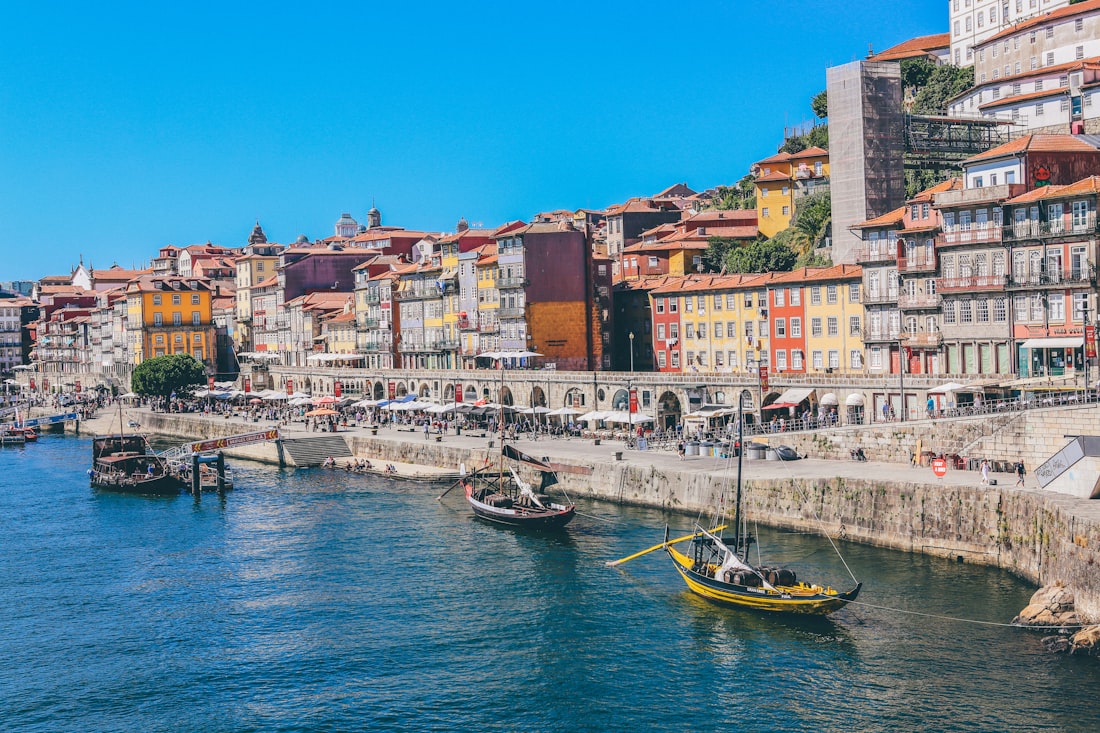
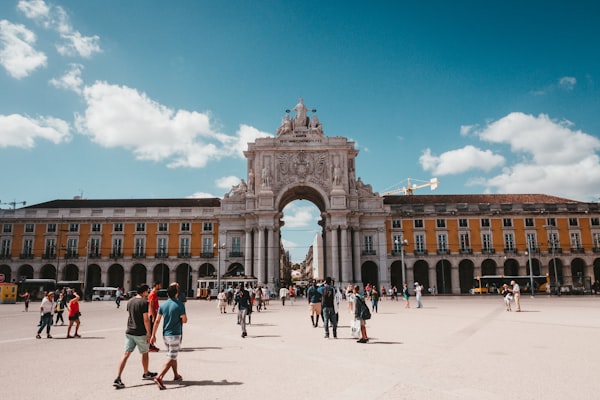
Lisbon
One of Europe’s most walkable, most beautiful, and most underrated capital cities. The Alfama district — Lisbon’s Moorish old town of narrow lanes, azulejo-covered walls, and viewpoints (miradouros) with river views — rewards hours of wandering. Belém is a 15-minute tram ride: the Jerónimos Monastery (where pastéis de nata were born), the Tower of Belém, and the Monument to the Discoveries. The LX Factory, Time Out Market, and Bairro Alto’s restaurants and fado bars complete a first visit. Allow a minimum of 3 days; 4–5 is better.
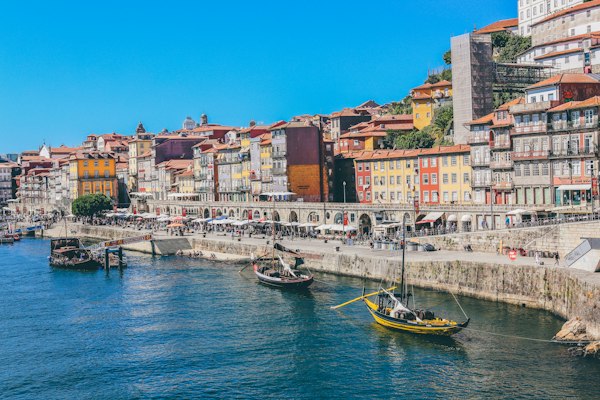
Porto
Portugal’s second city is many travellers’ favourite. The UNESCO Ribeira waterfront, the tilework-covered São Bento railway station (one of the world’s most beautiful), the famous Livraria Lello bookshop, and the Dom Luís I iron bridge with views to the port wine caves of Vila Nova de Gaia across the river. Porto is slightly cheaper than Lisbon and arguably more authentic. Allow 2–3 days plus a day trip into the Douro Valley. The train ride from Porto to the Douro — hugging the river through increasingly dramatic terraced vineyards — is one of Europe’s great railway journeys.
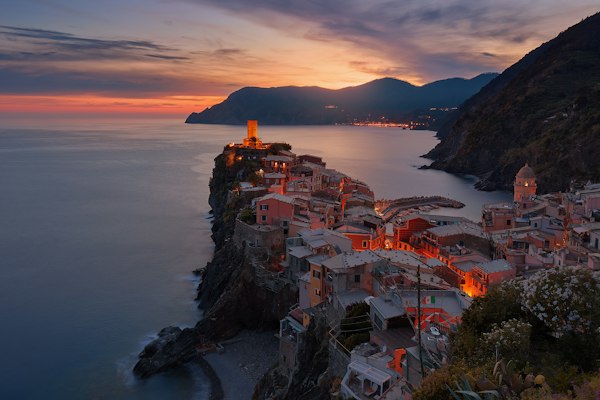
Algarve
Portugal’s southern coastline is genuinely extraordinary — centuries of Atlantic wave action have carved sea arches, hidden caves, and golden cliff formations from limestone that turn amber in the low evening light. Praia da Marinha and Praia de Benagil (accessible by kayak or boat tour) are among Europe’s most photographed beaches. Lagos and Tavira are the most characterful Algarve towns. Sagres, at the southwestern tip of continental Europe, has a wild, dramatic energy unlike anywhere else. The Algarve is most enjoyable in June, September, or October — July and August are extremely hot and crowded.

Sintra
Thirty-five kilometres from Lisbon by train (45 minutes, ~A$4), Sintra is one of Europe’s most magical UNESCO Heritage landscapes — a forested mountain ridge studded with Romanticist palaces commissioned by 19th-century Portuguese royalty who competed with each other to build the most extravagant fantasy estate. Pena Palace (polychrome towers above the clouds), Quinta da Regaleira (initiatic wells and Templar symbolism), and Monserrate (Moorish revival) are the three standouts. Budget a full day and book palace entries in advance — Sintra is very popular and sells out on weekends.

Douro Valley
Portugal’s wine country interior — a UNESCO World Heritage landscape of schist-terraced vineyards, traditional quintas (wine estates), and one of the world’s most dramatically beautiful river valleys. Best experienced from Porto on a full day trip (by train, boat, or guided tour) or as an overnight stay at a quinta during harvest season (September–October). Port wine tastings at the source cost a fraction of what the same wines command internationally. The Douro is the benchmark against which all wine country visits should be measured.

Alentejo
The Alentejo — occupying a third of Portugal’s land area but receiving a fraction of its tourist traffic — is Portugal’s best-kept regional secret. Rolling plains of cork oak, olive, and wheat. Medieval walled villages (Évora is the UNESCO heritage capital, with a Roman temple at its centre). Megalithic monuments older than Stonehenge. Outstanding wine (the Alentejo DOC is increasingly producing wines that compete internationally). Prices here are noticeably lower than Lisbon or the Algarve, and the experience of rural Portuguese life — long lunches, afternoon quiet, and an absence of tourist pressure — is irreplaceable.
🍽️ What to Eat & Drink
Portuguese food is one of Europe’s great underappreciated cuisines — anchored in fresh Atlantic seafood, salt cod, quality charcuterie, and an obsessive attention to bread and olive oil — and it remains affordable precisely because it hasn’t yet been elevated into the global fine-dining conversation the way French and Italian food has.
Pastel de Nata
Flaky pastry custard tart, warm from the oven. The Pastéis de Belém bakery has made them to the same secret recipe since 1837. ~A$2.50 each.
Bacalhau
Salt cod — the Portuguese national dish with more than 365 traditional recipes. Bacalhau à Brás, Bacalhau com Natas, Bacalhau Gomes de Sá — each region has its own. Expect ~A$18–35 at a quality restaurant.
Prato do Dia
Daily lunch special: soup, main, dessert, and a drink for €8–12 (~A$14–21). The single greatest food value in Portugal. Eat your main meal at lunch.
Fresh Seafood
Grilled fish (peixe grelhado), amêijoas (clams), camarões (prawns), polvo (octopus), arroz de marisco (seafood rice). Always order the day’s catch. Exceptional quality at modest prices.
Port Wine
At source in Vila Nova de Gaia (Porto’s wine cave district), a tasting of four ports costs €8–15 (~A$14–26). Graham’s, Taylor’s, Sandeman, and Ramos Pinto all offer cellar tours.
Vinho Verde & Alentejo
Vinho Verde (young green wine from the Minho region — lightly sparkling, low alcohol, intensely refreshing) and Alentejo reds are Portugal’s two most food-friendly wine styles. A bottle starts at A$10 in a supermarket; A$20–35 in a restaurant.
Espresso & Pastel
The Portuguese coffee culture rivals Italy’s. A “bica” (espresso) + pastel de nata at a neighbourhood café: €1.80–2.50 (~A$3.10–4.30). The best cheap breakfast in Europe.
Fado
Portugal’s UNESCO-listed musical tradition of melancholy, fate, and longing. A fado dinner in Alfama includes live performance, a meal, and house wine for €35–55 (~A$60–95). Genuinely moving if you let it be.
💵 What It Costs: Portugal vs the Alternatives
All figures per person per day, approximate Australian dollar equivalents at April 2026 exchange rates. Comparisons use average tourist daily costs in major cities.
| Item | Portugal 🇧🇪 | France 🇫🇷 | Italy 🇮🇹 | UK 🇬🇧 |
|---|---|---|---|---|
| Espresso | A$1.20–1.90 | A$4–7 | A$2–3.50 | A$6–9 |
| Budget lunch (3 courses) | A$14–21 | A$22–40 | A$18–32 | A$25–45 |
| Mid-range dinner | A$35–52 | A$60–100 | A$45–80 | A$70–120 |
| Glass of local wine | A$5–10 | A$12–20 | A$8–16 | A$14–22 |
| Budget hotel | A$95–156 | A$130–220 | A$110–190 | A$160–280 |
| Metro single trip | A$2.40–3.10 | A$3.50–5 | A$2.50–4 | A$5–8 |
| Museum entry (major) | A$10–22 | A$18–35 | A$18–35 | Often free |
| Budget daily total | A$95–138 | A$150–250 | A$130–220 | A$180–300 |
🌞 Best Time to Visit from Australia
Spring (April–May): The sweet spot. Temperatures 18–24°C, almost no rain, wildflowers covering the Alentejo plains, Douro vineyards a fresh green. Prices 20–30% below summer peaks. Book accommodation in advance for April as Easter and European spring holiday traffic is increasing.
Autumn (September–October): Equally excellent and arguably better for the Douro Valley, where September is harvest season. The Algarve remains warm through October (25–28°C) but crowds thin significantly after school terms resume. Lisbon and Porto are at their most pleasant. Wine harvest activities and Eat & Drink Portugal festival coincide.
June: Good but increasingly popular. Temperatures rising (25–30°C in south), still manageable crowds except in Algarve resorts. The June Santos Populares festivals in Lisbon — neighbourhood street parties honouring Saints’ days with grilled sardines, paper flowers, and dancing — are one of the city’s best cultural experiences.
Winter (November–February): Mild, very affordable, and atmospheric. Lisbon winter days reach 14–18°C — warmer than Sydney in June. Very few tourists; Lisbon’s Alfama and Porto’s Ribeira are enjoyed almost entirely by locals. Some Algarve beach facilities close seasonally, but the cities are excellent. Best value months by a significant margin.
⚠️ Honest Drawbacks
- The flight is long22 to 28 hours from Sydney or Melbourne with one or two connections. There are no direct flights from Australia to Lisbon. Common routes via Dubai (Emirates), Doha (Qatar Airways), Singapore, or London add meaningful travel time. Build in a rest day in Lisbon on arrival — the journey deserves recovery time.
- ETIAS coming late 2026When the EU’s ETIAS electronic travel authorisation launches (expected Q4 2026), Australians will need to apply online before visiting. It is a short form, low-cost (~€7–20), and valid for 3 years — but it adds a planning step. Not currently required. Verify before booking.
- Lisbon accommodation rising steeplyLisbon has experienced significant property and hotel price inflation due to digital nomad demand and tourism growth. Mid-range hotels in central Lisbon now run €120–180/night (~A$207–311). Porto is notably more affordable. Book accommodation well ahead for Lisbon — last-minute bookings are rarely cheaper.
- Pickpocketing in tourist areasTram 28 in Lisbon and the Alfama district in peak season are well-known pickpocket hotspots. Use a secure bag, keep phones in front pockets, and be aware in crowded tourist situations. This is the primary safety concern in Portugal — not violent crime.
- Summer heat in the southThe Algarve in July and August regularly reaches 35–40°C. Inland Alentejo can hit 45°C. Portugal’s southerly latitude means summer heat is genuine. The shoulder seasons are significantly more comfortable.
- The 90/180 Schengen rule if combining countriesIf you are adding France, Spain, or Italy to your Portugal trip, your 90 days runs across all Schengen countries combined. Plan your itinerary carefully if spending more than a month across European destinations.
Plan Your Portugal Trip with Cooee Tours
Lisbon, Porto, the Algarve, the Douro Valley — our team can help you build a Portugal itinerary that captures the breadth and value of this extraordinary country.
Talk to Our Team More Europe Guides →Frequently Asked Questions
As of April 2026, no. Australian passport holders enter Portugal visa-free for up to 90 days within any 180-day Schengen period. ETIAS — the EU’s new electronic travel authorisation (similar to the US ESTA) — is expected to launch late Q4 2026 and will require a short online form (~€7–20, valid 3 years). It is not yet operational. Verify at smartraveller.gov.au before departure.
There are no direct flights from Australia to Lisbon. Flights from Sydney or Melbourne take 22–28 hours with one or two stops. The most common routes are via Dubai (Emirates), Doha (Qatar Airways), Singapore, or London. Middle Eastern hub routes tend to offer competitive fares and comfortable connections. Build in a rest day on arrival in Lisbon.
Yes, significantly cheaper than most Western European destinations. A prato do dia (three-course lunch) costs A$14–21. An espresso is A$1.20–1.90. Budget daily spend including accommodation, food, and transport runs approximately A$95–138 per person. Mid-range is A$140–250. Portugal ranks 60th in the world cost of living index (Numbeo 2026) — well below France, Germany, the UK, or Italy.
Spring (April–May) and autumn (September–October) are ideal — mild temperatures (18–26°C), lower prices than summer, minimal rain, and manageable crowds. June is good but increasingly busy. July and August are very hot (Algarve 35–40°C), very crowded, and 40–60% more expensive. Winter (November–February) is mild in Lisbon (14–18°C), very affordable, and excellent for cities — though some coastal facilities close seasonally.
The 90/180-day rule allows visa-exempt travellers (including Australians) to spend a maximum of 90 days within any rolling 180-day period across all 29 Schengen countries combined — not just Portugal. If you plan to combine Portugal with France, Spain, or Italy on the same trip, count all your Schengen days together. The new EES digital border system, rolling out from April 2026, tracks this digitally via biometric records at each Schengen entry and exit.