About Switzerland
The Alps, Precision,
and Four Languages
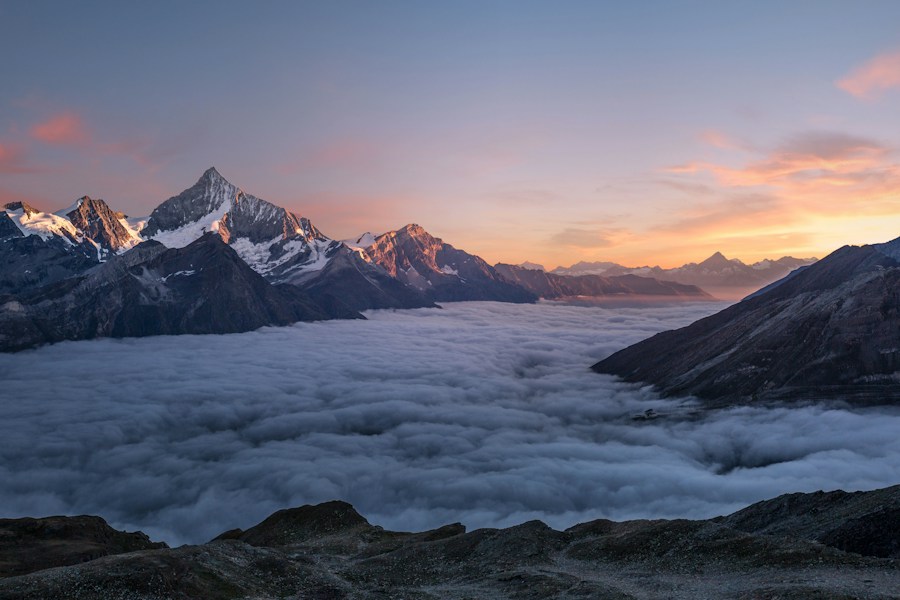
Switzerland is a landlocked country of 41,285 km² — roughly the size of Tasmania — that has achieved a density of UNESCO World Heritage Sites, scenic train engineering, watch-precision punctuality, and extraordinary natural beauty that would be implausible if the country didn’t exist to prove it daily. The Swiss Confederation (officially Confoederatio Helvetica — hence the CH country code) is not technically a member of the European Union and uses its own currency (the Swiss franc), though it participates in the Schengen Area’s free movement arrangements. The practical implication for Australian travellers: no separate visa required, but you are paying CHF prices, which are among the highest in the world — Switzerland consistently ranks as the most expensive country on earth for cost of living, and visitors feel this acutely.
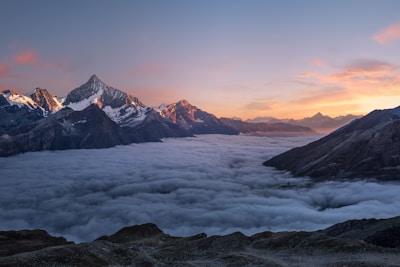
The country divides into four linguistic regions that are also broadly geographic: the German-speaking majority (German-speaking Switzerland — the Deutschschweiz — covers the north and centre, including Zurich, Bern, Basel, Lucerne, and the principal alpine resort towns of the Bernese Oberland and Valais), the French-speaking Romandy (Suisse romande — the west, Lake Geneva, the Lavaux vineyard terraces, Montreux, Lausanne, and Geneva), the Italian-speaking Ticino (the southern canton, Lugano, Locarno — Mediterranean climate and character despite the Alps), and the tiny Romansh-speaking Graubünden (the largest canton by area, St. Moritz, Davos, the Engadine valley). The linguistic boundary is not just a convenience — crossing from German Switzerland into the Romandy genuinely feels like entering a different cultural world.
Switzerland’s most singular achievement — beyond the mountains themselves — is the rail infrastructure it has built through them. The Swiss Federal Railways (SBB CFF FFS) and the associated mountain railway and cable car network constitute the most comprehensive public transport system built in alpine terrain anywhere on earth. The Glacier Express crosses 291 bridges, passes through 91 tunnels, and reaches an altitude of 2,033m on its 8-hour journey from Zermatt to St. Moritz. The Bernina Express crosses the Alps at 2,253m without a rack. The Jungfraujoch railway climbs to 3,454m in a 9km tunnel bored through solid rock in the Eiger and Mönch. These are not tourist gimmicks — they are the extraordinary engineering legacy of a country that decided it was going to connect every village in its alpine geography with public transport, and then spent 150 years doing it.
🇨🇭 Switzerland at a Glance
- Population: 8.8 million in 41,285 km² — 26 cantons with substantial autonomous governance
- 12 UNESCO World Heritage Sites including the Swiss Alps Jungfrau-Aletsch (the largest glaciated area in the Alps), Monte San Giorgio, the Lavaux vineyard terraces, and the Abbey of St Gallen
- Swiss Travel Pass: the most comprehensive single transit card in the world — covers all SBB trains, PostBuses, lake steamers, and many mountain railways. Essential for any Switzerland visit of 4+ days. Purchase at sbb.ch or Rail Europe before departure.
- Cost: Switzerland is the world’s most expensive country. Budget CHF 200–400 (AUD $340–680) per person per day for a comfortable mid-range experience. The Swiss Travel Pass significantly reduces transport costs.
- The Glacier Express: the world’s most famous scenic railway — 8 hours from Zermatt to St. Moritz (or Davos), 291 bridges, 91 tunnels, 2,033m maximum altitude. Reserve seats at glacierexpress.ch.
- The Jungfraujoch (3,454m — the “Top of Europe”): the highest railway station in Europe, reached via a 9km tunnel from Kleine Scheidegg through the Eiger and Mönch. CHF 220 return from Interlaken; book at jungfrau.ch for the best times and weather conditions.
- Schengen-adjacent status: Australian passport-holders enter visa-free for up to 90 days. Switzerland is not in the EU but participates in Schengen — days spent in Switzerland count toward the 90-day Schengen allowance.
- Swiss franc: 1 AUD ≈ 0.59 CHF (1 CHF ≈ AUD $1.70) — budget accordingly. A coffee costs CHF 4–5 (AUD $7–9), a restaurant main CHF 28–45 (AUD $48–77), a mid-range hotel room CHF 180–350 (AUD $306–595).