Australia presents a transport paradox. Within each capital city, the public networks are excellent — integrated, frequent, increasingly contactless, often beautiful (Sydney's harbour ferries, Melbourne's trams, Brisbane's CityCats). Between the cities, there's almost no public transport at all. The continent is too big and too sparsely populated to support a national rail or bus network the way Europe or Japan does.
This guide is the country hub for Australia — sitting between the global pillar and the individual city pages. It covers what doesn't fit on a city page: the seven different smartcards across the capitals, the four great interstate rail journeys, when you genuinely need to fly, when self-drive becomes the only option, and the practical realities of moving across a continent the size of Europe with roughly the population of greater Tokyo.
The 2026 Australian Transport Landscape
Australia's transport story changes depending on the scale you're looking at. Within 50km of a capital city CBD, you're in one of the best-resourced public transport environments in the world: high-frequency metros, ferries, light rail, double-decker trains, and frequent buses. Beyond that 50km radius, the experience changes — service becomes hourly, then twice-daily, then nothing at all.
For an international visitor, this means deciding upfront what kind of trip you're doing. City-hopping (Sydney → Melbourne → Brisbane) is best handled by domestic flights with public transport at each end. Regional touring (Great Ocean Road, Whitsundays, Margaret River, Tasmania) usually requires a hire car or guided tour. The Big Lap — circumnavigating the continent — is a self-drive adventure measured in months, not days (covered in our Highway 1 Big Lap guide).
Sydney to Perth by road is 3,950km — about the same as London to Tehran. Sydney to Darwin is 4,000km. The continent looks compact on a map because it's drawn at a smaller scale than Europe; it isn't. Plan distances honestly, then pick the mode.
Each Australian City Has Its Own Smartcard
Unlike countries that adopted a single national transit card (Japan's Suica, the Netherlands' OV-chipkaart), Australia's transport is run state-by-state — and each state has its own smartcard. The good news: contactless credit cards and phone wallets are progressively replacing all of them, starting with Sydney in 2024. By 2027 most major capitals are expected to accept contactless on at least the main metro modes.
| City | Smartcard | Contactless | Daily Cap / Pass | Key Detail |
|---|---|---|---|---|
| Sydney (NSW) | Opal | ✓ Live since 2024 | $19.30 weekday / $9.65 weekend / $2.80 Sunday | Sunday $2.80 cap is best value in Australia |
| Melbourne (VIC) | Myki | ~ Rolling out 2025–26 | ~$11 daily cap (zones 1–2) | Free Tram Zone in CBD; no tap required inside |
| Brisbane (QLD) | Go Card | ~ Rolling out 2025–26 | 50% off-peak discount (M–F outside peaks) | Same Go Card works on Gold Coast G:link |
| Gold Coast (QLD) | Go Card | ~ Rolling out 2025–26 | Same as Brisbane | G:link light rail along the beach strip |
| Perth (WA) | SmartRider | × Coming 2026+ | Zone-based fares; auto-load supported | Free CAT buses in CBD (no card needed) |
| Adelaide (SA) | Metrocard | ~ Tap-and-go trial | Daycap available; off-peak discounts | Free city loop buses + Glenelg tram |
| Hobart (TAS) | Greencard | × No | Day passes available | Smaller network; cash & Greencard only |
| Canberra (ACT) | MyWay+ | ✓ Live (newer system) | Daily cap with light rail integration | Newest system in Australia; contactless-ready |
Your Opal card is useless in Melbourne; your Myki is useless in Brisbane. Don't load $50 onto a card you'll only use for two days. Brisbane's Go Card is the one cross-state exception — it works on Gold Coast services too because they share the TransLink network.
For trips visiting two or more Australian cities, the simplest answer is to tap your contactless credit card or phone wallet wherever it's accepted — currently Sydney's full network plus rolling-out parts of Melbourne, Brisbane, Canberra and Adelaide. Buy the local smartcard only if you're staying somewhere five days or more, or if contactless isn't available yet on the local network. Each city's spoke guide flags the current contactless status before publication.
Choose Your Australian City
Click through to any city for the full transport deep-dive — payment, modes, fares, scenic routes, airport options, day trips, FAQs. Sydney is live now; the rest are rolling out through 2026 as part of the Cooee Tours national cluster.
Sydney
The largest network in the country — Opal, Sydney Metro, harbour ferries, the iconic Manly route, and the Sunday $2.80 cap.
- Full guide availableLive
Melbourne
The world's largest tram network, Myki smartcard, the Free Tram Zone in the CBD, plus SkyBus to the airport.
- Coming soonComing
Brisbane
Go Card, CityCat ferries up the Brisbane River, the underground Cross River Rail, and the Airtrain.
- Coming soonComing
Gold Coast
G:link light rail runs the entire beach strip — same Go Card as Brisbane. Direct rail link from Brisbane Airport.
- Coming soonComing
Perth
SmartRider plus the new Forrestfield Airport Link — airport to CBD by train without a heavy surcharge. Free CAT buses in town.
- Coming soonComing
Adelaide
Metrocard, free city loop buses, the historic Glenelg tram out to the beach, and the O-Bahn busway.
- Coming soonComing
Hobart
Australia's smallest capital network — Greencard buses, plus the iconic MONA Ferry up the Derwent River from the CBD.
- Coming soonComing
How to Travel Between Australian Cities
Five realistic ways to cross the country: fly, train, coach, drive, or charter. Each has its place — the right choice depends on distance, budget, and what you're trying to experience.
Domestic Flights
Often the only realistic option for trips over 1,000km
For international visitors with limited time, domestic flights are unavoidable. Sydney–Melbourne is one of the world's busiest air routes, with more than 100 flights a day and budget fares from around $99 each way. Sydney–Brisbane is similar; Sydney–Perth takes about 5 hours (longer than London to Moscow). Three carriers dominate: Qantas (full service, biggest network), Virgin Australia (full service, value-oriented), and Jetstar (Qantas's budget arm).
Book 6–8 weeks ahead for the best fares. Jetstar typically offers the cheapest prices on price-sensitive routes; Qantas's Frequent Flyer programme is the strongest if you're collecting points. Both Sydney and Melbourne have train links from their airports to the CBD; Brisbane has the Airtrain; Perth's new Forrestfield Airport Link is the easiest of the lot.
- SYD-MEL~1.5 hours, 100+ flights daily, fares from $99 budget / $200 full-service
- SYD-BNE~1.5 hours, frequent service, fares from $99 / $200
- SYD-PER~5 hours, fares from $250 / $500 full-service
- MEL-ADL~1.25 hours, fares from $89 / $180
- SYD-CNS~3 hours, fares from $180 / $350 (Cairns / Great Barrier Reef gateway)
- ADL-DRW~3.5 hours, fares from $250 / $500 (Adelaide to Darwin)
Interstate Rail — The Great Australian Train Journeys
Slow, scenic, iconic — the journey is the destination
Australia doesn't have high-speed rail. What it does have are four of the most legendary long-distance rail journeys in the world — experiences rather than transport. Operated mostly by Journey Beyond (the Indian Pacific, the Ghan, the Overland) and the state rail operators (NSW TrainLink, Queensland Rail), these journeys are about crossing the continent slowly, watching the landscape change from cities to forests to red desert to ocean.
The XPT and Spirit of Queensland are the practical interstate trains — comfortable, reasonably-priced overnight services for travellers who want an alternative to flying. The Indian Pacific and the Ghan are premium experiences with private cabins, all-inclusive dining and curated stops in remote towns — priced accordingly from $1,500+ one-way.
- Indian PacificSydney → Perth, 4,352km, 3 nights, world's longest east-west journey. Crosses the Nullarbor Plain — 478km without a single curve, the world's longest straight rail.
- The GhanAdelaide → Darwin via Alice Springs, 2,979km, 2–3 nights. Named after the Afghan cameleers who opened the inland route. Stops include Alice Springs (Uluru access) and Katherine.
- XPTSydney → Melbourne (11 hours, overnight option) and Sydney → Brisbane (14 hours). Standard interstate service operated by NSW TrainLink.
- Spirit of QLDBrisbane → Cairns, 25 hours up the Queensland coast. Tilt train technology; recliner and sleeper berths available.
- OverlandAdelaide → Melbourne, 11-hour day train through the Adelaide Hills and Western Victoria.

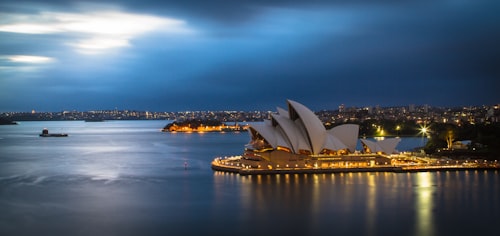
🚆 Indian Pacific
Sydney → Perth · 4,352km · 3 nights
Three time zones in one train. From the Blue Mountains to the Nullarbor's red dust to the Indian Ocean — one of the world's great rail journeys.
🚆 The Ghan
Adelaide → Darwin · 2,979km · 2–3 nights
South-to-north across the continent. Stops at Alice Springs (gateway to Uluru) and Katherine (Nitmiluk Gorge). Iconic Red Centre crossing.

🚆 Spirit of Queensland
Brisbane → Cairns · 1,681km · 25 hours
Tilt train up the Queensland tropical coast. Recliner and sleeper berths. Gateway from Brisbane to the Great Barrier Reef.
🚆 XPT (Sydney–Melbourne)
Sydney → Melbourne · 962km · 11 hours
The practical interstate train. Overnight or daytime service. Reasonably priced from ~$90 economy. NSW TrainLink operated.
Coach & Bus Networks
Greyhound, Premier, FlixBus — the backpacker classic, still going
Greyhound Australia runs the largest intercity coach network on the east coast — Sydney to Brisbane to Cairns is the classic backpacker run. Their Whimit Pass offers unlimited travel on the network for a fixed period (typical 30/60/90/120 days) and remains the cheapest way to see the east coast for travellers who don't want to drive. Coaches are slower than flying — Sydney–Brisbane is 16 hours by bus versus 1.5 hours by plane — but cost a fraction.
Premier Motor Service covers similar east coast territory at competitive prices. FlixBus launched in Australia in 2022–23 and is rapidly expanding, focusing on the high-volume east coast corridors. For regional travel, state operators like V/Line (Victoria) and Transwa (Western Australia) connect their respective regional towns to the capital with coach-and-train combinations.
- GreyhoundNational backpacker network — Whimit Pass for unlimited travel, useful for the east coast loop
- PremierEast coast budget operator — Sydney to Cairns and back, competitive pricing against Greyhound
- FlixBusEuropean entrant, rapidly expanding the major capital city corridors with low fares
- V/LineVictoria regional rail-and-coach — gets you out to Bendigo, Ballarat, and the Great Ocean Road towns
- NSW TrainLinkRegional NSW — Sydney to the Blue Mountains, Hunter Valley, and the South Coast on standard Opal rates
Self-Drive Australia
For regional and outback Australia, the only realistic option
Within the capitals, you don't need a car. To see Australia outside the capitals, you usually do. The Great Ocean Road, the Whitsundays drive, Tasmania's east coast, the Margaret River wine region, the Red Centre and the Kimberley — all are essentially impossible without a vehicle. Public transport ends where the tourist brochures begin.
International visitors should know: Australia drives on the left; distances are vast (a "short drive" in Australia is 400km); fuel is expensive in remote areas ($2.50+ per litre in the Outback); and road trains (triple-trailer trucks) operate in the north and west. For the ultimate self-drive experience, see our Highway 1 Big Lap Guide — circumnavigating Australia in 14,500km.
- SYD-MELSydney to Melbourne via the Hume Highway — 880km, 9 hours direct, 2–3 days with stops
- GORGreat Ocean Road, Melbourne to Adelaide via the coast — 760km, 5–7 days recommended
- SYD-CNSSydney to Cairns up the east coast — 2,400km, 2–3 weeks with stops at Byron, Whitsundays, Mission Beach
- ADL-ULURUAdelaide to Uluru via Coober Pedy — 1,560km Stuart Highway, 3–4 days, fully sealed
- PER-BROOMEPerth to Broome — 2,240km, gateway to the Kimberley region
Charter, Group & Private Transport
Coach charter and shuttles — the alternative to multi-city Opal juggling
For groups, multi-day itineraries, families with significant luggage, or anyone who'd rather skip the multi-city smartcard juggle, private charter and door-to-door transfers often win on time, comfort and cost-per-person. Cooee Tours coordinates through five partner brands across the family-operated Waggie Group — two national operators that cover the whole country, plus three regional bus-hire specialists.
National Partners — available anywhere in Australia
🚍 Cooee Coach Charters
National · 12–57 seater Mercedes coaches
Australia-wide coach hire for weddings, corporate offsites, sporting tours, school groups, mining transfers and multi-day touring. Modern Mercedes fleet, fixed quotes, professional chauffeurs. The standard choice when you need coach transport in a city without a regional bus-hire partner (Melbourne, Adelaide, Perth, Hobart, Darwin).
Cooee Coach Charters →✈️ Airport Shuttle Services
National Australia & NZ · from $49
Door-to-door private and shared airport transfers from every major Australian and New Zealand airport. Fixed fares, real-time flight tracking, no surge pricing. Operating since 1979 — the easy alternative to airport-only premium rail (BNE Airtrain) or hunting for hotel shuttle slots.
Book a transfer →Regional Bus Hire Partners — local specialists
🚍 Bus Hire in Sydney
Sydney & Greater NSW
Sydney specialist for 12–57 seat minibuses and coaches. Strong on Blue Mountains, Hunter Valley, Southern Highlands, South Coast and city-based group transport. Same-day availability for short-notice charters.
Bus Hire in Sydney →🚍 Brisbane Hire Bus
Brisbane & Gold Coast
Queensland's south-east specialist covering both Brisbane and the Gold Coast — Hinterland day trips, theme park groups, BNE-to-Gold Coast private transfers, sports excursions, school camps. Same-day quotes for short-notice transport.
Brisbane Hire Bus →🚍 Sunshine Coast Buslines
Sunshine Coast & Hinterland
Sunshine Coast specialist serving Noosa, Maroochydore, Caloundra, Mooloolaba and the Glass House Mountains. Group charters, airport shuttles to Sunshine Coast Airport (MCY), and Hinterland tours. The local choice north of Brisbane.
Sunshine Coast Buslines →For Melbourne, Adelaide, Perth, Hobart and Darwin we don't have a regional bus-hire partner — in those cities, Cooee Coach Charters services charters via national vehicle pools and local affiliate operators. For groups of 30+ travelling to popular regional destinations (Hunter Valley, Yarra Valley, Margaret River, Barossa), private charter is almost always cheaper per person than coordinating individual rail or coach travel across multiple cities.
The Distance Reality — Every Mode Compared
How long does it actually take to get from city to city in Australia? Honest times by every mode:
Airport Access — Every Australian Capital
Each Australian capital handles airport-to-city transport differently. Some have direct trains (great); some charge a heavy surcharge for the train (avoidable); some have nothing but buses and taxis (use the local shuttle service). Quick comparison — details on the city-specific guides:
| City & Airport | Direct Train? | Surcharge / Fare | Workaround |
|---|---|---|---|
| Sydney (SYD) | Yes — T8 Airport Link | ~$21 (+$17.92 surcharge) | Bus 420 to Mascot Station, then T8 (~$7 total) |
| Melbourne (MEL) | No (rail link due 2030s) | SkyBus ~$22 / taxi ~$60 | SkyBus is the standard option until rail opens |
| Brisbane (BNE) | Yes — Airtrain | ~$22 (premium service) | Skygate shuttle to Skygate station + train |
| Gold Coast (OOL) | No (G:link extension planned) | 700 bus to Helensvale + tram | Bus 700 + G:link is the standard route |
| Perth (PER) | Yes — Forrestfield Airport Link | Standard SmartRider fare | Already optimal — one of Australia's best airport links |
| Adelaide (ADL) | No | JetBus J1/J2 ~$5.80 | JetBus is already cheap; taxi ~$30 |
| Hobart (HBA) | No | SkyBus ~$22 / taxi ~$50 | SkyBus or shared shuttle |
| Canberra (CBR) | No (light rail extension planned) | Route 11 bus ~$3.20 | Route 11 bus is the standard public option |
Where a direct airport train exists (Sydney, Brisbane), it carries a premium fare that's NOT covered by daily caps. Where there's no direct rail (Melbourne, Adelaide, Hobart), a dedicated shuttle bus is the standard option at $5–22. Perth is the outlier — the Forrestfield Link opened in 2022 with no premium pricing, making it one of the best airport rail experiences in the country. City-specific spoke guides cover the exact workarounds and timing.
Planning an Australian Trip?
Cooee Tours specialises in multi-city Australian itineraries — with transport logistics, accommodation, and tours coordinated end-to-end. From Sydney harbour cruises to the Ghan to Highway 1.
Plan My Australian Trip →Twelve Tips for First-Time Visitors to Australia
- Plan transport by leg, not by trip. A typical "Sydney + Melbourne + Cairns" itinerary uses a domestic flight, an interstate flight, a public transport pass at each end, and possibly a hire car for day trips. Each leg has its own optimal mode.
- Buy domestic flights as a separate booking. International airlines often quote eye-watering prices for domestic add-ons. Book your international flight to Sydney/Melbourne, then book domestic legs directly with Qantas, Virgin or Jetstar — it's usually significantly cheaper.
- Don't pre-buy smartcards. They don't transfer between states. Buy them on arrival from the airport vending machines or convenience stores. Better still, use contactless if the city supports it.
- Check airport access fees before booking the train. Sydney's $17.92 surcharge and Brisbane's similar premium aren't covered by daily caps. For a family of four, that's $72 in unavoidable fees. Bus workarounds exist in every city — check the city guide.
- Sunday is the cheapest day for Sydney. The $2.80 Sunday Opal cap covers unlimited Sydney travel including ferries to Manly and the train to the Blue Mountains. Plan your longest day for a Sunday.
- The Indian Pacific and Ghan are experiences, not commutes. They cost more than flying and take longer. Book if you want the journey itself to be memorable; fly if you just need to get there.
- Greyhound Whimit is the budget east coast solution. Sydney to Cairns by bus over 2–3 weeks costs less than $400 with stops. The bus is the social hub for backpackers; you'll meet people along the way.
- Hire a car for regional, not for cities. A car is essential for the Great Ocean Road, the Whitsundays, Tasmania, and outback trips. Within Sydney, Melbourne, or Brisbane CBDs, a car is a liability — parking is expensive and the public transport is excellent.
- Australia drives on the left. Bring an International Driving Permit if your country requires one. Major hire car operators: Hertz, Avis, Budget, Europcar, Thrifty. East Coast Car Rentals and Apex are cheaper local alternatives.
- Watch fuel costs in the outback. Capital city fuel is around $1.80–$2.00 per litre. Remote outback fuel can hit $2.50–$2.80. Plan refuelling around towns; don't run on fumes between roadhouses in the Nullarbor or Stuart Highway.
- Use Citymapper in capitals, Google Maps elsewhere. Citymapper has Sydney and Melbourne; Brisbane, Perth and Adelaide are best handled with Google Maps' transit data plus the local operator's app (TransLink, Transperth, AdelaideMetro).
- Check seasonal closures in the tropical north. Wet season (November–April) closes roads in the Kimberley, Cape York, and parts of the Top End. Cyclone activity affects Queensland coastal transport. Plan northern trips for the dry season (May–October).
Frequently Asked Questions
Is there a single transport card that works across all of Australia?
No — Australia's transport networks are operated state-by-state, so each capital has its own smartcard: Opal (Sydney/NSW), Myki (Melbourne/Victoria), Go Card (Brisbane and Gold Coast), SmartRider (Perth/WA), Metrocard (Adelaide/SA), Greencard (Hobart/Tasmania), and MyWay+ (Canberra/ACT).
Contactless credit cards now work fully on Sydney's network (since 2024) and are progressively rolling out across the other capitals through 2025–2027. For multi-city Australian trips in 2026, tapping a contactless card or phone wallet is increasingly the simplest answer where supported.
What is the best way to travel between Australian cities?
Distance dictates the mode. Sydney–Melbourne, Sydney–Brisbane, Melbourne–Adelaide — all under 1,000km — can be done by drive (8–10 hrs), train (11–14 hrs scenic), bus (12–16 hrs cheap), or fly (1.5 hrs).
Sydney–Perth or Adelaide–Darwin — both over 3,000km — realistically only work as either a 5-hour flight or one of the legendary trains (the Indian Pacific or the Ghan, 3 days each). For most travellers on tight schedules, domestic flights are unavoidable for the long routes. The carriers are Qantas, Virgin Australia and Jetstar.
How much does it cost to travel around Australia by public transport?
Within cities, expect AUD $5–20 per day for unlimited travel on the local smartcard — Sydney caps at $19.30 weekday / $2.80 Sunday; Melbourne ~$11 day pass; Brisbane $5–10 with off-peak discount; Perth ~$10.
Interstate rail and coach are usually $80–150 one-way for the major east coast routes. The Indian Pacific and the Ghan are premium experiences starting $1,500+ one-way. Domestic flights between major capitals start around $99–199 each way on budget fares, $250–500 for full-service or longer routes (Sydney–Perth).
Can I use my Opal card in Melbourne or Brisbane?
No — Opal works only on Sydney/NSW services. In Melbourne you need Myki; in Brisbane you need a Go Card. The networks don't cross state borders.
However, contactless credit cards and phone wallets now work on Sydney's network and are progressively rolling out across the other capitals. For a 2026 multi-city Australian trip, tapping your contactless card where supported is increasingly the cleanest approach — no card juggling, no leftover balances, no surprises.
What is the Indian Pacific and is it worth doing?
The Indian Pacific is one of the world's great rail journeys — 4,352km from Sydney to Perth across the entire continent, taking three nights. It crosses the Blue Mountains, the Nullarbor Plain (the world's longest straight stretch of railway at 478km without a single curve), and ends at the Indian Ocean.
Operated by Journey Beyond, it's a premium experience starting around $1,500 one-way in 2026 (gold service much higher). For travellers who want the experience over the destination — private cabin, all-inclusive dining, off-train excursions in remote towns like Cook and Kalgoorlie — it's genuinely unforgettable. For travellers who just want to be in Perth tomorrow, fly.
Is Greyhound bus a good way to travel Australia?
For budget-conscious travellers, yes — particularly along the east coast. Greyhound Australia runs the largest intercity coach network on the Sydney–Brisbane–Cairns corridor and connects most major cities and tourist towns.
The Whimit Pass offers unlimited travel on the network for a fixed period (30/60/90/120 days) and remains the cheapest way to see the east coast. Buses take significantly longer than flying — Sydney–Brisbane is 16 hours by bus versus 1.5 hours by plane — but cost a fraction. Popular with backpackers and budget travellers; less suited to time-pressed itineraries.
Do I need to hire a car to see Australia?
Within the major capitals (Sydney, Melbourne, Brisbane, Perth, Adelaide), no — public transport is excellent. To see regional and outback Australia (Blue Mountains, Great Ocean Road, Whitsundays, Uluru, Kakadu, the Kimberley, Tasmania's east coast, Margaret River), self-drive is usually the only practical option.
Australia's vast distances mean a single day's drive can easily cover 800km. International visitors should plan their trip as a mix: domestic flights between capitals, then hire a car for the regional legs. Brokers like RentalCars.com aggregate prices across operators; Hertz, Avis, Europcar and Apex are the major players. For the ultimate self-drive trip, see our Highway 1 Big Lap Guide.
Are Australia's domestic flights expensive?
Comparable to international short-haul prices. Sydney–Melbourne is one of the world's busiest air routes, with budget fares from around $99 each way and full-service tickets $250–400. Sydney–Perth (cross-country, 5 hours) is typically $300–500 one-way.
Book 6–8 weeks ahead for the best fares. Jetstar and Virgin Australia tend to be cheaper than Qantas on price-sensitive routes; Qantas's network is the most comprehensive for regional and remote destinations. Sale fares appear regularly — subscribing to airline newsletters is worth it for flexible travellers.
How do I get from Australian airports to the city centre?
It depends on the city. Sydney has the T8 Airport Link train (13 min to Central, +$17.92 surcharge) — or take Bus 420 to Mascot Station and save the surcharge. Melbourne uses SkyBus (no rail link until the 2030s). Brisbane has the Airtrain (~$22 premium service). Perth has the new Forrestfield Airport Link at standard SmartRider fares — one of Australia's best airport links.
See the airport access table above for all eight capitals. Each city-specific spoke guide covers the exact route, fares and workarounds in detail.
Is contactless payment available in all Australian cities?
As of mid-2026, contactless payment works fully on Sydney's network (since 2024) and Canberra's MyWay+ (newer system, contactless-ready). It's being progressively rolled out in Melbourne, Brisbane, Adelaide and Perth through 2025–2027. Hobart and most regional networks still require the local smartcard or cash.
The picture changes rapidly — check each city's spoke guide for the current contactless state before your trip, and always carry a contactless card as your default with the option to buy a local smartcard if needed.
Related Travel Guides
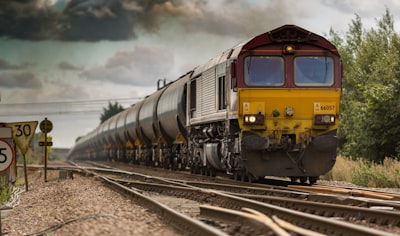
City Transport Pillar Guide
The global parent guide — compare Australia against world cities
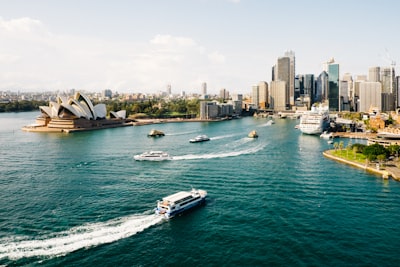
Sydney Transport Guide
The first city spoke — live now
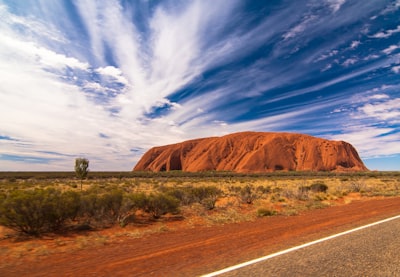
Highway 1 Big Lap Guide
Drive 14,500km around Australia's coast

Cairns Travel Guide
Reef, rainforest & tropical adventures

Queensland Wildlife Guide
Koalas, reef, platypus & eco experiences