Melbourne moves on trams. The city has the largest urban tram network in the world — 250km of tracks, 24 routes, around 1,700 stops — and the result is that Melbourne's character is shaped by them in a way no other Australian city is. The green-and-yellow trams roll past laneway cafes and Victorian terraces, climb up Bourke Street, glide along the beach at St Kilda, and disappear into the leafy inner-northern suburbs. They are the city's most distinctive transport asset and your default mode for getting around the CBD.
Beyond the trams, Melbourne offers a sprawling 16-line train network, a vast bus system, V/Line regional rail to wine country and goldfields towns, and one peculiarity for an Australian capital: no direct airport rail link — the Melbourne Airport Rail Link is in construction but won't open until the 2030s. Until then, the SkyBus is the standard option to and from Tullamarine. This guide covers everything: Myki, fares, the Free Tram Zone, the modes, scenic routes, day trips, and the practical tips that save first-time visitors money.
How to Pay — Myki & the Contactless Rollout
Melbourne uses Myki, Victoria's reusable transport smartcard. You buy one on arrival, top it up, then tap on (and sometimes tap off) for every journey. Contactless credit cards and mobile wallets are being progressively rolled out across the network through 2025–2026 — check the current status on the PTV website before you arrive.
Myki Smartcard
$6 for the card itself ($3 child/concession) plus the credit you load. Buy from station vending machines, 7-Eleven stores, PTV Hubs, or visitor centres at Tullamarine Airport, Southern Cross and Federation Square. Two modes: Myki Money (pay-as-you-go) or Myki Pass (7-day or longer).
Contactless & Apple Pay
Being progressively introduced across Melbourne's network through 2025–2026. Initially on trams and select train lines. By 2027 most main metro modes are expected to accept contactless cards. Always carry a Myki as backup until your route is confirmed.
Cash & Paper Tickets
Melbourne does not sell paper tickets. There is no cash option on trams or trains — you need a Myki or contactless. Buses operated by private companies still accept cash for one-off trips, but it's more expensive than Myki.
Authorised Officers conduct frequent random fare checks across Melbourne's network — tram, train and bus. The fine for travelling without a valid Myki touch-on is over $250 with no excuse accepted. Touch on every time you board, even if you're confident the trip is short. The only exception is inside the Free Tram Zone, where no touch-on is needed (see next section).
Walk into a 7-Eleven on arrival at Southern Cross or Flinders Street and buy a Myki for $6, then load $30–$40 of Myki Money. That covers 3–4 days of comfortable Melbourne travel with the daily cap doing the work. For week-long stays, buy a Myki 7-Day Pass instead — usually cheaper than capping every day. Top up at any station vending machine or via the PTV app.
The Free Tram Zone
Melbourne is the only major city in the world with a fully free urban tram zone for everyone — locals, tourists, anyone. Trams running inside the zone are free with no touch-on, no Myki, no payment required. The zone covers the entire CBD plus the Docklands precinct.
For first-time visitors, the zone covers most major attractions: Federation Square, Flinders Street Station, the Queen Victoria Market (just outside; walk one block), the State Library, Chinatown, Bourke Street Mall, Southern Cross Station, the Docklands and Crown Casino. You can spend a full day exploring the CBD on trams without spending a cent on transport. The free heritage City Circle Tram (Route 35) runs a full CBD loop in burgundy 1920s W-class carriages with recorded commentary — the city's best-value tourist experience.
Fares, Daily Caps & Day Passes
Melbourne's fare system is zone-based. Most travellers stay entirely within Zones 1+2 (which together cover almost the entire metropolitan area). Once you tap on, Myki automatically calculates the cheapest fare for your journey and caps the daily amount you can be charged.
| Fare Type | Zone 1 only | Zone 1+2 | Notes |
|---|---|---|---|
| 2-Hour Fare | ~$5.30 | ~$5.30 | Valid for 2 hours from first touch-on, including transfers |
| Weekday Daily Cap | ~$10.60 | ~$11.00 | Hits automatically — just keep tapping |
| Weekend/Holiday Cap | ~$7.20 | ~$7.50 | Saturday, Sunday and public holidays |
| 7-Day Myki Pass | ~$53 | ~$53 | Worth it for stays of 5+ days, otherwise cap is better |
| Child/Concession | Half | Half | Children 4–18 with valid Child Myki |
| Free Tram Zone | Free | Free | CBD & Docklands — no touch needed |
On trams, touch on only — the system uses your boarding location to calculate the fare. On trains and buses, touch on AND touch off. Forgetting to touch off charges you the maximum default fare (around $5.30 for a single trip), so be diligent at the gates. The PTV app shows your recent touches and current balance.
The Five Modes of Melbourne Transport
Trams, trains, buses, the SkyBus, and V/Line regional rail. Each has a role in a multi-day Melbourne trip; the right combination depends on whether you're in the CBD, day-tripping, or heading regional.
Yarra Trams — The Headline Mode
250km of tracks, 24 routes, ~1,700 stops — the world's largest tram network
Operated by Yarra Trams (Keolis Downer EDI), Melbourne's tram network is the city's signature transport experience. Trams run frequently across the CBD and stretch out into the inner and middle suburbs — St Kilda, Carlton, Fitzroy, Brunswick, Caulfield, Box Hill, Bundoora, Port Melbourne. Inside the Free Tram Zone they cost nothing; outside, they run on the standard Myki fare structure.
For first-time visitors, four routes stand out for both practicality and atmosphere: Route 96 takes you down Bourke Street through the CBD and out to St Kilda Beach, the bayside neighbourhood loved for cafes, the Esplanade and the Sunday market. Route 35 is the free City Circle Tram in heritage W-class carriages. Route 86 is one of the world's longest single tram routes, crossing from Bundoora through the inner-north to the Docklands. Route 109 runs east-west across the city from Box Hill to Port Melbourne.
- 96East Brunswick → St Kilda Beach via Bourke Street — the iconic tourist tram, sunset run to the bay
- 35City Circle — free heritage W-class tram, loops the CBD with recorded commentary
- 86Bundoora → Waterfront City (Docklands) — crosses inner-north Brunswick, Fitzroy and the CBD
- 109Box Hill → Port Melbourne — east-to-west across the city with views of Albert Park and the bay
- 19North Coburg → Flinders Street — the Sydney Road / Royal Parade tram, classic inner-north corridor
- 48Victoria Harbour → North Balwyn — through Collingwood and the eastern leafy suburbs
- 75Vermont South → Etihad Stadium — runs along Bridge Road past Richmond's restaurant strip
Metro Trains Melbourne — 16 Lines & the City Loop
The radial network covering the metropolitan area, anchored at Flinders Street
Melbourne's 16-line suburban train network is operated by Metro Trains Melbourne (MTM). Almost all lines converge at Flinders Street Station — the iconic yellow Edwardian building beside the Yarra River with the famous clocks under the dome (the traditional Melbourne meeting place). Many lines also pass through the City Loop, an underground rail loop with four stations: Southern Cross, Flagstaff, Melbourne Central, and Parliament.
Train lines fan out from the CBD to the suburbs, beaches and hills: the Sandringham line hugs the bay through Brighton; the Belgrave line climbs into the Dandenong Ranges and connects to the Puffing Billy steam train; the Werribee line heads west to the open-range zoo; the Lilydale line is your starting point for the Yarra Valley wineries. Suburban trains are clean, frequent (every 10–20 minutes off-peak), and run from around 5am to midnight on weekdays. The Night Network runs hourly through Friday and Saturday nights.
- Flinders StThe central hub. Every suburban line passes through. Meet under the clocks.
- Southern CrossThe interstate gateway: V/Line regional trains, SkyBus, the XPT to Sydney
- City LoopUnderground stations Flagstaff, Melbourne Central, Parliament — check direction signs
- Sandringham lineDirect to Brighton and the beach — no City Loop, fast service
- Belgrave lineTo the Dandenong Ranges and Puffing Billy steam railway
- Lilydale lineGateway to the Yarra Valley wine region
- Werribee lineTo Werribee Open Range Zoo and Werribee Mansion
Buses — The Network Fillers
Including the orbital SmartBus routes and Night Network
Buses fill the gaps in Melbourne's tram-and-train network — particularly in middle and outer suburbs, and connecting train stations to specific neighbourhoods. The SmartBus routes 901, 902 and 903 are high-frequency orbital services that loop around the metropolitan area without touching the CBD — useful for connecting suburbs without going via the city. The Night Network NightRider buses run overnight on weekends along the major commuter corridors.
For tourists, the most useful bus services are typically the airport SkyBus (covered separately below), the Yarra Valley buses (Lilydale Station to Healesville), and the Mornington Peninsula Bus connecting Frankston Station to Sorrento and Portsea. Buses use the same Myki system as trams and trains, with the same fare zones.
SkyBus — The Airport Connection
Melbourne's airport solution until the rail link opens in the 2030s
Melbourne is the largest city in Australia without a direct airport-to-CBD train. Until the Melbourne Airport Rail Link opens (planned for the 2030s), the SkyBus is the standard public option. Services depart every 10 minutes from Tullamarine, take 30–40 minutes to Southern Cross Station, and run 24 hours a day. The basic fare is around AUD $23.50 one-way or $34 return as of 2026 (kids generally free with paying adult).
SkyBus also runs to Avalon Airport (the Jetstar-focused secondary terminal), and there's a dedicated St Kilda Express service for travellers heading direct to bayside accommodation. From Southern Cross, SkyBus includes a free shuttle to most major CBD hotels — saving you a taxi fare on the final leg.
- SkyBus TullamarineEvery 10 min, 30–40 min to Southern Cross. $23.50 one-way / $34 return / kids free
- SkyBus AvalonConnects with Jetstar flights at Avalon Airport, ~75 min to Southern Cross
- St Kilda ExpressDirect from Tullamarine to St Kilda — useful for bayside hotel guests
- Hotel ShuttleFree from Southern Cross to most CBD hotels — book on arrival at SkyBus desk
V/Line — Regional Trains & Coaches
The gateway to the Yarra Valley, Geelong, Ballarat, Bendigo and Gippsland
For trips outside metropolitan Melbourne, you need V/Line — Victoria's regional rail and coach operator. V/Line trains depart from Southern Cross Station to Geelong, Ballarat, Bendigo, Seymour, Traralgon and Albury (with continuing service into NSW). Coach services connect train lines to smaller towns and the major regional tourist destinations.
V/Line uses its own fare system (not Myki capped) — tickets are sold per route via the V/Line website, app, or at Southern Cross ticketing. Trains are comfortable, with both economy and business classes on most services. The Geelong line is often the busiest tourist route; the Ballarat line takes you to Sovereign Hill goldfields; the Bendigo line connects to the historic gold-rush town.
- Geelong1 hour to Geelong Station — gateway to the Bellarine Peninsula and ferry to Sorrento
- Ballarat1.5 hours to Ballarat Station — Sovereign Hill living-history goldfields museum
- Bendigo2 hours to Bendigo — preserved gold-rush architecture, talking tram, art gallery
- Traralgon2 hours to the Latrobe Valley — Gippsland gateway
- Albury3 hours to Albury — the NSW border, continuing to Sydney via the XPT
Melbourne Airport (Tullamarine) Access
Until the Melbourne Airport Rail opens (planned for the 2030s), there is no direct train from Tullamarine to the CBD. Your four realistic options:
SkyBus
$23.50 one-way
Departs from outside Terminal 1, 3 and 4. Direct to Southern Cross, with free CBD hotel shuttle from there. The standard option for most travellers.
Airport Shuttle Services
From $49
Private and shared shuttle direct from Tullamarine to your Melbourne hotel or address. Fixed fares, real-time flight tracking, no surge pricing. Part of the Cooee Tours group, operating since 1979 — book at airportshuttleservices.com.au.
Taxi or Rideshare
$60–$80
Faster door-to-door, useful with luggage or for groups of 3+. Surcharges apply for late-night arrivals and Tullarmarine Freeway tolls.
901 Bus (Public)
$5.30 (Myki)
The cheapest option — SmartBus 901 from the airport to Broadmeadows Station, then train into the city. Slower and less direct; for very budget-conscious travellers.
The Melbourne Airport Rail Link is currently in construction with an expected opening in the 2030s. It will run from Tullamarine directly to Southern Cross Station via Sunshine, with one transfer-free trip planned. Until then, SkyBus is the standard public option and the price-quality balance most travellers choose.
Iconic Routes & Scenic Journeys
Melbourne's transport network includes some of Australia's most loved scenic and cultural routes. These trips are about the journey rather than just the destination.
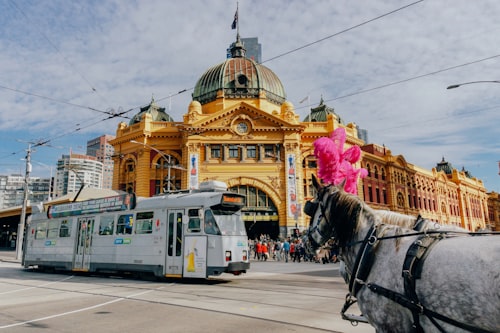
🚋 Route 96 to St Kilda
CBD → St Kilda Beach · ~30 min
The iconic tourist tram. Boards in the CBD on Bourke Street, runs through Albert Park, finishes at the St Kilda Esplanade. Best at sunset for the bayside light.
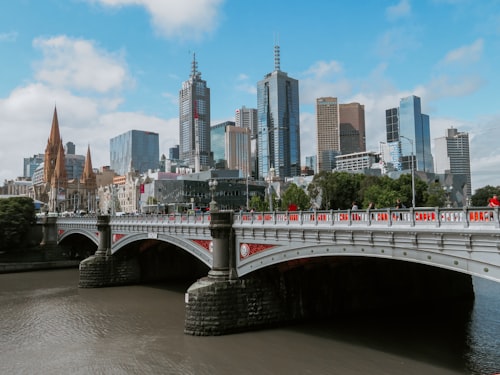
🚋 City Circle Tram (Route 35)
CBD Loop · FREE · W-class heritage
Vintage 1920s burgundy W-class trams loop the CBD with recorded commentary on the major landmarks. Always free. The slowest, most charming way to orient yourself.

🚆 Belgrave Line + Puffing Billy
CBD → Belgrave → steam train · full day
Take the Belgrave line to its terminus (1hr), then the historic Puffing Billy steam train through the Dandenong Ranges forest to Gembrook. A classic Melbourne family day out.
🚆 Sandringham Line
Flinders St → Sandringham · ~30 min
The bayside train that doesn't loop. Stops at Brighton Beach (Bathing Boxes), Sandringham (cliff-top walks), and the iconic Black Rock cafes. Direct service.
Day Trips by Public Transport
Where to go from Melbourne CBD on a single day, by public transport. Some are easy; some technically possible but better as a guided tour. We've flagged the practical reality for each.
| Destination | Best Mode | Travel Time | Notes |
|---|---|---|---|
| Yarra Valley wineries | Train + bus / tour | 1.5 hrs each way | Lilydale line then bus to Healesville. Tour is usually better — wineries are spread out. |
| Sovereign Hill (Ballarat) | V/Line train + bus | 1.5 hrs each way | Direct V/Line to Ballarat Station, then short bus to the goldfields. Easy. |
| Phillip Island (Penguins) | Tour (recommended) | 2 hrs each way | Technical PT possible (Stony Point ferry) but slow. Coach tour from CBD is standard. |
| Mornington Peninsula | Train + bus / tour | 1.5–2 hrs each way | Frankston line then bus 788 to Sorrento. Many travellers prefer a tour. |
| Dandenong Ranges | Belgrave line + Puffing Billy | 1 hr each way | The classic family day. Belgrave train then Puffing Billy steam. Excellent by PT. |
| Werribee Open Range Zoo | Werribee line + bus | 45 min | Direct train then short bus. Easy and well-signed. |
| Bendigo (historic city) | V/Line train | 2 hrs each way | Direct V/Line from Southern Cross. Best gold-rush city day trip. |
| Great Ocean Road | Tour (essential) | 1.5 days minimum | V/Line to Geelong then complicated bus connections. Tours are far more practical. |
| Healesville Sanctuary | Lilydale line + bus | 1.5 hrs each way | Train then Yarra Valley bus to the wildlife park. Easy. |
| Geelong & the Bellarine | V/Line train | 1 hr each way | Direct service from Southern Cross. Ferry from Geelong to Sorrento (separate ticket). |
Group Charter & Private Transfers
Public transport handles most Melbourne journeys beautifully, but for wedding parties, conference shuttles, sporting tours, school groups and door-to-door airport transfers, Cooee Tours coordinates through our national partner brands — part of the family-operated Waggie Group, with over 50 years in Australian transport logistics. We don't have a Melbourne-based bus-hire partner, but both national operators below routinely service Melbourne charters from interstate vehicle pools and local affiliate operators.
🚍 Cooee Coach Charters
National · 12–57 seater Mercedes coaches
Australia-wide coach hire that services Melbourne — ideal for Yarra Valley winery charters, Great Ocean Road group tours, AFL match transport, weddings around the city and the peninsulas, corporate offsites and multi-day touring through Victoria, the Bellarine and beyond. Modern Mercedes fleet with professional chauffeurs.
Cooee Coach Charters →✈️ Airport Shuttle Services
National Australia & NZ · from $49
Door-to-door private and shared transfers from Melbourne Airport (Tullamarine) and Avalon Airport direct to your hotel or address. Fixed fares, real-time flight tracking, no surge pricing. Operating since 1979 — the convenient alternative to SkyBus + hotel shuttle for arrivals with heavy luggage, groups or accessibility needs.
Book a transfer →Want the Yarra Valley or Great Ocean Road without the planning?
Cooee Tours runs guided Melbourne day tours to the Yarra Valley, Great Ocean Road, Phillip Island and the Mornington Peninsula — transport, expert guides and major venues all sorted.
See Melbourne Tours →Essential Apps for Melbourne Travel
PTV App
Official Public Transport Victoria app — route planner, real-time info, Myki balance, service alerts. Essential.
Tram Tracker
Live tram arrival predictions stop-by-stop. More accurate than PTV for tram-only journeys.
Citymapper
Best multi-modal routing app for Melbourne. Compares tram vs train vs walking for any journey in seconds.
Google Maps
Reliable PT routing fallback — integrated PTV data with walking directions.
Uber / DiDi / Bolt
All three operate in Melbourne. Useful for late nights, hotel transfers and short final legs from train stations.
Twelve Local Tips for First-Time Visitors
- Buy your Myki at a 7-Eleven, not the airport. Airport visitor centres do sell them, but it's quicker to buy on arrival at any 7-Eleven near your accommodation — same price ($6), shorter queues.
- The Free Tram Zone is genuinely free. Don't touch on if your entire journey is inside the CBD boundaries — touching on accidentally outside the zone elsewhere can charge you. The zone is clearly marked at every stop.
- Sit on the right side of Route 96. Going from the CBD to St Kilda, the right (west) side gives you the view of the bay as you approach. Sunset run is particularly photogenic.
- Use the Sandringham line for the bayside. Trains run direct from Flinders Street to Brighton (the famous bathing boxes), Sandringham and Black Rock. No City Loop — faster than other lines.
- Check the City Loop direction. Some trains run inbound via the loop, then direct out; others the reverse. Each platform has signs — pay attention especially during AFL match days when patterns change.
- Touch off on trains and buses. Forgetting to touch off charges you the default fare (~$5.30). It's an easy mistake at unstaffed stations late at night. Set a phone reminder if needed.
- The 7-Day Myki Pass beats daily caps if you're staying a week. ~$53 for 7 days vs ~$77 of daily caps in zones 1+2. Calculate before you commit to either — weekend caps are lower, so mixed-week trips are sometimes still better on capped Myki Money.
- "Meet me under the clocks" means Flinders Street. The original Melbourne meet-up location. The clocks under the central dome at Flinders Street Station have been the city's traditional rendezvous point since the 1850s.
- Melbourne weather changes fast. "Four seasons in one day" is real. Always carry a light jacket and check rain radar before long tram trips — trams have shelter at stops but transfers leave you exposed.
- AFL game days mean crowded trains. The MCG (Melbourne Cricket Ground) is the main venue — on AFL days (Mar–Sep), Richmond Station and surrounding train and tram services are very busy. Plan accordingly or join the spectacle.
- The Colonial Tramcar Restaurant is unique. Premium dining experience aboard a converted W-class tram. Three-course meal while you tour the city tram network. Bookings essential.
- SkyBus to St Kilda exists. If you're staying bayside, the SkyBus St Kilda Express runs direct from Tullamarine to St Kilda — bypassing the CBD entirely. Useful for those who choose St Kilda Esplanade hotels over CBD accommodation.
Frequently Asked Questions
Can I use a contactless card or Apple Pay on Melbourne public transport?
Contactless payment is being progressively rolled out across Melbourne's network through 2025–2026 — initially on trams and parts of the train network. As of mid-2026, most travellers still purchase a Myki card from station vending machines, 7-Eleven stores, or visitor centres on arrival.
Check the Public Transport Victoria (PTV) website for the current rollout status before your trip — some routes may already accept contactless while others still require Myki. Either way, plan to use Myki as your default and treat contactless as a bonus where available.
What is the Free Tram Zone in Melbourne and how does it work?
The Free Tram Zone covers Melbourne's entire CBD — bounded by Spring Street, Flinders Street, La Trobe Street and Spencer Street — plus the Docklands extension. All tram travel that starts and ends inside this zone is completely free: no Myki, no touch-on, no payment required. The zone is clearly marked at every tram stop within it.
If you board inside the zone but exit outside, you must touch on with your Myki at boarding to be charged from the zone boundary onward. The free heritage City Circle Tram (Route 35) is always free regardless of where you board.
How much is a Myki card and where do I buy one?
A Myki card costs AUD $6 for adults ($3 for children/concession) plus the travel credit you load onto it. You can buy and top up Myki cards at:
Train station vending machines (Flinders Street, Southern Cross and every other suburban station), 7-Eleven stores, retailers displaying the PTV sign, visitor centres at Melbourne Airport, Southern Cross Station and Federation Square, or online at ptv.vic.gov.au.
Allow around $20–30 of Myki Money loaded for a few days of comfortable Melbourne travel — the daily cap means you'll never overspend even on heavy travel days.
How do I get from Melbourne Airport (Tullamarine) to the city centre?
Melbourne is the only Australian capital without a direct airport rail link as of 2026 (the Melbourne Airport Rail is in construction, planned to open in the 2030s).
Three options: SkyBus is the standard — $23.50 one-way / $34 return, departing every 10 minutes, taking 30–40 minutes to Southern Cross Station, free hotel transfer included. Taxis or rideshare cost $60–80 and take 25–45 minutes depending on traffic. The 901 SmartBus via Broadmeadows train station is the budget public option at $5.30 (Myki), but takes about 75 minutes total.
What is the daily fare cap for Myki in Melbourne?
In 2026, the daily Myki Money cap for zones 1+2 is approximately AUD $11 on weekdays and AUD $7.50 on weekends and public holidays. Once you hit the cap, all further travel that day on trams, trains and buses is included — you can keep tapping on with no extra charge.
There is no cap on V/Line regional services — those use their own per-route ticketing. Children and concession holders pay roughly half the adult fares with a valid Child or Concession Myki card.
Do I need to touch off on Melbourne trams?
On Melbourne trams, you only need to touch on with your Myki (no touch off required) — the system automatically calculates a default fare based on your boarding zone.
On trains and buses, you must touch on AND touch off at the start and end of your journey. Forgetting to touch off charges you the maximum default fare (around $5.30 for a single trip). Inside the Free Tram Zone in the CBD, no touch is required at all for trams.
What's the best Melbourne tram route for sightseeing?
Route 96 from Bourke Street to St Kilda Beach is the iconic tourist tram — running through Albert Park, along the bay, and ending at the St Kilda Esplanade.
Route 35 (the City Circle Tram) uses heritage W-class trams and circles the CBD for free with recorded commentary on the major sights. Route 86 from Bundoora to the Docklands is one of the world's longest tram routes and crosses some of Melbourne's most interesting inner-north suburbs. Route 19 up Sydney Road is the classic inner-north corridor.
Can I get to the Yarra Valley wine region by public transport from Melbourne?
Yes, but it's slow. Take the Lilydale train line from Flinders Street to Lilydale Station (about 1 hour), then a Yarra Valley Bus to Healesville (around 30 minutes). For wineries on the bus route this works, but most wineries are spread across the valley and impossible to reach without a car.
A guided Yarra Valley tour from Melbourne CBD is usually a far better choice for time-pressed visitors — Cooee Tours offers single-day and multi-day Yarra Valley options with multiple winery stops, lunch, and door-to-door transport.
How do I get to Phillip Island and the Penguin Parade from Melbourne?
Phillip Island is challenging by public transport. The technical route is V/Line train to Cowes via Stony Point and ferry — but services are infrequent and require precise timing for the Penguin Parade at sunset.
Almost all visitors use either a hire car (about 2 hours each way from CBD) or a guided coach tour from Melbourne CBD. Day tours typically include Brighton Beach Boxes, the Koala Conservation Centre, and possibly the Nobbies cliffs alongside the penguin viewing — usually returning to the CBD around 10pm.
Is Melbourne's public transport safe at night?
Generally very safe in central Melbourne — trams, trains and stations are well-lit, monitored by CCTV, and frequently patrolled. The Night Network runs trains, trams and buses through Friday and Saturday nights.
Standard precautions apply: stay in the main carriages near other passengers, avoid empty suburban stations late at night, and use Uber, DiDi or a taxi for short final-leg journeys to your accommodation if you're unfamiliar with the area. Inner-city tram lines run reliably until midnight on weeknights.
Related Travel Guides
Australia Transport Guide
The national hub — compare Melbourne against Sydney, Brisbane and Perth
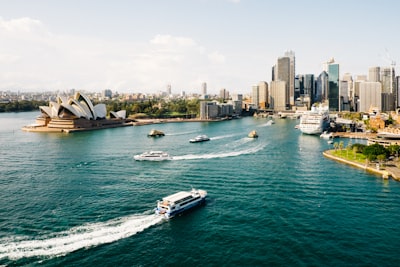
Sydney Transport Guide
The Opal-and-ferries city to the north

City Transport Pillar
The global parent — Melbourne vs world cities
Highway 1 Big Lap
Drive 14,500km around Australia's coast

Melbourne Day Tours
Yarra Valley, Great Ocean Road, Phillip Island