

Four nights in Ubud for the rice terraces at seven, the holy springs, the ridge walk, a cooking class and a dance in the palace courtyard; then the driver south to a villa or resort on the coast chosen for who is in the water, for Uluwatu at sunset, Jimbaran on the sand and a loose day. It is the Bali trip in its classic shape, and the order matters.
Bali is the Asian country most Australians have visited and the one most of them have seen a third of, because a week on the Seminyak coast is a beach holiday and Ubud, an hour inland, is the island. This route is the Bali trip done in the right order: the hills first, for the terraces and the temples and the dance and the cool nights, while the party has the energy for a 7 am driver; then the coast, chosen for who is in the water, for the last three nights of pool and sunset and nothing that has to be seen. A car and driver every day, because that is how Bali is done and a driver who knows which temple has a ceremony on is the difference between a tour and a visit. It is the itinerary we build most on the island, and the one that turns a first Bali trip into a second. The things to do in Bali page has the island beyond the route.
Why this route
Because most Australians have seen Bali’s coast and not Bali. Ubud is an hour inland and a different island: cool nights, rice terraces that step down the valleys, holy springs where the village bathes, a dance tradition performed in the palace courtyard every evening, temples with a ceremony on most days, and a food scene that has become one of Asia’s best. Four nights there with a driver at seven, then three on the coast with nothing that has to be seen, is the shape that lets a Bali trip be both the island and the beach, in the order that winds down rather than up. Add a driver who has been with the family since the first day and knows which beach the children can swim at, and it is the Bali trip that produces the second Bali trip.
At a glance
| Duration | 8 days / 7 nights (10 with Nusa Penida) |
|---|---|
| Route | Ubud (4) → the coast: Seminyak or Canggu, Sanur or Nusa Dua, or the Bukit (3) |
| Fly | Direct to Denpasar from Sydney, Melbourne, Brisbane or Perth, 6 hours from the east coast |
| Best months | May to September; late April and October for value; the July and September holidays are the peaks |
| Pace | Easy: two bases, a driver on the touring days, one loose day in each |
| Style | Private itinerary; a car and English-speaking driver throughout; a rice-field hotel or villa in Ubud, a villa or resort on the coast |
| Suits | First and second trips, couples, families, short breaks, anyone with a week |
| Accommodation | A hotel or villa in the Ubud hills; a villa or resort on the coast chosen for the swimmers |
| Price | Quoted per departure in AUD |

Day by day
Day 1: Arrive Denpasar, up to Ubud
The direct flight lands at Denpasar in the afternoon or evening; a private car with a name board, the e-VOA and levy done on our instructions, and the hour north through Denpasar’s traffic to Ubud as the light goes. A rice-field hotel or a villa in the hills, a first Balinese dinner at the hotel or a warung the driver names, and the sound of frogs and gamelan practice from the village temple. Bali is on Brisbane time; there is no body clock to reset.
Day 2: Ubud: the terraces, the springs, the forest
The driver at seven. Tegallalang’s rice terraces before the swings open and the coaches arrive, walked down to the river; Tirta Empul’s holy springs at Tampaksiring, where you can queue with the Balinese to bathe under the spouts in a sarong; Gunung Kawi’s rock-cut shrines down 300 steps; lunch at a warung overlooking a valley; the Monkey Forest in the afternoon with the bag held tight; and the evening in Ubud’s town — the palace, the market, and a legong or kecak dance in the palace courtyard at 7.30, with the gamelan, the gold and the torches, which is the hour that tells you where you are.

Day 3: Ubud: the ridge, the valley, the class
The Campuhan Ridge walk at seven, two kilometres along a spine of grass between two river valleys, and coffee at the far end; then the driver to Sidemen, ninety minutes east, for the rice terraces without the crowds under Mount Agung, a village walk and lunch. Or a Balinese cooking class at a family compound: the market first, then the spice pastes, the satay, the lawar. A spa afternoon — Ubud’s are among the best in Asia — and dinner at one of the town’s restaurants, booked.
Day 4: Ubud: the loose day, or the volcano
A choice at booking. Mount Batur at dawn: a 3 am pick-up, a two-hour climb by torchlight, the sunrise over the caldera, the lake and Agung beyond, eggs cooked in the volcanic steam, and back for a late breakfast and a long sleep. Or Pura Besakih, the mother temple on Agung’s flank, and the water palace at Tirta Gangga with its stepping stones and koi. Or, for the fourth morning, nothing: the pool, a book, a walk through the paddies behind the hotel with the ducks being herded through the stubble, and a massage. Most parties take the volcano and are glad; some take the pool and are gladder.
Day 5: Ubud to the coast
A slow morning — the Neka or Agung Rai museum for the painting tradition, a last coffee — and the driver south by lunch to the coast chosen for the party: a villa in Seminyak or Canggu for the sunsets and the beach clubs, a resort at Sanur or Nusa Dua for calm swimming, the cliffs of the Bukit for a couple. The afternoon in the pool; the sunset from the sand.
Day 6: The coast: Uluwatu and the south
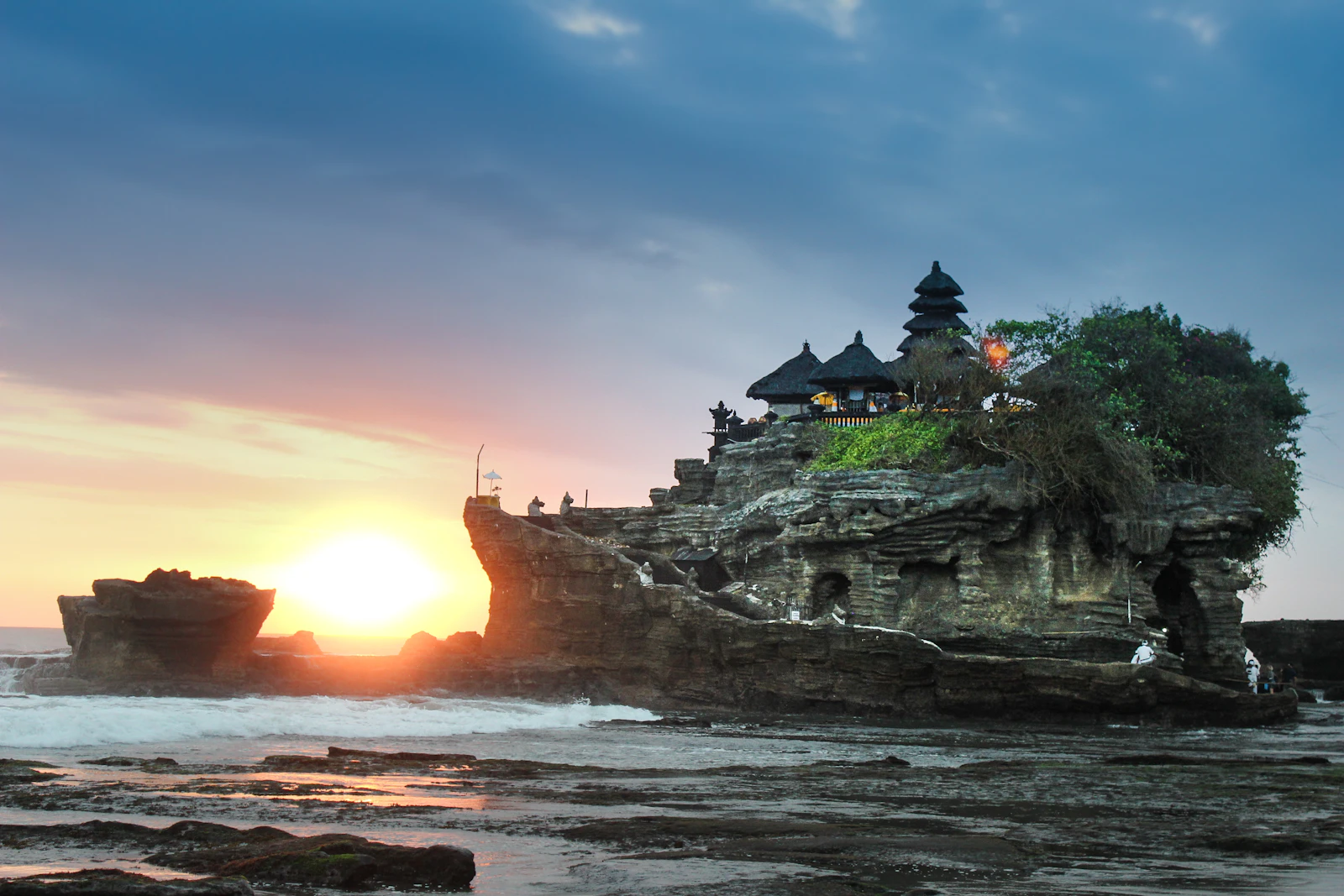
The driver for the Bukit: Padang Padang and Bingin’s coves down the cliff steps, lunch at a warung above the surf, Uluwatu temple on its headland at five with the monkeys and the kecak dance at sunset (booked; the amphitheatre fills), and dinner at Jimbaran on the sand with the fishing boats lit and the grilled fish chosen from the ice; the driver chooses the warung, because the front has fifty and they are not equal, and the one with the Balinese families at the next table is the one.
Day 7: The coast: the loose day
The beach, the pool, a surf lesson at Canggu or Kuta (the instructors are good and the waves forgiving in the morning), a beach club for the afternoon, a spa, or Tanah Lot at sunset without the bus park if the party has not seen it. The last dinner at the restaurant that has been the good one all week, booked for the table at the edge where the sunset is, with the driver waiting to take everyone home.
Day 8: Depart
A late checkout, the last swim, a last lunch at the warung a street back from the front, and the private car to Denpasar for the evening flight home, six hours to the east coast. Eight days, two Balis, and the driver’s number kept for next time, which is how most of our Bali bookings begin.
Variations and extensions
Ten days with Nusa Penida: two nights on the island between Ubud and the coast by the Sanur fast boat — Kelingking, Broken Beach, Crystal Bay and the mantas — on our Nusa islands shape, which beats the exhausting day trip. Six days: Ubud three, the coast three; the shortest version that keeps both. Two coasts: for a fortnight, Ubud four, the Bukit three, Sanur or Seminyak three, with a Penida boat day from Sanur. The east: Sidemen and Amed for a night or two after Ubud — the terraces under Agung, the black-sand snorkelling at Amed and the Liberty wreck at Tulamben — for the party that wants the quiet Bali. The north: Munduk’s waterfalls and the twin lakes, the Bedugul temple on the water, and Lovina’s dolphins, as two nights between Ubud and the coast by the mountain road. Families: the Bali for families shape, which is this route with the villa, the water park and the calm coast built in. Wellness: the Ubud week extended into a retreat on the wellness and villas shape. Beyond Bali: Java, the Gilis or Komodo added on the Bali and beyond route.
What a day looks like. In Ubud the driver is at the gate at seven and the big thing — the terraces, the springs, the ridge — is done before the heat and the coaches; lunch is at a warung with a view; the afternoon is the pool, a massage or the town; the evening is a dance at 7.30 and dinner at nine. On the coast the day starts whenever, the outing is the Bukit or nothing, the afternoon is the water, the sunset is from the sand. Two temples a day at most; the driver waiting with the air-conditioning on; sarongs in the car. The document we send has the plan and the driver has the flexibility to change it, and the loose day in each base is kept loose because that is where the trip becomes the party’s own.
Eating on this route
Ubud is the food capital of the island and it eats at every level. Babi guling, the roast suckling pig, at Ibu Oka or better at a village warung the driver knows, at lunch; bebek betutu, the slow-roast duck, ordered a day ahead; nasi campur, the mixed-rice plate, as the default; the Gianyar night market for the stalls; the cooking class on day three, which begins at the market and ends with the spice pastes, the satay and the lawar; and Ubud’s restaurants, which in the last decade have become some of the best in Asia — Locavore’s successors, the Indonesian fine-dining, the raw and plant-based cafes, the warung-turned-restaurants along Jalan Raya and Penestanan — and need booking a week ahead in the dry season. The coast: Jimbaran’s seafood on the sand chosen from the ice, the beach clubs of Seminyak and Canggu for the afternoon, the restaurants of Petitenget and Batu Belig, and the warungs a street back from the front where the food is better and a third of the price. Balinese food is spice pastes, coconut, peanut and sambal rather than chilli heat and is milder than Thai; vegetarians do well (gado-gado, tempeh, the Ubud cafes); children eat satay, nasi goreng and fruit and are content. The Asia food guide has the Indonesian section, and the warning about counterfeit spirits is in the practical notes and worth reading.
What is included
- Return economy airfare from Sydney, Melbourne, Brisbane or Perth to Denpasar direct; premium economy and business on request
- Private airport transfers with a name board, and a car and English-speaking driver for every touring day
- Accommodation as described with breakfast; villas with a cook and daily housekeeping where named
- The fast boats, entries and experiences named in the itinerary, booked before departure
- e-VOA and Bali levy guidance and entry checks for every traveller
- A day-by-day document with the driver’s plan, timings and warung recommendations
- Australian consumer-law protection and a Cooee contact in Brisbane throughout
- Four nights in Ubud and three on the coast as described
- The Ubud touring days (Tegallalang, Tirta Empul, Gunung Kawi, the Monkey Forest; the ridge walk and Sidemen or the cooking class)
- A dance performance at the Ubud palace
- The Bukit day with Uluwatu temple and the kecak dance, and a Jimbaran seafood dinner
- A driver on call on the loose days
Not included
- Lunches and most dinners (breakfast is cooked in at villas)
- Travel insurance (required)
- The Indonesian e-VOA fee (about AUD 50) and the Bali tourist levy (IDR 150,000), paid on arrival or online
- Personal spending, optional experiences not named, and tips (modest and appreciated: 10 per cent at restaurants without a service charge, a daily amount for the driver at the end)
- The Mount Batur sunrise climb, the surf lesson and the beach clubs, booked on request
Where you stay
Ubud: a hotel in the rice fields or the Ayung gorge — the Alila, the Kayon, the Bisma Eight, the Komaneka properties, or a family villa with a pool in the Penestanan or Sayan hills ten minutes from the town — and the Four Seasons Sayan, the Mandapa or Amandari at the top. Ubud’s town itself is noisy and the hills are where to sleep. The coast: chosen for who is in the water. Seminyak or Canggu (a licensed villa with a pool and a cook, or the Legian, the W, the Alila Seminyak) for the beach clubs, the restaurants and the sunsets, with the swimming on the sand and not beyond the flags; Sanur or Nusa Dua (the Tandjung Sari, the Andaz, the St. Regis; family villas at Sanur) for calm reef-protected water and children; the Bukit (the Alila Uluwatu, Bulgari, the mid-range cliff hotels at Bingin) for a couple and the surf below. The villa licence and the pool fence are confirmed before we take a deposit, and a villa for a family is usually cheaper than two rooms.
Two rules govern the choice. The Ubud base sits in the hills, not the town, because the town is traffic and scooters after nine and the hills are frogs and gamelan; the ten minutes by driver is nothing. The coast base sits on the sand its swimmers need: a west-coast villa is for a party who will swim between the flags and watch the sunset, a Sanur or Nusa Dua room is for a party with children who will be in the water all day. A villa’s staff — a cook for breakfast, a cleaner, a driver on call — are included in the rate and are the reason a Bali villa week is the easiest family holiday in Asia.
What it costs
Eight days for two in a rice-field hotel and a coast villa in May or June is the version most people book; July and Christmas add a third to a half on flights and villas, and the driver, the dance and the temples do not move. We do not publish a from-price because two factors move it by thousands: the season (the July and September school holidays and Christmas–New Year cost 30–50 per cent more than May, June or October on flights and villas combined) and the accommodation tier (a good three-bedroom villa against a cliff resort or a rice-field hotel at the top). We quote every departure individually in Australian dollars with everything above included. The Indonesia guide and the South-East Asia guide set out the daily numbers. A villa with a cook for a family of four or six brings the accommodation cost per head below a resort room and includes breakfast.
Practical notes
Entry: Australians use the Indonesian e-Visa on Arrival (online before departure or at the airport, about AUD 50 for 30 days) plus the Bali tourist levy and the All Indonesia arrival card; rules have changed several times since 2022 and we confirm the current requirement on every itinerary. Passports need six months’ validity. Health: dengue is present year-round and repellent morning and dusk is the defence; tap water is not for drinking or tooth-brushing; the rule of bottled water and busy warungs covers most of the rest; hepatitis A and typhoid vaccinations are recommended; BIMC and Siloam hospitals are good and insurance is required. Swimming: the west coast (Kuta, Seminyak, Canggu) has rips and drownings every year; the east and south (Sanur, Nusa Dua, Jimbaran) are reef-protected and calm; we place the accommodation for who is in the water. Money: rupiah; divide by 10,000 for a rough AUD; cards at hotels and larger restaurants, cash at warungs, temples, markets and for the driver; ATMs everywhere on the main island. Temples: sarong and sash, lent at the gate; shoulders covered; menstruating women are asked not to enter. Motorbikes: the leading cause of Australian injuries in Bali and not hired on our itineraries. Spirits: methanol poisoning from counterfeit arak is real; drink beer, wine or spirits from a reputable bar and never a cheap cocktail from a beach shack. Nyepi: the day of silence in March or April closes the island, including the airport, for 24 hours; the itinerary checks the date. Apps: Gojek and Grab for rides, Google Maps, WhatsApp for the driver. The order is the point: Ubud first, while the party will get up at seven for the terraces and the springs, and the coast last, when nobody wants to. Reversed, the trip ends with a 3 am volcano and a traffic jam. Traffic: Denpasar to Ubud is an hour on a good day and two on a bad one; the driver knows the back roads and the itinerary allows for it. Temple days: a sarong and sash are lent at the gate; Tirta Empul’s bathing is open to visitors in a sarong and the queue with the Balinese is the experience; Besakih has touts and a guide fee that we handle. The Monkey Forest: nothing loose in the hands, sunglasses in the bag, and the monkeys are as advertised. Families: a villa in both bases, the terraces and the springs kept short, the Monkey Forest as the children’s morning, Sanur or Nusa Dua for the coast, and a surf lesson or Waterbom on the loose day. Older travellers: the ridge walk is flat and the terraces have a steep path down that can be skipped; Gunung Kawi’s 300 steps are optional; the driver carries the day; a coast resort with a lift and a level path to the sand.
How to book
Send us your preferred dates, your departure city and the names and ages of the party through the enquiry form or on 0409 661 342. We check the season against the route, confirm availability at the hotels and inns that matter, and send an itinerary and a quote in Australian dollars within two working days. A deposit holds the booking; the balance is due before departure under our booking conditions. Travel insurance is required and we can recommend a policy.
Frequently asked questions
How many days is the Ubud and the Coast itinerary?
Eight days and seven nights, or ten with Nusa Penida. It can be shortened or extended; the day-by-day above is the shape we start from.
When is the best time for the Ubud and the Coast itinerary?
May to September, the dry season, for reliable beaches, the volcano climb and the island boats; late April and October are the value shoulders with short afternoon storms; November to March is wet and Christmas–January is nonetheless a peak. The July and September Australian school holidays fill the villas six months out.
Is this a group tour or a private itinerary?
A private itinerary built for your party and your dates, not a fixed-departure group. A car and driver is with you on the touring days; the rest is independent with everything pre-booked.
Are flights included?
Yes: return economy from Sydney, Melbourne, Brisbane or Perth to Denpasar direct, plus any fast boats or internal flights named. Premium economy and business on request.
Do Australians need a visa for Bali?
An e-Visa on Arrival (about AUD 50 for 30 days, extendable once), plus the Bali tourist levy of IDR 150,000 and the All Indonesia arrival card online. We send the links and confirm the current rules before departure.
Who is this itinerary for?
First-time visitors who have only seen the coast, couples with a week, families (the villa, the springs, the monkeys, Sanur’s calm water), short-break travellers from Perth and the east coast, and anyone who wants Bali done in the right order rather than from one beach.
Is Bali safe for swimming?
It depends on the coast. The west-coast surf beaches have strong rips; the reef-protected east and south (Sanur, Nusa Dua, Jimbaran) are calm. We place the accommodation for who is in the water and say which beach is which.
How much does it cost?
Quoted per departure in Australian dollars with flights, transfers, a driver, accommodation and named experiences included. Season and accommodation tier move the total; the Indonesia guide shows the underlying numbers.
Related
Tours convert; things to do informs. If you are still choosing, the things-to-do page is the step before this one.