About Los Angeles
The City That Invented
Itself and Keeps Going
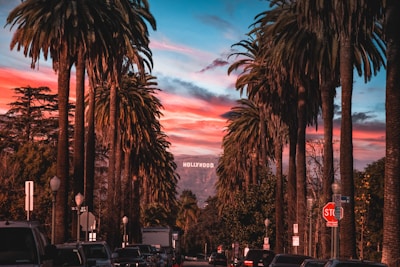
Los Angeles has no centre. This is not a flaw — it is the city's founding logic. Where New York's identity is compressed into a single island and shaped by density and verticality, Los Angeles expanded horizontally across a basin between mountains and ocean and became something that no other city on earth resembles. The result is a place where neighbourhood identity is everything: Hollywood and Silver Lake and Koreatown and Malibu and Compton are all “Los Angeles” and all entirely distinct — in architecture, culture, food, cost, and character. First-time visitors who try to do “LA” without understanding this geography spend four days in traffic. Visitors who understand it spend four days discovering that Los Angeles is many excellent cities simultaneously.
The entertainment industry — film, television, music, streaming — is the visible layer, and it is real: the studio tours at Warner Bros. and Sony are among the most genuinely interesting industry experiences available anywhere. But the city underneath is more interesting. Los Angeles has quietly become one of the world's finest food cities — its Mexican food (rooted in Oaxacan, Sonoran, and Mexican-American traditions going back generations) is the best outside Mexico; its Korean food (Koreatown on Wilshire Boulevard is the densest Korean restaurant district outside Seoul) is extraordinary; its Thai food (specifically the East Hollywood/Thai Town cluster around Hollywood Boulevard and Normandie) is the best in the USA. The city has world-class art in the Getty Center and LACMA; genuinely extraordinary hiking within 20 minutes of the freeway; and a beach culture — from the family quietness of Manhattan Beach to the performance-art chaos of Venice — unlike anything accessible from a major city elsewhere in the world.
The practical truth about Los Angeles is that a hire car is not optional — it is the city. The Metro system is improving but covers only a fraction of what makes the city worth visiting. Los Angeles without a car is Los Angeles from a hotel lobby. Budget for the rental, the parking (valet is often the only option in West Hollywood and Beverly Hills — USD $15–30), and the gas, and then drive everywhere, because the driving itself — on Mulholland Drive with the city spread below, on PCH with the Pacific inches from the window — is part of the experience.
🌞 Los Angeles at a Glance
- City area: 1,302 km² — one of the largest city footprints in the world by area
- Population: 3.9 million city, 13.2 million Greater LA metro — 2nd largest US metro
- Climate: Mediterranean — warm and dry year-round, rain almost exclusively December–March
- 284 sunny days per year — the weather is the city's permanent infrastructure
- Coastline: 70 miles of Pacific from Malibu in the north to Palos Verdes in the south
- The Getty Center: free entry, world-class Impressionist collection, best hilltop view of the city
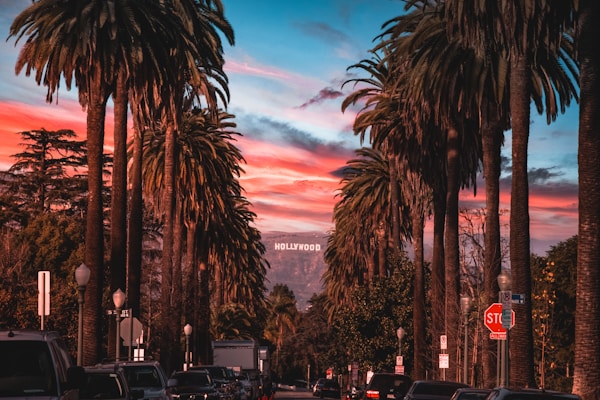
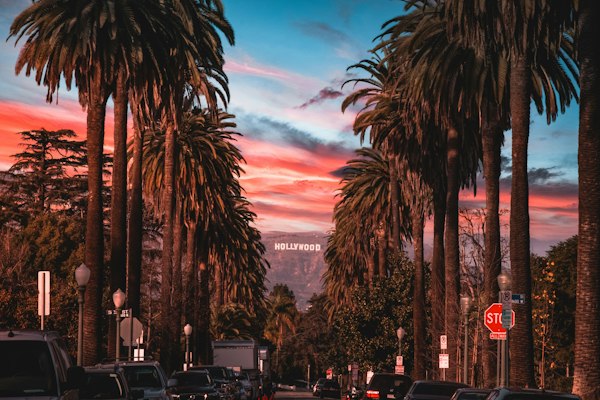
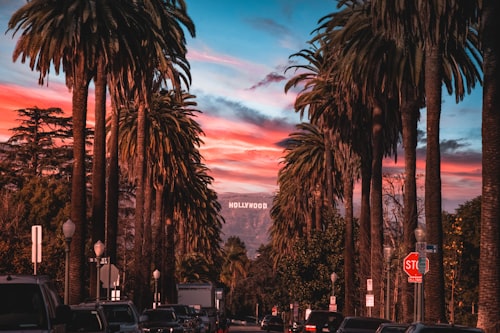
- Griffith Observatory: free entry, best view of the Hollywood sign and the LA basin, no reservation needed
- LAX is a direct 15–16 hour flight from Brisbane — Qantas operates this route daily