The complete 2026 guide to AFL — Australia's most spectacular and uniquely indigenous sport. Understand the rules, read the scoreboard, know the history, and experience a match at the MCG like a local, with Cooee Tours.
Australian Rules Football — AFL, footy, the game — is one of the world's most distinctive sporting spectacles. Played on the largest field of any professional sport, with no offside rule, spectacular high-flying marks, and a unique scoring system that keeps every match in doubt until the final siren. This is the game Melburnians live and breathe. Here's everything you need to enjoy it.
Australian Rules Football — universally called "footy" in southern Australia — is both Australia's most popular spectator sport and one of the world's most unusual football codes. It was codified in Melbourne in 1858, predating rugby union's written rules and soccer's Football Association by several years. It is the world's oldest organised football game still played under its original rules framework.
The Australian Football League (AFL) is the premier professional competition. The distinction matters: Australian Rules Football is the sport; AFL is the professional league at the top of that sport, in the same way football is the sport and the Premier League is one competition within it. The AFL features 18 clubs drawn from across Australia, competing from March through September in a home-and-away season followed by a four-week finals series culminating in the Grand Final at the Melbourne Cricket Ground.
What makes it genuinely different from every other football code: the oval-shaped field (the largest playing surface in professional sport), the complete absence of an offside rule (players can move freely anywhere on the field at any time), the two-tier scoring system (goals worth 6 points and behinds worth 1), and the unique skills of marking (catching a kicked ball to earn a protected free kick) and handballing (punching the ball to a teammate rather than throwing it). The combination creates a fast, open, high-scoring game that is immediately exciting even without full rule comprehension.
No offside. No limit on where you can run. No restriction on the direction you kick. A field the size of a city block. That's Australian Rules Football — and once you've seen it live, you'll understand why Australians are so proud of it.
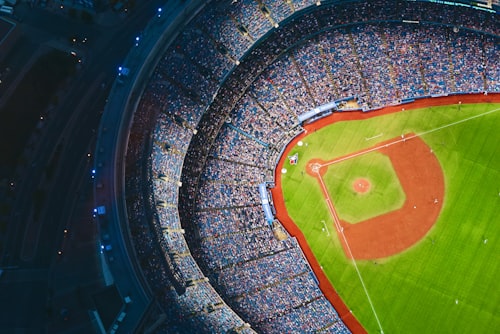
— Cooee Tours Sport & Culture Team · 2026The AFL field is an oval, usually a converted cricket ground — the MCG (Melbourne Cricket Ground), Adelaide Oval, and the Gabba in Brisbane all host both codes in their respective seasons. The playing area is enormous: regulations allow ovals from 135–185 metres in length and 110–155 metres in width. The MCG itself is approximately 171 by 146 metres, one of the largest sports venues on Earth. Players routinely cover 12–15 km per match, making AFL one of the most physically demanding sports in the world.
The objective is straightforward: score more points than the opposition by moving the ball to your attacking end and kicking it through the goal posts. Players can move the ball three ways: by kicking it (most common), by handballing (punching it with a closed fist to a teammate), or by running with it — though a player carrying the ball must bounce it on the ground every 15 metres, or they can be tackled and penalised.
There is no offside rule. Players can go anywhere on the field at any time. This is the single most important fact for understanding why AFL looks so different from other football codes — the game is genuinely three-dimensional, with players attacking and defending across the entire oval simultaneously.
The "mark" is arguably AFL's most spectacular element: when a player catches a kicked ball that has travelled more than 15 metres without anyone touching it, they earn a "mark" — a protected free kick taken from the spot of the catch, with all opponents required to stay behind them. Spectacular marks taken over the heads of opponents ("speccy" marks, short for spectacular) are celebrated by crowds with the same intensity as goals. The high-flying athleticism involved — players sometimes climb on each other's backs — is immediately impressive to any viewer, regardless of football knowledge.
Players can be tackled — physically seized below the shoulders and above the knees — while carrying the ball. If caught in a tackle with the ball and unable to legally dispose of it (by kicking or handballing), they are penalised for "holding the ball" and the opposition receives a free kick. This creates the game's constant physical contest and the urgency with which players move the ball. Unlike rugby, play continues fluidly even through physical contests rather than stopping for set plays.
AFL's scoring system is one of the game's most distinctive and initially confusing elements for visitors — but it becomes intuitive within the first quarter of a match. Four posts stand at each end of the ground: two tall central goal posts and two shorter outer behind posts. Depending on how the ball passes through these posts, it is worth either 6 points or 1 point.
AFL scores are displayed in the format Goals.Behinds (Total Points). The format preserves the full statistical picture while providing the total at a glance. Here is a realistic example of a close game:
This scoreline tells you: Richmond won by 3 points, scoring 14 goals (84 points) and 9 behinds (9 points) to Collingwood's 13 goals (78 points) and 12 behinds (12 points). Notice that Collingwood had more behinds but fewer goals — they had more scoring shots overall but converted less accurately. This is the tactical heart of AFL scoring: accuracy under pressure frequently decides close matches.
The one-point behind creates strategic complexity that experienced AFL fans analyse constantly. A team that kicks 20 goals and 20 behinds (140 points) would lose to a team that kicks 24 goals and 4 behinds (148 points), despite the first team having four more scoring shots. Kicking accuracy — converting scoring opportunities into goals rather than behinds — is one of the most scrutinised aspects of AFL team performance. Close matches often hinge on a team's accuracy in the last quarter.
Each AFL team fields 18 players during play, with 4 interchange players on the bench who can rotate onto the field at any time through a designated interchange gate. There is no limit on the number of rotations, which means coaches rotate players 60–80 times per game to maintain freshness across the enormous playing surface.
AFL positions are organised into three lines — forwards (attacking), midfielders (linking), and backs (defending) — with specialist ruckmen contesting aerial duels at stoppages. Modern tactics have significantly blurred these boundaries, but the traditional structure remains the conceptual framework for understanding the game:
Contemporary AFL has moved significantly toward positional fluidity. Teams now deploy sophisticated zone-based defensive systems, structured ball movement chains, and "zonal forward lines" that break from traditional position-specific roles. The most successful teams of the past decade have been those with the most versatile players capable of performing multiple roles across different zones of the ground. For first-time spectators, the simplest frame is to watch where the ball is going and notice how both teams respond: the sweeping, coordinated patterns that emerge when teams move the ball quickly are one of the sport's most beautiful elements.
An AFL match consists of four quarters, each with 20 minutes of active playing time plus "time on" — extra minutes added by umpires to compensate for stoppages, goals, injuries, and boundary incidents. In practice, each quarter runs 27–32 minutes in real time. Including breaks (6 minutes at quarter and three-quarter time, 20 minutes at half-time), a complete match typically lasts 2.5 to 3 hours.
The AFL regular season (Home and Away rounds) runs from March through August, comprising 23 rounds. Each club plays 22 matches — roughly 11 home games and 11 away. The AFL Finals Series follows in September across four weeks (the first three weeks are double-chance elimination rounds; the fourth is the Grand Final). The season ends on the last Saturday of September.
The Anzac Day match (April 25 — Collingwood vs Essendon at the MCG) is the most emotionally charged fixture of the year: 90,000+ spectators, a pre-game Anzac Day ceremony, and one of the great rivalries in Australian sport. It sells out instantly — book months in advance or through a tour operator. The AFL Finals series (September) delivers maximum intensity but comes with the highest ticket prices and most demanding availability. For visitors wanting good football with realistic ticket access, the regular winter season (May–August) is often the sweet spot: competitive matches, easier availability, and more affordable prices.
Australian Rules Football was codified in Melbourne in 1858, making it one of the oldest organised football codes on Earth. The first recorded match was played on July 10, 1858, between Scotch College and Melbourne Grammar School on parkland adjacent to the Melbourne Cricket Ground — the same location that now hosts the Grand Final. The Melbourne Football Club, founded in 1858, is the oldest continually operating football club in the world.
The primary architect of the game's first rules was Tom Wills, a prominent cricketer educated at Rugby School in England who returned to Melbourne in the 1850s seeking a winter fitness game for cricketers. Rather than replicate English football codes, Wills and his collaborators developed a genuinely new game suited to the large open spaces of colonial Melbourne — specifically, the MCG itself. The sport's oval shape, the absence of offside, and the free-flowing nature of play are all deliberate departures from the English codes Wills knew.
The sport spread rapidly through Victoria during the 1860s–1880s, initially called "Victorian Rules" or "Melbourne Rules." The Victorian Football League (VFL) was established in 1896 with eight founding clubs: Carlton, Collingwood, Essendon, Fitzroy, Geelong, Melbourne, St Kilda, and South Melbourne — five of which still play under their original names today. The VFL Grand Final was first played at the MCG in 1902, establishing a tradition that continues uninterrupted.
The transformation from VFL to AFL (Australian Football League) occurred in 1990 as the competition expanded nationally, incorporating teams from South Australia, Western Australia, Queensland, and New South Wales. Today the AFL fields 18 clubs across six states, though Melbourne (with 9 clubs) remains the spiritual heartland of the sport.
The question of Indigenous Australian influence on the game's origins remains historically contested but culturally significant. Substantial evidence suggests the Djabwurrung and Jardwadjali peoples of western Victoria played a game called "Marn Grook" (meaning "game ball") involving kicking a possum-skin ball and catching it — elements that distinctly mirror AFL marking. Tom Wills spent time in the same region as a child and would have encountered this game. While academic consensus varies, the AFL has formally embraced the connection as part of the sport's cultural heritage.
Indigenous Australian players have made extraordinary contributions to AFL — Adam Goodes (two-time Brownlow Medallist, dual Premiership winner), Michael Long, Nicky Winmar, and Lance "Buddy" Franklin are among the most celebrated. The annual Indigenous Round and the Dreamtime at the 'G match (Essendon vs Richmond, with full Indigenous cultural ceremony) are among the season's most meaningful fixtures. The AFL actively acknowledges this connection through reconciliation programs, and the AFLW competition has Indigenous-themed rounds and guernseys.
AFL Grand Final day functions as an unofficial national holiday in Victoria, South Australia, and Western Australia. Melbourne businesses close early, households gather for viewing parties, and thousands of expatriate Australians worldwide schedule their waking hours around the broadcast. The MCG on Grand Final day — 100,000 spectators in team colours, the roar that rises when the siren sounds at the end of a close fourth quarter — is one of the great sporting experiences on Earth. Understanding this cultural weight is the key to understanding why Melburnians care so deeply about the game.
Arrive 30–45 minutes before the first bounce. The MCG opens 90 minutes before games; use this time to explore the concourse, find your seat, grab food, and absorb the atmosphere as it builds. The pre-game entertainment — team warm-ups, boundary riders, crowd noise building — is part of the experience.
The meat pie is the mandatory AFL food. Every venue sells them; at the MCG you can now choose from artisan versions. Four'N Twenty remains the traditional brand. Australian beer (Victoria Bitter, Carlton Draught) is the drink. Prices are venue-standard — approximately $8–12 for a pie, $10–14 for a beer. There are alcohol-free sections in most stadiums.
Melbourne AFL season (March–September) ranges from mild to cold — 8–18°C. Layer up with a warm jacket; matches run into cool evenings. Wearing team colours adds enormously to the experience. Official merchandise is available at venue shops, but neutral clothing is entirely acceptable — you're a visitor, not a traitor.
The MCG has four stands encircling the oval. Members areas (heritage-listed standing sections at the MCG) are the most atmospheric but require membership or guest access. General reserved seating is available at all price points; buying anywhere gives you a reasonable view thanks to the bowl-shaped seating. Avoid the extreme ends if you want to follow play from goal to goal.
AFL crowds are passionate but overwhelmingly good-natured. Opposing supporters regularly sit in the same sections, banter freely, and share the experience. Aggressive crowd behaviour is genuinely rare — it's a family sport as much as a tribal one. Ask local fans questions; Australians love explaining their sport to interested visitors, and you will learn more in one quarter from a neighbouring fan than from any guide.
The MCG is in Yarra Park, a short walk from Flinders Street Station and Richmond Station. On match days, a dedicated MCG tram service runs from the CBD. Marvel Stadium is in the Docklands precinct, walkable from Southern Cross Station. Neither venue provides adequate parking — public transport is strongly recommended and is how most Melburnians attend.
Cooee Tours AFL match-day experiences take the complexity out of attending your first (or fifth) AFL match. We handle the tickets, the transport to and from the ground, and provide a knowledgeable local guide who explains what's happening on the field — the rules, the tactics, the history, the rivalries — in real time, as it happens. Small groups mean personal attention; our guides have watched footy for decades and genuinely love sharing it.
ATAS accredited · Small groups · MCG & Marvel Stadium · Regular season and finals available
Australian Rules Football is the sport — the game itself. AFL (Australian Football League) is the premier professional competition at the top of that sport, like the relationship between football and the Premier League. AFL features 18 professional clubs. The sport is also played at amateur, school, state league, and community levels. When Australians say "footy" in Melbourne, they mean Australian Rules Football; in Sydney or Brisbane, "footy" more commonly means rugby league.
Two ways to score. A goal (6 points) is scored by kicking the ball cleanly between the two tall central posts — the umpire signals this with both arms raised. A behind (1 point) is scored when the ball passes between a tall post and a shorter outer post, hits any post, or is touched before crossing between the tall posts. Scores are displayed as Goals.Behinds (Total) — for example, 14.9 (93) means 14 goals (84 points) + 9 behinds (9 points) = 93 total points.
Four quarters of 20 minutes each, with umpires adding time on for stoppages. Each quarter runs approximately 27–32 minutes in real time. Including two 6-minute breaks and a 20-minute half-time, a complete match lasts approximately 2 hours 30 minutes to 3 hours. AFL Grand Finals sometimes run slightly longer due to the highest volume of time on in any game of the year.
Regular-season general admission is approximately AUD $30–45; reserved seating AUD $45–95; premium reserved AUD $95–165. Finals matches cost significantly more — reserved seating starts from approximately AUD $80 for the first week of finals and rises. Grand Final public ballot tickets range from AUD $220 to $650+. Corporate and hospitality packages start from AUD $250+ for regular season and considerably more for finals. Cooee Tours AFL packages start from approximately AUD $150 per person including tickets, transport, and guide.
A fast-moving, physically spectacular sport with a genuinely welcoming crowd atmosphere. Both sets of supporters typically sit in mixed sections and banter good-naturedly. The pace is considerably faster than rugby or American football. Arrive 30–45 minutes early to soak up pre-game atmosphere and find food before queues form. The MCG's pre-bounce noise builds in the final minutes before first bounce — the atmosphere alone is worth attending for. Australians love explaining their sport to interested visitors; don't hesitate to ask the person next to you.
Fundamentally different sports despite both being called football. AFL is played on an oval (vs rectangular in rugby), has no offside rule, uses a marking system where catching a kick earns a protected free kick, and allows movement in all directions. Scoring uses goals (6 points) and behinds (1 point) rather than tries and conversions. AFL games typically score 80–120 points per team; rugby scores 12–35 points. AFL players wear minimal padding; the ball is slightly different in shape. The gameplay is much faster and more continuous than either rugby code.
Anzac Day (April 25 — Collingwood vs Essendon at the MCG) is the single most iconic AFL fixture, combining intense rivalry with national commemoration — book months in advance. The AFL Finals Series (September) provides maximum intensity but requires the earliest booking and highest prices. The King's Birthday long weekend (June) and Easter weekend feature traditional blockbuster matches. For visitors wanting good football with realistic ticket availability, the regular winter season May–August is the practical sweet spot.
Absolutely — and most first-timers do exactly this. The spectacular athleticism (high-flying marks, long-distance goal kicks, physical contests), crowd energy, and fast pace are immediately compelling regardless of rule knowledge. Follow the basics: kick or handball the ball toward the tall posts; 6 points for a goal between the tall posts; 1 point for a near-miss. A Cooee Tours guide explains rules in real time throughout the match, making the experience accessible and progressively more rewarding as understanding builds.
The Ashes, the MCG Boxing Day Test, and how to experience Australian cricket as a tourist — complete guide.
Melbourne, Sydney, the Great Barrier Reef, and seven more — the best places to visit in Australia.
The complete East Coast journey from Cairns to Sydney — itineraries, budgets, key stops, and insider tips.
65,000 years of Indigenous history, culture, and connection — understanding Australia's First Nations heritage.