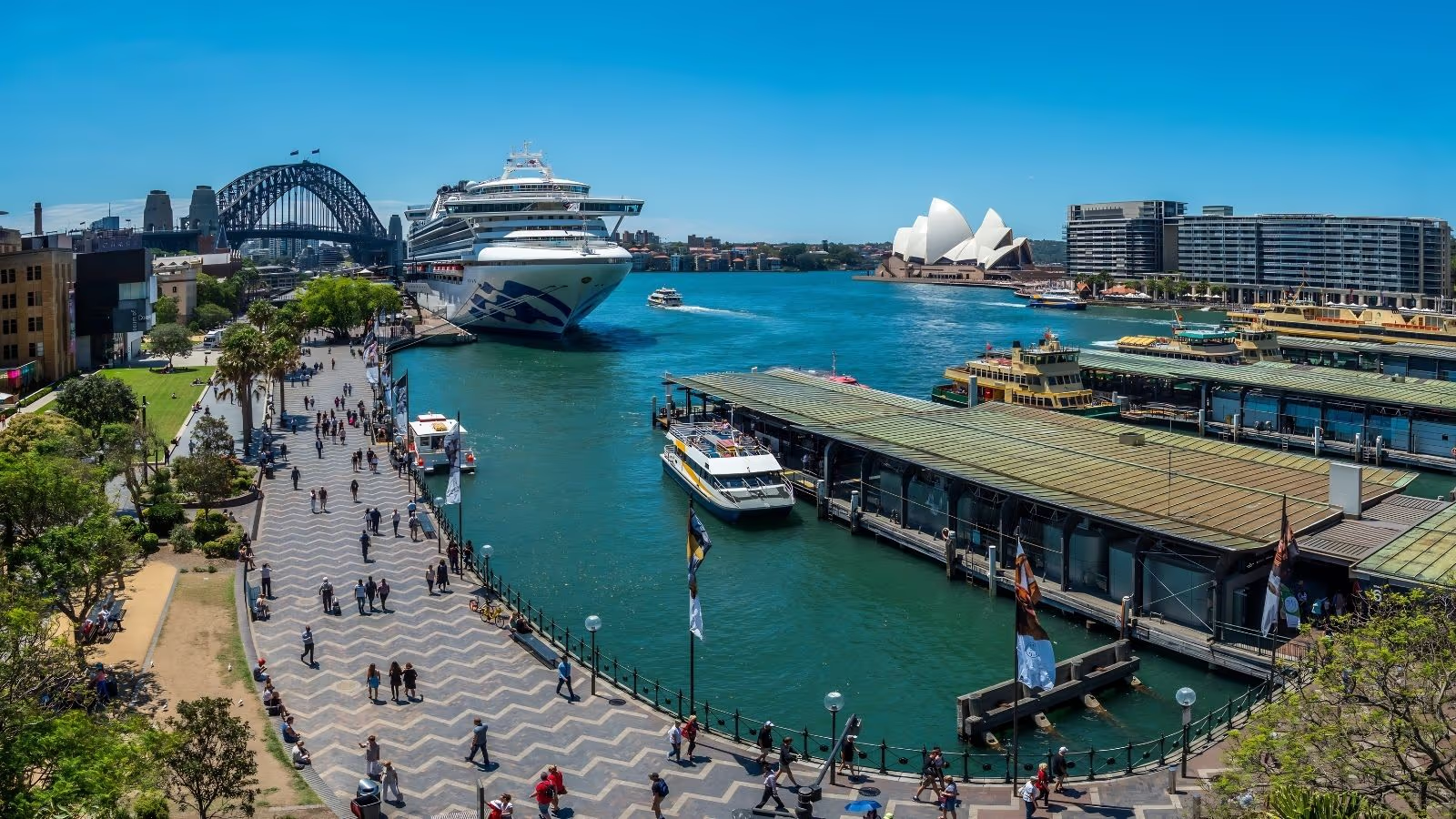
Sydney is a straightforward city to visit and a surprisingly easy one to get slightly wrong. The mistakes are rarely dramatic. They are small, repeated ones: half an hour lost to a route that looked short, an unexpected fare, an afternoon at the wrong beach, a sunburn acquired in what felt like mild weather. None of them ruins a trip. All of them are avoidable if somebody tells you first.
Everything is further than it looks
Start here, because most other first-timer problems are downstream of it. Sydney’s map is misleading. The harbour cuts the city into pieces, and the road network funnels through a small number of crossings, so two points a short distance apart as the crow flies may be a long way apart in practice.
The specific traps: the northern beaches are much further from the city than they appear and are a half-day commitment at least. Bondi has no train station — you take the train to Bondi Junction and then a bus. And anything requiring a harbour crossing at peak hour by road will take considerably longer than the map suggests.
The reliable fix is to use the water. Where a ferry exists, it is usually the fastest and always the most pleasant option, and it is priced as ordinary public transport.
The fare rules, and the one that catches everyone
Sydney runs a single tap-on, tap-off system across trains, metro, buses, ferries and light rail. You can use a contactless bank card or phone; for most adult visitors there is no advantage to buying a physical card, and no price difference.
Three things worth knowing before you tap:
- Tap off as well as on. On trains, the metro and ferries, failing to tap off charges you the maximum fare for that trip.
- Fares are capped daily and weekly, and weekends and public holidays carry a much lower daily cap than weekdays. If you have a choice about which day to do a lot of travelling, do it on a weekend.
- Use the same card or phone every time. Switching between a physical card and a phone splits your travel across two accounts and breaks the cap.
Journeys starting or ending at the airport stations carry a separate station access fee on top of the normal fare, and it sits outside the daily and weekly caps. It is the single most common unpleasant surprise on a Sydney transport bill. For a group of three or four, a taxi or rideshare to the city can genuinely work out comparable.
Fares are reviewed annually, so check current figures at transportnsw.info before you travel. Our Sydney transport guide has the full breakdown.
The sun is stronger than you think it is
This is the one visitors from the northern hemisphere consistently underestimate, and it is the only item on this page with real consequences.
Australia sits under a thinner ozone layer with a clearer atmosphere, and the UV index in Sydney regularly reaches levels that are rare in Europe or most of North America. You can burn badly on a mild, overcast spring day. The temperature is not the signal — a twenty-two degree October afternoon in Sydney can carry more UV than a thirty-degree day in the Mediterranean.
Practically: sunscreen every day between roughly September and April regardless of cloud, a hat, and shade in the middle of the day. Australian sunscreen is cheap, widely sold and formulated for the conditions. Buy it here rather than bringing it.
Beaches: the flags are not decorative
Sydney beaches are patrolled by volunteer lifesavers, and the red and yellow flags mark the section of water they are watching. Swimming between them is not a suggestion. Rip currents are the actual hazard on an Australian surf beach — not sharks, which preoccupy visitors far out of proportion to the risk — and they are difficult for an inexperienced swimmer to identify.
If you are caught in a rip, the advice is to stay calm, not to swim against it, and to raise an arm for help. Rips pull you out, not under.
Two other things worth knowing. Not all Sydney beaches are surf beaches: the harbour beaches are calm, shallow and much better for young children. And Sydney’s ocean pools — tidal rock pools built into the coastline at dozens of beaches — are free, distinctively Sydney, and the best option on a day when the surf is too rough. Our Sydney beaches guide covers which is which.
What is genuinely worth doing, and what is not
Worth it: the ferry to Manly, the Bondi to Coogee coastal walk, the Royal Botanic Garden and Mrs Macquarie’s Chair for the classic harbour view, an evening in Newtown or Surry Hills, and the Blue Mountains if you have a spare day.
Overrated for the money: paid harbour cruises, which do a slightly nicer version of what the ferries do for several times the price. Also the observation tower, which offers a view that the free harbour vantage points largely match.
Divisive: the Opera House interior tour and the bridge climb. Both are genuinely good and both are expensive. If you are going to do one paid marquee experience in Sydney, we would pick the bridge climb, because there is no free substitute for it — whereas the Opera House is at its best from outside, which costs nothing.
Underrated: the inner-west suburbs, the harbour beaches, and simply spending an afternoon on a ferry with no destination in mind.
Where to base yourself
For a first visit of three to five days, stay in or immediately around the central city. It is not the most characterful part of Sydney, but everything connects from there and you will spend less time in transit than anywhere else.
The eastern suburbs near Bondi suit a longer stay or a beach-focused trip, at the cost of a longer commute to everything else. The inner west — Newtown, Glebe, Marrickville — is where you would stay for the food and the nightlife, and it is well connected. The lower north shore is quiet, green, ferry-connected and often better value.
What we would avoid on a first trip: anywhere requiring a car, and anywhere on the far side of a harbour crossing from the things you intend to do. Our neighbourhoods guide breaks these down properly.
Timing your days around the city
Sydney has rhythms that are easy to work with once you know them, and expensive to fight.
Mornings are the best part of the Sydney day for most of the year. The light is good, the coastal walks are quiet, the beaches have not filled, and in summer it is the only comfortable time to be outdoors for long. Australians swim early; a Bondi beach at seven in the morning is a genuinely different place from the same beach at one in the afternoon.
The middle of the day in summer is when to be indoors or in shade, which is when a gallery, a long lunch or a ferry with a roof earns its place in the itinerary. Late afternoon is the second good window, and sunset is when the harbour is at its best.
Two scheduling notes. Weekday peak hours on public transport are genuinely busy between roughly seven and nine in the morning and four and six in the evening, and off-peak fares are cheaper outside them. And Sydney restaurants tend to serve earlier than European visitors expect — a kitchen that closes at nine is normal, and turning up at nine-thirty hoping for dinner will not go well outside a handful of inner-city areas.
Small practical things
- Cash is not accepted on public transport. None of it. Bus drivers cannot sell you a ticket.
- Tipping is not expected in restaurants, bars or taxis. Rounding up is fine; a percentage is not required.
- Tap water is safe and good everywhere in Sydney. Bottled water is an unnecessary expense.
- Bottle shops are separate from supermarkets. Alcohol is sold in dedicated stores, not in the grocery aisle.
- Sunday is not a quiet day. Shops, transport and attractions run normally, and the transport fare cap is at its lowest.
- Australian plugs are type I and the supply is 230V. Bring an adapter.
What things cost, roughly
Sydney is an expensive city by most standards, and it is worth arriving with calibrated expectations rather than being surprised at the first coffee.
Broadly: a flat white sits in the mid single figures, a pub meal in the mid-to-high twenties, a mid-range restaurant main in the thirties to forties, and a schooner of beer somewhere between eight and fourteen dollars depending on the suburb. Accommodation is the line that hurts most, particularly between December and February and over event weekends.
The offsetting fact, and the reason Sydney is cheaper than its reputation for many visitors, is how much of the city is free. Every beach is free and public — there is no such thing as a private beach in New South Wales. The coastal walks, the ocean pools, the botanic gardens, the harbour foreshore parks and the state gallery’s permanent collection all cost nothing. A very good Sydney day can consist of a fare cap, lunch and a swim.
Our Australia on a budget guide covers the national picture if you are costing a longer trip.
Use the harbour properly
Most first-time visitors treat the harbour as scenery. It is better understood as infrastructure that happens to be beautiful, and using it that way changes the trip.
The ferry network runs from Circular Quay to Manly, Taronga, Watsons Bay, Cockatoo Island, Darling Harbour and a dozen other points, on ordinary public transport fares that count towards your daily cap. The Manly run is the famous one and deserves it — half an hour out past the Opera House, the Heads and the open ocean swell for the price of a bus trip. Watsons Bay is quieter, ends at a swimming beach and a decent pub, and gets a fraction of the traffic.
Two tips. Sit outside and on the right-hand side heading out from the Quay for the Opera House and bridge together. And do at least one ferry near sunset, which is when the sandstone headlands turn and the harbour does the thing everyone photographs.
The Sydney Harbour guide maps out the routes and what is at the end of each.
Things visitors worry about that are not worth worrying about
A short list, because anxiety about the wrong things costs people time and money in Sydney.
Sharks. The risk at a patrolled Sydney beach is very small, and rip currents are the hazard that actually accounts for drownings on Australian beaches. Swim between the flags and the statistics are on your side by a wide margin.
Spiders and snakes. Both exist and neither is a realistic urban concern. You are not going to meet a snake on a coastal walk in Bondi. Shake out your shoes if you are camping; otherwise forget it.
Crime. Sydney is a safe city by international standards and the ordinary precautions of any large city are sufficient. The main risk to a visitor is a lost phone.
Language and etiquette. Australians are informal, direct, and will not be offended by much. Address staff casually, do not tip, and do not stand on the right of an escalator unless you want to be walked around — keep left, walk right.
The things genuinely worth worrying about, by contrast, are the sun, the surf and the transit times. Those are the three that catch people out, and all three are covered above.
If you only remember three things
Take the ferry rather than the cruise. Wear sunscreen on days that do not feel like sunscreen days. And build your itinerary around transit times rather than map distances, because that single habit prevents most of the frustration first-time visitors report.
Everything else about Sydney is forgiving. It is a safe, English-speaking, well-connected city where the best things are outdoors and mostly free, and it is very hard to have a bad time in it once you stop fighting the geography.
Frequently asked questions
Do I need an Opal card, or can I use my bank card?
Why is the train from Sydney Airport so expensive?
Is it safe to swim at Sydney beaches?
How bad is the sun in Sydney really?
Where should I stay on a first visit?
Do I need to tip in Sydney?
Do I need to hire a car in Sydney?
Planning a Sydney trip?
We have been running guided touring in Australia since 1974. Tell us what you want out of Sydney and we will put an itinerary around it.
Talk to a specialist