


🌏 Why Sustainable Travel Matters — The 2026 Picture
Tourism represents approximately 8% of global carbon emissions. As international travel rebounds to and beyond pre-pandemic levels, the industry faces genuine pressure to reduce its environmental footprint while remaining economically viable for the communities it supports. The good news for travellers: the tools to make better choices are more accessible than ever.
Sustainable travel doesn't mean compromising the experience — it means making informed choices about which operators to support, how to get between destinations, and how to engage with natural environments. At its best, it produces richer experiences: Indigenous cultural tours, wildlife encounters led by conservation-funded guides, and farm-to-table food that's genuinely local.
The most biodiverse and fragile destinations — coral reefs, ancient rainforests, alpine and polar regions — are exactly where careless tourism does the most damage and where good choices matter most. Frameworks like the Global Sustainable Tourism Council (GSTC), Leave No Trace, and reef-management authorities exist to help you visit these ecosystems without harming them. Choosing certified operators directly funds the conservation work that keeps these places accessible.
🤖 How AI Transforms Eco-Friendly Travel — Real Tools for 2026
AI and technology genuinely help eco-conscious travellers make better decisions — when used purposefully. Here are the tools that are actually useful for sustainable travel anywhere, with an honest assessment of what each does.
Skyscanner — Greener Choice Filter
Skyscanner's flight search now includes a "Greener Choice" label on lower-emission flight options. When you must fly, this helps identify routes and airlines with better fuel efficiency. Not perfect — but a genuine and accessible starting point.
Rome2rio — Multi-Modal Route Planning
Rome2rio compares train, bus, ferry, and car options alongside flights — the best tool for finding lower-carbon ways to travel between cities anywhere. Paris to Amsterdam by rail? Tokyo to Kyoto by Shinkansen? Sydney to Melbourne overnight? It shows the options side-by-side.
GSTC & Certified-Operator Finders
The most reliable way to find genuinely sustainable operators is to search certification bodies directly. The Global Sustainable Tourism Council (GSTC) recognises standards worldwide; schemes such as Travelife and EarthCheck list certified members, and many countries run their own verified directories. These verify claims rather than taking operators at their word.
Google Hotels — Eco-Certification Filter
Google Hotels surfaces recognised eco-certifications (such as GSTC-accredited schemes) directly in hotel listings, letting you filter for properties with verified environmental credentials — renewable energy, waste reduction, water conservation, and local sourcing. Handy for screening accommodation in any city.
Google Travel — Carbon Emissions Estimates
Google Flights now shows carbon emissions estimates for flights in search results, making it easy to compare the environmental cost of different routes and airlines when planning any trip. Simple and integrated into the search most people already use.
PlugShare — EV Charging Worldwide
For road trips in an electric or hybrid vehicle, PlugShare maps charging stations across more than 60 countries, with reviews and real-time availability. EV road trips are now genuinely practical across Europe, North America, and Australia — plan your charging stops the same way you'd plan fuel.
By 2026, generative AI tools can craft personalised eco-itineraries that consider a traveller's preferences alongside local environmental data — avoiding overcrowded sites, suggesting certified eco-lodging, and combining transport modes to reduce emissions. Research indicates AI-driven route planning can reduce a typical trip's carbon footprint by approximately 15% compared to traditional planning. The most practical version: use AI assistants to find train alternatives to flights, identify certified sustainable operators, and plan routes that sequence destinations efficiently to minimise backtracking.
🌱 Sustainable Tourism Certification — The Verification That Matters
Anyone can call a tour "eco". Independent, third-party certification is what separates a genuine commitment from greenwashing. The global benchmark is the Global Sustainable Tourism Council (GSTC), which sets the criteria that most reputable national and regional schemes are measured against. When an operator or hotel is certified against a GSTC-recognised standard, its environmental and cultural practices have been independently verified — not just self-reported.
GSTC — The Global Standard
The Global Sustainable Tourism Council sets the internationally recognised criteria for sustainable tourism, covering environmental management, cultural respect, community benefit, and visitor education. It accredits the certification bodies that audit operators worldwide.
Travelife & EarthCheck
Two of the most widely used GSTC-recognised schemes. Travelife certifies tour operators and accommodation against detailed sustainability criteria; EarthCheck is a science-based benchmarking and certification programme used by hotels and destinations in over 70 countries.
Trusted National Schemes
Many countries run respected GSTC-aligned programmes — Australia's ECO certification, New Zealand's Qualmark, Costa Rica's CST, and Slovenia's Green Scheme among them. A credible national badge backed by GSTC recognition is a reliable signal of genuine practice.
Not every operator claiming to be "eco-friendly" is certified. Ask which standard they are certified against and whether it is independently audited, then check the certifying body's own member directory (for example, the GSTC site lists its recognised standards). Be wary of vague, self-declared "green" claims with nothing verifiable behind them. For reef experiences, also look for the local marine-park authority's approved-operator status (such as the Great Barrier Reef Marine Park Authority's High Standard Tourism Operator list in Australia).
🌊 Sustainable Adventure Destinations Around the World
Some of the planet's greatest natural experiences are also among the best set up for low-impact travel. These destinations pair natural wonder with genuine, well-developed responsible-tourism infrastructure.
Great Barrier Reef, Australia
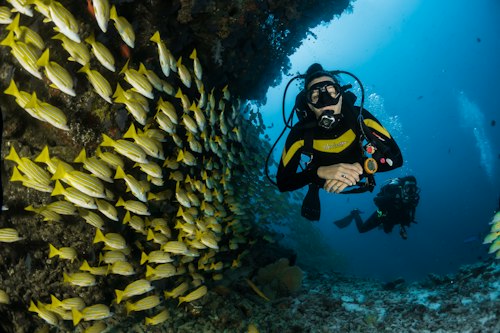
Snorkel or dive with operators holding the Great Barrier Reef Marine Park Authority's High Standard Tourism Operator status. Use reef-safe mineral sunscreen, and choose outer-reef tours that provide genuine conservation education. It's also our home reef, so we know it well.

Costa Rica
A global pioneer of ecotourism, with its own Certification for Sustainable Tourism (CST) and vast protected rainforest. Stay in certified eco-lodges, spot wildlife with naturalist guides, and support a country that runs largely on renewable energy.

The Norwegian Fjords
Norway is electrifying its iconic fjord ferries and leads the world in EV adoption. Explore UNESCO-listed fjords by silent electric boat, hike from village to village, and base yourself in towns certified under Norway's Sustainable Destination scheme.

New Zealand
Aotearoa's Qualmark system rates operators on sustainability, and the famous Great Walks offer world-class low-impact hiking. Māori-led experiences add deep cultural context to fjords, rainforest, and alpine wilderness.

Slovenia
Repeatedly ranked among the world's most sustainable destinations, with its national Green Scheme certifying towns and operators. Lake Bled, the Julian Alps, and Ljubljana's car-free centre make it a model of compact, low-impact travel.

Botswana
Botswana's high-value, low-volume tourism model funds conservation and limits visitor numbers in the Okavango Delta. Stay in solar-powered camps with strong community-benefit and anti-poaching commitments for one of Africa's most responsible safaris.
⚖️ The Honest Trade-Off: AI's Own Environmental Footprint
A genuinely useful guide to AI and sustainable travel has to include this: AI itself has a significant and growing energy footprint. Data centres running AI consumed approximately 460 TWh in 2022 — equivalent to the entire electricity consumption of Germany. The International Energy Agency projects this will double to 1,000 TWh by 2026.
This doesn't mean AI tools aren't useful for sustainable travel — they genuinely are. AI-optimised routing can reduce trip emissions by ~15%. Eco-certification finders save hours of manual research and prevent booking greenwashing operators. Carbon tracking creates accountability. These are real benefits.
The most sustainable approach: use AI tools selectively and purposefully — for planning and decision-support — rather than generating unnecessary AI content or running energy-intensive generative tasks out of curiosity. A well-targeted AI search that finds a certified eco-operator you would have missed independently has a clear net benefit. An AI that generates 10 variations of a travel caption does not. Use the tools; use them with intention.
✅ Your Sustainable Travel Checklist
Before You Book
- Verify operators against a recognised standard — check the GSTC, Travelife, or EarthCheck member directories before booking
- Use Rome2rio to identify train or bus alternatives to internal flights
- Use Skyscanner's "Greener Choice" filter when flights are unavoidable
- For reef experiences, check the local marine-park authority's approved-operator list (e.g. the Great Barrier Reef Marine Park Authority in Australia)
- Choose accommodation with a recognised eco-certification (visible in Google Hotels' eco filter) over self-declared "green" claims
- Research carbon offsetting through verified programmes such as Gold Standard
While You're There
- Use reef-safe sunscreen (no oxybenzone or octinoxate) near marine environments
- Follow Leave No Trace principles on all bushwalks and nature activities
- Book Indigenous and community-led experiences with operators working under community permission and cultural protocols
- Choose locally owned restaurants, markets, and cafés over chains
- Carry a reusable water bottle and refill where tap water is safe (a filter bottle covers you where it isn't)
- Respect all signage at natural sites — particularly sacred site restrictions and wildlife distance guidelines
- Never take rocks, shells, or natural material from protected areas anywhere (see our Responsible Travel guide)
Technology Habits
- Download offline maps before losing cell coverage in national parks (Gaia GPS, AllTrails)
- Use certification-body directories (GSTC, Travelife, EarthCheck) to find verified experiences in each region
- Track your trip emissions using Google Travel or Skyscanner's carbon estimates
- If hiring a car, select hybrid or electric — EV charging networks now cover most major tourist routes worldwide
- Use AI for planning decisions, not entertainment — keep the energy footprint of your planning proportionate
Travel Sustainably with Cooee Tours
Travelling sustainably comes down to a few good habits you can take anywhere. And if your travels reach South East Queensland, Cooee Tours runs eco-conscious day tours and guided nature immersion from Brisbane and the Gold Coast — supporting local guides and following responsible wildlife protocols.
Explore Our Tours →