Beijing & the Great Wall
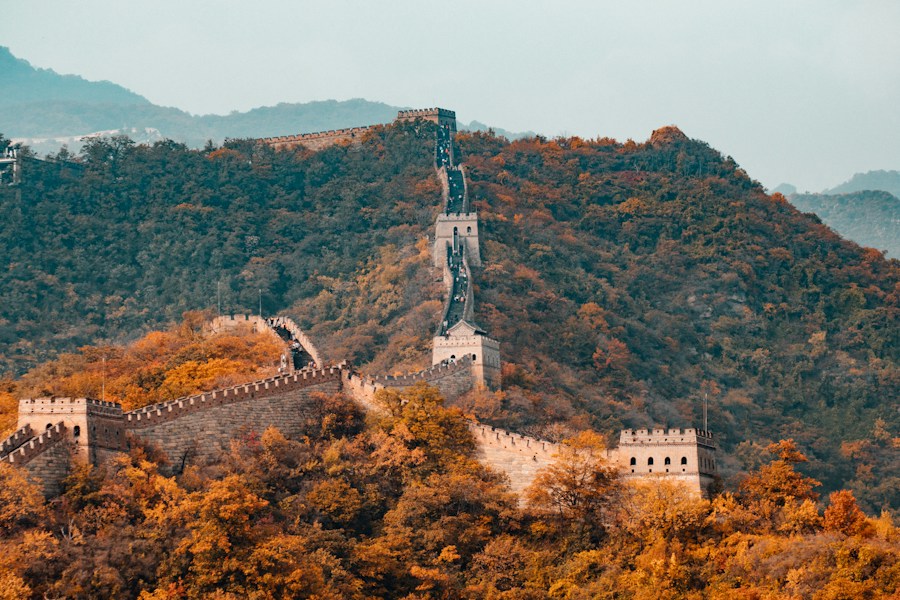
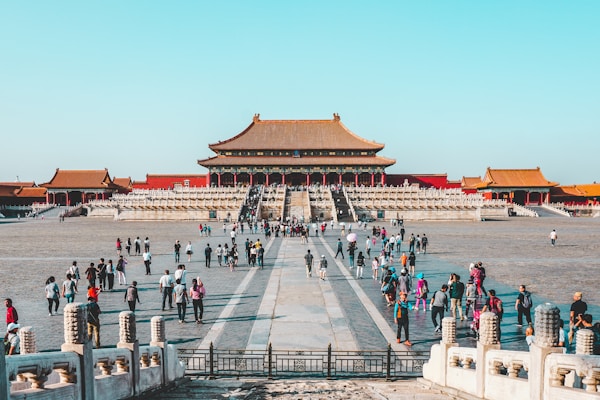
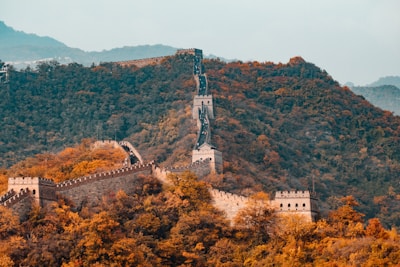
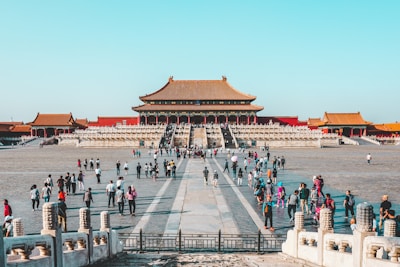
The Forbidden City, Tiananmen Square, Summer Palace, Temple of Heaven — and the Great Wall looming above forested northern mountains. China's capital is the unmissable starting point.
北京 · Capital of China
The Great Wall at dawn. The Forbidden City's vermillion gates. Guilin's impossible karst peaks. Shanghai's futuristic skyline. Giant pandas in Chengdu's bamboo groves. No country on Earth packs so much history, scale, and wonder into a single journey.
China is a country so vast and ancient it has no real parallel in the world of travel. The third-largest nation on Earth by land area, it spans climates from tropical Yunnan to frigid Harbin, and cultures from the Cantonese south to the Tibetan plateau. It is a civilisation that has been continuously inhabited for longer than almost anywhere on Earth, leaving behind a cultural and architectural legacy of staggering depth — from the Great Wall stretching across the northern mountains to the terracotta warriors buried beneath a central Chinese plain, from the floating villages of Guilin's Li River to the philosophical stillness of a Zen Buddhist temple garden in Suzhou.
At the same time, China is ferociously modern. Shanghai's Pudong skyline rivals Manhattan in architectural ambition. Shenzhen and Chengdu are technology capitals challenging Silicon Valley. The nation's high-speed rail network — the world's largest by far at over 40,000 kilometres — makes city-hopping faster and more comfortable than flying. Travelling China in 2026 means navigating a country in the midst of one of history's most remarkable transformations — where a farmer's cottage stands in the shadow of a 500-metre skyscraper, and where ancient traditions are both fiercely preserved and rapidly evolving.
For Australian travellers, China requires a little more preparation than most Asian destinations — a visa application, a VPN, some digital payment groundwork, and at least a few Mandarin phrases. The rewards for that preparation are extraordinary. This guide will help you plan confidently.
From the imperial north to the subtropical south, China's destinations span thousands of years of history and some of the world's most dramatic landscapes.
The Forbidden City, Tiananmen Square, Summer Palace, Temple of Heaven — and the Great Wall looming above forested northern mountains. China's capital is the unmissable starting point.
北京 · Capital of China
上海 · City of the Future
桂林 · Karst Mountain Paradise
西安 · Terracotta Warriors
成都 · Pandas & Sichuan Cuisine
张家界 · The Avatar Mountains
Eight cities that between them tell most of China's story — from ancient imperial capitals to revolutionary new megacities.
China's political and cultural heart for over 700 years. Imperial grandeur, world-class museums, and the Great Wall on its doorstep.
China's most cosmopolitan city — the colonial Bund, soaring Pudong towers, the French Concession's cafes, and extraordinary food.
The starting point of the ancient Silk Road and home to the Terracotta Army — one of the world's greatest archaeological discoveries.
Laidback, spicy, and utterly charming. Home to the Giant Panda Research Base, fiery Sichuan hotpot, and the most relaxed teahouse culture in China.
The otherworldly karst limestone peaks that have inspired Chinese artists for millennia. The Li River cruise to Yangshuo is one of China's great journeys.
Marco Polo called it "the finest and most splendid city in the world." Its UNESCO-listed West Lake — with willow-lined causeways, pagodas, and lotus blooms — proves the point.
Dazzling harbour views, Michelin-starred dim sum, neon-lit night markets, and tram rides up Victoria Peak. A distinct and dynamic entry point to China.
The "Venice of the East" — ancient canals, UNESCO-listed classical gardens of meticulous design, and the finest silk in all of China. A 25-minute high-speed train from Shanghai.
China has four distinct seasons and enormous regional variation. Spring and autumn are universally the best times to visit — but there are gems in every season.
The finest season for travel. Cherry blossoms in Wuhan and Hangzhou, clear skies over Beijing, mild temperatures everywhere. Avoid Golden Week (early May) when domestic tourism peaks. Book well ahead.
Hot, humid, and crowded in the south and east. Beijing is sweltering. However, summer is the best time for Tibet (road access opens), Yunnan's festivals, and the cooler mountains of Sichuan. Inner Mongolia and grassland destinations are excellent. Expect typhoon risk on southeast coast.
Arguably the best season — particularly October, when temperatures are perfect across China, foliage turns spectacular in the north, and visibility is superb. The Great Wall in October is unforgettable. Avoid Golden Week (October 1–7) — 1.4 billion people are all travelling simultaneously.
Fewer crowds and lower prices in most of China. Harbin's Ice Festival (January) is one of the world's great spectacles. Beijing and Xi'an are manageable if you dress for the cold. South China (Guangzhou, Guilin, Hong Kong) remains pleasant. Avoid Chinese New Year travel — one of the largest human migrations on Earth.
Across 9.6 million square kilometres, these are the moments that define what it means to travel China.
Skip the tourist-packed Badaling section and head to Mutianyu — restored, accessible, and breathtaking. Or hike the wild, unrestored Jiankou section for the most dramatic photography on Earth.
Sept – Nov BestOver 8,000 life-sized terracotta soldiers buried with China's First Emperor in 210 BCE — each face uniquely sculpted. One of archaeology's greatest discoveries. Allow a full day to do it justice.
HistoryGlide for four hours between the knife-edged limestone peaks that have defined Chinese landscape painting for 1,500 years. Arrive in Yangshuo — one of China's most beguiling small towns — and explore by bicycle.
Apr – Oct BestThe Chengdu Research Base of Giant Panda Breeding is the world's best place to observe these extraordinary animals. Visit early morning — when pandas are feeding and playful — for the best experience.
Year-roundStand on the colonial Bund promenade as Pudong's extraordinary skyline blazes across the Huangpu River. Then take the ferry across, ascend the Shanghai Tower observation deck, and look down on the whole glittering city.
Year-roundThe sandstone pillar landscape that inspired Pandora in Avatar. The world's longest cable car, the glass-bottomed Zhangjiajie Grand Canyon Bridge, and misty forest walks through an utterly alien landscape.
OtherworldlyThe world's largest surviving palace complex — 9,999 rooms across 72 hectares, the seat of 24 emperors of the Ming and Qing dynasties. Pre-book your timed entry ticket. Arrive early, stay late.
Mar – Jun · Sep – NovTiger Leaping Gorge, the rice terraces of Honghe, Lijiang's cobblestone old town, and ancient Tibetan monasteries in Shangri-La. China's most diverse and beautiful region — and its most biodiverse.
AdventureChina requires a little more preparation than most Asian destinations. These are the things every Australian traveller needs to know before they arrive — the details that make or break a China trip.
China blocks access to Google, Gmail, Google Maps, Facebook, Instagram, WhatsApp, YouTube, and most Western news sites. Without a VPN (Virtual Private Network), you lose access to your regular apps the moment you land.
Download and test your VPN before you leave Australia — you cannot access VPN provider websites from inside China. ExpressVPN, NordVPN, and Astrill are widely used and generally work well in China.
China is the world's most cashless society. Markets, restaurants, taxis, and convenience stores often don't accept cash or foreign credit cards. WeChat Pay and Alipay dominate.
The good news: both apps now accept international Visa/Mastercard as a funding source for foreign tourists. Set up WeChat Pay before you leave — link your Australian bank card through the app's Wallet function. Alternatively, China's major banks now offer tourist-friendly prepaid cards.
Google Maps doesn't work in China (without a VPN) and often has inaccurate map data even when it does. Download Baidu Maps or Amap (高德地图) before you arrive. Both work brilliantly in English mode and have offline capabilities.
For getting around cities, the Didi app (China's Uber) is essential. Book rides entirely within the app — English interface available. Works without a VPN. Significantly cheaper and safer than hailing unmarked taxis on the street.
English is limited outside major tourist attractions, international hotels, and upscale restaurants. In local restaurants, wet markets, smaller towns, and rural areas, you'll need a translation solution.
Download Google Translate offline (Chinese Simplified pack) before you leave — use it with your VPN while in China. The camera translation feature, which identifies characters in real time, is remarkably useful for reading menus and signs. Learning a few dozen Mandarin phrases makes an enormous difference to your experience and is deeply appreciated by locals.
China's most popular attractions — the Forbidden City, the Terracotta Army, the Giant Panda Base, and popular Great Wall sections — require timed entry tickets booked online in advance. Same-day availability is often zero.
The Forbidden City sells out weeks ahead in peak season. Mutianyu Great Wall is easier but still benefits from advance booking. The Chengdu Panda Base caps daily visitor numbers. Use the official attraction websites or the Klook platform for English-language booking.
China's high-speed rail network is the world's largest and most impressive — and booking is straightforward once you know how. The official booking platform is 12306.cn (Chinese) or the Trip.com app (English).
You'll need your passport number to buy tickets. For popular routes (Beijing–Shanghai, Beijing–Xi'an, Shanghai–Hangzhou), book 15–30 days ahead, especially during Golden Week. Tickets can be collected at any train station using your passport at the self-service machines — the process is fast and simple.
With over 40,000km of high-speed track, China's bullet trains make city-hopping faster, cheaper, and more comfortable than domestic flying. These are the routes every visitor should know.
Trains every 15–30 min · From ¥553 2nd class (~$120 AUD)
Multiple daily departures · From ¥515 2nd class (~$110 AUD)
Trains every 10 min · From ¥73 2nd class (~$16 AUD)
Trains every 10 min · From ¥36 2nd class (~$8 AUD)
Multiple daily departures · From ¥290 2nd class (~$63 AUD)
Multiple daily departures · From ¥464 2nd class (~$100 AUD)
Chinese food in Australia is a single cuisine. In China, it's eight — each as distinct as French and Italian. Eating your way through China's regions is one of travel's great pleasures.
The world's most complex heat — Sichuan peppercorns deliver a unique numbing sensation (má là, 麻辣) that is unlike any other spice on Earth. Bold, fragrant, and utterly addictive.
The foundation of most Western "Chinese food" — subtle, fresh, ingredient-forward. Cantonese dim sum (yum cha) is one of the world's great culinary traditions. Fresh seafood, delicate broths, and perfect roast meats.
Wheat-based, robust, and hearty — the food of emperors and northern winters. Peking Duck is Beijing's supreme dish — lacquered skin wrapped in thin pancakes with hoisin and scallion. Jiaozi dumplings and hand-pulled noodles are unmissable.
China requires more preparation than most Asian destinations for Australians — but it's entirely manageable with a few weeks' lead time.
| Entry Type | Status for Australians | Cost & Validity | Details & Notes |
|---|---|---|---|
| Standard Tourist Visa (L) | Visa Required | ~$200–$250 AUD · 1–10 years | Apply at the Chinese Consulate in Brisbane, Melbourne, or Sydney. Submit passport, photo, flight + hotel bookings, and bank statements. Processing: 4–5 business days standard, 2–3 days express. |
| Visa-Free Transit (144hr) | Visa-Free | Free · Up to 144 hours | Available in Beijing, Shanghai, Guangzhou, Chengdu, and several other hub cities. Requires onward ticket to a third country within 144 hours. Great for adding China to a longer trip. |
| Hainan Island Free Trade Zone | Visa-Free 30 days | Free | Hainan Island (China's tropical beach province) allows Australian passport holders 30-day visa-free access as part of its Free Trade Zone status. Direct entry to Hainan only. |
| Hong Kong SAR | Visa-Free 90 days | Free | Hong Kong operates a separate visa regime from Mainland China. Australian passport holders enter visa-free for 90 days. Note: crossing from Hong Kong to Mainland China requires a mainland China visa. |
| Macau SAR | Visa-Free 90 days | Free | Like Hong Kong, Macau is a separate SAR with its own entry rules. Visa-free for Australians. A fascinating day trip or overnight from Hong Kong — UNESCO-listed Portuguese colonial architecture and the world's highest-density casino district. |
From our team who have lived and travelled extensively across China — the things that make the difference between a good trip and an extraordinary one.
This is the number one preparation mistake first-time visitors make. Download, set up, and test your VPN while still in Australia. ExpressVPN and Astrill both have strong China track records. Once you land, you can't access VPN provider sites to sign up — it's too late.
China has two Golden Weeks — Chinese New Year (late Jan / Feb, dates vary annually) and National Day (October 1–7). 1.4 billion people travel simultaneously. Every attraction is overwhelmed, trains are packed solid, and prices spike. These are the hardest two weeks of the year to enjoy China. Avoid if at all possible.
The most memorable China experiences are rarely at the main attractions. Wander Beijing's hutong alleyways at dawn. Take the overnight sleeper train between Guilin and Kunming. Join a local mahjong session in a Chengdu teahouse. Eat breakfast at a street stall where no one speaks English. These moments define a China trip.
Flying between Chinese cities wastes a day with check-in, delays, and transfers. The Beijing–Shanghai G-train takes 4.5 hours city-centre to city-centre, is almost always on time, has generous legroom, and costs a fraction of the airfare. Use trains for all journeys under 6 hours — they are simply better than flying.