 Travel guide
Japan Accommodation: Hotels, Ryokan & Apartments
Understand room types, meal plans, traditional inns, family accommodation and the questions to ask before booking.
Explore Japan Accommodation →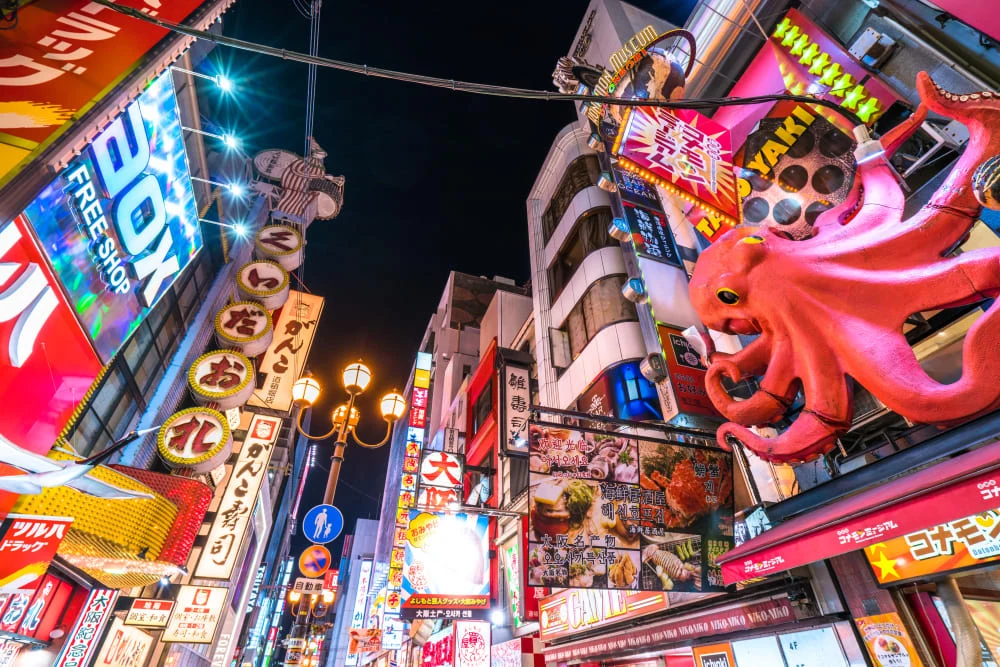
Five nights in Tokyo and five in Kansai, with room for a theme park, Nara, food discoveries and slower afternoons.
Restaurant signs and busy streets in Osaka · Photography source
Shape this journey around you. This is a proposed itinerary. Dates, prices, accommodation, transport, guides and inclusions must be confirmed in a written quote. Daily lists are choices to tailor, not a promise to complete every stop.
This proposed itinerary uses eleven days and ten nights: Tokyo for nights one to five, followed by Kyoto or Osaka for nights six to ten, with departure on day eleven. It is designed for families who prefer fewer hotel changes. Choose Kyoto if temples and early cultural visits dominate; choose Osaka if food, entertainment and a theme park matter more.
This is a planning example, not a published departure or a priced package. Flights, accommodation, transfers, guides, attraction tickets and meal inclusions need to be agreed in a written quote. The route should change for the children’s ages, flight schedule, accessibility needs and season.
Day one is for arrival, the transfer to your hotel and a simple meal nearby. If the room is not ready, store luggage and take a short local walk rather than making a prepaid attraction booking. Choose accommodation with enough beds and floor space, and establish a familiar breakfast option for the next morning.
On day two, explore Asakusa and Senso-ji, with a river or park break. Add one nearby activity if everyone is comfortable; do not automatically continue to several distant districts. Keep the evening easy. Families arriving from different Australian time zones may adjust differently, so follow the party’s energy rather than a fixed early-start rule.
Choose a manageable combination around Meiji Shrine, Harajuku and Shibuya. The shrine approach offers a change from the city streets, while shops and cafés can suit older children. If a viewpoint or timed experience matters, make it the day’s main booking and allow sufficient travel time around it.
For younger children, substitute a park, museum or shorter neighbourhood outing. The route is a framework, not an instruction to visit every named place. Plan a lunch with reliable options and return to the hotel before everyone is exhausted.
Use this day for a pre-planned Tokyo Disney Resort visit if that is a family priority. Check the official admission system, ride requirements and any additional access products for your date. A park day can be long, so agree a meeting point, rest plan and way to manage different interests.
The alternative is an interest-led Tokyo day: a suitable museum, character shopping, an aquarium or an art experience. Choose based on the children’s interests and current availability. Do not add a theme park merely because it appears on most family itineraries.
Keep the final Tokyo day deliberately flexible. Ueno and its museums, a favourite neighbourhood revisited or a short shopping outing can work well. Use part of the afternoon for laundry and packing. This is also a useful buffer if earlier weather forced a change.
Confirm tomorrow’s train, seats and luggage arrangements. If forwarding bags, check the delivery date and carry enough clothing and essentials. Buy a train meal or snacks in good time rather than turning the station departure into a hurried shopping exercise.
Travel to Kyoto or Shin-Osaka on the service appropriate to your ticket, with reserved seats together where available. A national pass should be purchased only if the actual journeys justify it. Keep the first afternoon near the new hotel and find a straightforward dinner option.
Avoid booking a major attraction immediately after arrival. Changing cities already involves checkout, station navigation, the train and another local transfer. A short neighbourhood walk is enough to make the day feel like travel rather than lost time.
Devote one day to a compact Kyoto area, such as southern Higashiyama, with one or two main visits and a planned break. A guide can be helpful if the content and pace are adapted to the children, but should be requested rather than assumed included. Avoid combining all of eastern Kyoto with Arashiyama in the same day.
Use the other day for Nara if the family enjoys temples and outdoor space. Visit Todai-ji, walk a manageable part of the park and choose either another shrine or the old town. Supervise deer encounters and follow local feeding guidance. Return early enough for a relaxed dinner near the hotel.
Spend one day enjoying Osaka’s food and neighbourhoods, or dedicate it to Universal Studios Japan if that is the chosen priority. A park visit requires its own date-specific ticket research and should not be combined with an ambitious city itinerary.
Keep day ten for the family’s preferred final experience, shopping, laundry and departure preparation. If a ryokan or Hakone stay is essential, add a night or replace a planned city day earlier in the trip; do not squeeze it into the final airport transfer. Confirm the departure terminal and transport before the last evening.
Allow a comfortable journey to the airport. If the flight is early, a different final-night location may be sensible. For families with toddlers, reduce the daily walking further; for teenagers, add more independent-interest time with agreed meeting arrangements. A longer holiday can add a mountain or regional stay without sacrificing the two substantial city bases.
Before requesting a quote, provide the children’s ages, required bed setup, dietary needs, preferred attractions and approximate budget. Ask for each major inclusion and cancellation term to be itemised. The value of this route is its flexibility: it leaves room to enjoy Japan together rather than moving the family every morning.
Travel guideUnderstand room types, meal plans, traditional inns, family accommodation and the questions to ask before booking.
Explore Japan Accommodation → Travel journal
Travel lighter between cities by planning delivery dates, hotel acceptance and an overnight bag before handing over your suitcase.
Explore Luggage Forwarding in Japan →Travel journalCheck visa exemption, passport validity, arrival procedures, medicines and customs using the official rules for your circumstances.
Explore Japan Entry Requirements for Australians → Tours & itineraries
Compare classic, slower-paced, seasonal, family, Alps, hot-spring, Kyushu and golf travel ideas before shaping your own trip.
Explore Japan Tours & Itineraries for Australians →Reviewed 12 November 2026. Check current fares, entry conditions, opening arrangements and booking terms for your actual dates. Any older indicative budget figures retained in the detailed guides are planning examples, not live quotes.
Your Japan, thoughtfully planned
Tell us your dates, group size, preferred pace and interests. Include dietary, bedding and access needs so we can discuss suitable options and confirm what can be arranged.
Keep exploring
Build your next journey with practical destination guides across Australia, New Zealand and the world.
Explore Tokyo · Explore Kyoto · Explore Osaka · Explore Taiwan