🇺🇸 USA · New York State · City Guide

The City That
Has Never
Stopped Being Made

New York is the benchmark against which all other cities measure themselves — not for livability or cleanliness, but for density of experience. Eight million people on an island 21 kilometres long. The greatest concentration of art, theatre, food, architecture, and human intensity on earth, compressed into five boroughs and delivered at a pace that is consistently, productively overwhelming.

5
Boroughs
~22hrs
Brisbane to JFK
ESTA
Required · USD $21
8.3M
City Population
5–7
Nights Recommended
🛂
US Entry
ESTA Requiredesta.cbp.dhs.gov
💲
Currency
USDTip 18–22% at restaurants
Airports
JFK · EWR · LGAJFK best for Australians
🚊
Getting Around
Subway · WalkNo hire car needed
🌡
Best Season
Sep – NovAlso May & Jun excellent
Time Zone
UTC−5 (EST)15hrs behind AEST
About New York City

The City That Invented
Everything Else

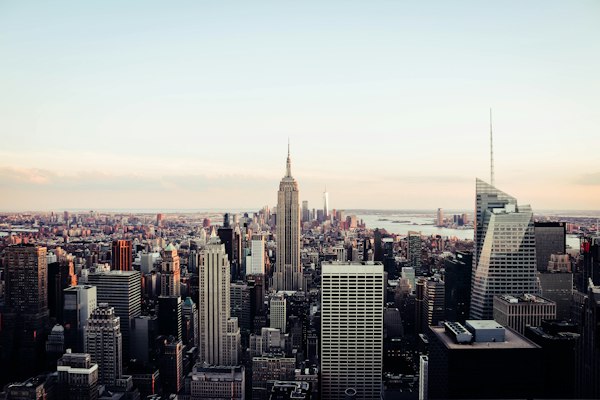
New York is the city that all other cities reference. Not because it is the oldest or the most beautiful or the most livable — it is none of these things — but because it has operated at the highest pitch of human ambition and density for longer and more consistently than any other urban centre on earth. The Met has more art than the Vatican. The subway runs 24 hours. The food options within a single midtown block would sustain a small nation. The skyline — seen for the first time from a plane at night, or from the Brooklyn Bridge at dawn, or from Top of the Rock at dusk — is the defining urban image of the 20th century.

What surprises most first-time visitors is the city's walkability. New York's geography — a grid island of 21km by 3km — means that the five most important blocks of cultural real estate in the world (Fifth Avenue from the Met to MoMA, the High Line from Gansevoort to Hudson Yards, the streets of the West Village, the Brooklyn Bridge walkway, Central Park's southern end) are all manageable on foot. New York is fundamentally a walking city dressed up as a subway city. The visitors who walk have the better time. The subway is fast, reliable (by world standards), cheap (USD $2.90 per ride with Omny contactless tap), and operates 24 hours a day — but the street is where the city actually is.

Unlike Los Angeles, New York does not require a hire car. It actively punishes you for having one — street parking averages USD $20–40/day in garages, traffic in Midtown is genuinely stationary between 8am and 7pm, and no destination in the city is inaccessible by subway and foot. The one exception: a day trip to the Hamptons (Long Island Rail Road from Penn Station), the Hudson Valley (Metro-North from Grand Central), or New Jersey wine country — all possible without a car and all excellent additions to a longer NYC stay.

🎸 New York City at a Glance
  • Five boroughs: Manhattan, Brooklyn, Queens, The Bronx, Staten Island
  • Manhattan is 21km long, 3.7km wide — 2.1 million people on a single island
  • Subway: 472 stations, 245 route miles, 24hrs, USD $2.90/ride with Omny contactless
  • Museums: the Met, MoMA, the Guggenheim, the Whitney, the Frick, the Brooklyn Museum — all within 4km of each other
  • Central Park: 341 hectares — larger than the principality of Monaco — in the centre of Manhattan
  • Broadway: 41 active theatres within walking distance of Times Square — the world's highest-concentration live theatre district
  • The High Line: 2.3km of elevated park on a former freight rail line through Chelsea and the Meatpacking District — free
  • Brisbane to JFK: typically 22–24 hours via Los Angeles, Dallas, or San Francisco — no direct service
Must-See

New York City's Essential Attractions

New York has more world-class attractions per square kilometre than any city on earth. These are the ones that consistently deliver — with the specific timing, booking advice, and angles that transform them from tourist boxes to genuine experiences.

Central Park New York City aerial fall foliage Manhattan buildings
🏆 Free · 341 Hectares · Year-Round

Central Park

Central Park is the world's most consequential urban park — 341 hectares of Olmsted and Vaux's 1858 masterpiece in the exact geographical centre of Manhattan, framed on all four sides by the skyline. It functions as the city's living room: New Yorkers run it, cycle it, row boats on the Loeb Boathouse lake, take their children to the Tisch Children's Zoo, attend the Metropolitan Opera's free summer concerts at the Great Lawn, and spread across Sheep Meadow on every warm afternoon. The Ramble (the park's wild woodland section, 15 hectares of winding paths — the single best birdwatching location in the northeastern USA during spring migration), Bethesda Terrace and Fountain (the park's ceremonial heart, the filming location of hundreds of films and TV shows), and the Jacqueline Kennedy Onassis Reservoir (1.6km running loop, skyline reflected) are the three finest sections. Enter from the 72nd Street transverse for the most direct access to Bethesda Fountain. Free. Always open.

Midtown Manhattan · Enter at 59th–110th Street · Free · Open always
★ 5.0
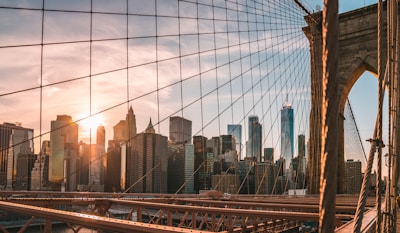
Brooklyn Bridge New York City walking path cables skyline
Free · Dawn is Best

Brooklyn Bridge Walk

Lower Manhattan to DUMBO, Brooklyn · Free · 30 min one-way
★ 4.9
High Line elevated park New York City Chelsea Manhattan
Free · Best Urban Park

The High Line

Chelsea to Hudson Yards · Free · Opens 7am
★ 4.8
Metropolitan Museum of Art New York Fifth Avenue steps facade
World’s Greatest Museum

The Metropolitan Museum

Upper East Side · 5th Ave & 82nd · USD $30 suggested
★ 5.0
DUMBO Brooklyn Manhattan Bridge arch skyline cobblestone street
Best Photo in NYC

DUMBO, Brooklyn

Brooklyn · A/C to High Street or F to York St
★ 4.8
Statue of Liberty New York Harbour Ellis Island ferry
Iconic Symbol

Statue of Liberty

New York Harbour · Ferry from Battery Park · Book ahead
★ 4.7
Manhattan Block by Block

Manhattan Neighbourhood by Neighbourhood

Manhattan's neighbourhoods are as distinct as separate cities — each with its own architecture, culture, food scene, and pace. This is how the island is divided and what to expect from each section.

Midtown Manhattan Rockefeller Center Fifth Avenue Empire State Building
🏭 Business · Landmarks · Theatre
Midtown

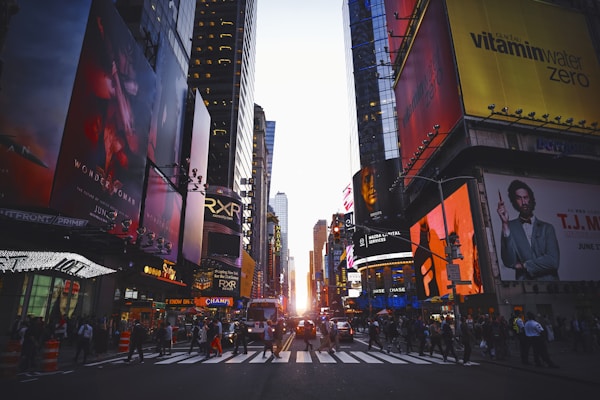
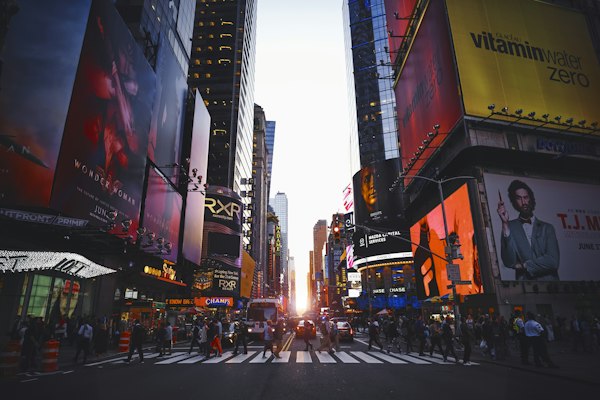
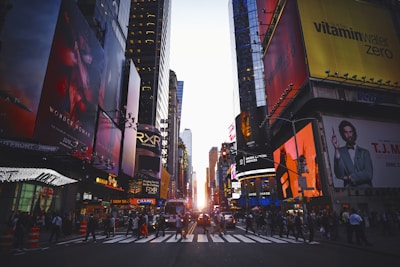
Midtown (34th to 59th Streets) is the New York of postcards — Times Square (overwhelming at night; best approached as a phenomenon rather than a destination), Rockefeller Center (the Art Deco complex with the NBC Studios, the famous Christmas tree, and Top of the Rock observation deck), Fifth Avenue (the Met is at the top; the Plaza Hotel, Bergdorf Goodman, Tiffany & Co., Saks Fifth Avenue in the middle), Grand Central Terminal (the Beaux-Arts main concourse is the finest interior in New York — stand at the balcony overlook at 9am on a weekday morning), and the Theatre District (Broadway shows, 41 theatres). Midtown is where most hotels are; it is not where most of the city's character is. Arrive for the landmarks, leave for the neighbourhoods.

Times SquareGrand CentralRockefeller CenterBroadwayFifth Avenue
Grand Central Terminal at 9am on a weekday — stand on the balcony above the main concourse and watch 750,000 commuters move through below. The light through the clerestory windows on the Tennessee marble floor is extraordinary. Free; open always.
Upper East Side New York Museum Mile Fifth Avenue residential
🏛 Museum Mile · Old Money
Upper East Side

The Upper East Side — Fifth Avenue from 59th to 104th — is Museum Mile: the Metropolitan Museum of Art, the Guggenheim (Frank Lloyd Wright's spiral, Kandinsky collection), the Frick Collection (the finest private art collection in New York, open in its restored mansion), the Cooper Hewitt (design museum in Andrew Carnegie's 1902 mansion), and the Jewish Museum. The residential streets east of Park Avenue (particularly 73rd to 84th Streets) are some of the finest pre-war apartment architecture in the world. Lexington Avenue between 70th and 80th has the best neighbourhood cafés — E.A.T. (Eli Zabar's deli and cafe) on 80th is an institution.

The MetGuggenheimFrick CollectionCentral Park East
The Frick Collection — closed for restoration until 2024, now fully reopened in the 1914 Frick mansion on Fifth Avenue — is the most intimate major art collection in New York. The collection (Vermeer, Rembrandt, El Greco, Velázquez in original mansion rooms) is in a class of its own.
Upper West Side New York Lincoln Center Central Park West brownstones
🎶 Culture · Family · Brownstones
Upper West Side

The Upper West Side — west of Central Park from 59th to 110th — is the most residential and intellectually dense neighbourhood in Manhattan: the American Museum of Natural History (the Hayden Planetarium, the Hall of Ocean Life, the Rose Center — plan a full day), Lincoln Center for the Performing Arts (the Metropolitan Opera, the New York Philharmonic, the NY City Ballet — the most concentrated performing arts campus in the world), and the neighbourhood itself: brownstone townhouses, Zabar's deli (the finest deli counter in New York — buy smoked salmon, cream cheese, and a bagel), and Riverside Park (4 miles of Hudson riverfront park, quieter than Central Park, with the Hudson River views the east side doesn't have).

Lincoln CenterMuseum of Natural HistoryZabar's deliRiverside Park
Lincoln Center's Metropolitan Opera runs September–May and offers rush tickets (USD $25–35 for same-day availability, available online from 10am on the performance day) for some of the finest opera productions in the world in one of the most beautiful opera houses. Worth the scheduling effort.
West Village Greenwich Village New York brownstones cobblestone streets
🏠 Best Base · Restaurants · Human Scale
West Village & Greenwich Village

The West Village is the New York neighbourhood that most closely matches what people imagine New York to feel like: cobblestone streets (specifically the area around Weehawken Street and Commerce Street), a human-scaled grid that breaks the Midtown logic, remarkable restaurants on every block (Via Carota, Buvette, Frenchette, Joe's Pizza on Carmine, Russ & Daughters on Houston for smoked fish — the best in the city), and the sense of the city as it operated before the glass towers arrived. The High Line's southern end (Gansevoort Street) is within walking distance; the Whitney Museum is on Gansevoort. The Village is the best neighbourhood to base a first New York visit from.

Best restaurantsVia CarotaJoe's PizzaWhitney MuseumHuman scale
Via Carota on Grove Street is the most sought-after neighbourhood reservation in Manhattan — Italian vegetables and pasta cooked with precision, in a room of extraordinary warmth. No reservations; walk-in only. Arrive at 5:30pm when doors open — the bar seats fill first and have the best view of the kitchen.
SoHo New York cast-iron architecture shopping galleries art
🏪 Architecture · Shopping · Art
SoHo & NoHo

SoHo (South of Houston) contains the highest concentration of cast-iron architecture in the world — 26 blocks of mid-19th-century warehouse buildings with ornate facades, converted over the 1970s and 80s from garment district warehouses to artist lofts, then galleries, then high-end retail. The galleries that made SoHo famous have mostly moved to Chelsea (West 20s) but the architecture remains extraordinary — walk Greene Street (the finest continuous block of cast-iron facades in the city) with your eyes up. The shopping (Chanel, Prada, Dior, Apple SoHo, McNally Jackson Books) is exceptional; the brunch crowds on weekends are extreme. NoHo (north of Houston) is quieter with excellent Japanese restaurants (Mimi on Madison, Nishida on Great Jones).

Cast-iron architectureGreene StreetMcNally JacksonWeekend brunch
SoHo on a weekday morning (before 10am) is a completely different experience from weekend afternoons when it becomes genuinely difficult to walk. The architecture reveals itself most clearly when the pavements are empty. The Apple SoHo store (103 Prince Street) occupies the 1872 Puck Building groundfloor — a beautiful cast-iron interior.
Chelsea New York High Line galleries Hudson Yards art district
🎨 Art · High Line · Hudson Yards
Chelsea & Hudson Yards

Chelsea (West 14th to 34th, west of Eighth Avenue) is the contemporary art capital of New York — the West 20s gallery district (particularly West 24th and West 25th between Tenth and Eleventh Avenues) contains 200+ galleries in converted warehouse buildings, open Tuesday–Saturday, free. The High Line runs through the neighbourhood; the Whitney Museum is at its south end (Gansevoort). Hudson Yards — the largest private real estate development in US history, on a platform built above the rail yards — contains the Shed (NYC's newest arts centre), the Edge (the highest outdoor observation deck in the Western Hemisphere at 335m), and Vessel (Thomas Heatherwick's honeycomb sculpture, 16 floors of interconnected staircases — free to access).

Gallery districtHigh LineThe EdgeVesselGagosian Gallery
The Chelsea gallery district on a Thursday evening (galleries are open late, typically 6–8pm, often with opening receptions) is one of New York's finest free cultural events — a moving feast of contemporary art across 200+ spaces. No admission, no booking, just walk the West 20s blocks from gallery to gallery.
Lower East Side New York food market delis Essex Market cultural
🎮 Food · Nightlife · Immigration History
Lower East Side & East Village

The Lower East Side — the neighbourhood that received the largest wave of Eastern European Jewish immigration in the late 19th century — retains its food culture as its most tangible historical legacy. Katz's Delicatessen (205 E Houston Street — open since 1888, the pastrami sandwich is a rite of passage, the deli counter procedure is part of the experience — take your ticket, order at the counter, pay when you leave) is New York's most important food institution. Russ & Daughters (179 Houston — smoked fish, cream cheese, bagels — a century of operation) is the finest. The East Village (north of Houston) is the neighbourhood: St Marks Place, Momofuku Noodle Bar (David Chang's original), McSorley's Old Ale House (operating since 1854 — oldest continuously operating saloon in NYC).

Katz's DeliRuss & DaughtersMcSorley'sSt Marks Place
Katz's Deli system: take the ticket at the door, walk to the counter, order the pastrami on rye (USD $28 — a genuine meal; share if two people), tip the cutter USD $2, take your tray to the communal tables. Do not lose your ticket — you pay it at the exit. Open since 1888; the "When Harry Met Sally" table is marked by a sign above.
Tribeca Lower Manhattan New York loft buildings restaurants Wall Street
🎓 Lofts · Celebrities · Downtown Cool
Tribeca & Financial District

Tribeca (Triangle Below Canal Street) is the most expensive residential neighbourhood in New York — the converted warehouses and loft buildings that made it a celebrity enclave (Jay-Z, Taylor Swift, Robert De Niro, who founded the Tribeca Film Festival) have some of the finest interiors in the city. The neighbourhood has outstanding restaurants (Locanda Verde, Tiny's, Odeon) and the Hudson River Park waterfront, with cycling paths, picnic lawns, and views of the Statue of Liberty across the harbour. The Financial District — immediately to the east — contains Wall Street (the New York Stock Exchange building is an extraordinary Beaux-Arts facade), the 9/11 Memorial and Museum (the two reflecting pools are one of the most powerful memorial designs in the world), and One World Observatory at the top of One World Trade Center (541m).

9/11 MemorialOne World TradeWall StreetHudson River Park
The 9/11 Memorial reflecting pools — open 7am–9pm, free with timed reservation — are at their most powerful and most quiet at opening time (7am) or in the last hour before closing. The pools are set in the exact footprints of the twin towers; the sound of falling water creates a contained stillness within the surrounding city noise.
Brooklyn DUMBO Williamsburg waterfront NYC skyline view
🌊 Best Views · Food · Culture
Brooklyn — DUMBO, Williamsburg & Park Slope

Brooklyn is not one neighbourhood but a borough of 2.7 million people — larger than Chicago in population. DUMBO (Down Under the Manhattan Bridge Overpass) has the best Manhattan views in New York: stand at the intersection of Washington Street and Water Street and look through the Manhattan Bridge arch toward the Empire State Building — this is the single most photographed view in New York. Brooklyn Bridge Park (under the bridge, along the East River waterfront) is one of the finest new parks in any US city. Williamsburg (the most gentrified neighbourhood in NYC, with excellent restaurants, music venues, and the Smorgasburg outdoor food market on weekend mornings) and Park Slope (19th-century brownstones, the Brooklyn Museum, Prospect Park) complete the Brooklyn visitor circuit.

DUMBO photo spotBrooklyn Bridge ParkSmorgasburgBrooklyn Museum
Smorgasburg at Domino Park in Williamsburg (Saturdays, April–November, 11am–6pm) is the finest outdoor food market in New York — 100+ vendors, every cuisine, new vendors every season. The Williamsburg waterfront view of Manhattan (the skyline from river level at magic hour) is one of the finest city views available for free.
The Skyline From Every Angle

New York City Views — Complete Guide

New York has the most spectacular city skyline on earth and at least a dozen ways to see it — from free riverside parks to paid observation decks to the world's most famous ferry. Here is the complete guide to choosing the right view for your visit.

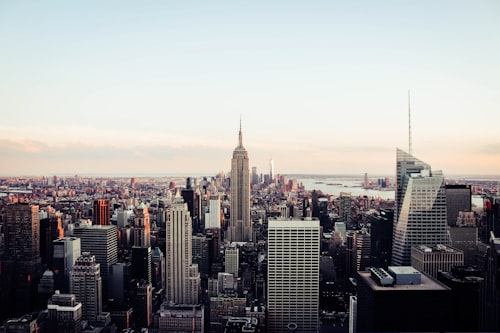
Top of the Rock Rockefeller Center New York 70th floor skyline
📸 Paid · Best Overall View
Top of the Rock

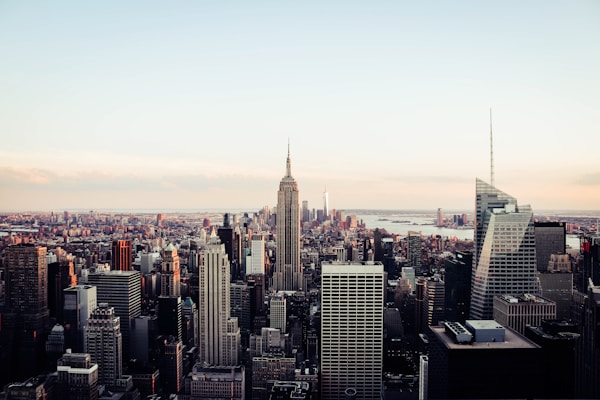
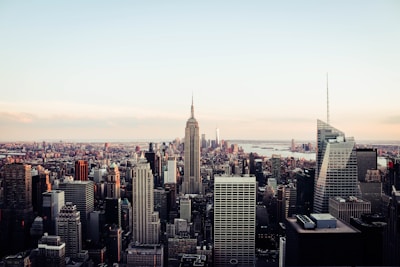
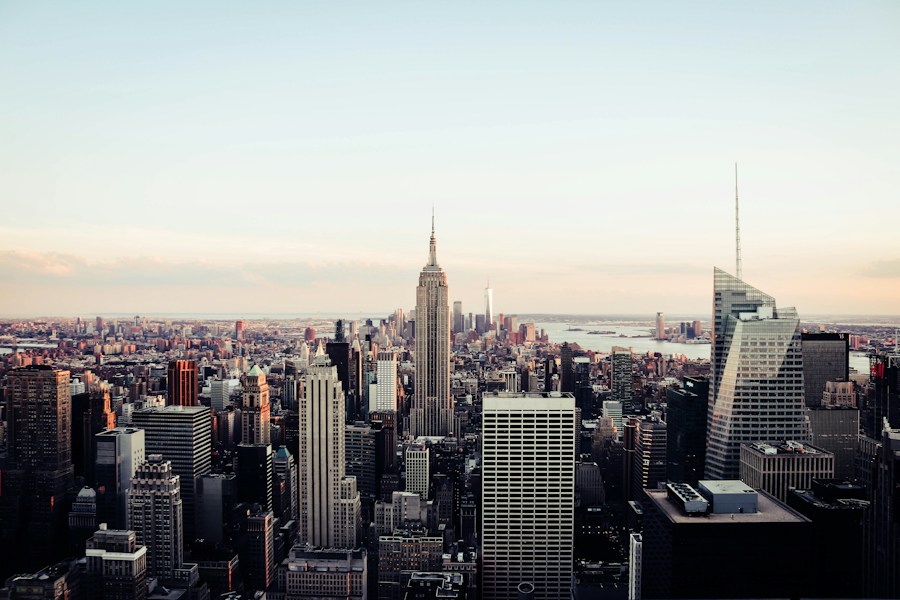
The Rockefeller Center's 70th floor observation deck is the finest paid view in New York — the only observation deck that includes the Empire State Building in the skyline rather than looking out from it. Open-air, three-level, with the Empire State directly to the south, Central Park to the north, and the Hudson and East Rivers on both sides. The sunset view from Top of the Rock — with the Empire State's tower lit against a darkening sky — is the defining New York photograph. Book timed entry online (topoftherocknyc.com) 2–4 weeks ahead for sunset slots in peak summer. USD $40 adult.

Height
70th floor, 259m
Cost
USD $40 adult
Best time
30 min before sunset
Open
8am–midnight
Book the last timed-entry slot before the 30-minute-before-sunset window — you arrive in full daylight, the light slowly shifts, and the Empire State's lights come on while you're still on the deck. The transition from golden hour to blue hour to full night in a single visit is the best USD $40 in New York.
Empire State Building New York Art Deco observation deck view
🏭 Paid · The Iconic Address
Empire State Building

The Empire State Building's 86th-floor Main Deck is the most famous observation deck in the world — 320m above Midtown Manhattan, open-air on three sides, the view 360° of the city you know from every film. The 102nd-floor Top Deck adds another 40m (USD $20 supplement) but is an enclosed glass room. The ESB itself is the view from everywhere else in the city; the view from the ESB is everything except the ESB. Sunrise (the deck opens at 10am, but the Empire State's Main Deck is more spectacular looking down at the city waking up than in daylight) and night are the recommended times. Pre-book online (esbnyc.com) — the queues without pre-booking can be 2+ hours.

Height
86th floor, 320m
Cost
USD $44 + optional top deck
Opens
10am (last entry 1:15am)
Best time
Night (after 9pm, less crowded)
The Empire State Building at night (10pm–midnight) is significantly less crowded than daytime — pre-book a late slot online, arrive after 10pm, and you may have the deck nearly to yourself with the full city lights below. The tower changes colour nightly for different causes and holidays — check the calendar on esbnyc.com for themed light nights.
Staten Island Ferry New York free ride Manhattan skyline Statue of Liberty
🇲🈁 Free · Best Value View
Staten Island Ferry

The Staten Island Ferry is the world's finest free attraction — a working commuter ferry that departs Whitehall Terminal (Lower Manhattan) every 20–30 minutes, 24 hours a day, 365 days a year, carrying passengers across New York Harbour past the Statue of Liberty at a distance of 0.5 kilometres — free, no reservation required, no ticket needed. The Manhattan skyline from the harbour, the Statue of Liberty at arm's length, and the return trip across the harbour at sunset or at night are all completely free. Take the ferry over to Staten Island (25 minutes), turn around on the Staten Island terminal, and take the next one back. Total time: 90 minutes. Total cost: USD $0.

Cost
Free · Always
Departs
Every 20–30 min, 24hrs
Best time
Sunset westbound
Statue distance
0.5km (outbound)
Take the outbound (Manhattan to Staten Island) ferry on the right side of the boat (port/left as you face the bow) for the Statue of Liberty approach. Take the return trip on the right side again (now facing Manhattan) for the harbour and skyline approach. Sunset on the outbound in summer is one of New York's most extraordinary free moments.
Brooklyn Bridge Park New York free view Manhattan skyline East River
🌳 Free · Best Ground-Level View
Brooklyn Bridge Park

Brooklyn Bridge Park — an 85-acre waterfront park on the Brooklyn side of the East River, directly under the Brooklyn Bridge — offers the finest free ground-level view of the Manhattan skyline in the city. From Pier 1 (the main lawn and promenade), the entire Lower Manhattan and Midtown skyline is visible across the river at a distance that allows the full vertical scale to register. The Empire State, One World Trade, the Chrysler Building, and the Brooklyn Bridge are all simultaneously visible. Bring a picnic at dusk; the light on the Manhattan skyline at golden hour from the Brooklyn side of the river is the city's finest free spectacle. Access: A/C to High Street or F to York Street in Brooklyn, 5 minutes walk.

Cost
Free · Always open
Best time
Dusk (west-facing)
Subway
A/C to High St
Combine with
DUMBO, Bridge Walk
Edge observation deck Hudson Yards New York highest outdoor deck
🏢 Paid · Highest Outdoor Deck
Edge at Hudson Yards

The Edge at Hudson Yards is the highest outdoor observation deck in the Western Hemisphere at 335m — a cantilevered glass floor deck at the 100th floor of 30 Hudson Yards on the far west side of Manhattan. The floor-to-ceiling glass panels, angled outward at the observation level, create a vertiginous experience of standing above the city with nothing between you and the street below. The view includes the Hudson River, New Jersey beyond, and the entire Manhattan grid spread south and east. USD $36 adult; combined ticket with the Vessel (Thomas Heatherwick's sculpture in the adjacent plaza) available.

Height
100th floor, 335m
Cost
USD $36 adult
Unique feature
Glass-floor deck
Subway
7 to Hudson Yards
The glass floor at the Edge is genuinely vertiginous — most visitors spend 15 seconds on it before retreating to the solid section of the deck. But the angled glass panels at the perimeter create views of the street below (335m down) that no other observation deck provides. Combine with the Vessel sculpture and the free Shed arts centre in the same plaza.
DUMBO New York Manhattan Bridge arch Empire State Building photo spot
🏭 Free · Most Photographed Street
DUMBO — Washington & Water Street

The intersection of Washington Street and Water Street in DUMBO, Brooklyn — where the Manhattan Bridge arch perfectly frames the Empire State Building in the distance — is the single most photographed street view in New York and one of the most photographed urban compositions in the world. The framing is exact: stand in the middle of Washington Street facing Manhattan (the bridge arch is overhead) and the Empire State appears perfectly centred through the arch. Best at blue hour (30–45 minutes after sunset, when the sky is deep navy and the city lights are on). Free; always accessible. Warning: in peak season, there is frequently a queue of photographers at the exact spot.

Cost
Free · Always
Best time
Blue hour after sunset
Subway
A/C to High St
Combine with
Brooklyn Bridge Park
41 Theatres · The World’s Finest Live Theatre

Broadway — The Complete Guide

Broadway is the highest-level live theatre in the world — 41 professional theatres within a few blocks of Times Square, producing musicals, dramas, and revivals at a standard of performance and production that has no equivalent anywhere. Here is everything you need to know to do it properly.

🎶
Long-Running Musicals
The Reliable Choices

The long-running musicals are reliable at any time because they have been cast, rehearsed, and performed to consistency over years or decades. Hamilton (Richard Rodgers Theatre — if still running in 2026; check), The Lion King (Minskoff Theatre — running since 1997), Chicago (Ambassador Theatre — the longest-running American musical in Broadway history, since 1996), Hadestown (Walter Kerr — extraordinary score by Anaïs Mitchell), and Wicked (if it has returned post-film; check schedule). These are safe choices for first-time Broadway visitors who want the full production value of a major musical with no risk of a short run.

For the best long-running musicals, orchestra-level seats in rows D–K are the optimal position — close enough for facial expression detail, far enough for the full stage picture. Avoid the very front two rows (looking up at steep angles) and the mezzanine unless it is steeply raked.
🎪
New Productions & Limited Runs
How to Find the Best New Shows

The most exciting Broadway experiences are often new productions or limited runs with major casts — celebrity-driven revivals (a famous actor returning to Broadway for a limited run), new musicals in their first season, and serious drama starring major film actors. These sell out fastest and deliver the highest-quality single-performance experiences. The best sources: the New York Times theatre critic (Ben Brantley's successor, currently Jesse Green — a positive review from the Times reliably identifies the best new shows) and the Tony Awards nominations (announced in May, the Tony ceremony in June — nominated shows typically run through at least the summer). Book through Telecharge.com or Broadway.com — both are official ticketing platforms with no fraudulent listings.

The best new productions announce casting and booking 3–6 months before opening. If your travel dates are more than 3 months away, check what is scheduled to open in your window and book immediately when tickets go on sale — the first 4–6 weeks of a well-reviewed new production sell out within days.
🎭
Rush Tickets & Discount Options
How to Get Tickets at a Discount

Full-price Broadway orchestra seats run USD $100–250 for most productions; premium seating for hot shows can reach USD $400–700. The legitimate discount options: TKTS booths (Times Square, South Street Seaport, Lincoln Center — same-day tickets at 20–50% off; cash preferred; longest queues at Times Square but most selection), TodayTix app (rush and lottery tickets for same-day performances, often USD $35–75 — results posted at midnight for the following day, excellent for spontaneous visits), and show-specific lotteries (Hamilton, Hadestown, and others run digital lotteries accessible 2 days before performance via their official websites — USD $10–20 per ticket, genuinely drawn).

TodayTix Rush: download the app, set notification for midnight, and enter rush for every show you want to see on the nights you are available. Rush results post at midnight for that day's performances — you need to be awake and responsive. For a 7-night NYC stay, you can realistically see 3–4 shows on rush tickets at USD $35–75 each.
Off-Broadway & Theatre Beyond Broadway
The Best Theatre That Isn’t Broadway

Off-Broadway (theatres with 100–499 seats) and Off-Off-Broadway (under 100 seats) frequently produce the most interesting work in New York theatre — with lower ticket prices (USD $25–85) and more experimental approaches than the commercial Broadway productions. The Atlantic Theatre Company (West 20th Street — a company founded by playwright David Mamet), the Playwrights Horizons (West 42nd — the most important Off-Broadway house for new American writing), Second Stage (Helen Hayes Theatre), and the Public Theater (Lafayette Street — Shakespeare in the Park is a Public program, free performances of Shakespeare in Central Park's Delacorte Theater every summer) are the key venues. Shakespeare in the Park tickets are distributed free on same-day morning queues at the Delacorte — arrive at 7am for evening performances.

Shakespeare in the Park at the Delacorte Theater in Central Park — free performances, major stars (Meryl Streep, Al Pacino, Kevin Kline, Denzel Washington have all performed here) — requires arriving by 7am for the same-day ticket queue. The performances run June–August; the setting (open-air theatre in Central Park as the sun sets) is extraordinary regardless of the production.
🎟 Broadway — Essential Facts
🎮41 Broadway theatres within a few blocks of Times Square (42nd to 54th Street, 6th to 9th Avenues)
📅Performance schedule: Tuesday–Sunday evening (8pm), Wednesday and Saturday matinees (2pm). No Monday performances. Dark Tuesdays for some productions.
💰Price range: Rush/lottery USD $10–75 · TKTS discount 20–50% off · Regular orchestra USD $100–250 · Premium front centre USD $300–700
🔊Running time: Musicals typically 2.5–3hrs with one 15-minute interval. Dramas 2–2.5hrs with interval. No alcohol allowed in the theatre; pre-show drinks at the bar are standard.
🔖Official booking only: Telecharge.com and Broadway.com are the only official platforms. Do not purchase from street scalpers or secondary platforms at premium prices — the shows themselves do not get that revenue.
📷No phones during performance: Strictly enforced. The entire audience knows if your phone lights up — and the actors can see it from the stage. Most theatres now use Yondr pouches for high-profile productions.
🌶 Best Seat Guide by Budget
USD $35–75 (rush/TKTS): Mezzanine centre or orchestra sides — excellent sight lines, full sound, best-value Broadway experience
USD $120–180: Orchestra D–K, centre — the ideal position for musicals. Facial expressions, full stage picture, full sound
USD $200–300: Premium orchestra A–C centre — the full experience. Justified for special occasions or limited-run shows
🚫Avoid: Rear orchestra under the mezzanine (sound is muffled), extreme side mezzanine (30°+ angle), standing room (for young feet only)
What to Do

New York City's Unmissable Experiences

The city that invented the blockbuster, the deli, the skyscraper, and the ticker-tape parade. These are the experiences that define it.

Metropolitan Museum of Art New York Egyptian Temple Sackler
Metropolitan Museum of Art

The Met is the greatest encyclopaedic art museum in the world — 5,000 years of human art-making across 17 curatorial departments in a building of 200,000m² on Central Park's east face. The admission is technically "suggested" at USD $30 for adults (pay what you can — minimum USD $0.01 is legally accepted, though culturally awkward). Essential rooms: the Temple of Dendur (Egyptian wing — a complete 2,000-year-old temple in its own glass-roofed wing), the European Paintings galleries (Vermeer, Rembrandt, El Greco, Caravaggio), the American Wing with its glass garden court, and the rooftop garden sculpture installation (open May–October — the best free cocktail bar view in New York). Allow a full day; come back the next morning for what you missed.

USD $30 suggested · Fri–Sat open until 9pm
High Line New York elevated park Chelsea Meatpacking District garden
The High Line at Opening Time

The High Line — a 2.3km elevated park built on a decommissioned freight railway line above the streets of Chelsea — opens at 7am daily and is at its finest in the first hour: the plantings (designed by Piet Oudolf, who designs for seasonal change) in morning light, the city below on both sides, and the absence of the midday crowds that make it feel like a museum. The High Line runs from Gansevoort Street (Meatpacking District, Whitney Museum below) to 34th Street (Hudson Yards, the Vessel and the Edge above). Free; open 7am–10pm daily. The best single morning walk in Manhattan.

Free · Open 7am · 2.3km walk
Brooklyn Bridge New York walking at dawn sunrise cables towers
Brooklyn Bridge at Dawn

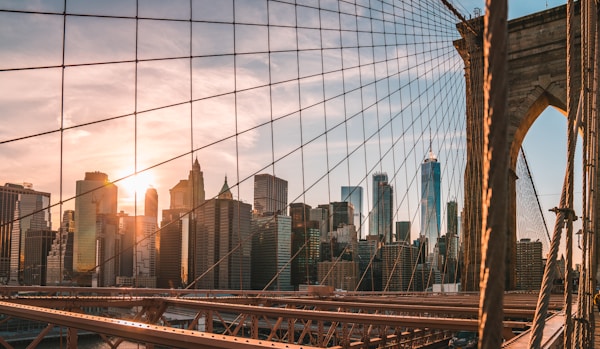
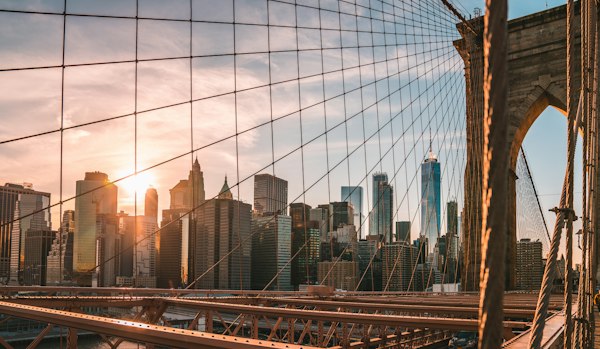
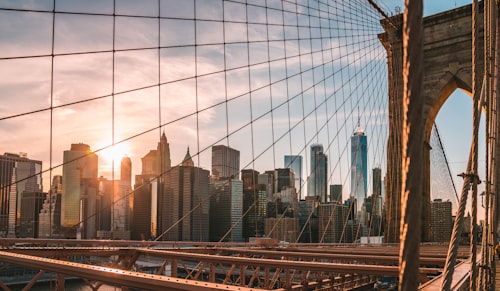
Walking the Brooklyn Bridge at dawn — crossing from Manhattan to Brooklyn on the pedestrian walkway above the traffic lanes, the East River below and the Manhattan skyline behind you, the cables forming perfect geometric patterns against the lightening sky — is one of the finest free experiences in any city on earth. The bridge walk is 30 minutes one way (1.3km). Begin from the Manhattan entrance (City Hall Park subway exit, 4/5/6 to Brooklyn Bridge-City Hall) at 6am — the cables and towers catch the first light at a 45-minute window you will not forget. End in DUMBO for breakfast at one of the waterfront cafés.

Free · Dawn is essential · 30 min crossing
Chelsea galleries New York contemporary art district warehouses
Chelsea Gallery District

The West 20s gallery district in Chelsea — 200+ galleries in converted warehouses between Tenth and Eleventh Avenues, open Tuesday–Saturday — is the world's most concentrated contemporary art market and one of New York's most accessible cultural experiences. Gagosian (522 West 21st), David Zwirner (519 West 19th), Pace (540 West 25th), and Hauser & Wirth (548 West 22nd) are among the most important galleries on earth. Entry is free; no invitation required; the gallery assistants (all working artists) are generally knowledgeable and willing to discuss the work. A Thursday evening circuit — galleries open until 8pm with opening receptions for new shows — is the finest introduction.

Free · Tue–Sat · Thursday evenings best
MoMA Museum of Modern Art New York Starry Night Picasso Warhol
MoMA — Museum of Modern Art

MoMA's permanent collection contains the most important single gathering of modern art on earth: Picasso's Les Demoiselles d'Avignon, Van Gogh's Starry Night, Warhol's Campbell's Soup Cans, Monet's Water Lilies, Matisse's The Dance, Pollock's One: Number 31, Cindy Sherman's Untitled Film Stills. USD $30 adult; free Friday evenings 5–9pm (first-come, first-served, queue forms from 4pm). The design and architecture collection (4th floor) — including a helicopter, an Eames chair, a Fiat 500, and the original iPhone packaging — is the finest collection of designed objects in the world. Allow 3–4 hours minimum.

USD $30 · Free Fri 5–9pm · Midtown
New York City food halls markets delis bagels pizza Katz
NYC Food Culture — The Essentials

New York's food culture is not its restaurants — it is its institutions: Katz's Deli (pastrami since 1888), Russ & Daughters (smoked salmon since 1914), Di Fara Pizza in Brooklyn (the last owner-operated slice shop, USD $6/slice), Levain Bakery (the finest chocolate chip cookie in the city, USD $5 — two locations), Ess-a-Bagel (the best bagel in Manhattan, 1st Avenue and 51st — plain with lox and cream cheese), and Smorgasburg (Brooklyn's Saturday outdoor food market — 100 vendors, every cuisine, the current state of NYC food entrepreneurship in a single afternoon). None of these are the cheapest or most Instagrammed — they are the most correct.

Year-round · All boroughs · USD $5–30
New York City jazz clubs Village Vanguard Smalls music live
Live Jazz in the Village

New York is the world capital of jazz and the Village Vanguard (178 Seventh Avenue South, West Village — operating since 1935) is its cathedral. Monday is the Village Vanguard's house big band night (the Vanguard Jazz Orchestra — a collective that has performed here every Monday night since 1966). Tuesday–Sunday features the current booking — the finest jazz musicians in the world perform here weekly. Sets at 8pm and 10pm; arrive 30 minutes early. USD $35 cover, two-drink minimum. Smalls (183 West 10th Street — a basement club with a USD $25 cover that includes all drinks after midnight) is the best value late-night jazz in the city.

Year-round · Village Vanguard USD $35
New York City subway system trains night platform commuters urban
Riding the NYC Subway

The New York City subway — 472 stations, 245 route miles, 24 hours, USD $2.90 per ride — is the city's most democratic institution and one of its most distinctly New York experiences. Tap in with Omny contactless (bank card, phone, or watch — no MetroCard needed), take the A/C/E, B/D/F/M, the 4/5/6, the 1/2/3, and the L through neighbourhoods that cost USD $2.90 to move between. The Q train over the Manhattan Bridge (northbound, sit on the right side) is one of the finest free views in the city — the Manhattan skyline appears through the bridge's steel structure as you cross from Brooklyn, 30 metres above the East River.

USD $2.90/ride · 24hrs · Omny contactless
When to Visit

New York City Through the Seasons

New York has four genuine seasons — including real winters and real summers — and each delivers a fundamentally different city experience. The season you choose shapes the entire character of the visit.

🌸
Spring — Best Season
April – May

Spring in New York — specifically the last two weeks of April and all of May — is the finest time the city offers: the cherry blossoms peak in Central Park (Conservatory Garden and the Japanese Hill-and-Pond Garden in Brooklyn Botanic Garden, mid-April), temperatures reach 18–22°C without humidity, the city is fully operational after winter, and the summer tourist peak has not yet arrived. The High Line's Piet Oudolf plantings are at their most dynamic in May. Hotel rates are below July peak. Broadway's spring season (through June) includes the Tony-nominated productions. April in New York is, as the song correctly notes, optimal.

Summer — Hot & Busy
June – August

Summer in New York is genuinely hot and humid (July averages 29°C with 70% humidity — the subway platforms are 35–40°C in July and August). The city is fully alive: SummerStage concerts in Central Park (free), Shakespeare in the Park (free, requires 7am queue), the Governors Ball and other outdoor music festivals, Jazz at Lincoln Center's outdoor programmes, and the most crowded museum and tourist attraction season of the year. July 4th fireworks over the East River are extraordinary (position in Brooklyn Bridge Park by 7pm for the best view). Air conditioning is universal — the restaurants, museums, and subway are well-chilled. Dress for heat and air conditioning simultaneously.

🍂
Autumn — The Best Choice
September – November

Autumn is the consensus finest season in New York. September is warm, dry, and significantly less crowded than July-August; October delivers the finest fall foliage in Central Park (the Ramble and the North End particularly — peak colour typically October 15–28), and the light on the city in October has the quality that drove every 20th-century New York photographer. The Broadway season opens in September (the Tony cycle resets, the most important new productions open in the fall). The New York Marathon in early November is extraordinary to watch. November is quiet, uncrowded, and hotel rates drop. First frost typically arrives late November.

Winter — Magical & Cold
December – February

New York in winter divides sharply around Christmas. December is among the finest months — the Rockefeller Center tree (lit from Thanksgiving through early January), ice skating at Central Park and Bryant Park (free entry to the rink, skate hire available), the department store window displays on Fifth Avenue, and the holiday energy of a city that knows how to do Christmas. January and February are the city's quietest months: cold (average -1°C in January, with wind chill regularly reaching -10°C), hotel rates at annual lows, museums uncrowded, and Broadway at its most accessible. Pack appropriately — a proper winter coat, gloves, and waterproof boots. The snow on Central Park, when it comes, is one of the most beautiful urban scenes on earth.

Expert Tips for New York City

From the team that has walked the Brooklyn Bridge at dawn, eaten at the Katz's counter on a Tuesday morning, and booked the wrong MoMA day — the things that genuinely separate a great New York trip from the rest.

01
New York Runs on Walking — Not the Subway

The New York City subway is essential for crossing the island north–south (the 4/5/6 on the East Side, the 1/2/3 on the West Side, the A/C/E in the middle), but the most important distances in the city — from the High Line's northern end at 34th Street to MoMA (10 minutes walk), from Central Park South to the Met (25 minutes walk north on Fifth Avenue), from the Brooklyn Bridge to DUMBO (5 minutes on foot) — are better walked than subwayed. The city reveals itself at street level in ways the subway cannot: the architecture, the deli smells, the sound of a jazz trumpet from a basement window, the sudden opening of a cross-street revealing the Hudson. Plan your days geographically — one neighbourhood per morning, one neighbourhood per afternoon — and walk between the sites within each.

02
The Free Attractions Are Often the Best

New York's finest experiences include a remarkable number that cost nothing: the High Line, the Brooklyn Bridge walk, the Staten Island Ferry (Statue of Liberty from 0.5km), Brooklyn Bridge Park, Central Park, Grand Central Terminal main concourse, the National September 11 Memorial (timed reservation, free), the Chelsea gallery district, all public library interiors (the New York Public Library's Rose Main Reading Room on 42nd Street is one of the most beautiful rooms in North America — free, open to the public), and the Met (technically USD $30 "suggested" — legally, any amount above zero is accepted for New York State residents and international visitors). Build the free experiences as the framework; add the paid ones selectively.

03
Pre-Book the Timed-Entry Attractions

A handful of NYC attractions require or strongly benefit from advance timed-entry booking: the Statue of Liberty Crown access (book 3–4 months ahead through the National Park Service — statuelibertyferry.com — crown tickets sell out as soon as they release); the 9/11 Memorial (free, but timed reservations strongly recommended for morning slots in peak season); Top of the Rock (book the sunset slot 2–4 weeks ahead); the Guggenheim (book 1–2 weeks ahead; the spiral ramp on a Tuesday morning, when it's quietest, is the optimal Guggenheim experience). Everything else — the Met, MoMA, the Brooklyn Museum, the Whitney — can generally be visited walk-up, with the caveat that Friday and Saturday afternoons in summer are always busy.

04
NYC Is the Most Expensive City in the USA — Budget Accordingly

New York consistently ranks as the most expensive city in the USA for accommodation and food. Mid-range hotel rates in Midtown (3-star, standard double): USD $250–400/night in peak summer and October. Budget options: Arlo Hotels (SoHo and Midtown — well-designed, small rooms, excellent common areas, USD $120–220), Generator NYC, The Standard (High Line — more expensive but in the best location, above the High Line). The best value base: Lower East Side or East Village — excellent hotel options, central enough to reach all of Manhattan by subway, and the most interesting restaurant density at the lowest prices. Per-day food budget: USD $15–25 for excellent breakfast and lunch (delis, Levain bakery, pizza slice), USD $60–120 for dinner with wine at a quality restaurant. The city's finest meals — Torrisi, Via Carota, Don Angie, Frenchette — run USD $80–180 per person.

Before You Go

Getting to & Around New York City

No direct flights from Australia, but JFK is well-served via LA, Dallas, and San Francisco. Once you land, you won’t need a hire car — the subway does everything.

Flights from Brisbane to New York
  • No direct Brisbane–New York service exists. All routings from Brisbane connect through a US gateway city or an international hub. Total journey time: 22–28 hours depending on routing and connection times. This is worth noting in your planning — the east coast time-zone adjustment combined with the long haul means arriving at JFK on day one should be treated as a transit day.
  • Via Los Angeles (recommended): Qantas direct Brisbane–LAX (15–16hrs), then connect American, Delta, or JetBlue to JFK or EWR (5.5hrs). Total: 22–24hrs. This routing allows an open-jaw itinerary — fly into LAX, road-trip or connect to NYC, fly home from JFK — at minimal extra cost and with a natural west-to-east continental arc.
  • Via Dallas/Fort Worth: American Airlines via DFW (Qantas codeshare, single booking) is seamless for Queensland travellers — Brisbane to Dallas is approximately 17hrs, then Dallas to JFK 3.5hrs. Total: 22–23hrs with good connection times. American has the most comprehensive DFW–JFK schedule of any carrier.
  • Via San Francisco or Chicago: United Airlines via SFO or ORD connects Melbourne and Sydney to New York; Brisbane travellers typically connect Sydney–SFO–JFK or use a domestic sector to Sydney first. Total: 24–28hrs. Less convenient than the LA or Dallas routings for Queenslanders.
  • Which New York airport: JFK (John F. Kennedy International, Queens) is the primary international airport — the AirTrain to the A or J/Z subway lines connects to Manhattan in 45–70 minutes for USD $9.50 total. EWR (Newark Liberty, New Jersey) is often cheaper on airfares and connects to Penn Station via NJ Transit in 30 minutes (USD $17 — the fastest airport-to-city connection). LGA (LaGuardia, Queens) handles domestic connections only — taxi or rideshare, USD $35–55 to Midtown.
  • Best booking window: 3–5 months ahead for summer (June–August) and October (peak foliage). 8–12 weeks for spring and November. January–February flights are typically the cheapest of the year from Brisbane. New York Thanksgiving week (late November) is extremely heavily booked — avoid unless specifically intended.
  • ESTA requirement: Apply at esta.cbp.dhs.gov before departure — USD $21, typically approved within minutes to 72 hours, valid for 2 years. Without ESTA you cannot board any flight to the USA. Apply as soon as your travel is confirmed.
🚊
Getting Around New York City
  • The subway is the city: 472 stations, 245 route miles, 24 hours, USD $2.90 per ride. Tap in with Omny (any contactless bank card, phone, or watch — no MetroCard needed, though MetroCards are still available). The subway is safe, reliable (by global standards), and the fastest way to move north–south across Manhattan. The key lines: 4/5/6 (Lexington Avenue, East Side), 1/2/3 (Seventh Avenue, West Side), A/C/E (Eighth Avenue, central), B/D/F/M (Sixth Avenue), and the L (14th Street crosstown and to Williamsburg, Brooklyn). Download the MTA App (official) or Citymapper for real-time arrivals and service alerts.
  • Walking is the best mode: Manhattan's grid makes walking extraordinarily legible — the numbered streets run east–west (1st Street at the south end to 220th at the north), the avenues run north–south (First Avenue on the east, Tenth and Eleventh on the west). Twenty New York blocks north–south equals 1.6km and takes 15–20 minutes on foot. Crossing a short block east–west takes 1–2 minutes. Once you understand the grid, you can navigate Manhattan without a map by estimating block distances.
  • No hire car: Do not hire a car for a New York City visit. Parking costs USD $20–60 per day in garages, Midtown traffic is genuinely stationary in peak hours, and no destination in the city is unreachable by subway and foot. The one exception: a dedicated day trip to the Hudson Valley, the Hamptons, or New Jersey wine country — all possible by train, but a hire car gives more flexibility.
  • Rideshare (Uber/Lyft/Via): Useful for late-night trips, airport transfers, and crosstown journeys on 14th, 23rd, 34th, or 42nd Streets when the weather is bad. Via is the cheapest rideshare option in Manhattan for short trips — a shared ride from Penn Station to the West Village costs USD $6–10. Surge pricing during rush hours and after concerts is significant — the subway is almost always faster and cheaper in those windows.
  • Citi Bike: NYC's bike share system has 30,000+ bikes across 2,000+ stations in Manhattan, Brooklyn, Queens, and the Bronx. Day pass: USD $19 (unlimited 30-minute rides). Electric bikes: USD $0.30/minute. Excellent for the High Line to Hudson Yards connection, the Brooklyn Bridge to DUMBO circuit, and Central Park loops. The protected bike lane network has expanded dramatically since 2020 — Ninth Avenue (the most complete protected lane in Manhattan) runs from 14th to 57th Street.
  • From JFK specifically: AirTrain from any JFK terminal to Jamaica Station (free within JFK), then LIRR or the A subway to Manhattan. The A train to Midtown takes about 65 minutes and costs USD $9.50 total (AirTrain USD $8.25 + subway USD $2.90, but AirTrain transfers to subway for free if buying a MetroCard or tapping Omny). Taxi from JFK to Manhattan: flat fare USD $70 (plus toll USD $9 + tip) — Uber/Lyft typically USD $55–85 depending on surge.
💰
Budget Guide — What NYC Costs
  • Accommodation — the city’s biggest cost: New York is the most expensive hotel market in the USA. Budget (hostel dorm, Airbnb shared): USD $60–120/night. Mid-range (3-star hotel, Midtown or Lower East Side): USD $220–380/night in peak season. Boutique hotels in prime locations (The Standard High Line, Ace Hotel, The Ludlow on the Lower East Side): USD $280–450/night. Luxury (The Mark on the Upper East Side, The NoMad, 11 Howard in SoHo): USD $500–1,200+/night. October (fall foliage) and July–August (summer peak) command the highest rates. January and February are the cheapest months, 30–40% below summer peak.
  • Best-value base neighbourhoods: Lower East Side and East Village (excellent independent hotels, subway central, best restaurant density per dollar, 20 minutes to Midtown by subway), Williamsburg Brooklyn (hip, excellent food scene, L train to Manhattan in 10 minutes, significantly cheaper than Manhattan hotels), Long Island City Queens (5 minutes to Midtown by 7 train, budget hotel options, a genuine neighbourhood with restaurants — the best-kept accommodation secret in NYC).
  • Food — every price point: NYC has the full spectrum. Outstanding breakfast for USD $8–15: an Ess-a-Bagel bagel with lox and cream cheese (USD $14), a slice from Di Fara or Joe’s Pizza (USD $5–6), a Levain cookie (USD $5). A mid-range lunch: USD $15–25. Restaurant dinner for two with wine: USD $80–160 at a quality neighbourhood restaurant. The city’s most acclaimed restaurants (Eleven Madison Park, Le Bernardin, Per Se, Daniel) run USD $200–400+ per person with wine. The Michelin Bib Gourmand list (NYC’s most Bib Gourmands of any US city — exceptional restaurants at USD $40 or less for two courses) is the best single guide to quality dining on a budget.
  • Tipping — non-negotiable: Restaurant: 18–22% of pre-tax bill. Bars: USD $1–2 per drink. Taxi/rideshare: 15–20%. Hotel housekeeping: USD $3–5 per night. Coffee shop counter service: tip prompts on screens are suggestions, not requirements — USD $1 for a simple coffee order is appropriate. Do not under-tip at restaurants — servers’ incomes are built on tips, not the listed salary.
  • Free and cheap NYC: Central Park (always free), all public beaches in the Rockaways and Coney Island (free, accessible by A train), the Staten Island Ferry (free, best Statue of Liberty view), the High Line (free), all public library branches including the NYPL Rose Main Reading Room (free), MoMA free Fridays 5–9pm, the Met (pay-what-you-can, technically any amount), the Chelsea gallery district (free, Tue–Sat), Shakespeare in the Park (free with 7am queue). A well-planned NYC day can cost under USD $30 in paid admissions and still deliver extraordinary cultural content.
  • New York City pass options: The New York Pass and the New York CityPASS offer bundled admission to multiple attractions. Worth calculating before purchase — if your itinerary includes the Empire State Building (USD $44), Top of the Rock (USD $40), and one or two other paid attractions, a bundle pass may save USD $20–40. Not worth it for visitors who plan to spend most of their time at free attractions (Central Park, the High Line, the Brooklyn Bridge, the galleries).

New York is not visited.
It is encountered.
Let us arrange yours.

Our New York specialists have the Top of the Rock sunset slot booked three weeks ahead, the Via Carota walk-in timing down to 5:25pm, the Village Vanguard Monday night reservation, and the DUMBO blue-hour photo position memorised. We know which JFK terminal connects to the A train and which hotel is two blocks from the High Line without the West Village premium. After 35 years sending Australians to New York, we know the difference between seeing the city and actually being in it. Let us build your version.

Plan My New York City Trip Call 0409 661 342

Trusted by 50,000+ Australian travellers · ATAS Accredited · 35+ Years

More USA Guides

More USA & North America Guides