🐋 June to November
Whale Watching from Brisbane
Humpback whales migrate past Moreton Bay each winter and spring, and Brisbane is one of the few Australian capitals where you can watch them from a headland for nothing as well as from a boat.
Humpback whales migrate past Moreton Bay each winter and spring, and Brisbane is one of the few Australian capitals where you can watch them from a headland for nothing as well as from a boat.
Humpback whales migrate north along the Queensland coast through winter to calve in warmer water, then south again with their calves in spring. Both legs pass Moreton Bay, which puts one of the great wildlife migrations within an hour of the Brisbane CBD.
The season runs roughly June to November, and the two halves are different.
The northward migration through June and July is faster and more purposeful — the whales are travelling. Sightings tend to be of animals moving steadily north.
The southward return from September into November is the better half. Mothers travel with newborn calves, move more slowly, and rest in sheltered water. Calves are also considerably more active on the surface, which is where the breaching and tail-slapping people hope for comes from.
If you can choose, late September and October are the pick.
This is the part visitors miss. You do not need a boat.
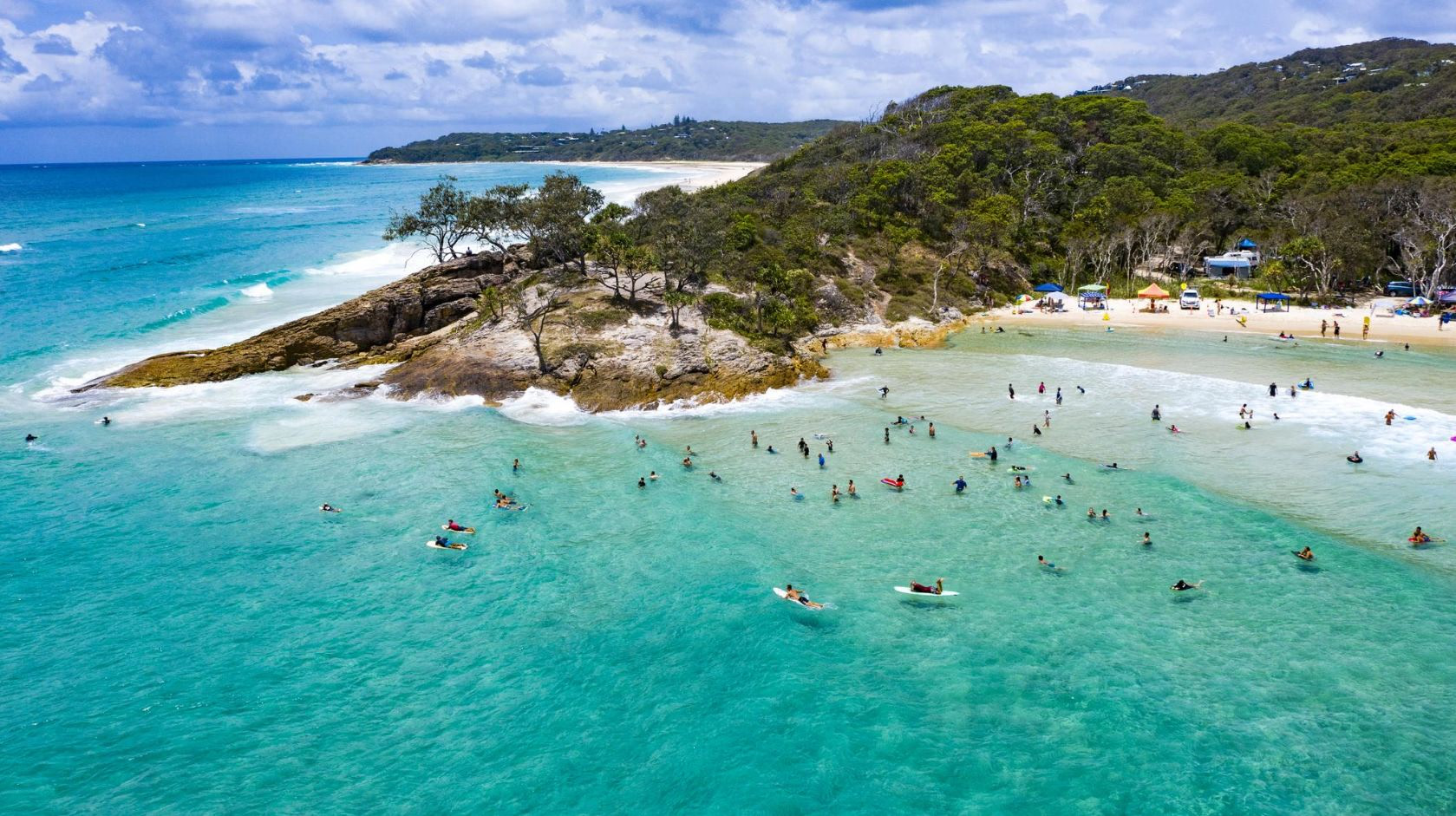
The North Gorge Walk at Point Lookout on North Stradbroke Island is one of the best land-based whale watching sites in South-East Queensland. The headland drops straight into deep water and the whales pass close in. The walk itself is a flat, sealed loop with viewing platforms, and it costs nothing.
On a good day in October you can watch from the headland for an hour and see multiple pods, along with dolphins, turtles and manta rays in the same water below.
Getting there is a train to Cleveland and a ferry across — the whole trip on Queensland's 50-cent flat fare plus the ferry fare.
Boat-based whale watching operates out of Moreton Bay through the season, and the advantage is proximity — getting alongside a pod rather than watching from a clifftop.
Australian regulations set minimum approach distances that vessels must observe, so a good operator holds position and lets the whales approach if they choose. Many do, and a curious humpback surfacing beside a stationary boat is the experience people remember.
Most operators offer a sighting guarantee — a free return trip if no whales are seen — which tells you how reliable the season is. These are third-party operators rather than Cooee vessels.
Moreton Bay is partly sheltered by the sand islands, so conditions are usually calmer than open ocean. It can still be choppy, and anyone prone to motion sickness should take something before boarding rather than after — it is far less effective once symptoms start.
Bring layers. Winter on the water is considerably colder than on land, and the wind makes the difference. Sun protection matters even in July, since reflection off the water is unforgiving.
Binoculars help enormously from land and are largely unnecessary from a boat.
Moreton Bay is a marine park and the whales are not the only thing in it. Bottlenose dolphins are common year-round. Green and loggerhead turtles are frequently visible in clear water. Manta rays pass through in the warmer months, and dugongs live in the bay's seagrass beds, though they are rarely seen.
Humpbacks spend the southern summer feeding in Antarctic waters, building the fat reserves that carry them through the rest of the year. As the ice expands they head north along the Australian coast to breed and calve in warm shallow water, then return south with their young.
The round trip is roughly 10,000 kilometres each way, one of the longest migrations of any mammal. The animals passing Moreton Bay in July are the same population you might see off Hervey Bay a fortnight later.
What makes this worth knowing as a visitor is that the whales are not feeding while they are here. They are running on reserves for months, which is why a mother with a calf conserves energy and rests in sheltered water — and why the boats that behave well are the ones that hold position rather than chase.
The east coast population has recovered dramatically since commercial whaling ended. Australia's last whaling station closed in 1978, and numbers have climbed from a few hundred animals to tens of thousands. The reason whale watching from Brisbane is reliable now, and was not in the 1980s, is that recovery.
Half the pleasure is knowing what the behaviour means, and guides rarely have time to explain all of it.
A blow is the exhale — a humpback's is bushy and about three metres high, and it is usually the first thing you spot. Several blows in sequence means the animal is at the surface recovering before a longer dive.
A fluke-up dive, where the tail lifts clear of the water, means a deep dive and a wait of several minutes. If the tail does not lift, the animal is staying shallow and will resurface soon.
Breaching — the full-body leap — has no settled explanation. Communication, parasite removal and play are all proposed. Calves breach far more than adults, which is part of why the spring return is the better half of the season.
Pec slapping and tail slapping are repetitive surface strikes, audible for a long distance underwater, and generally read as communication. Spy hopping is a vertical rise with the head clear of the water — the animal is looking at you, which is a strange thing to be on the receiving end of.
Australian regulations set minimum approach distances, and knowing them helps you judge an operator.
Vessels must not approach closer than 100 metres to an adult humpback, extended to 300 metres where a calf is present. Aircraft including drones have their own limits. Boats must not cut across a whale's path, separate a mother from a calf, or approach from directly in front or behind.
Crucially, the rules govern the boat's behaviour, not the whale's. If a curious animal chooses to approach a stationary vessel, that is permitted, and it happens often. A good skipper cuts the engine and waits. An operator manoeuvring hard to close the distance is breaking the rules and stressing the animal.
Whales are protected in Queensland waters, and penalties for harassment are substantial.
The land-based option deserves more attention than it gets, because it is free and genuinely good.
The North Gorge Walk is a sealed loop of roughly 1.2 kilometres around the headland at Point Lookout on North Stradbroke Island, with viewing platforms along the way. The headland drops into deep water very close to shore, which is why whales pass within a few hundred metres rather than on the horizon.
Bring binoculars — they transform it. Look for blows rather than bodies; the exhale is what you see first at distance. Mid-morning tends to give the calmest water and the best light, and a still day makes spotting far easier than a choppy one.
The same platforms regularly show dolphins, green and loggerhead turtles, and manta rays in the clear water below. Even on a day without whales, the walk is worth doing.
Getting there is a train to Cleveland, the ferry to Dunwich, and a bus or transfer across the island to Point Lookout. It is a full day rather than a morning, but the train leg costs 50 cents.
Boat trips run out of Moreton Bay through the season and they are not all the same.
Ask about vessel size and passenger numbers — a smaller boat gets you closer to the water and a larger one is more stable if you are prone to seasickness. Ask whether there is a sighting guarantee; most reputable operators offer a free return trip, which tells you how confident they are.
Ask about trip length. Half-day trips are typical; the time actually spent with whales is a fraction of that once you account for the run out and back. And ask whether there is a marine biologist or trained guide aboard, because commentary is most of the difference between watching a distant shape and understanding what it is doing.
These are third-party operators rather than Cooee vessels. What we can do is get a group to and from the departure point, which matters for early starts.
Cooee Tours acknowledges the Turrbal and Yuggera (Jagera) peoples as the Traditional Custodians of the land on which Brisbane stands. We pay respect to Elders past, present and emerging.
We run transfers to the bay and to Straddie through whale season. Family owned and operating in South-East Queensland since 1974.
Plan a Brisbane daySee also Brisbane beaches and water for where to swim and what else is out on the bay.