🥾 Free · By Difficulty
Hiking Trails Near Brisbane
Brisbane has genuine bushwalking within fifteen minutes of the CBD and serious mountain country within ninety, and the difference between the two catches people out.
Brisbane has genuine bushwalking within fifteen minutes of the CBD and serious mountain country within ninety, and the difference between the two catches people out.
National park entry is free in Queensland, which means the hiking near Brisbane costs nothing but the transport. What varies enormously is difficulty — from a sealed twenty-minute loop to a genuine scramble requiring experience — and the gap between them is where people get into trouble.
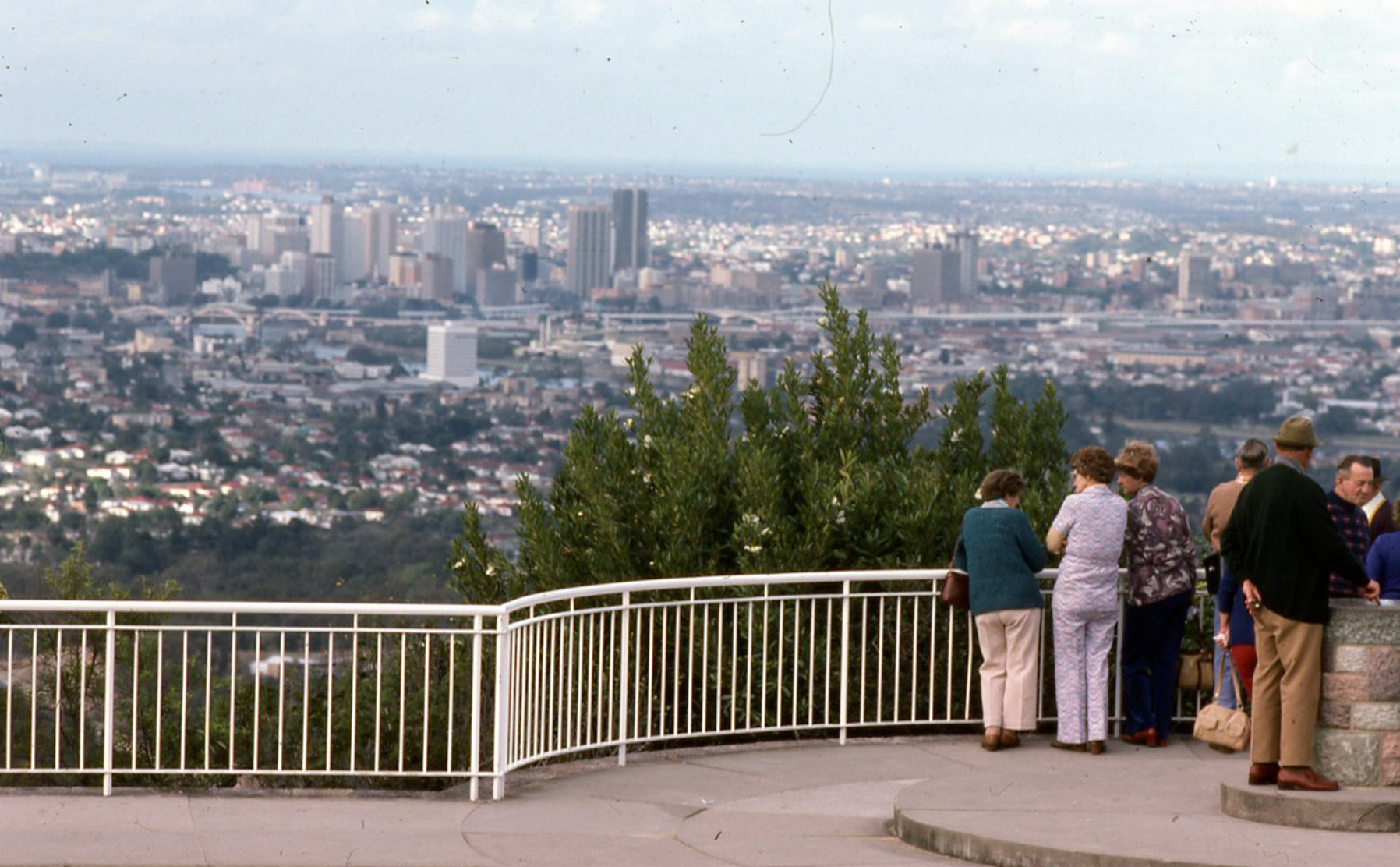
The Aboriginal Art Trail at Mt Coot-tha is a short interpretive circuit with artworks by local Aboriginal artists, under half an hour and gentle throughout.
The Riverwalk is flat and sealed with no steps anywhere — forty minutes between New Farm and the CBD, and the most accessible long walk in the city. The City Botanic Gardens and the base of the Kangaroo Point cliffs are both level.
Daisy Hill, half an hour south, has short forest loops on gently undulating ground.
Simpson Falls at Mt Coot-tha involves steps, uneven ground and a climb on the return — about an hour. The JC Slaughter Falls to summit route is a solid hour of sustained gradient.
Mount Ngungun in the Glass House Mountains is the accessible peak — a well-formed track, roughly an hour return, and the views justify it. This is the one to choose if you want a summit without a scramble.
Springbrook and Lamington in the Scenic Rim carry graded rainforest circuits of two to four hours, mostly on formed track.
Mount Tibrogargan, the Glass House profile everyone recognises, is a serious scramble with exposed rock and genuine fall risk. It is not a walk and should not be attempted casually.
Mount Beerwah, the tallest, is frequently closed for rockfall and requires climbing experience when open. Mount Barney in the Scenic Rim is a full-day mountain requiring navigation and fitness.
Several Glass House peaks carry cultural significance to the Jinibara and Kabi Kabi peoples, and some are not climbed out of respect. Check current access and closures with the Queensland Parks and Wildlife Service before setting out.
More people get into difficulty near Brisbane from heat than from anything else. Summer walking should start at first light and finish by mid-morning, and the middle of a February day on an exposed ridge is genuinely dangerous rather than merely uncomfortable.
Carry more water than you think you need — there is none on any of these tracks. Winter is the best hiking season here: dry, mild and clear, with the sharpest long-distance visibility of the year.
Snakes are present year-round and active in the warmer months. They will move away if given the chance, and staying on marked tracks is most of the answer. Ticks are worth checking for after any off-track walking.
Closed shoes with grip rather than sandals. Sun protection even under canopy. Mobile coverage is patchy in the gullies and absent in parts of the Scenic Rim, so tell someone your route.
Tracks are unlit. Start early enough to be out before dusk — Queensland has no long twilight and darkness arrives quickly.
Mt Coot-tha is bus route 471 for 50 cents. The Glass House Mountains are on the Nambour rail line, though the trailheads are a walk or a short drive from the stations.
The Scenic Rim — Springbrook, Lamington, Mount Barney — has no useful public transport at all, which is where a vehicle or a charter stops being a preference and becomes the only practical option.
Cooee Tours acknowledges the Turrbal and Yuggera (Jagera) peoples as the Traditional Custodians of the land on which Brisbane stands. We pay respect to Elders past, present and emerging.
We run transfers to the Scenic Rim and Glass House trailheads, which have no public transport. Family owned and operating in South-East Queensland since 1974.
Plan a Brisbane day