A permanent night market built from repurposed shipping containers on the river at Hamilton, with dozens of food operators, several bars and live music. It runs on weekend evenings only and charges a small entry fee.
✍️ By Frank Adam Burns📅 Updated 2026📍 Brisbane, QLD
📅
Fri–Sun
Evenings only
🎟
Entry fee
Small, cash or card
🚚
Containers
Repurposed shipping
🚢
Northshore
CityCat terminal
Eat Street Northshore is a permanent night market on the river at Hamilton, built almost entirely from repurposed shipping containers. It runs weekend evenings, charges a modest entry fee, and holds dozens of independent food operators alongside bars and live music stages. It is one of the few genuinely distinctive things to do in Brisbane after dark.
How It Works
The site is laid out as lanes between stacked containers, each fitted out as a kitchen, bar or shopfront. Everything is compact and walkable, and the layout is designed so you wander rather than queue at one place.
There is a gate fee — small, but it exists, and it surprises people expecting a free market. Children under a certain age generally enter free. Food and drink are paid separately at each operator.
It opens in the evening on weekend nights only. Turning up on a Tuesday finds a closed site, which is the most common mistake visitors make.
The Food
The range is the point. Dozens of operators cover most of the world's street food — Southeast Asian, Latin American, Middle Eastern, Japanese, European and Australian — plus a heavy showing of desserts, which is where the queues form.
Portions are designed for grazing rather than a single sitting, and the sensible approach is several small things from different containers rather than one large plate. Prices are modest by restaurant standards.
Vegetarian and vegan options are well covered. Gluten-free is available but varies by operator, so it is worth asking rather than assuming.
Music and Atmosphere
Live music runs across several stages through the evening, generally covers and originals from local acts rather than headline bookings. There are bars scattered through the site and communal seating rather than table service.
It is family-friendly early and gets busier and louder later. The lighting between the containers is the thing people photograph.
When to Go
Early evening is the calmer window and the better one with children or if you want to actually sit down. From about seven it fills, and the popular containers develop queues.
It runs in most weather — much of the site is under cover — but a wet Brisbane evening thins the crowds considerably, which some people prefer.
Getting There
Northshore Hamilton is the last stop on the CityCat line, and arriving by ferry is much the best way to do it — the run downriver at dusk is worth the trip on its own, and it costs 50 cents under Queensland's flat fare.
By road it is about fifteen minutes from the CBD. There is parking on site, which fills on busy nights.
Because there is drinking involved for most groups, the ferry or a charter is the sensible arrangement rather than driving.
The Site's Own History
Northshore Hamilton is the old Portside working river frontage — wharves, warehouses and industrial land that handled Brisbane's shipping before container terminals moved the trade downstream to the Port of Brisbane.
The market opened on the site in 2013 and became permanent after proving itself, which is why it looks purpose-built rather than improvised. The whole precinct is part of a long-running redevelopment of the riverfront.
Using repurposed shipping containers on a former shipping site is not incidental — it is the design idea. Containers are fitted out as kitchens, bars and shopfronts and arranged into lanes, with lighting strung between them, which is what gives the place its look at night.
How to Actually Eat There
People get this wrong by treating it like a restaurant, and it rewards a different approach.
Walk the whole site first. The lanes hold dozens of operators and the queues bunch unevenly — what looks busy at the entrance may be quiet at the far end. Committing to the first thing you see is the classic mistake.
Order small and often. Portions are built for grazing, so several small things from different containers beats one large plate. Split things across a group and try more.
Do dessert early if it matters to you. The dessert containers develop the longest queues of the night, and some sell out.
Find seating before you buy on a busy night. Communal tables fill from about seven, and holding a spot while others fetch food is the standard tactic.
What It Costs
There is a gate fee, charged per adult, and it is the detail that most surprises people — a market with an entry charge is unusual in Australia. Children under a certain age enter free.
Once inside, food and drink are paid separately at each container. Prices are modest by restaurant standards and most dishes sit in the street-food range, so a full evening of grazing plus a couple of drinks is still cheaper than a mid-range restaurant meal.
Almost everything is card and contactless. Some operators are card-only.
Dietary Requirements
The range works in your favour here. Vegetarian and vegan options are well covered — several operators are entirely plant-based and most others have something.
Gluten-free is available but varies by operator, and shared fryers and grills are common. If coeliac rather than preference, ask each stall directly rather than assuming a labelled dish is safe.
The same applies to nut allergies — the Southeast Asian operators in particular use peanut heavily, and cross-contact in a compact kitchen is a real consideration.
With Children, and Late
Early evening is the family window. It is calmer, the queues are shorter, and there is space to move a pram between the lanes. Children generally do well here because the choice means nobody is stuck with a menu that does not suit them.
From about seven-thirty the crowd thickens, the music gets louder and the atmosphere shifts towards adults. Neither version is better; they are just different nights.
Getting There and Back
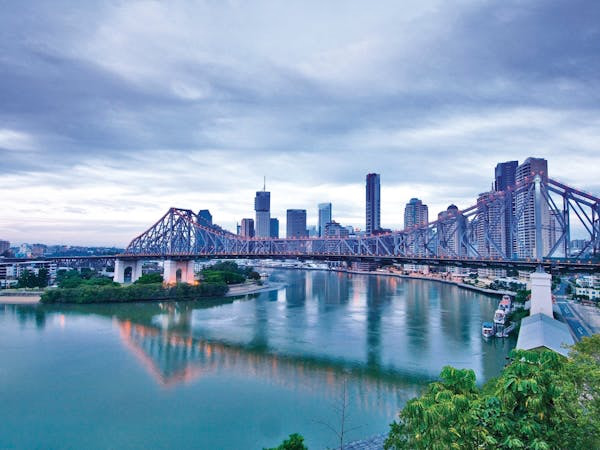
Northshore Hamilton is the last stop on the CityCat line, and arriving by ferry is much the best way to do it. The run downriver at dusk passes the Story Bridge, the cliffs and the industrial reaches, and it costs 50 cents under Queensland's flat fare.
Check the last ferry time before you settle in — services finish earlier than the market does, and a group that misses the last CityCat is looking at rideshare surge pricing on a Saturday night.
By road it is about fifteen minutes from the CBD with parking on site, which fills on busy nights. Because most groups are drinking, the ferry or a charter is the sensible arrangement rather than driving.
If It Is Closed
Since it runs weekend evenings only, a midweek visit finds locked gates. The nearest equivalents are worth knowing.
Howard Smith Wharves under the Story Bridge has restaurants and a brewery open through the week. Fortitude Valley and James Street cover dining most nights. South Bank's Little Stanley Street and Grey Street run seven days.
For markets specifically, the Saturday morning options are the Jan Powers Farmers Market at the Powerhouse and Davies Park at West End — different proposition, same appetite.
Questions About Eat Street
Weekend evenings only. It is closed on weekdays, which catches out visitors who turn up midweek.
Yes — a small gate fee, separate from what you spend on food and drink. Young children generally enter free.
Dozens of independent operators covering Southeast Asian, Latin American, Middle Eastern, Japanese, European and Australian street food, plus a large dessert section.
Yes, particularly early in the evening. It gets busier and louder later.
Northshore Hamilton is the last stop on the CityCat line and the ferry ride at dusk is the best approach. By road it is about fifteen minutes from the CBD.
Much of the site is, so it runs in most weather. Wet evenings are noticeably quieter.
Well covered across the operators. Gluten-free is available but varies by stall, so ask rather than assume.
Cooee Tours acknowledges the Turrbal and Yuggera (Jagera) peoples as the Traditional Custodians of the land on which Brisbane stands. We pay respect to Elders past, present and emerging.
See It With a Local
Eat Street pairs naturally with a river evening on a private charter. Family owned and operating in South-East Queensland since 1974.