🗺 Local Guide · 2026 Updated
Mount Coot-tha
Brisbane's Best View
The free lookout, Queensland's largest botanic gardens, a planetarium and 50km of bushwalking track — eight kilometres from the CBD and reachable for 50 cents.
The free lookout, Queensland's largest botanic gardens, a planetarium and 50km of bushwalking track — eight kilometres from the CBD and reachable for 50 cents.
Mount Coot-tha is the view every Brisbane postcard is taken from, and the one place locals bring visitors on their first evening. It is a 327-metre forested ridge eight kilometres west of the CBD, and it holds four separate things worth your time: a free lookout terrace over the whole city, Queensland's largest botanic gardens, a planetarium, and more than fifty kilometres of walking track. This guide covers all four — how to get there without a car, what each part actually involves, when to go, and what most first-time visitors get wrong.
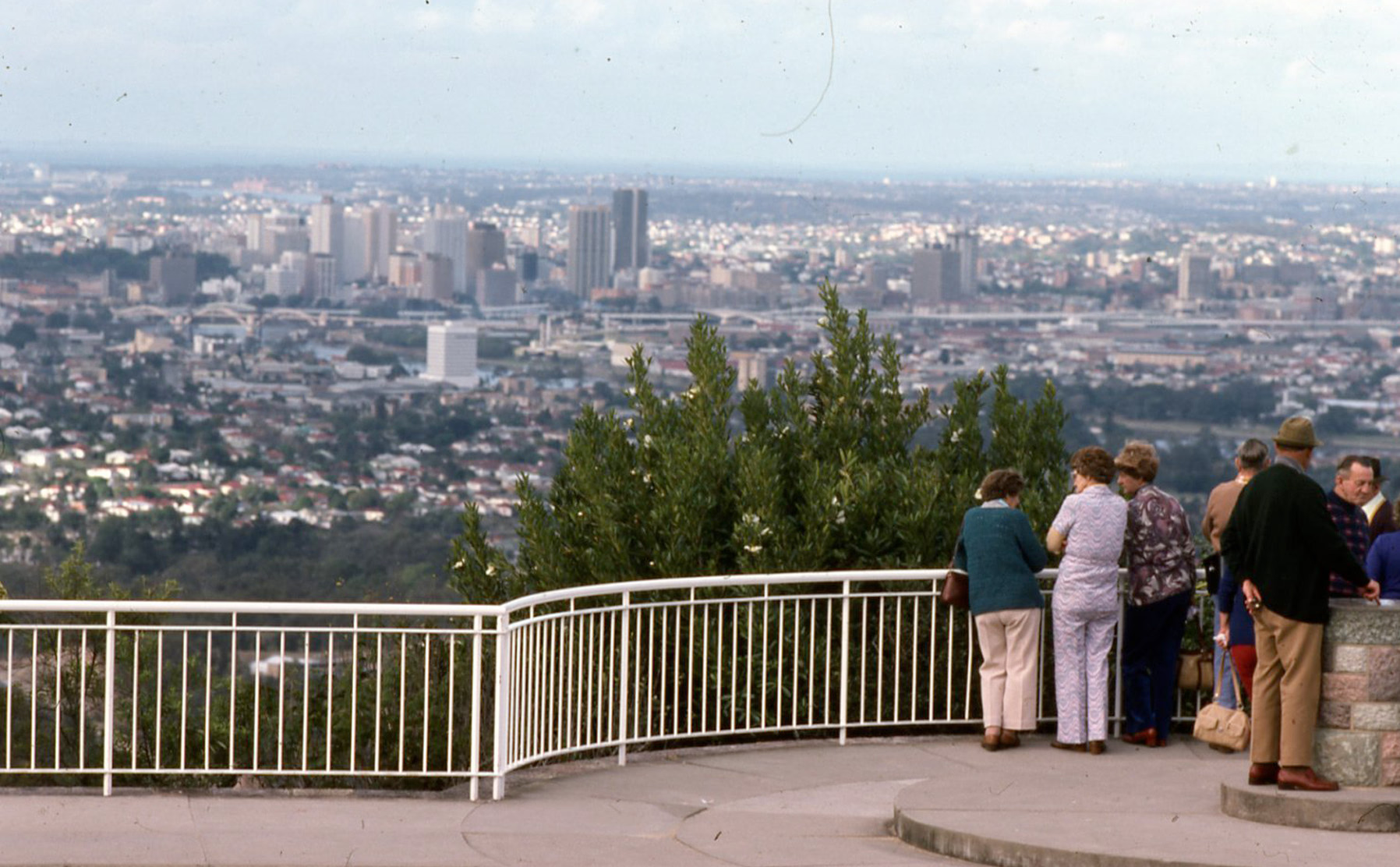
The main attraction is the summit lookout terrace, and it costs nothing. From the railing you look east across the entire city: the CBD towers in the middle distance, the Brisbane River threading through them in its distinctive loops, the suburbs spreading north and south, and Moreton Bay beyond. On a clear day the Glass House Mountains are visible to the north and the Scenic Rim ranges to the south-west.
What makes it work better than most city lookouts is the angle. At 327 metres you are high enough to see the whole layout of the city and low enough to still read individual buildings and bridges. The river's shape — the reason Brisbane's suburbs make no geographical sense until you see it from above — only becomes obvious from here.
Open 24 hours, no entry fee, no booking. Sealed terrace with railings, interpretive signage naming the landmarks, and public toilets. Parking is free but fills at sunset.
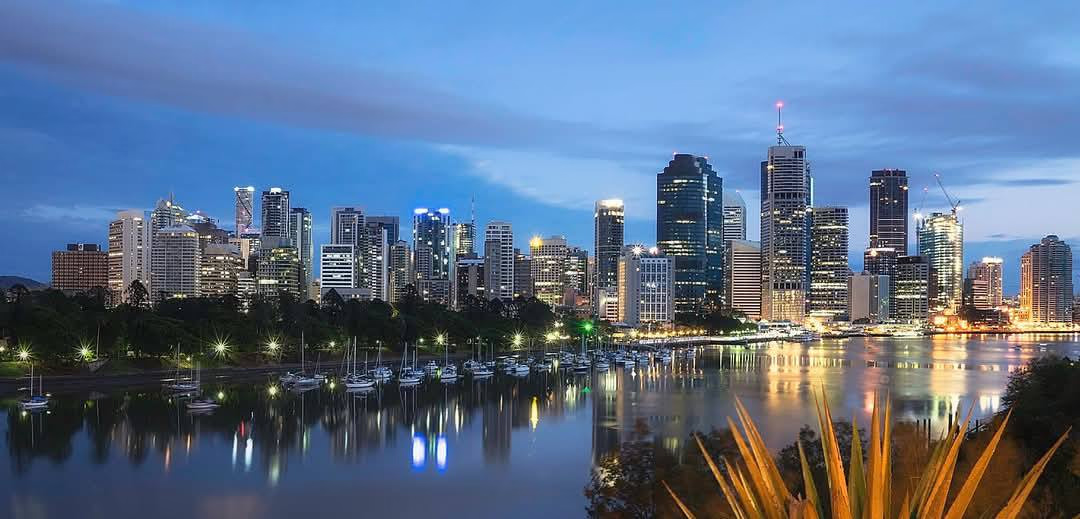
Sunset is the busy hour and the reason most people come. The city lights up as the sky goes, and the terrace fills accordingly — expect a crowd and a full car park from about forty minutes before sunset through to an hour after. Arrive early if you want a spot at the railing rather than a view over shoulders.
What fewer visitors realise is that the lookout is open all night and is arguably better an hour later, once the sunset crowd has gone and the city is fully lit. It is a legitimate late-evening stop rather than a daytime-only attraction.
Because the lookout faces east, sunrise happens directly in front of you — the sun comes up over Moreton Bay and the city catches the light first. It is the quieter and, in our opinion, better of the two. You will often have the terrace to yourself.
The mountain is eight kilometres west of the CBD in the suburb of Mount Coot-tha, and there are three practical ways up.
Route 471 runs from the city to the summit via the Botanic Gardens, and under Queensland's flat fare it costs 50 cents each way regardless of distance. That makes the round trip one dollar, which is close to the best-value sightseeing available anywhere in Australia. Services are less frequent than inner-city routes, so check the timetable before you rely on a specific return.
The 471 stops at the Botanic Gardens on the way, which means you can do the gardens and the lookout as one trip without a car.
Fifteen to twenty minutes from the CBD via Milton Road and Sir Samuel Griffith Drive. Parking at the summit is free and there is a lot of it, but it does fill at sunset and on weekends — the overflow parking involves a walk uphill. The road is sealed, well graded and suitable for any vehicle.
Mount Coot-tha appears on most Brisbane city tours because it is the natural orientation stop — twenty minutes at the lookout early in the day gives visitors a mental map of everything they will see afterwards. It also removes the parking problem entirely at sunset. Our Brisbane day tours include it, and it is a standard inclusion on private charters.
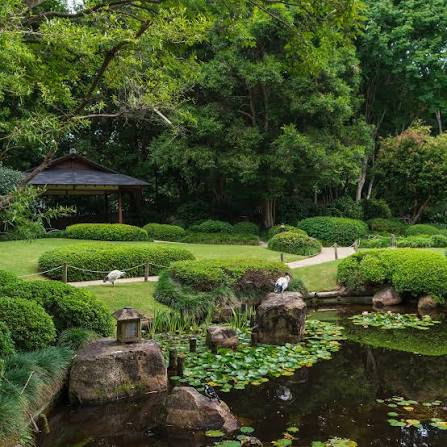
At the base of the mountain sit the Brisbane Botanic Gardens — fifty-two hectares and Queensland's largest subtropical botanic gardens. They are free, open daily, and genuinely separate from the City Botanic Gardens in the CBD, which is a much older and much smaller site. Visitors regularly confuse the two.
The collection is organised into distinct zones, which makes it easy to see a lot without walking far:
Allow ninety minutes to see the main zones at a comfortable pace, or half a day if you intend to sit. There is a cafe on site, free parking, and a library. The gardens close earlier than the lookout, so do them first and finish at the summit.
The planetarium sits at the entrance to the Botanic Gardens and is the largest of its kind in Australia. Unlike the lookout and the gardens, the dome shows are ticketed — the surrounding displays and the mini-theatre are free to walk through.
Shows run in the Cosmic Skydome and change through the year, covering the southern night sky, planetary science and general astronomy. Sessions are scheduled rather than continuous, and weekends and school holidays book out, so check times and reserve ahead rather than turning up hopefully.
It pairs naturally with an evening at the lookout: a show, then the drive to the summit as the light goes.
Mount Coot-tha Reserve carries more than fifty kilometres of marked walking track through dry eucalypt forest, and it is genuinely good bushwalking eight kilometres from a capital city CBD. The tracks are unsealed, undulating and vary a great deal in difficulty.
There are two options at the top and one at the gardens. The Summit restaurant occupies a heritage building at the lookout and does full table service with the view through the windows — the most formal dining option, and the one to book. Alongside it, a cafe and kiosk handle coffee, cake and casual meals with terrace seating, no booking needed.
Down at the Botanic Gardens there is a separate cafe near the entrance, which is the more practical stop if you are doing the gardens first.
For anyone bringing their own, the picnic areas at Slaughter Falls and around the lower reserve have free electric barbecues, tables and shade — a genuinely good free option, and one locals use far more than visitors do.
Mount Coot-tha works year-round, but the experience changes with the season and the hour.
Seasonally, winter gives the clearest visibility — dry air, no haze, and the sharpest views out to the Glass House Mountains. Summer brings humidity and afternoon build-up, which can obscure the distance but also produces the most spectacular storm-front views from the terrace. Spring adds jacaranda colour across the city below.
The lookout is one of the more accessible major attractions in Brisbane. Accessible parking sits close to the terrace, the main viewing platform is step-free from the car park, and the surface is sealed throughout. The restaurant and cafe terrace both have seating with the full panorama, so nobody needs to stand at the railing to see the view. Accessible toilets are on site.
At the Botanic Gardens, the main paths through the Japanese Garden, the display dome and the lagoon circuit are sealed with a gentle grade and frequent bench seating. The arid zone and the bamboo grove involve firmer gradients and looser surfaces. There is a free shuttle within the gardens on some days — ask at the information kiosk on arrival.
The bushwalking tracks are not accessible: unsealed, uneven and steep in sections.
The Brisbane Botanic Gardens are at Mount Coot-tha. The City Botanic Gardens are in the CBD on the river bend at Gardens Point. They are different sites, eight kilometres apart, and a surprising number of itineraries send people to the wrong one.
The lookout alone is twenty minutes. The mountain as a whole — gardens, planetarium, a walk, a meal — is comfortably a half day, and many visitors regret having budgeted for a photo stop.
It is the busiest hour and the hardest for parking. Sunrise, mid-morning and after dark are all better experiences.
The walking tracks are real bushwalking with real gradients, not garden paths. People set off in sandals with no water more often than they should.
Mount Coot-tha's name comes from the Yugara word ku-ta, referring to the honey of the native stingless bee, which was gathered here. The ridge sat within the country of the Turrbal and Yuggera (Jagera) peoples long before it became a scenic drive, and the Aboriginal Art Trail near Slaughter Falls is the part of the reserve that engages with that history directly — a short interpretive circuit with works by local Aboriginal artists.
The mountain was gazetted as a reserve in the 1880s, at a point when Brisbane was small enough that eight kilometres counted as a serious excursion. The summit road and the lookout came later, and the Botanic Gardens moved here in the 1970s after repeated flooding of the original City Botanic Gardens site on the river bend — which is the historical reason Brisbane ended up with two botanic gardens rather than one.
The transmission towers on the ridge are the reason Mount Coot-tha is visible from most of Brisbane, and they are a useful landmark in their own right: if you can see the towers, you can work out roughly which direction west is. They sit slightly apart from the lookout and are not open to visitors, but they appear in most photographs of the summit whether you want them to or not.
The mountain sits west of the city, which makes it easy to pair with some things and awkward to pair with others.
Free, sealed, and generous by the standards of Brisbane attractions — but it is one car park serving the city's most popular sunset spot. On a clear Saturday evening it fills, and the overflow areas are further down the hill. Weekday mornings you will have your pick.
Public toilets at the summit and at the Botanic Gardens, both including accessible facilities. Drinking water at the gardens and the picnic areas, but not on the walking tracks.
Reception is generally good at the summit and patchy on the lower tracks. The reserve is unlit after dark apart from the summit precinct, so bushwalks need to finish before dusk. In storm season, the terrace is an exposed ridge — it is a spectacular place to watch a front come in and a poor place to be when it arrives.
Dogs on leads are permitted in much of the reserve and the picnic areas, but not inside the Botanic Gardens. Worth checking the current signage at the entrance, as conditions vary by zone.
It is, in short, one of the few genuinely major attractions in an Australian capital where a family can spend an entire day and pay nothing but the bus fare and lunch.
The mountain does not close, but what it offers changes enough through the year to be worth planning around.
Hot and humid, and the gardens are the place to be rather than the exposed terrace. The lagoon circuit and the rainforest walk hold shade through the middle of the day, and the Tropical Display Dome is the one part of the gardens that feels better in summer than out of it. Afternoon storm fronts build to the west, which means the terrace has a front-row view of them arriving — dramatic, and a signal to leave rather than linger. Bushwalking is genuinely unpleasant in the middle of a February day; go at dawn or not at all.
The best all-round window. Humidity drops, the air clears, and the walking tracks are comfortable at any hour. The Japanese Garden is at its best. Sunset crowds thin from the summer peak without the winter chill setting in.
The clearest visibility of the year. Dry air means the Glass House Mountains and the Scenic Rim are reliably visible, which is not true in summer. It is the best season for the long view and for bushwalking, but the summit is genuinely cold after dark — noticeably colder than the CBD, and windier. Layers are not optional if you are staying for the lights.
Jacaranda season across Brisbane runs late October into November, and the lookout is the best place in the city to see how much of it there is — the purple shows up across whole suburbs from above in a way it never does at street level. The gardens are at their most colourful, and the weather is warm without summer's humidity.
Mount Coot-tha is the orientation stop on most of our Brisbane days — twenty minutes at the top early on, and the rest of the city makes sense afterwards. Family owned and operating in South-East Queensland since 1974.
Plan a Brisbane day