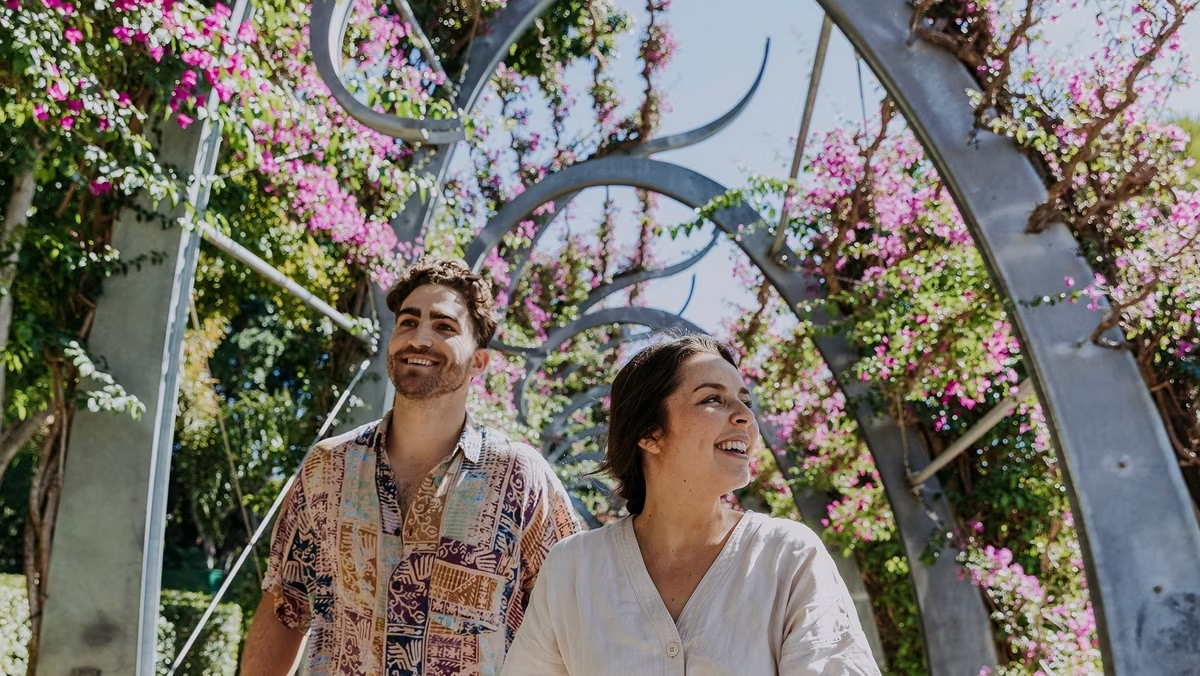
Eleven hectares of subtropical garden built on former railway yards, and the largest garden of its kind in any city centre in the world. Free, open around the clock, and almost entirely missed by visitors.
✍️ By Frank Adam Burns📅 Updated 2026📍 Brisbane, QLD
📏
11 ha
Parkland area
📅
2001
Opened
🎟
Free
Open 24 hours
🚆
Roma St
Own train station
Roma Street Parkland is the best thing in Brisbane that visitors routinely walk past. Eleven hectares of subtropical planting on the northern edge of the CBD, built on former railway land, opened in 2001 — and billed as the world's largest subtropical garden in a city centre. It costs nothing and it is open around the clock.
What It Actually Is
The parkland is not a botanic garden and not a park in the ordinary sense. It is a designed landscape — themed garden beds, boardwalks and pathways threading between cascading waterways, rocky outcrops and fern gullies, with artworks by sixteen local artists set into the grounds.
The Spectacle Garden is the showpiece, planted for colour and changed through the year. The Rainforest Walk runs through dense planting that feels considerably further from a CBD than it is. The amphitheatre hosts concerts and outdoor theatre.
Both the Spectacle Garden and the Rainforest Walk close at dusk; the rest of the parkland stays open.
The Ground It Sits On
Local Aboriginal people used this area for thousands of years for meetings and ceremonies. In 1825 it formed part of the original Brisbane settlement, and from 1875 it was railway land — a terminal station and the yards that came with it.
The parkland was created on that site and opened on 6 April 2001. It has since been recognised with the international Green Flag Award, one of a small number of Australian green spaces to hold it.
The Wildlife
For a park in the middle of a capital city, the wildlife is unusually good and unusually visible.
Eastern water dragons bask on the rocks around the water features and are entirely used to people. Rainbow lorikeets are constant and loud. Brushtail possums emerge at dusk. Black flying foxes feed in the palms — most obviously at dawn and dusk, when they move between roosts.
A resident carpet python has lived in the Spectacle Garden long enough to be locally known, which tells you something about how established the planting has become in twenty-five years.
Using the Parkland
Paths are sealed and gently graded, with boardwalks over the wetter sections, making it accessible throughout. There are lawns for sitting, barbecue and picnic areas, and a playground.
It works as a genuine break rather than a destination — a place to eat lunch, walk between meetings, or start a morning before the city gets going. The rocky outcrops and the water make it feel enclosed despite sitting between a railway station and Wickham Terrace.
Early morning is the quietest and the best for the birds. Evening brings the flying foxes.
Getting There
Roma Street station is directly adjacent and is one of Brisbane's main rail interchanges, so this is the easiest green space in the city to reach — every journey costs 50 cents under Queensland's flat fare.
On foot there is access from Albert Street and from the former Albert Park section on Wickham Terrace. A car park is reached from the Wickham Terrace, College Road and Gregory Terrace intersection.
From the Queen Street Mall it is about a ten-minute walk uphill.
Questions About Roma Street Parkland
Yes, and it is open 24 hours. The Spectacle Garden and Rainforest Walk close at dusk; the rest of the parkland stays open.
Eleven hectares, and it is described as the world's largest subtropical garden in a city centre.
6 April 2001, on land that had been railway yards since 1875 and part of the original 1825 settlement before that.
Eastern water dragons, rainbow lorikeets, brushtail possums at dusk and black flying foxes feeding in the palms. A resident carpet python lives in the Spectacle Garden.
Yes — sealed, gently graded paths with boardwalks over the wetter sections throughout.
Roma Street station is directly adjacent, so any train or bus journey gets you there for 50 cents. It is about ten minutes on foot from the Queen Street Mall.
Roma Street is a designed landscape with themed gardens, waterways and an amphitheatre. The City Botanic Gardens are older, flatter and on the river at Gardens Point.
Cooee Tours acknowledges the Turrbal and Yuggera (Jagera) peoples as the Traditional Custodians of the land on which Brisbane stands. We pay respect to Elders past, present and emerging.
See It With a Local
It is the easiest green space to reach in Brisbane and a standard stop on a walking city day. Family owned and operating in South-East Queensland since 1974.