The History of the Carnival of Flowers
Australia's longest-running floral festival began as a plan to lift a city's spirits after the war. Seventy-seven years on, it draws hundreds of thousands every spring. Here's how it happened.
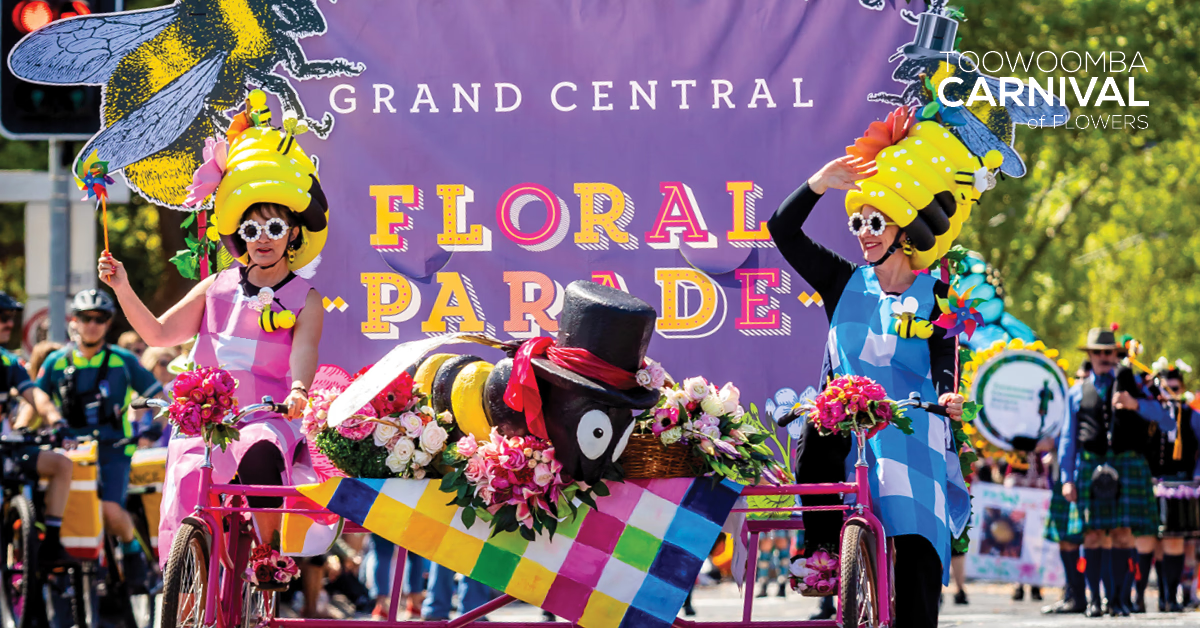
1949: a city decides to bloom
In the years after World War II, Toowoomba's civic leaders wanted a way to boost the local economy and celebrate the return of spring. The answer was a festival built on the thing the city already did better than anywhere else in Queensland: gardening. The first Carnival of Flowers was staged in 1949, centred on a community street parade and the city's beloved parks — and it has run every year since, making it Australia's longest-running floral festival.
Why Toowoomba? The Garden City advantage
The reputation wasn't marketing. Perched 700 metres up the Great Dividing Range, Toowoomba has cool nights, warm spring days and rich volcanic soil — near-perfect conditions for tulips, ranunculus, poppies and roses that struggle in coastal Queensland's heat. With public parks dating to the 1870s (Queens Park among them), the Garden City had a century of horticultural head start before the first float rolled.
The displays you see each September are planted months in advance by council gardening teams — tens of millions of blooms timed to peak across the festival weeks.
The parade becomes an icon
The street parade was there from the beginning, but over the decades the Grand Central Floral Parade grew into the festival's defining spectacle — elaborate floats covered in thousands of fresh blooms, built by schools, clubs and community groups, rolling through the city centre before enormous crowds. The Garden Competition, meanwhile, turned suburban Toowoomba into part of the show: residents compete fiercely, then open their prize-winning gardens to visitors.
From community fair to national event
What began as a one-day celebration now spans three spring weekends with a program of 80+ events — food and wine festivals, live music, night markets and family events layered over the floral displays. The Carnival routinely attracts hundreds of thousands of visitors from across Australia and beyond, and has been repeatedly recognised among the country's best festivals.
The Carnival in 2026
The 77th Carnival of Flowers runs 18 September to 5 October 2026, with the Grand Central Floral Parade on Saturday 19 September. Queens Park and Laurel Bank Park carry the headline displays, as they have for generations — and the easiest way to walk through 77 years of history is with a local at the wheel. Our Carnival day tours visit the same parks where it all began in 1949.
The decades, told properly
The 1950s consolidated the experiment: what began as civic morale became annual expectation, with the parade growing floats and the crowds growing return habits. The 1960s opened the garden gates — the private garden competitions drew the suburbs into the show and gave the festival its distinctive double act of civic display and backyard pride. The 1970s and 80s professionalised the spectacle: bigger floats, longer routes, and the Grand Central Floral Parade hardening into the institution that anchors the program still.
The 1990s taught resilience — drought years tested a festival built on abundance, and the gardeners' response (smarter plantings, water discipline, the climate-matched species selection that now underpins the whole show) quietly modernised the horticulture. The 2000s stretched the calendar from a weekend toward the multi-week format, layering food, music and night events over the flowers. And the 2010s onward scaled the audience: hundreds of thousands of annual visitors, national tourism awards, and a program of eighty-plus events wearing the original 1949 idea like a well-kept heritage facade.
The Garden Competition: the suburbs join the show
If the parade is the festival's public face, the garden competition is its beating heart. From the early decades, Toowoomba residents were invited to compete — street against street, gardener against gardener — and the response built the Carnival's most distinctive feature: a city where the festival doesn't stop at the park gates. Champions emerge each year across categories from grand established gardens to first-time entries, and the winning gates open to visitors for the festival's duration, turning suburban blocks into exhibition halls.
The competition's deeper effect is cultural: it made gardening a civic sport. Multi-generation competitor families exist; champion status carries neighbourhood weight that outlasts the season; and the general standard of the city's street-visible gardens — the decorated homes every tour threads past — reflects decades of competitive spillover. Other cities plant displays for their festivals. Toowoomba's festival taught an entire city to plant, which is why the show now runs kerb to kerb.
An engineering history of the parade float
The parade's floats deserve their own chapter of craft history. Early floats were decorated trucks and drays — flowers wired to frames by volunteer hands the night before, petals replaced by dawn when the wind argued. The techniques matured with the decades: chicken-wire armatures giving way to sculpted forms, bloom-by-bloom coverage methods passed between community groups like guild knowledge, and the modern floats — tens of thousands of stems each — built across months by schools, clubs and organisations who guard their design secrets until parade morning.
The engineering constraint never changed: fresh flowers, one day, no second chances. It's why the parade retains its slightly miraculous quality — each float is a perishable sculpture at highway scale, finished hours before its only public appearance — and why parade morning's float marshalling area, glimpsed from the right vantage, remains one of the festival's great unticketed spectacles.
The festival and the city's fortunes
The Carnival began as economic policy — a post-war city buying itself a future with flowers — and the investment's returns compounded beyond any 1949 imagining. The festival seeded Toowoomba's entire visitor economy: the accommodation stock, the food scene's ambition, the coach-touring tradition this website belongs to, and the 'Garden City' identity that now sells the town year-round. Tourism economics aside, the subtler dividend is civic: a city with an annual deadline keeps its parks funded, its horticultural expertise employed, and its self-image green — the festival functioning as a seventy-seven-year maintenance contract the town signed with itself.
The model has been studied and envied by regional cities nationwide, and its unglamorous secret is continuity: the Carnival never skipped a year, never rebranded away its core, and never let the flowers become the sideshow to their own festival. Institutions compound like interest; Toowoomba simply never broke the streak.
Myths, milestones and pub-quiz material
The record, corrected and decorated: the Carnival is Australia's longest-running floral festival — the streak, unbroken since 1949, is the claim to fame, and 2026's edition is the 77th. The parade has survived weather that cancelled lesser events, wartime austerity's long shadow, and at least one decade of questionable float fashion the archives tactfully under-photograph. Queens Park predates the festival by three-quarters of a century — the 1949 organisers inherited their stage from the 1870s. And the festival's name has always been a small municipal flex: not a flower show, not a garden week — a Carnival, promising the civic joy the post-war founders were actually selling. Seventy-seven years on, the promise still clears.
Visiting with history in mind
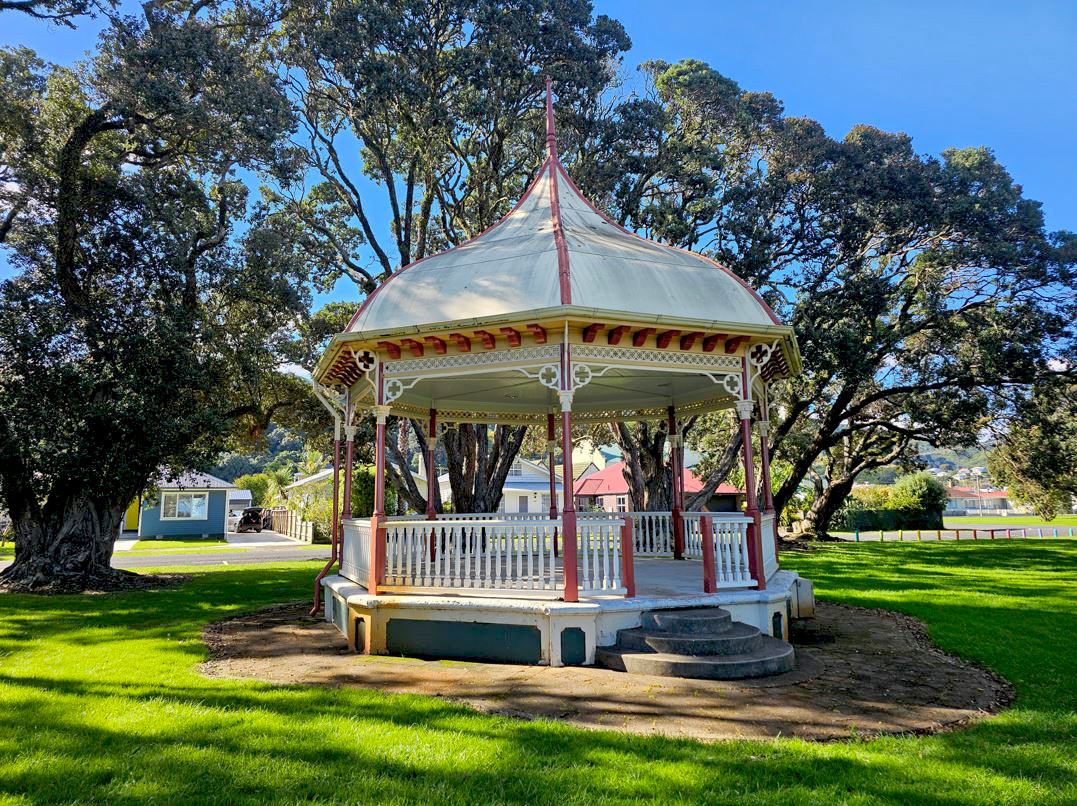
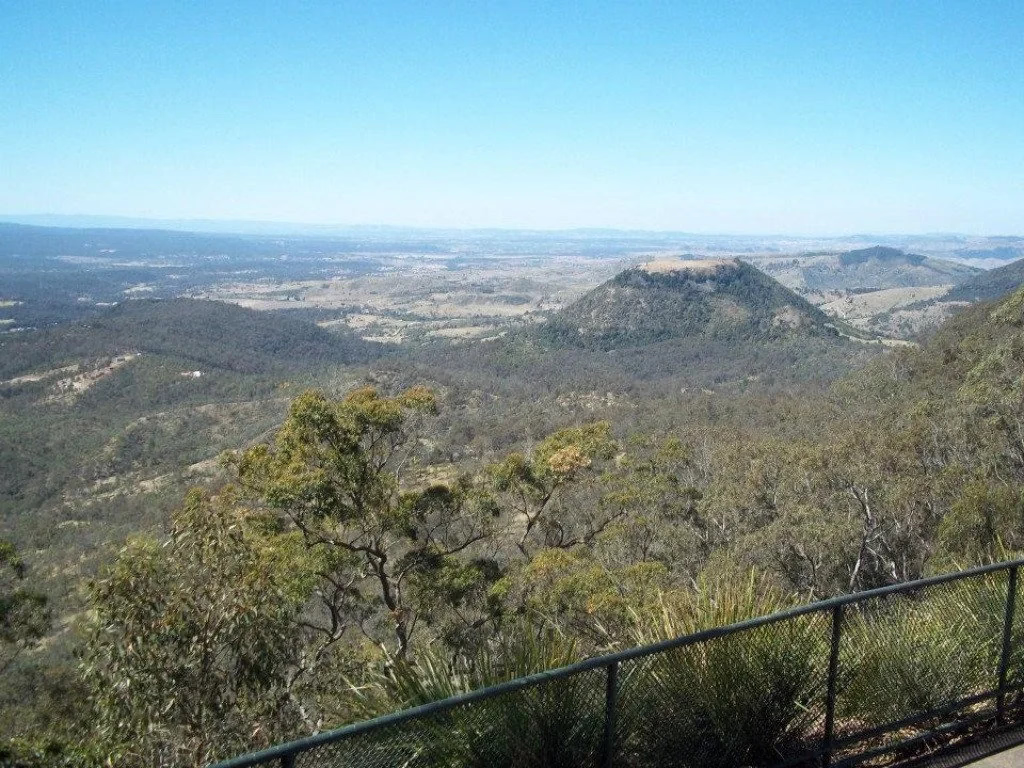
History changes what the eye finds at the festival. At Queens Park, look past the beds to the rotunda and mature canopy — the Victorian bones every Carnival has dressed. On parade day, watch the community groups' floats specifically: they're the direct descendants of 1949's volunteer drays, still built by the same civic impulse. In the suburbs, read the decorated homes as the competition's long echo — a city trained to garden publicly across four generations. And at Picnic Point, consider the view's role: this lookout sold the Downs to visitors before the festival existed, and the morning-tea stop every Cooee tour makes there is itself a piece of coach-touring heritage running back through decades of festival Septembers.
The festival's history, in other words, isn't background reading — it's the extra layer the informed visitor walks through, and the reason the 77th edition will feel less like an event than an inheritance, freshly planted.
The people who plant a festival
Seventy-seven Carnivals is finally a story about labour, most of it uncelebrated. The council's parks crews carry the headline load — the year-round cycle of design, propagation and planting our gardens guide details — but the festival's true workforce radiates outward: the float-building volunteers whose techniques pass between generations of school and club sheds; the competition gardeners whose front yards absorb evenings and weekends the whole year through; the event volunteers marshalling crowds who arrive in the hundreds of thousands; and the hospitality staff for whom September is the annual final exam, sat at double pace.
Continuity is the workforce's quiet marvel. Toowoomba families count three and four generations of Carnival involvement — grandmothers who wired floats in the sixties watching grandchildren do it with cable ties — and the festival's institutional memory lives in exactly this human relay. When visitors remark that the Carnival feels less staged than inhabited, this is the mechanism: it isn't an event the city hosts, it's a thing the city does, annually, with its own hands.
The visitor's part in the labour story is simple and traditional: show up, marvel audibly, and thank a gardener where found. The festival has run on precisely that exchange since Chifley was prime minister, and shows no sign of renegotiating.
How the festival survived its close calls
No seventy-seven-year streak runs unthreatened, and the Carnival's continuity conceals real tests. Drought pressed hardest — multiple eras of water restriction forced the horticulture to reinvent itself, trading thirsty exotics toward the climate-matched plantings and water discipline that now read as foresight. Economic downturns periodically thinned budgets and sponsorships; the festival answered by leaning back onto its volunteer chassis, which recessions cannot repossess. And the disrupted years of the recent past tested every event in the country; the Carnival bent formats where needed and kept the streak whole, a point of fierce local pride.
The survival pattern repeats across the decades: when spectacle got expensive, the festival got communal; when abundance got hard, it got clever. Institutions that outlive their founders usually carry one non-negotiable — for the Carnival it was always the streak itself, the simple refusal to let a September pass unflowered. Everything else proved adaptable. That stubbornness, more than any bloom, is the thing the 77th edition actually celebrates.
The Carnival in the national story
Zoom out and Toowoomba's festival holds a distinctive place in Australia's events landscape: older than the nation's famous food-and-wine festivals, more continuous than most capital-city institutions, and the template regional Australia keeps borrowing — the demonstrated proof that a mid-sized inland city can build a national tourism brand from its own civic habits rather than imported spectacle. Tourism bodies cite it; award panels have decorated it repeatedly; and its formula — free public spine, competitive community layer, food and events wrapping — reads today like the modern regional-festival playbook, written decades before anyone named the genre.
For the visitor, the national context sharpens the September choice: plenty of Australian festivals are bigger, none of comparable vintage is more continuously itself. The Carnival's seventy-seven years aren't a marketing number bolted to an event; they're the event — compound civic interest, paid out annually in petals, and collectible in person every September the streak extends.
Reading the archive: where the history lives
For visitors the past hooks, the festival's paper trail rewards an hour. The local press has covered every Carnival since the first — the digitised decades are a rabbit hole of float photographs, garden-competition controversies and weather laments in period prose — while the regional collections hold programs, posters and parade footage that trace the festival's design history from hand-set type to the current branding. The museums layer in the material culture: parade ephemera, horticultural equipment, and the civic-history displays that frame what 1949's organisers were actually rebuilding from.
The living archive is better still: strike up conversation with any long-term local at a garden gate and the oral history arrives unprompted — the year the wind took the floats' petals, the champion garden three owners back, the parade route's old shape. Toowoomba holds its festival memory the way port towns hold shipping lore, and September's visitors are its favourite audience. Ask one question; budget accordingly.
The next seventy-seven years
Institutions this old invite the forward question, and the festival's trajectory suggests answers. The horticulture will keep adapting — climate pressure guarantees continued movement toward resilient plantings, and the beds of 2050 will differ in species while keeping the spectacle, exactly as the drought decades already demonstrated. The program will keep layering — food, night events and family fixtures have each joined the flowers without displacing them, and the pattern has room yet. And the audience will keep compounding, because the festival's core transaction — a city's genuine effort, freely witnessed — is the one tourism product that doesn't date.
What won't change is the streak's arithmetic: every September added is harder-won and more valuable than the last, and the town knows it. Visitors to the 77th edition are buying into a going concern with, on current form, no closing date — and the only genuinely scarce ticket is the one to this particular year, which is the same gentle sales pitch every Carnival has made since the first: these exact flowers, this September only.
Timeline: the streak at a glance
1875 — Queens Park established: the future stage, three-quarters of a century early. 1949 — the first Carnival: one parade, one post-war city deciding spring deserved better. 1950s — annual habit hardens into institution. 1960s — the garden competition opens the suburbs' gates. 1970s–80s — the parade professionalises; floats become engineering. 1990s — drought rewrites the horticulture; the festival learns resilience. 2000s — the multi-week format arrives; food and night events join the bill. 2010s — national awards, six-figure crowds, the modern program. 2026 — the 77th consecutive festival: 18 September to 5 October, parade on the 19th, streak intact.
Print that paragraph and you hold the pub-quiz version of everything above — though the fuller chapters, like the festival itself, reward the unhurried visit. History here was never the background; in Toowoomba each September, it's the entire foreground, freshly watered.
Walking the history: a heritage loop for September
To take this article outdoors, thread the history into one short festival-day loop: begin at the Queens Park rotunda — the stage that predates the show — and read the beds as the current edition of a 77-year serial; cross to the Cobb & Co precinct, where the pre-festival Downs explains what 1949 was rebuilding; walk the CBD's heritage facades that watched every parade since the first; and finish on any decorated suburban street, where the garden competition's long echo still plays annually. An hour's walking, no tickets, and the festival re-frames itself around you — less an event you attended than a tradition you briefly joined. Which was, from the very first parade, always the founders' actual design.
Final word to the founders, whoever exactly they were around that 1949 table: they wanted a struggling city to feel like spring mattered, and they chose flowers because flowers were what Toowoomba had. Seventy-seven Septembers later their morale project outdraws most of the state's built attractions, employs its own history, and still costs its core audience nothing but an early morning. Few civic decisions anywhere have compounded better — and none, surely, smell as good.
The gardens the festival built: how the Garden City kept adding rooms
Seventy-seven years of festival deadlines did more than maintain the existing parks — they kept commissioning new ones, and the city's garden map reads as a timeline of the Carnival's ambitions. Queens Park was the inheritance: roughly twenty-six heritage-listed hectares laid out in the 1870s, handed to the 1949 organisers as a ready-made stage. Laurel Bank grew into the festival's second room — a smaller, gentler four-and-a-half hectares whose scented garden turned display horticulture toward the nose as well as the eye, an idea decades ahead of the sensory-garden movement that later made it fashionable. And late in the twentieth century the Garden City added its most surprising wing: Ju Raku En at the university, one of Australia's largest traditionally designed Japanese gardens, which planted an entirely different philosophy of garden-making — stillness, structure, borrowed scenery — into a city previously fluent mainly in massed colour.
Read together, the gardens chart what the festival taught its host. A town that began with one Victorian park and a parade learned, September by September, to value scent gardens, water gardens and green architecture alongside the tulip arithmetic — and to fund them, because a city with an annual horticultural deadline never lets its garden budget lapse. The visitor who walks all three today is touring the Carnival's collected works: the Victorian stage, the mid-century refinement and the late-century experiment, all free, all still growing, and all owing their upkeep to a festival that made gardening the city's permanent line item.
Arriving through history: rail, road and the Range
How visitors reached the festival is its own historical layer, and the Range has always been the plot. The railway wrote the first chapter: the line up from the Lockyer, an engineering feat threading the escarpment, carried the excursion era's crowds — and left the festival its most charming relic in Spring Bluff, the heritage station between Murphys Creek and Toowoomba whose platform gardens became Carnival celebrities in their own right, tended to competition standard for generations of arriving travellers. A railway station famous primarily for its flowerbeds is a very Toowoomba institution, and September still queues to photograph it.
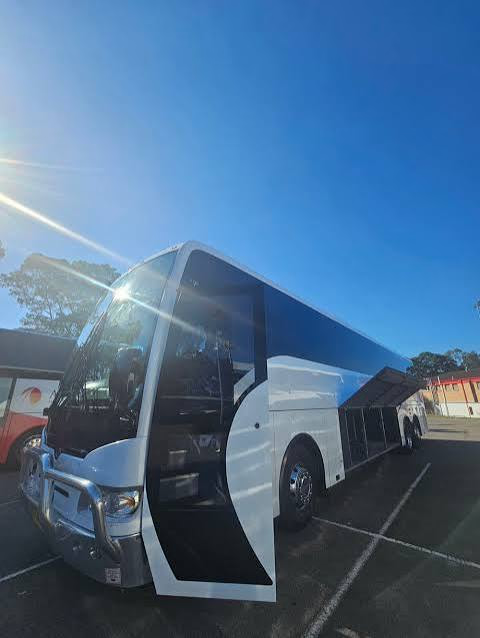
The road era rewrote the logistics without changing the plot: the highway up the Range replaced the excursion train, the family car democratised the trip, and from the 1970s the coach lines — Cooee's touring history among them, running since 1974 — industrialised the day trip from Brisbane into the format hundreds of thousands have used since. The modern Carnival day tours from $89 are that tradition's current edition, and their itinerary is itself a heritage document: the lookout morning tea, the Queens Park arrival, the decorated-homes drive — rituals refined across five decades of festival Septembers. Every era's travellers met the same test, the 700-metre climb, and won the same prize at the top. The vehicles changed; the reveal never has.
The 78th is already in the diary
Institutions with unbroken streaks get to do something rare in the events business: promise. The 78th Carnival of Flowers is already confirmed for 17 September to 4 October 2027 — announced before the 77th has even opened its gates, which is the streak working as civic machinery. The gardeners' calendar demands it (2027's bulbs are a planning document long before they are a planting), the tourism economy builds around it, and the festival's forward confidence is itself a historical artefact: only an event that has never missed a year gets to publish its future in ink.
For the visitor, the 2027 dates convert this history article into a planning one. The festival's demand curve now runs a year deep — accommodation and 2027 tour departures take bookings well ahead, and the veterans book the next September on the way home from the last one, a habit this history suggests is less enthusiasm than pattern recognition. Somewhere in the 2027 program a future chapter of this article is already scheduled: a new champion garden, a parade innovation, another year added to Australia's longest floral streak. The only way to read that chapter early is the traditional one, unchanged since 1949 — be there when the gates open, and let the 78th edition explain itself in flowers.
See the Carnival the easy way
Cooee Tours runs Carnival day tours from Brisbane ($89pp), the Gold Coast ($99pp) and the Sunshine Coast ($109pp), plus a $159 small-group Deluxe Experience with lunch included — no traffic, no parking, local driver included.
Carnival of Flowers Tours